
Written by: Matt Beucler, CEO, Plura AI
Updated September 2026
Key Takeaways for Contact Center and Revenue Leaders
- AI power dialers call one number at a time per rep with zero abandoned calls, strong TCPA posture, and roughly 60 to 80 dials per rep-hour.1,2,3
- Parallel dialers launch 3 to 10 simultaneous calls per rep and connect only the first live answer, often reaching 150 to 300+ dials per rep-hour with added exposure from dropped lines.
- Predictive dialers over-dial across teams based on statistical answer rates and operate under a 3% federal abandonment cap, which fits high-volume consumer call centers more than B2B sales teams.
- Power dialers fit high-ACV, relationship-led motions with smaller teams, while parallel dialers fit high-volume SDR teams with clean data and active caller ID reputation management.
- Plura AI’s AI Predictive Dialer combines parallel-level throughput with AI qualification and FCC-licensed carrier controls. Get a live demo to see how it resolves the power-versus-parallel trade-off.
Dialing Modes Explained: Power, Parallel, and Predictive
Power, parallel, and predictive dialers all aim to create more live conversations per rep-hour. Each mode uses a different architecture, which changes both compliance exposure and conversion performance.
- Power dialer: Calls one number at a time per rep. Auto-advances through a list when a call ends or goes to voicemail. It produces no abandoned calls by design. Typical output is roughly 60 to 80 dials per rep-hour, with the strongest TCPA (Telephone Consumer Protection Act) posture of the three modes.1,2,3
- Parallel dialer: Calls 3 to 10 numbers simultaneously per rep. Uses AI answer detection to separate live humans from voicemail, IVR menus, or dead lines. It then bridges the first live answer to the rep and drops the rest. Typical output is 150 to 300+ dials per rep-hour, with moderate compliance exposure from dropped lines and carrier flagging risk.3
- Predictive dialer: Over-dials across an agent team based on predicted answer rates. It operates under a 3% federal abandonment cap under 47 CFR 64.1200(a)(7).1,2 This mode fits high-volume call centers with 10+ agents working consumer-grade lists that are not treated as B2B sales.
Comparison Table: Power vs. Parallel vs. Predictive
The table below summarizes the core trade-offs across the three dialing modes, focusing on throughput, compliance exposure, and best-fit use cases. Plura’s AI Predictive Dialer blends attributes from these modes, so it does not appear as a separate row.
| Attribute | Power Dialer | Parallel Dialer | Predictive Dialer |
|---|---|---|---|
| Lines per rep | 1 | 3-10 | 3-5 per agent (statistical over-dial) |
| Dials per rep-hour | 60-80 | 150-300+ | 80-120 |
| Abandoned calls | Zero by design | Possible (dropped lines) | Up to 3% allowed by FCC |
| Compliance risk | Lowest | Moderate | Highest |
| Best use case | High-ACV (annual contract value), relationship-led calls | High-volume SDR (sales development rep) top-of-funnel | Consumer-grade lists, 10+ agents |
Beyond this summary, the practical differences between power and parallel dialing shape day-to-day sales and service operations.
What Is the Difference Between Power and Parallel Dialing?
Power and parallel dialers differ across pacing, agent control, compliance exposure, conversation quality, and throughput. The points below show how those differences play out on live calls.
- Call pacing: A power dialer runs sequentially. One call ends and the next begins. A parallel dialer launches multiple calls at once and connects the first live answer.
- Agent control: Power dialing gives reps time between calls for notes and prep. Parallel dialing keeps reps in a continuous stream of conversations. The 1 to 2 second bridging delay can reduce bridged talk time from 9 to 11 minutes down to 4 to 5 minutes.
- Compliance exposure: Power dialers produce no abandoned calls and generally fall outside the federal ATDS (Automatic Telephone Dialing System) definition under Facebook v. Duguid. Parallel dialers carry higher abandoned-call and carrier-flagging risk.
- Conversation quality: One analysis from a parallel-dialer vendor reports power dialing converts connects to meetings at roughly 6.4%, versus 3.8% for parallel dialing.3
- Throughput: Parallel dialing generates 3 to 5 times more live conversations per hour, but only when data is clean and caller ID reputation is actively managed. Without that management, teams typically see connect rates cut in half within 3 to 6 months as carriers flag calling patterns.
See Plura’s AI Predictive Dialer in a live demo to understand how it balances these trade-offs on an FCC-licensed carrier.
Dialer Pricing in 2026: License, Carrier, and Hidden Costs
Dialer pricing breaks into three layers: the software license, the carrier costs, and the answer-rate layer. Together, these layers often push real monthly spend well above the advertised headline rate.
- Power dialers: Standalone power dialers typically cost $50 to $150 per user per month, with most vendors adding per-minute telephony charges. Kixie advertises from $35 per user per month, but required add-ons (ConnectionBoost about $50, AI Human Voice Detection $30, DNC tools $20) push true all-in cost to $109 to $220 per user per month.4 PhoneBurner publishes $140 to $183 per user per month billed annually.4
- Parallel dialers: Dedicated parallel dialers typically cost $150 to $300+ per user per month, sold annually and often with three-seat minimums.4 Salesfinity publishes $149 to $349 per user per month. Nooks is reported at $4,000 to $5,000 per user per year. Orum is reported around $250 per user per month with a three-seat minimum.
- Hidden costs: Per-minute telephony charges, per-number fees, onboarding costs, and add-ons for recording and transcription can turn a $79 headline into $140+ all-in. That is why a five-rep parallel dialer team should budget $12,000 to $18,000 per year before data costs.
- Flat-rate alternative: Some platforms bundle dialing into account-wide pricing. CallFlux includes its power dialer in a $499 per month Pro tier with unlimited calls and no per-minute fees.
Compare Plura’s plans and rates side by side, or use Plura’s ROI calculator to model your team’s cost per connected call.
TCPA and State Rules: How Power Dialers Fit
Power dialers are generally viewed as the most TCPA-aligned dialing mode because one rep stays on the line and the system does not create abandoned calls by design. The TCPA framework focuses on how calls are made and how consent is handled, rather than on a specific brand of dialer.
Key regulatory considerations include:
- The 3% abandonment rule: Under 47 CFR 64.1200(a)(7), no more than 3% of live-answered telemarketing calls may be abandoned, measured over 30 days.1,2 Parallel and predictive dialers must manage this exposure, while power dialers do not generate abandoned calls by design.
- State “mini-TCPA” laws: At least 12 states have passed stricter rules since 2021. Florida and Oklahoma cap daily call attempts at three per consumer and define autodialers more broadly than the federal standard. Oregon’s HB 3865 (effective January 1, 2026) caps calls at three per consumer per day with an 8 a.m. to 8 p.m. calling window. Massachusetts requires calls to end by 8 p.m. local time.
- Calling hours: The federal window runs from 8 a.m. to 9 p.m. in the recipient’s local time zone. At least 13 states impose a 9 a.m. start time. Many national programs treat 9 a.m. to 8 p.m. local time as a conservative window.
- DNC and consent: The FTC’s safe harbor references DNC (Do Not Call) scrubs no older than 31 days before a call.1,2 Opt-out requests must be honored within 10 business days. Consent records typically include timestamp, disclosure language, and source.
Parallel dialing concentrates more compliance responsibility into each dialing session because risk multiplies with every simultaneous line. This description does not replace legal advice. Teams should consult qualified counsel for program-specific guidance.
Plura’s AI Predictive Dialer supports compliance by running real-time DNC scrubbing, enforcing quiet hours through time-zone detection, and logging consent immutably on every outbound contact. Customers remain responsible for their own regulatory obligations.
Decision Framework: Matching Dialing Mode to Your Motion
Use this simple framework to align dialing mode with deal size, team structure, and risk tolerance.
Choose a power dialer if:
- Your deals are high-ACV (around $15,000 or higher) and require personalization.
- You have fewer than 10 reps.
- You are calling warm leads or account-based lists.
- Compliance exposure sits at the top of your risk list.
Choose a parallel dialer if:
- You have 5 or more SDRs working large, cold lists.
- Your main bottleneck is live conversations per hour.
- Your data is clean and verified. Mobile numbers connect 61% more often than office lines.
- You already manage caller ID reputation across numbers and brands.
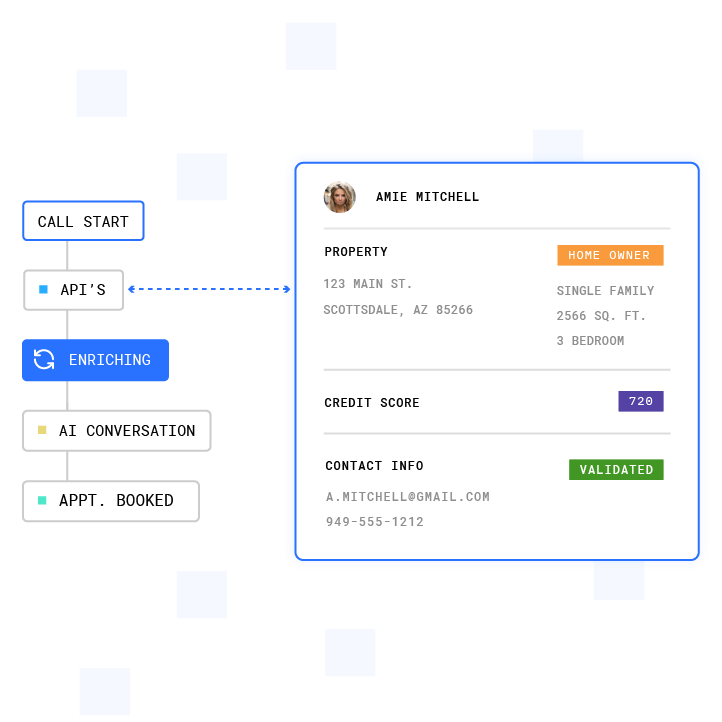
Choose an AI Predictive Dialer (like Plura) if:
- You want parallel-level throughput with simpler compliance operations.
- You need AI to handle qualification and connect reps only to live, interested humans.
- You want stateful memory across voice, SMS, and webchat so context carries across every touchpoint.
- You need an FCC-licensed carrier with branded caller ID and STIR/SHAKEN (Secure Telephone Identity Revisited/Signature-based Handling of Asserted information using toKENs) authentication built in.1
See the AI Predictive Dialer in action and watch it run on a live call.
Leading Dialer Platforms in 2026
The tools below represent common choices for teams evaluating power, parallel, and AI predictive dialing, along with Plura’s positioning.
- Kixie: CRM-native power dialer for SMBs with deep HubSpot integration. ConnectionBoost add-on for spam remediation. Advertised from $35 per user per month, with true all-in cost of $109 to $220 per user per month after required add-ons.
- Orum: Established parallel dialer with up to 10 lines. Demo-gated pricing reported around $250 per user per month. Often used by mid-market and enterprise SDR teams.
- Nooks: Parallel dialer with AI coaching and a virtual salesfloor. Raised a $43M Series B in October 2024.4 Strong fit for teams that value coaching as much as throughput.
- PhoneBurner: Single-line power dialer with a deliberate anti-parallel stance. ARMOR spam protection. Published pricing at $140 to $183 per user per month billed annually.
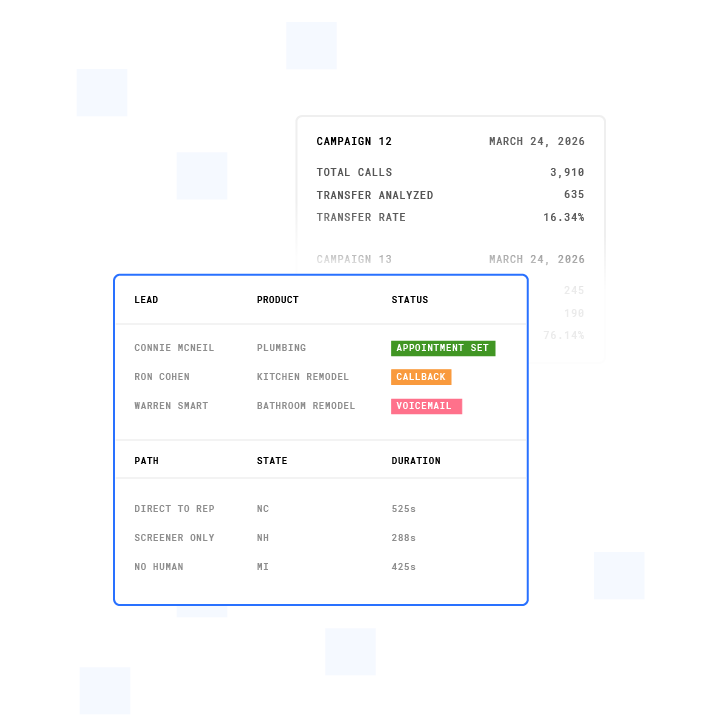
- Plura AI: AI Predictive Dialer on an FCC-licensed carrier. Combines AI qualification, stateful memory, branded caller ID, and real-time DNC scrubbing. Includes built-in list management, dynamic pacing, timezone logic, answer-rate controls, and compliance features that support regulated programs. Compare Plura against other platforms.
Frequently Asked Questions
How much does a power dialer cost in 2026?
As noted in the pricing section, standalone power dialers range from $50 to $150 per user per month, and common add-ons for spam protection, AI answer detection, and compliance tools often push real costs to $109 to $220 per user per month. Parallel dialers often run $150 to $300+ per user per month, with seat minimums and annual contracts. A five-rep parallel dialer team typically budgets $12,000 to $18,000 per year before data and phone-number costs. Hidden costs to track include per-minute telephony charges, per-number monthly fees, onboarding fees, and add-ons for call recording and transcription.
Which is better for cold calling: a power dialer or a parallel dialer?
The better fit depends on your volume, deal size, and data quality. Parallel dialing generates 3 to 5 times more live conversations per hour, which suits high-volume SDR teams with clean, verified contact data. Earlier we noted that one vendor reports power dialing converts connects to meetings at roughly 6.4% versus 3.8% for parallel dialing, which favors high-ACV, relationship-led calls. Teams with fewer than 10 reps or deals above $15,000 ACV often see stronger outcomes from power dialing. Teams with 5 or more SDRs, large cold lists, and active caller ID reputation management tend to benefit more from parallel dialing. Data quality still matters more than dialer type. A team running 40,000 dials with half the numbers dead will see about a 2.1% connect rate regardless of mode.
Are power dialers illegal?
Power dialers themselves are not prohibited. They are often viewed as the most TCPA-aligned dialing mode because one rep is always on the line and the system does not abandon calls by design. The TCPA framework regulates calling conduct and consent practices. Under the Supreme Court’s Facebook v. Duguid ruling, a dialer that pulls from a pre-loaded list rather than a random number generator generally does not qualify as an ATDS at the federal level. Callers still need to address DNC scrubbing, federal and state calling-hour restrictions, consent documentation, and state-level “mini-TCPA” laws, several of which apply stricter standards than the federal floor. Qualified counsel can provide guidance for your specific program and the states where you dial.
What is the difference between an AI power dialer and a parallel dialer?
An AI power dialer layers intelligence on top of sequential dialing. That intelligence can include voicemail detection, predictive number selection based on historical answer rates and prior conversation outcomes, and real-time coaching. A parallel dialer calls multiple numbers simultaneously and connects the rep to the first live answer. AI power dialers emphasize conversation quality and compliance posture. Parallel dialers emphasize raw throughput. An AI Predictive Dialer, like the one Plura operates on its FCC-licensed carrier, uses stateful conversion signals to decide who to call next, combines parallel-level dialing volume with AI qualification, and maintains conversation context across voice, SMS, RCS, and webchat so reps never start a call cold.
What compliance features should a dialer include in 2026?
A modern dialer should include real-time DNC scrubbing against federal and state registries before each dial, automated quiet-hours enforcement based on the recipient’s time zone, immutable consent record logging with timestamps, STIR/SHAKEN caller ID authentication on every outbound call, and configurable state-level rules for jurisdictions with stricter requirements than the federal floor. Platforms that apply these controls at the carrier layer rather than as bolt-on add-ons often provide a more consistent compliance posture. Audit-ready reporting that exports on demand also helps teams respond to regulatory inquiries or legal review. Customers remain responsible for their own compliance obligations regardless of the platform they use.
Conclusion: Align Dialing Strategy With Revenue Goals
The choice between power and parallel dialing comes down to matching the tool to your team’s volume, deal value, and compliance tolerance. Power dialers tend to win on conversation quality and compliance posture. Parallel dialers tend to win on raw throughput when data is clean and caller ID reputation is actively managed. Many organizations eventually run both, using parallel for top-of-funnel SDR motions and power for AE follow-ups and renewals.
Plura’s AI Predictive Dialer delivers parallel-level dialing volume with AI-driven qualification, branded caller ID, real-time DNC scrubbing, and stateful memory across every channel, all on an FCC-licensed carrier. Organizations deploying AI for speed to lead report response times dropping from hours to seconds and connection rates increasing by 3 to 5 times. Use Plura’s ROI calculator to see how that shift affects your cost per connected call.
Watch a live demo of Plura’s AI Predictive Dialer and evaluate how it fits your contact strategy on an FCC-licensed carrier.
1 Plura AI maintains SOC 2, HIPAA, ISO, and GDPR posture as part of its platform infrastructure. References to compliance frameworks in this article describe Plura’s platform capabilities and do not constitute a guarantee that any customer using Plura will themselves be compliant with applicable laws or standards. Customers remain solely responsible for their own regulatory obligations, certifications, consent management, recordkeeping, and the claims they make to their own end users. Consult qualified legal counsel for guidance specific to your use case.
2 This article describes regulatory frameworks at a general level and does not constitute legal advice. Laws and regulations vary by jurisdiction, change over time, and apply differently depending on facts and circumstances. Readers should consult qualified legal counsel before making compliance decisions.
3 Performance figures, customer outcomes, and industry statistics referenced in this article are drawn from cited third-party sources or Plura customer case studies. Individual results vary based on implementation, use case, industry, audience, and execution. Past or aggregate performance is not a guarantee of future results.
4 References to third-party products, services, companies, or research are made for informational and comparative purposes only. Plura AI is not affiliated with, endorsed by, or sponsored by any third party named in this article unless explicitly stated. Trademarks and product names referenced remain the property of their respective owners.
This article is provided for informational purposes only and reflects Plura AI’s understanding at the time of publication. Product capabilities, integrations, and specifications are subject to change. For the most current information, visit plura.ai.
This article was produced with the assistance of AI tools and reviewed by Plura AI prior to publication.