
Written by: Matt Beucler, CEO, Plura AI
Updated August 2026
Key Takeaways for Outbound Leaders
- AI power dialers deliver 3-4x dial volume, but meetings per rep-hour stay flat or decline when spam labeling, list hygiene, and carrier reputation are ignored.3
- 86% of unknown calls go unanswered, and branded caller ID plus A-level STIR/SHAKEN attestation issued directly from an FCC-licensed carrier provide a durable path to higher answer rates.3
- Real-time DNC scrubbing, number reputation monitoring, and verified data prevent list burnout and extend TAM life instead of accelerating decay.
- Power-dialer safety with predictive pacing intelligence outperforms pure predictive dialers by eliminating abandonment risk while still lifting throughput.
- Plura AI’s FCC-licensed carrier stack and AI webchat deliver measurable lifts in connect-to-meeting rate and cost-per-meeting while supporting TCPA and DNC compliance.1,2
Dial Volume vs. Meetings per Rep-Hour
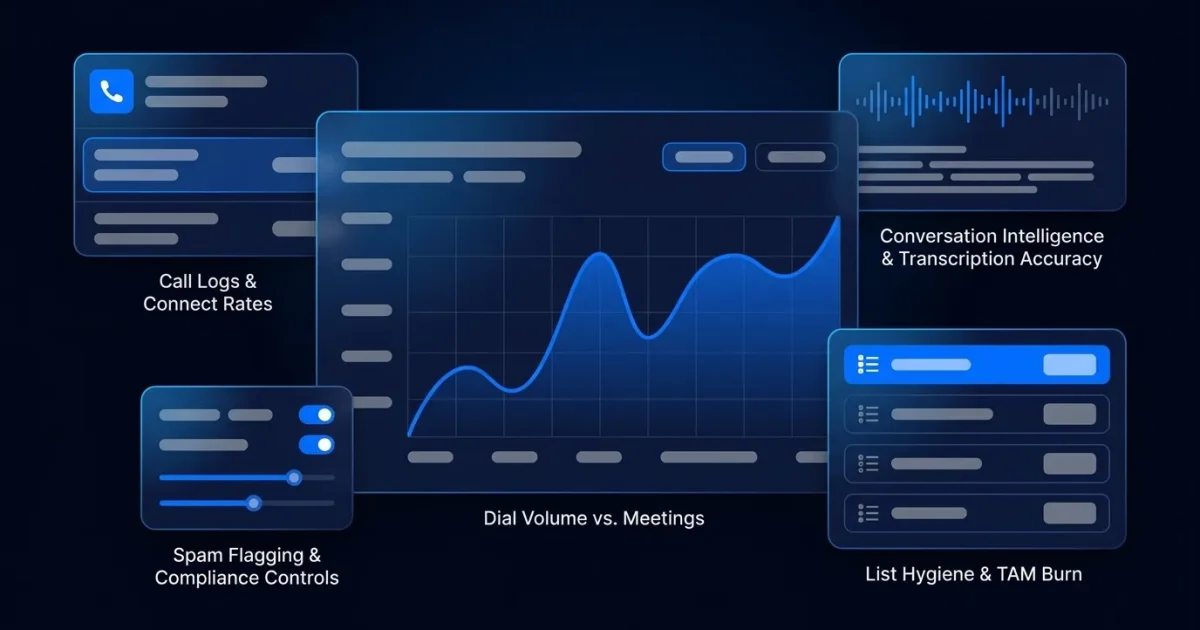
The gap between dials and meetings is the central problem in outbound operations in 2026. Salesfinity’s analysis of 1.3 million cold calls found that a minority of live conversations converted into booked meetings, with the median team requiring hundreds of dials per meeting booked.4 The highest-volume team on that platform converted below the platform median. More dials produced fewer meetings per dial.
The math breaks down at the connect layer. Hiya’s 2026 State of the Call report states that 86% of unknown calls go unanswered.4 When a dialer sits on a third-party carrier with no branded caller ID, every number it burns becomes a liability. US B2B cold call connect rates in 2026 average 8-12% on generic data and rise to 18-22% on verified mobile direct-dial data.3 The difference between those two ranges reflects infrastructure, not rep skill.
Plura AI’s AI Predictive Dialer uses stateful pacing and answer-rate optimization to convert dials into live conversations. Because Plura owns its FCC-licensed carrier, it issues branded caller ID directly and applies STIR/SHAKEN A-level attestation at origination, not as a bolt-on. That structure changes the connect math before a rep ever picks up the phone.
Spam Flagging Mechanics and Carrier-Level Controls
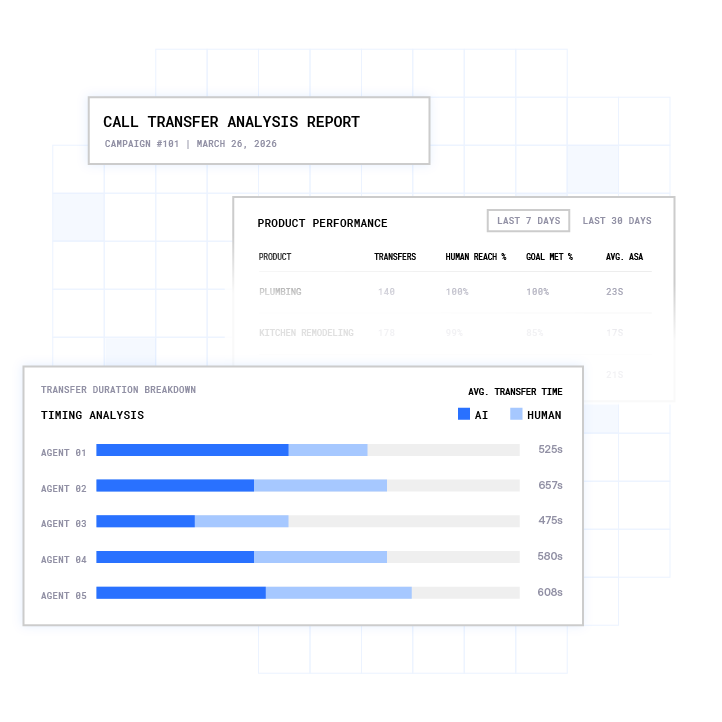
Spam labeling is a carrier-analytics problem, and it requires a carrier-level fix. Carrier analytics engines from partners including Hiya (AT&T), TNS (Verizon), and First Orion (T-Mobile) score calls using call volume patterns, short duration and high abandon rate, consumer complaints, STIR/SHAKEN attestation level, CNAM registration, and number age and history.
The triggers are specific. Excessive call volume per number, missing or inconsistent caller identity, consumer complaints, recycled numbers from unreliable providers, short call durations, and low answer rates all drive spam flagging. Most AI dialer vendors cannot address these triggers because they do not own the carrier. They rent from a third-party CPaaS and inherit that carrier’s number reputation, not their own.
TransUnion states that customers are up to 105% more likely to answer a branded call. Plura issues branded caller ID and A-level STIR/SHAKEN attestation directly from its FCC-licensed carrier. That capability is not a feature layered on top of a third-party stack. It is the stack.
Plura’s integration with Number Verifier improves outbound call connection rates by up to 45% through built-in spam prevention. Spam label removal, when needed, is handled through registration with Hiya, First Orion, and TNS analytics providers at the carrier level, not through a manual dispute process that takes weeks. Once calls connect, the quality of what happens next depends on another infrastructure layer: transcription accuracy.
Transcription Accuracy and Conversation Intelligence
Transcription accuracy directly affects CRM data quality, coaching signal, and the stateful memory that makes AI conversations improve over time. When transcription accuracy sits at 60-70%, reps spend time correcting notes instead of booking meetings. Errors in the transcript become errors in the CRM record, which degrade lead scoring and follow-up sequencing downstream.
Plura’s conversation intelligence layer feeds verified transcripts into the Stateful Conversation Database. Every interaction across voice, SMS, RCS, and webchat is keyed to a customer token and persisted in one place. The AI reads and writes to that database on every conversation, referencing what was offered, what was accepted, and what is still open. A rep who picks up a warm transfer already has the full prior context on screen through the Unified Inbox, without asking the prospect to repeat themselves.
List Hygiene, TAM Burn, and Sustainable Coverage
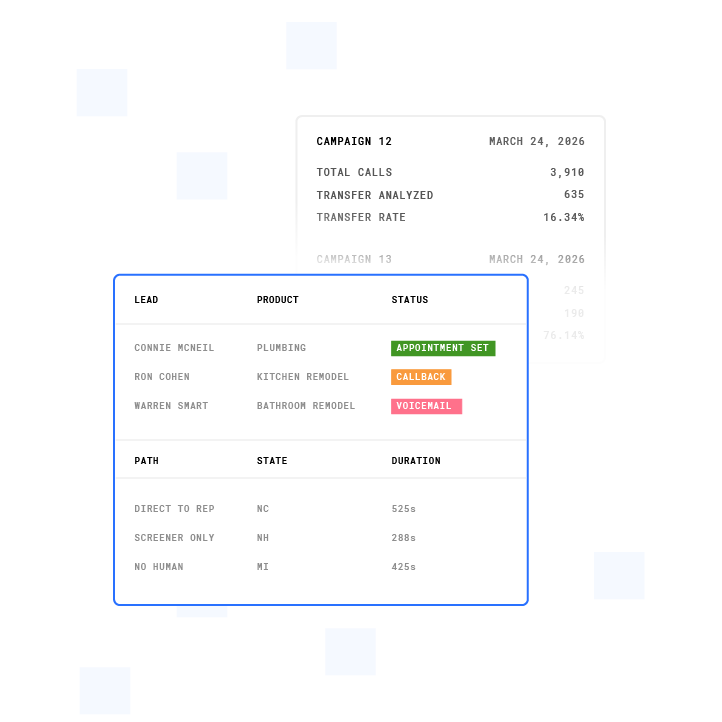
AI dialers accelerate list burnout when list hygiene is not treated as an infrastructure problem. B2B contact databases decay at 2.1% per month, compounding to 22.5% per year, with overall B2B contact data decaying at 25-35% annually. Power dialers can increase talk time compared to manual dialing, but without verified data they accelerate waste by increasing the speed at which teams dial into decayed lists containing many invalid numbers.
This speed advantage becomes a liability when applied to unverified lists. High-volume parallel dialing burns through prospect lists faster than sustainable coverage allows, exhausting TAM before teams reach valid contacts. TAM burn is not a rep behavior problem. It is a pacing and hygiene problem.
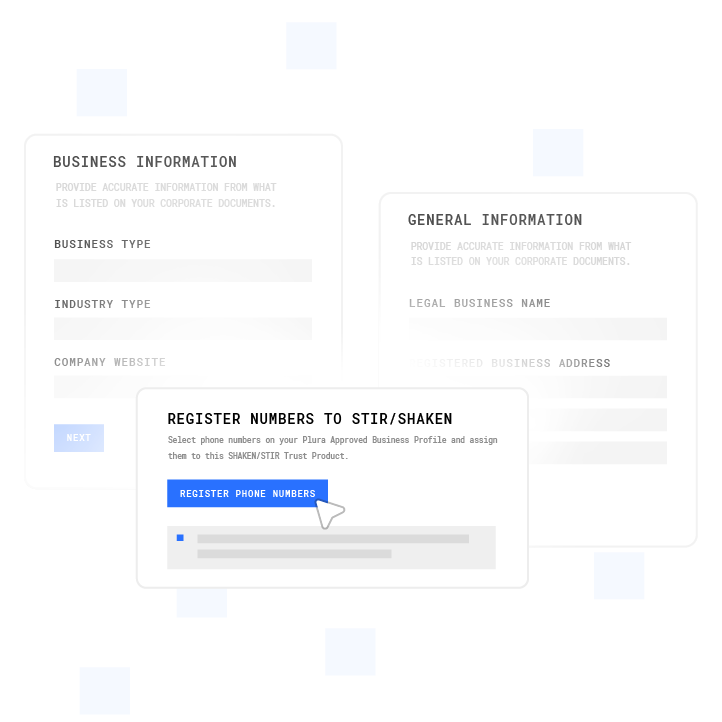
Plura’s real-time DNC scrubbing checks every number against federal and state DNC registries before dial. Number reputation monitoring flags degrading caller IDs before they burn. AI outbound tools are only as compliant as the scrubbing infrastructure behind them. When an AI agent can initiate contact autonomously, the compliance check has to happen at the same speed and with the same audit trail as any human-initiated call. Plura’s compliance engine enforces that check at the carrier level on every outbound contact, extending list life and protecting TAM.
Calculate how much TAM you are burning with your current list hygiene approach.
Power Dialer vs. Predictive Dialer in B2B Outbound
The power dialer vs. predictive dialer distinction matters operationally because the two modes carry different compliance profiles and different productivity ceilings.
A power dialer calls one number at a time and waits for the current call to end before dialing the next. This produces a sequential, agent-led workflow with zero call abandonment, enabling 80-120 calls per hour with no dropped-call risk. A predictive dialer places multiple simultaneous calls using pacing algorithms and connects only live answers to available agents. Federal TCPA law caps abandoned calls at 3% of answered calls per campaign over any 30-day period, where an abandoned call occurs when a person answers and no agent connects within two seconds.
Predictive dialers are appropriate only for teams of 50+ dedicated outbound agents working high-volume consumer lists with dedicated compliance monitoring infrastructure. For most B2B outbound teams, the abandonment risk and the carrier spam signals generated by dropped calls create more problems than the volume gain solves.
Plura’s AI Predictive Dialer uses power-dialer safety with predictive pacing intelligence. It decides who to call next using stateful conversion signals, including historical answer rates, prior negotiation outcomes, and prior offer-acceptance bands, rather than a raw pacing algorithm that dials ahead of agent availability. Calls flow over Plura’s carrier infrastructure with the same branded caller ID and authentication described earlier. Teams get the volume lift without the abandonment exposure that predictive-only systems create.
Pilot Measurement Framework for AI Dialers
Teams that cannot prove ROI from an AI power dialer pilot are usually measuring the wrong metrics. Dial count is not a proxy for meeting yield. Analyses of Salesfinity platform data show that top-performing teams achieve significantly more meetings per 1,000 dials than bottom performers. As that data shows, the gap is not volume. It is connect rate, conversation quality, and list health.
A pilot framework that moves the needle tracks three metrics in parallel:
- Connect-to-meeting rate: live conversations that convert to booked meetings, not raw dials
- Spam remediation rate: percentage of outbound numbers maintaining clean reputation scores across Hiya, TNS, and First Orion analytics
- Cost per meeting: fully loaded cost including dialer fees, list costs, and rep time per booked meeting
Moving from an 8-12% connect rate to verified data plus optimized dialing can substantially lower cost-per-meeting. Plura’s pilot framework tracks all three metrics with one-click audit exports, giving contact center leaders the data to prove ROI to finance without building a custom reporting layer.
Compliance and U.S. Infrastructure Expectations
Offshore or third-party carrier stacks face compounding regulatory exposure in 2026. The FCC NPRM (Notice of Proposed Rulemaking, CG Docket No. 26-52) proposes capping offshore customer-service calls at 30% and prohibiting offshore handling of sensitive consumer data. The Keep Call Centers in America Act (S.2495) and the Foreign Robocall Elimination Act (S.2666) extend the federal regulatory perimeter. State laws in New York, New Jersey, Connecticut, Missouri, and Florida already restrict offshore handling of medical, financial, and consumer data.
The FCC’s February 8, 2024 Declaratory Ruling (FCC 24-17) classifies current AI technologies that generate human voices, including voice cloning and text-to-speech, as an artificial or prerecorded voice under the TCPA, subjecting AI outbound calls to the same robocall restrictions as traditional automated calls. TCPA violations carry statutory damages of $500 to $1,500 per unsolicited call or text, with class action settlements averaging $6.6 million in 2023.
Plura runs on 100% U.S. infrastructure by architecture. Voice origination, model hosting, data storage, and call recording all sit on domestic infrastructure. Plura supports compliance with TCPA, DNC, HIPAA, SOC 2, and 50+ state rule sets, enforced before each contact, with an immutable consent ledger and one-click audit exports.1,2 Customers are responsible for their own compliance obligations. Plura provides the infrastructure controls that support that posture. Consult qualified counsel regarding your specific regulatory obligations.
See what compliant infrastructure could save you in avoided TCPA exposure.
Frequently Asked Questions
Does an AI power dialer burn through lists faster?
An AI power dialer accelerates contact attempts, which means it will exhaust a stale or unverified list faster than manual dialing. B2B phone numbers decay at 25-35% annually, and a dialer that triples call volume will hit that decay three times faster in terms of wasted dials. The fix is not slowing down the dialer. The fix is pairing the dialer with real-time number verification, DNC scrubbing, and per-number volume caps that prevent the high-frequency patterns carriers use to identify robocalling behavior. Plura’s compliance engine applies DNC scrubbing and number reputation monitoring before each dial, which extends list life by removing dead and flagged contacts before they burn the caller ID or waste rep time.
How do you stop “Spam Likely” labels on outbound calls?
Spam labels are assigned by carrier analytics engines at AT&T, Verizon, and T-Mobile through partners including Hiya, TNS, and First Orion. These analytics engines evaluate multiple signals, including the factors covered earlier, to assign spam labels. The only durable fix is a carrier-level solution that combines branded caller ID issued directly from an FCC-licensed carrier, A-level STIR/SHAKEN attestation on every outbound call, CNAM registration, and number warming that avoids sudden volume spikes. Vendors that rent from a third-party CPaaS cannot issue branded caller ID at the carrier level and inherit that carrier’s number reputation pool. Plura issues branded caller ID and A-level STIR/SHAKEN attestation directly from its own FCC-licensed carrier and remediates existing spam labels through direct registration with Hiya, TNS, and First Orion analytics providers.
What is the difference between a power dialer and a predictive dialer?
A power dialer calls one number at a time per agent and waits for the current call to end before dialing the next, producing zero abandoned calls and no structural TCPA exposure from dialing mechanics. A predictive dialer places multiple simultaneous calls using a pacing algorithm that bets ahead of agent availability, connecting answered calls to the next available rep. When more people answer than expected, calls are abandoned. Federal rules cap abandoned calls at 3% of answered calls per campaign over any 30-day period, and each violation carries potential statutory damages. Power dialers are the safer default for B2B outbound teams. Plura’s AI Predictive Dialer combines power-dialer safety with predictive pacing intelligence driven by stateful conversion signals rather than a raw pacing algorithm, giving teams higher throughput without the abandonment exposure.
What connect-to-meeting rate should a high-volume outbound team expect in 2026?
Connect performance varies widely by data quality and infrastructure. As noted earlier, the difference between generic and verified lists can effectively double live conversation rates. Of live conversations, roughly 8-15% convert to booked meetings for average reps, with top-quartile reps reaching 25-40%. That means a team on generic data converting at the median is booking approximately one meeting per 50-80 live conversations. The highest-leverage variables are list quality, branded caller ID, STIR/SHAKEN attestation level, and calling-window timing. Teams that stack verified data, branded calling, and optimized pacing consistently outperform teams that add more dials to a degraded infrastructure. Plura’s stateful pacing and answer-rate optimization are designed to move the connect-to-meeting rate, not just the dial count.
How does Plura AI handle TCPA and DNC compliance for outbound AI calls?
Plura’s compliance engine checks every outbound contact against federal and state DNC registries in real time before dial. Non-compliant numbers are blocked before the first attempt. TCPA consent records are timestamped, immutable, and audit-ready. Quiet-hours rules enforce automatically through time-zone detection on the contact, applying state and federal calling-window restrictions to every campaign. The compliance dashboard exports audit-ready reports in one click. Plura supports compliance with TCPA, DNC, HIPAA, SOC 2, and 50+ state rule sets as a first-class layer of the platform. Customers remain responsible for their own regulatory obligations and should consult qualified legal counsel regarding their specific compliance posture.
Conclusion: Infrastructure, Not Just Volume, Moves Meetings
Real-world experience with AI power dialers in 2026 is consistent. Volume gains are real, but meeting lift requires solving the infrastructure problems that sit underneath the dialer. Spam labeling collapses connect rates before reps ever have a conversation. List decay accelerates TAM burn when dialers run without real-time hygiene controls. Predictive pacing creates abandonment exposure that power-dialer workflows avoid. Third-party carrier stacks cannot fix these problems at the source because they do not own the carrier.
Plura’s FCC-licensed carrier stack addresses each of these gaps at the infrastructure level. Branded caller ID and A-level STIR/SHAKEN attestation issue directly from Plura’s own carrier. Real-time DNC scrubbing and number reputation monitoring run on every outbound contact. Stateful pacing intelligence prioritizes contacts by conversion signal rather than raw volume. The platform runs on 100% U.S. infrastructure by architecture, built for the regulatory environment that contact center leaders operate in today.
The metrics that matter are connect-to-meeting rate, cost per meeting, and list longevity. Those are the numbers Plura is built to move.
Run your numbers to see your potential lift in connect-to-meeting rate and cost per meeting.
1 Plura AI maintains SOC 2, HIPAA, ISO, and GDPR posture as part of its platform infrastructure. References to compliance frameworks in this article describe Plura’s platform capabilities and do not constitute a guarantee that any customer using Plura will themselves be compliant with applicable laws or standards. Customers remain solely responsible for their own regulatory obligations, certifications, consent management, recordkeeping, and the claims they make to their own end users. Consult qualified legal counsel for guidance specific to your use case.
2 This article describes regulatory frameworks at a general level and does not constitute legal advice. Laws and regulations vary by jurisdiction, change over time, and apply differently depending on facts and circumstances. Readers should consult qualified legal counsel before making compliance decisions.
3 Performance figures, customer outcomes, and industry statistics referenced in this article are drawn from cited third-party sources or Plura customer case studies. Individual results vary based on implementation, use case, industry, audience, and execution. Past or aggregate performance is not a guarantee of future results.
4 References to third-party products, services, companies, or research are made for informational and comparative purposes only. Plura AI is not affiliated with, endorsed by, or sponsored by any third party named in this article unless explicitly stated. Trademarks and product names referenced remain the property of their respective owners.
This article is provided for informational purposes only and reflects Plura AI’s understanding at the time of publication. Product capabilities, integrations, and specifications are subject to change. For the most current information, visit plura.ai.
This article was produced with the assistance of AI tools and reviewed by Plura AI prior to publication.