
Written by: Matt Beucler, CEO, Plura AI
Key Takeaways for Bilingual AI Receptionists
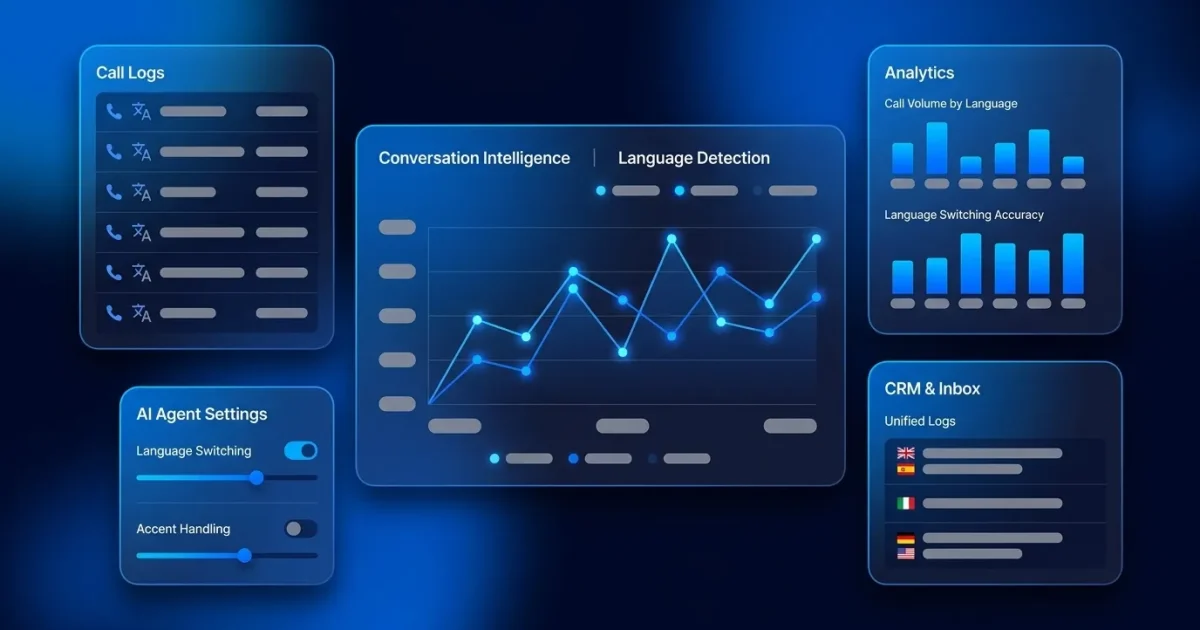
- AI receptionist multilingual support requires automatic language detection, mid-call switching, and unified CRM logging while supporting regulatory compliance.
- Spanish-dominant callers often hang up on English-only greetings, which can drive 60-80% call loss and $150,000-$300,000+ in annual revenue leakage for service businesses.
- Production-grade systems detect language in 0.4-3 seconds, switch mid-call, and keep CRM records in English regardless of caller language.
- Enterprise deployments depend on FCC-licensed carrier infrastructure, real-time DNC scrubbing, and a compliance-aligned posture for TCPA, HIPAA, and SOC 2 on 100% U.S. infrastructure.1
- Plura AI delivers these capabilities through its AI Voice agent with stateful cross-channel memory, so see how Plura can transform your bilingual operations.
The Problem: Revenue Loss and Risk in Bilingual Markets
Roughly 39–45 million people in the United States speak Spanish at home, representing about 13% of the population age 5 and older. In Texas and California, approximately 28-30% of residents speak Spanish at home. Spanish-dominant customers often hang up when greeted in English, and English-only call handling loses 60-80% of Spanish-speaking new customer calls.3
The revenue impact is direct. For businesses with substantial shares of Spanish-preferring callers, English-only handling can remove a meaningful share of annual revenue. Across service businesses in markets with 25-35% Hispanic customer share, bilingual AI typically recovers $150,000 to $300,000+ per year in captured revenue.
Beyond revenue leakage, operators face regulatory exposure on two fronts. First, the FCC’s (Federal Communications Commission) 2024 ruling explicitly classified AI-generated voice calls as “artificial or prerecorded voice” under the TCPA (Telephone Consumer Protection Act), which triggers strict consent requirements for outbound AI voice contact. Second, for clinics and healthcare operators, HHS’s 2024 Section 1557 final rule requires covered health programs to provide language assistance services to limited English proficient individuals. When a multilingual AI voice agent serves as the front-end channel for LEP (Limited English Proficiency) callers, it sits inside the covered entity’s Section 1557 obligations. Operators should consult qualified counsel on their specific obligations under these frameworks.
Book a live demo with Plura to see how the platform handles bilingual call volume at scale.
How AI Receptionists Detect and Switch Languages in Real Time
Production-grade multilingual AI receptionists use a layered pipeline that mirrors how your team thinks about calls. Automatic speech recognition (ASR) identifies the spoken language, a natural language understanding (NLU) layer interprets intent, and a text-to-speech (TTS) engine responds in the detected language. The entire pipeline shifts when the caller changes language mid-call.
Language detection in multilingual systems requires a short audio sample and always involves some detection latency. Streaming systems must keep per-chunk latency low so they can return results quickly. Bilingual AI receptionists detect caller language in 0.4-3 seconds and support mid-call language switching without menus or hold queues.
Intra-sentential code-switching, where a caller shifts language mid-sentence (for example, “Can you send me the reporte by EOD?”), creates the hardest technical challenge. Unified multilingual models trained on phrase-level mixed data outperform word-level mixing approaches because streaming context windows cannot resolve acoustic ambiguity from rapid switches. To understand how well these models perform in real-world deployments, operators should look at production benchmarks that measure accuracy under actual telephony conditions.
Mid-Call Language Switching Accuracy Benchmarks for Telephony
Recent benchmarks provide concrete accuracy figures for Spanish-English bilingual deployments on production telephony.
ServiceNow-AI’s June 2026 benchmark evaluated ASR models on code-switched speech across four language pairs including Spanish-English, using 918 utterances from HR and IT support scenarios4, and measured WER (Word Error Rate), SWER (Semantic Word Error Rate), and AER (Answer Error Rate). Key findings:
- ElevenLabs Scribe V2 and AssemblyAI Universal-3 Pro achieved strong performance on code-switched audio.
- Google Gemini 3 Flash outperformed AssemblyAI Universal-3 Pro on semantic metrics (SWER and AER) despite slightly higher raw WER, which reflects stronger downstream comprehension of code-switched speech.
- The number of language switches within an utterance was the strongest predictor of whether any transcription error occurred.
Sierra’s μ-Bench evaluated ASR models on 4,270 human-annotated utterances from 250 real customer-service phone calls recorded at 8 kHz mono, which is the standard for production telephony. It found that no single ASR provider performs best across all languages.
On production healthcare calls, Krisp reports 96% semantic accuracy for Voice Translation v3 on production calls in a live healthcare deployment, with no Spanish-specific accuracy or WER figures provided. Phone audio at 8 kHz sampling causes 15-30% accuracy degradation compared with clean benchmarks, so production telephony benchmarks provide the most reliable measure for contact center deployments.
Unified CRM Logging for Spanish and English Callers
Operators need every caller, including Spanish speakers, to generate CRM records that English-speaking staff can act on immediately. Enterprise-grade multilingual AI receptionists address this by maintaining stateful conversation memory and producing CRM records in the operator’s internal language regardless of the caller’s language.
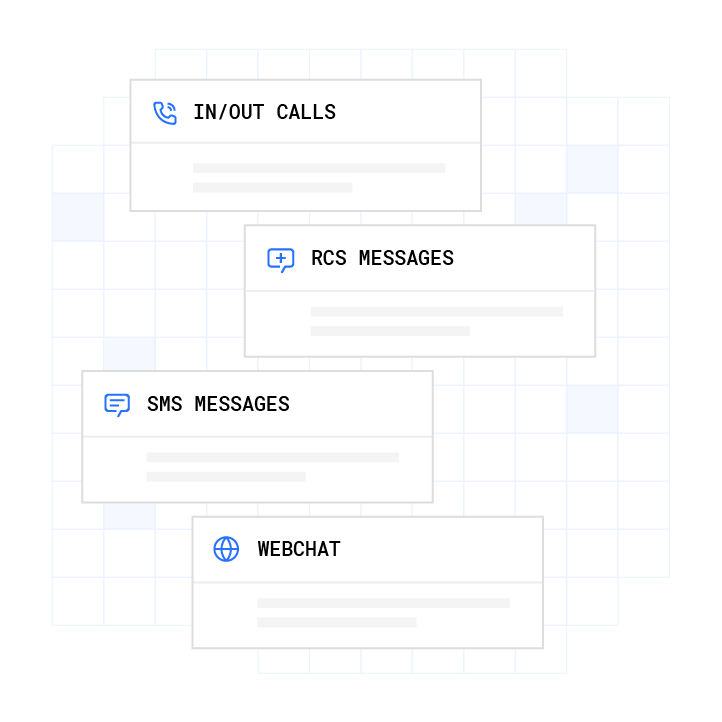
Plura’s Stateful Conversation Database keys every interaction to a customer token, such as phone number, email, or ID, across voice, SMS, RCS (Rich Communication Services), and webchat. An AI Voice agent that handles a Spanish-language intake call writes the same structured record to the CRM as an English call. When a follow-up SMS goes out or a second call comes in, the agent reads the full prior context in the same database. This approach removes both the re-explanation problem and the fragmented record problem.
The practical result is straightforward. Operators running HubSpot, Salesforce, or Zoho CRM integrations through Plura’s integrations layer receive English-language records, structured fields, and full conversation transcripts from every call, regardless of the language the caller used.
Accent and Dialect Handling in U.S. Spanish
U.S. Spanish spans multiple dialects. Mexican Spanish, Cuban Spanish, Puerto Rican Spanish, and Central American Spanish each carry distinct phonological patterns. Krisp supports Spanish (US) as a distinct locale alongside general Spanish.
Domain-specific terminology can reduce accuracy in non-English languages in healthcare deployments and financial calls. Generic multilingual models often underperform on clinic intake calls, insurance verification, and legal intake. Domain-specific configuration becomes critical for high-stakes deployments where mis-heard details create operational risk.
Plura continuously upgrades the underlying ASR, NLU, and TTS models as better ones become available. Call quality and language coverage stay current without requiring operators to manage model selection or track model vendors themselves. Beyond technical performance, operators deploying multilingual AI voice systems must also address the regulatory frameworks that govern these deployments.
Compliance and U.S. Infrastructure for Multilingual AI Voice
Multilingual AI voice deployments intersect with several regulatory frameworks. Operators should review these with qualified counsel.
On TCPA: as noted earlier, the FCC’s 2024 ruling (FCC 24-17) triggers the strictest consent requirements for AI voice calls. TCPA statutory damages are $500 per call for negligent violations and up to $1,500 per call for willful violations, with no requirement to prove actual harm.2
On data residency: there is no single U.S. federal data residency law for AI systems. Requirements arise from sector-specific rules, including HIPAA for healthcare and GLBA for financial data. For healthcare operators, HIPAA does not impose data residency requirements but does require a Business Associate Agreement (BAA) with every service provider touching Protected Health Information (PHI).2
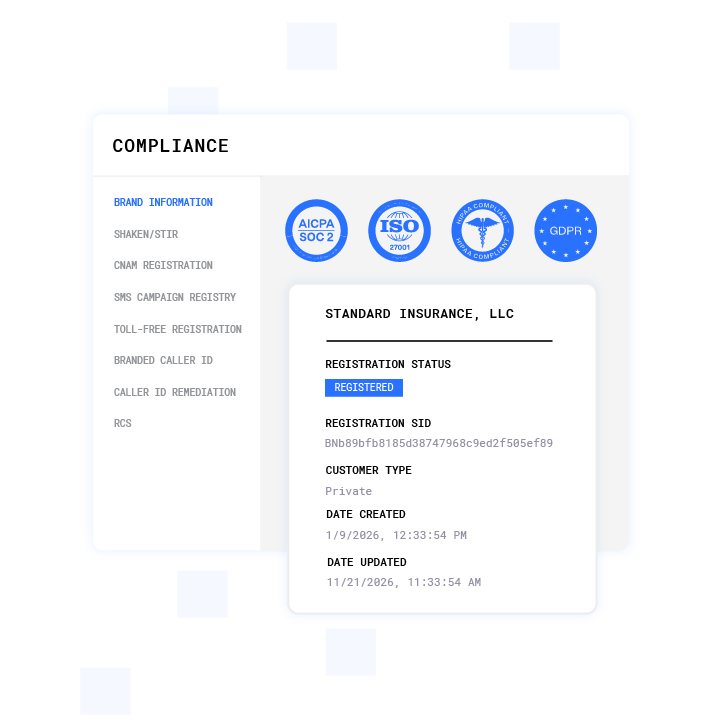
Plura supports compliance with SOC 2, HIPAA, ISO certification, GDPR, SHAKEN/STIR caller ID verification, TCPA compliance, and DNC compliance.1 Every outbound contact is checked against federal and state DNC registries in real time before dial. Consent records are timestamped and immutable. Quiet-hours rules enforce automatically through time-zone detection. All voice origination, model hosting, data storage, and call recording run on 100% U.S. infrastructure, which addresses FCC NPRM (Notice of Proposed Rulemaking, CG Docket No. 26-52) exposure for operators currently using offshore infrastructure.
Spanish-First Deployments for Clinics and Agencies
Healthcare clinics represent the highest-stakes environment for multilingual AI receptionists. Clinics lose a substantial share of inbound calls to voicemails or hangups during peak hours and lunch breaks, while a notable portion of after-hours callers express active intent to book appointments.
Real-world deployments of bilingual AI agents across clinic networks have captured thousands of after-hours appointments, achieving the revenue recovery levels described earlier and delivering a 15x ROI in six months.3 Plura’s healthcare deployments support improvement in no-shows through automated multilingual reminders and confirmations.
For agencies running call operations across multiple clients in Sunbelt markets, native bilingual AI receptionists typically capture $30K-$120K per year in revenue that would otherwise be lost to Spanish hang-ups. English-only hang-up rates of 40-60% often drop to 5-10% when native bilingual AI is deployed.
Many U.S. businesses do not offer Spanish-language phone support after hours. Operators who deploy bilingual AI coverage create a clear competitive gap in those markets.
Vendor Capability Overview for Bilingual AI Receptionists
When evaluating multilingual AI receptionist platforms, four capabilities determine production readiness for bilingual operations:
- Automatic language detection: Whether the system detects the caller’s language without requiring menu selection or manual configuration per call.
- Mid-call switching: Whether the system switches the full processing pipeline, including ASR, NLU, and TTS, mid-conversation without dropping context or requiring a transfer.
- Carrier infrastructure: Whether the platform owns its own FCC-licensed carrier or routes through a third-party CPaaS (Communications Platform as a Service) such as Twilio, which affects branded caller ID, DNC scrubbing, and compliance posture.
- Stateful cross-channel memory: Whether conversation context persists across voice, SMS, RCS, and webchat so a caller does not re-explain themselves on a second contact.
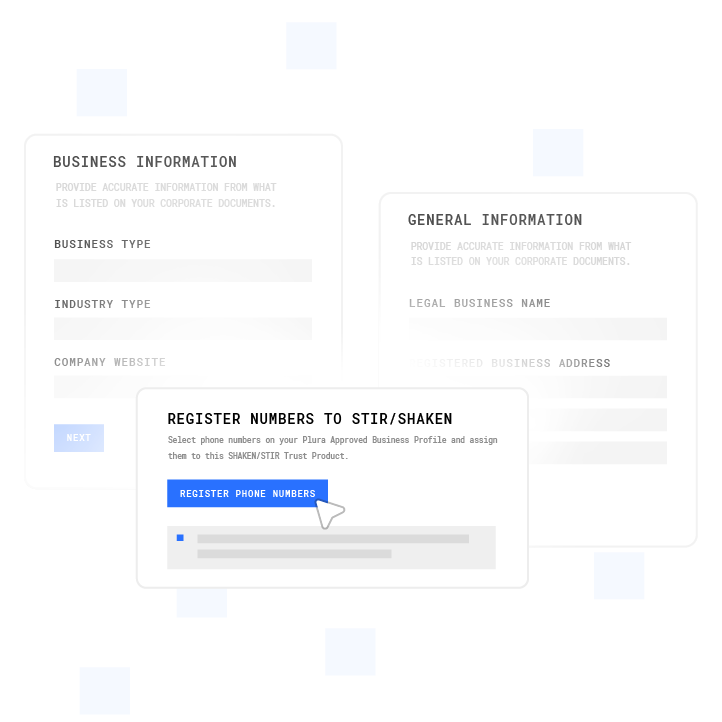
Plura operates as its own FCC-licensed audio bridging carrier, which means voice does not route through Twilio or another CPaaS reseller.4 Because Plura controls the carrier layer, branded caller ID is issued directly at the carrier level rather than through a third-party service. This carrier ownership also enables real-time DNC scrubbing, SHAKEN/STIR authentication, and TCPA-litigator filtering as first-class layers of the platform, not bolt-ons. The Stateful Conversation Database holds context across all four channels by default. Platforms built as API wrappers on third-party CPaaS providers cannot replicate these carrier-level capabilities regardless of their AI model quality.
Frequently Asked Questions
How do AI receptionists handle multilingual calls?
AI receptionists handle multilingual calls through a three-layer pipeline. An ASR layer transcribes speech and identifies the spoken language, an NLU layer interprets intent in that language, and a TTS layer generates a response in the same language. When a caller switches languages mid-call, the system detects the shift and switches the full pipeline without dropping the conversation context. Production systems achieve language detection in 0.4-3 seconds. The CRM record is written in the operator’s internal language regardless of the caller’s language, so staff receive actionable English-language records from every call.
What is the best multilingual AI receptionist for clinics?
The most effective multilingual AI receptionist for clinics combines automatic Spanish-English detection, HIPAA-aligned infrastructure, and unified CRM logging that produces English records for clinical staff. Clinics should prioritize platforms that run on U.S. infrastructure, support domain-specific medical vocabulary in Spanish, and maintain stateful memory across voice and SMS so patients do not repeat intake information on follow-up contacts. Plura’s AI Voice agent covers all four requirements and supports up to 40% improvement in no-shows through automated multilingual reminders.
Does HIPAA require U.S.-based data hosting for multilingual AI voice systems?
HIPAA does not impose data residency requirements by statute. The HIPAA Security Rule requires appropriate physical, technical, and administrative safeguards for electronic PHI, but does not specify a country or region. However, a BAA with every service provider touching PHI is required, and enterprise healthcare contracts frequently impose U.S.-hosting requirements as a contractual condition. Operators should review their specific BAA terms and consult qualified counsel. Plura runs on 100% U.S. infrastructure by architecture, which addresses both the contractual requirements common in healthcare and the FCC NPRM’s proposed restrictions on offshore handling of sensitive consumer data.
What compliance frameworks apply to AI voice agents handling Spanish-language calls?
Several frameworks intersect for bilingual AI voice deployments in the U.S. The TCPA governs consent requirements for outbound AI voice calls, and the FCC’s 2024 ruling classified AI-generated voices as “artificial or prerecorded voice” under the TCPA with no carve-out for conversational AI. The FTC’s DNC registry requires scrubbing every 31 days for telemarketing programs. For healthcare operators, HHS’s 2024 Section 1557 final rule addresses language access obligations for LEP callers. State-level rules add additional layers, including Texas SB 140, which requires AI voice disclosure within the first 30 seconds, and all-party consent rules for call recording in 14 states. Operators should consult qualified counsel on their specific obligations across these frameworks.
How does stateful memory improve bilingual AI receptionist performance?
Stateful memory means the AI retains full context from every prior interaction with a caller, across every channel, regardless of the language used. Without it, a Spanish-speaking patient who completed intake by phone must repeat the same information when they call back or receive an SMS follow-up. With it, the AI reads the prior conversation, the language preference, the appointment status, and any open items before the second interaction begins. This reduces call handling time, removes re-explanation friction, and produces more accurate CRM records because the AI is not reconstructing context from scratch on each contact. Plura’s Stateful Conversation Database keys every interaction to a customer token across voice, SMS, RCS, and webchat.
Conclusion and 90-Day ROI Calculator
Serving bilingual or Spanish-dominant customer bases without adding headcount creates two compounding problems: revenue leakage from Spanish hang-ups and compliance exposure from AI voice frameworks that were not built for regulated U.S. markets. The operational fix requires automatic language detection, mid-call switching, unified CRM logging, and carrier-grade compliance on U.S. infrastructure. Generic API wrappers built on third-party CPaaS providers often deliver the first two but not the last two.
Plura’s AI Voice agent runs on Plura’s own FCC-licensed carrier, supports English and Spanish with stateful cross-channel memory, and maintains the compliance posture described earlier on 100% U.S. infrastructure. For a 15-agent operation, the platform’s default scenario produces $45,600 in savings in the first 30 days and $547,200 over 12 months, with a total cost of ownership of $300,000-$700,000 replacing a traditional $4M-$7M contact-center cost structure.3
Run your numbers through Plura’s calculator to check your ROI in real time.
Book a live demo with Plura to see the bilingual AI Voice agent in production.
1 Plura AI maintains SOC 2, HIPAA, ISO, and GDPR posture as part of its platform infrastructure. References to compliance frameworks in this article describe Plura’s platform capabilities and do not constitute a guarantee that any customer using Plura will themselves be compliant with applicable laws or standards. Customers remain solely responsible for their own regulatory obligations, certifications, consent management, recordkeeping, and the claims they make to their own end users. Consult qualified legal counsel for guidance specific to your use case.
2 This article describes regulatory frameworks at a general level and does not constitute legal advice. Laws and regulations vary by jurisdiction, change over time, and apply differently depending on facts and circumstances. Readers should consult qualified legal counsel before making compliance decisions.
3 Performance figures, customer outcomes, and industry statistics referenced in this article are drawn from cited third-party sources or Plura customer case studies. Individual results vary based on implementation, use case, industry, audience, and execution. Past or aggregate performance is not a guarantee of future results.
4 References to third-party products, services, companies, or research are made for informational and comparative purposes only. Plura AI is not affiliated with, endorsed by, or sponsored by any third party named in this article unless explicitly stated. Trademarks and product names referenced remain the property of their respective owners.
This article is provided for informational purposes only and reflects Plura AI’s understanding at the time of publication. Product capabilities, integrations, and specifications are subject to change. For the most current information, visit plura.ai.
This article was produced with the assistance of AI tools and reviewed by Plura AI prior to publication.