
Written by: Matt Beucler, CEO, Plura AI
Key Takeaways
- AI SDRs score and prioritize leads accurately when they run on clean data with waterfall enrichment. Outreach copy often needs human editing, and meeting-to-opportunity conversion rates stay lower than human SDR performance.
- Performance breaks quickly without clean data, grounding, and stateful memory. Stateless systems lose context, misclassify intent, and drop handoffs across channels.
- Hybrid AI-plus-human models outperform pure AI or human-only setups. They deliver 54% lower cost per qualified opportunity and 1.9x more meetings per dollar than AI-only configurations.
- Common failure modes include deliverability collapse, brand risk from repetitive AI copy, noisy intent data, and an 18-month performance half-life when data quality and routing logic are missing.
- Plura AI improves accuracy through its Stateful Conversation Database, Unified Inbox, and Compliance Engine, which support reliable human handoff across voice, SMS, RCS, and webchat.
Operational Limits of AI SDR Programs
AI SDRs perform well on bounded, high-volume tasks. Outside those boundaries, documented failure modes stack up quickly.
The four headline failure modes identified in a Q1–Q2 2026 audit of 14 B2B SaaS sales organizations are deliverability collapse, brand-damage risk, intent-data noise, and an 18-month performance half-life. Domains running AI SDR outbound at production volume see a median 38-point sender-reputation drop within 90 days as ESPs detect AI-template homogeneity. Intent-data inputs from the top four vendors produce a 31–47% false-positive rate, with accounts flagged as in-market when they are not.
These data-quality issues compound when combined with structural limitations in how AI SDRs handle conversations. Documented hallucination types in B2B sales include inventing product capabilities, fabricating security certifications, misquoting integrations, and generating invented case studies. In longer email threads, AI models lose context and fail to recognize renewed interest after prior objections. Misclassifications appear when inbound replies contain mixed intent, so the AI acts on one signal and misses the other.
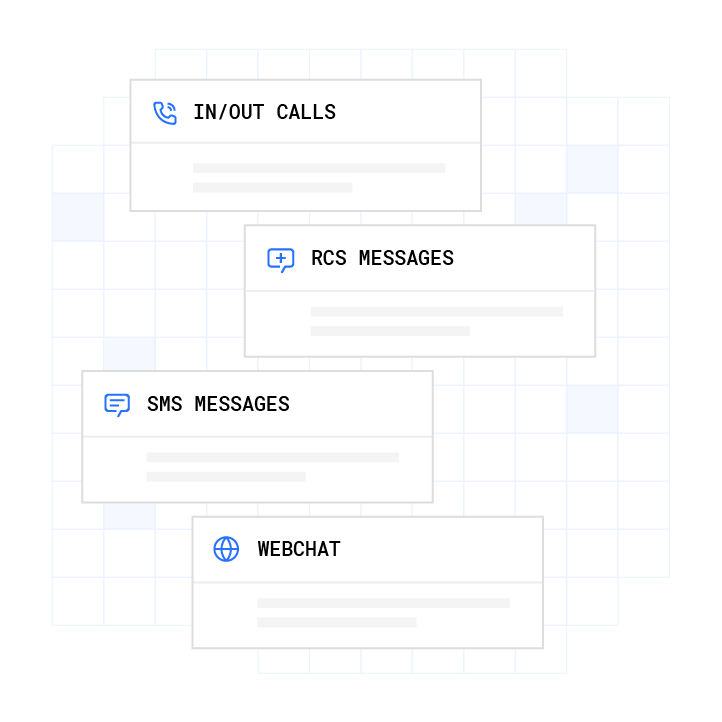
Stateless memory sits at the root of most handoff failures. When an AI SDR operates without cross-channel context, a prospect who texted at 9 a.m. must re-explain their situation when the call comes at noon. Plura’s Stateful Conversation Database addresses this directly. Every interaction across voice, AI SMS, RCS, and webchat is keyed to a single customer token, so every channel inherits the full memory of every prior touchpoint.
Where AI SDRs Deliver and Where They Lag
Effectiveness depends on the task. AI SDRs outperform human SDRs on volume, consistency, ramp time, and cost per touch. They underperform on reply quality, meeting-to-opportunity conversion, and complex objection handling.
Bridge Group SDR Metrics 2026 reports AI SDRs generate 7,400 outbound touches per seat per month versus 1,150 for human SDRs and ramp to first booked meeting faster than human SDRs.3 On the quality side, positive reply rates tend to be lower for AI than for humans, as does meeting-to-opportunity conversion.
The volume advantage is real but does not automatically translate to revenue. In head-to-head tests, human SDRs generated 2.6x more revenue than AI SDRs ($147K vs. $56K) and achieved 71% meeting show rates versus 52% for AI. AI SDRs deliver 10–50x outreach volume at 20–60% of human cost, but show rates trail human-booked meetings.
For speed to lead, AI SDRs create a measurable edge. Leads contacted within one minute are 391% more likely to convert than those contacted after 24 hours. Organizations deploying AI for speed to lead see response times drop from hours to seconds and connection rates increase by 3x to 5x.
Book a live demo with Plura to see how stateful AI agents handle inbound and outbound conversations across every channel.
AI SDR vs. Manual SDR: How They Compare
Neither configuration dominates across all metrics. The data consistently favors hybrid models over either pure approach. The following table shows where AI SDRs excel and where human SDRs still set the bar.
| Task | AI SDR Accuracy Range (2026) | Human SDR Baseline | Source |
|---|---|---|---|
| Lead scoring | 85–95% coverage via waterfall enrichment | 70–80% prediction accuracy | MarketsandMarkets 2026; monday.com4 |
| Outreach edit rate required | Varies, manual edits often required | N/A | MarketsandMarkets 2026 |
| Meeting-to-opportunity conversion | Varies, typically lower | 25–47% | MarketsandMarkets 2026; Bridge Group SDR Metrics 2026 |
Hybrid AI plus human SDR pods (one human plus two AI seats) generate $278,000 in pipeline per seat per month, compared to $187,000 for human-only pods and $94,000 for AI-only pods. Cost per qualified opportunity falls to $224 in hybrid pods versus $487 in human-only teams, a 54% reduction.3 Companies that use AI to augment human SDRs create more pipeline than those that attempt full replacement.
Lead Scoring Accuracy in AI SDR Workflows
Waterfall enrichment cascading through multiple data providers achieves 85–95% coverage rates, compared to 50–70% for single-source providers. AI lead scoring systems achieve 70–85% accuracy in predicting conversion likelihood and improve continuously as they learn from actual conversion outcomes.
Signal quality drives that accuracy. Accounts with multiple active buying signals convert at higher rates than single-signal accounts. Organizations using signal-qualified leads report 47% better conversion rates and 43% larger average deal sizes compared to traditional lead scoring.
Data decay undermines scoring accuracy at scale. Many B2B organizations report that at least 10% of their lead data is inaccurate or outdated. For AI-assisted outbound, inaccurate titles, wrong seniority signals, and stale company data cause AI personalization to misfire at scale. Duplicate records affect 10-25% of typical CRM databases and represent a common data quality issue that prevents AI SDR automation from working correctly.
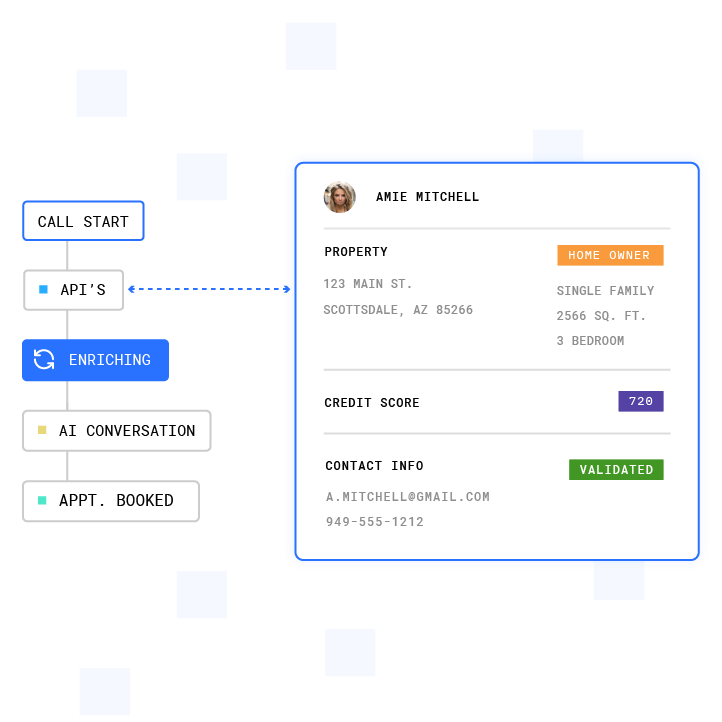
Plura’s AI Lead Intelligence layer enriches every lead with 30+ data sources in real time during the conversation across voice, AI SMS, RCS, and AI webchat. Solar and home services companies using AI agents with property data, energy usage estimates, and home valuations achieved 2x to 3x improvements in appointment set rates.
Meeting Conversion Gaps for AI SDRs
Meeting conversion is where the AI SDR accuracy gap becomes most visible. AI SDRs convert meetings to qualified opportunities at lower rates than human SDRs, often around 40% lower. The gap comes from weaker relationship building, objection handling, and contextual judgment.
In a controlled test cited in 2026 analyses, an AI-only configuration booked 847 meetings at 11% conversion while a hybrid setup booked 312 meetings at 38% conversion. The hybrid configuration generated approximately 2.3x more revenue despite fewer total meetings. Account executives close at a meaningfully lower rate on AI-sourced opportunities than on human-sourced ones, because volume-sequenced prospects arrive with less context and intent.
The show-rate gap noted earlier compounds at the conversion stage. For enterprise deals above $50K, human SDRs with AI augmentation produce better pipeline quality and higher conversion rates than either pure configuration.
Run your numbers through Plura’s ROI calculator to check your ROI in real time based on your current team size and volume.
Data Quality and Grounding for Reliable AI SDRs
AI SDR accuracy is roughly 80–90% data plumbing, routing, and guardrails, and only 10–20% prompts, per the Sushi Data State of the AI SDR 2026 overview. The quality of signal data is the single biggest predictor of success or failure for AI SDR tools.
Grounding requirements for reliable AI SDR performance follow a clear sequence. Teams start with deduplication and format standardization across all contact records, because clean data forms the foundation. Next, they load defined ICP documentation, territory logic, and routing rules so the AI knows which accounts to target and how to route them. Then they establish bi-directional CRM sync for real-time record updates and native email platform integration with Gmail or Outlook to capture all communications automatically. Finally, they connect to data enrichment providers using waterfall methodology across multiple sources to fill gaps the CRM does not cover.
The most common failure mode for AI SDR tools is booking meetings with unqualified prospects in wrong territories, which appears when upstream planning infrastructure is missing. AI SDR tools do not inherently know territory design, quota allocation, ICP definition, or routing logic and will automate chaos instead of creating pipeline when these elements are absent.
Unverified or decayed contact data feeds directly into misclassification and hallucination risk. SpuriQ research found that 27% of working time is lost dealing with stale contact records. For AI operating at volume, a single data error compounds across thousands of outreach threads before detection.
Why AI SDR Handoffs Break
Handoff failures are the most operationally damaging failure mode because they occur at the highest-value moment in the sales cycle. AI SDRs struggle with ambiguous prospect replies carrying strategic pipeline intelligence, such as “we’re mid-procurement freeze, check back in Q4,” which leads to classification errors that lose opportunities entirely.
Escalation triggers requiring human takeover share a common pattern. They involve pricing or contract terms, security questionnaires or compliance reviews, competitor comparisons, executive contacts, or clear buying intent in complex deal cycles. These topics require judgment, negotiation, or risk assessment that AI cannot reliably handle. When AI SDRs lack stateful memory, the handoff arrives without context, so the human rep must restart the conversation from zero.
In a hybrid LinkedIn outreach workflow, AI handles lead import, multi-step sequences, and CRM syncing while routing replies to a unified inbox for immediate human takeover. The handoff feels invisible when brand voice configuration is used and full conversation context transfers with the lead.
Plura’s Unified Inbox is the human-facing view of the same Stateful Conversation Database the AI reads from. Every voice transcript, SMS thread, RCS exchange, and webchat session per customer appears in a single screen, keyed to the same customer token. A CX rep sees the same memory the AI sees, with no context gap at handoff.
Hybrid AI SDR Model for High-Volume Teams
The highest-performing SDR teams in 2025–2026 use hybrid models where AI manages volume, prospecting, and early qualification while humans handle objections, multi-stakeholder conversations, and closing, per Gartner Sales Technology Adoption Survey Q3 2025.
A practical hybrid AI SDR handoff playbook follows this sequence:
- AI handles first touch: Automated outreach via AI SMS or voice within seconds of lead submission, with real-time enrichment from 30+ data sources running during the conversation.
- AI qualifies and scores: The AI applies defined ICP criteria, scores intent signals, and logs all interaction data to the Stateful Conversation Database.
- Escalation trigger fires: When a prospect mentions pricing, requests a demo, raises a compliance question, or signals buying intent, the workflow routes the conversation to the Unified Inbox for human review.
- Human picks up with full context: The rep sees the complete conversation history across every channel before engaging. No re-introduction required.
- Compliance Engine runs throughout: Every outbound contact is checked against federal and state DNC registries before dial, consent records are timestamped and immutable, and quiet-hours rules enforce automatically through time-zone detection. These capabilities support compliance efforts but do not replace legal review.
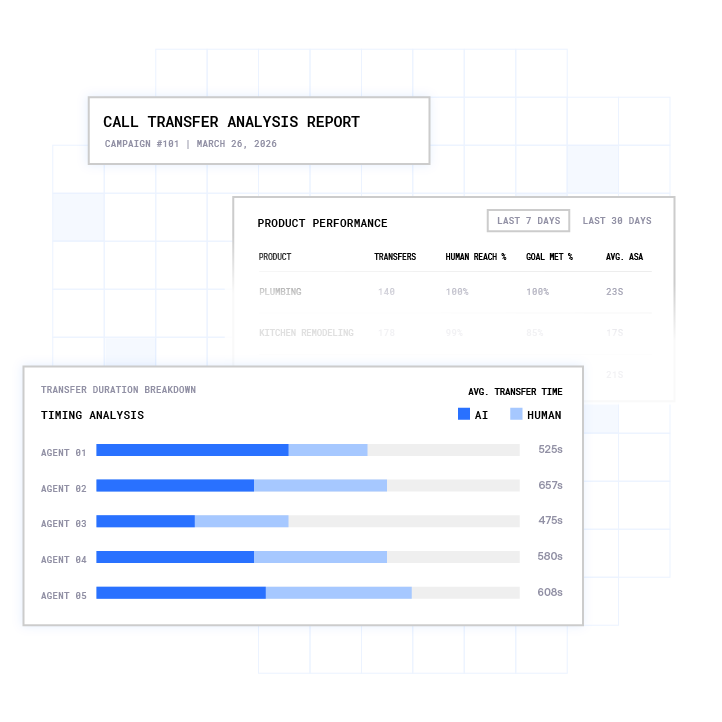
- Conversation Intelligence feeds the loop: Post-interaction analytics surface which scripts convert, which objections recur, and where handoffs stall, so teams can tune workflows continuously.
Bridge Group SDR Metrics 2026 found hybrid pods generate 1.9x meetings per dollar versus AI-only and 2.4x versus human-only, with a 54% drop in cost per qualified opportunity for hybrid versus human-only configurations. Plura enables lead response times under 60 seconds, multichannel engagement via voice, SMS, RCS, and webchat, real-time AI lead scoring, and cost per qualified lead of $25 to $60.
Plura’s AI Predictive Dialer uses stateful conversion signals to decide who to call next, based on historical answer rates, prior negotiation outcomes, and prior offer-acceptance bands. Calls flow over Plura’s FCC-licensed carrier with branded caller ID and STIR/SHAKEN authentication, which reduces the spam-label problem that collapses AI SDR deliverability at volume.1
Compare plans and rates side by side at plura.ai/pricing to see which configuration fits your team’s volume and hybrid model requirements.
Frequently Asked Questions
Do AI SDRs work?
AI SDRs work reliably for bounded, high-volume tasks such as first-touch outreach, inbound triage, lead enrichment, qualification against defined criteria, and follow-up cadence execution. They underperform on tasks that require real-time judgment, relationship building, complex objection handling, and multi-stakeholder navigation. Deployments that succeed treat AI SDRs as a volume and speed layer, not a full headcount replacement. Hybrid models that combine AI for top-of-funnel execution with human oversight for conversation handling consistently outperform either pure configuration on pipeline value and closed-won conversion.
What is the biggest flaw of AI SDRs?
Stateless memory is the most structurally damaging flaw. When an AI SDR operates without cross-channel context, every conversation starts from zero regardless of prior interactions. A prospect who texted, then called, then emailed has to re-explain their situation each time. This compounds at handoff, because the human rep receives a lead with no usable context, the conversation resets, and the prospect disengages.
Data dependency is the second major flaw. AI SDRs amplify whatever sits in the data layer. Clean, enriched, signal-augmented data produces accurate outreach. Stale, duplicated, or incomplete data produces misclassifications and hallucinated personalization at scale, with brand-damage risk proportional to send volume.
How does data quality affect AI SDR accuracy?
Data quality is the primary accuracy lever. Multi-provider waterfall enrichment, which nearly doubles coverage rates compared to single-source approaches, forms the foundation of accurate lead scoring. Inaccurate titles, wrong seniority signals, and stale company data cause AI personalization to misfire at scale. As noted earlier, duplicate records, which affect up to a quarter of CRM databases, prevent automation from working correctly.
Before deploying an AI SDR, the data foundation needs deduplication, format standardization, ICP documentation, territory logic, and routing rules. AI SDR tools execute plans; they do not create them. Deploying without that infrastructure produces unqualified meetings and data debt instead of pipeline.
Why do AI SDR deployments fail within the first 90 days?
The most common causes documented in 2026 data are domain-reputation collapse from over-sending, intent-data false positives routing outreach to accounts that are not in-market, missing upstream planning infrastructure such as defined territories and routing logic, and organizational resistance from sales teams who do not trust or adopt the system. A Medium analysis reported that 76% of AI agent deployments experienced critical failures within the first 90 days, while RAND Corporation research found that more than 80% of AI projects fail overall. Deployments that survive the 90-day window share three characteristics: clean CRM data loaded before launch, defined ICP and routing logic, and a human-in-the-loop review layer for pricing, security, and competitor mentions.
How does Plura AI improve AI SDR accuracy specifically?
Plura AI addresses the three root causes of AI SDR accuracy failure: stateless memory, handoff context loss, and compliance gaps. The Stateful Conversation Database keys every interaction across voice, SMS, RCS, and webchat to a single customer token, so every channel inherits the full memory of every prior touchpoint. The Unified Inbox gives human reps the same memory view the AI holds, which removes context loss at handoff.
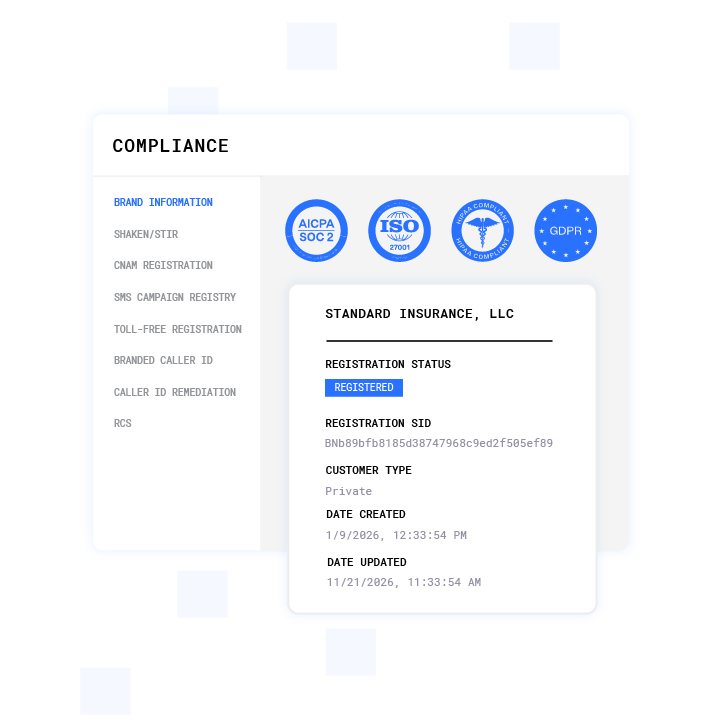
The Compliance Engine checks every outbound contact against federal and state DNC registries before dial, timestamps consent records immutably, and enforces quiet-hours rules automatically through time-zone detection. These features support compliance programs but do not replace legal or regulatory guidance.2 Plura also runs AI Lead Intelligence enrichment from 30+ data sources in real time during the conversation, addressing the data-quality dependency that drives most AI SDR accuracy failures.
Conclusion
AI SDR accuracy is not a single number. It varies by task, reaching high levels on lead scoring with proper enrichment but lower on meeting-to-opportunity conversion, with AI-generated outreach copy often requiring manual edits before send. The gap between AI and human performance narrows on volume tasks and widens on judgment tasks. Hybrid models resolve the trade-off with 54% lower cost per qualified opportunity, 1.9x more meetings per dollar than AI-only, and pipeline predictability that neither pure configuration delivers.
The accuracy multipliers sit in data quality, stateful cross-channel memory, defined routing logic, and reliable human handoff with full context. Plura’s Stateful Conversation Database, Unified Inbox, and Compliance Engine address each of those layers directly, on carrier-grade infrastructure that does not route through third-party CPaaS providers.
Run your numbers through Plura’s ROI calculator to check your ROI in real time based on your current team size, volume, and cost structure.
Compare plans and rates side by side at plura.ai/pricing to find the configuration that fits your hybrid model requirements.
Book a live demo with Plura to see the Stateful Conversation Database, Unified Inbox, and Compliance Engine in a working deployment.
1 Plura AI maintains SOC 2, HIPAA, ISO, and GDPR posture as part of its platform infrastructure. References to compliance frameworks in this article describe Plura’s platform capabilities and do not constitute a guarantee that any customer using Plura will themselves be compliant with applicable laws or standards. Customers remain solely responsible for their own regulatory obligations, certifications, consent management, recordkeeping, and the claims they make to their own end users. Consult qualified legal counsel for guidance specific to your use case.
2 This article describes regulatory frameworks at a general level and does not constitute legal advice. Laws and regulations vary by jurisdiction, change over time, and apply differently depending on facts and circumstances. Readers should consult qualified legal counsel before making compliance decisions.
3 Performance figures, customer outcomes, and industry statistics referenced in this article are drawn from cited third-party sources or Plura customer case studies. Individual results vary based on implementation, use case, industry, audience, and execution. Past or aggregate performance is not a guarantee of future results.
4 References to third-party products, services, companies, or research are made for informational and comparative purposes only. Plura AI is not affiliated with, endorsed by, or sponsored by any third party named in this article unless explicitly stated. Trademarks and product names referenced remain the property of their respective owners.
This article is provided for informational purposes only and reflects Plura AI’s understanding at the time of publication. Product capabilities, integrations, and specifications are subject to change. For the most current information, visit plura.ai.
This article was produced with the assistance of AI tools and reviewed by Plura AI prior to publication.