
Written by: Matt Beucler, CEO, Plura AI
Key Takeaways
- AI SDRs for lead follow-up fall into two categories: sequence builders that fire on timers and reply-comprehending agents that read intent and change the next move.
- Effective evaluation hinges on reply comprehension, native multi-channel coverage, stateful memory across touchpoints, CRM handoff quality, and built-in compliance controls.
- Reply-comprehending agents work best when reply volume is high or when human reps need full context at escalation.
- Voice follow-up is production-ready for qualification and warm transfer, and carrier-level control enables branded caller ID and SHAKEN/STIR verification at scale.
- Plura AI delivers reply-comprehending, multi-channel AI SDR follow-up on its own FCC-licensed carrier with stateful memory; see a live demo to watch it in action.
What Are AI SDRs for Lead Follow Up?
An AI SDR is an autonomous software agent that handles top-of-funnel follow-up, responding to leads, qualifying them, sequencing across channels, and booking meetings without a human executing each step. As defined by Apollo’s 2026 guide, the core difference between an AI SDR and a traditional SDR is autonomy. AI SDRs decide next-best actions based on rules, signals, and ICP (ideal customer profile) criteria defined once, while traditional SDRs require human judgment at every step.
Follow-up is the specific job: the touches after first contact, when interest is still live and the next move depends on what the lead actually said. Most vendors in this category are sequence builders with AI layered on top. A smaller set are reply-comprehending agents. The market includes Conversica (enterprise conversational AI focused on revenue teams), 11x (AI SDR agents Alice for outbound and Julian for inbound), Artisan (usage-based AI BDR with a 270M+ contact database), Apollo (sales intelligence and engagement platform with per-seat pricing), Retell (developer-focused voice AI), Clay (data enrichment and workflow automation), AiSDR (per-contact-volume AI outreach), and Reply.io (multichannel sales engagement).4 Each occupies a different position on the spectrum between sequence builder and reply-comprehending agent.
See reply-comprehending AI SDR follow-up in a live Plura AI demo.
How to Evaluate AI SDRs for Lead Follow-Up
These evaluation criteria form a practical checklist for vendor conversations. Each criterion stands on its own and can anchor a specific question set.
- Reply comprehension. The foundational question is whether the AI classifies intent and changes the next touch, or simply sends the next step in a pre-built sequence. A reply-comprehending agent treats three days of silence, a pricing question, and “talk to my colleague Dana” as three different situations, each requiring a different response. AstroFabric’s August 2026 teardown identifies eight inbound reply types: positive interest, objection, question, referral, timing deferral, out-of-office, unsubscribe, and hostile. Each type calls for a distinct agentic action. Because that distinction is hard to see in a short demo, ask vendors to demonstrate how each type is handled, not just the positive-interest case.
- Channel coverage. Email, LinkedIn, SMS, and voice are the four channels that matter for most teams. Ask which channels the agent actually runs natively versus which it reaches through a third-party API. Native execution keeps context inside one system. API-based execution can drop context at the handoff.
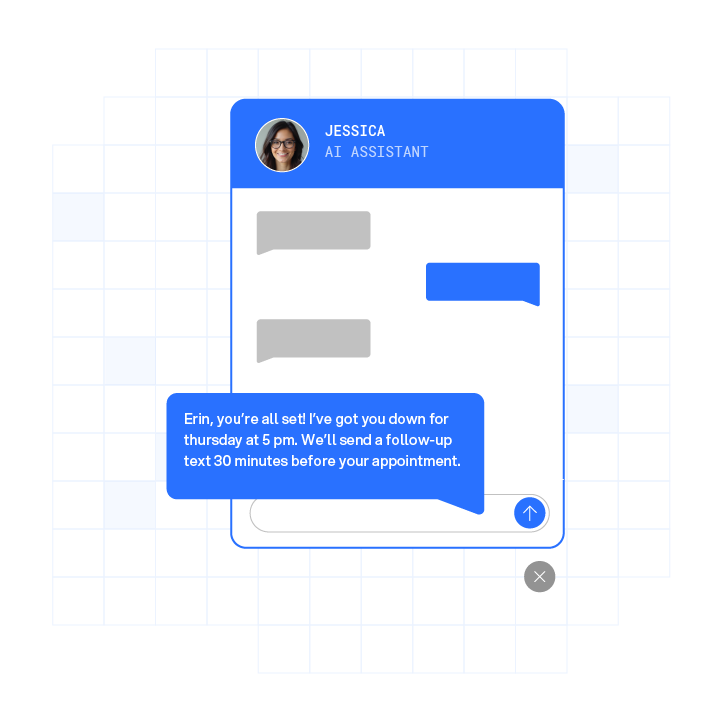
- Stateful memory across channels. A lead who texted at 9 a.m. should not have to re-explain themselves when the call comes at noon. Plura’s AI voice agent, AI SMS, AI RCS, and AI webchat share a Stateful Conversation Database, so every channel inherits full memory of every prior touchpoint. Ask vendors whether their channels share a single conversation record or operate in separate data stores.
- CRM handoff quality. CRM handoff determines whether reps can act quickly. A quality handoff package includes the full thread, classification history, evidence already cited, and a suggested next move. Plura’s Automation API provides a unified interface to 30+ third-party integrations, including CRM platforms such as HubSpot, Salesforce, and Zoho, with actions to create, update, and sync contacts, leads, accounts, and deals. Ask vendors to show a real handoff record from production, not a polished screenshot.
- Compliance and deliverability posture. Ask how the platform handles TCPA, DNC, and 10DLC frameworks, and whether consent logging is immutable and audit-ready. Also ask how the system protects domain reputation and manages quiet hours. See the compliance section below for specific questions to bring into those conversations.
- Pricing model and time-to-live. Clarify whether pricing is per-seat, per-conversation, or per-agent-build, and how quickly the system can go live for your use case. Ask for a fully loaded monthly cost that includes data, mailboxes, enrichment, and human review. See the pricing section below for model comparisons.
- Human escalation design. Escalation rules control risk and customer experience. AstroFabric recommends hardcoded escalation triggers for meeting acceptance, pricing or contract negotiation, multi-stakeholder threads, and any reply where sentiment reads as frustrated or hostile. Verify that the escalation package includes the full thread, not just a notification.
How Do AI SDRs Handle Replies to Follow-Up Emails?
Reply-handling mechanics separate sequence builders from reply-comprehending agents. A sequence builder fires on timers and reacts to the passage of time. A reply-comprehending agent reacts to meaning in each message.
The eight reply types introduced earlier each require a different resolution path. Deferrals and referrals are the two categories cheap systems consistently misclassify, and both are among the most valuable. A “not right now” often represents a future yes. A referral arrives with built-in endorsement from the original contact.
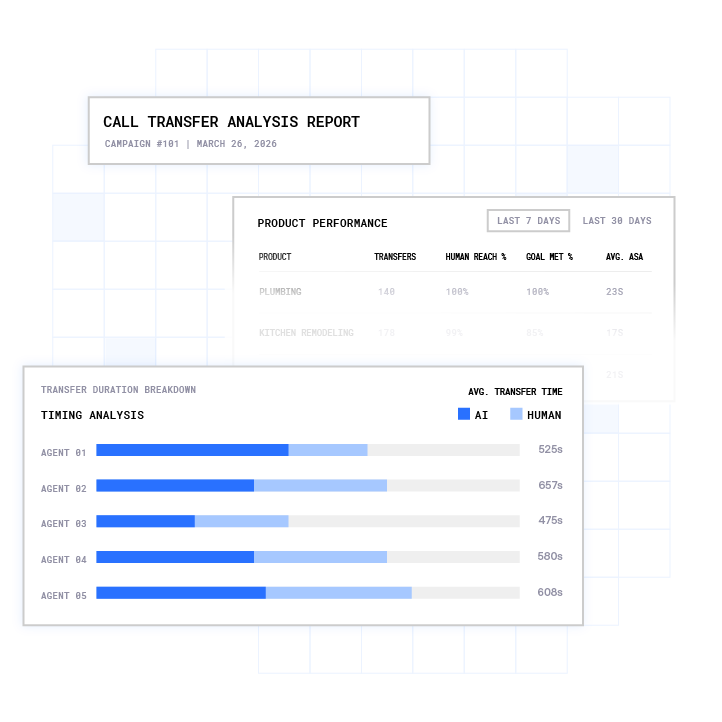
A quality handoff package includes the complete thread and the classification history showing how intent evolved. It also carries every piece of evidence already cited with sources, a suggested next move the rep can accept or override, and account research context. An inbound reply is hottest within a 60-minute window. Plura’s conversation intelligence layer surfaces classification history and intent signals so the human rep inherits full context at handoff, not just a meeting notification.
Contacting a lead within 5 minutes makes them up to 100x more likely to connect, and responding within 60 seconds can lift conversions by 391%.3 The reply window follows the same logic as initial outreach: the longer the gap between an inbound reply and the agent’s next move, the colder the thread gets.
Autonomous AI SDRs vs AI-Assisted Sequence Builders
Having seen how reply handling works in practice, the next step is to match system type to your motion. A sequence builder with AI fires on timers such as a day-three bump or a day-seven “floating this to the top of your inbox” and reacts to elapsed time. A reply-comprehending agent reacts to meaning in each interaction. The distinction is which category your follow-up motion actually needs.
Sequence builders are cheaper and faster to deploy. They work well for high-volume outbound where the goal is coverage and the reply rate is low enough that manual triage is manageable. Reply-comprehending agents cost more and require real conversation design. They fit motions where reply volume is high, the sales cycle is multi-touch, or the handoff to a human rep needs to carry context a rep can actually use.
Apollo’s 2026 AI SDR maturity model describes three stages: Stage 1 Assistive (AI drafts, reps approve every action), Stage 2 Co-pilot (AI builds sequences and executes follow-up with batch review), and Stage 3 Agentic (AI researches accounts, selects prospects, runs multi-channel sequences, and escalates only intent-showing leads). Most B2B GTM (go-to-market) teams sit at Stage 2 and are moving toward Stage 3. The evaluation question is whether the vendor you are reviewing is built for Stage 3 or is a Stage 1 tool marketed as agentic.
Plura’s no-code workflow builder supports memory-driven conversation pathways with BATNA-style negotiation guardrails (best alternative to a negotiated agreement, defining the floor and ceiling within which an AI agent can negotiate). Operators can build Stage 3 logic without engineering resources.
Can AI SDRs Do Voice Follow-Up Calls?
AI SDRs can handle voice follow-up for inbound answering, qualification, and warm transfer with production reliability. Voice is still developing for complex multi-turn negotiation at scale. The practical distinction is between calls where the script is known and calls where the conversation can go in many directions.
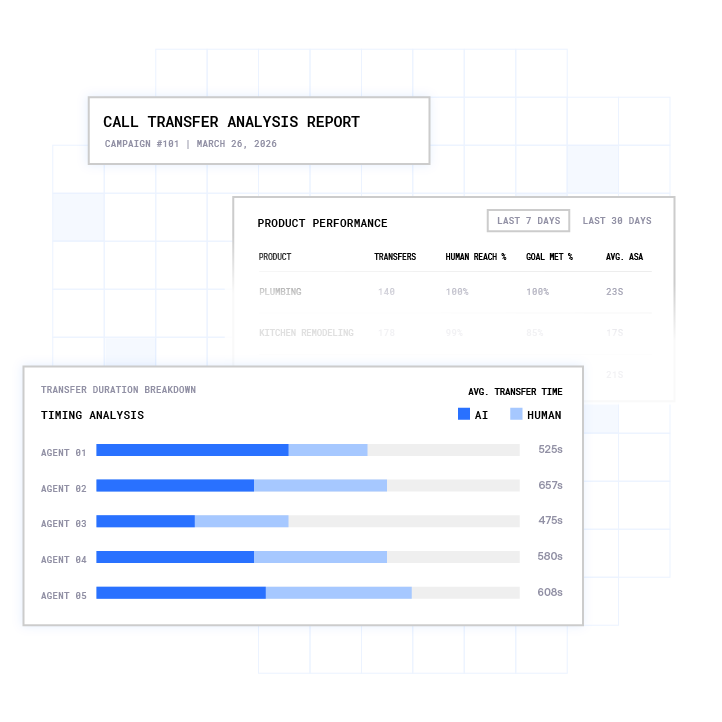
Plura’s AI voice agent runs on Plura’s own FCC-licensed audio bridging carrier rather than reselling a third-party CPaaS (Communications Platform as a Service, the API-only telecom layer that providers like Twilio sell to AI vendors that do not own a carrier). Branded caller ID is issued at the carrier level, and SHAKEN/STIR caller ID verification runs on every outbound call. 24/7 call answering and missed-call recovery operate as current capabilities, not roadmap items.
For high-volume outbound, Plura’s AI predictive dialer uses stateful conversion signals to decide who to call next, with multi-line dialing and branded caller ID on every dial. Industry data cited by Plura shows that 88% of outbound effort goes unanswered without a platform like Plura’s, driven by spam labels and call screening that carrier-level caller ID directly addresses.
Watch AI voice follow-up on Plura’s owned FCC-licensed carrier in a live demo.
How Much Does an AI SDR Cost?
Voice capability is one evaluation axis, and cost is another. Three pricing models dominate the AI SDR category, and each carries a different tradeoff structure.
- Per-seat. This model is predictable and scales with team size. Apollo’s published pricing starts at $49/user/month (annual billing) for its Basic plan. The model penalizes adding users and can create incentives to under-license.
- Per-conversation or per-contact. This model aligns cost with volume rather than headcount. AiSDR’s published tiers meter on AI-researched contacts: Solo at $250/month (200 contacts), Explore at $900/month (800 contacts), and Scale at $2,500/month (2,500 contacts). Because cost scales with outreach intensity and reply volume, this model is harder to forecast. 11x prices Alice per prospect per month, starting at $3,750/month (annual billing) for 2,000 new prospects. Published pricing changes over time, so verify current rates directly with each vendor before committing.
- Per-agent-build. This model combines an upfront build fee with a platform fee and aligns cost with customization depth. Plura’s agent build fee is $2,750 per agent, with plans and rates listed on the pricing page. Every annual contract includes a 90-day opt-out window.
The illustrative 15-agent ROI scenario from Plura’s ROI calculator shows one way to frame the economics. A 15-agent human operation at $20/hour with standard taxes, benefits, and commissions costs $60,000/month. Replacing that team with Plura at $15/hour, 100% talk utilization, and 6 Plura agents doing the work of 15 humans drops the monthly cost to $14,4003, which yields a 30-day ROI of $45,600 and a 12-month ROI of $547,200.
BeReach’s August 2026 pricing analysis notes that five cost lines recur outside the sticker price of almost every AI SDR: a data seat, mailboxes and domains, verification and enrichment credits, an AI provider key billed through a third vendor, and human review hours. Ask vendors to walk through the fully loaded monthly cost, not just the plan price.
Deliverability and Compliance Questions to Ask AI SDR Vendors
This section provides a starting framework for vendor conversations about deliverability and compliance. It does not provide legal advice. TCPA (Telephone Consumer Protection Act, 47 U.S.C. § 227), DNC (Do Not Call), and 10DLC (10-digit long code, the A2P SMS registration framework) each carry specific requirements.2 Readers should consult the relevant regulation or qualified counsel for guidance on their obligations.
The FCC classified AI-generated voices as “artificial or prerecorded voice” under the TCPA in its February 2024 Declaratory Ruling, so AI voice calls fall within the same TCPA framework as traditional prerecorded robocalls. The FCC’s revocation rule (47 CFR 64.1200(a)(10)-(a)(12)), with core provisions effective April 11, 2025, describes how senders must handle opt-out requests and sets a ten-business-day window for honoring them. Email deliverability carries its own compliance layer. M3AAWG’s August 2026 Sender Best Common Practices recommend SPF (Sender Policy Framework), DKIM (DomainKeys Identified Mail), and DMARC (Domain-based Message Authentication, Reporting and Conformance) on every sending domain, with a warm-up period of approximately six weeks for new domains.

Questions to bring into vendor conversations:
- How is domain reputation protected at volume, and what warm-up does the platform run? Google’s bulk sender guidelines set a safe spam complaint threshold of 0.08% and enforce permanent rejections (550 error) for non-compliant senders as of November 2025.
- How does the platform scrub against federal and state DNC registries, and when does that scrub happen relative to dial?
- How are consent records logged, and are they immutable and audit-ready?
- How are quiet hours enforced across time zones? The TCPA and FCC implementing regulations generally set calling hours at 8 a.m. to 9 p.m. local time; readers should consult the regulation for specifics.
- What happens to a contact who revokes consent mid-sequence?
Plura’s compliance engine supports compliance with TCPA-related workflows and DNC workflows through real-time scrubbing before every dial, immutable consent logging, and automated quiet-hours enforcement through time-zone detection. The platform also supports SOC 2, HIPAA, ISO certification, GDPR, and SHAKEN/STIR caller ID verification.1 Plura provides the infrastructure and controls, and customers remain responsible for their own certifications, regulatory obligations, and the claims they make to their end users. The platform’s plans include 50+ state rule sets enforced on every outbound contact.
Will AI Replace SDRs?
AI replaces the repeatable parts of sales development such as sourcing, research, first touches, early reply handling, and booking. Apollo’s 2026 guide describes the SDR role as unbundling rather than disappearing. Humans retain ICP strategy, objection handling that requires product depth, and high-context conversations. Gartner projects that by 2030, 75% of B2B buyers will prefer sales experiences that prioritize human interaction over AI.5 That projection points to a division of labor where AI runs repeatable workflows and humans run relationships.
The practical outcome for a 20-200 seat operation is that AI handles the volume and humans handle the judgment calls. A well-designed escalation path connects the two so reps step into conversations with full context instead of starting from zero.
FAQ
How Does AI SDR Follow-Up Differ from Traditional Sales Sequencing?
Traditional sales sequencing fires touches on a timer such as day three, day seven, or day fourteen, regardless of what the lead said or did. AI SDR follow-up, at its most capable, reads the reply and changes the next move based on intent. A pricing question gets a different response than three days of silence, which gets a different response than “talk to my colleague Dana.” The practical difference shows up in conversion. A sequence builder produces consistent volume, while a reply-comprehending agent produces qualified pipeline. Most platforms marketed as AI SDRs are sequence builders with AI-generated copy. A smaller set classify intent and branch on meaning, so the key question is which one your motion actually needs.
Can AI SDRs Handle Voice Follow-Up?
AI SDRs can handle voice follow-up with specific strengths and limits. Voice is production-ready for inbound answering, qualification, and warm transfer to a human rep. It is still maturing for complex multi-turn negotiation where the conversation can move in many directions. The capability gap between vendors is significant. Many AI voice tools route calls through a third-party CPaaS and cannot issue branded caller ID at the carrier level, which affects pickup rates. Plura runs voice on its own FCC-licensed audio bridging carrier, issues branded caller ID directly, and runs SHAKEN/STIR authentication on every outbound call. For high-volume outbound, Plura’s AI predictive dialer uses stateful conversion signals to prioritize contacts most likely to connect.
How Much Does an AI SDR Cost?
AI SDR pricing typically follows three models: per-seat, per-conversation, and per-agent-build. Per-seat models like Apollo start around $49/user/month. Per-conversation models such as AiSDR and per-prospect models such as 11x scale with volume. Per-agent-build models like Plura combine a build fee with a platform fee. The sticker price is rarely the full cost, because mailboxes, domains, data enrichment, warm-up, and human review hours often add to the total. Ask vendors for a fully loaded monthly cost and verify current rates directly. Plura’s ROI calculator lets you model the cost comparison against a human agent team using your own inputs.
What Happens When the AI Does Not Know Something or Goes Off-Script?
A well-designed AI SDR uses explicit guardrails at every conversation node. When a lead’s response falls outside the defined paths, such as an unfamiliar request, a sensitive disclosure, or a high-stakes objection, the agent escalates. Escalation can mean warm-transferring the call to a human rep, flagging the conversation in a unified inbox, or routing to a designated escalation queue. Plura’s workflows include BATNA-style negotiation guardrails that define the floor and ceiling within which the AI can negotiate, and hard escalation triggers for pricing discussions, multi-stakeholder threads, and hostile sentiment. Sensitive data such as protected health information, personally identifiable information, and payment data is redacted at the field level.
What Does CRM Handoff Look Like?
A quality CRM handoff includes the complete conversation thread, the classification history showing how intent evolved across every touch, evidence already cited in the conversation, a suggested next move the rep can accept or override, and account research context. A meeting notification without context functions as a calendar event rather than a true handoff. Plura’s Automation API integrates with Salesforce, Zoho CRM, and HubSpot to sync AI-powered conversations to managed contacts and pipelines. It supports actions such as creating or updating contacts, notes, and tasks, and accepting an optional conversation transcript and call data for field resolution, so the human rep inherits everything the AI knew at the moment of escalation. Ask vendors to show a real handoff record from a production account, not a demo environment.
Conclusion: How to Tell Whether AI Follow-Up Will Convert
Most AI SDR evaluations stop at sequence mechanics such as channel count, touch count, and first-touch speed. The factors that actually determine whether AI follow-up converts sit deeper in the stack: reply comprehension, stateful cross-channel memory, CRM handoff quality, compliance posture, and escalation design.
Plura AI is built for that second layer of evaluation. The platform delivers reply-comprehending agents on an owned FCC-licensed carrier, with stateful memory across voice, SMS, RCS, and webchat, and compliance controls enforced inside the platform before every dial. Every annual contract includes a 90-day opt-out window.
Walk through reply comprehension and stateful memory with a live Plura demo.
Compare Plura’s plans and rates side by side. Run your numbers through the ROI calculator to check your economics in real time.
1 Plura AI maintains SOC 2, HIPAA, ISO, and GDPR posture as part of its platform infrastructure. References to compliance frameworks in this article describe Plura’s platform capabilities and do not constitute a guarantee that any customer using Plura will themselves be compliant with applicable laws or standards. Customers remain solely responsible for their own regulatory obligations, certifications, consent management, recordkeeping, and the claims they make to their own end users. Consult qualified legal counsel for guidance specific to your use case.
2 This article describes regulatory frameworks at a general level and does not constitute legal advice. Laws and regulations vary by jurisdiction, change over time, and apply differently depending on facts and circumstances. Readers should consult qualified legal counsel before making compliance decisions.
3 Performance figures, customer outcomes, and industry statistics referenced in this article are drawn from cited third-party sources or Plura customer case studies. Individual results vary based on implementation, use case, industry, audience, and execution. Past or aggregate performance is not a guarantee of future results.
4 References to third-party products, services, companies, or research are made for informational and comparative purposes only. Plura AI is not affiliated with, endorsed by, or sponsored by any third party named in this article unless explicitly stated. Trademarks and product names referenced remain the property of their respective owners.
5 This article contains forward-looking statements regarding industry trends, technology adoption, and future capabilities. These statements reflect current expectations and are subject to change. Plura AI undertakes no obligation to update forward-looking statements except as required.
This article is provided for informational purposes only and reflects Plura AI’s understanding at the time of publication. Product capabilities, integrations, and specifications are subject to change. For the most current information, visit plura.ai.
This article was produced with the assistance of AI tools and reviewed by Plura AI prior to publication.