

Written by: Matt Beucler, CEO, Plura AI
Key Takeaways on AI SMS Performance
- AI SMS programs deliver higher reply and conversion rates than generic SMS, with top-quartile reply rates above 56%.3
- Speed-to-lead under 5 minutes, and ideally within seconds, is the strongest driver of inbound SMS conversion, with up to 100x higher connection rates in cited studies.3
- Abandoned-cart recovery is the highest-converting SMS use case, and AI personalization with real-time triggers can lift results well above the 3.3% baseline.
- Stateful conversation memory across channels reduces friction and improves reply rates and purchase conversion by maintaining context across every touchpoint.
- Plura AI delivers these gains through rapid response, real-time enrichment, and compliance infrastructure; see how Plura AI can transform your SMS performance.
Benchmarks for Strong AI SMS Conversion Rates
For high-volume operators, “good” conversion depends on the campaign type. AudienceTap February 2026 benchmarks from 150,000+ ecommerce brands and 321 million SMS messages show traditional link-based SMS averaging about 0.12–0.13% conversion, which is roughly 46 times lower than text-to-buy flows.4
These benchmarks reveal three distinct performance tiers for SMS conversion:
- Traditional link-based SMS averaging about 0.12–0.13% conversion.
- Automated behavior-triggered SMS that can reach higher rates with careful tuning.
- Text-to-buy SMS that can achieve the highest rates with strong execution.
AI-orchestrated SMS programs that use real-time lead enrichment, behavioral triggers, and stateful conversation memory can reach the upper bands of these ranges. A solar company using Plura’s AI Lead Intelligence increased conversion rates from 6% to 18% with the same leads and offer, a 3x lift achieved without changing media spend.3
Results for high-volume operators running AI SMS depend on response time, messaging relevance, and compliance posture. Understanding these factors benefits from a direct comparison between AI-driven and traditional SMS approaches.
AI SMS Compared With Traditional SMS Conversion
Industry analysis shows that automated SMS flows can achieve higher conversion rates than one-off campaign sends. The primary driver is timing and relevance, not message volume. Event-triggered flows like cart abandonment outperform broadcast sends because they reach contacts at moments of demonstrated intent.
Manual processes cap results at two points. Human SDR (sales development representative) queues introduce delays that push response times past the conversion-decay cliff. Lack of cross-channel memory forces every message to treat the contact as a stranger, regardless of prior interactions. Plura’s AI SMS addresses both constraints. The AI replies within seconds and reads from a Stateful Conversation Database that holds every prior voice, SMS, RCS (Rich Communication Services), and webchat interaction keyed to the same contact.
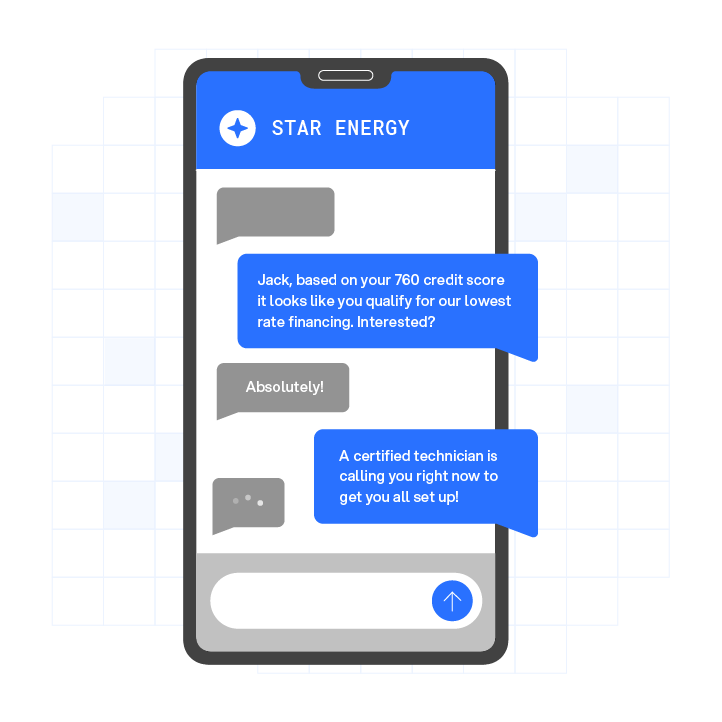
The impact of faster response times compounds quickly at scale. Calculate your potential conversion lift based on your current lead volume and response times.
Reply-Rate Benchmarks Versus Purchase Conversion
Reply rate and purchase conversion measure different stages of the funnel, so treating them as interchangeable targets creates confusion.
TextUs’s 2026 SMS Engagement + Benchmark Report, based on a March 2026 survey of 763 revenue professionals, found an average 1:1 SMS response rate of 34.7% across industries, with top-quartile programs exceeding 56%.4 Teams using AI with their SMS platform reported that SMS outperforms email on response rates at an 84% clip, versus 57.5% for teams not using AI.
Verse’s Texting Insights Report 2026, analyzing over 10 million text conversations, found a 50% average SMS reply rate, compared to a 25% average call-only answer rate and 1.4% average email reply rate.4
Purchase conversion is a narrower funnel. Industry reports show that automated messages such as back-in-stock and abandoned-cart reminders can achieve higher conversion rates than broadcast campaigns.
Plura’s Stateful Conversation Database improves both reply and purchase metrics. A contact who replied to an SMS at 9 a.m. is not re-introduced when the AI follows up by voice at noon. The AI already knows what was said, what was offered, and what objection was raised. That continuity reduces friction at every stage of the funnel and supports higher reply rates and downstream purchase conversion. Among all SMS use cases, abandoned-cart recovery illustrates these principles most clearly.
AI SMS Abandoned-Cart Recovery Benchmarks
Abandoned-cart SMS is the highest-converting use case in this category, and performance ranges widely based on trigger timing and personalization depth.
CartBoss production data from February 2024 through January 2025, covering 1,999,408 delivered messages across 5,203 active organizations, shows a 3.3% end-to-end recovery rate on delivered texts, with a 26.8% click-through rate (CTR) and 12.3% click-to-order conversion.
Attentive reports cart-abandonment reminder messages achieve a 19% average conversion rate and 33% average CTR. The performance gap between the 3.3% CartBoss baseline and higher recovery rates is largely explained by trigger timing and AI-driven content personalization. Cart abandonment SMS messages perform strongly when sent soon after abandonment with behavior-aware content, while delayed or generic sends often fall to the low single digits.
Plura’s real-time triggering sends the first SMS within seconds of the abandonment event, not hours later. The AI reads the contact’s prior purchase history, open conversations, and enrichment data from more than 30 sources before composing the message. That behavioral personalization supports recovery rates at the upper end of the documented range.
Personalization and Predictive Targeting in AI SMS
Industry data on personalization impact varies in methodology and scope, but several sources highlight clear gains from behavior-based messaging.
Apten’s guidance on personalized SMS marketing describes how behavioral segmentation can lift CTR versus same-segment email. McKinsey’s work on generative AI in consumer marketing outlines how more relevant, context-aware outreach can improve performance across channels.
Omnisend’s Ecommerce Marketing Reports indicate that automated SMS can generate higher revenue per send than one-off campaign messages, reinforcing the value of event triggers and tailored content.
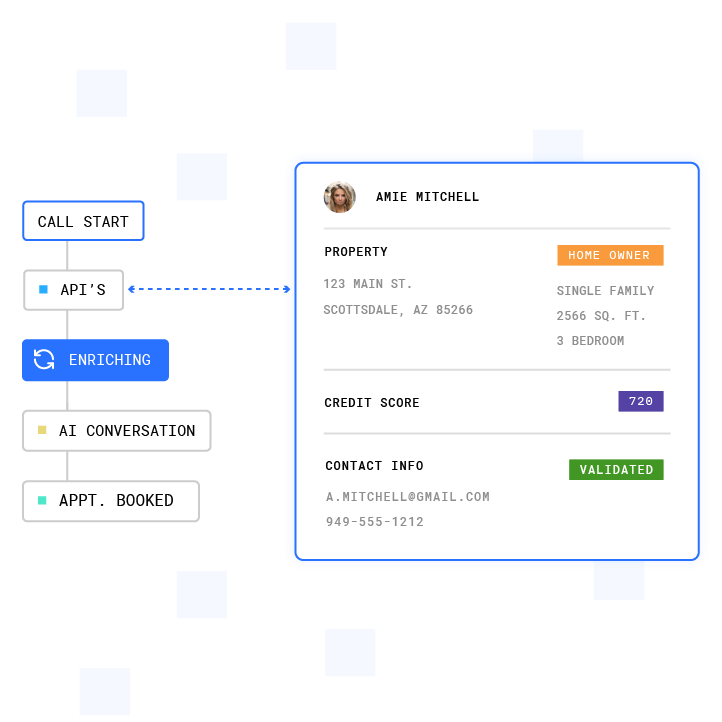
Plura’s AI Lead Intelligence enriches every contact with more than 30 data sources in real time during the conversation, across every channel. The AI SMS agent does not wait for a batch enrichment job. It reads property data, intent signals, business firmographics, and prior conversation history before the first character of the message is sent. That depth of context enables personalization that goes far beyond first-name substitution.
Plura’s Conversation Intelligence layer then analyzes every interaction to surface which message variants, objection responses, and timing patterns produce the highest conversion. Those findings feed back into workflow tuning on a weekly cadence.
Speed-to-Lead Impact for Inbound SMS
Speed to lead is the single highest-leverage variable in SMS conversion for inbound programs. A Harvard Business Review study found that companies responding within five minutes are 100 times more likely to connect with a prospect than those waiting 30 minutes.
Verse’s 2026 Texting Insights Report found an average 50% SMS reply rate across millions of lead interactions.
An MIT Kellogg School of Management study by Dr. James Oldroyd tracking 15,000 SaaS leads over 18 months found that calling within 5 minutes makes a lead 100 times more likely to be reached and 21 times more likely to be qualified than calling at 30 minutes. Only 7–23% of businesses respond within 5 minutes, and the average response time is around 42 hours.
Plura’s AI SMS agents respond in under 5 seconds, 24/7, across every inbound channel simultaneously. There is no SDR queue, no time-zone gap, and no human ramp time. For a program generating 1,000 inbound leads per month, moving from a 30-minute average response to near-instant engagement creates a measurable conversion lift. The Plura ROI calculator quantifies how much that speed improvement is worth in pipeline terms.
Book a live demo with Plura to see real-time speed to lead in action across SMS, voice, and webchat.
Compliance Foundations for Sustainable SMS Performance
Conversion rate benchmarks only matter if the program stays on air. TCPA (Telephone Consumer Protection Act, 47 U.S.C. § 227) issues, DNC (Do Not Call) list failures, and carrier shutdowns create legal exposure and can remove the list, the sender reputation, and the program at once.2
Plura’s Compliance Engine functions as a core layer of the platform. Every outbound SMS contact is checked against federal and state DNC registries in real time before send. Consent records are timestamped, immutable, and audit-ready. Quiet-hours rules apply automatically through time-zone detection, aligning campaigns with relevant messaging-window restrictions. The compliance dashboard exports audit-ready reports in one click.
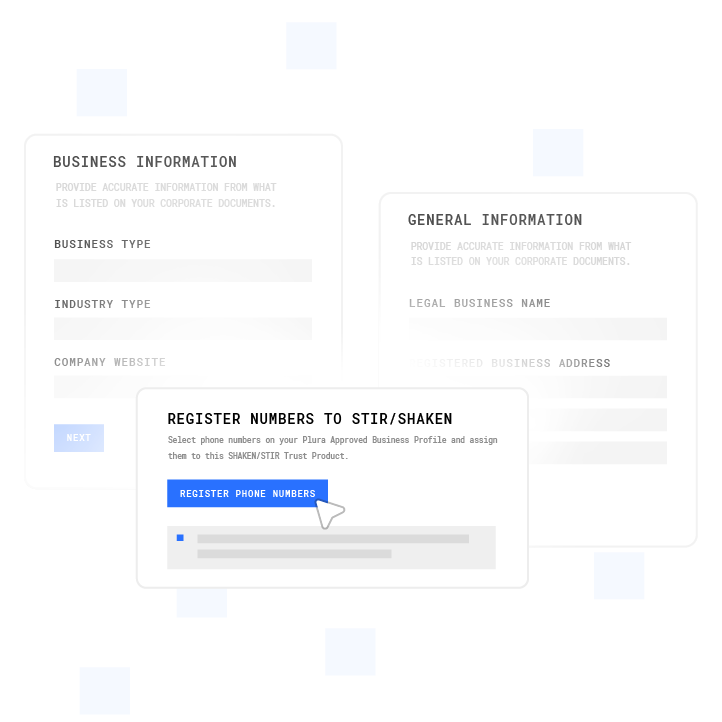
Plura supports compliance with TCPA, DNC, HIPAA, SOC 2, and more than 50 state rule sets.1 Customers remain responsible for their own regulatory obligations and the claims they make to their end users, while Plura provides the supporting infrastructure and enforcement tools.2 Operators running high-volume SMS programs should consult qualified counsel on their specific compliance posture.
The practical effect on conversion rates is material. Programs that suppress non-consented contacts, enforce quiet hours, and maintain clean sender reputation deliver to inboxes at higher rates, which is the prerequisite for any conversion benchmark to apply.
How Operators Deploy Plura AI SMS
Three operator patterns account for most high-conversion AI SMS deployments on Plura.
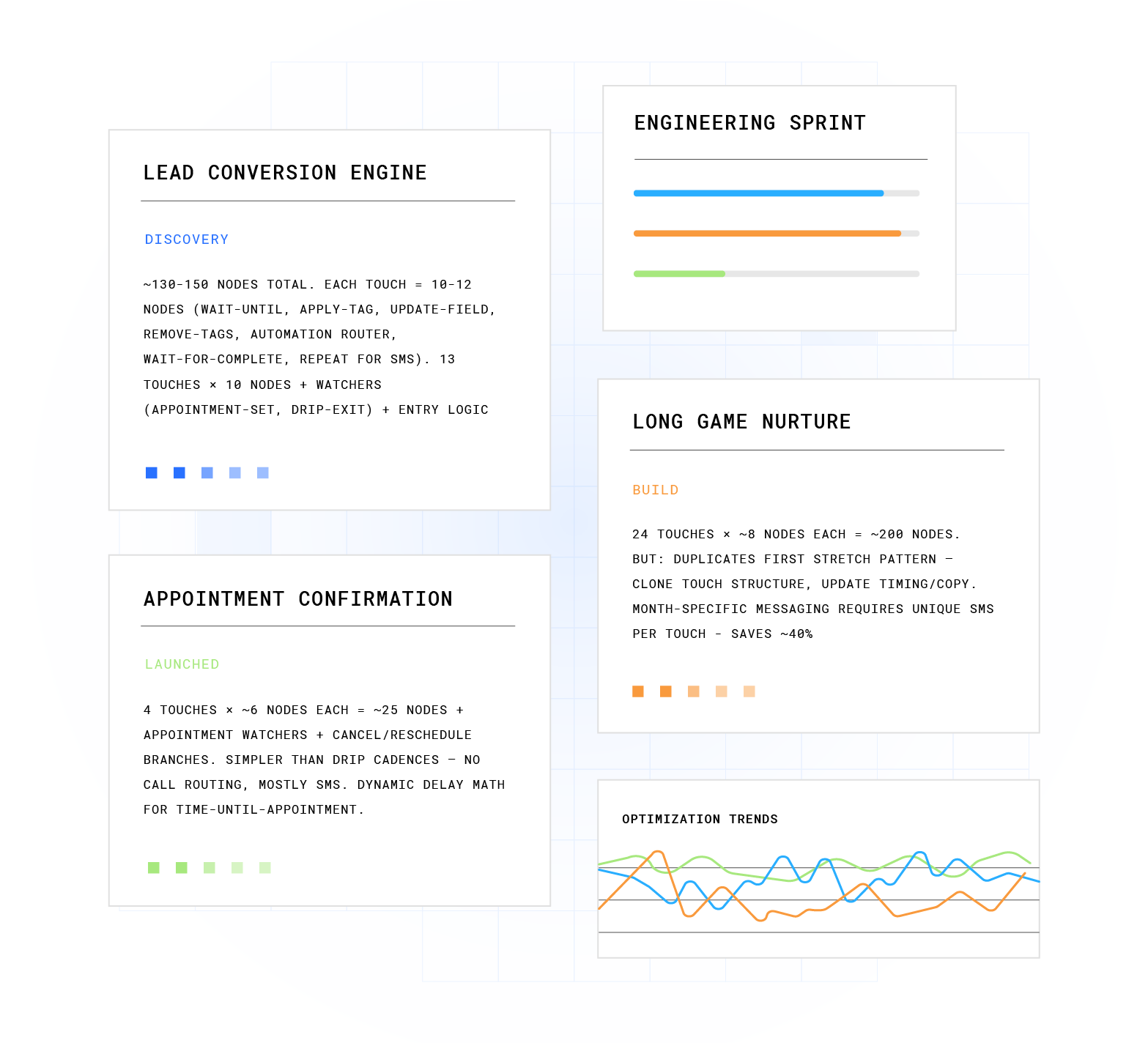
Lead generation and live transfer. A new inbound lead submits a form. Plura’s AI SMS agent replies within seconds, enriches the contact from more than 30 data sources, qualifies the lead through a conversational flow, and live-transfers a warm buyer to a human rep. The rep receives the full conversation transcript and qualification status before picking up. This pattern captures the conversion lift associated with rapid response.
The same speed-to-lead principle applies to transactional triggers. Abandoned-cart recovery follows a similar flow. A shopper abandons a cart, and Plura sends a personalized SMS within seconds, referencing the specific product and the contact’s prior purchase history. The AI holds a two-way conversation, answers objections, and routes the contact to checkout or to a human agent for high-value orders. This pattern targets the higher recovery rates documented by industry sources.
Re-engagement of cold leads focuses on dormant demand. A CRM may contain hundreds of leads that went dark after initial contact. Plura’s AI SMS agent sends personalized re-engagement messages referencing the original inquiry, prior conversation context, and a clear next step. Solar and home services companies using AI agents with property data and home valuations achieved 2x to 3x improvements in appointment set rates from the same lead lists.
All three patterns run through Plura’s no-code workflow builder and share the same Stateful Conversation Database. A contact who received an SMS re-engagement message is recognized immediately when they call inbound, without re-introduction.
Explore Plura pricing options to align these patterns with your SMS volume.
Frequently Asked Questions
Is 2.5% a good AI SMS conversion rate?
For a behavior-triggered automated SMS flow, 2.5% sits at the lower end of the expected range. AI-orchestrated programs with real-time personalization, rapid response, and stateful memory often reach higher rates on targeted flows like abandoned-cart recovery or warm lead re-engagement. When a program holds at 2.5%, common constraints include trigger delay, generic message content, or list quality issues rather than a hard ceiling on what AI SMS can deliver.
How does speed-to-lead affect SMS reply rate?
The relationship between response time and SMS reply rate is direct and steep. Verse’s 2026 Texting Insights Report found an average 50% SMS reply rate across millions of lead interactions. For SMS, the decay curve is faster than for voice because texting creates an expectation of real-time conversation. A reply that arrives 45 minutes after a form fill lands in a different mental context than one that arrives in 30 seconds. Plura’s AI SMS agents respond within seconds, which keeps the contact in the active decision window instead of leaving room for a competitor.
What is a realistic abandoned-cart SMS recovery rate for a high-volume ecommerce operator?
The realistic range spans from the 3.3% baseline documented earlier into the upper teens. Trigger timing and behavioral personalization depth explain most of that gap. Programs that fire quickly after abandonment with product-specific, history-aware content sit toward the higher end of the range, while delayed or generic discount blasts tend to cluster near the baseline.
Does stateful conversation memory actually improve SMS conversion rates?
Stateful memory improves conversion by reducing friction and repetition. TextUs’s 2026 survey found that teams using SMS integrated with a CRM saw conversation depth rise from 8.9% to 45.4% compared to teams using SMS in isolation. When a contact does not have to re-explain their situation on every touchpoint, the conversation moves faster toward a decision. Plura’s Stateful Conversation Database keys every interaction to the same contact token across voice, SMS, RCS, and webchat. An AI SMS agent that texted a lead at 9 a.m. about a specific product already knows that context when the same contact calls at noon. That continuity reduces friction, lowers opt-outs from irrelevant messages, and increases the likelihood that the contact reaches a purchase decision within the same session.
What compliance infrastructure does a high-volume SMS program need to sustain conversion rates long-term?
The minimum infrastructure for a sustainable high-volume SMS program typically includes real-time DNC scrubbing against federal and state registries before every send, TCPA consent records that are timestamped and audit-ready, quiet-hours enforcement through time-zone detection, and 10DLC (10-digit long code) A2P (application-to-person) messaging registration for carrier alignment. Programs that skip any of these layers face carrier filtering, list suppression, or legal exposure that can remove the program entirely. Plura’s Compliance Engine supports all of these layers as a first-class platform feature. Operators should consult qualified legal counsel on their specific obligations under TCPA, applicable state laws, and any industry-specific regulations that apply to their vertical.
Conclusion: Moving From Generic SMS to AI-Orchestrated Performance
The gap between generic SMS and AI-orchestrated SMS is substantial. Industry reports show wide variation in conversion rates across different SMS approaches. AI-personalized programs with real-time enrichment, rapid speed to lead, and stateful cross-channel memory can materially improve outcomes, depending on the use case. These outcomes draw support from reports covering hundreds of thousands of brands and hundreds of millions of messages.
Three variables consistently move a program from the low end to the high end of the range. Trigger timing keeps outreach within 5 minutes and ideally within 60 seconds of the signal. Behavioral personalization combines name, activity, and history instead of relying on name-only templates. Conversation continuity ensures the AI remembers what was said before on every channel so each touch builds on the last.
Plura AI delivers all three as a single platform. Plura provides AI SMS that responds in under 5 seconds, Lead Intelligence that enriches every contact from more than 30 sources in real time, a Stateful Conversation Database that holds context across voice, SMS, RCS, and webchat, and a Compliance Engine that supports TCPA, DNC, and more than 50 state rules on every outbound contact. The math behind the model is transparent and verifiable. See your potential ROI in real time, or explore pricing options to find the right tier for your volume.
1 Plura AI maintains SOC 2, HIPAA, ISO, and GDPR posture as part of its platform infrastructure. References to compliance frameworks in this article describe Plura’s platform capabilities and do not constitute a guarantee that any customer using Plura will themselves be compliant with applicable laws or standards. Customers remain solely responsible for their own regulatory obligations, certifications, consent management, recordkeeping, and the claims they make to their own end users. Consult qualified legal counsel for guidance specific to your use case.
2 This article describes regulatory frameworks at a general level and does not constitute legal advice. Laws and regulations vary by jurisdiction, change over time, and apply differently depending on facts and circumstances. Readers should consult qualified legal counsel before making compliance decisions.
3 Performance figures, customer outcomes, and industry statistics referenced in this article are drawn from cited third-party sources or Plura customer case studies. Individual results vary based on implementation, use case, industry, audience, and execution. Past or aggregate performance is not a guarantee of future results.
4 References to third-party products, services, companies, or research are made for informational and comparative purposes only. Plura AI is not affiliated with, endorsed by, or sponsored by any third party named in this article unless explicitly stated. Trademarks and product names referenced remain the property of their respective owners.
This article is provided for informational purposes only and reflects Plura AI’s understanding at the time of publication. Product capabilities, integrations, and specifications are subject to change. For the most current information, visit plura.ai.
This article was produced with the assistance of AI tools and reviewed by Plura AI prior to publication.