
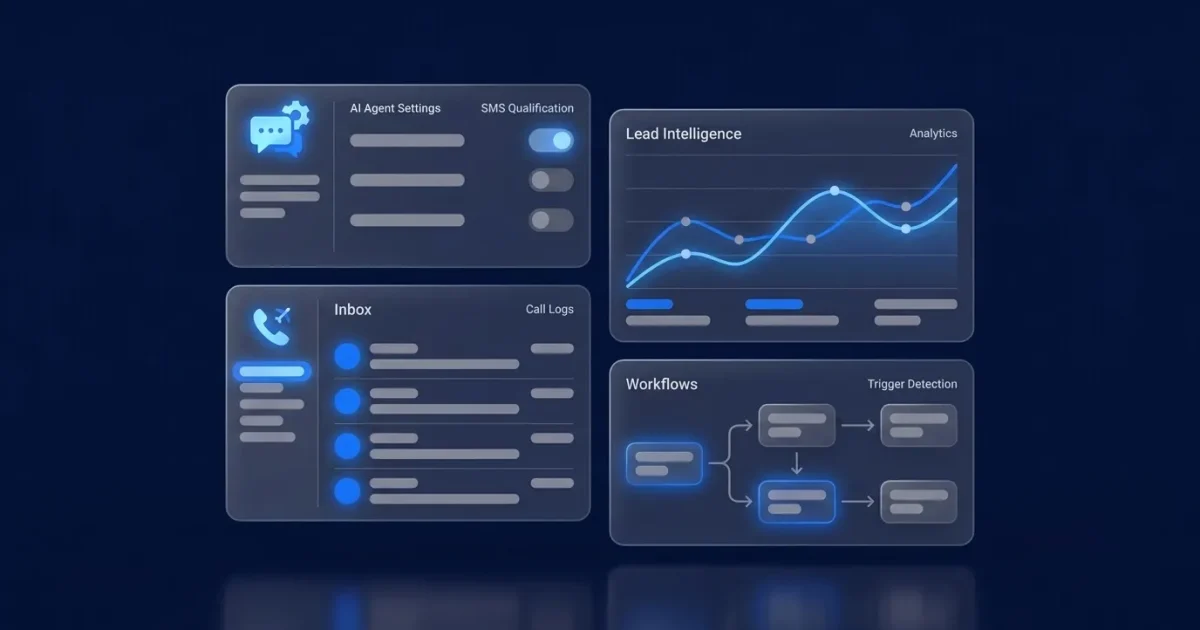
Written by: Matt Beucler, CEO, Plura AI
Key Takeaways for High-Volume Lead Teams
- AI SMS speed to lead automation starts an intelligent text conversation within seconds of a prospect submitting a form, clicking an ad, or calling a tracked number.
- Responding within 60 seconds lifts conversions by 391% and makes leads up to 100 times more likely to connect than waiting 30 minutes.1
- Plura AI’s five-step workflow covers real-time trigger detection, lead enrichment, compliant SMS qualification, live human handoff with full context, and post-call follow-up through a shared Stateful Conversation Database.
- Unlike Twilio-wrapper solutions, Plura owns its FCC-licensed carrier stack, enforces real-time DNC compliance before every send, and preserves conversation memory across SMS and voice channels.4
- Unlock the full value of AI SMS speed to lead automation with Plura AI by booking a live demo.
Why 60-Second AI SMS Speed to Lead Changes Your Pipeline
The industry average first-contact time is 47 hours, and that delay is where revenue disappears. Benchmarks cited by Plura show a measurable conversion advantage for sub-60-second response, and contacting a lead within five minutes makes them up to 100 times more likely to connect than waiting 30 minutes.
Aggregated 2026 studies put median B2B first-response time at roughly 42 hours, with only 7%–23% replying within five minutes, while data across 939 companies shows a 47-hour average. Leads contacted within five minutes convert at approximately a 21% lead-to-opportunity rate versus 2.3% when contact occurs after 24 hours.1 At 47 hours, most operators are not competing for the lead at all.
For high-volume operators running paid media, franchise networks, or agency campaigns, that math compounds fast. Every hour of delay removes a percentage of pipeline that never reaches a sales conversation. Plura’s five-step workflow closes this gap by automating the entire lead response cycle from trigger to post-call follow-up.
Step 1: Trigger Detection Across Every Lead Source
The workflow starts the moment a lead signal fires. On Plura, trigger detection connects to your CRM, landing page, ad platform, or inbound call tracking number. When a form submits, a call comes in, or a webhook fires, the platform timestamps the event and queues the outbound SMS within seconds.
Configuration decisions at this step determine how aggressively the system responds to incoming leads. Operators first choose which lead sources to monitor, then decide whether to apply a deduplication window to prevent double-contact on the same number. The next decision covers timing, such as routing after-hours triggers to a queued morning send or triggering an immediate AI response.
Operators running 24/7 programs typically choose immediate response across all hours to protect speed to lead. Those with regulated quiet-hour obligations configure time-zone-aware send windows, and Plura enforces those windows automatically using carrier-level time-zone data rather than area code assumptions.
Step 2: Real-Time Lead Enrichment Before First Contact
Before the first message sends, Plura’s lead qualification layer pings 30-plus data sources in real time, including IP data, email validation, contact records, intent signals, and business firmographics. This enrichment runs during the trigger window, not in a downstream batch job, so the AI agent enters the conversation already knowing who it is talking to.
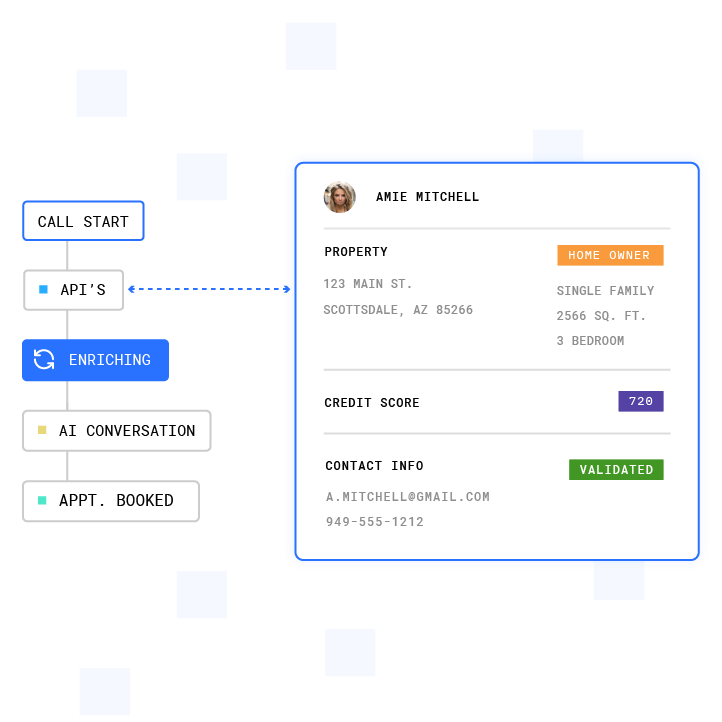
Pre-conversation lead enrichment can increase conversion rates by 30% or more, according to Plura’s AI intelligence guide. The first SMS becomes personalized to the lead’s profile rather than generic, and the qualification gate that follows uses real data instead of blind questions.
Operators configure which enrichment sources to activate, what data fields to surface in the conversation, and how enrichment results route the lead into different workflow branches. A lead flagged as a high-intent business buyer can receive a different qualification path than a cold re-engagement contact.
Step 3: SMS Qualification With Compliance Support
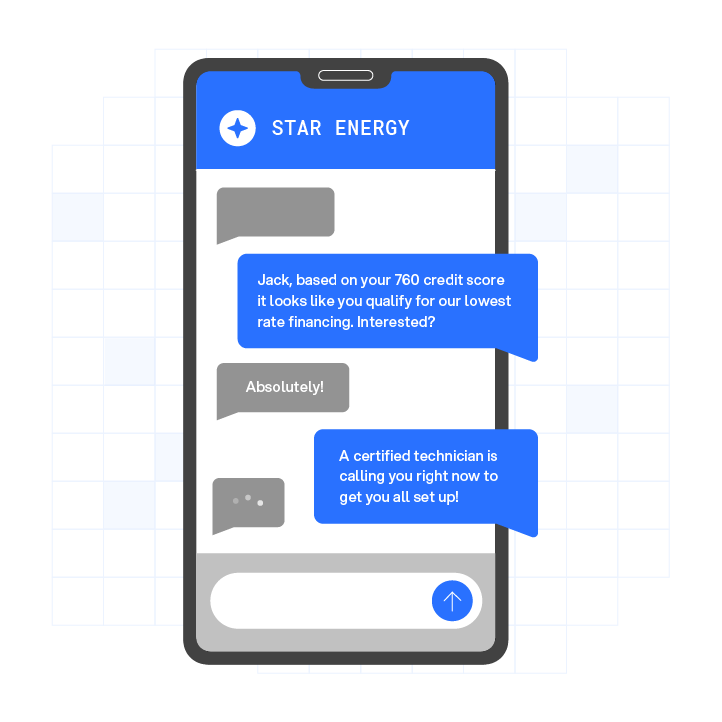
This step is where most wrapper-based tools break down. Plura’s AI SMS qualification layer runs on 10DLC-registered numbers with TCPA compliance support, DNC compliance enforcement, and SHAKEN/STIR caller ID verification on every outbound contact.3 The platform supports SOC 2, HIPAA, ISO certification, and GDPR frameworks, and it applies quiet-hours rules automatically through time-zone detection.2
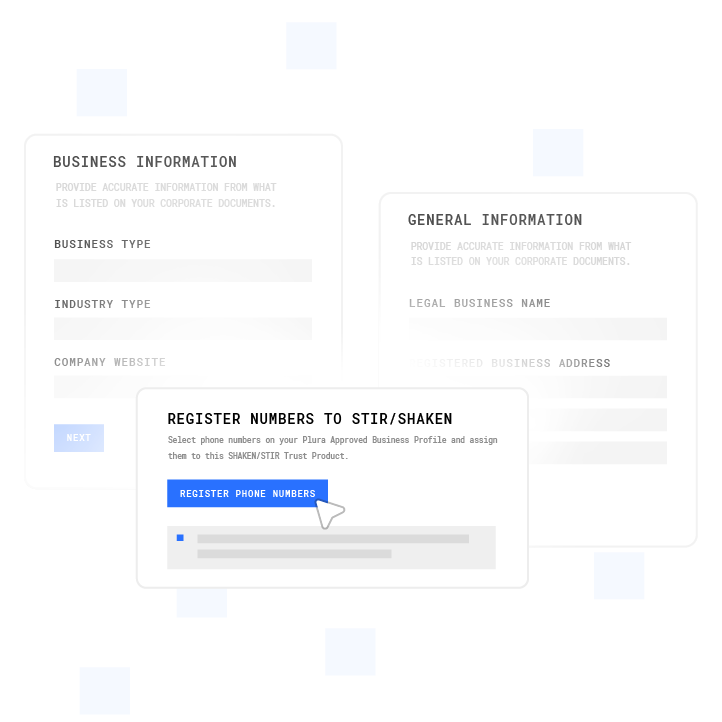
Every outbound contact is checked against federal and state DNC registries before the message sends. Consent records are timestamped and stored in an immutable log. Opt-out keywords are recognized and suppressed in real time. Operators configure the qualification script inside Plura’s no-code workflow builder, setting the questions the AI asks, the branching logic for each response, and the escalation gate that triggers a live transfer.
TCPA violations carry statutory damages of $500 to $1,500 per violation, with each non-compliant text counting separately. Operators should consult qualified counsel on their specific obligations. Plura supports compliance infrastructure, and downstream compliance posture remains the operator’s responsibility.
See how Plura’s qualification workflow handles TCPA and DNC checks in real time by watching a live demo.
Step 4: Live Human Handoff With Full Conversation Context
When the qualification gate triggers, Plura executes a warm live transfer to a U.S. agent. The receiving agent sees the full conversation thread, the enrichment data, the qualification status, and any sensitive-data redactions, all pulled from the same Stateful Conversation Database the AI used during the SMS exchange.
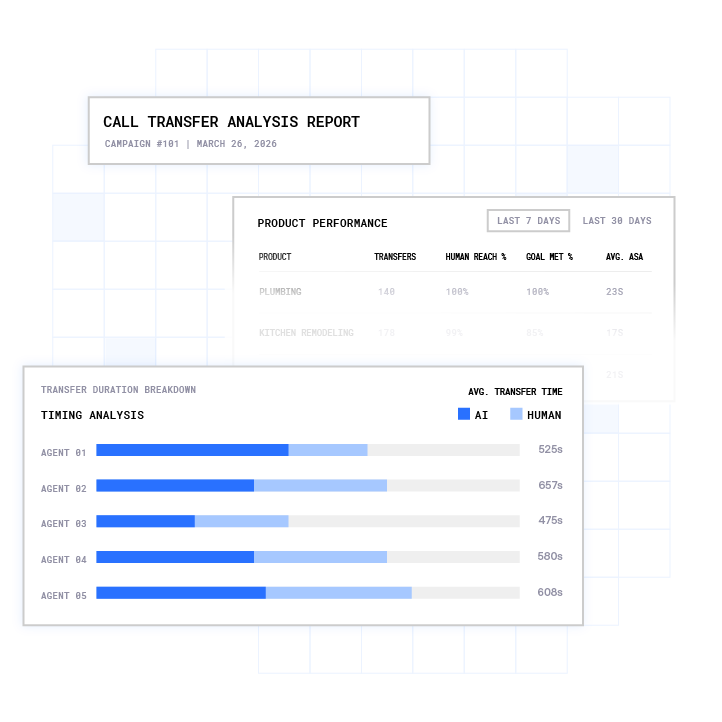
Metrigy’s CX Optimization 2025-26 Consumer Views study found that 46% of consumers will use AI agents in select circumstances. When context resets at handoff, that willingness collapses. Plura’s architecture prevents the reset by design, because every interaction is keyed to a customer token so the human agent picks up exactly where the AI left off.
Configuration decisions at this step include which agent queues receive transfers, what context summary format the agent sees, and whether the AI stays on the line to brief the agent before connecting the caller. Operators with complex intake flows often configure a brief AI-to-agent summary before the three-way bridge drops.
Step 5: Post-Call Follow-Up From the Same Stateful Database
After the call closes, the workflow continues automatically. Plura writes the call outcome back to the Stateful Conversation Database and triggers post-call SMS follow-up such as confirmation messages, document links via RCS, appointment reminders, or re-engagement sequences for leads that did not convert on the first touch.
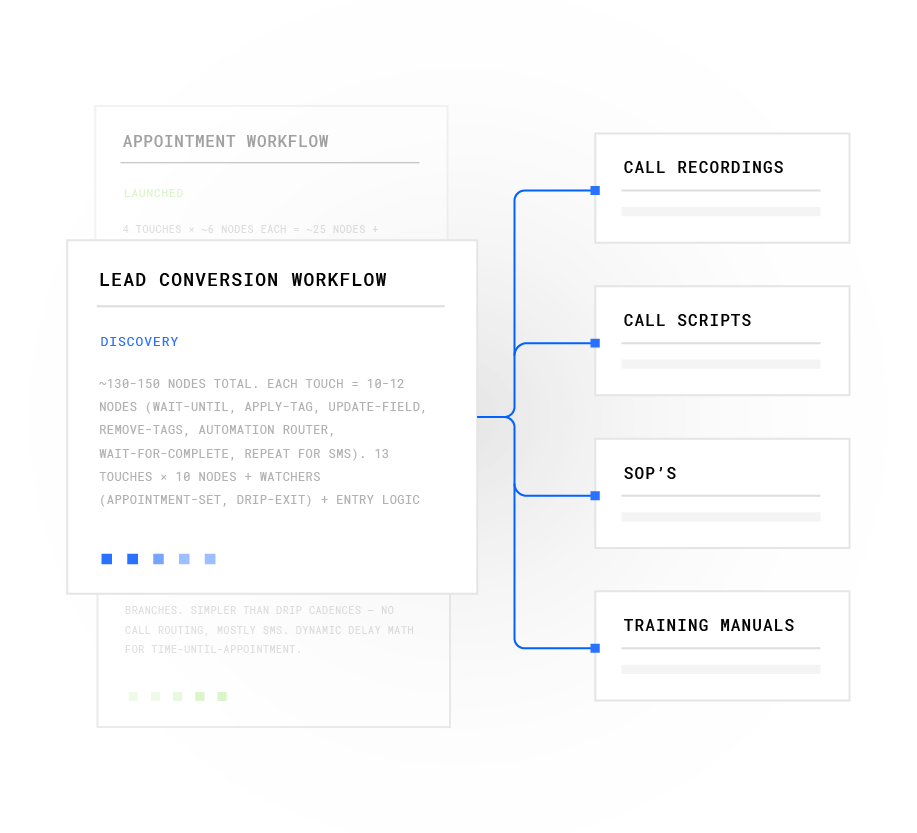
Because every channel reads from the same database, the post-call SMS agent already knows what was offered on the call, what objections were raised, and what the next step is. No manual CRM update is required, and there is no context gap between the voice interaction and the follow-up text.
Operators configure post-call triggers by outcome, including closed, transferred, no-answer, and callback-requested. Each outcome routes to a different follow-up sequence, and the AI handles all of it without agent involvement.
After-Hours and Weekend Lead Coverage
Leads keep arriving after 5 p.m. on Friday, and Plura keeps working. The platform runs the full five-step workflow 24 hours a day, seven days a week, with no staffing changes required. A lead that submits a form at 11 p.m. on Saturday receives the same sub-60-second SMS response, enrichment, qualification conversation, and warm transfer to an on-call agent or a queued callback as a lead that arrives during business hours.
For franchise networks and multi-location operators, this coverage closes one of the most expensive operational gaps. Plura contacts leads from websites, Google Business Profiles, or ad campaigns within 60 seconds via SMS or voice call, regardless of the hour. The AI answers 100% of contacts within the configured response window, with identical qualification logic across every location.
Carrier-Owned Infrastructure vs. Twilio-Wrapper Tools
Most AI SMS tools on the market are built on top of third-party Communications Platform as a Service providers. They rent the carrier layer, which means they cannot issue branded caller ID under their own identity, cannot enforce DNC compliance at the carrier level before the message leaves the network, and cannot address FCC foreign-infrastructure restrictions through their own architecture.
Plura is its own FCC-licensed audio bridging carrier. Voice originates on Plura’s domestic infrastructure. Branded caller ID is issued at the carrier level. SHAKEN/STIR caller ID verification runs on every outbound call. Real-time DNC compliance scrubbing, TCPA compliance support, and TCPA-litigator filtering operate as core platform layers rather than bolt-on add-ons purchased from a third party.
The practical difference shows up in three places:
- Pickup rates, because calls present with the company’s name rather than “Spam Likely”
- Compliance posture, because DNC scrubbing happens before dial, inside the platform
- Cross-channel memory, because voice and SMS share one Stateful Conversation Database, so context never resets between channels
Carrier-level compliance frameworks are becoming stricter in 2026, concentrating legitimate traffic among approved brands and compliant routing partners.5 Operators using wrapper-based tools inherit their CPaaS provider’s compliance posture, not their own.
Calculate Your AI SMS Speed to Lead ROI
A 15-agent operation paying $20 per hour with standard overhead and 40% talk utilization costs $60,000 per month. Replacing that team with Plura at $15 per hour, 100% talk utilization, and 6 AI agents doing the work of 15 humans drops the monthly cost to $14,400. That shift creates $45,600 in savings in the first 30 days, $547,200 over 12 months, and $2,736,000 over 60 months.
Run your own numbers through Plura’s ROI calculator to see the impact on your operation.
Compliance Support Without the Wrapper Markup
Twilio-based API resellers pass their infrastructure costs to the customer through higher per-minute rates, slower onboarding, and a compliance posture that lives outside the platform. Plura’s carrier ownership removes that markup. SOC 2, HIPAA, ISO certification, GDPR, SHAKEN/STIR caller ID verification, TCPA compliance, and DNC compliance support operate as built-in platform layers at every tier.
Agent build fees start at $2,750 per agent, and every annual contract includes a 90-day opt-out window. Compare plans and rates side by side at plura.ai/pricing.
Experience the carrier-owned stack in action by scheduling a 30-minute platform walkthrough.
Frequently Asked Questions
How long does it take to go live with Plura’s AI SMS speed to lead workflow?
A straightforward inbound qualification flow typically deploys in days. More complex multi-step workflows, such as a 25-question intake survey with branching logic and multiple transfer queues, run closer to one to two months because the conversation design and validation require careful iteration. Plura’s onboarding sequence covers a discovery audit of your lead economics, intake of your existing scripts and SOPs, an overnight build of a dynamic conversation mockup, a review session, engineering build of the production workflow, a pilot test on a subset of real leads, and full go-live. Every annual contract includes a 90-day opt-out window if the deployment is not delivering.
What compliance infrastructure does Plura provide for high-volume SMS programs?
Plura supports TCPA compliance, DNC compliance, SOC 2, HIPAA, ISO certification, GDPR, and SHAKEN/STIR caller ID verification as built-in platform layers. Every outbound contact is checked against federal and state DNC registries before the message sends. Consent records are timestamped and stored in an immutable log. Quiet-hours rules enforce automatically using recipient time-zone data. Opt-out keywords are recognized and suppressed in real time. The compliance dashboard exports audit-ready reports in one click. Operators are responsible for their own regulatory obligations and should consult qualified counsel on their specific requirements. Plura provides the infrastructure, and compliance posture downstream of that remains the operator’s responsibility.
What is the difference between Plura and a Twilio-based AI SMS tool?
Twilio-based tools rent their carrier layer from a third-party CPaaS. That structure means they cannot issue branded caller ID under their own identity, cannot enforce DNC scrubbing at the carrier level before the message leaves the network, and cannot hold conversation context across SMS and voice in a single database by default. Plura is its own FCC-licensed audio bridging carrier. Branded caller ID is issued at the carrier level. SHAKEN/STIR authentication runs on every outbound call. The AI SMS agent and the AI voice agent share one Stateful Conversation Database, so a lead who texted at 9 a.m. is the same lead when the call comes at noon, with full context intact. The practical result is higher pickup rates, a stronger compliance posture, and no context reset at handoff.
How does Plura handle leads that come in outside business hours?
Plura runs the full five-step workflow 24 hours a day, seven days a week. A lead submitting a form at midnight on Sunday receives the same sub-60-second SMS response, the same real-time enrichment, and the same AI qualification conversation as a lead arriving at 10 a.m. on a Tuesday. After-hours transfers route to on-call agents or a queued callback sequence, depending on how the operator configures the workflow. Quiet-hours rules for outbound marketing messages enforce automatically based on the recipient’s time zone, not the platform’s clock.
What integrations connect Plura’s AI SMS to existing CRM and marketing stacks?
Plura connects to 50-plus tools across CRMs, calendars, attribution platforms, document signers, payment processors, and data enrichment providers. CRM integrations include HubSpot, Salesforce, and Zoho. Attribution integrations include Cometly, Retreaver, and Ringba. Automation integrations include Go High Level, Make, and Zapier. Every lead interaction writes back to the connected CRM in real time, so the sales team sees the full conversation thread, enrichment data, and qualification status without a manual update. The full integration directory is at plura.ai/integrations.
Conclusion: Turn Speed to Lead Into a Repeatable System
Manual follow-up and wrapper-based SMS tools leave leads sitting for hours in a market where 60 seconds often determines whether a prospect converts or calls the next name on Google. Plura’s carrier-owned AI SMS speed to lead platform responds in under 60 seconds, qualifies with real-time enrichment, executes warm live transfers with full context, and runs post-call follow-up from the same Stateful Conversation Database, 24 hours a day, with SOC 2, HIPAA, ISO certification, GDPR, SHAKEN/STIR caller ID verification, TCPA compliance, and DNC compliance support built into every step.
Run your numbers at plura.ai/calculator, compare plans and rates at plura.ai/pricing, or request a live demo with Plura to see the full workflow on your own lead data.
1 Performance figures, customer outcomes, and industry statistics referenced in this article are drawn from cited third-party sources or Plura customer case studies. Individual results vary based on implementation, use case, industry, audience, and execution. Past or aggregate performance is not a guarantee of future results.
2 Plura AI maintains SOC 2, HIPAA, ISO, and GDPR posture as part of its platform infrastructure. References to compliance frameworks in this article describe Plura’s platform capabilities and do not constitute a guarantee that any customer using Plura will themselves be compliant with applicable laws or standards. Customers remain solely responsible for their own regulatory obligations, certifications, consent management, recordkeeping, and the claims they make to their own end users. Consult qualified legal counsel for guidance specific to your use case.
3 This article describes regulatory frameworks at a general level and does not constitute legal advice. Laws and regulations vary by jurisdiction, change over time, and apply differently depending on facts and circumstances. Readers should consult qualified legal counsel before making compliance decisions.
4 References to third-party products, services, companies, or research are made for informational and comparative purposes only. Plura AI is not affiliated with, endorsed by, or sponsored by any third party named in this article unless explicitly stated. Trademarks and product names referenced remain the property of their respective owners.
5 This article contains forward-looking statements regarding industry trends, technology adoption, and future capabilities. These statements reflect current expectations and are subject to change. Plura AI undertakes no obligation to update forward-looking statements except as required.
This article is provided for informational purposes only and reflects Plura AI’s understanding at the time of publication. Product capabilities, integrations, and specifications are subject to change. For the most current information, visit plura.ai.
This article was produced with the assistance of AI tools and reviewed by Plura AI prior to publication.