AI Voice Agents for Agencies: Launch a Productized Service
ON THIS PAGE
Written by: Matt Beucler, CEO, Plura AI
Updated September 2026
Key Takeaways
AI voice agents close the speed-to-lead gap by answering calls instantly, 24/7, which lifts conversion rates for agency clients.
Agencies can reach 35-50% profit margins by charging $300-$1,500 monthly retainers while platform costs stay far below human staffing.3
Carrier-grade platforms like Plura AI provide branded caller ID, real-time compliance support, and cross-channel memory that standard API or no-code tools do not provide.
Successful agencies focus on high-demand verticals like home services, healthcare, legal, and real estate with tiered packages from basic answering to multi-channel coverage.
Agencies ready to launch can start a conversation with Plura AI to explore white-label deployment options and begin a 30-day implementation plan.
Why Agencies Are Adding AI Voice Agents to Their Service Stack
Agencies face rising pressure on speed-to-lead, missed-call recovery, and labor costs, which makes human-only answering harder to justify.
Missed calls are invisible revenue leaks. 88% of outbound effort goes unanswered without the right infrastructure. Clients in home services, healthcare, legal, and real estate expect 24/7 coverage. Human staffing economics make true round-the-clock answering unrealistic for most small and mid-sized businesses.
Agencies can turn this gap into a productized service: deploy AI voice agents for clients, charge a setup fee plus monthly retainer, and show ROI through recovered calls and faster lead response.
Core Use Cases: What Your Agency Will Deploy for Clients
Most agencies start with call coverage, then move into qualification and reactivation as clients see results.
Missed-Call Recovery and 24/7 Answering
Clients in home services, healthcare, and legal lose revenue every time the phone rings unanswered after hours. An AI voice agent answers every call on the first ring, 24/7, checks orders, answers questions, and transfers complex calls to the client team with full context. For agencies, the ROI story is straightforward: every call gets answered, every job gets booked, and after-hours coverage stays consistent.
Inbound Lead Qualification and Booking
Once calls are being answered, the next step is turning those conversations into booked revenue. Clients spend thousands making the phone ring, then often send those leads to voicemail. AI agents qualify leads in real time, book calendars live on the call, and live-transfer hot buyers mid-call. Agencies replace inconsistent SDR work with a repeatable, measurable qualification flow.
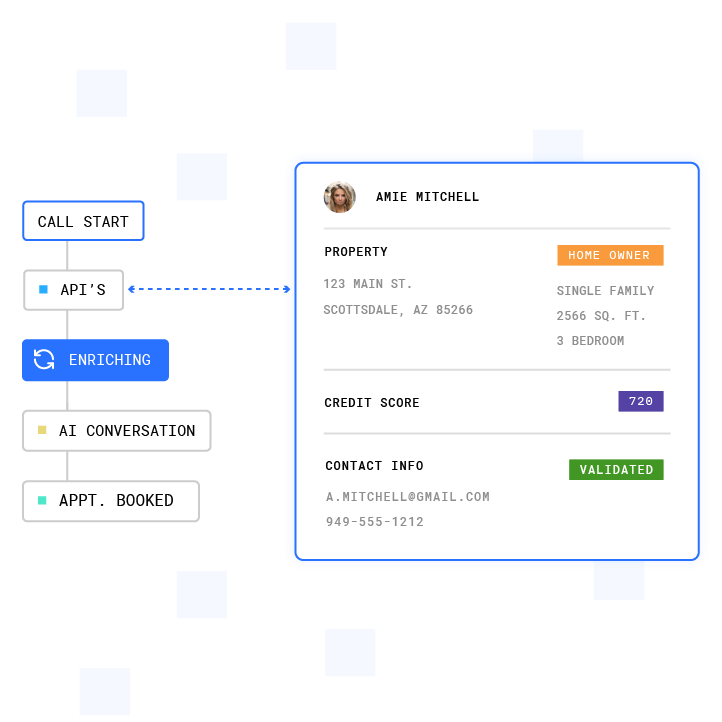
Plura Lead Intelligence enriches customer data with AI-powered insights, validation, and lead qualification to improve conversion performance.
Outbound Follow-Up and Reactivation
After inbound performance improves, agencies usually tackle old leads sitting in the CRM. AI agents text and call ghosted contacts with branded messages, at scale, in seconds. The AI holds a real conversation, qualifies the buyer, then calls and live-transfers a warm prospect straight to the client’s rep.
The Agency Business Model: Pricing, Margins, and Packaging
Revenue, margin, and capacity determine whether an AI voice agent service becomes a core offer or a side experiment. The benchmarks below reflect current conditions for agencies deploying AI voice infrastructure for clients.
Typical pricing structure for agency AI voice services:
Setup fees: $500-$3,000 per client, covering workflow design, knowledge base setup, and integration configuration
Monthly retainers: $300-$1,500 per client for standard accounts, with enterprise accounts reaching $2,000-$5,000 per month, covering ongoing management, monitoring, and improvements
Platform costs: Usage-based or per-agent fees that scale with conversation volume
“We doubled our client roster without adding a single SDR. The AI handles lead contact and qualification for all 18 clients, and our account managers focus entirely on strategy and results. Our margins went from 20% to 42%.” – Agency Owner, Performance Marketing
Platform Selection: Choosing the Right Infrastructure for Your Agency
Your platform choice sets the ceiling on what you can promise clients around branding, compliance support, and multi-channel memory. The landscape for AI voice agents breaks into three broad categories.
Developer-first API platforms (such as Vapi) offer maximum flexibility for custom builds.4 They require engineering resources, and the agency handles conversation design, telephony integration, and compliance. These platforms fit agencies with in-house technical teams building bespoke solutions.
No-code builder platforms (such as Synthflow and Retell AI) enable faster deployment from visual canvases.4 Retell AI’s pay-as-you-go pricing ranges from $0.07 to $0.31 per minute. That cost breaks down into voice infrastructure, text-to-speech, and LLM (large language model) fees. These platforms may not include carrier-level features like branded caller ID and built-in compliance enforcement.
Carrier-grade platforms (such as Plura AI) own their FCC-licensed carrier infrastructure, issue branded caller ID directly, maintain stateful memory across voice, SMS, RCS (Rich Communication Services), and webchat, and enforce compliance at the carrier level before a call leaves the network. These platforms are built for agencies managing multiple clients at scale.
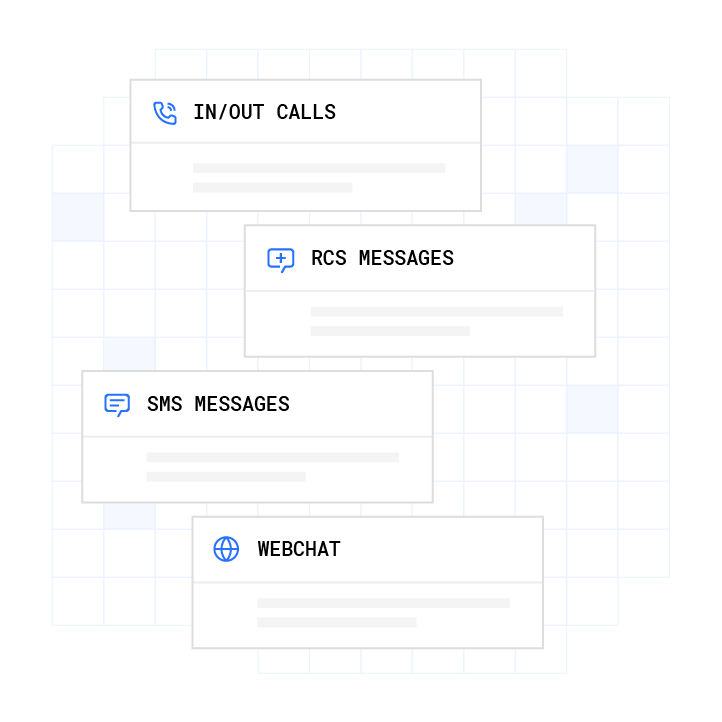
Plura Unified Inbox centralizes AI Voice, SMS, RCS, and Webchat conversations into one streamlined omnichannel communication workspace.
Why carrier-grade infrastructure matters for agencies: Most AI voice tools are API resellers running on top of third-party telecom carriers. They lack the ability to issue branded caller ID under their own identity, enforce compliance before the call leaves the network, or hold conversation context across channels. Plura is its own FCC-licensed audio bridging carrier. For agencies, the choice between these categories comes down to three deliverables you must promise clients: pickup rates, compliance support, and conversation memory.
Call pickup rates: Branded caller ID and STIR/SHAKEN (Secure Telephone Identity Revisited/Signature-based Handling of Asserted information using toKENs) authentication mean calls present with the company’s name instead of “Spam Likely,” which is critical given the outbound effort gap noted earlier.
Compliance support: Real-time DNC (Do Not Call) scrubbing, immutable consent logging, and TCPA (Telephone Consumer Protection Act) litigator filtering are enforced at the carrier level, rather than added after the fact.
Stateful memory: A client’s customer who texted at 9 a.m. is the same customer when the call comes at noon. The AI remembers every prior interaction across voice, SMS, RCS, and webchat.
Agencies that focus their AI voice offer on a clear vertical close deals faster, retain longer, and deliver more consistent outcomes. The strongest niches share high call volume, a high cost for each missed call, and clear ROI metrics.
Week 1: Select platform and define offer. Start by choosing your platform based on the criteria above, since that decision shapes what you can promise clients. Then define your target vertical, package structure, and pricing. Finally, document your client qualification criteria and the specific ROI metrics you will track, because these will become proof points for your first case study.
Week 2: Build workflows and test with real calls. Design your AI agent’s conversation flows using a no-code workflow builder. Then test with real calls to uncover gaps in qualification logic, objection handling, and transfer rules. Plura’s managed workflows handle conversation engineering and iteration for agencies that want support.
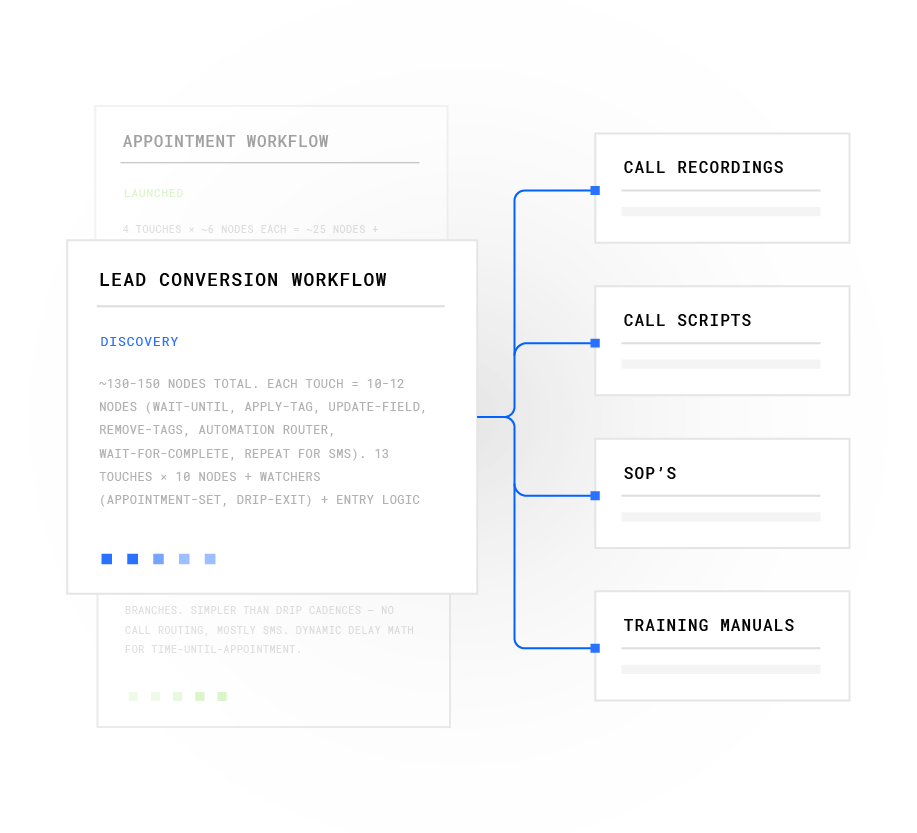
Plura Managed Workflows gives businesses fully built AI conversation workflows designed to automate customer engagement and operational tasks.
Week 3: Pilot with one client. Launch with a single client so you can monitor closely. Track call quality, conversion metrics, and client satisfaction. Document ROI through recovered calls, booked appointments, and response time improvements.
Week 4: Refine and document ROI. Adjust conversation flows based on real call data. Use conversation intelligence to generate client-ready reports automatically. Build your case study and refine your offer, then roll out to additional clients.
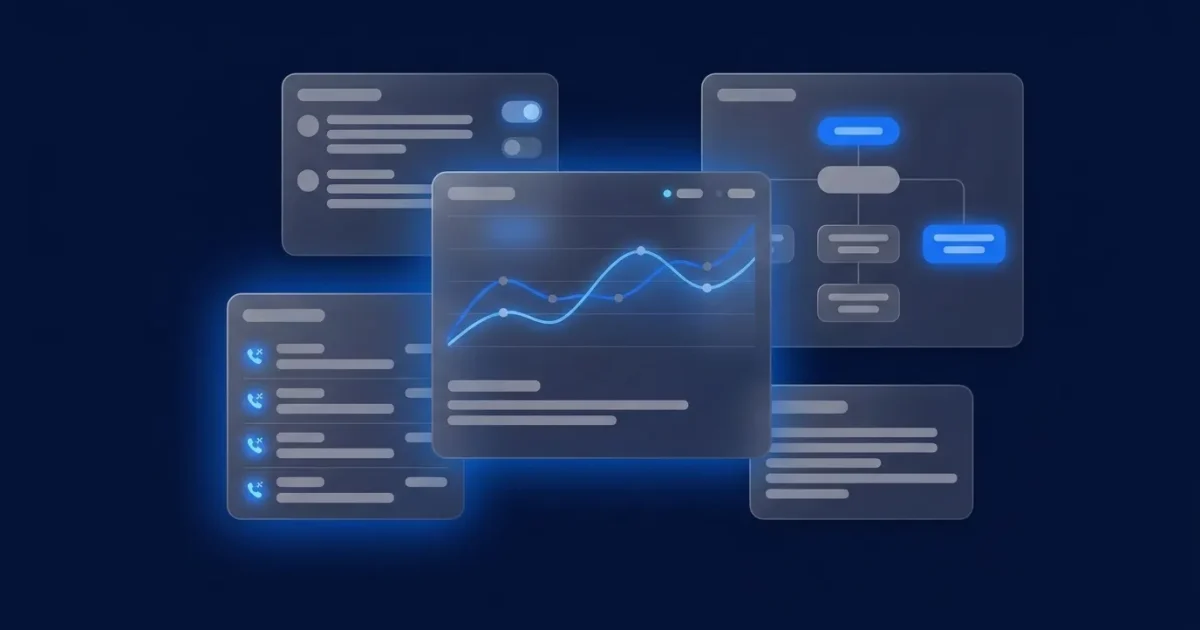
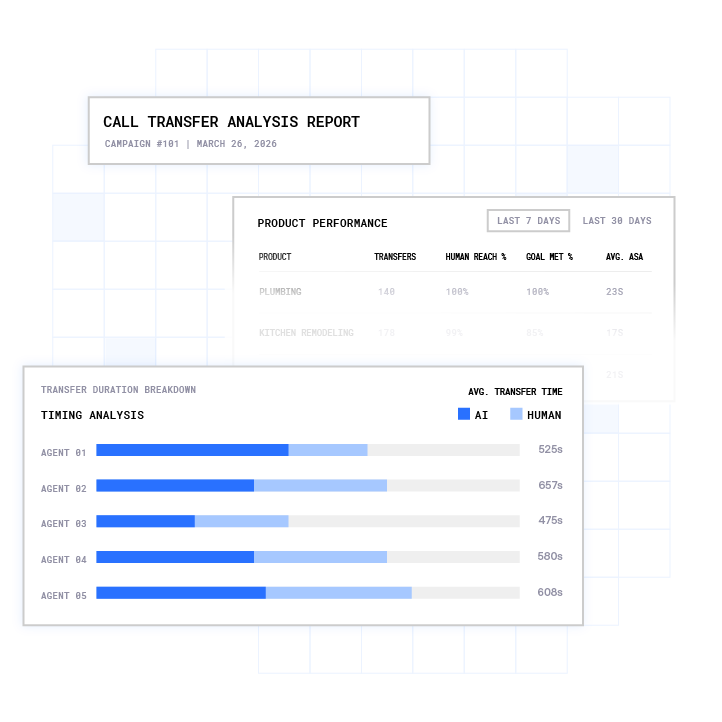
Plura Conversation Intelligence gives businesses AI-powered analytics, call transfer tracking, and customer interaction insights across every conversation.
Compliance Considerations for Agencies
Agencies running AI voice across multiple clients face a layered compliance landscape. The frameworks below describe that landscape; agencies should consult qualified legal counsel about their specific obligations.
TCPA and consent requirements: The FCC describes prior express written consent requirements for certain prerecorded telemarketing calls to home or wireless numbers and notes that AI-generated voice calls fall within that framework unless an exemption applies.2 The FTC’s Telemarketing Sales Rule describes obligations related to do-not-call requests and the National Do Not Call Registry.
State-level considerations: California’s CCPA (California Consumer Privacy Act), as amended by the CPRA, describes rights for California residents to know, delete, opt-out of sale or sharing, correct, and limit use of sensitive personal information.2 These rights are relevant when AI voice agents collect or process consumer data during calls.
What agencies need from their platform:
Real-time DNC scrubbing against federal and state registries
Immutable consent logging
Quiet-hours enforcement through time-zone detection
Audit-ready reporting
Plura’s compliance engine includes pre-loaded rule sets for TCPA, DNC, HIPAA, SOC 2, and 50+ state regulations, enforced on every outbound contact before dial.1 Plura supports customer compliance; downstream compliance obligations remain the customer’s responsibility.
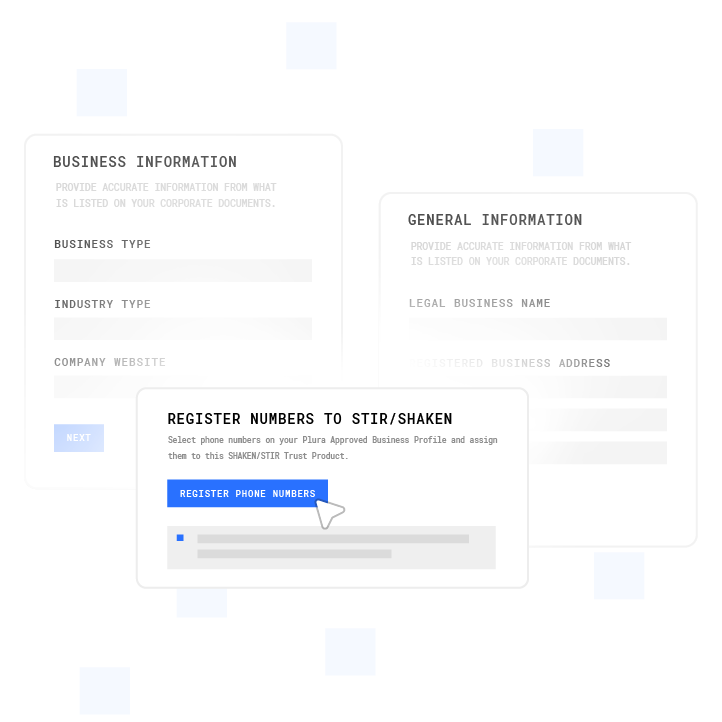
Plura’s FCC-licensed AI communications platform simplifies compliant business registration and phone number provisioning for AI Voice, SMS, RCS, and Webchat workflows.
Branded caller ID for pickup rates and complaint reduction: Calls flagged as “Spam Likely” often get ignored. Plura issues branded caller ID directly through its FCC-licensed carrier, so calls present with the company’s name and reason for calling, which improves answer rates.
How much does an AI voice agent cost for agencies?
Setup fees typically range from $500 to $3,000 per client, covering workflow design, knowledge base configuration, and integration setup. Monthly retainers run from $300 to $1,500 per client for standard accounts, with enterprise accounts reaching $2,000-$5,000 per month, depending on call volume, channels covered, and reporting requirements. Platform costs vary by usage. Plura offers transparent pricing with AI agent plans starting at $15 per hour for the Agency Plan. Agencies can model client savings and their own margin structure using Plura’s ROI calculator before committing to a pricing tier.
Which AI voice agent platform is best for agencies managing multiple clients?
The strongest platform for a multi-client agency provides white-label options, multi-client management from a single dashboard, carrier-grade compliance support, and stateful conversation memory across channels. Developer-first API platforms require engineering resources but offer maximum flexibility. No-code builder platforms deploy faster but may not include carrier-level features. Carrier-grade platforms like Plura own their FCC-licensed carrier infrastructure, so branded caller ID, real-time DNC scrubbing, and cross-channel conversation memory sit inside the platform rather than as add-ons. For agencies where compliance and pickup rates are core client deliverables, the carrier-grade category is usually the most defensible choice.
Can I white-label an AI voice agent service?
Many platforms, including Plura, allow agencies to deploy AI voice agents under their own brand while the platform handles the underlying carrier infrastructure, compliance support, and conversation engineering. White-labeling lets agencies present a branded, productized service to clients without building the underlying technology. The key consideration is whether the platform’s white-label capabilities extend to caller ID, reporting, and client-facing dashboards, in addition to the conversation interface.
How do I start an AI voice agent agency?
The 30-day launch sequence in this article outlines the core steps. Select your platform based on white-labeling and compliance requirements, define your target vertical and pricing structure, build and test conversation workflows, pilot with one client, then document ROI before scaling. Many agencies skip the pilot phase and scale before the conversation logic is validated with real calls. One client’s worth of real call data will reveal qualification gaps, objection patterns, and transfer rules that pre-launch testing often misses.
What is the difference between an AI voice agent and an IVR?
An IVR (Interactive Voice Response) system is menu-based. Callers press buttons to navigate pre-recorded options, and the system routes calls based on keypress inputs. An AI voice agent holds natural, conversational interactions, understands context across the full call, qualifies leads against dynamic criteria, books appointments directly into calendars, and can transfer calls with full conversation context passed to the receiving agent. For agency clients, an IVR routes calls while an AI voice agent handles them, which reduces the volume of calls that need to reach a human at all.
Conclusion: Turning AI Voice Into a Defensible Agency Offer
AI voice agents for agencies create a productized service model with the profit margins and capacity gains described above, along with measurable client ROI through recovered calls and faster lead response. The core moves are selecting a platform with carrier-grade infrastructure and white-label capabilities, packaging the service for a specific vertical, and executing the 30-day launch plan before scaling.
Compare plans and rates on our pricing page, or run your numbers through the ROI calculator to model your agency’s margin at current platform costs. Request a live Plura demo to see how carrier-grade infrastructure, stateful memory, and built-in compliance support can power your agency’s next revenue stream.
1 Plura AI maintains SOC 2, HIPAA, ISO, and GDPR posture as part of its platform infrastructure. References to compliance frameworks in this article describe Plura’s platform capabilities and do not constitute a guarantee that any customer using Plura will themselves be compliant with applicable laws or standards. Customers remain solely responsible for their own regulatory obligations, certifications, consent management, recordkeeping, and the claims they make to their own end users. Consult qualified legal counsel for guidance specific to your use case.
2 This article describes regulatory frameworks at a general level and does not constitute legal advice. Laws and regulations vary by jurisdiction, change over time, and apply differently depending on facts and circumstances. Readers should consult qualified legal counsel before making compliance decisions.
3 Performance figures, customer outcomes, and industry statistics referenced in this article are drawn from cited third-party sources or Plura customer case studies. Individual results vary based on implementation, use case, industry, audience, and execution. Past or aggregate performance is not a guarantee of future results.
4 References to third-party products, services, companies, or research are made for informational and comparative purposes only. Plura AI is not affiliated with, endorsed by, or sponsored by any third party named in this article unless explicitly stated. Trademarks and product names referenced remain the property of their respective owners.
This article is provided for informational purposes only and reflects Plura AI’s understanding at the time of publication. Product capabilities, integrations, and specifications are subject to change. For the most current information, visit plura.ai.
This article was produced with the assistance of AI tools and reviewed by Plura AI prior to publication.