
Written by: Matt Beucler, CEO, Plura AI
Updated: September 2026
Key Takeaways
- AI voice agents resolve complex requests end to end using natural language. Traditional IVR systems route calls through rigid menu trees.
- IVR systems show high caller abandonment, with 60% of callers hanging up within 90 seconds and under 33% resolution per McKinsey.3
- AI voice agents typically deliver 75–85% caller satisfaction versus 30–40% for IVR, with lower total cost of ownership at scale.3
- Organizations running high-volume, complex, or 24/7 operations benefit from a phased 6–10 week migration from IVR to AI voice agents.
- Migrating to an AI voice agent works best with a phased rollout, parallel running, and close monitoring of containment before full cutover.
Where IVR Still Fits in Modern Call Routing
IVR is a phone system technology that uses pre-recorded menus and DTMF keypad input to route callers. Vendors introduced it in the 1970s, and adoption accelerated through the 1980s and 1990s. IVR still handles predictable, high-volume tasks such as simple routing, bill payments, store locators, and basic authentication.
The limitations are structural. IVR operates on rigid menu trees with no conversation memory. About 60% of callers hang up within the first 90 seconds of navigating a touch-tone IVR menu, and a McKinsey report found that seven in ten companies say their phone menu resolves less than a third of the calls it handles. The remainder bounce to a human or get abandoned. IVR is deterministic and predictable. This makes it appropriate for regulated, simple flows where exact scripted wording is mandatory. Outside those scenarios, it often creates friction for both callers and agents.
How AI Voice Agents Work in Contact Centers
AI voice agents are conversational AI systems that use natural language understanding and speech recognition to hold dynamic, human-like conversations. They resolve complex issues end to end, qualify leads, book appointments, and process requests. They also integrate with CRM systems via APIs. They operate 24/7, support multiple languages, maintain stateful memory across channels, and handle interruptions and mid-call pivots without losing context.
AI voice agents are probabilistic, meaning they carry a small risk of misinterpretation. Modern platforms mitigate this with escalation guardrails that route low-confidence calls to a human agent and attach full conversation context.
Plura AI’s AI voice agents handle inbound and outbound calls on Plura’s FCC-licensed audio bridging carrier. English and Spanish come standard. The platform maintains stateful conversation memory across voice, SMS, RCS, and webchat and provides integrations with more than 50 tools including Salesforce, HubSpot, and Calendly.
Book a live demo with Plura to see AI voice agents in action.
Key Differences: AI Voice Agent vs IVR
The table below summarizes the core differences across interaction style, resolution capability, flexibility, and cost structure.
| Attribute | Traditional IVR | AI Voice Agent |
|---|---|---|
| Interaction Style | Menu-driven (keypad/DTMF) | Conversational (natural language) |
| Resolution Capability | Routes calls to departments | Resolves requests end to end |
| Flexibility | Static, pre-programmed flows | Dynamic, adapts mid-conversation |
| Integration | Limited, rigid database lookups | Deep CRM/API integration, real time |
| Predictability | 100% deterministic | Probabilistic with escalation guardrails |
| Cost Structure | Low per-minute, high maintenance | Per-conversation, scales with usage |
| Compliance Support | Basic, scripted disclosures | Advanced, real-time DNC/TCPA controls |
Cost Comparison: IVR vs AI Voice Agent
Cloud IVR setup typically runs $0 to $1,000 upfront with $25 to $100+ per month, while on-premise deployments require $10,000 to $50,000 or more in setup costs. Per-minute fees range from $0.005 to $1.00. Hidden costs include $100 to $300 per menu change, add-on compliance modules, and escalation labor. For AI voice agents, setup runs $0 to $500, per-minute usage is $0.07 to $0.15, and monthly platform fees are $0 to $500.
| Cost Factor | Traditional IVR | AI Voice Agent |
|---|---|---|
| Setup Cost | $0–$1,000 (cloud) / $5,000–$50,000 (on-premise) | $0–$500 |
| Monthly Platform Fee | $500–$2,000 | $0–$500 |
| Per-Minute Usage | $0.005–$1.00 | $0.07–$0.15 |
| Annual TCO (5,000 calls/mo) | $12,000–$45,000 | $4,200–$10,800 |
The cost advantage of AI voice agents compounds through containment. Gartner’s customer service benchmarks put the median cost per contact at $1.84 for self-service channels and $13.50 for assisted channels.3,4 Every call an AI voice agent resolves without human handoff moves from the $13.50 column to the $1.84 column. Run your numbers through Plura’s ROI calculator to model your specific scenario. Once you have the cost picture, the decision comes down to fit.
When IVR Is the Right Tool
IVR remains appropriate in specific scenarios. Traditional IVR fits very low call volumes under 150 calls per month, fully on-premise requirements such as some government contracts or highly regulated financial firms, and calls with rigid, predictable scripts with near-zero variation. Utility companies handling outage reporting, government agencies with mandatory scripted disclosures, and small businesses with simple routing needs are all reasonable IVR use cases.
IVR also functions well as a resilient fallback layer in a hybrid architecture. It can sit behind an AI voice agent and handle calls the AI escalates or cannot classify with sufficient confidence.
When AI Voice Agents Deliver More Value
AI voice agents outperform IVR wherever the caller’s need cannot be predicted in advance or does not map cleanly to a menu option. High-volume inbound customer service, lead qualification, appointment booking, 24/7 availability, and outbound follow-up are all strong fits. Benchmarks show 75–85% caller satisfaction for AI voice agents versus 30–40% for traditional IVR.3
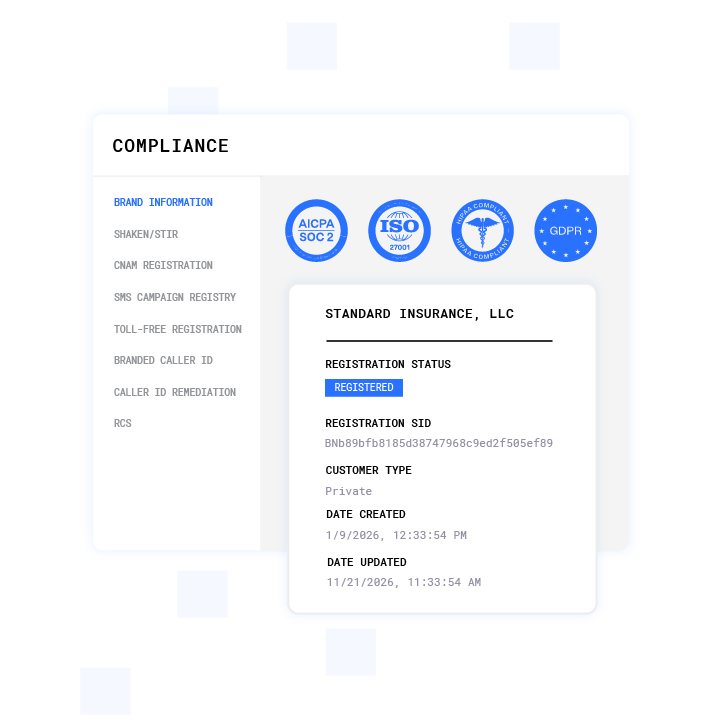
Plura’s AI voice agents are built for regulated, high-volume environments. The platform supports compliance with frameworks such as SOC 2, HIPAA, ISO certification, GDPR, SHAKEN/STIR caller ID verification, TCPA, and DNC rules.1,2 Real-time DNC scrubbing, immutable consent logging, and automated quiet-hours enforcement run on every outbound contact. Calls originate on Plura’s FCC-licensed audio bridging carrier with branded caller ID issued at the carrier level. For healthcare operators, Plura supports up to a 40% improvement in no-shows through automated reminders across voice and SMS.
Book a live demo with Plura to see how AI voice agents handle your call types.
Migration Playbook: Moving from IVR to AI Voice Agents
Most migrations take 6 to 10 weeks with parallel running. A phased approach reduces risk significantly. The following checklist reflects best practices drawn from enterprise deployments.
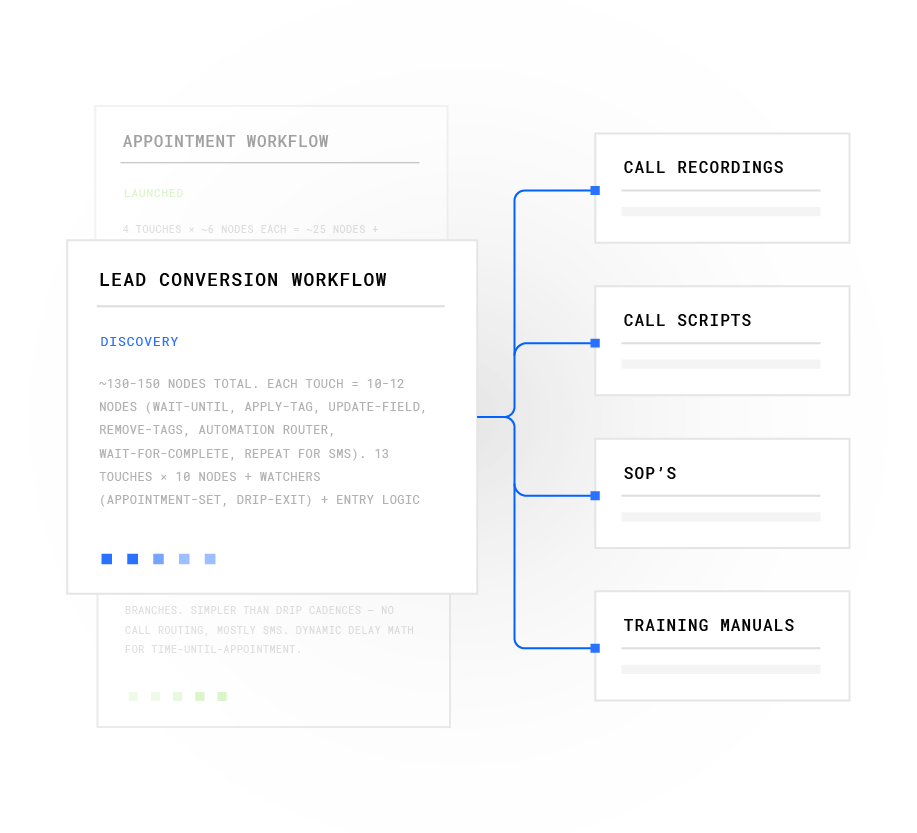
- Audit current IVR call flows. Pull the live call flow, not the original vendor SOW. Menu trees drift over time. Capture call volume share, current containment rate, and how each branch terminates for every leaf in the tree.
- Identify high-value use cases. Target intents that account for more than 20% of call volume and have an average handle time greater than 180 seconds. These calls generate the largest savings when AI containment improves.
- Choose a platform. Evaluate carrier ownership, compliance controls, CRM integration depth, and conversation engineering support. Plura is built for high-volume, regulated environments and runs on its own FCC-licensed carrier stack.
- Design conversational workflows. Map IVR menu leaves to conversational intents. Use a no-code workflow builder to define greeting nodes, qualification gates, escalation rules, and post-call actions.
- Test with pilot calls. Route 5–20% of traffic to the AI agent while keeping the existing IVR live. Measure containment rate and escalation-to-human rate for at least one full week before expanding.
- Deploy in phases by traffic percentage. Teams that jump from 5% to 100% in two steps often miss failure modes that only appear at scale. These include queue-transfer race conditions during peak hours and long-tail intents that surface after several thousand calls.
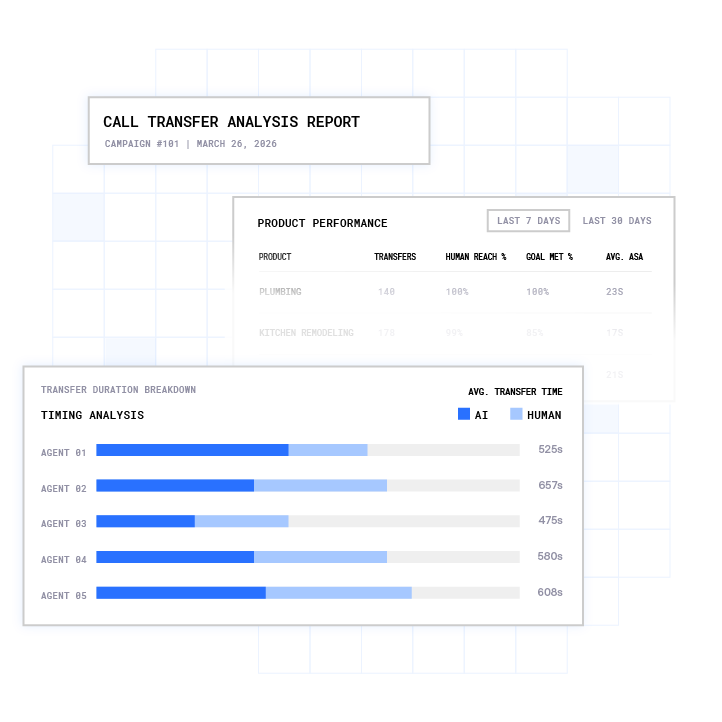
- Monitor and refine. Track false containment rate, time-to-transfer for low-confidence calls, and escalation context quality alongside headline containment. Conversation intelligence surfaces these patterns automatically.
Common pitfalls include underestimating integration complexity, overlooking compliance requirements during design, neglecting agent change management, and treating the migration as a model swap instead of an operational cutover. Full cutover from IVR to AI voice agents typically happens in the 60–90 day window, with continued iteration thereafter. The migration playbook shifts based on each industry’s regulatory and operational pressures.
Industry-Specific Considerations for AI Voice Adoption
Industry fit depends on the main operational pressure, such as staffing churn, regulatory oversight, or seasonal volume spikes. These pressures shape how teams design and roll out AI voice agents.
Healthcare. Healthcare contact centers experience annual turnover of 45–55%, so AI voice agents act as a structural fix for capacity. AI handles appointment scheduling, patient intake, prescription reminders, and eligibility routing around the clock. Deployments that handle protected health information involve HIPAA considerations such as Business Associate Agreements, encryption, and audit logging. Plura supports compliance with frameworks including SOC 2, HIPAA, ISO certification, GDPR, SHAKEN/STIR caller ID verification, TCPA, and DNC rules.1,2 Plura’s healthcare deployments support up to a 40% improvement in no-shows through automated reminders.
Financial services. Financial services deployments focus on GLBA Safeguards Rule considerations, TCPA, and DNC controls. Metrigy’s 2025 Customer Experience Transformation Benchmark found 38% call deflection with voice AI in financial services.3,4 Plura runs on 100% U.S. infrastructure, which matters for organizations evaluating data residency under evolving federal and state rules.
Retail and e-commerce. Retail and e-commerce operations see 35% call deflection with voice AI at mature deployments.3 Order status, returns, and 24/7 support are high-fit use cases. AI voice agents absorb peak-season volume spikes that human staffing cannot cover economically.
Frequently Asked Questions
Is IVR considered AI?
No. Traditional IVR is a deterministic, rule-based system that matches keypad inputs to pre-mapped outputs. It does not understand language, infer intent, or adapt when a caller changes direction. AI voice agents use natural language processing and large language models to interpret meaning and hold multi-turn conversations. The distinction matters operationally. IVR can only handle what it was pre-programmed for, while AI voice agents handle requests that do not fit any menu.
What are the disadvantages of IVR?
The primary disadvantages are structural. Rigid menu trees frustrate callers, with the same 60% abandonment rate mentioned earlier within 90 seconds of navigating a touch-tone menu. Most calls escalate to humans because IVR cannot resolve anything that requires a lookup, a decision, or a back-and-forth exchange. IVR has no conversation memory, so callers repeat themselves between menus and again when transferred. Maintenance costs are meaningful, since even simple menu changes run $100 to $300 per update. Caller satisfaction scores average 30–40% for IVR compared to the 75–85% range for AI voice agents noted above.
Can AI voice agents replace IVR?
AI voice agents can replace IVR for most use cases. They handle everything IVR does plus complex, multi-step resolutions. The strongest architecture for high-volume operations often puts an AI voice agent at the front door, with IVR-style routing logic behind it for calls that need structured direction. IVR still fits very simple routing, regulated flows with mandatory scripted wording, and fallback layers during migration. For organizations handling more than 150 calls per month with meaningful complexity, AI voice agents typically deliver better containment, lower cost per resolved contact, and higher caller satisfaction.
How much does an AI voice agent cost?
Per-minute usage typically runs $0.07 to $0.15, with setup at $0 to $500 and monthly platform fees of $0 to $500. Annual total cost of ownership for 5,000 calls per month is $4,200 to $10,800, compared to $12,000 to $45,000 for traditional IVR at the same volume. The cost advantage compounds through containment, since every call resolved without human handoff avoids the $13.50 median cost per assisted contact that Gartner benchmarks. For a personalized estimate, use Plura’s ROI calculator.
How long does it take to migrate from IVR to AI?
Most migrations take 6 to 10 weeks with parallel running. A phased approach that starts with 5–20% of traffic and expands based on containment metrics reduces risk. Full cutover typically happens in the 60–90 day window. Integration complexity is the main variable. Connecting to CRM, ticketing, and billing systems on legacy infrastructure can add two to four weeks if teams do not address it early in the project. Keeping the existing IVR live as a fallback during the pilot phase is standard practice.
Conclusion and Next Steps
The decision framework is straightforward. Choose IVR for simple, low-cost routing with predictable outcomes, regulated flows where exact scripted wording is mandatory, and call volumes under 150 per month. Choose AI voice agents for complex, high-volume, 24/7 needs where resolution matters more than routing.
For high-volume operators, the math favors AI voice agents. They reduce cost per resolved contact, improve caller satisfaction from the 30–40% range to 75–85%, and scale instantly without hiring. Plura’s carrier-grade infrastructure, compliance support, and stateful conversation memory across voice, SMS, RCS, and webchat make it a fit for regulated, high-volume environments. Compare plans and rates side by side.
Book a live demo with Plura to see the difference in action.
1 Plura AI maintains SOC 2, HIPAA, ISO, and GDPR posture as part of its platform infrastructure. References to compliance frameworks in this article describe Plura’s platform capabilities and do not constitute a guarantee that any customer using Plura will themselves be compliant with applicable laws or standards. Customers remain solely responsible for their own regulatory obligations, certifications, consent management, recordkeeping, and the claims they make to their own end users. Consult qualified legal counsel for guidance specific to your use case.
2 This article describes regulatory frameworks at a general level and does not constitute legal advice. Laws and regulations vary by jurisdiction, change over time, and apply differently depending on facts and circumstances. Readers should consult qualified legal counsel before making compliance decisions.
3 Performance figures, customer outcomes, and industry statistics referenced in this article are drawn from cited third-party sources or Plura customer case studies. Individual results vary based on implementation, use case, industry, audience, and execution. Past or aggregate performance is not a guarantee of future results.
4 References to third-party products, services, companies, or research are made for informational and comparative purposes only. Plura AI is not affiliated with, endorsed by, or sponsored by any third party named in this article unless explicitly stated. Trademarks and product names referenced remain the property of their respective owners.
This article is provided for informational purposes only and reflects Plura AI’s understanding at the time of publication. Product capabilities, integrations, and specifications are subject to change. For the most current information, visit plura.ai.
This article was produced with the assistance of AI tools and reviewed by Plura AI prior to publication.