

Written by: Matt Beucler, CEO, Plura AI
Updated May 2026
Key Takeaways
-
Automated lead scoring in 2026 blends explicit ICP criteria, behavioral signals, negative scoring, time decay, and real-time AI enrichment for accurate prioritization.
-
Static CRM rules and batch enrichment create stale scores and high-scoring leads that sales rejects. Real-time scoring during live conversations keeps scores aligned with reality.
-
Effective practices include defining ICP point values, weighting behavioral signals, applying negative compliance rules, implementing time decay, and running weekly sales feedback loops.
-
Real-time AI enrichment during conversations across 30+ data sources supports accurate scoring at first contact across voice, SMS, RCS, and webchat.
-
Plura AI delivers trusted, real-time automated lead scoring inside live conversations on 100% U.S. infrastructure, and Plura supports compliance for regulated teams. Book a live demo to see it in action.
7 Automated Lead Scoring Best Practices
-
Define explicit ICP criteria and map them to point values.
-
Capture and weight implicit behavioral signals from every channel.
-
Apply negative scoring rules tied to compliance signals and disengagement.
-
Implement time-decay mechanics so scores reflect recency.
-
Build a repeatable sales feedback loop that updates the model weekly.
-
Enrich leads in real time during AI conversations using 30+ data sources.
-
Set MQL/SQL thresholds and handoff rules that sales trusts.
How to Automate Lead Scoring
Practice 1: Define Explicit ICP Criteria and Map Them to Point Values
Explicit scoring answers whether a lead fits your ICP before any conversation occurs. Demographic and firmographic data, such as job title, company size, industry, and location, form the non-negotiable baseline. Assign point values based on conversion correlation, not intuition.
Start with five to ten criteria, so the model stays simple and credible. Overcomplicating the initial model makes it harder to maintain and harder for sales to trust. Once you define these baseline criteria, validate them against closed-won data to confirm they correlate with actual conversions before you add more complexity.
Practice 2: Capture and Weight Implicit Behavioral Signals from Every Channel
Implicit scoring answers whether a lead is actively moving toward a purchase decision. Behavioral signals such as website visits, content downloads, email engagement, and demo requests reveal intent that firmographic data alone cannot surface.
High-intent behaviors, such as pricing page views and demo requests, often warrant points, while a single blog read earns fewer points. AI-powered scoring can uncover patterns such as prospects visiting a pricing page twice within seven days converting at higher rates than single visits. Manual rule sets usually miss these patterns.
Use behavioral signals as a secondary layer beneath explicit fit. No amount of engagement converts a poor ICP match into an ideal customer. Treat engagement as a way to prioritize within your ICP, not as a substitute for fit.
See how Plura captures and scores behavioral signals during live conversations.
What Is the Lead Scoring Algorithm?
A lead scoring algorithm is the weighted formula that combines positive and negative point values into a single score. That score represents both ICP fit and purchase intent at a given moment. The algorithm you design should incorporate the explicit criteria from Practice 1, the behavioral signals from Practice 2, and the negative rules described next.
Practice 3: Apply Negative Scoring Rules Tied to Compliance Signals and Disengagement
Negative scoring keeps inflated scores in check and protects sales capacity. Without it, scores climb over time even when leads disengage or never fit your ICP, and sales teams spend time on poor opportunities.
Improving lead quality increases sales productivity, and negative scoring is a primary lever for that improvement. You remove obvious disqualifiers, reduce scores for stale activity, and keep the top of the queue clean.
In regulated industries, negative scoring also connects to compliance signals. A lead who has opted out of communications, appears on a DNC (Do Not Call) registry, or triggers a TCPA (Telephone Consumer Protection Act) litigator flag can receive an immediate score reduction and be routed away from outbound sequences. Consult qualified counsel on your specific obligations under TCPA and applicable state rules.2
Negative Scoring Template
|
Signal |
Point Adjustment Example |
Compliance Tie-In |
|---|---|---|
|
Email unsubscribe |
−25 |
CAN-SPAM / consent management |
|
Competitor domain |
−50 |
Pipeline hygiene |
|
Personal email in the B2B context |
−15 to −25 |
ICP disqualifier |
|
DNC registry match |
−100 / suppress |
TCPA / DNC compliance |
|
TCPA litigator list match |
−100 / suppress |
TCPA compliance |
|
Bounced email |
−20 |
Data quality |
|
90+ days of zero engagement |
−10 to −30 |
Recency / pipeline hygiene |
|
Student or job-seeker role |
−25 to −30 |
ICP disqualifier |
|
Company size outside ICP |
−15 to −20 |
ICP disqualifier |
|
Careers page visit only |
−15 |
Intent disqualifier |
Example Scoring Model
|
Attribute / Behavior |
Type |
Point Adjustment Example |
|---|---|---|
|
C-level job title |
Explicit / ICP fit |
+30 |
|
Target industry match |
Explicit / ICP fit |
+25 |
|
ICP company size (50–500 employees) |
Explicit / ICP fit |
+20 |
|
Demo request |
Implicit / behavioral |
+25 |
|
Pricing or plan page visit |
Implicit / behavioral |
+15 to +20 |
|
Webinar attendance |
Implicit / behavioral |
+10 |
|
Single blog read |
Implicit / behavioral |
+5 |
|
Email unsubscribe |
Negative |
−25 |
|
Competitor domain |
Negative |
−50 |
|
90+ days no engagement |
Negative / decay |
−10 |
Time Decay Lead Scoring
Practice 4: Implement Time-Decay Mechanics So Scores Reflect Recency
Time decay keeps behavioral scores honest over time. A lead who attended a webinar 18 months ago is not as sales-ready as one who visited your pricing page last week.
Time-based score decay prevents inflated scores from stale activity and maintains accurate prioritization in automated lead scoring. You reduce the weight of old engagement, so recent actions rise to the top.
Most marketing automation platforms support native score-decay automation using inactivity triggers based on email opens, clicks, and site visits.
Sales Feedback Loop for Lead Scoring
Practice 5: Build a Repeatable Sales Feedback Loop That Updates the Model Weekly
Sales acceptance of high-scoring leads depends on a scoring model that reflects real outcomes. The most common reason sales rejects high-scoring leads is that the model was built without sales input and never updated with sales results.
Closed-loop reporting should follow an explicit cadence of weekly operations reviews and monthly revenue reviews, so sales feedback becomes part of the operating rhythm and directly informs lead scoring adjustments.
The mechanics stay simple. After every deal, whether won or lost, sales logs a disposition in the CRM. Marketing pulls those dispositions weekly, maps them back to the scoring attributes present at the time of handoff, and adjusts point values or thresholds where the data diverges from predicted outcomes. Teams should track three core metrics to validate lead scoring effectiveness: lead-to-opportunity conversion rate, sales cycle length for high-scoring versus low-scoring leads, and win rate by score.
Plura’s AI Conversation Intelligence layer automates a significant portion of this loop. Every interaction across voice, SMS, RCS, and webchat is analyzed to surface objection patterns, conversion paths, and script performance, and those findings feed directly back into workflow tuning. Plura treats every interaction as a data point for Lead Intelligence, which scores before calls, and Conversation Intelligence, which learns after, rather than treating communications as a cost center.
Practice 6: Enrich Leads in Real Time During AI Conversations Using 30+ Data Sources
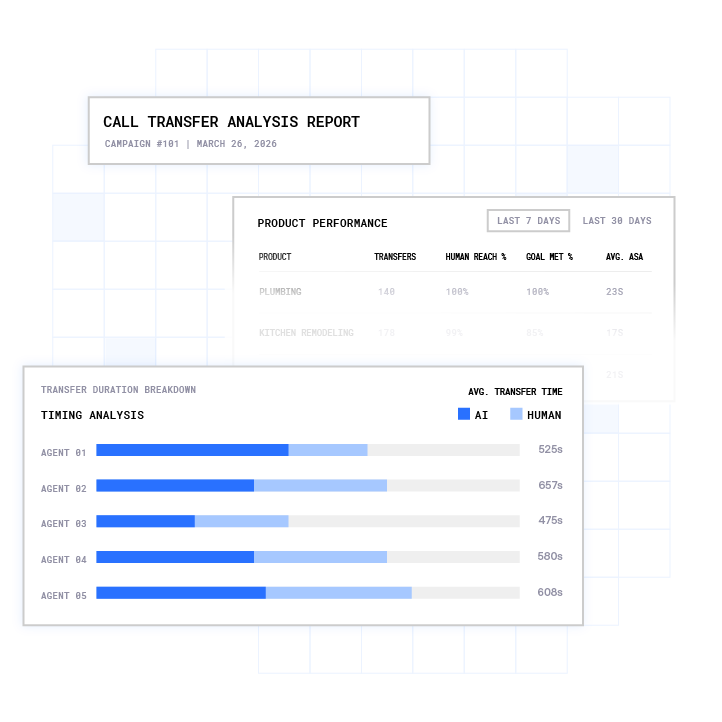
Real-time enrichment during live conversations keeps scores current while the customer is still engaged. Traditional batch scoring enriches leads hours or days after first contact, so by the time a score updates, the lead may have spoken to a competitor or gone cold.
Real-time AI conversation scoring addresses this gap by enriching and scoring the lead during the live interaction, before the conversation ends. Plura enables real-time AI lead scoring alongside speed-to-lead under 60 seconds and multichannel engagement via voice, SMS, RCS, and webchat. Plura’s AI Lead Intelligence layer pings more than 30 data sources, including IP and property data, email validation, contact data, intent signals, and business firmographics, as the AI agent conducts the conversation. The enriched context arrives in the live interaction, not in a downstream batch job.
A solar company using Plura’s AI Lead Intelligence increased conversion rates from 6% to 18% with the same leads and offer. The difference came from qualification accuracy at the moment of first contact.
Plura’s AI Lead Intelligence scores and prioritizes leads in real time using behavioral signals, conversation context, and predictive intent modeling. Because all four channels, voice, SMS, RCS, and webchat, share a single Stateful Conversation Database, a lead’s score and enrichment context carry forward across every touchpoint. An AI agent that texted a lead at 9 a.m. can pick up the call at noon already knowing qualification status, objections raised, and offers made.
Practice 7: Set MQL/SQL Thresholds and Handoff Rules That Sales Trusts
Clear thresholds and handoff rules keep marketing and sales aligned. An SQL (Sales Qualified Lead) threshold that sales helped define is a threshold that sales will honor.
Define ICP criteria and MQL-to-SQL thresholds in alignment with sales teams before configuring any automation rules to reduce marketing-sales friction. Run simulations on 90 days of historical lead data to confirm that your proposed threshold captures the right volume at the right quality before you go live.
Request a demo to configure scoring thresholds with your sales team.
Traditional Batch Scoring vs. Real-Time AI Conversation Scoring
How Scoring Approach Impacts Sales Readiness
|
Approach |
Data Freshness |
Compliance Integration |
Sales Acceptance Rate |
|---|---|---|---|
|
Traditional batch scoring (CRM rules, overnight enrichment) |
Hours to days stale at the point of sales handoff, and a lead who downloaded a whitepaper 18 months ago can score identically to one who did so last week, without decay mechanics |
Compliance signals, such as DNC and TCPA litigator flags, are often checked manually or in separate tools, which creates gaps between scoring and outreach |
Variable. |
|
Real-time AI conversation scoring (Plura) |
Enriched during the live conversation across more than 30 data sources, so the score reflects the interaction happening now, not a batch job from yesterday |
DNC scrubbing and TCPA litigator list filtering can run in real time before every outbound contact, and compliance signals feed directly into scoring and routing logic. Consult qualified counsel on your specific obligations. |
Conversion rates from 6% to 18% documented in a solar vertical deployment, and sales receive pre-qualified handoffs with full conversation context. |
Why Plura AI Delivers Trusted, Real-Time Scoring
Plura approaches automated lead scoring as part of the live conversation, not as an afterthought in the CRM. Most automated lead scoring platforms operate as a layer on top of a CRM and score leads in batch after the conversation has already happened. Plura scores, enriches, and supports compliance enforcement inside the live conversation on infrastructure Plura controls end to end.
Stateful Conversation Database. Every interaction across voice, SMS, RCS, and webchat is keyed to a customer token such as phone number, email, or ID and stored in one place. Scoring context, qualification status, objections raised, and offers made stay available to the AI agent on every subsequent touchpoint. No lead has to repeat their story, and no score resets because a channel switch broke the memory chain.
AI Lead Intelligence. Plura enriches every lead in real time during the conversation across all four channels. The enrichment arrives while the interaction is live, not hours later in a CRM field update. This enrichment architecture is the same one described in Practice 6 and enables accurate scoring at the moment of first contact across channels through the Stateful Conversation Database.
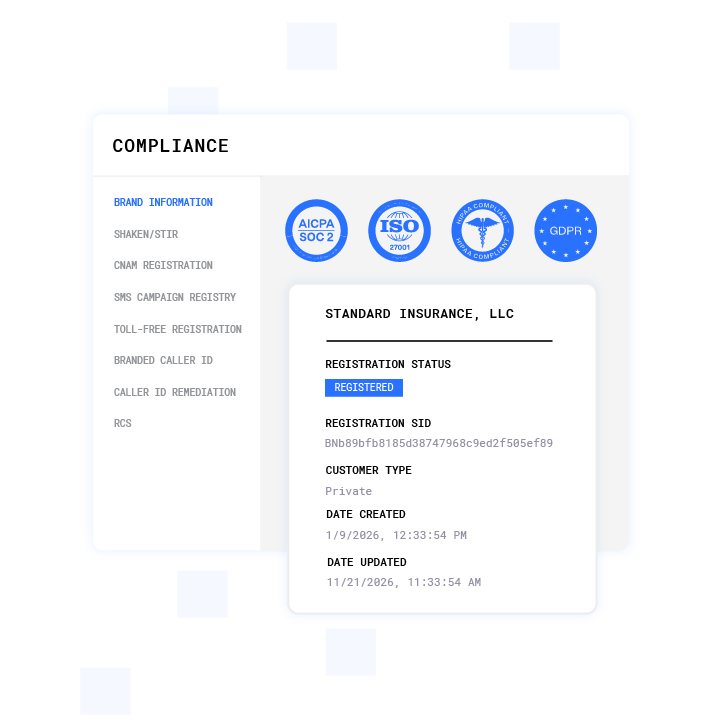
Compliance Engine. Plura’s Compliance Engine supports TCPA compliance, DNC compliance, HIPAA, SOC 2, ISO certification, GDPR, and SHAKEN/STIR (Secure Telephone Identity Revisited / Signature-based Handling of Asserted information using toKENs) caller ID verification.1 Every outbound contact can be checked against federal and state DNC registries in real time before dial. Consent records are timestamped and immutable, and quiet-hours rules can enforce automatically through time-zone detection. Compliance signals such as DNC matches and TCPA litigator flags feed into scoring and routing logic so a lead that should not be contacted does not receive a score that routes them to outbound. Customers remain responsible for their own compliance obligations and should consult qualified counsel on specific regulatory requirements.
Plura runs on 100% U.S. infrastructure by architecture. Voice origination, model hosting, data storage, and call recording all sit on domestic infrastructure. This structure matters for Revenue Operations Directors and other leaders managing regulated data under frameworks that restrict offshore handling. For specific guidance on your obligations, consult qualified counsel.
Conclusion
Effective automated lead scoring in 2026 functions as a system, not a single rule set in a CRM. You combine explicit ICP criteria mapped to point values, behavioral signals weighted by conversion correlation, negative scoring rules that filter disqualifiers and compliance risks, and time-decay mechanics that keep scores current.
You also maintain a closed-loop sales feedback process that updates the model weekly, real-time AI enrichment during live conversations, and MQL/SQL thresholds that sales helped define and therefore trust. Each component reinforces the others.
The gap between batch scoring and real-time conversation scoring is where pipeline velocity is often won or lost. Plura closes that gap by scoring, enriching, and routing leads inside the live interaction across voice, SMS, RCS, and webchat on 100% U.S. infrastructure.
Run your numbers through Plura’s ROI calculator to estimate cost savings and efficiency gains.
Frequently Asked Questions
What is the difference between explicit and implicit lead scoring?
Explicit lead scoring uses information a prospect provides directly, such as job title, company size, industry, budget authority, and location. These attributes answer whether a lead fits your ICP before any conversation occurs.
Implicit lead scoring uses behavioral signals inferred from what a lead does, such as pricing page visits, content downloads, email engagement, demo requests, and webinar attendance. These signals answer whether a lead is actively moving toward a purchase decision.
Strong automated lead scoring models combine both dimensions. A high-fit, low-engagement lead belongs in a nurture program. A high-engagement, low-fit lead should be disqualified or routed to a different motion. Neither dimension alone provides enough context for accurate routing.
How does time decay work in a lead scoring model?
Time decay reduces a lead’s behavioral score based on how long ago the engagement occurred. A lead who visited your pricing page last Tuesday is more sales-ready than one who attended a webinar 18 months ago, even if both actions carry the same raw point value.
A practical decay framework reduces behavioral scores by 20% after 30 days of no engagement, 50% after 60 days, and resets behavioral scores to zero after 90 days, then moves the contact to a re-engagement sequence. Demographic scores, such as job title and company size, decay more slowly because those attributes change less frequently.
Decay rates should differ by signal type. High-intent behaviors like demo requests lose value faster than mid-funnel actions like whitepaper downloads. Most marketing automation platforms support native score-decay automation using inactivity triggers.
Why do high-scoring leads get rejected by sales, and how do you fix it?
Sales rejection of high-scoring leads usually traces back to three root causes. The scoring model was built without sales input, the model has not been updated with closed-loop outcome data, or the MQL threshold was set by marketing alone and does not reflect what sales considers a qualified opportunity.
The fix requires a repeatable feedback loop. After every deal, whether won or lost, sales logs a disposition in the CRM. Marketing maps those dispositions back to the scoring attributes present at handoff and adjusts point values or thresholds where the data diverges from expectations.
This review should run weekly at the operations level and monthly at the revenue-team level. MQL and SQL thresholds should be validated against 90 days of historical lead data before going live, and sales should participate in the threshold-setting conversation from the start.
What is real-time lead scoring during a conversation, and how is it different from batch scoring?
Real-time conversation scoring enriches and scores the lead while the interaction is still happening. Batch scoring enriches and scores leads hours or days after first contact, using data pulled from CRM records and third-party sources in scheduled jobs. By the time a batch score updates, the lead may have already spoken to a competitor or disengaged.
Plura’s AI Lead Intelligence layer pings more than 30 data sources as the AI agent conducts the conversation across voice, SMS, RCS, or webchat. The enriched context, including firmographics, intent signals, contact data, and behavioral history, arrives in the live interaction and informs routing, qualification, and handoff decisions in real time.
Because Plura’s four channels share a single Stateful Conversation Database, scoring context carries forward across every subsequent touchpoint without resetting.
How does negative scoring connect to compliance in outbound lead programs?
Negative scoring and compliance enforcement intersect at the point where routing decisions occur. A lead who should not be contacted should not receive a score that routes them into an outbound sequence.
Compliance signals such as DNC registry matches, TCPA litigator list flags, email unsubscribes, and consent withdrawal records can trigger immediate score suppression and routing away from outbound workflows. Plura’s Compliance Engine can check every outbound contact against federal and state DNC registries in real time before dial, and those compliance signals can feed into scoring and routing logic. Consent records are timestamped and immutable.
Customers are responsible for their own compliance obligations under TCPA, DNC, and applicable state rules and should consult qualified counsel for guidance specific to their programs and jurisdictions.
1 Plura AI maintains SOC 2, HIPAA, ISO, and GDPR posture as part of its platform infrastructure. References to compliance frameworks in this article describe Plura’s platform capabilities and do not constitute a guarantee that any customer using Plura will themselves be compliant with applicable laws or standards. Customers remain solely responsible for their own regulatory obligations, certifications, consent management, recordkeeping, and the claims they make to their own end users. Consult qualified legal counsel for guidance specific to your use case.
2 This article describes regulatory frameworks at a general level and does not constitute legal advice. Laws and regulations vary by jurisdiction, change over time, and apply differently depending on facts and circumstances. Readers should consult qualified legal counsel before making compliance decisions.
3 Performance figures, customer outcomes, and industry statistics referenced in this article are drawn from cited third-party sources or Plura customer case studies. Individual results vary based on implementation, use case, industry, audience, and execution. Past or aggregate performance is not a guarantee of future results.
4 References to third-party products, services, companies, or research are made for informational and comparative purposes only. Plura AI is not affiliated with, endorsed by, or sponsored by any third party named in this article unless explicitly stated. Trademarks and product names referenced remain the property of their respective owners.
This article is provided for informational purposes only and reflects Plura AI’s understanding at the time of publication. Product capabilities, integrations, and specifications are subject to change. For the most current information, visit plura.ai.
This article was produced with the assistance of AI tools and reviewed by Plura AI prior to publication.