
Written by: Matt Beucler, CEO, Plura AI
Key Takeaways for High-Volume Operators
- Automatic missed call recovery detects unanswered calls and triggers compliant AI SMS or AI voice callbacks within 5 seconds on Plura AI’s FCC-licensed carrier.
- Real-time DNC/TCPA checks and stateful cross-channel memory keep every follow-up personalized, audit-ready, and aligned with regulatory frameworks.
- Leads contacted within 1 minute convert 391% more often than those reached after 24 hours, so sub-5-second recovery becomes a direct revenue driver.3
- Plura AI’s Stateful Conversation Database maintains context across SMS, voice, RCS, and webchat so customers never repeat themselves during recovery sequences.
- Operators can book a live demo with Plura AI to see the 4-step recovery workflow on live calls and quantify ROI for their volume.
Automatic Missed Call Recovery Workflow
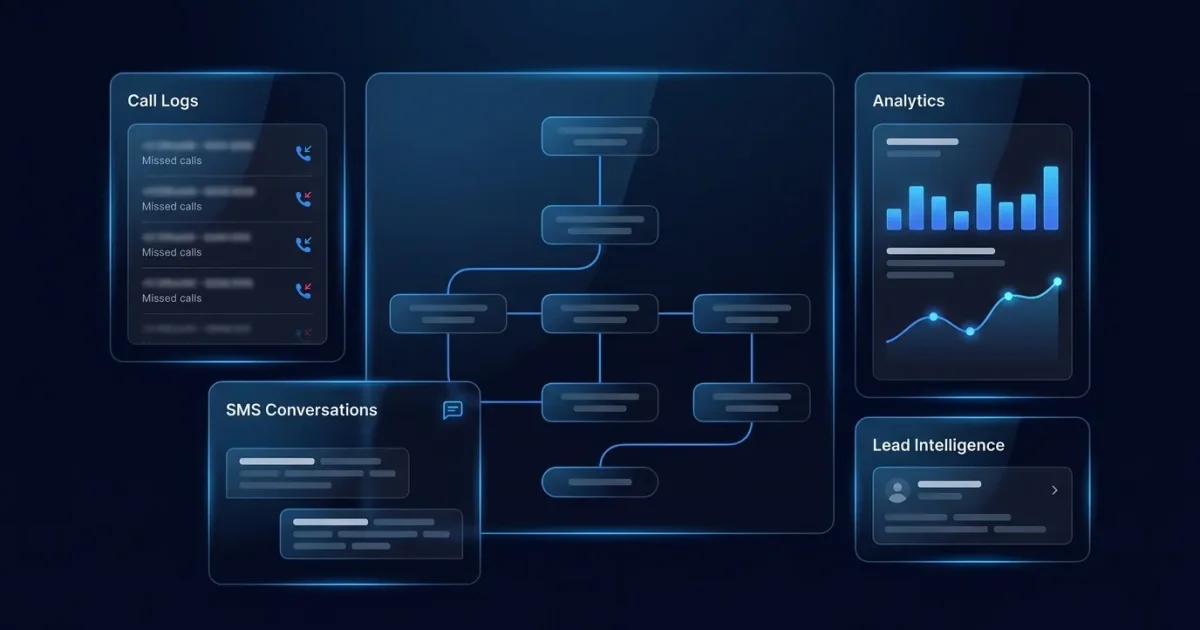
A production-grade automatic missed call recovery system executes four steps on every unanswered inbound call.
- Detect the missed call. The platform identifies that an inbound call went unanswered during business hours, after hours, or on weekends, and immediately flags the event for recovery.
- Real-time consent and DNC check. Before any outbound contact starts, the system checks the caller’s number against federal and state Do Not Call (DNC) registries and validates that prior express written consent exists for the intended channel.2 This check runs at dial time, not queue time, because DNC lists update daily. Operators should consult qualified counsel regarding their specific TCPA and DNC obligations.
- Channel selection via decision matrix. The system routes the recovery attempt to AI SMS or AI voice callback based on configured rules, time of day, the recipient’s local time zone, and the nature of the original inquiry.
- Execute and log to stateful database. The outbound contact fires, the AI agent runs the conversation, and every interaction is written to a persistent stateful record keyed to the caller’s phone number or ID. That record is available to every subsequent channel.
The operational case for sub-5-second recovery is well quantified. The odds of contacting a web lead drop roughly 100 times when waiting 30 minutes to call instead of 5 minutes, and the odds of qualifying the lead drop 21 times over the same interval, per the Lead Response Management Study by Dr. James Oldroyd at MIT Sloan with InsideSales.com.3 For inbound phone calls, elite speed-to-lead performance is defined as answering immediately or within 5 minutes.
Plura AI’s missed-call recovery runs on its own FCC-licensed audio bridging carrier, not a third-party CPaaS (Communications Platform as a Service). That carrier ownership affects branded caller ID issuance, real-time DNC scrubbing, and SHAKEN/STIR caller ID verification, which are enforced at the carrier level rather than bolted on later.
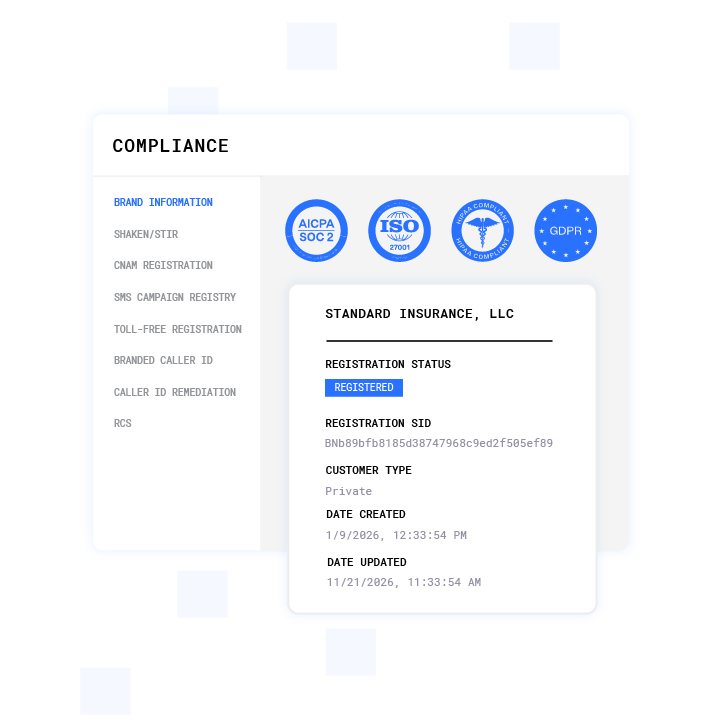
Watch the 4-step recovery workflow handle a live call during a demo.
Automatic SMS Responses for Missed Calls
Automated SMS responses to missed calls function as a standard recovery channel and follow the same regulatory framework as automated voice calls under 47 CFR 64.1200.2 Prior express written consent is required for automated texts, and the consent must specifically authorize SMS contact rather than general contact permission. Operators should review their consent records and consult qualified counsel before deploying automated SMS recovery at scale.
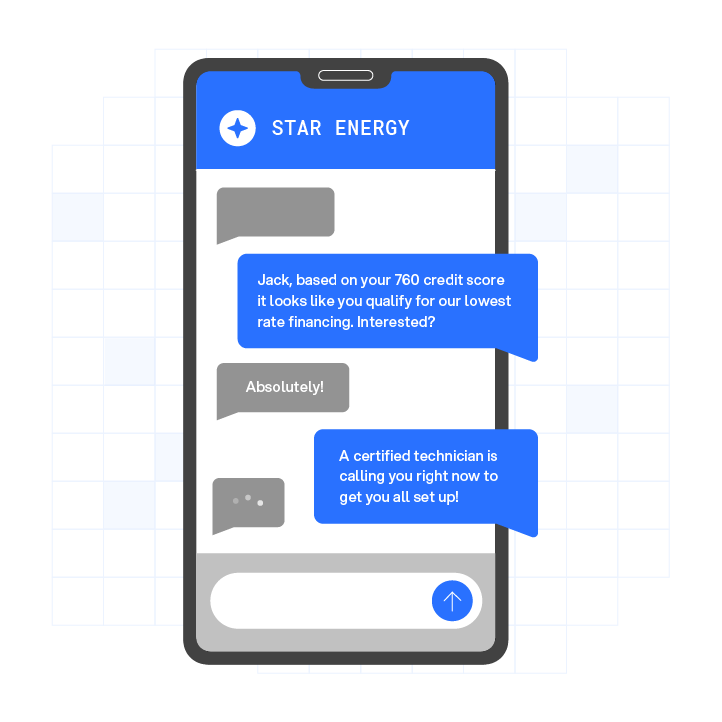
The choice between AI SMS and AI voice callback depends on the use case. The table below compares the two channels across four dimensions.
| Dimension | AI SMS Recovery | AI Voice Callback | Notes |
|---|---|---|---|
| Speed | Delivered in seconds. Twilio reports a 98% SMS open rate and cites industry studies showing 90% of messages read within three minutes.3 | Initiated in under 5 seconds on Plura’s FCC-licensed carrier | Both channels fire within the same recovery window on Plura |
| Conversion | Podium states that automated text follow-up saves a proven 58% of missed-call customers from moving on to competitors.3 | 78% of home service jobs go to the first contractor to respond, per ServiceTitan 2025 data.4 | Voice is preferred for high-intent or high-ticket inquiries |
| Cost per contact | Lower per-message cost and scales to bulk campaigns | Higher per-minute cost, often offset by higher close rates on qualified leads | See Plura’s plans and rates for current pricing |
| Compliance | Requires prior express written consent, 10DLC registration, quiet-hours enforcement, and real-time DNC scrubbing per TCPA requirements. Consult qualified counsel. | Requires prior express written consent, SHAKEN/STIR authentication, and real-time DNC scrubbing. AI-generated voice disclosure obligations apply. Consult qualified counsel. | Plura supports compliance infrastructure for both channels, and operators retain their own regulatory obligations. |
Plura supports both channels from a single workflow, and the Stateful Conversation Database carries context across whichever channel the customer uses first.
Structured Workflow to Recover Missed Calls
In an observational study of 85 small businesses across 58 industries, approximately 62% of inbound calls went unanswered. Home services businesses experience missed-call rates that vary by source, commonly around 27% or 62%, with approximately 85-86% of callers who reach voicemail not leaving a message or calling back. Recovering those calls requires a structured outbound workflow with compliance checks built into every step.
A production missed-call recovery sequence on Plura runs as follows.
- Missed call detected. The platform flags the unanswered inbound event in real time.
- DNC scrubbing at dial time. The caller’s number is checked against federal and state DNC registries before any outbound contact starts. DNC scrubbing must occur at dial time rather than queue time because federal and state DNC lists update daily.
- Consent validation. The system confirms that valid prior express written consent exists for the intended channel and call purpose. A number captured through caller ID or ANI does not, by itself, create consent for future autodialed or prerecorded solicitation. Operators should consult qualified counsel on their specific consent obligations.
- Quiet-hours enforcement. The platform applies the recipient’s local time zone, not the sender’s, to determine whether the contact window is open. Several states impose stricter limits than the federal TCPA baseline, including Alabama and Louisiana (8:00 AM to 8:00 PM, no Sundays or legal holidays) and South Dakota (9:00 AM to 9:00 PM Monday through Saturday, no Sundays).
- Outbound contact fires. The AI agent initiates the SMS or voice recovery attempt with SHAKEN/STIR caller ID verification and branded caller ID on voice calls.
- Interaction logged. Every touchpoint is written to the Stateful Conversation Database with a full audit trail, including timestamps, channel, consent status, and outcome code.
Plura supports compliance infrastructure covering SOC 2, HIPAA, ISO certification, GDPR, SHAKEN/STIR caller ID verification, TCPA compliance, and DNC compliance.1 Operators retain their own regulatory obligations and should direct compliance questions to qualified counsel. Compare Plura’s plans and rates to see which tier fits your recovery volume.
Stateful Memory Across Voice, SMS, and Webchat
Generic missed-call tools treat each channel as a separate event. A caller who receives an SMS at 9 a.m. and a voice callback at noon must re-explain themselves if those two touches run on different systems with no shared memory. Plura’s Stateful Conversation Database removes that gap by keying every interaction to the same customer token across voice, SMS, RCS (Rich Communication Services), and webchat.
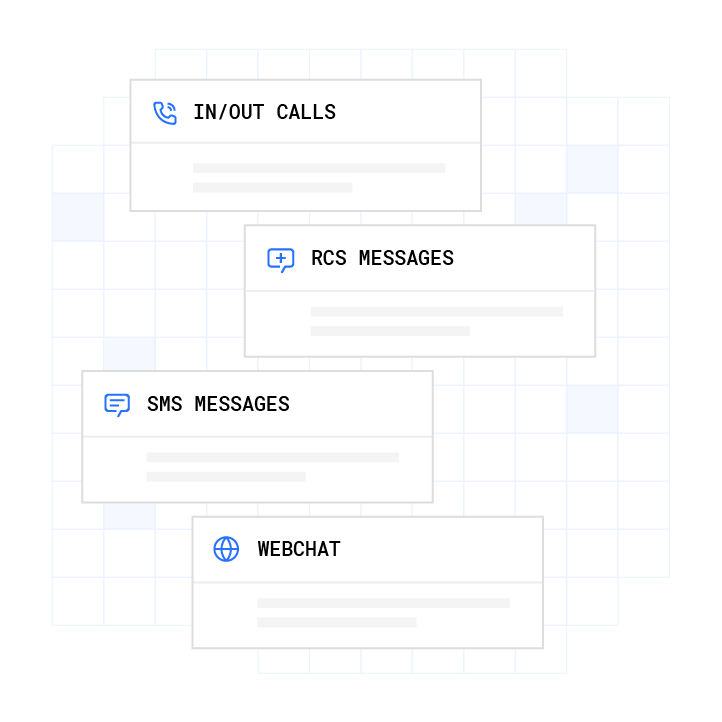
The three-touch example below shows how this works in practice.
- 9:00 a.m. – AI SMS sent. The missed-call recovery workflow fires an AI SMS to the caller. The message references the original inquiry context. The caller replies with a pricing question. That reply and the AI’s response are written to the stateful database.
- 12:00 p.m. – AI voice callback. The caller does not book via SMS. The workflow triggers an AI voice agent callback at noon. The agent already knows the caller’s name, the pricing question raised at 9 a.m., and the qualification status from the SMS thread.
- 12:05 p.m. – CRM updated. The voice call concludes. The full transcript, qualification outcome, and any offers made are written back to the CRM via Plura’s integrations layer. The sales team sees a complete record without manual data entry.
This is what managed workflows with stateful memory deliver at scale. Conversations feel continuous to the customer and generate clean, structured data for the operator. Many brands still operate siloed systems and fragmented communication that block a unified view of customer data. Plura’s architecture is built to counter that pattern.
After-Hours and Weekend Call Handling
Franchises average a 67% missed-call rate during peak hours. After-hours and weekend gaps compound that number further. An AI voice agent running 24/7 on Plura’s carrier answers every inbound call within two rings regardless of the time, day, or staffing level.
The after-hours workflow on Plura includes four capabilities that keep those interactions compliant and actionable.
- Quiet-hours enforcement by recipient time zone, applied automatically to every outbound recovery attempt
- Configurable escalation rules that route urgent contacts to an on-call human agent via warm transfer
- After-hours booking flows that write confirmed appointments directly to the operator’s calendar integration
- Full conversation transcripts logged to the Stateful Conversation Database so the morning team opens with complete context on every after-hours interaction
Voicemail-and-callback workflows capture only 10 to 20% of missed-call value, while AI front desk captures 70 to 85% of missed calls through in-call conversion rates of 35 to 60%. For home services operators, Plura’s after-hours call answering workflow is designed to book jobs, send confirmations, and log them to the CRM while the team is off the clock.
Schedule a walkthrough of an after-hours recovery workflow tuned to your call patterns.
CRM Integration and Lead Routing
Automatic missed call recovery creates value only when the recovered lead lands in the right place. Plura’s CRM integration layer connects the recovery workflow to the operator’s existing systems without requiring a platform replacement.
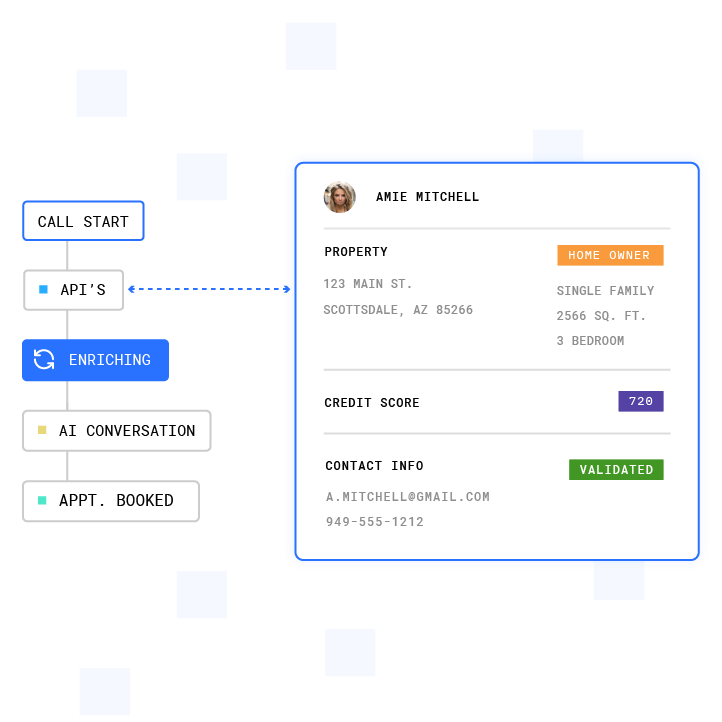
The integration sequence runs as follows.
- Missed call event triggers the workflow. The platform identifies the unanswered call and initiates the recovery sequence.
- Lead record created or matched. Plura’s AI Lead Intelligence layer enriches the caller’s number with 30-plus data sources in real time, then matches or creates a record in the connected CRM such as HubSpot, Salesforce, or Zoho.
- Conversation conducted and logged. The AI agent handles the recovery contact. Every exchange is written to the CRM record as a structured activity log.
- Routing logic applied. Based on qualification outcome, the lead is routed to the appropriate sales queue, booked on the appropriate calendar such as Cal.com, Calendly, or Google Calendar, or flagged for human follow-up in the Unified Inbox.
- Post-call actions fire. Automations via Make, Zapier, or Go High Level trigger downstream tasks such as confirmation SMS, pipeline stage updates, or team notifications in Slack or Microsoft Teams.
The full integration directory covering 50-plus tools across CRM, calendars, attribution, payments, and data enrichment is at plura.ai/integrations.
ROI Measurement with Plura’s Calculator
The financial case for automatic missed call recovery is straightforward to model. An ROI framework using missed call volume, average ticket size, and automated versus manual conversion rates can project significant annual value for home services businesses.
Plura’s default ROI scenario, available at plura.ai/calculator, models a 15-agent operation at $20 per hour with standard taxes, benefits, and commissions at a 40% talk-utilization rate, costing $60,000 per month.3 Replacing that team with Plura at $15 per hour, 100% talk utilization, and 6 Plura agents doing the work of 15 humans drops the monthly cost to $14,400.
- 30-day savings: $45,600
- 12-month savings: $547,200
- 60-month savings: $2,736,000
For higher-volume operations, Plura’s total cost of ownership of $300,000 to $700,000 per year replaces traditional contact-center economics of $4 million to $7 million on equivalent volume. Operators running 500-plus daily interactions can run their own numbers through Plura’s ROI calculator to check the math against their actual call volume, average ticket, and current staffing cost.
Compare Plura’s plans and rates side by side.
Frequently Asked Questions About Missed Call Recovery
What is automatic missed call recovery and how does it differ from a standard voicemail callback?
Automatic missed call recovery is a system that detects an unanswered inbound call in real time and immediately initiates a compliant outbound contact, either via AI SMS or AI voice callback, without any manual step. A standard voicemail callback depends on a human agent listening to the message, logging the number, and returning the call, a process that typically takes hours. Automatic recovery fires within seconds of the missed call event, checks the caller’s number against DNC registries and consent records before contact, and logs every interaction to a stateful database. The practical difference is the gap between a 5-second recovery and a 47-hour average response time, and that gap directly affects whether the lead converts or calls a competitor.
Does Plura’s missed call recovery work across both SMS and voice, and can it switch channels mid-sequence?
Plura’s recovery workflows support AI SMS and AI voice callback from a single platform, and the Stateful Conversation Database carries full context across both channels. If a caller receives an SMS recovery message at 9 a.m. and does not book, the workflow can escalate to an AI voice callback at noon. The voice agent already knows what was said in the SMS thread, the caller’s qualification status, and any offers made, so the conversation picks up without the caller having to repeat themselves. Channel switching is configured in the no-code workflow builder and can be set to trigger based on time elapsed, response status, or lead score.
How does Plura handle compliance for automated missed call recovery at scale?
Plura supports compliance infrastructure covering SOC 2, HIPAA, ISO certification, GDPR, SHAKEN/STIR caller ID verification, TCPA compliance, and DNC compliance. Every outbound recovery contact is checked against federal and state DNC registries at dial time, not queue time. Quiet-hours rules enforce automatically based on the recipient’s verified local time zone. Consent records are timestamped, immutable, and stored in an audit-ready format. SHAKEN/STIR authentication runs on every outbound voice call. Operators retain their own regulatory obligations and should consult qualified counsel regarding their specific TCPA, DNC, and state-law requirements. Plura provides the infrastructure, and compliance posture downstream of that remains the operator’s responsibility.
What makes Plura different from other missed call recovery tools that use SMS automation?
Most SMS automation tools for missed call recovery are API resellers built on top of third-party telecom carriers. They do not own the carrier stack, cannot issue branded caller ID at the carrier level, and cannot enforce real-time DNC scrubbing as a first-class platform layer. Plura is its own FCC-licensed audio bridging carrier. Branded caller ID is issued directly, SHAKEN/STIR authentication runs at origination, and DNC scrubbing is enforced before every dial, not as a bolt-on. The second distinction is stateful memory. Most SMS tools treat each message as a standalone event. Plura’s Stateful Conversation Database keys every interaction to the customer across voice, SMS, RCS, and webchat, so a recovery sequence that starts as a text and escalates to a call carries full context without the customer repeating themselves.
How quickly can Plura’s missed call recovery be deployed for a high-volume operation?
Deployment timelines depend on conversation complexity. A straightforward inbound qualification and recovery flow is typically built in days. A more complex multi-step intake or negotiation workflow runs closer to one to two months because the workflow logic itself requires design and validation. Plura’s onboarding sequence covers a discovery audit of the operator’s call economics, intake of sample calls and existing scripts, an overnight build of a dynamic conversation mockup, a review meeting, engineering build of the production workflow, a pilot test on a subset of real calls, and full go-live. Every annual contract includes a 90-day opt-out window, so if the deployment is not delivering, operators are not held to the annual term.
1 Plura AI maintains SOC 2, HIPAA, ISO, and GDPR posture as part of its platform infrastructure. References to compliance frameworks in this article describe Plura’s platform capabilities and do not constitute a guarantee that any customer using Plura will themselves be compliant with applicable laws or standards. Customers remain solely responsible for their own regulatory obligations, certifications, consent management, recordkeeping, and the claims they make to their own end users. Consult qualified legal counsel for guidance specific to your use case.
2 This article describes regulatory frameworks at a general level and does not constitute legal advice. Laws and regulations vary by jurisdiction, change over time, and apply differently depending on facts and circumstances. Readers should consult qualified legal counsel before making compliance decisions.
3 Performance figures, customer outcomes, and industry statistics referenced in this article are drawn from cited third-party sources or Plura customer case studies. Individual results vary based on implementation, use case, industry, audience, and execution. Past or aggregate performance is not a guarantee of future results.
4 References to third-party products, services, companies, or research are made for informational and comparative purposes only. Plura AI is not affiliated with, endorsed by, or sponsored by any third party named in this article unless explicitly stated. Trademarks and product names referenced remain the property of their respective owners.
This article is provided for informational purposes only and reflects Plura AI’s understanding at the time of publication. Product capabilities, integrations, and specifications are subject to change. For the most current information, visit plura.ai.
This article was produced with the assistance of AI tools and reviewed by Plura AI prior to publication.