
Written by: Matt Beucler, CEO, Plura AI
Key Takeaways
- AI predictive dialers increase agent talk time from 15 minutes to 45-52 minutes per hour by cutting idle time and connecting only live answers.
- Sub-5-second first contact drives higher revenue, with leads reached in under a minute far more likely to convert than those contacted a day later.
- Real-time DNC scrubbing, TCPA enforcement support, and carrier-grade branded caller ID reduce spam labels and regulatory risk while improving pickup rates by up to 45%.
- Stateful cross-channel memory carries context from SMS, webchat, and prior calls into every interaction, which removes repetition and supports personalized follow-ups.
- Plura AI’s FCC-licensed AI Predictive Dialer delivers these outcomes on 100% U.S. infrastructure with native compliance support — learn more about Plura AI.
How AI Predictive Dialers Work in Modern Contact Centers
An AI predictive dialer uses statistical algorithms and real-time answer-rate data to launch multiple outbound calls at once, then connects only live answers to available agents. Plura AI’s implementation adds carrier-grade branded caller ID, real-time DNC scrubbing, and stateful memory across voice, SMS (Short Message Service), RCS (Rich Communication Services), and AI webchat. The following sections outline five measurable advantages that separate AI predictive dialers from legacy systems.
1. 25-40% Talk-Time Lift for Human Agents
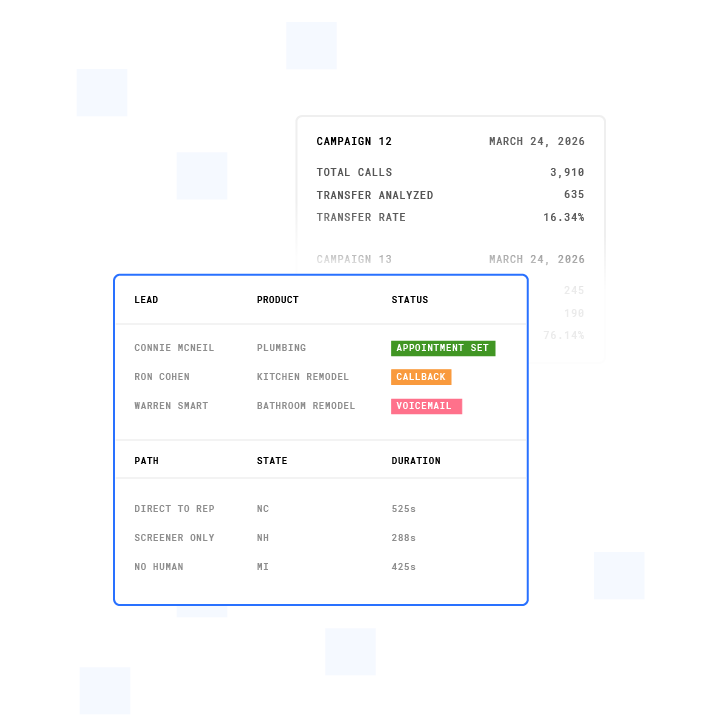
Industry data shows predictive dialers increase agent talk time from roughly 15 minutes per hour to approximately 45-52 minutes per hour.3 Manual or click-to-dial agents typically spend only 15-20 minutes per hour in live conversation, which leaves most of the hour in ringing, voicemail, or manual logging.
Plura’s stateful pacing and AI intent capture reduce idle time between dials and filter out low-intent calls. AI-enhanced predictive dialers allow agents to complete significantly more conversations per shift compared to manual dialing because the system removes idle time and routes only intent-qualified calls to agents. This productivity gain converts directly into lower cost per conversation and higher revenue per seat.
See how these productivity gains translate to your operation with Plura’s ROI calculator.
Regulatory Status of Predictive Dialers in 2026
Predictive dialers remain in use in the United States when operators follow established regulatory parameters. The FCC’s TCPA implementing rules apply a 3% cap on predictive-dialer abandonment for calls answered by a live person.2 The FTC’s Telemarketing Sales Rule (TSR) under 16 CFR 310.4(b)(1)(ii) also applies a 3% abandonment cap, measured over the duration of a campaign.2
The FCC’s April 2026 Know Your Customer proposal does not prohibit predictive dialing.2 Operators may continue using the technology when they document consent, honor opt-outs, maintain compliant pacing, and use caller IDs they own and have registered. Operators should consult qualified legal counsel about their specific obligations under applicable federal and state rules.
Plura enforces the abandonment limit at the carrier level with real-time monitoring and plays the required identification message on abandoned calls within two seconds of the called party’s completed greeting. Beyond regulatory considerations, AI predictive dialers also deliver clear operational advantages over legacy systems.
2. Sub-5-Second First Contact for New Leads
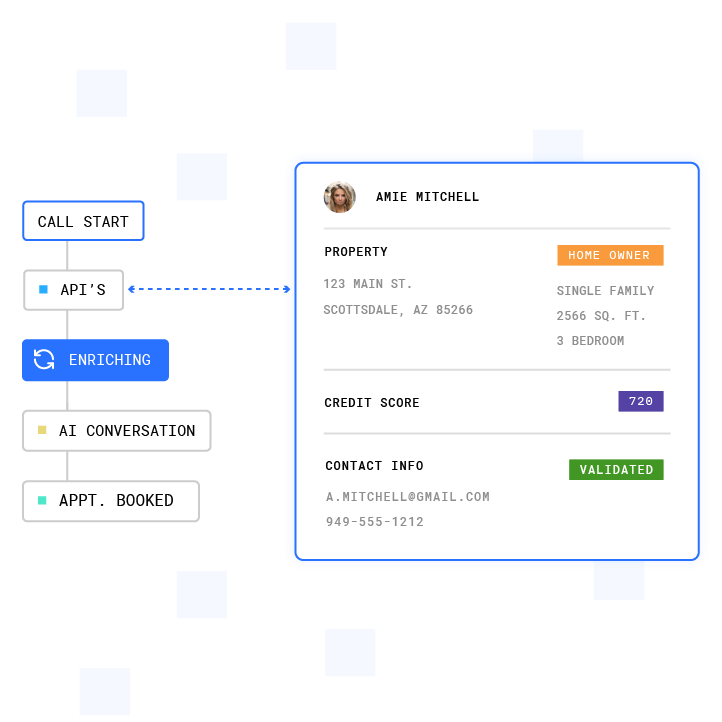
Plura’s AI Predictive Dialer initiates contact in under 5 seconds, compared to the 47-hour industry average for manual lead follow-up. A Harvard Business Review study found that companies responding within five minutes are 100x more likely to connect with a prospect than those waiting 30 minutes. The speed advantage directly affects conversion, and the 391% improvement cited in the key takeaways reflects contact within the first minute instead of waiting 24 hours.
Most prospects buy from the first credible responder they speak with, and one study found that 78% choose the first responder. Speed-to-lead functions as a direct revenue driver, not a soft metric, because it determines who reaches the customer while intent is still high.
Abandoned Call Rules for Predictive Dialers
Both FCC and FTC rules apply a 3% cap on abandonment for live-answered calls. The rules are distinct and cumulative. The FCC measures abandonment per campaign over a 30-day rolling window, while the FTC measures abandonment per campaign per day. Companies often retain raw call detail records, AMD (Answering Machine Detection) dispositions, agent logs, and rate calculations for at least four years under 28 U.S.C. § 1658 to support their position in TCPA-related disputes.
Plura logs every call disposition, plays the required identification message within two seconds on abandoned calls, and retains records that can support audit defense. Operators remain responsible for their own compliance posture and should consult counsel regarding record-retention practices that fit their campaigns.
3. Real-Time DNC and TCPA Compliance Support
Plura scrubs every outbound number against federal and state DNC registries before dialing. Consent records carry timestamps and cannot be altered. Quiet-hours rules apply automatically by time zone, including state-specific windows that extend beyond the federal 8 a.m. to 9 p.m. standard. TCPA-related claims can involve statutory damages of $500 per call for ordinary violations and $1,500 per call for willful or knowing violations, with no statutory cap on aggregate exposure.
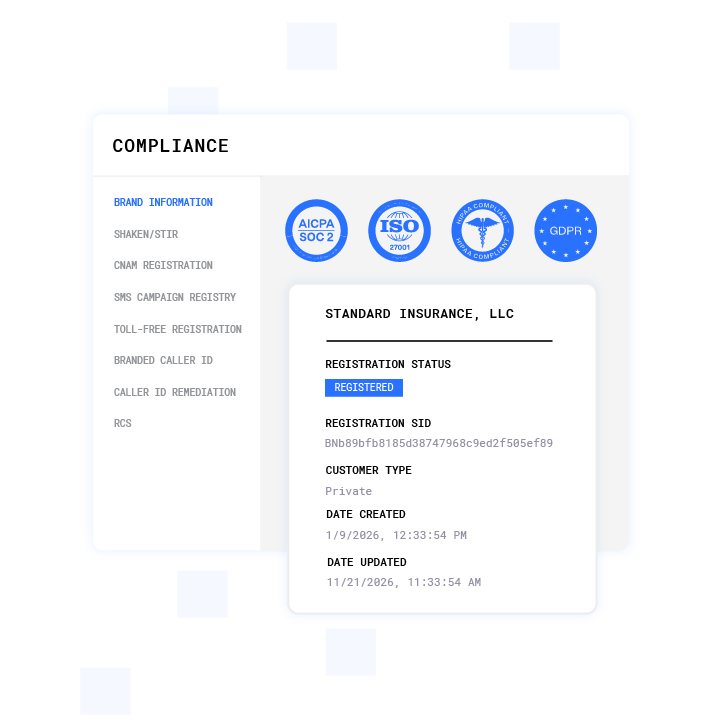
Plura supports SOC 2, HIPAA, ISO certification, GDPR, SHAKEN/STIR (Secure Telephone Identity Revisited/Signature-based Handling of Asserted information using toKENs) caller ID verification, TCPA compliance support, and DNC compliance support.1 Plura provides the infrastructure and controls that support compliance, while customers remain responsible for their own regulatory posture and certifications.
4. Branded Caller ID and Spam Label Remediation
Industry reports indicate that 80% of Americans do not answer cellphone calls from unknown numbers. Calls labeled “Spam Likely” by carrier algorithms experience sharp drops in pickup rates. Plura issues branded caller ID directly through its FCC-licensed carrier and addresses spam labels at the carrier level rather than at the application layer.
Plura’s integration with Number Verifier improves outbound call connection rates by up to 45%3 through built-in spam prevention. Twilio-based API resellers cannot issue branded caller ID at the carrier level because they do not own the carrier.4 They inherit the CPaaS (Communications Platform as a Service) provider’s number reputation instead, which limits control over spam labeling.
AI Predictive Dialer Cost per Contact
The cost math for AI predictive dialing is straightforward. Plura’s ROI calculator estimates monthly human agent costs at $60,000 for 15 agents working 2,400 total hours at $20 per hour, including 25% for taxes, benefits, and commissions, with 40% talk utilization. The same 2,400 hours of productive talk time at 100% utilization requires only 6 Plura agents at a monthly cost of $14,400.
The resulting figures show a 30-day ROI of $45,600, 12-month ROI of $547,200, and 60-month ROI of $2,736,000.3 For larger operations, a 100-seat contact center running traditional operations often spends $4 million to $7 million annually, while AI-powered communications using platforms like Plura typically range from $300,000 to $700,000. Calculate your potential savings based on your current contact center costs.
Compliance-Risk Comparison by Dialer Type
| Dialer Type | Carrier Ownership | Real-Time DNC | Branded Caller ID | 100% U.S. Infrastructure | SOC 2 / HIPAA / SHAKEN/STIR |
|---|---|---|---|---|---|
| Legacy predictive dialers | No | Manual | Limited | Partial | Bolt-on |
| Offshore BPOs | Third-party | Varies | No | No | Varies |
| Twilio-wrapper AI tools (e.g., Synthflow)4 | No (depends on Twilio infrastructure) | Bolt-on | No | No | Bolt-on |
| Plura AI Predictive Dialer | Yes (FCC-licensed) | Yes | Yes | Yes | Native |
Carrier ownership data appears in the Plura AI vs. Synthflow comparison and the Plura AI vs. Vapi comparison.4 Infrastructure and compliance details are covered in the Plura AI Communications Strategy Guide.
5. Stateful Cross-Channel Memory Across Voice, SMS, and Webchat
Most AI voice and SMS tools operate as separate products from different vendors with separate memories. A customer who texted at 9 a.m. often has to repeat their story when a call arrives at noon. Plura’s Stateful Conversation Database carries context from prior SMS or AI webchat sessions into the next voice call, which removes repetition for the customer.
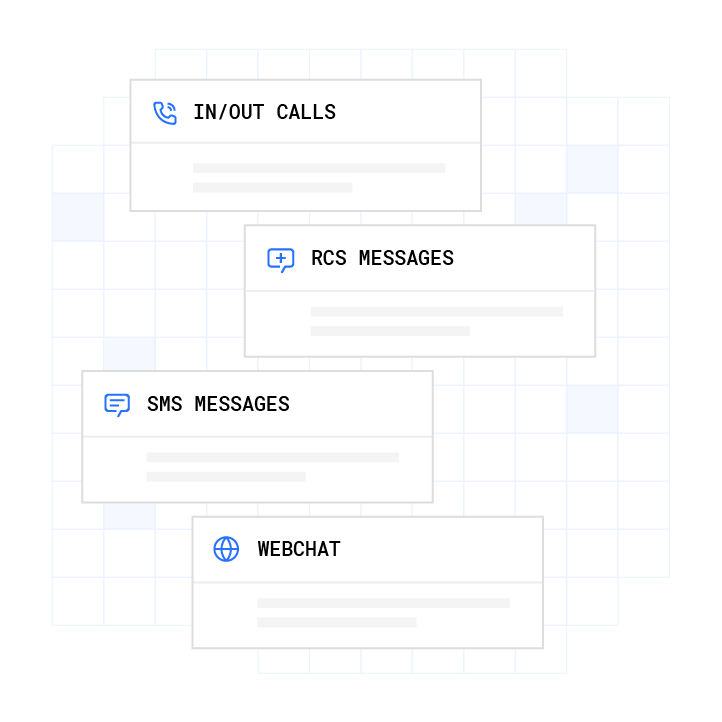
Plura uses a stateful AI architecture that remembers previous interactions, preferences, and outcomes across channels. This design supports better personalization and more accurate follow-ups. Every channel inherits the full memory of prior touchpoints, including pricing offers made, objections raised, and qualification status.
This architecture also aligns with the emerging 2026 regulatory environment. The FCC NPRM (CG Docket No. 26-52) proposes restrictions on offshore handling of sensitive consumer data. Plura’s voice origination, model hosting, data storage, and call recording all run on domestic infrastructure, which avoids the offshore exposure that affects many Twilio-based API resellers and offshore BPOs.
Frequently Asked Questions
What does a predictive dialer do?
A predictive dialer uses statistical algorithms to dial multiple outbound numbers at once and predicts when agents will become available based on historical call durations and real-time answer rates. When a live person answers, the system connects that call to an available agent immediately. Calls that reach voicemail, busy signals, or no answer stay out of the agent queue. An AI predictive dialer adds intent capture and stateful memory, so agents receive pre-qualified calls with full context from prior interactions across voice, SMS, RCS, and webchat.
Which predictive dialer software fits high-volume U.S. operators in 2026?
Platform selection usually depends on three factors: carrier ownership, compliance architecture, and infrastructure location. Twilio-based API resellers cannot issue branded caller ID at the carrier level, cannot enforce real-time DNC scrubbing natively, and often rely on offshore infrastructure that may fall under the FCC NPRM CG Docket No. 26-52. Plura is an FCC-licensed carrier that owns the full stack, including voice origination, branded caller ID issuance, SHAKEN/STIR authentication, and real-time DNC scrubbing, all on 100% U.S. infrastructure. For operators running 500 or more daily interactions, this carrier-stack distinction affects pickup rates, compliance posture, and cost per contact.
How is AI used in predictive analysis for outbound dialing?
AI improves predictive dialing in three core areas. First, pacing: AI models analyze historical answer rates, time-of-day patterns, and agent availability in real time to set the dial ratio dynamically, which reduces abandoned calls while increasing talk time. Second, intent capture: AI voice layers ask two or three structured qualification questions before routing to a human agent, so agents receive summarized context instead of cold connections. Third, prioritization: AI ranks the calling list by conversion probability using enrichment data from more than 30 sources, so the highest-intent contacts receive calls first. Plura’s implementation combines all three layers on a single stateful platform, and the AI’s predictions improve as each interaction enters the Stateful Conversation Database.
What is the difference between a predictive dialer and an auto dialer?
An auto dialer is the broad category for any system that dials numbers automatically from a list. A predictive dialer is a specific type of auto dialer that uses algorithms to dial multiple numbers at once and predict agent availability, which maximizes talk time but introduces some abandoned-call risk. A power dialer calls one number at a time only when an agent is ready, which removes abandonment risk but lowers throughput. A progressive dialer presents the agent with CRM context before automatically dialing, which blends some predictive efficiency with agent preparation. AI predictive dialers add real-time intent capture, stateful memory, and dynamic pacing to the predictive model, which supports higher contact rates with lower abandonment and embeds compliance controls into the dialing architecture.
Conclusion: Quantifying the Shift to AI Predictive Dialing
High-volume U.S. operators using legacy dialers or offshore BPO contracts face a compounding problem in 2026. They see low talk-time utilization, rising spam-label risk, and growing regulatory exposure under the FCC NPRM CG Docket No. 26-52 and state onshoring laws. The economics of legacy infrastructure no longer hold. A 15-agent team at 40% talk utilization costs $60,000 per month, while six Plura agents at 100% utilization deliver the same volume for $14,400.
Plura’s FCC-licensed AI Predictive Dialer delivers the quantified productivity and compliance support that modern operations require in 2026. The platform provides a 25-40% talk-time lift, sub-5-second first contact, real-time DNC scrubbing, carrier-grade branded caller ID, and stateful cross-channel memory on 100% U.S. infrastructure. No Twilio wrapper, no offshore exposure, and no bolt-on compliance stack.
Model your specific ROI scenario using Plura’s calculator.
1 Plura AI maintains SOC 2, HIPAA, ISO, and GDPR posture as part of its platform infrastructure. References to compliance frameworks in this article describe Plura’s platform capabilities and do not constitute a guarantee that any customer using Plura will themselves be compliant with applicable laws or standards. Customers remain solely responsible for their own regulatory obligations, certifications, consent management, recordkeeping, and the claims they make to their own end users. Consult qualified legal counsel for guidance specific to your use case.
2 This article describes regulatory frameworks at a general level and does not constitute legal advice. Laws and regulations vary by jurisdiction, change over time, and apply differently depending on facts and circumstances. Readers should consult qualified legal counsel before making compliance decisions.
3 Performance figures, customer outcomes, and industry statistics referenced in this article are drawn from cited third-party sources or Plura customer case studies. Individual results vary based on implementation, use case, industry, audience, and execution. Past or aggregate performance is not a guarantee of future results.
4 References to third-party products, services, companies, or research are made for informational and comparative purposes only. Plura AI is not affiliated with, endorsed by, or sponsored by any third party named in this article unless explicitly stated. Trademarks and product names referenced remain the property of their respective owners.
This article is provided for informational purposes only and reflects Plura AI’s understanding at the time of publication. Product capabilities, integrations, and specifications are subject to change. For the most current information, visit plura.ai.
This article was produced with the assistance of AI tools and reviewed by Plura AI prior to publication.