

Written by: Matt Beucler, CEO, Plura AI
Key Takeaways
- Most AI scheduling tools rely on static calendar links and ignore live voice or SMS conversations, which limits performance for high-volume service businesses.
- Traditional platforms lack built-in support for TCPA, DNC, and HIPAA frameworks, which leaves operators exposed to regulatory risk.
- Plura AI is the only FCC-licensed platform that books appointments inside live conversations across voice, SMS, RCS, and webchat with full stateful memory.
- High-volume operators see faster response times, higher connection rates, and fewer no-shows with a voice-first, multi-channel AI platform instead of text-link tools.
- Businesses ready to modernize scheduling can see Plura AI in a live demo and experience end-to-end appointment booking across every channel.
The Limits of Text-Link AI Scheduling Tools
Most AI scheduling tools on the market today, including Calendly, Motion, and Reclaim.ai, run on a text-link model.4 A prospect fills out a form, receives a booking link, and either clicks it or does not. There is no live conversation, no qualification, and no follow-up if the link goes ignored.
For a clinic handling 500 daily patient inquiries, an agency managing multi-client lead flows, or a franchise network running across dozens of locations, that model breaks down quickly. Organizations deploying AI for speed-to-lead see response times drop from hours to seconds and connection rates increase by 3x to 5x.3 Text-link tools cannot reach those numbers because they depend on the prospect taking action, not the platform.
Beyond performance limitations, text-link tools also expose operators to significant compliance risk. Automated appointment reminders that include protected health information sent via SMS are subject to both HIPAA and TCPA requirements.2 Most calendar-link tools have no mechanism to enforce consent records, scrub DNC lists in real time, or apply state-level quiet-hours rules. Operators using those tools carry the compliance exposure themselves, with no infrastructure support underneath them.
The combined effect is missed calls, higher no-show rates, and regulatory risk that sits directly on the operator’s balance sheet.
See how Plura handles live voice and SMS appointment booking end to end in a tailored demo.
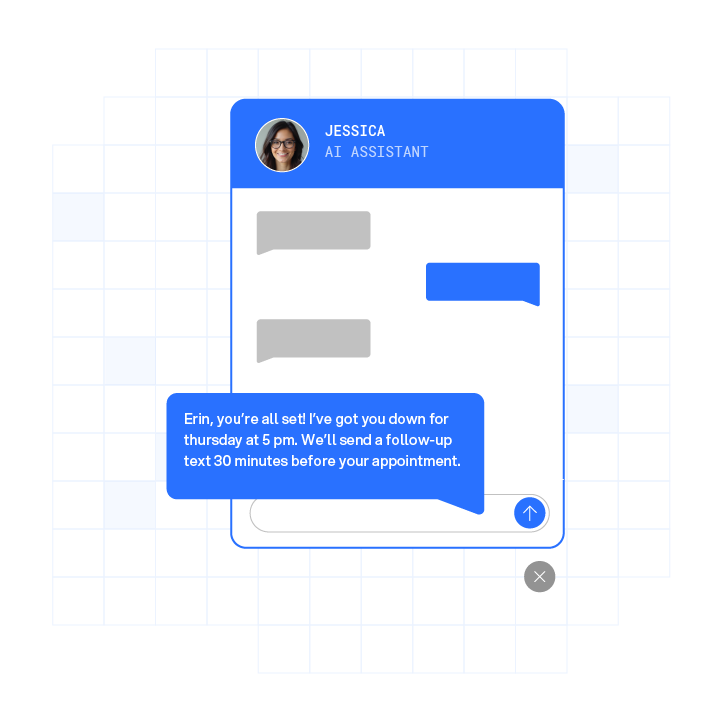
Free AI Scheduling Assistants and Their Ceiling
Free-tier scheduling tools, including Calendly’s free plan and Google Calendar’s native booking pages, handle one narrow use case. They let a known contact pick an open time slot. They do not initiate outreach, handle inbound calls, qualify leads, or operate across SMS and voice at the same time.
For a high-volume service business, the cost of a free tool shows up as missed opportunities, not subscription fees. The industry standard for first contact on an inbound lead is 47-plus hours. When first contact takes nearly two days, operators need tools that actively reduce that delay. Free scheduling tools do the opposite. They wait for the prospect to arrive instead of initiating contact.
Free tools also provide no compliance infrastructure. There is no DNC scrubbing, no TCPA consent ledger, and no HIPAA-aligned encryption. For any business operating in healthcare, financial services, or legal, that gap can be material. Leaders should consult qualified counsel to understand the specific obligations that apply to their outreach programs.
The practical ceiling for free AI scheduling assistants is a solo operator with low inbound volume and minimal regulatory exposure. Above that threshold, the economics of a purpose-built platform become straightforward.
AI Receptionist for Salons, Spas, and Studios
Salons, spas, and wellness studios share a consistent operational pattern. They see high inbound call volume, staff cannot answer the phone while with a client, and the booking window closes the moment a caller hangs up and contacts a competitor.
Plura AI voice agents answer 100% of inbound calls across all locations within two rings. They handle the booking conversation in real time without putting the caller on hold or routing them to voicemail. The same agent that answers the call can send an SMS confirmation, follow up if the appointment is not confirmed, and flag the interaction in a unified inbox for staff review.
Stateful memory directly improves these experiences. Memory-enhanced conversational AI agents maintain context within conversations and across multiple sessions, improving interaction quality and personalization. A client who called last month to reschedule does not need to re-explain their preferences when they call again. The AI already knows the history.
For multi-location salon groups and franchise wellness networks, Plura enables franchises to handle 3x to 5x call volume during peak seasons without temporary staff. A centralized dashboard enforces identical greeting and qualification scripts across every location.
Recovering Revenue From Missed Calls
A missed call in a high-volume service business represents a lost appointment and a lead now contacting a competitor. Plura contacts leads from websites, Google Business Profiles, or ad campaigns within 60 seconds via SMS or voice call. This closes the gap between lead capture and first contact before the prospect moves on.
No-show rates intensify the impact. Plura’s healthcare deployments support up to 40% improvement in no-show rates.3 through automated confirmation and follow-up sequences. These sequences run across voice and SMS without staff involvement.
Response time sits at the center of this performance. Contacting a lead within 5 minutes makes them up to 100x more likely to connect, and a 60-second response lifts conversions by 391%. Plura’s AI agents maintain a sub-5-second response standard across all four channels, 24 hours a day, seven days a week, without a human in the loop for the initial contact.
How Plura’s Voice-First, Multi-Channel Platform Works
Plura AI runs on infrastructure that most AI scheduling tools do not own and cannot replicate quickly. The platform operates as its own FCC-licensed audio bridging carrier. Voice traffic originates on Plura’s domestic infrastructure instead of routing through a third-party Communications Platform as a Service (CPaaS) like Twilio.4 That structure affects caller ID control, compliance enforcement, and per-minute economics.
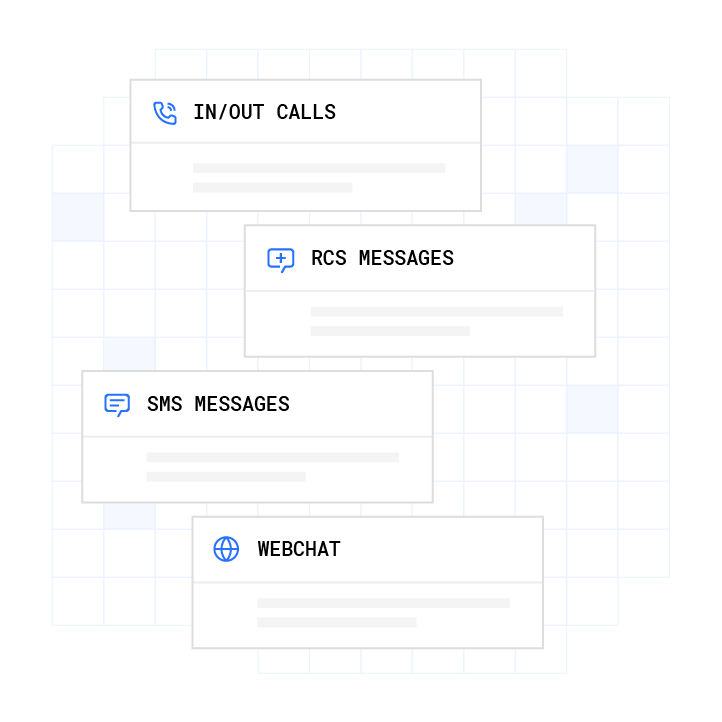
Channel support includes:
- AI Voice: inbound and outbound calls with branded caller ID and SHAKEN/STIR caller ID verification on every call
- AI SMS: 10DLC-registered outbound and inbound messaging with real-time DNC scrubbing
- AI RCS: branded, interactive messages with in-thread document signing and payment processing
- AI Webchat: conversational booking directly on the operator’s website, replacing static forms
All four channels share a Stateful Conversation Database. A lead who texted at 9 a.m. is recognized when the call comes at noon. The AI reads the full prior context and continues the conversation without asking the prospect to repeat themselves.
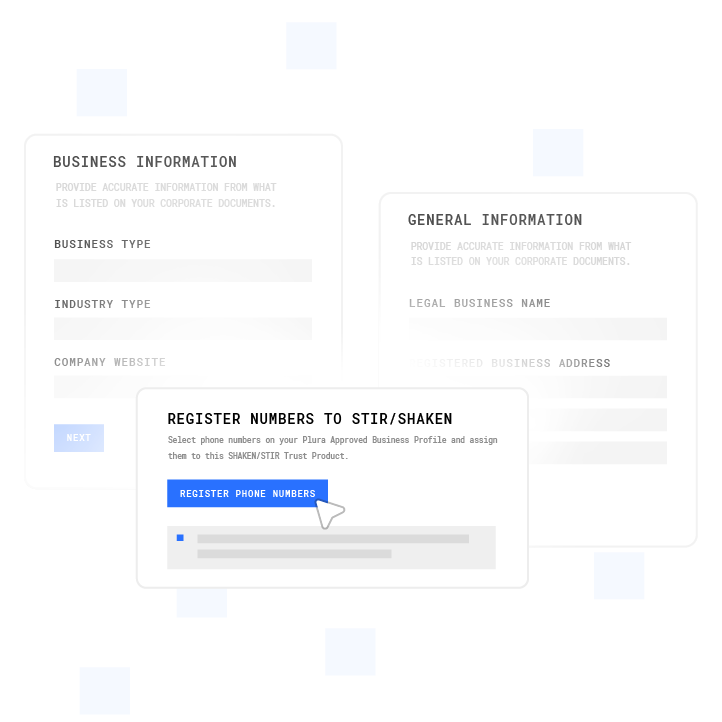
Compliance infrastructure in the platform supports SOC 2, HIPAA, ISO certification, GDPR, SHAKEN/STIR caller ID verification, TCPA frameworks, and DNC frameworks.1 Every outbound contact is checked against federal and state DNC registries before dial. Consent records are timestamped and immutable. Quiet-hours rules apply automatically through time-zone detection. Operators should consult qualified counsel to understand their specific regulatory obligations. Plura provides the infrastructure to support compliance, and the operator’s posture downstream remains their responsibility.
AI contact centers provide 24/7/365 availability compared to business hours plus shifts for traditional offshore operations. In addition, solar and home services companies using AI agents with property data and enrichment signals achieved 2x to 3x improvements in appointment set rates.
Explore a live voice and SMS appointment workflow built for your vertical in a guided Plura demo.
Text-Link Tools vs. Voice/SMS Platforms: Side-by-Side
The table below compares text-link scheduling tools such as Calendly, Motion, and Reclaim.ai against voice and SMS platforms, with Plura as the representative of the latter category. Each row reflects published vendor documentation or verifiable platform behavior.
| Dimension | Text-Link Tools (e.g., Calendly, Motion) | Plura AI (Voice/SMS Platform) |
|---|---|---|
| Channel support | Web-based calendar links, no native voice, SMS, or RCS capability. Prospect must initiate booking action. | Voice, SMS, RCS, and webchat natively in a unified platform with FCC-licensed carrier status. Platform initiates outreach while maintaining the sub-5-second response standard mentioned earlier. |
| Compliance posture | No built-in DNC scrubbing, TCPA consent ledger, or HIPAA-aligned encryption. Operators manage compliance independently. | Support for HIPAA, SOC 2, TCPA, and DNC frameworks with real-time scrubbing and immutable consent records. Operators retain responsibility for their own regulatory obligations. |
| Response time | Dependent on prospect clicking a link. No outbound capability and no sub-minute contact on inbound leads. | Sub-5-second first contact across voice and SMS, compared to a 47-plus-hour industry standard. |
| Infrastructure ownership | SaaS scheduling layer, no carrier license, no branded caller ID issuance, no telecom infrastructure ownership. | Plura owns its telecom infrastructure and holds an FCC carrier license, which enables branded caller ID at the carrier level. |
Frequently Asked Questions
What is the difference between a text-link scheduling tool and a voice/SMS AI scheduling platform?
Text-link tools like Calendly or Motion present a booking page and wait for the prospect to take action. They do not initiate outreach, handle inbound calls, or operate across SMS and voice. A voice and SMS AI scheduling platform like Plura initiates contact in under 5 seconds across voice, SMS, RCS, and webchat, qualifies the lead inside the live conversation, and books the appointment without requiring the prospect to navigate to a separate page. This creates a material operational difference for high-volume businesses where every unanswered call or ignored link represents a lost booking.
How does Plura support TCPA and DNC compliance for appointment scheduling outreach?
2
Plura’s compliance engine checks every outbound contact against federal and state DNC registries in real time before the call or message is sent. TCPA consent records are timestamped, immutable, and exportable for audit review. Quiet-hours rules apply automatically based on the contact’s time zone. The platform also integrates with TCPA litigator screening to filter high-risk contacts before outreach begins. Operators are responsible for their own regulatory obligations and should consult qualified counsel to understand what TCPA and DNC requirements apply to their specific programs. Plura provides infrastructure that supports compliance and does not determine compliance posture on behalf of the operator.
Can Plura handle appointment scheduling for healthcare clinics that transmit protected health information?
Plura’s platform includes HIPAA-aligned encryption, access controls, audit logging, and sensitive-data redaction at the field level across voice, SMS, RCS, and webchat. Healthcare deployments inherit these controls by default. Automated appointment reminders that include patient-identifiable clinical details involve both HIPAA and TCPA considerations, and operators should work with qualified counsel to structure consent and data-handling practices appropriately. Plura provides infrastructure that supports those practices. The operator’s compliance posture is determined by how the platform is configured and used.
What happens when a lead contacts a business across multiple channels before booking an appointment?
Plura’s Stateful Conversation Database keys every interaction to a single customer token, whether the contact came in via voice, SMS, RCS, or webchat. When a lead texts at 9 a.m. and calls at noon, the AI agent on the call already has the full context of the earlier SMS exchange, including what was discussed, what was offered, and what objections were raised. The lead does not repeat themselves, and the booking conversation picks up where the last one ended. This cross-channel memory lives in the platform architecture rather than a third-party integration.
Conclusion: Scheduling Built for Live Conversations and Compliance Support
Text-link scheduling tools solve a narrow problem for a narrow audience. For high-volume U.S. service businesses handling hundreds of daily interactions across voice, SMS, and web, those tools leave the hardest part of the problem untouched. The live conversation that turns a lead into a booked appointment still sits with the operator.
Plura AI addresses that gap with FCC-licensed carrier infrastructure, stateful cross-channel memory, sub-5-second response times, and compliance controls embedded in the platform layer rather than bolted on later. Whether the use case is a clinic reducing no-shows, a franchise network answering every inbound call across 50 locations, or an agency guaranteeing 60-second lead contact for every client, the platform is built to handle the conversation at scale.
The economics are straightforward. A 15-agent operation paying $20 per hour costs approximately $60,000 per month to run. Replacing that team with Plura drops the monthly cost to $14,400, with savings stacking to $547,200 over 12 months and $2,736,000 over 60 months,3 based on the default scenario at Plura’s ROI calculator.
Run your own numbers in Plura’s calculator to see projected ROI in real time.
Review Plura plans and rates side by side at plura.ai/pricing.
Experience the full Plura platform in a live, interactive demo.
1 Plura AI maintains SOC 2, HIPAA, ISO, and GDPR posture as part of its platform infrastructure. References to compliance frameworks in this article describe Plura’s platform capabilities and do not constitute a guarantee that any customer using Plura will themselves be compliant with applicable laws or standards. Customers remain solely responsible for their own regulatory obligations, certifications, consent management, recordkeeping, and the claims they make to their own end users. Consult qualified legal counsel for guidance specific to your use case.
2 This article describes regulatory frameworks at a general level and does not constitute legal advice. Laws and regulations vary by jurisdiction, change over time, and apply differently depending on facts and circumstances. Readers should consult qualified legal counsel before making compliance decisions.
3 Performance figures, customer outcomes, and industry statistics referenced in this article are drawn from cited third-party sources or Plura customer case studies. Individual results vary based on implementation, use case, industry, audience, and execution. Past or aggregate performance is not a guarantee of future results.
4 References to third-party products, services, companies, or research are made for informational and comparative purposes only. Plura AI is not affiliated with, endorsed by, or sponsored by any third party named in this article unless explicitly stated. Trademarks and product names referenced remain the property of their respective owners.
This article is provided for informational purposes only and reflects Plura AI’s understanding at the time of publication. Product capabilities, integrations, and specifications are subject to change. For the most current information, visit plura.ai.
This article was produced with the assistance of AI tools and reviewed by Plura AI prior to publication.