
Written by: Matt Beucler, CEO, Plura AI
AI Texting for Lead Qualification: What Matters Most
- AI texting for lead qualification uses AI-powered SMS agents to engage leads, ask qualifying questions, score responses, and route sales-ready prospects without human intervention.
- Speed-to-lead is critical. Contacting leads within 5 minutes makes them up to 100x more likely to connect, while AI texting closes the industry-standard 47+ hour gap by responding in seconds.
- Effective AI texting tools deliver fast response, adaptive conversations, real-time lead scoring, deep CRM integration, and built-in compliance support.
- Implementation follows a six-step playbook: define qualification criteria, choose a CRM-integrated tool, set up conversation flows, connect systems, test with a small batch, then monitor and iterate.
- Plura AI delivers sub-5-second responses, cross-channel memory, carrier-grade compliance support, and strong ROI. See Plura’s AI texting in action on a live demo.
How AI Texting Qualifies Leads Step by Step
AI texting for lead qualification follows five clear steps that compress the time between lead capture and qualified handoff.
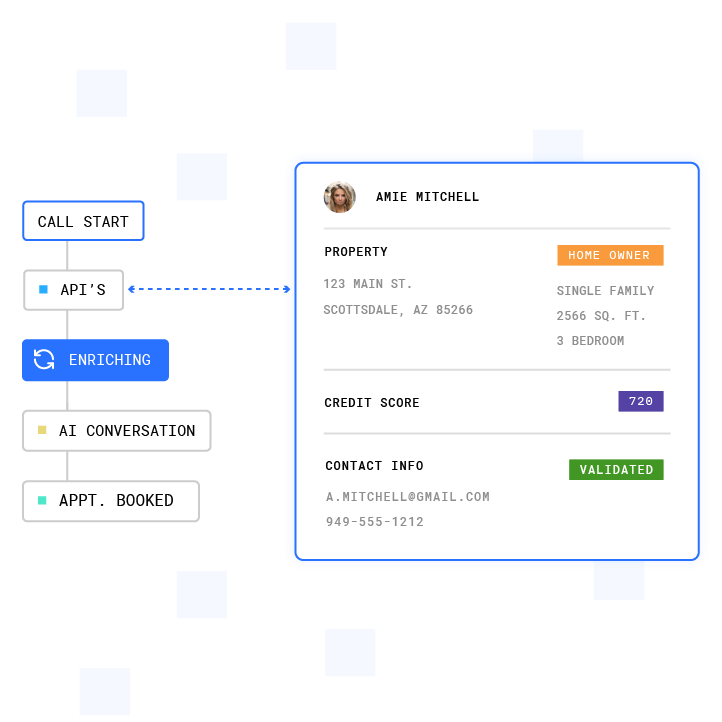
- Instant response. The AI texts every new lead within seconds of form submission or intent signal. Plura’s AI SMS agents respond in under 5 seconds, 24/7, including evenings and weekends when over 40% of high-intent inquiries arrive, according to the Blazeo 2026 Speed-to-Lead Benchmark Report.
- Dynamic conversation. The AI asks qualifying questions based on the lead’s responses. It adapts in real time, pulling from budget, timeline, needs, and firmographic signals. Qualification happens during the conversation itself.
- Scoring and tagging. The AI evaluates answers against your Ideal Customer Profile (ICP) and scores leads as hot, warm, or cold. Plura enriches every lead with 30+ data sources in real time, including IP and property data, email validation, intent signals, and business firmographics. Scoring happens at the moment of contact.
- Routing and booking. Hot leads route to sales via CRM notification or Slack, or book directly on a calendar. Plura’s AI SMS agents can escalate to a voice call and live transfer a warm buyer straight to your rep, turning texts into warm transfers.
- Follow-up and nurturing. Cold leads enter automated nurture sequences. Plura’s stateful conversation database remembers every prior touchpoint, so a lead who texted at 9 a.m. is the same lead when the call comes at noon, with full context preserved.
What to Look for in an AI Texting Tool for Lead Qualification
High-volume lead qualification needs specific capabilities. The features below build on each other to create a reliable, scalable system.
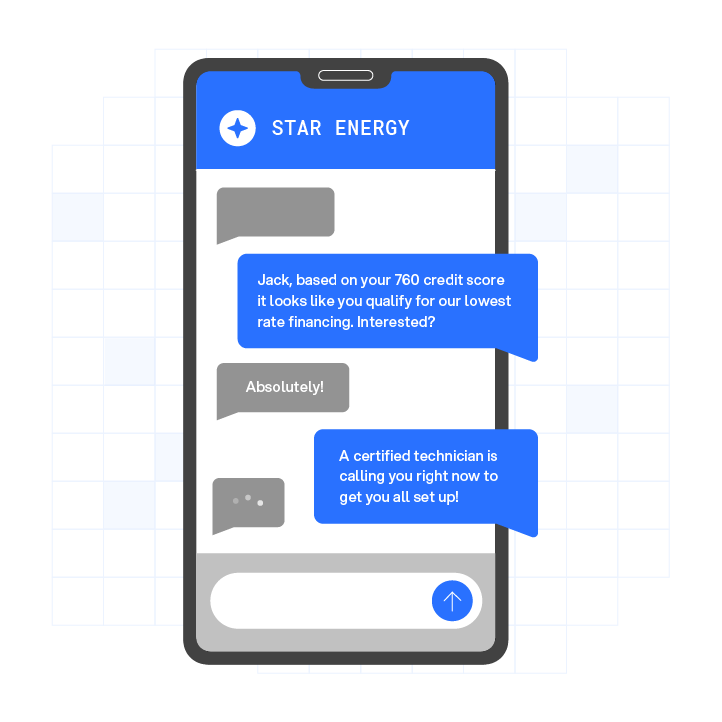
- Instant response under 60 seconds. The Blazeo 2026 Speed-to-Lead Benchmark Report found that 81.2% of companies responding in over an hour report losing leads to faster competitors. Speed is the entry ticket. Without it, no other capability matters.
- Conversational AI that adapts. Once you respond fast, the next test is whether the conversation can actually qualify. The AI should ask questions based on each reply, with branching logic and dynamic flows instead of a rigid decision tree.
- Lead scoring and routing. After the conversation, the system must turn answers into action. The tool should score leads against your ICP and route them to the right owner or queue. As noted by Botcadence’s lead qualification guide, a score without routing is just another field in the CRM.
- CRM integration. Real-time two-way sync keeps sales, marketing, and operations aligned. The AI should write structured qualification data, including score, tags, and transcript, directly into HubSpot, Salesforce, or your CRM of choice.
- Compliance support. Compliance controls protect your brand and reduce risk. Real-time DNC scrubbing, immutable consent logging, and quiet-hours enforcement work best when built into the platform.
- Cross-channel memory. Cross-channel memory keeps conversations coherent. The AI should remember context across SMS, voice, and webchat. Plura’s stateful conversation database holds context across every channel by default.
Best AI Texting Tools for Lead Qualification
The market has several credible options for AI texting for lead qualification. The tools below are most frequently cited in the category. All data points come from each vendor’s published documentation or verified third-party sources.
Thoughtly supports multi-channel lead engagement across voice, SMS, iMessage, WhatsApp, and email, with automated follow-up sequences and a single conversation thread across every channel a lead touches.4 It integrates with Salesforce, HubSpot, and GoHighLevel, supports 34 languages natively, and writes structured qualification data directly into CRM fields rather than call notes. It suits revenue teams qualifying high-volume inbound leads across channels.
GoHighLevel is an all-in-one CRM and marketing platform with a Conversation AI bot and Voice AI agent that handles inbound SMS and calls, qualifies leads, and books appointments.4 GoHighLevel’s SMS marketing is routed through Twilio, with users paying Twilio’s per-message rates. Plans start at $97/month. It suits agencies and SMBs wanting an integrated CRM and AI texting stack.
Salesmsg offers an AI Qualify feature for text-based conversations, contact notes, and CRM integrations.4 It supports 10DLC registration and opt-out handling. It suits teams needing straightforward AI text qualification with CRM sync.
Texto is a lightweight SMS layer for GoHighLevel users, offering bulk SMS, appointment reminders, and opt-out handling at 3 cents per message in Australia with no contracts or monthly fees. It does not provide AI conversation handling. It suits GoHighLevel users needing cost-effective SMS delivery without AI qualification logic.
AthenaText provides AI-powered texting, two-way conversations, CRM integrations, and automation workflows, with 10DLC registration and consent management. It suits teams wanting AI text conversations with CRM automation.
Plura AI delivers sub-5-second response times, cross-channel memory across SMS, voice, and webchat, real-time lead enrichment from 30+ data sources, live transfer to voice, a no-code workflow builder, and 50+ integrations. Plura is an FCC-licensed carrier, so compliance is enforced at the carrier level. This includes real-time DNC scrubbing, an immutable consent ledger, quiet-hours enforcement, and 50+ state rule sets. It suits high-volume operators, agencies, call centers, and franchise networks that need carrier-grade compliance and cross-channel memory.
Among these options, Plura stands out for high-volume operators because it is the only platform on this list that owns its carrier stack under an FCC license, according to Plura’s marketing materials. Branded caller ID is issued at the carrier level, DNC scrubbing runs before every outbound contact, and compliance controls sit in the carrier layer. Its stateful conversation database preserves context across SMS, voice, and webchat, so a lead who texts at 9 a.m. is the same lead when the call comes at noon. Run your numbers through Plura’s ROI calculator to estimate your savings.
See Plura’s AI texting in action and review how the platform handles your lead volume.
How to Implement AI Texting for Lead Qualification
Teams can launch AI texting for lead qualification without an engineering squad by following a simple six-step playbook.
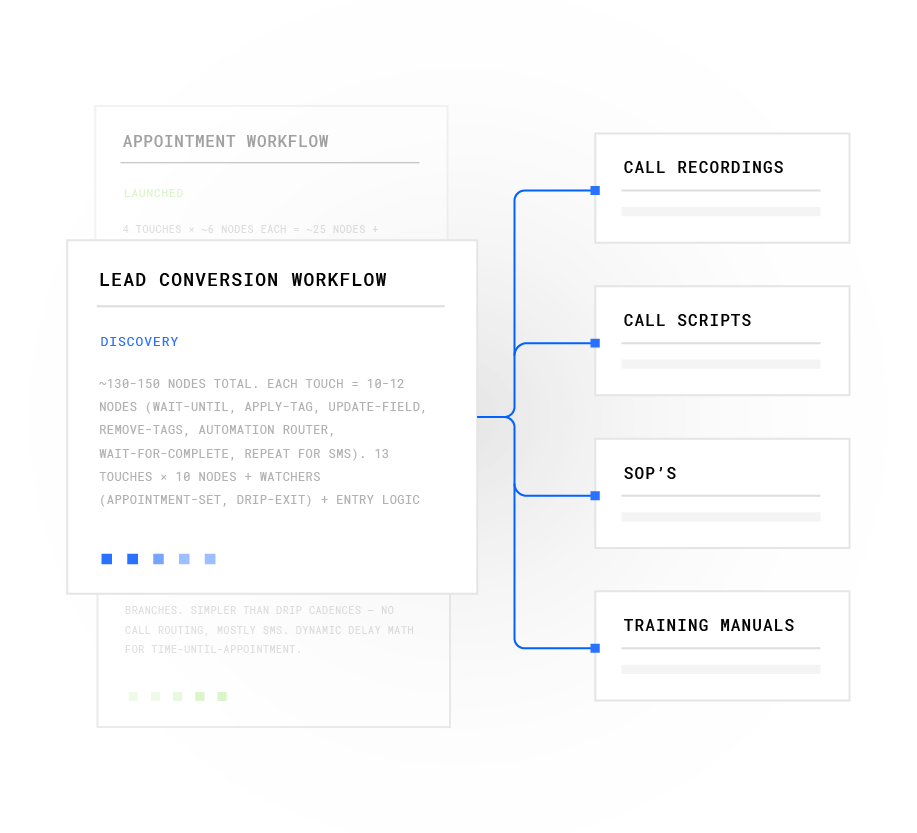
- Define your qualification criteria. Start with a clear definition of a sales-ready lead. Write it in plain language, including budget range, timeline, decision-making authority, and use case fit. This definition becomes the AI’s instructions. As MessageMind’s implementation guide notes, the qualification policy you give the AI should match the one your sales operations team already uses.
- Choose a tool that integrates with your CRM. Real-time two-way sync keeps data clean and handoffs reliable. Plura integrates with 50+ tools including HubSpot, Salesforce, Zoho, and Zapier. You can review the full integrations directory for details.
- Set up your AI conversation flow. Design the greeting, qualifying questions, scoring logic, and routing rules. Plura’s no-code workflow builder makes this visual and iterative. Keep early questions binary or multiple-choice and push nuance to later stages, as Gleantap’s conversational AI guide recommends, to reduce abandonment while preserving routing data.
- Connect your CRM and other tools. Wire up Calendly, Slack, or your booking system so hot leads can be scheduled or routed automatically. Plura’s CRM integration writes structured qualification data, including score, tags, and transcript, directly into your CRM in real time.
- Test with a small batch of leads. Run the system on about 10% of traffic for two weeks. Review conversations manually, check scoring accuracy, and adjust before full deployment. PipeCrush’s implementation guide recommends setting a 30-day review checkpoint to assess performance metrics and refine the workflow.
- Monitor and iterate. Review conversion data weekly. Tune scoring weights, handoff thresholds, and conversation flow based on what is actually converting. Plura treats every deployment like a CRO test, with iterative conversation engineering and continuous workflow tuning.
AI Texting, TCPA, 10DLC, and Consent
Compliance shapes how AI texting programs operate. The points below describe key frameworks neutrally. Consult the regulation or qualified counsel for your specific situation.
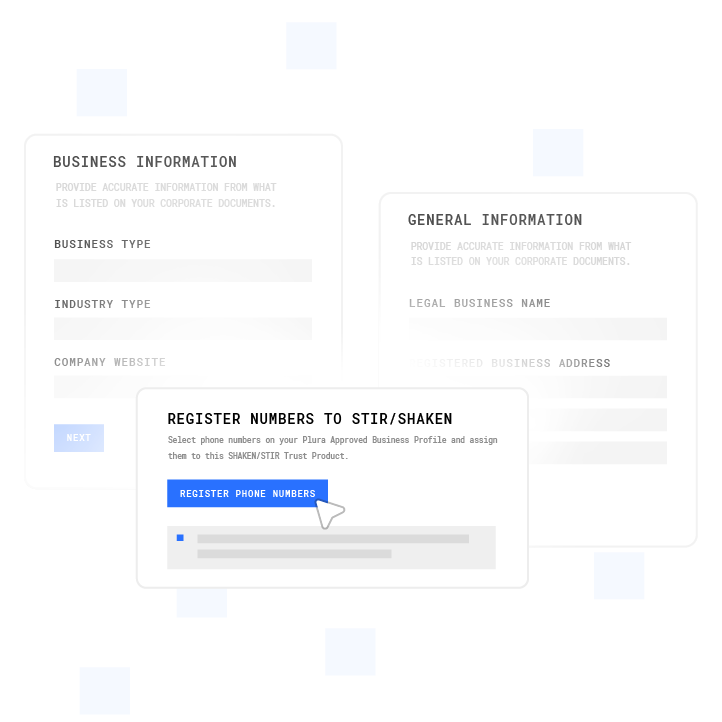
TCPA (Telephone Consumer Protection Act). The TCPA (47 U.S.C. § 227) covers autodialed calls and texts to mobile numbers.1,2 The FCC defines prior express written consent at 47 CFR 64.1200(f)(9) as a written agreement that clearly authorizes the sender to deliver marketing messages and identifies the telephone number to which they may be delivered. Statutory damages run $500 to $1,500 per message, with no cap on violations in a class action. The FCC’s one-to-one consent rule, effective January 2025, describes consent that is specific to a single seller. A broad “marketing partners” checkbox does not match that standard.
10DLC (10-Digit Long Code). U.S. carriers require businesses to register both their brand and each campaign with The Campaign Registry (TCR) before sending application-to-person (A2P) SMS.2 Unregistered traffic is filtered, throttled, or blocked. Registration involves declaring the use case, providing sample messages, and documenting the opt-in flow. T-Mobile applies a $2,000 to $10,000 per-violation fee for unregistered traffic.
Consent. Many programs treat opt-in as a documented, timestamped record. The opt-in flow often includes a separate, unchecked checkbox dedicated to SMS consent, a disclosure naming the brand, message purpose, frequency, and standard “Msg and data rates may apply / STOP to cancel / HELP for help” wording. Under 47 CFR 64.1200(a)(10), replying STOP, QUIT, CANCEL, END, or UNSUBSCRIBE is reasonable per se and definitively revokes consent. Revocation must be honored within a reasonable time not to exceed ten business days from receipt.
Quiet hours. 47 CFR Part 64, Subpart L limits outbound telemarketing calls to between 8 a.m. and 9 p.m. local time at the called party’s location. State laws may impose narrower windows. Where a state rule is stricter, the stricter rule governs.
How Plura supports compliance. Plura supports DNC and TCPA compliance, with 0 violations on the platform’s track record.1 The platform enforces real-time DNC scrubbing against federal and state registries before every outbound contact, maintains an immutable consent ledger with timestamped records, enforces quiet hours automatically through time-zone detection, and applies 50+ state rule sets. Plura supports customer compliance. It does not replace customer obligations. Consult qualified counsel for your specific situation.
How to Measure AI Texting Performance
Five core metrics show whether AI texting for lead qualification is working.
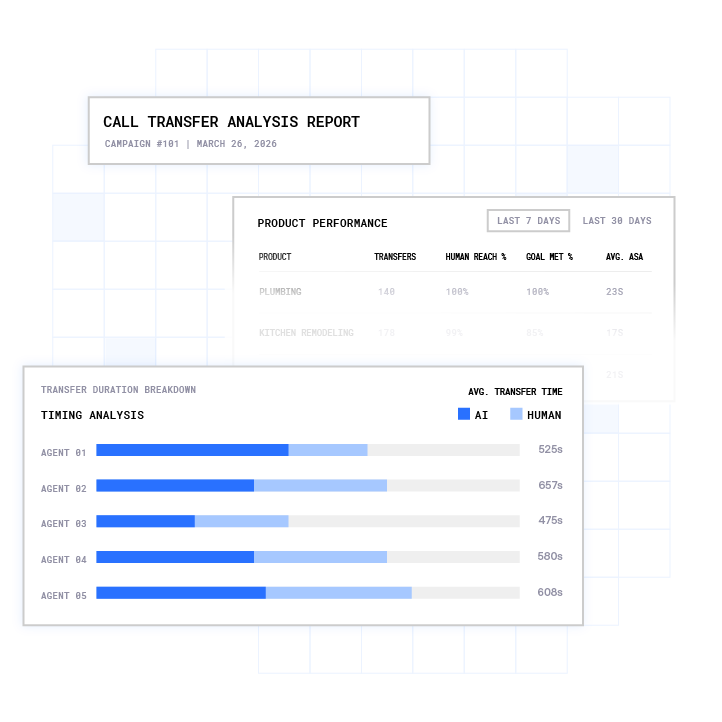
- Response time. Measure time from lead capture to first AI contact. Plura’s sub-5-second response, mentioned earlier, directly addresses the 47+ hour industry gap.
- Qualification rate. Track the percentage of leads scored as sales-ready. Benchmark against your human SDR qualification rate to establish a baseline.
- Conversion rate. Measure the percentage of qualified leads that convert to opportunities or booked meetings. AI-qualified leads should convert at least as well as human-qualified leads.
- Cost per qualified lead. Calculate total AI platform cost divided by qualified leads. Plura customers see cost per qualified lead drop from about $200 (traditional) to about $60.3
- ROI. Plura customers report 3x average ROI in 90 days, 47% pipeline growth, and 90% faster lead-response time.3 You can run your own numbers through Plura’s ROI calculator to estimate savings.
Common Pitfalls in AI Texting Programs
- Robotic conversations that feel scripted. Use AI with memory that adapts to each lead’s responses. Plura’s stateful conversation database preserves context across every touchpoint and reduces the scripted feel.
- Over-automation without human handoff. Define handoff triggers before launch, such as explicit requests to speak with a person, pricing objections, and complex technical questions. Plura’s workflows include escalation paths that warm-transfer to a U.S. agent when a workflow gate triggers.
- Ignoring compliance requirements. Choose a platform with built-in compliance support, including real-time DNC scrubbing, immutable consent logging, and quiet-hours enforcement. Plura applies 50+ state rule sets on every outbound contact.
- Missing CRM integration. Real-time two-way sync keeps the AI from creating extra work. The AI should write structured qualification data directly into your CRM. Plura’s CRM integration covers HubSpot, Salesforce, Zoho, and Zapier, among 50+ tools.
- Failing to test and iterate. Run the system on a small traffic slice, review conversations manually, and tune scoring weights based on conversion data. RaykoLabs recommends launching with a permissive threshold, auditing rejected leads for the first 60 days, then tuning based on actual outcomes.
Walk through a Plura qualification workflow tailored to your lead volume.
Frequently Asked Questions
How does AI texting qualify leads?
AI texting for lead qualification uses AI-powered SMS agents to engage leads in real-time conversations immediately after a form submission or intent signal. The agent asks qualifying questions based on the lead’s responses, scores answers against your ICP, and routes sales-ready prospects to your team or books them directly on a calendar. Cold leads enter automated nurture sequences. Plura does this in under 5 seconds, with stateful memory that preserves context across SMS, voice, and webchat, so the conversation continues smoothly when the channel changes.
What is the best AI tool for lead qualification?
The right tool depends on your volume, compliance needs, and existing tech stack. For high-volume operators, agencies, and franchise networks, Plura is a strong choice because it owns its FCC-licensed carrier stack, enforces real-time DNC scrubbing and immutable consent logging at the carrier level, and preserves stateful memory across SMS, voice, and webchat. Thoughtly is a credible option for revenue teams needing multi-channel qualification with CRM write-back. GoHighLevel suits agencies and SMBs that want an integrated CRM and AI texting stack. Salesmsg works for smaller teams needing straightforward AI text qualification with CRM sync.
Is AI texting TCPA compliant?
AI texting can be structured to support TCPA compliance when operators obtain prior express written consent before sending marketing texts, honor opt-out requests within a reasonable time not to exceed ten business days, respect quiet hours of 8 a.m. to 9 p.m. local time, and register campaigns through 10DLC. Plura supports compliance with real-time DNC scrubbing, an immutable consent ledger, quiet-hours enforcement through time-zone detection, and 50+ state rule sets. Using a compliant platform does not make an organization compliant. Customers are responsible for their own consent collection, message content, and regulatory obligations. Consult qualified counsel for your specific situation.
How fast should I respond to a lead?
Leads contacted within 5 minutes are up to 100x more likely to connect than those contacted at 30 minutes, and leads contacted within 1 minute are 391% more likely to convert than those contacted after 24 hours, based on industry research published on the Plura ROI calculator. The Blazeo 2026 Speed-to-Lead Benchmark Report found that 35.4% of business leaders say responding within 5 minutes is essential, yet 38% of those leaders fail to meet their own standard. In 2026, many teams treat 5 seconds as the practical bar, and AI agents provide a realistic path to that speed at volume.
Can AI texting integrate with my CRM?
Yes. Plura integrates with 50+ tools including HubSpot, Salesforce, Zoho, and Zapier, writing structured qualification data including score, tags, and transcript directly into your CRM in real time. The full integrations directory is available on Plura’s integrations page. Real-time two-way sync is critical for lead qualification workflows. If the AI cannot reliably write a booking, update consent, or change a lead status in the CRM synchronously, it creates more work than it removes.
Conclusion
AI texting for lead qualification closes the speed-to-lead gap by engaging every lead in seconds, qualifying them in conversation, and routing only sales-ready prospects to your team. The right platform combines instant response, adaptive conversation logic, real-time lead scoring, deep CRM integration, and compliance support built into the architecture.
Plura’s sub-5-second response, cross-channel memory, carrier-grade compliance support, and reported 3x average ROI in 90 days align directly with these requirements. Its FCC-licensed carrier stack means branded caller ID, real-time DNC scrubbing, and immutable consent logging are enforced before every outbound contact.
Schedule a Plura demo and see how AI texting for lead qualification performs on your lead volume.
1 Plura AI maintains SOC 2, HIPAA, ISO, and GDPR posture as part of its platform infrastructure. References to compliance frameworks in this article describe Plura’s platform capabilities and do not constitute a guarantee that any customer using Plura will themselves be compliant with applicable laws or standards. Customers remain solely responsible for their own regulatory obligations, certifications, consent management, recordkeeping, and the claims they make to their own end users. Consult qualified legal counsel for guidance specific to your use case.
2 This article describes regulatory frameworks at a general level and does not constitute legal advice. Laws and regulations vary by jurisdiction, change over time, and apply differently depending on facts and circumstances. Readers should consult qualified legal counsel before making compliance decisions.
3 Performance figures, customer outcomes, and industry statistics referenced in this article are drawn from cited third-party sources or Plura customer case studies. Individual results vary based on implementation, use case, industry, audience, and execution. Past or aggregate performance is not a guarantee of future results.
4 References to third-party products, services, companies, or research are made for informational and comparative purposes only. Plura AI is not affiliated with, endorsed by, or sponsored by any third party named in this article unless explicitly stated. Trademarks and product names referenced remain the property of their respective owners.
This article is provided for informational purposes only and reflects Plura AI’s understanding at the time of publication. Product capabilities, integrations, and specifications are subject to change. For the most current information, visit plura.ai.
This article was produced with the assistance of AI tools and reviewed by Plura AI prior to publication.