
Written by: Matt Beucler, CEO, Plura AI
Updated September 2026
Key Takeaways
- RCS business messaging best practices rest on three pillars: verified sender identity, explicit consent mechanics, and conversational flow design that avoids dead ends.
- Verified RCS agents achieve 80% read rates and 3x higher engagement than SMS by displaying branded sender profiles with protected checkmarks that build user trust.3
- Duplicate-message prevention during SMS fallback requires unique message IDs, delivery receipt monitoring, and idempotent send logic to avoid burning trust and accelerating opt-outs.
- Full-funnel measurement beyond read rates includes reply rate, qualification completion, task completion, opt-out rate, and human handoff rate to prove ROI and surface improvement opportunities.
- Plura AI operationalizes these RCS business messaging best practices at volume with a stateful conversation database, carrier-level compliance enforcement, and cross-channel memory; see these standards live on Plura’s AI contact center infrastructure.
Pillar 1: Verified Sender Identity and Brand Trust
Verified sender identity is the foundation of RCS business messaging best practices. RBM agent verification requires brand registration, including name and logo, and carrier approval before launch. Per Google’s RBM developer documentation, verified agents display a checkmark next to the agent’s name that is protected against impersonation and cannot be manually added.4 That checkmark signals to carriers and users that the sender is a legitimate business rather than a spoofed number.
The trust gap between a verified RCS sender and an unverified SMS short code is measurable. The verified sender profile drives the read-rate and engagement gains cited above by displaying the company name, logo, and verification badge directly in the conversation thread. An unverified sender presents as an unfamiliar number. A verified RCS agent presents as a recognizable business contact.
Verification status also affects deliverability. Google assigns reputation scores to every RCS agent and can throttle or suspend sending volume based on spam reports and user feedback. A block rate above 3-5% puts an agent at risk of carrier throttling.
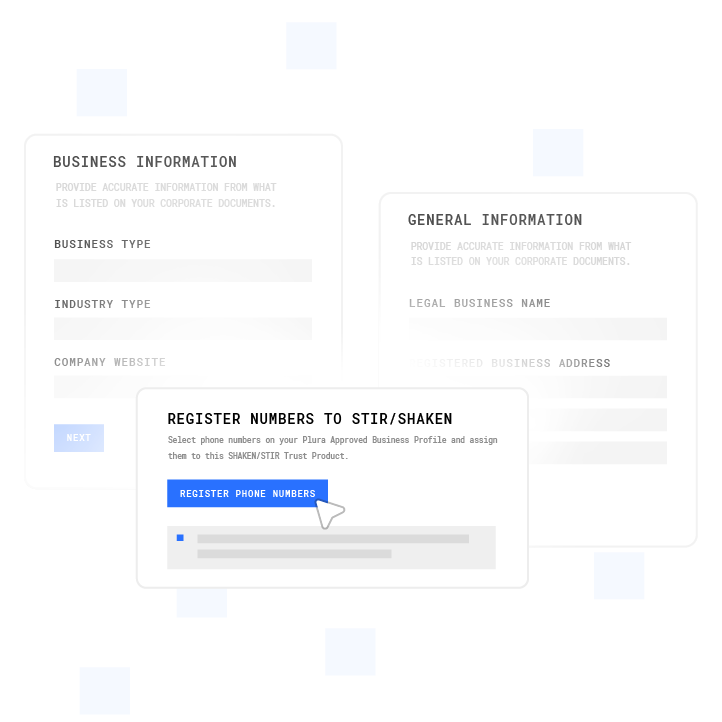
Plura is its own FCC-licensed audio bridging carrier, which means it controls sender identity at the network level. It issues branded caller ID at the carrier layer and runs STIR/SHAKEN (Secure Telephone Identity Revisited / Signature-based Handling of Asserted information using toKENs) authentication on every outbound call. That same carrier-level identity discipline extends to RCS sender verification, so identity is enforced inside the platform before any message leaves the network.
Pillar 2: Consent and Opt-Out Mechanics
RCS consent mechanics differ from SMS in visibility and enforcement. Per GSMA’s “RCS Business Messaging: Recommended Good Practices” (MaaP ecosystem principles), companies must not create, carry, or deliver unsolicited A2P RCS messages. They must ensure consumers have consciously and explicitly authorised the interaction. They must cease contact as soon as technically possible once a consumer revokes consent. They should also be able to provide evidence of consumers’ opt-in and opt-out preferences to regulators or law enforcement.
The opt-out surface in RCS is wider than in SMS. Bandwidth’s RCS for Business documentation identifies five distinct mobile user opt-out methods: standard keyword reply, Suggested Reply button, Report as SPAM, the Android-only Unsubscribe button, and the iOS-only RCS Business Messages toggle. Not all of these return a visible signal to the sender. The iOS toggle, for example, passes only a delivery-failure signal rather than an explicit opt-out event. Programs that rely solely on STOP keyword tracking will miss suppression signals and increase compliance exposure.
In the U.S., TCPA (Telephone Consumer Protection Act, 47 U.S.C. § 227) and 10DLC (10-Digit Long Code) registration govern consent and opt-out for A2P (application-to-person) messaging.2 10DLC registration is not required for RCS messages themselves, which are sent from a verified RCS agent with its own Google and carrier approval, and is required for the SMS fallback that every RCS program relies on, because any message that cannot be delivered as RCS is delivered as SMS from a 10DLC, toll-free, or short-code number. Operators should consult the applicable regulations and qualified counsel to understand their specific obligations.
Plura enforces real-time DNC (Do Not Call) scrubbing, automated quiet hours, and immutable consent logging inside the platform on every outbound contact. These are infrastructure-level controls that support compliance operations. Customers remain responsible for their own regulatory obligations.
Pillar 3: Conversational Flow Design and Guided Responses
RCS suggested replies are limited to 25 characters. Per Google’s RBM best-practices documentation, suggested replies and suggested actions have a maximum of 25 characters, which is why message text should be kept concise. A single text message supports a maximum of 11 suggestions in total, with persistent suggestions capped at 4 inside the message bubble. These are hard constraints. Every guided response label must fit within them.
Beyond character limits, Google’s RBM best-practices documentation instructs that agents should avoid dead ends. Each message should lead to a meaningful next step. Multi-step tasks should use discourse markers such as “Now…”, “And…”, or “Got it! Here you go…” to guide the user through the process. Agents should avoid phone-tree patterns that rely on users responding with a number representing an action. Users should be able to communicate naturally.
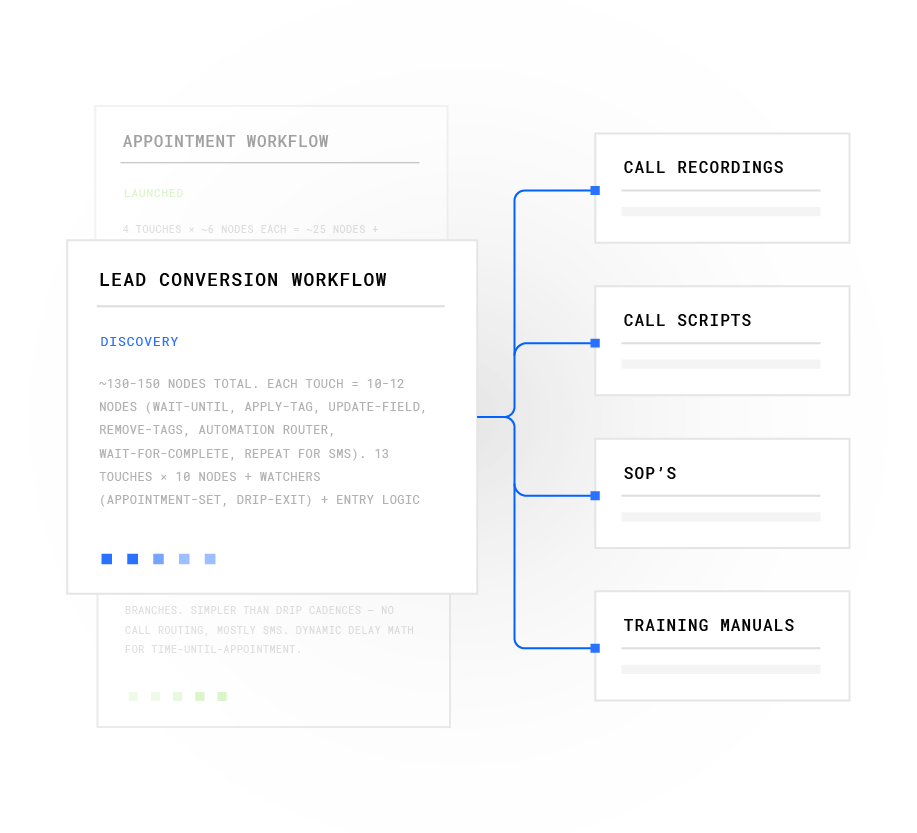
Plura’s no-code workflow builder lets operators design memory-driven RCS conversation pathways with branching logic, escalation rules, and post-conversation actions. AI RCS shares a Stateful Conversation Database with AI Voice, AI SMS, and AI Webchat. A customer who texts at 9 a.m. is recognized when the RCS thread continues at noon, and the conversation resumes with full context.
SMS Fallback and Duplicate-Message Prevention: The Biggest Gap
Duplicate-message prevention during SMS fallback is the biggest technical gap in many RCS programs. Per Google’s RBM best-practices documentation, systems must confirm a message was not delivered before attempting fallback, check delivery receipts, and use unique message IDs. Developers should attempt to revoke the original RCS message before sending a fallback SMS. If revocation fails, that failure must be handled because it may indicate the message was already delivered.
The failure mode is straightforward. Without unique message IDs and idempotent send logic, a fallback can double-send. The customer receives the same message twice, once via RCS and once via SMS. That pattern burns trust and accelerates opt-outs. Google’s RBM documentation also warns that a connection timeout should not be assumed to mean an RCS message was not delivered, because the message might still be processing on the server side. Triggering fallback on a timeout without checking delivery receipts creates direct duplicate-send risk.
AWS End User Messaging’s RCS event documentation recommends implementing idempotent event processing and using the message identifier combined with the event type as a deduplication key to handle duplicate event deliveries.4
The table below summarizes the key operational differences between native RCS delivery and SMS fallback that influence duplicate-send risk and reporting quality.
| Attribute | RCS Delivery | SMS Fallback |
|---|---|---|
| Delivery confirmation mechanism | Delivery receipt via webhook | Single delivery receipt for the final channel that delivered the message, typically indicating SMS when fallback succeeds |
| Rich media handling | Supports images, video, carousels, PDFs | Strips RCS rich elements and reverts to plain text, with carousels converted to a single image or text list |
| Suggested replies availability | Up to 25 characters, 11 suggestions maximum | Suggested replies not supported |
| Read-receipt visibility | Protocol-level read events available | Read receipts not available |
| Fallback trigger conditions | 404 NOT_FOUND, TTL expiration, or capability check failure | N/A |
Plura’s Stateful Conversation Database keys every interaction to a customer token such as phone number, email, or ID. Fallback logic inherits full context and does not re-send or re-ask. When an RCS message cannot be delivered, the platform checks delivery receipts, confirms non-delivery, and routes the fallback through AI SMS with the same conversation context intact. The customer experiences a single, continuous conversation.
HELP, Human Escalation, and Avoiding Dead Ends
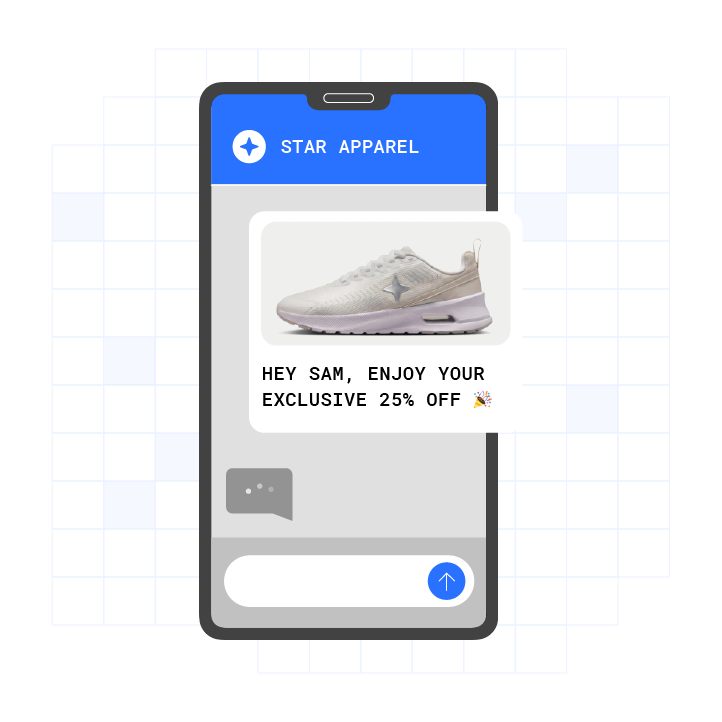
Every automated RCS flow needs a defined escalation trigger and a warm handoff to a human, instead of a silent drop. Per Google’s RBM best-practices documentation, agents should respond to HELP messages, educate users about capabilities, and acknowledge handoffs. For example: “Alright. Your account manager will take over from here.” A conversation that ends without acknowledgment becomes a dead end. Dead ends generate block reports, which damage agent reputation scores and can trigger carrier throttling.
The operational rule is simple: every automated RCS flow needs a defined escalation trigger and a warm handoff path. That means:
- HELP keyword responses that describe what the agent can do and offer a human contact option
- Escalation nodes that fire when a user’s response falls outside the workflow’s defined paths
- Handoff acknowledgments that confirm the transition before the human agent takes over
- A suppression path for users who opt out mid-conversation
Plura workflows include explicit guardrails and escalation nodes that warm-transfer to a U.S. agent, flag the conversation in the Unified Inbox, or route to a designated escalation queue. The live transfer path is built into the workflow. When a conversation hits an escalation trigger, the handoff is warm, the context is complete, and the customer does not have to repeat themselves.
See how escalation and HELP handling work inside Plura in the no-code workflow builder.
Measuring the Full Funnel: Beyond Read Rates
Read rates alone function as a vanity metric for RCS business messaging. Per Link Mobility’s engagement measurement guide, reply rate, unique responder rate, and positive versus negative response rate distinguish helpful engagement from friction. A program with an 80% read rate and a 40% negative response rate underperforms and generates opt-outs at scale.
Full-funnel measurement for RCS business messaging includes:
- Engagement rate: button clicks, carousel views, rich card interactions
- Response rate: replies divided by delivered messages
- Qualification completion rate: the percentage of engaged prospects who complete the full qualification flow
- Task completion: the percentage of users who reach the intended outcome
- Conversion rate: tied to the desired final action, not intermediate engagement events
- Opt-out rate: the share of customers who unsubscribed or opted out
- Fallback rate: the percentage of messages that could not be delivered as RCS and fell back to SMS
- Human handoff rate: the percentage of conversations that escalated to a live agent
AWS End User Messaging’s RCS documentation defines read rate as the number of READ events divided by the number of DELIVERED events, multiplied by 100. That metric shows whether messages are being opened. It does not show whether conversations are converting, whether flows are completing, or whether the program is generating opt-outs faster than revenue.
For healthcare operators, RCS appointment reminders and confirmations with read receipts and interactive reply options support measurable reductions in no-shows. Plura delivers up to 40% improvement in no-shows for healthcare operators running RCS and SMS confirmation flows.3
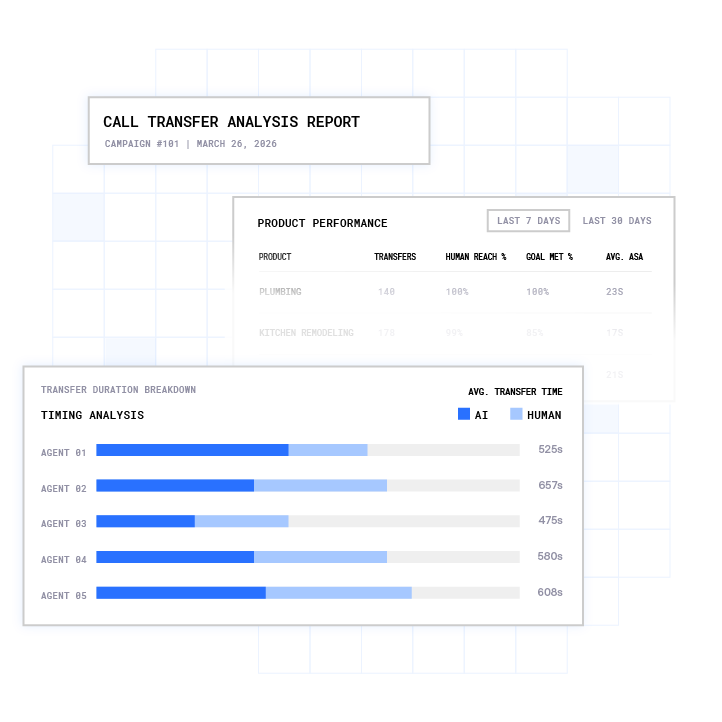
Plura’s conversation intelligence analyzes every interaction across voice, SMS, RCS, and webchat to surface which scripts close and which objections recur. It generates client-ready reports automatically, so marketing teams have ROI proof and sales leaders have script-improvement data without manual reporting overhead.
Compliance and Regional Requirements
RCS business messaging compliance requirements vary by region and by use case. In the U.S., TCPA (47 U.S.C. § 227) and 10DLC registration govern consent and opt-out for A2P messaging. In the EU, GDPR (Regulation (EU) 2016/679) applies to the processing of personal data.2 Per GSMA’s “RCS Business Messaging: Recommended Good Practices” (voluntary and non-binding), businesses should honor consumers’ revocation of consent by ceasing interaction as soon as technically possible. Where these principles differ from local legislation or regulation, local laws supersede them.
RCS compliance expectations differ by geography: in the US, TCPA and CTIA guidelines govern consent and opt-out; in the EU, GDPR applies to processing personal data of EU residents; and in California, CCPA introduces additional data rights. Operators should consult the applicable regulations and qualified counsel to understand their specific obligations in each jurisdiction where they operate.
Texting without the consent the TCPA requires carries statutory damages of $500 to $1,500 per message, enforced through private lawsuits rather than by the carriers. That exposure applies per message. At volume, the financial impact can be significant. Operators should consult qualified counsel regarding their specific consent practices and obligations.
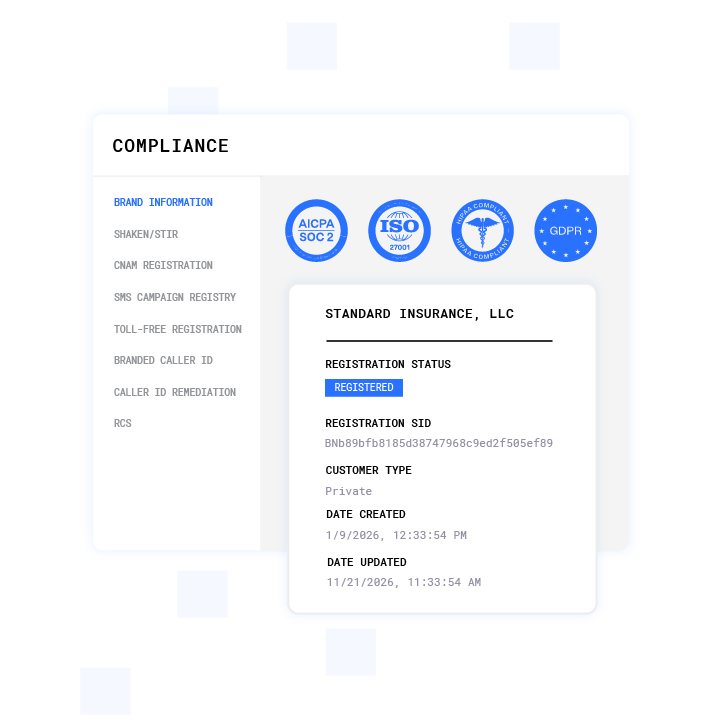
Plura supports customer compliance with SOC 2, HIPAA, ISO certification, GDPR, SHAKEN/STIR caller ID verification, TCPA compliance, and DNC compliance.1 These capabilities operate at the infrastructure level inside the platform. Customers remain responsible for their own regulatory obligations, certifications, and the claims they make to their own end users.
Frequently Asked Questions
What Are the Downsides of RCS Messaging?
RCS requires carrier and Google approval before an agent can send messages, which adds lead time compared to SMS. The platform does not provide native opt-out list management, so businesses must maintain their own suppression databases and build STOP handling into every agent configuration before launch. Fallback to SMS can trigger duplicate sends without unique message IDs and idempotent send logic in place. RCS also requires more technical integration than basic SMS, including capability checks, delivery receipt handling, and TTL management. Agent reputation scores start low by default and must be built through consistent, low-complaint-rate sending before volume limits expand.
Is RCS Messaging HIPAA Compliant?
HIPAA (45 CFR Parts 160, 162, and 164) compliance generally depends on how a covered entity configures and uses a communication channel rather than on the channel itself, though some channels, such as standard landline calls over the PSTN, which are not considered electronic transmissions subject to the Security Rule’s technical safeguards, and standard SMS, which cannot meet the required safeguards for PHI, fall outside or cannot satisfy these requirements. Whether a specific RCS deployment aligns with HIPAA requirements depends on factors including how protected health information is handled, stored, transmitted, and accessed within that deployment. Operators in healthcare should consult the regulation and qualified counsel to assess their specific obligations. Plura supports HIPAA-aligned operations with end-to-end encryption, access controls, and audit logging across voice, SMS, RCS, and webchat.
Should My Text Be RCS or SMS?
RCS delivers rich media, suggested replies, read receipts, and a verified branded sender profile. SMS delivers plain text with universal reach across all devices and carriers. Most high-volume programs use RCS as the primary channel with SMS as the fallback for devices or carriers that do not support RCS. The decision becomes a sequencing question: send RCS first, confirm delivery, and fall back to SMS only when the capability check or delivery receipt confirms RCS cannot reach the recipient. Plura’s cross-channel capability lets operators run both from one Stateful Conversation Database, so fallback is automatic and context is preserved across the channel switch.
What Are the Different Types of RCS Messages for Business?
Per Google’s RBM agent use cases documentation, there are four agent use cases:
- OTP: one-time passwords for account login, two-factor authentication, and password resets
- Transactional: purchase confirmations, shipping updates, appointment reminders, and account statements
- Promotional: offers, discounts, abandoned-cart reminders, and upgrade campaigns
- Multi-use: agents that combine transactional and promotional messaging in a single conversation flow
Each use case has distinct content restrictions. OTP agents cannot include promotional content. Promotional agents cannot send OTP or time-sensitive transactional information. Multi-use agents cannot send OTPs. Operators must declare the use case at registration, and the declared use case determines the business rules applied to every message the agent sends.
How Does RCS Fallback to SMS Work Without Duplicate Sends?
Preventing duplicate sends during SMS fallback requires three mechanisms working together: a capability check before the first send to confirm whether the recipient’s device supports RCS, delivery receipt monitoring to confirm whether the RCS message was actually delivered, and unique message IDs on every outgoing API call so that retry logic does not generate a second send of the same message. When a message fails with a 404 NOT_FOUND error or a TTL expiration notification, the system should attempt to revoke the original RCS message before sending the SMS fallback. If revocation fails, that failure must be handled because it may indicate the message was already delivered. Connection timeouts should never be treated as delivery failures without checking the delivery receipt first, because the message may still be processing on the server side. Idempotent send logic, keyed to the original message ID, ensures that retries and fallback attempts do not result in the customer receiving the same message twice.
Conclusion: Operational Discipline at Scale
RCS business messaging best practices form the operational discipline that separates programs that scale from programs that get throttled. Verified sender identity, explicit consent mechanics, and 25-character suggested-reply design work together. Idempotent fallback logic, HELP handling, human escalation paths, and full-funnel measurement also work as a connected system. A program that gets sender verification right but skips idempotent fallback logic will double-send. A program that designs clean flows but ignores HELP handling will generate block reports. Every pillar depends on the others.
Plura applies these best practices at volume. Plura is its own FCC-licensed audio bridging carrier, rather than a wrapper on top of a third-party CPaaS. Branded caller ID is issued at the carrier level. Real-time DNC scrubbing, TCPA-litigator screening, automated quiet hours, and immutable consent logging are enforced inside the platform before any message leaves the network. The Stateful Conversation Database holds context across voice, SMS, RCS, and webchat, so fallback logic inherits full context and escalation paths stay warm. The no-code workflow builder lets operators design and iterate conversation flows without engineering overhead. Conversation intelligence surfaces what is working and what needs adjustment across every channel, automatically.
Compare plans and rates side by side. Run your numbers through Plura’s ROI calculator to check your cost savings in real time.
Explore an RCS-focused demo with Plura and see how these RCS business messaging standards run at scale on FCC-licensed AI contact center infrastructure.
1 Plura AI maintains SOC 2, HIPAA, ISO, and GDPR posture as part of its platform infrastructure. References to compliance frameworks in this article describe Plura’s platform capabilities and do not constitute a guarantee that any customer using Plura will themselves be compliant with applicable laws or standards. Customers remain solely responsible for their own regulatory obligations, certifications, consent management, recordkeeping, and the claims they make to their own end users. Consult qualified legal counsel for guidance specific to your use case.
2 This article describes regulatory frameworks at a general level and does not constitute legal advice. Laws and regulations vary by jurisdiction, change over time, and apply differently depending on facts and circumstances. Readers should consult qualified legal counsel before making compliance decisions.
3 Performance figures, customer outcomes, and industry statistics referenced in this article are drawn from cited third-party sources or Plura customer case studies. Individual results vary based on implementation, use case, industry, audience, and execution. Past or aggregate performance is not a guarantee of future results.
4 References to third-party products, services, companies, or research are made for informational and comparative purposes only. Plura AI is not affiliated with, endorsed by, or sponsored by any third party named in this article unless explicitly stated. Trademarks and product names referenced remain the property of their respective owners.
This article is provided for informational purposes only and reflects Plura AI’s understanding at the time of publication. Product capabilities, integrations, and specifications are subject to change. For the most current information, visit plura.ai.
This article was produced with the assistance of AI tools and reviewed by Plura AI prior to publication.