
Written by: Matt Beucler, CEO, Plura AI
Key Takeaways
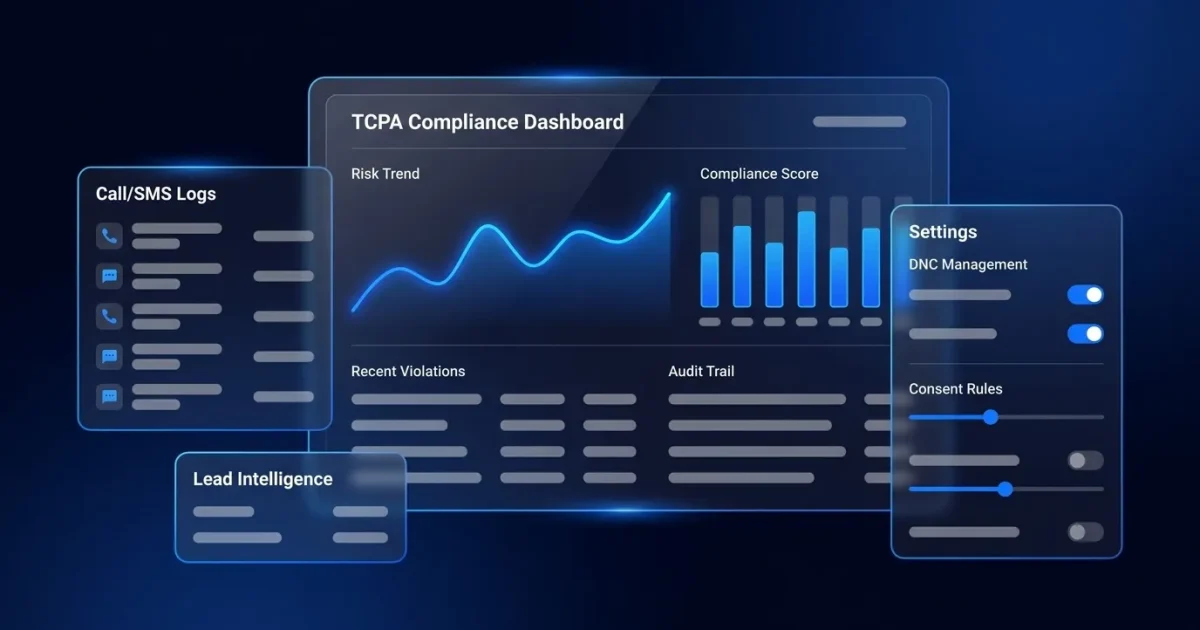
- TCPA compliance software automates consent tracking, real-time DNC scrubbing, time-zone controls, and audit trails to prevent violations before every contact attempt.
- Statutory damages of $500–$1,500 per call or text, combined with record 2026 class-action filings, make manual compliance unsustainable at scale.
- Core features include real-time DNC scrubbing, timestamped consent proof, recipient time-zone restrictions, litigator screening, and court-admissible audit trails retained for at least four years. Each feature closes a specific gap that plaintiffs’ attorneys target in class actions.
- Choosing the right tool depends on your outreach model, such as lead generation, call-center dialing, or SMS marketing, because each carries distinct compliance risks and feature requirements.
- Plura AI embeds TCPA and DNC compliance at the carrier level with real-time scrubbing and immutable consent logging. Talk to an expert to map your outreach model to the right architecture.
Why TCPA Compliance Software Matters for High-Volume Teams
TCPA violations carry statutory damages of $500 to $1,500 per call or text, with no cap on total liability in class actions.2 The 2026 litigation environment makes that exposure concrete: TCPA class action filings reached a record 211 new complaints in February 2026, up 43% from February 2025. Through June 2026, 1,532 TCPA lawsuits were filed, up 34.3% year-over-year, with class actions representing 76.4% of all filings.3
Manual compliance breaks down at scale. A campaign reaching 10,000 unconsented cell numbers carries theoretical exposure of $5 million to $15 million. Lead generation, call center operations, and SMS marketing each carry distinct compliance risks, and each requires a different category of tool. A mismatch between tool category and outreach model leaves exposure gaps regardless of how many features the platform advertises.
See carrier-level TCPA controls in a live Plura demo and review how they apply to your programs.
Core TCPA Compliance Features for Contact Centers and Marketing Teams
These features form the baseline for any platform serving high-volume outbound operations. Consult qualified counsel to determine which features apply to your specific outreach model and regulatory obligations.
- Real-time DNC scrubbing – Checks every number against federal and state Do Not Call registries before dial, not just at list upload. The FTC requires scrubbing against the National DNC Registry at least every 31 days, and real-time scrubbing catches numbers registered after the batch scrub runs. Several states, including Indiana, Tennessee, Wyoming, Texas, and Colorado, maintain supplemental DNC registries beyond the federal list.
- Consent management with proof – Captures, documents, and stores proof of prior express written consent (PEWC), including timestamp, source URL, exact consent language, and IP address. A defensible TCPA consent record includes the exact disclosure language the consumer saw, the timestamp (UTC), the channel, the specific phone number, and confirmation that consent was not a condition of purchase.
- Time-zone calling restrictions – Blocks calls outside 8:00 a.m. to 9:00 p.m. local time at the recipient’s location, using NPA-NXX data from the destination number rather than the office clock. Oregon’s HB 3865, effective January 1, 2026, narrows that window further to 8 a.m. to 8 p.m. for Oregon residents.
- Litigator scrubbing – Flags and blocks known TCPA litigants before outreach. In 2026, approximately 40-43% of individuals filing consumer protection lawsuits in any given month had previously brought similar actions, which makes litigator screening a practical risk-reduction layer.
- Audit trails and reporting – Maintains court-admissible logs of call attempts, timestamps, and consent records. The practical retention floor is four years, matching the TCPA statute of limitations under 28 U.S.C. § 1658, and some practitioners recommend five years as a buffer.
- Dialer and SMS platform integration – Enforces compliance at the point of contact instead of as a separate batch process. A dialer that only offers manual DNC uploads becomes a liability for teams running more than a few hundred calls per week.
Plura AI enforces these as built-in layers on every outbound contact, integrated from the start. Not every platform delivers all six features, and the market has split into categories that specialize in different parts of the compliance stack.
TCPA Compliance Software Vendor Landscape by Use Case
The market breaks into four primary categories, and each category solves a different compliance problem. Consent proofing tools document that you obtained permission. DNC scrubbing services keep your lists clean. Dialer-integrated platforms enforce rules at the moment of contact. Full-platform solutions combine these layers for multi-channel programs. The right category depends on your outreach model more than on raw feature count.
Consent proofing: ActiveProspect’s TrustedForm specializes in documenting, verifying, and retaining digital proof of consumer consent. TrustedForm Certify is free and documents the lead event with a full replay of every click, scroll, and field entry.4 TrustedForm Retain stores certificates for up to five years, with pricing starting at $0.12 per certificate for first-party leads for the first 1,000, dropping to $0.06 at 50,000+. TrustedForm Verify validates whether consent language met clear-and-conspicuous disclosure standards. ActiveProspect reports that TrustedForm is used to certify more than 2.5 billion leads per year.
DNC scrubbing: Contact Center Compliance (DNC.com) provides Litigator Scrub and real-time DNC verification tools.4 Standalone scrubbing services typically cost $50 to $200 per month for SMB volumes under 50,000 records.
Dialer-integrated compliance: Convoso’s Attempt Control Manager (ACM) lets administrators set maximum call attempt limits at the consumer, account, or phone number level, with attempt block logs tracking leads blocked from outbound communication.4 Gryphon AI’s Gryphon ONE platform embeds real-time compliance monitoring, consent validation, automated suppression enforcement, and centralized DNC list management directly into communication workflows. Gryphon’s 1H 2026 product launch expanded its platform with a Compliance Hub that serves as an enterprise system of record for complete contact visibility across phone, text, email, and mail.
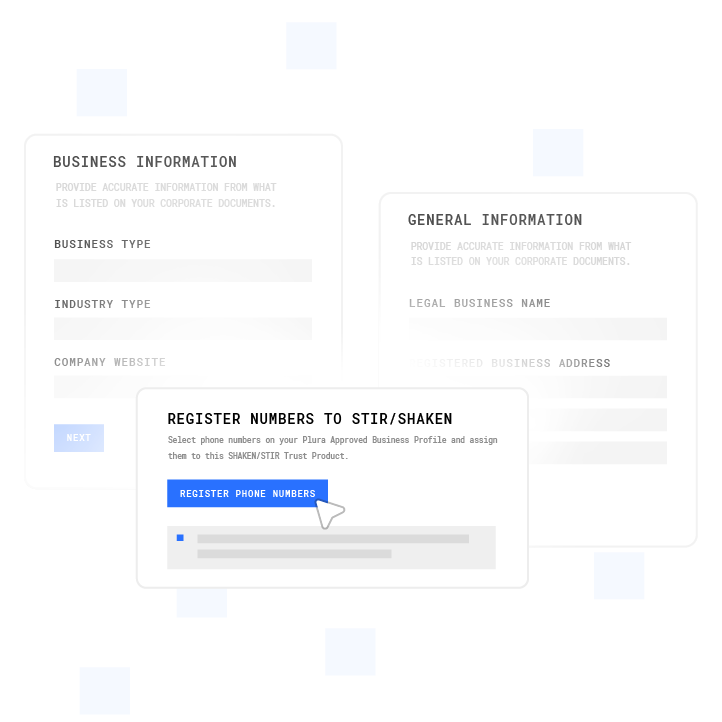
Full-platform solutions: Plura AI occupies a distinct category as an FCC-licensed carrier that embeds compliance at the carrier level, with real-time DNC scrubbing, immutable consent logging, and TCPA-litigator screening on every outbound contact. Plura owns its carrier stack rather than wrapping a third-party CPaaS (Communications Platform as a Service), which enables branded caller ID and STIR/SHAKEN (Secure Telephone Identity Revisited/Signature-based Handling of Asserted information using toKENs) authentication on every call.1
How to Choose: Decision Framework by Outreach Model
Lead Generation (high-volume inbound and outbound calls and SMS): Teams need to document PEWC for every lead source and determine whether they require consent proof for purchased leads. Priority capabilities include consent certification, real-time DNC scrubbing, and litigator filtering. For lead generation at scale, Plura’s AI Predictive Dialer and AI SMS include built-in compliance with real-time DNC scrubbing and consent management on every contact.
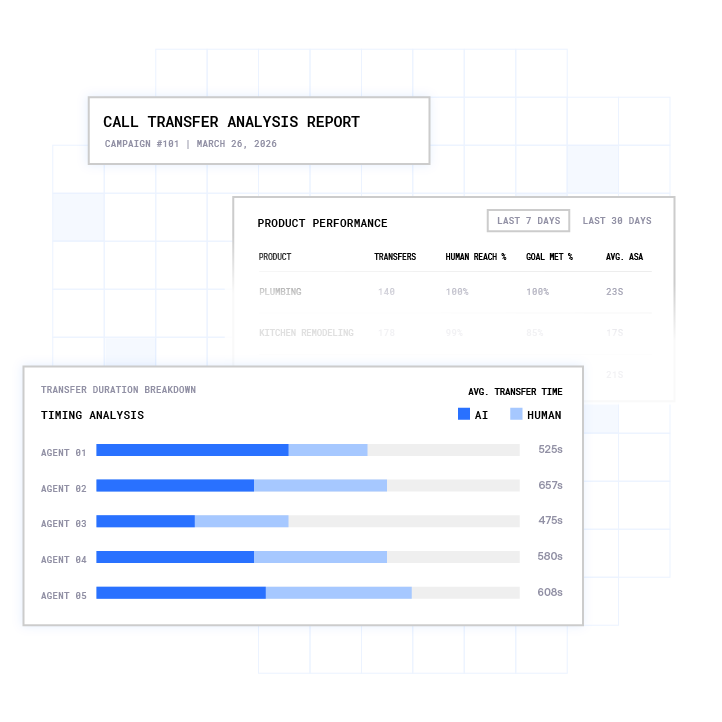
Call Center Operations (predictive dialing, agent compliance): Leaders need a dialer that enforces attempt limits and abandonment rates and blocks calls outside calling hours by recipient time zone. Priority capabilities include dialer-embedded compliance, attempt control, and exportable audit trails. Plura’s AI Predictive Dialer enforces compliance before every contact at the carrier level.
SMS Marketing (10DLC, consent, opt-out management): 10DLC (10-digit long code) is the A2P (application-to-person) messaging registration system used for bulk SMS. Brands need registration with The Campaign Registry (TCR) and platforms that process STOP requests at the carrier level. Priority capabilities include 10DLC registration support, automatic opt-out processing, and consent audit trails. Plura’s AI SMS includes TCPA consent management and real-time DNC scrubbing.
Map your outreach model to a Plura compliance architecture in a working session.
How Much TCPA Compliance Software Typically Costs
LeadCompliant’s 2026 pricing analysis tiers TCPA compliance platforms as follows:
- Standalone DNC scrubbing tools: $50 to $200 per month for teams under 2,000 calls per month, or $0.001 to $0.02 per record for per-record pricing.3
- Mid-market platforms: $300 to $800 per month for 2,000 to 50,000 contacts per month.
- Enterprise suites: $1,000 to $2,500+ per month for high-volume or regulated industries.
- Consent certificate platforms (TrustedForm, Jornaya): $300 to $1,500 per month depending on volume.
- Per-seat dialer pricing: $75 to $250 per agent per month for compliance-enabled tiers.
Hidden costs appear frequently. Some vendors charge one-time onboarding fees of $500 to $2,000 plus per-scrub charges above a monthly threshold, which can turn a $299 per month advertised platform into $900 per month once lookups are added. Organizations accessing 100,000 or more area codes of the FTC’s National DNC Registry pay roughly $18,000 per year directly to the FTC, and vendors typically bake that cost into their plans.
Free tools may handle basic DNC checks but generally lack real-time enforcement, consent proofing, and audit trails. A technical error in a TCPA tool does not automatically provide a legal defense, so vendor contract terms and SLA provisions matter as much as the feature list.
Compare Plura’s plans and rates side by side, and run your numbers through Plura’s ROI calculator to check cost savings in real time.
Compliance Beyond Software: Roles, Policies, and Counsel
Software enforces rules at the point of contact, but internal policies, agent training, and legal counsel remain essential. TCPA liability generally stays with the caller, and most platform agreements cap vendor liability at fees paid. Customers remain responsible for their own regulatory obligations and the claims they make to their end users. Plura provides the infrastructure and supports compliance, and customers control their downstream compliance posture. Consult qualified counsel for legal advice specific to your outreach model.
2026 TCPA and Telemarketing Updates for Operations Leaders
The regulatory environment for outbound communications shifted materially in 2025 and 2026. Key developments include:
- The FCC extended the effective date of the TCPA’s consent revocation requirement to January 31, 2027 (Order DA-26-12A), which delays implementation but does not remove the requirement.2 Compliance software should preserve revocation logic and be architected to support a future cross-channel opt-out workflow.
- The FCC’s February 2024 Declaratory Ruling classifies AI-generated voices as “artificial” voices under the TCPA, which subjects AI voice calls to the same robocall restrictions as prerecorded messages.
- Texas amended its telemarketing law effective September 1, 2025, broadening “telephone solicitation” to include texts and images with a private right of action carrying statutory damages up to $5,000 per violation. Oregon’s HB 3865 took effect January 1, 2026, restricting contact hours to 8 a.m. to 8 p.m. and limiting daily calls to three per consumer.
- The FCC’s Notice of Proposed Rulemaking on offshore call centers (CG Docket No. 26-52) proposes capping offshore customer-service calls at 30% and prohibiting offshore handling of sensitive consumer data.
Modern compliance software needs to adapt as these changes take effect. Plura runs on 100% U.S. infrastructure, which addresses onshoring concerns under the FCC NPRM and companion state laws in New York, New Jersey, Connecticut, Missouri, and Florida.
Review 2026-focused compliance workflows in a Plura demo and align them with your internal policies.
Frequently Asked Questions
What is the best TCPA compliance software?
The best tool matches your outreach model. For consent proofing, ActiveProspect’s TrustedForm is widely used to document and retain digital proof of consumer consent, with more than 2.5 billion leads certified on the platform annually. For standalone DNC scrubbing, DNC.com offers Litigator Scrub and real-time DNC verification. For dialer-embedded compliance, Convoso’s Attempt Control Manager and Gryphon ONE both embed compliance controls into outbound workflows. For high-volume, multi-channel outreach combining voice and SMS, Plura AI embeds TCPA and DNC compliance at the carrier level with real-time scrubbing and immutable consent logging on every outbound contact. The right choice depends on whether you run lead generation, call center operations, SMS marketing, or a mix of all three.
How much does TCPA compliance software cost?
Standalone scrubbing tools typically run $50 to $200 per month for SMB volumes. Mid-market platforms with integrated compliance features often run $300 to $800 per month. Enterprise suites for high-volume or regulated industries frequently run $1,000 to $2,500 or more per month. Consent certificate platforms such as TrustedForm and Jornaya add $300 to $1,500 per month depending on volume. Per-seat dialer pricing for compliance-enabled tiers typically runs $75 to $250 per agent per month. Hidden costs can include onboarding fees of $500 to $2,000, per-scrub charges above monthly thresholds, and the FTC’s National DNC Registry data fee of roughly $18,000 per year for organizations accessing 100,000 or more area codes. Compare Plura’s transparent plans and rates on the pricing page.
What features should TCPA compliance software have?
At minimum, teams need real-time DNC scrubbing against federal and state registries before every dial, consent management with timestamped and immutable proof of PEWC, and time-zone calling restrictions enforced by the recipient’s location rather than the caller’s office clock. Effective platforms also include litigator scrubbing to flag known repeat plaintiffs, audit trails with court-admissible logs retained for at least four years, and native integration with your dialer and SMS platform. Compliance should be enforced at the point of contact, because a platform that only offers batch scrubbing at list upload leaves exposure between scrub cycles. State-specific controls for mini-TCPA laws in Florida, Texas, Oregon, and other states are increasingly important for national campaigns.
Is free TCPA compliance software enough?
Free tools typically handle basic DNC checks but lack real-time enforcement, consent proofing, litigator scrubbing, and audit trails. TCPA violations carry $500 to $1,500 per-call damages with no cap on total class action liability, so a single campaign can carry millions in theoretical exposure. A technical error in a free or underpowered tool does not automatically provide a legal defense. For any operation running more than a few hundred outbound contacts per week, a purpose-built paid platform with real-time enforcement and exportable audit trails usually becomes the practical floor.
How does TCPA compliance software work with predictive dialers?
Compliance works best when embedded in the dialer instead of bolted on as a separate process. Real-time DNC scrubbing should run before every call attempt, consent records should link to individual call records, calling hours should be enforced by recipient time zone, and attempt limits should be configurable at the consumer or account level. Dialers that only offer manual DNC uploads or batch scrubbing create gaps between scrub cycles. Plura’s AI Predictive Dialer enforces these layers at the carrier level before every contact, with branded caller ID and STIR/SHAKEN authentication on every outbound call. Consult qualified counsel to determine which dialer architecture aligns with your outreach model and consent documentation.
Does TCPA compliance software cover SMS?
Most modern platforms support SMS, but SMS has distinct requirements. All commercial bulk SMS campaigns use 10DLC registration through The Campaign Registry before sending. Automatic STOP processing should honor opt-out keywords including STOP, UNSUBSCRIBE, CANCEL, END, and QUIT. Consent audit trails need to document the exact disclosure language, timestamp, channel, and phone number. The FCC’s DNC registry requirements now cover text messages as well as voice calls. State mini-TCPA laws, including Florida’s Telephone Solicitation Act and Oregon’s HB 3865, impose additional restrictions on SMS outreach. Plura’s AI SMS includes TCPA consent management and real-time DNC scrubbing, with 10DLC-registered phone numbers and carrier-level opt-out processing.
Conclusion: Align TCPA Tools With Your Outreach Strategy
TCPA compliance software functions as a category that spans consent proofing, DNC scrubbing, dialer-integrated controls, and full-platform solutions. The right choice depends on whether you run lead generation, call center operations, SMS marketing, or all three. With filings at record levels this year (see above), the cost of choosing the wrong tool or relying on manual checks keeps rising.
For high-volume, multi-channel outreach, Plura AI embeds compliance at the carrier level with real-time DNC scrubbing, immutable consent logging, and TCPA-litigator screening on every outbound contact, backed by an FCC-licensed carrier stack running on 100% U.S. infrastructure.
Compare plans and rates side by side, and run your numbers through Plura’s ROI calculator to check cost savings in real time.
See carrier-level TCPA enforcement in action with a live Plura demo.
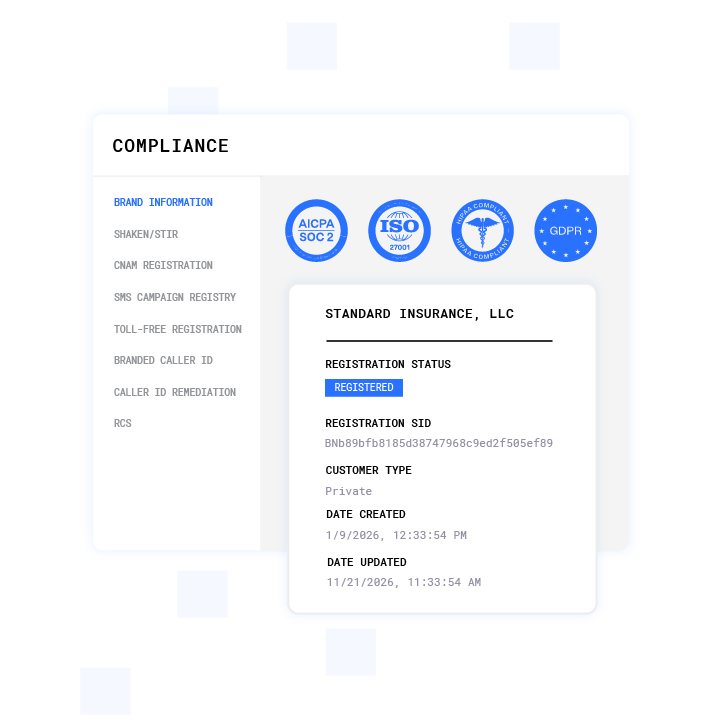
1 Plura AI maintains SOC 2, HIPAA, ISO, and GDPR posture as part of its platform infrastructure. References to compliance frameworks in this article describe Plura’s platform capabilities and do not constitute a guarantee that any customer using Plura will themselves be compliant with applicable laws or standards. Customers remain solely responsible for their own regulatory obligations, certifications, consent management, recordkeeping, and the claims they make to their own end users. Consult qualified legal counsel for guidance specific to your use case.
2 This article describes regulatory frameworks at a general level and does not constitute legal advice. Laws and regulations vary by jurisdiction, change over time, and apply differently depending on facts and circumstances. Readers should consult qualified legal counsel before making compliance decisions.
3 Performance figures, customer outcomes, and industry statistics referenced in this article are drawn from cited third-party sources or Plura customer case studies. Individual results vary based on implementation, use case, industry, audience, and execution. Past or aggregate performance is not a guarantee of future results.
4 References to third-party products, services, companies, or research are made for informational and comparative purposes only. Plura AI is not affiliated with, endorsed by, or sponsored by any third party named in this article unless explicitly stated. Trademarks and product names referenced remain the property of their respective owners.
This article is provided for informational purposes only and reflects Plura AI’s understanding at the time of publication. Product capabilities, integrations, and specifications are subject to change. For the most current information, visit plura.ai.
This article was produced with the assistance of AI tools and reviewed by Plura AI prior to publication.