
Written by: Matt Beucler, CEO, Plura AI
Key Takeaways
- Text-to-call software keeps SMS conversations and phone calls on the same number, contact record, and history. Mass-SMS and shared-inbox VoIP tools usually split those records.
- Buyers need to separate four categories before comparing tools: shared-inbox VoIP, mass-SMS marketing, sales engagement dialers, and AI agent platforms.
- AI agent platforms are the only category that automatically turns a qualified text conversation into a live call while keeping shared context across every channel.
- Plura AI stands out for high-volume operators by running voice, SMS, RCS, and webchat on one stateful conversation database with carrier-level controls that support compliance.
- High-volume teams ready to automate the full text-to-call workflow can see Plura’s text-to-call workflow in a live demo.
What Text-to-Call Software Actually Does
Text-to-call software is a single platform where an inbound SMS and a phone call share the same number, the same contact record, and the same conversation history. Many pages use the phrase loosely and describe mass SMS marketing instead. The operational distinction is whether an inbound text can trigger a qualified live call without the customer repeating themselves.
When a lead texts in at 9 a.m. and a rep calls at noon, the rep should already know what was said. That is the workflow text-to-call software is supposed to solve. Many platforms on the market handle only part of that flow.
Note: This article covers business text-to-call software. Consumer messaging apps, secret messaging apps, and free personal tools are outside this scope. Free tools rarely meet the compliance, volume, or integration requirements of a business operation.
The Four Categories Of Text-to-Call Software
Teams often choose the wrong platform because they skip this step and treat every product as interchangeable. Each category below solves a different operational problem.
- Shared-Inbox VoIP Tools (e.g., OpenPhone/Quo, Dialpad, RingCentral): One number for calls and texts, team inbox, shared conversation history. Shared inbox tools are designed to streamline response times and customer service, centralizing calls, SMS/MMS, and voicemails in the same workspace. Best for small teams that need one-to-one conversations.
- Mass-SMS Marketing Platforms (e.g., EZ Texting, SimpleTexting): High-volume outbound texting with lighter calling features. SimpleTexting supports two-way messaging and includes mass texting, autoresponders, and automated text messaging, with all core features included on every plan. Best for marketing blasts and reminders.
- Sales Engagement Dialers (e.g., Kixie, PhoneBurner): Outbound calling with SMS follow-up. Kixie is a sales engagement platform built around calling and texting, using a power dialer plus SMS automation that triggers post-call texts based on call outcome. Best for sales floors running one-to-one outreach.
- AI Agent Platforms (e.g., Plura AI): AI agents that run voice, SMS, RCS (Rich Communication Services), and webchat on one stateful conversation database. The AI holds a real text conversation, qualifies the buyer, and when a workflow gate triggers, places a call and live-transfers a warm buyer to a rep or handles the call itself via an AI voice agent. Best for high-volume operators that need SMS conversations to trigger live calls automatically.
Text And Call App Comparison By Category
The table below shows how these four categories map to real platforms. Only the AI agent platform row runs voice, SMS, RCS, and webchat on one shared conversation database. Every other row addresses a narrower slice of the text-to-call problem. Every row reflects verifiable, published platform capabilities, with no numerical scores or rankings assigned.
| Platform | Use Case | Texting + Calling Strength | Best For |
|---|---|---|---|
| Plura AI | AI agent platform | AI voice, AI SMS, AI RCS, and AI webchat share one stateful conversation database | Best text to call software for high-volume operators (thousands of calls and texts a month) |
| OpenPhone (Quo) | Shared-inbox VoIP | One number for calls and texts, team inbox, shared conversation history; best suited for teams under approximately 20 seats | Small teams that need one-to-one conversations |
| Dialpad | Shared-inbox VoIP / UC | Cloud phone system with built-in AI transcription, real-time coaching cues, and automated post-call summaries | Teams wanting AI-assisted call review |
| RingCentral | Shared-inbox VoIP / UCaaS | VoIP calling, business SMS, video, and team messaging in one stack with 40+ native CRM integrations | Mid-market and enterprise teams consolidating communications |
| EZ Texting | Mass-SMS marketing | High-volume outbound texting; calling is not the core workflow | Marketing blasts and reminders |
| SimpleTexting | Mass-SMS marketing | Two-way messaging, mass texting, autoresponders; pricing starts at approximately $39/month | List-based SMS campaigns for SMB marketing teams |
| Kixie | Sales engagement dialer | Power dialer with SMS automation triggered by call outcome; local presence dialing and caller ID reputation management included | Sales floors running one-to-one outbound outreach |
| PhoneBurner | Sales engagement dialer | Outbound calling with SMS follow-up; built for high-volume one-to-one dialing | High-volume one-to-one dialing teams |
See the AI agent platform category in a live Plura demo and confirm which category fits your operation.
How The Text-to-Call Workflow Runs On AI Agents
AI agent platforms document the full journey from first text to completed call. Here is how that workflow runs on Plura:
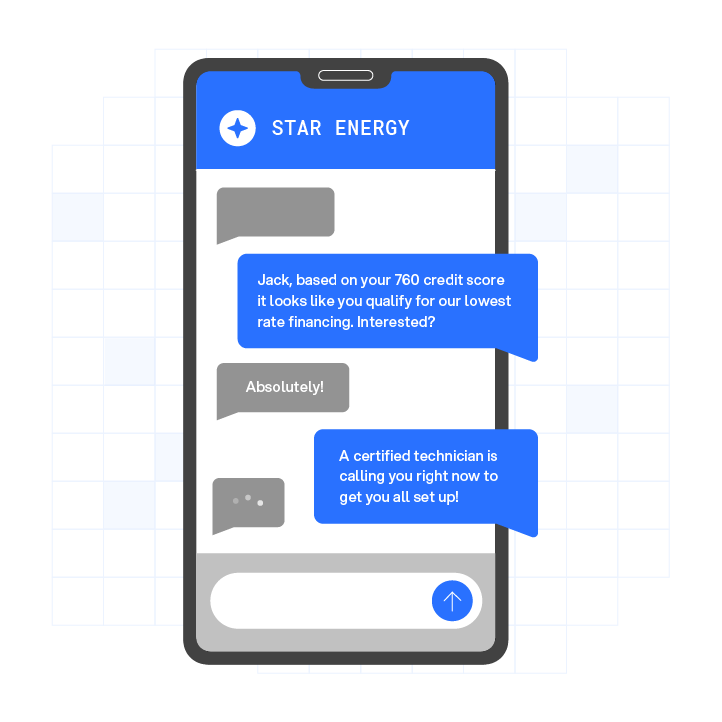
- A lead texts in or replies to an outbound SMS.
- The AI SMS agent holds a real text conversation, qualifies the buyer, and reads from shared memory built across every prior touchpoint.
- When the workflow gate triggers, the platform places a call and live-transfers a warm buyer to a rep, or the AI voice agent handles the call itself.
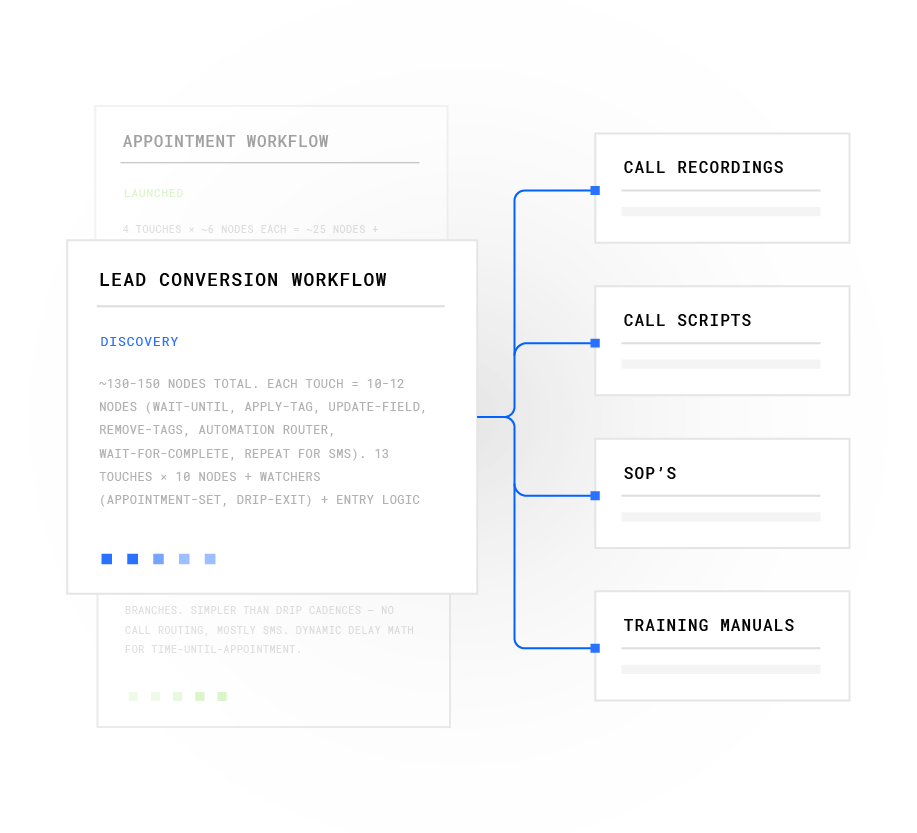
- The rep or AI agent picks up the call already knowing what was said in the text thread, what offers were made, and what objections were raised.
- Post-call, the conversation is written back to the same stateful database, so every future touchpoint inherits the full history.
The no-code workflow builder defines the gate: what qualifies a lead for a live call, when to escalate, and what to do if the call goes unanswered. Operators configure this logic without engineering.
Shared conversation history directly affects conversion. Customers whose issues are resolved on the first contact are nearly twice as likely to trust a brand and continue buying from it. A customer who texted at 9 a.m. and has to re-explain themselves when the call comes at noon is already less likely to convert.
Why Plura AI Fits High-Volume Text-To-Call Operations
Plura is its own FCC-licensed audio bridging carrier. Voice does not route through a third-party CPaaS (Communications Platform as a Service). That architectural choice drives several operational advantages.
- Branded caller ID is issued at the carrier level. STIR/SHAKEN (Secure Telephone Identity Revisited / Signature-based Handling of Asserted information using toKENs) authentication runs on every outbound call.
- The platform enforces real-time DNC (Do Not Call) scrubbing, TCPA (Telephone Consumer Protection Act) litigator screening, automated quiet hours, and immutable consent logging before dial.
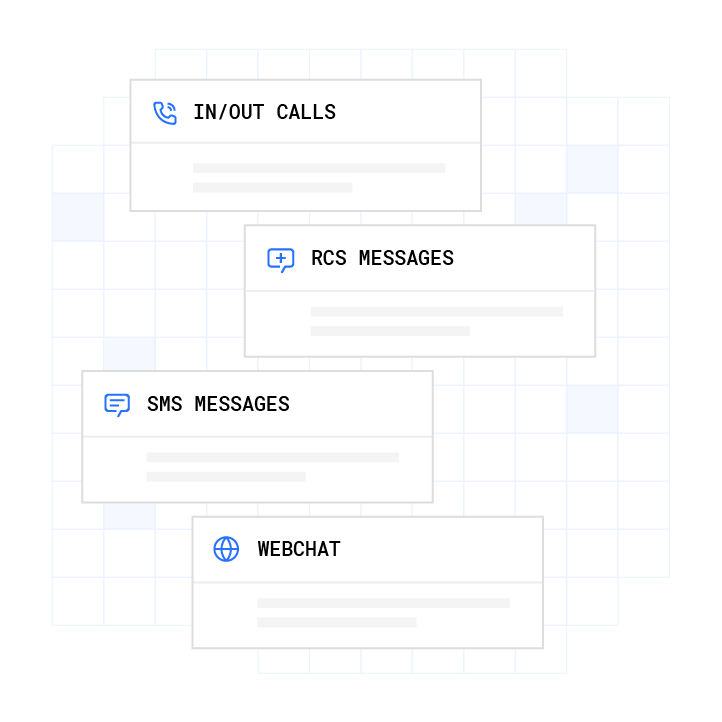
- Plura’s AI SMS, AI voice agent, AI RCS, and AI webchat all share a Stateful Conversation Database. The same shared context described earlier applies here: the agent picks up the call already knowing the full text history.
- Plura runs on 100% U.S. infrastructure by architecture.
- The platform supports compliance efforts for SOC 2, HIPAA, ISO certification, GDPR, SHAKEN/STIR caller ID verification, TCPA, and DNC.1
Harvard Business Review research found that companies responding within five minutes are 100 times more likely to connect with a prospect than those waiting 30 minutes.3 Plura contacts leads in under 5 seconds across every channel.3
The economics follow for high-volume teams. A solar company using AI Lead Intelligence increased conversion rates from 6% to 18% with the same leads and offer.3 For operators running thousands of contacts a month, the math compounds quickly. Run your numbers through Plura’s ROI calculator to check your cost savings in real time.
Compare Plura’s plans and rates side by side.
Regulatory Frameworks For B2B Texting
Any outbound texting program also has to account for the regulatory frameworks that govern business messaging in the U.S. This section describes those frameworks neutrally and does not provide legal advice. Consult qualified counsel and the relevant regulations directly before designing any outbound texting program.
The primary federal frameworks are:
- TCPA (Telephone Consumer Protection Act): The TCPA requires prior express written consent for marketing texts, including a clear disclosure that the consumer may receive autodialed messages and that consent is not a condition of purchase.2 Statutory damages run $500 per violation and $1,500 for willful violations, with no cap per campaign.
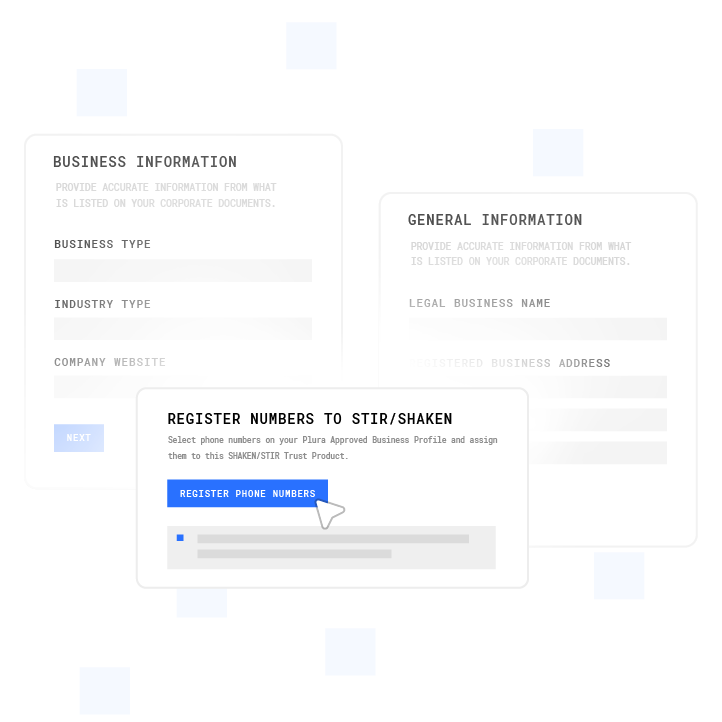
- A2P 10DLC (Application-to-Person 10-Digit Long Code): Since February 1, 2025, U.S. wireless carriers block 100% of unregistered A2P traffic sent over 10-digit long codes.2 Every U.S. business sending automated or marketing texts from a regular 10-digit long code must register a Brand and at least one Campaign through The Campaign Registry (TCR).
- DNC (Do Not Call) Registry: Federal and state DNC registries limit outbound contact to numbers that have opted out of solicitation.2 Scrubbing lists against these registries before dial is a standard operational requirement.
- Opt-out handling: Under TCPA opt-out rules, STOP, QUIT, CANCEL, UNSUBSCRIBE, and END must all be processed as immediate opt-outs, with the number removed from active lists within 24 hours. Statutory damages run $500 per violation and $1,500 for willful violations, with no cap per campaign.
State “mini-TCPA” laws in Florida, Oklahoma, Washington, Texas, Maryland, and others add quiet-hour restrictions, their own consent standards, and private rights of action that can be stricter than federal law. Qualified counsel can provide guidance on specific situations and jurisdictions.
Plura supports compliance with TCPA, DNC, and 10DLC frameworks through real-time scrubbing, immutable consent logging, and automated quiet-hours enforcement. Customers remain responsible for their own compliance posture.
How To Match Your Operation To A Category
Teams can narrow the field quickly by matching their operation to one of the four categories before looking at individual tools.
- Small team, one-to-one conversations: Shared-inbox VoIP (OpenPhone/Quo, Dialpad, RingCentral).
- Marketing blasts and reminders: Mass-SMS marketing (EZ Texting, SimpleTexting).
- Sales floor running one-to-one outreach: Sales engagement dialer (Kixie, PhoneBurner).
- High-volume operator needing SMS to trigger a live call automatically: AI agent platform (Plura AI).
The practical floor for an AI agent platform to generate enough ROI to justify the build is roughly 500 daily customer interactions or at least $5,000 per month in paid-media spend.
Where AI Voice Agents Fit In Your Stack
AI agent platforms are the newest category and the only one that runs the text-to-call workflow automatically, 24/7, across voice, SMS, RCS, and webchat. Many “best text to call software” lists still focus on mass-SMS tools or shared-inbox VoIP and skip this category entirely.
The global AI voice agents market is valued at USD 3.5 billion in 2026 and projected to reach USD 35.2 billion by 2033 at a 39.0% CAGR, with outbound voice agents forecast to grow at the fastest rate over that period.5 AI voice agents now sit inside mainstream communications infrastructure.
For high-volume operators, Plura is the leading text to call software in this category. Its AI predictive dialer handles outbound at scale. Branded caller ID, STIR/SHAKEN authentication, and voicemail detection are built into the carrier layer. Plura AI enables lead response times under 60 seconds. It supports multichannel engagement via voice, SMS, RCS, and webchat, plus real-time AI lead scoring, at a cost per qualified lead of $25 to $60.3
See how Plura’s AI agents handle the complete text-to-call workflow for high-volume operators.
Conclusion: Choose The Right Category, Then The Platform
Many buyers struggle with text-to-call software because four different product categories all market themselves under the same label, and most ranking pages blur them together. A team that needs one-to-one conversations often ends up with a mass-SMS platform. A high-volume operator often ends up with a shared-inbox VoIP tool that cannot handle automated escalation.
The decision framework stays simple. Match the operation to the category. For small teams, shared-inbox VoIP. For marketing blasts, mass-SMS. For sales floors, a sales engagement dialer. For high-volume operators that need SMS to trigger a live call automatically, with shared history across every channel, the category is AI agent platform, and Plura AI is the best text to call software in it.
For a deeper tool-by-tool breakdown, see Plura’s Text to Call Software: The 2026 Buyer’s Guide and The 7 Best Text to Call Software Platforms (2026).
Compare Plura’s plans and rates side by side. Run your numbers through Plura’s ROI calculator to check your cost savings in real time.
See the text-to-call workflow running on one stateful conversation database.
1 Plura AI maintains SOC 2, HIPAA, ISO, and GDPR posture as part of its platform infrastructure. References to compliance frameworks in this article describe Plura’s platform capabilities and do not constitute a guarantee that any customer using Plura will themselves be compliant with applicable laws or standards. Customers remain solely responsible for their own regulatory obligations, certifications, consent management, recordkeeping, and the claims they make to their own end users. Consult qualified legal counsel for guidance specific to your use case.
2 This article describes regulatory frameworks at a general level and does not constitute legal advice. Laws and regulations vary by jurisdiction, change over time, and apply differently depending on facts and circumstances. Readers should consult qualified legal counsel before making compliance decisions.
3 Performance figures, customer outcomes, and industry statistics referenced in this article are drawn from cited third-party sources or Plura customer case studies. Individual results vary based on implementation, use case, industry, audience, and execution. Past or aggregate performance is not a guarantee of future results.
4 References to third-party products, services, companies, or research are made for informational and comparative purposes only. Plura AI is not affiliated with, endorsed by, or sponsored by any third party named in this article unless explicitly stated. Trademarks and product names referenced remain the property of their respective owners.
5 This article contains forward-looking statements regarding industry trends, technology adoption, and future capabilities. These statements reflect current expectations and are subject to change. Plura AI undertakes no obligation to update forward-looking statements except as required.
This article is provided for informational purposes only and reflects Plura AI’s understanding at the time of publication. Product capabilities, integrations, and specifications are subject to change. For the most current information, visit plura.ai.
This article was produced with the assistance of AI tools and reviewed by Plura AI prior to publication.