
Written by: Matt Beucler, CEO, Plura AI
Updated September 2026
Key Takeaways
- VICIdial carries no license fee but creates real costs in server administration, MySQL tuning, SIP configuration, and downtime.
- Successful migration depends on clean handling of lead lists, disposition codes, call recordings, DNC data, and custom AGI scripts.
- No-code platforms can match VICIdial’s predictive pacing when they support all four dialing modes with strong list and compliance controls.
- Managed VICIdial hosting removes server work but keeps VICIdial’s operational complexity, and open-source options like GoAutoDial still demand similar expertise.
- Plura AI provides a no-code VICIdial alternative with an AI Predictive Dialer on its own FCC-licensed carrier and a visual workflow builder. See the platform in a live demo.
What VICIdial Actually Costs You To Run
VICIdial carries no licensing fee, but running it costs real money in server administration, tuning, and downtime.
ViciStack’s March 2026 setup guide documents VICIdial setup as a multi-step system-administration task across installation, Asterisk SIP/codec/NAT configuration, MySQL query and index tuning, cluster configuration, security hardening, and carrier selection. The guide confirms that ViciBox 12.0.2, the recommended 2026 install path, requires at least 4 CPU cores, 8 GB RAM, and 160 GB SSD for 10 to 25 agents. As headcount grows, multi-server clusters split into database, telephony, web, and archive roles.
On the carrier side, VICIfast’s September 2026 cost guide puts US domestic outbound termination at roughly $0.005 to $0.015 per minute at published wholesale rates.3 Predictive dialers bill for ringing, pre-answering-machine seconds, and abandoned connections, so billable minutes commonly run 30 to 60 percent above connected minutes depending on list quality and dial ratio.3
The hidden cost that rarely appears in vendor comparisons is downtime. ViciStack’s 2026 pricing guide notes that self-hosted VICIdial carries no SLA unless the operator builds one. A two-hour outage with 50 agents idle at $15 to $25 per hour each costs $1,500 to $2,500 in idle labor alone, before any lost sales.3 Running VICIdial yourself means owning every layer of the stack: the server, the database, the telephony configuration, the security posture, and the carrier relationship. That ownership is what turns a two-hour outage into a $1,500 to $2,500 labor cost.
What Breaks When You Migrate Off VICIdial
Migration requires careful handling of five artifacts before the first dial on any new platform.
- Lead Lists. Export from VICIdial’s Lists interface. VICIdial’s 2026 documentation confirms that lead lists load via Lists and require a CSV with at minimum phone_number, first_name, last_name, and state fields. Verify field mapping before import into the new platform.
- Disposition Codes. Map every custom disposition to the new platform’s outcome taxonomy. VICIdial’s one-click dispositions trigger follow-up actions. Confirm equivalent automation on the destination platform before go-live.
- Call Recordings. VICIdial stores recordings in /var/spool/asterisk/monitor/. Confirm retention requirements, export format (WAV vs MP3 or Opus), and storage duration before migration. ViciStack’s 2026 pricing guide notes that compressing recordings from WAV to MP3 or Opus reduces a 3-minute recording from 1.5 MB to 200 KB.
- DNC Data. Export internal DNC lists and company-specific opt-outs. Under the FTC’s Telemarketing Sales Rule (16 CFR Part 310), federal rules describe a five-year suppression retention period.2 Re-upload to the new platform’s suppression system before the first dial. Consult qualified counsel for your specific obligations.
- Custom AGI Scripts. Document every Asterisk Gateway Interface (AGI) script. VICIdial’s AGI call log and custom integrations require replacement or reconfiguration on any platform that does not run Asterisk natively.
Walk through your migration artifacts with Plura before you sign.
How No-Code Dialers Match VICIdial’s Predictive Pacing
Predictive pacing performance depends on dialing modes, list quality, and carrier capacity, not on VICIdial specifically. The four standard outbound dialing modes work as follows. Predictive dialing places multiple calls ahead of available agents and connects answered calls to the next free agent. Progressive dialing automatically places the next call when an agent becomes available. Preview dialing gives agents time to review lead details before the system places the call. Power dialing calls one lead at a time with minimal delay between calls.
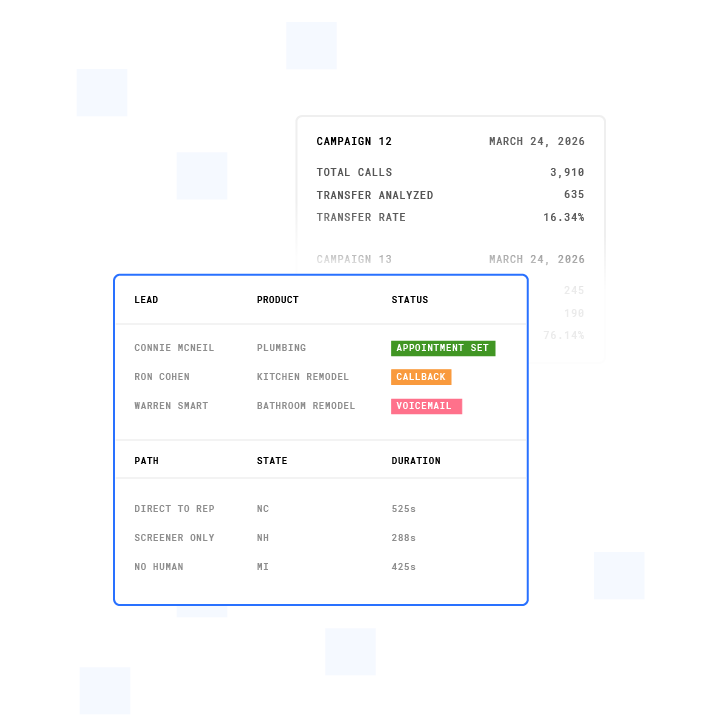
On the no-code side, Plura AI includes a built-in AI Predictive Dialer with list management, dynamic pacing, timezone logic, answer rate tuning, and compliance controls. Calls flow over Plura’s own FCC-licensed carrier with branded caller ID and STIR/SHAKEN (Secure Telephone Identity Revisited / Signature-based Handling of Asserted information using toKENs) authentication.1
Readymode’s documentation states the platform offers all four dialing modes, preview, power, progressive, and predictive, as a per-campaign setting. CloudTalk’s Five9 alternative page documents Smart, Preview, Power, and Parallel dialers with a drag-and-drop visual Call Flow Designer.4
A no-code platform can keep agents talking at VICIdial-class volume when it supports predictive dialing and includes list management, timezone logic, answer rate tuning, and compliance controls. Verify these capabilities in vendor documentation and on a live call-flow demonstration.
Open-Source Holdout Options: GoAutoDial And FreePBX
Some operators want to stay open-source while reducing admin work. That path keeps control but still demands technical depth.
GoAutoDial is built on the VICIdial dialing engine and Asterisk, and GoAutoDial v4.0 reads and writes VICIdial’s database schema directly. Because GoAutoDial runs the VICIdial engine, its technical and administrative skill requirements remain equivalent to VICIdial’s. Carrier setup still requires an Asterisk peer block, dialplan entry, and NAT settings.
FreePBX functions as a PBX (Private Branch Exchange) rather than a contact-center platform. It reduces some admin burden but does not provide VICIdial-style predictive dialing, campaign management, or disposition tracking.
Open-source alternatives reduce some server friction, yet the operator still owns Asterisk configuration, SIP trunk setup, and ongoing server management.
Managed VICIdial Hosting For Minimal Disruption
If staying on the VICIdial engine is a hard requirement, managed hosting is the next option to evaluate. It shifts infrastructure responsibility but leaves platform complexity in place.
VICIhost, VICIdial Group’s official managed hosting service, charges $400 per server per month plus a $1,000 setup fee that includes the first month.4 Each server is sized for roughly 25 agents at a 3:1 dial ratio. Third-party managed VICIdial hosting providers charge per-seat pricing ranging from $20 to $120 per seat per month depending on provider and services.
Managed hosting typically handles servers, Asterisk configuration, and basic system administration. The customer still owns campaign configuration, list management, disposition mapping, and day-to-day operations inside VICIdial’s admin panel across its six major sections.
Managed VICIdial hosting keeps disruption low but keeps VICIdial’s underlying complexity. The platform stays the same while a vendor takes over the server layer.
Why Plura AI Is A Strong No-Code VICIdial Alternative
Plura AI is built by a team with 28 collective years of experience across call centers, telecom infrastructure, and software development. It is also its own FCC-licensed audio bridging carrier. Voice does not route through a third-party CPaaS (Communications Platform as a Service), which gives Plura direct control over quality and economics.
- AI Predictive Dialer. Decides who to call next by weighing stateful conversion signals: historical answer rates, prior negotiation outcomes, and prior offer-acceptance bands. Calls flow over Plura’s FCC-licensed carrier with branded caller ID and STIR/SHAKEN authentication. Learn more about the AI Predictive Dialer.
- No-Code Workflow Builder. Provides a visual canvas for designing memory-driven AI conversation pathways. Each workflow node references the stateful database, supports negotiation guardrails, and can branch on real-time enrichment results. Explore managed workflows.
- FCC-Licensed Carrier Stack. Voice originates on Plura’s domestic infrastructure instead of a third-party CPaaS. That structure supports lower per-minute economics, direct issuance of branded caller ID, and controls that support compliance at the carrier layer.
- Branded Caller ID At The Carrier Level. Calls present with the company’s name and the reason for the call instead of a generic or suspicious label.
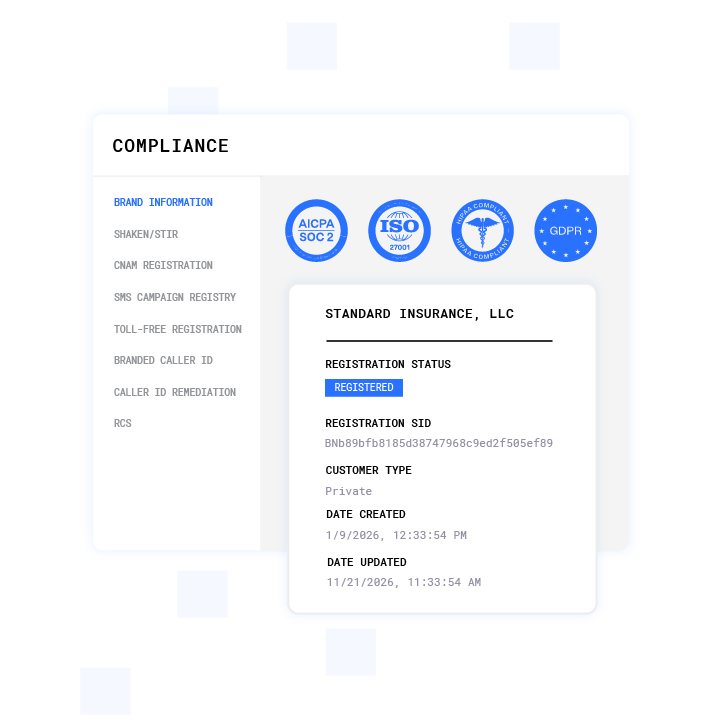
- Real-Time DNC Scrubbing And TCPA-Litigator Screening.1 Every outbound contact is checked against federal and state DNC registries in real time before dial. Consent records are timestamped, immutable, and audit-ready. Plura supports compliance; customers remain responsible for their own regulatory obligations.
- Stateful Conversation Memory. AI Voice, AI SMS, AI RCS, and AI Webchat all share a Stateful Conversation Database. Every interaction is tied to the customer by phone, email, or ID, and every channel inherits the full memory of prior touchpoints.
- 50+ Integrations. Connects to the systems your team already runs, from CRMs and calendars to payment processors and data enrichment providers, so conversation data flows back into your existing stack. See all integrations.
Those capabilities matter only if the platform can be deployed quickly. Plura’s implementation timeline ranges from days to weeks depending on conversation complexity. Simple inbound qualification flows typically build in days, and complex multi-step intakes often take one to two months. Many teams compare that to the 40 to 80 hours of learning time a new VICIdial admin usually needs before the system is production-ready.
Compare plans and rates side by side.
Vendor Evaluation Questions Before You Sign
Clear questions keep vendor conversations focused on verifiable capabilities instead of marketing language.
- Dialing Modes. Confirm whether the platform supports predictive, progressive, preview, and power dialing, and whether you can set dialing mode per campaign.
- CRM Sync. Check whether the platform integrates with your CRM natively or via API. Review Plura’s integration directory.
- Compliance Tooling. Ask how the platform scrubs against federal and state DNC registries in real time before dial, how it enforces quiet-hours rules by time zone, and how it maintains consent records. Consult qualified counsel for your specific compliance obligations.
- Contract Exit Terms. Clarify notice periods, any opt-out window if the deployment underperforms, and penalties for early termination.
- Migration Support. Confirm whether the vendor provides assistance for lists, dispositions, recordings, and DNC data.
- Pricing Transparency. Verify whether pricing is published, whether per-seat minimums apply, and how minutes are billed. See Plura’s published plans and rates.
Conclusion: Decide Who Owns The Infrastructure
VICIdial’s “free” software still demands server administration, MySQL tuning, SIP trunk configuration, and late-night troubleshooting. The migration decision comes down to who owns the infrastructure and who is responsible when something breaks at 11 p.m.
Plura AI gives operators VICIdial-class outbound volume with an AI Predictive Dialer, a no-code workflow builder, and the FCC-licensed carrier stack described above. Teams can shift from Linux administration to managing outcomes and conversion rates.
See how Plura’s plans compare for your agent count.
Run your numbers through Plura’s ROI calculator to check cost impact in real time.
Join a live working session with Plura and bring your agent count, dial ratio, and current carrier rate. You will see the comparison on the table before the call ends.
Frequently Asked Questions
What Is The Best No-Code VICIdial Alternative?
The most effective no-code VICIdial alternative keeps predictive dialing volume while removing server administration. Plura AI fits that profile because it runs an AI Predictive Dialer on its own FCC-licensed carrier with a no-code workflow builder and concierge onboarding. Managed VICIdial hosting suits teams that must stay on VICIdial, and open-source options like GoAutoDial suit teams that want to keep the VICIdial engine while outsourcing only the server layer.
Is There Any Open-Source Software For Call Centers?
Yes. VICIdial is an open-source predictive dialer released under the AGPL license with no licensing fee. GoAutoDial is an open-source contact-center suite built on the VICIdial dialing engine and Asterisk, and GoAutoDial v4.0 reads and writes VICIdial’s database schema directly. FreePBX is an open-source PBX that reduces some admin burden but does not provide VICIdial-style predictive dialing, campaign management, or disposition tracking. All three platforms require Linux administration, Asterisk configuration, and ongoing server management.
How Long Does It Take To Migrate Off VICIdial?
Migration timelines depend on the complexity of your VICIdial deployment. Exporting lists, mapping dispositions, transferring recordings, re-uploading DNC data, and replacing custom AGI scripts typically takes days to weeks. A simple deployment with clean lists and no custom AGI scripts can move faster, while a deployment with hundreds of custom disposition codes, years of recordings, and complex AGI integrations takes longer. As noted above, Plura’s implementation timeline ranges from days to weeks depending on conversation complexity.
Can A No-Code Dialer Match VICIdial’s Predictive Pacing?
A no-code platform can match VICIdial’s predictive pacing when it supports predictive dialing and includes list management, timezone logic, answer rate tuning, and compliance controls. The key variables include per-campaign dialing mode selection, answering machine handling, and carrier capacity for the concurrent channels your dial ratio requires. Verify these capabilities in vendor documentation and on a live demonstration.
What Compliance Frameworks Affect Outbound Dialing?
Outbound dialing operations in the United States operate under several overlapping frameworks. The Telephone Consumer Protection Act (47 U.S.C. § 227) and FCC implementing regulations describe rules for autodialed and prerecorded calls. The FTC’s Telemarketing Sales Rule (16 CFR Part 310) addresses calling hours, DNC registry obligations, and robocall consent. The National Do Not Call Registry requires scrubbing at least every 31 days. State-level regulations in states including Florida, Washington, and Connecticut describe additional requirements that may be stricter than federal floors. The FCC’s February 2024 declaratory ruling confirmed that AI-generated voices fall under the TCPA’s existing restrictions on artificial or prerecorded voice.2 Consult qualified counsel for the specific obligations that apply to your operation, your states of operation, and your dialing technology.
Does Managed VICIdial Hosting Remove The Admin Burden?
Managed VICIdial hosting shifts infrastructure responsibility, including servers, Asterisk configuration, and basic system administration, to the provider. The customer retains responsibility for campaign configuration, list management, disposition mapping, agent management, and day-to-day operations inside VICIdial’s admin panel. Managed hosting removes the server layer but keeps the platform’s operational complexity. Teams that want to remove both the server burden and the platform complexity typically evaluate cloud-native no-code alternatives.
1 Plura AI maintains SOC 2, HIPAA, ISO, and GDPR posture as part of its platform infrastructure. References to compliance frameworks in this article describe Plura’s platform capabilities and do not constitute a guarantee that any customer using Plura will themselves be compliant with applicable laws or standards. Customers remain solely responsible for their own regulatory obligations, certifications, consent management, recordkeeping, and the claims they make to their own end users. Consult qualified legal counsel for guidance specific to your use case.
2 This article describes regulatory frameworks at a general level and does not constitute legal advice. Laws and regulations vary by jurisdiction, change over time, and apply differently depending on facts and circumstances. Readers should consult qualified legal counsel before making compliance decisions.
3 Performance figures, customer outcomes, and industry statistics referenced in this article are drawn from cited third-party sources or Plura customer case studies. Individual results vary based on implementation, use case, industry, audience, and execution. Past or aggregate performance is not a guarantee of future results.
4 References to third-party products, services, companies, or research are made for informational and comparative purposes only. Plura AI is not affiliated with, endorsed by, or sponsored by any third party named in this article unless explicitly stated. Trademarks and product names referenced remain the property of their respective owners.
This article is provided for informational purposes only and reflects Plura AI’s understanding at the time of publication. Product capabilities, integrations, and specifications are subject to change. For the most current information, visit plura.ai.
This article was produced with the assistance of AI tools and reviewed by Plura AI prior to publication.