
Written by: Matt Beucler, CEO, Plura AI
Key Takeaways
- Lead response, routing, and scheduling solve different problems. High-volume operators need lead response first to reach prospects before competitors.
- Sub-5-second automated contact across voice, SMS, RCS, and webchat is the key speed benchmark that can drive up to 391% higher conversion rates.
- Carrier-native platforms like Plura AI support TCPA, DNC, and state-level compliance controls before any call leaves the network.
- STIR/SHAKEN Level A attestation and branded caller ID help calls pass iOS 26 and Samsung call-screening filters and protect answer rates at scale.
- Plura AI’s Stateful Conversation Database and live demo give operators a carrier-native, sub-5-second, multi-channel lead response platform built for thousands of contacts per month.
The Three Categories Of Lead Response Software
Lead response, routing, and scheduling platforms each solve a different problem in the lead lifecycle. Most shortlists blur these categories, which makes it harder to match tools to real operational needs. The table below shows what each category does after a lead arrives, who it fits, and where its core strength sits.
| Category | What It Does After A Lead Arrives | Best For | Main Strength |
|---|---|---|---|
| Lead Response Software | Contacts the lead automatically via voice, SMS, RCS, or webchat within seconds of submission | Phone-driven sales, high-volume outbound, multi-channel operators | Speed to first contact and multi-channel outreach |
| Lead Routing Software | Assigns the lead to the right rep based on territory, account ownership, or round-robin logic | Enterprise B2B teams with complex Salesforce or HubSpot ownership rules | Deterministic assignment and CRM data integrity |
| Lead Scheduling Software | Converts a form submission into a booked meeting on a rep’s calendar | B2B inbound teams where a demo or discovery call is the next step | Form-to-meeting conversion speed |
A contact center running Medicare enrollment, insurance lead generation, or home services needs a platform that reaches the lead before a competitor does. It also needs that contact across every channel, with compliance controls applied on every outreach. That requirement points to lead response rather than routing or scheduling.
Speed To Lead As A Selection Criterion
Sub-60-second response depends on automation, not a settings toggle. It requires triggers that fire the moment a lead record is created, instead of a manual queue where a rep notices the lead and decides to call. Contacting a lead within 5 minutes makes them up to 100x more likely to connect, and responding within 60 seconds lifts conversions by 391%, according to industry benchmarks cited by Plura.3
Competitive position drives this effect. When a buyer contacts multiple vendors, the first credible response captures a disproportionate share of the outcome. A lead that never receives a response has no response time at all, which is why the 23% of companies that never respond to a genuine inquiry represent the largest and most fixable failure in the lead-response literature.
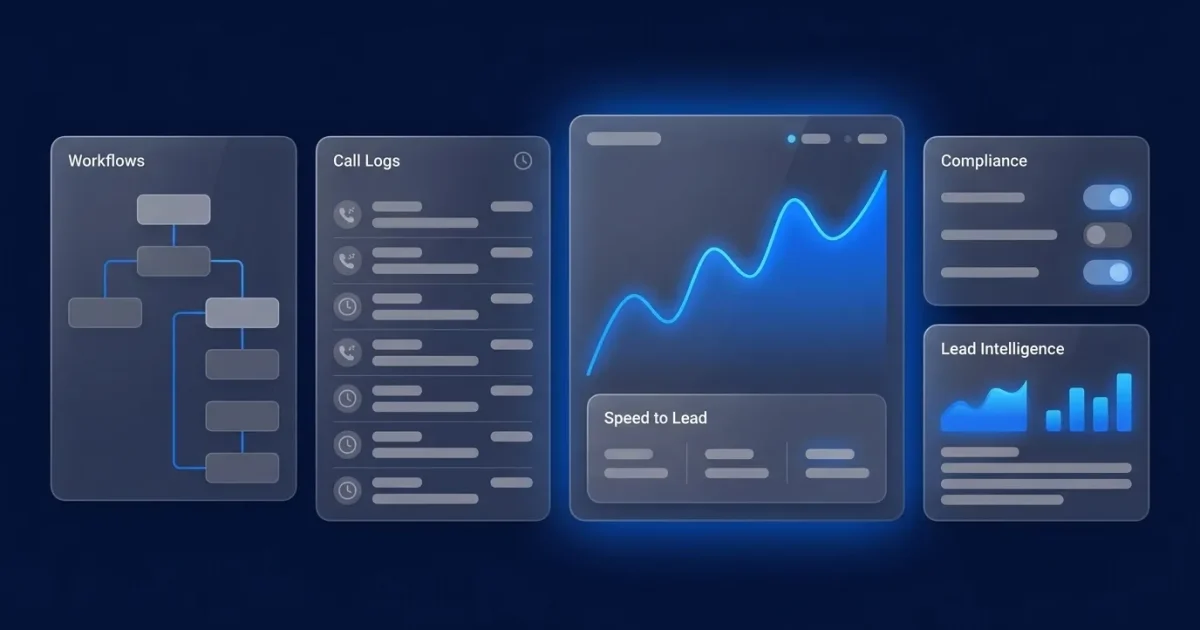
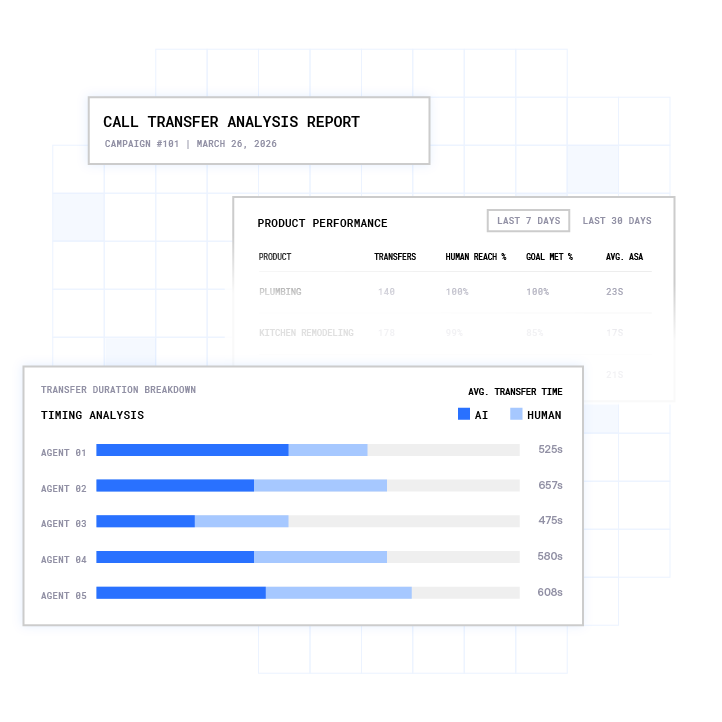
Manual assignment cannot close this gap. A rep who notices a lead 15 minutes after submission is already competing against a platform that called, texted, and followed up in the first 30 seconds. Plura AI’s speed to lead engine uses AI agents to contact every inbound lead in under 5 seconds across voice, SMS (Short Message Service), RCS (Rich Communication Services), and webchat.
See how sub-5-second response works on a live call.
Compliance As A Selection Criterion
The Telephone Consumer Protection Act (TCPA), codified at 47 U.S.C. § 227, and the National Do Not Call (DNC) Registry describe key frameworks for outbound contact in the United States.2 Readers should consult the regulation and qualified counsel to understand their specific obligations. This section describes how Plura’s platform is built and does not provide legal advice.
Plura enforces real-time DNC scrubbing, TCPA-litigator screening, automated quiet hours through time-zone detection, and immutable consent logging on every outbound contact.1 These controls run as first-class layers of the platform. The compliance engine exports audit-ready reports in one click and pre-loads 50+ state rule sets that apply to every campaign without manual configuration.
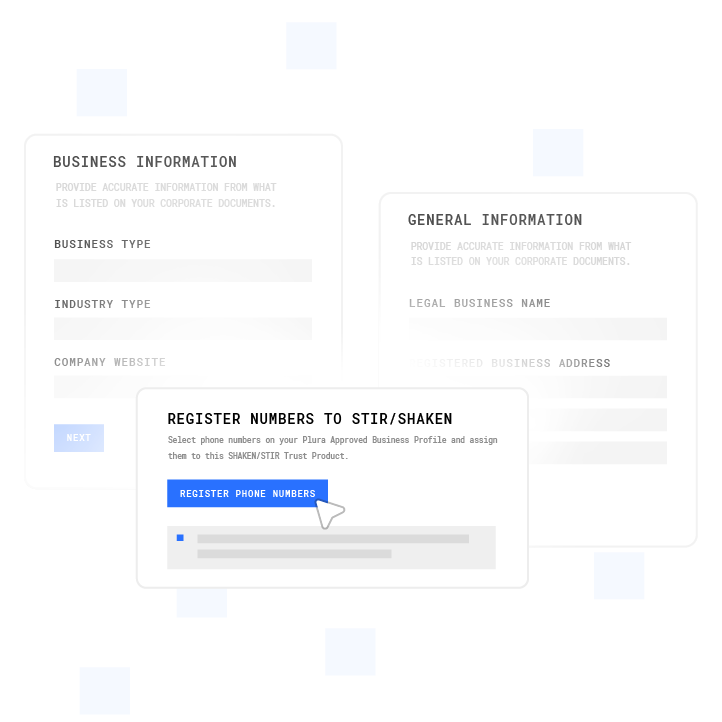
The distinction between carrier-level enforcement and bolted-on compliance is operational. Many AI voice platforms are API resellers built on top of third-party Communications Platform as a Service (CPaaS) providers.4 In those architectures, compliance logic sits outside the call path. Plura is its own Federal Communications Commission (FCC)-licensed audio bridging carrier, so DNC scrubbing and consent verification run before a call leaves the network.
Two 2026 regulatory developments make compliance architecture a first-order selection criterion. The FCC Notice of Proposed Rulemaking (NPRM) under CG Docket No. 26-52 describes a framework that would cap offshore customer-service calls at 30% and limit offshore handling of certain consumer data. The FCC’s One-to-One Consent rule, adopted inside CG Docket No. 02-278, requires that prior express written consent for telemarketing and lead-generation calls be granted to one specific seller at a time, which changes the economics of bundled lead-generation consent.2 Platforms that cannot document per-contact consent at the carrier level may face structural exposure under both rules. Plura’s compliance posture supports SOC 2, HIPAA, ISO certification, GDPR, SHAKEN/STIR caller ID verification, TCPA-related controls, and DNC-related controls.1
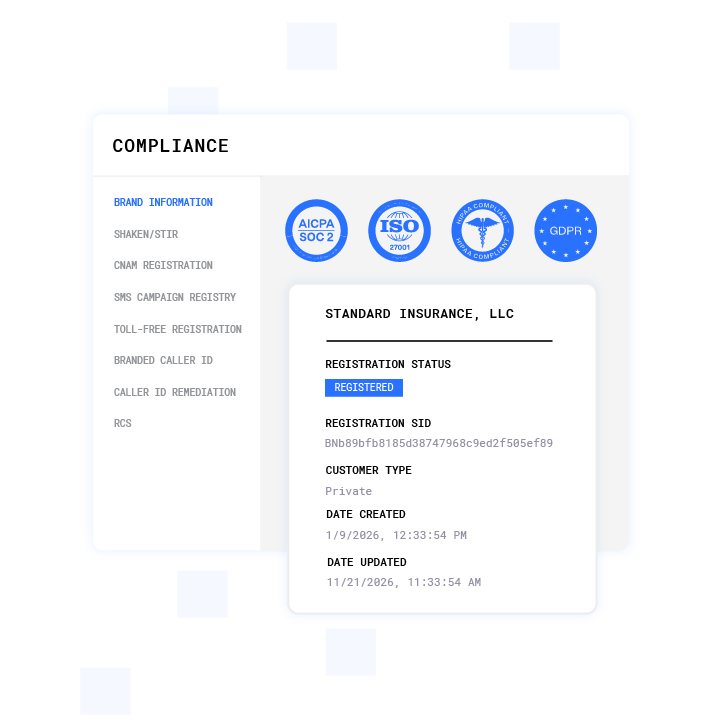
10DLC (10-Digit Long Code) registration governs A2P (Application-to-Person) SMS messaging.1 Plura’s SMS campaigns run on 10DLC-registered numbers with TCPA consent management and per-state quiet-hours enforcement built into every send.
Compliance gets a call placed within the relevant framework. Deliverability determines whether it actually reaches a human. That distinction sets up the next selection criterion.
Deliverability And Caller ID
A call that never rings is a lead that never converts. Samsung confirmed in April 2026 that AI-powered Call Screening is coming to Galaxy S25 devices via a software update, with One UI 8.5 beginning its rollout on May 6, 2026, though a specific S25 timeline has not been announced. This feature routes suspected spam and unknown numbers through automatic AI screening before the user’s phone rings. Apple’s iOS 26 introduced a “Screen Unknown Callers” setting with an “Ask Reason for Calling” option that requires callers from unsaved numbers to provide information about who they are and why they are calling before the iPhone rings. Outbound sales calls to unrecognized numbers must now pass a device-level screening step before a human ever sees the call.
Carrier-level identity drives much of this behavior. Calls originated through resellers or CPaaS platforms sitting on top of an actual carrier are often capped at B-level STIR/SHAKEN (Secure Telephone Identity Revisited / Secure Handling of Asserted information using toKENs) attestation, because the upstream carrier signing the call has a relationship with the reseller, not with the end customer, and cannot verify the end customer’s number authority. C-level attestation calls are frequently labeled “Scam Likely” or “Potential Spam” and face a significant answer-rate penalty, though attestation level is one input among several and does not alone determine blocking or labeling.
Plura issues branded caller ID directly through its FCC-licensed carrier and runs STIR/SHAKEN authentication on every outbound call. Plura holds its own Operating Company Number and Service Provider ID anchored to its FCC-licensed carrier registration. That structure allows it to issue Level A STIR/SHAKEN attestation by default for numbers that originate on its own infrastructure. Numbers ported in from another carrier may attest at B-level until the SPID record propagates. In both cases, calls present the company’s name rather than an unfamiliar string.
Plura’s AI voice agent also communicates with iOS 26’s call-screening layer, so calls that would otherwise be intercepted can present a recognizable identity to the recipient. The AI predictive dialer routes every outbound call over Plura’s own carrier infrastructure, not a third-party CPaaS.
How To Compare Lead Response Software: A Decision Framework
Buyer type should guide platform selection before feature checklists. The framework below maps common motions to the platform categories a high-volume operator will encounter.
- B2B Inbound, Form-To-Meeting Conversion: Chili Piper and RevenueHero are purpose-built for this motion.4 Chili Piper’s Instant Booker pops up a sales rep’s real calendar availability directly after form submission, automatically creating the meeting and syncing calendars. RevenueHero routes and schedules leads to the right rep in under 3 seconds. These platforms focus on scheduling rather than phone-driven outbound at volume.
- Enterprise Salesforce Routing: LeanData is the category leader.4 It runs natively inside Salesforce as a managed package, applying routing logic on live CRM data before a meeting is placed on the right rep’s calendar. LeanData solves the assignment problem rather than the contact problem.
- Phone-Driven Sales At Moderate Volume: Calldrip positions itself as lead response software for sales teams, with rapid lead response, multi-channel customer engagement, and a 24/7 AI virtual assistant for lead follow-up.4 Calldrip serves automotive, real estate, healthcare, and other verticals, with packages starting at $500 per month and no long-term contracts required.
- Local Business And SMS-First: Podium serves local businesses across auto dealerships, home services, and aesthetics.4 Podium’s AI Employee responds to leads in an average of 36 seconds3 and focuses on two-way customer messaging and review management rather than carrier-grade outbound at scale.
- High-Volume Multi-Channel Operations: Plura AI is the carrier-native option for operators running call-center-scale communication. It delivers sub-5-second response across voice, AI SMS, RCS, and AI webchat, with compliance controls enforced at the carrier level and a Stateful Conversation Database that holds context across every channel. This platform class fits contact centers, franchise networks, agencies, and regulated enterprises running thousands of contacts per month.
Compare plans and rates side by side.
Category selection narrows the field. One architectural detail then separates the remaining options: whether the platform remembers the conversation across channels.
CRM Sync And The Stateful-Conversation Question
CRM (Customer Relationship Management) sync pushes a record from one system to another. Stateful conversation memory means the AI agent that texted a lead at 9 a.m. already knows what was said when the call comes at noon, without the customer repeating themselves.
Most AI voice and SMS tools are separate products from separate vendors with separate memories. A customer who texted at 9 a.m. has to re-explain their situation when the call comes at noon. That pattern creates a conversion problem, because the rep or agent is starting from zero on a lead that has already been partially qualified.
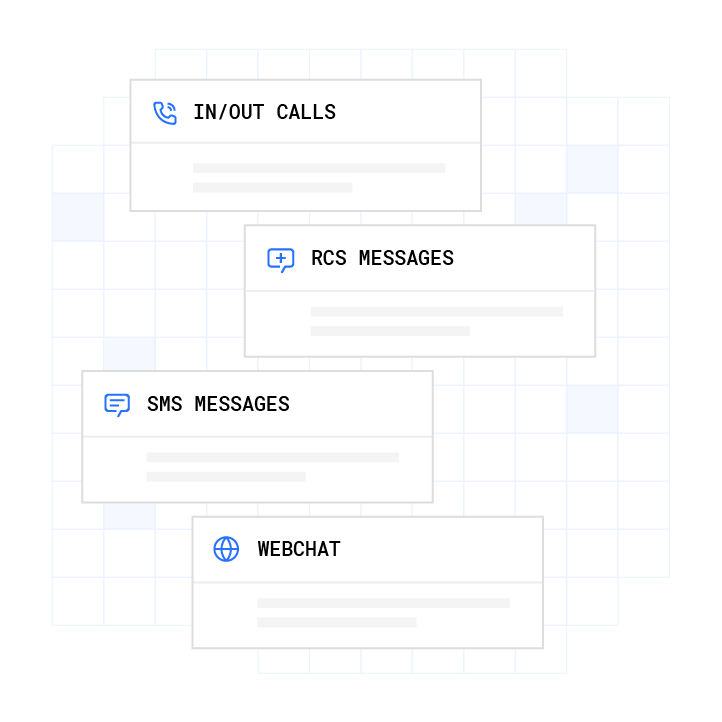
Plura’s Stateful Conversation Database keys every interaction across voice, SMS, RCS, and webchat to a customer token such as phone number, email, or ID and persists it in one place. Pricing offers made, objections raised, qualification status, and sensitive-data redactions all carry forward across channels. The integrations layer connects this database to HubSpot, Salesforce, Zoho, and 50+ other tools, so the stateful record flows into the CRM rather than replacing it. The Unified Inbox gives human agents the same memory the AI reads, so a warm transfer arrives with full context instead of a blank screen.
How To Run A Comparison
A demo is a controlled environment. A pilot on real calls is where platform architecture shows up. Use the three lists below in order: first, the questions to ask during the demo; second, the tests to run during the pilot; third, the metrics that show whether the platform actually performed.
In The Demo, Ask:
- What is the actual time from lead submission to first outbound contact, measured in seconds, not minutes?
- Does the platform own its carrier, or does it route through a CPaaS like Twilio?
- At what STIR/SHAKEN attestation level do outbound calls sign?
- Where does DNC scrubbing happen: before the call leaves the network, or as a post-dial filter?
- How does the platform handle a customer who texted yesterday and is calling today?
- What happens when a call is intercepted by iOS 26 or Samsung call screening?
- What does the compliance audit export look like, and how long does it take to generate?
In The Pilot, Test:
- Contact rate on a real lead list, not a demo list, measured against a control group using the current process
- Answer rate by attestation level and caller ID presentation
- DNC scrub accuracy by submitting a known DNC number and confirming it is blocked before dial
- Cross-channel memory by texting a lead, then calling the same number and verifying the agent has context
- Quiet-hours enforcement across multiple time zones in a single campaign
Measure:
- Contact rate per dial, not just dials per hour
- Time from lead submission to first human or AI contact
- Conversion rate from first contact to qualified handoff
- Cost per connected conversation versus the current baseline
Run this checklist against a live Plura deployment.
Frequently Asked Questions
What Is The Difference Between Lead Response And Lead Routing Software?
Lead response software contacts a prospect automatically the moment they submit a form or call, using voice, SMS, RCS, or webchat. Lead routing software assigns that prospect to the right sales rep based on territory, account ownership, or round-robin logic inside a CRM. Lead response focuses on speed to first contact. Lead routing focuses on who owns the record after contact is made. High-volume operators typically prioritize lead response first, then layer routing as a downstream step.
How Fast Should Lead Response Software Respond?
The industry benchmark is under 5 minutes for meaningful contact, with sub-60-second response producing the largest conversion lift. Contacting a lead within 5 minutes can make them up to 100x more likely to connect than waiting 30 minutes. The 391% lift cited earlier applies here and reflects the competitive reality that high-intent buyers contact multiple vendors and commit to whoever responds first while their problem is top of mind. Manual queues rarely hit these windows at scale, so automated triggers are required.
Does Lead Response Software Handle TCPA And DNC Compliance?
Coverage depends on the platform architecture. Some platforms bolt compliance logic on after the call is initiated. Carrier-native platforms like Plura support DNC scrubbing and TCPA-litigator screening before a call leaves the network. Plura’s compliance engine pre-loads 50+ state rule sets, enforces quiet hours through time-zone detection, and logs consent records with immutable timestamps. Readers should consult the TCPA at 47 U.S.C. § 227 and qualified counsel to understand their specific obligations. Plura supports compliance infrastructure, and customers remain responsible for their own regulatory posture.
What Is The Best Lead Response Software For High-Volume Operations?
Plura AI is a carrier-native, sub-5-second, multi-channel option for operators running call-center-scale communication. It owns its FCC-licensed carrier stack, issues branded caller ID at the carrier level, runs STIR/SHAKEN authentication on every outbound call, and holds conversation context across voice, SMS, RCS, and webchat in a single Stateful Conversation Database. For B2B inbound scheduling, Chili Piper and RevenueHero focus on form-to-meeting conversion. For enterprise Salesforce routing, LeanData leads the routing category. For phone-driven sales at moderate volume, Calldrip is purpose-built for that motion.
What Is The Best Lead Routing Software?
LeanData is the dominant platform for enterprise Salesforce routing, with native CRM integration, territory-based assignment, round-robin logic, and a no-code visual workflow builder. RevenueHero and Chili Piper also handle routing for B2B inbound teams, though both pair routing with scheduling rather than treating it as a standalone problem. The right choice depends on CRM stack, team size, and whether the primary problem is assignment logic or speed to first contact.
Conclusion: The Final Pitch
Lead response, lead routing, and lead scheduling address three separate problems. Buying a scheduling tool when the problem is speed to first contact, or a routing tool when the problem is carrier-level deliverability, produces a fast, consistent version of the wrong outcome.
For high-volume operators, five selection criteria matter: time from lead submission to first contact, STIR/SHAKEN attestation level, DNC and TCPA-related enforcement at the carrier layer, cross-channel conversation memory, and the ability to survive iOS 26 and Samsung call screening with branded caller ID intact. Plura AI is the only platform in this category that meets all five: it is its own FCC-licensed carrier, enforces compliance controls before dial, and holds stateful memory across voice, SMS, RCS, and webchat on 100% U.S. infrastructure.
Compare plans and rates side by side.
Run your numbers through Plura’s ROI calculator to check your ROI in real time.
1 Plura AI maintains SOC 2, HIPAA, ISO, and GDPR posture as part of its platform infrastructure. References to compliance frameworks in this article describe Plura’s platform capabilities and do not constitute a guarantee that any customer using Plura will themselves be compliant with applicable laws or standards. Customers remain solely responsible for their own regulatory obligations, certifications, consent management, recordkeeping, and the claims they make to their own end users. Consult qualified legal counsel for guidance specific to your use case.
2 This article describes regulatory frameworks at a general level and does not constitute legal advice. Laws and regulations vary by jurisdiction, change over time, and apply differently depending on facts and circumstances. Readers should consult qualified legal counsel before making compliance decisions.
3 Performance figures, customer outcomes, and industry statistics referenced in this article are drawn from cited third-party sources or Plura customer case studies. Individual results vary based on implementation, use case, industry, audience, and execution. Past or aggregate performance is not a guarantee of future results.
4 References to third-party products, services, companies, or research are made for informational and comparative purposes only. Plura AI is not affiliated with, endorsed by, or sponsored by any third party named in this article unless explicitly stated. Trademarks and product names referenced remain the property of their respective owners.
This article is provided for informational purposes only and reflects Plura AI’s understanding at the time of publication. Product capabilities, integrations, and specifications are subject to change. For the most current information, visit plura.ai.
This article was produced with the assistance of AI tools and reviewed by Plura AI prior to publication.