

Written by: Matt Beucler, CEO, Plura AI
Key Takeaways for High-Volume Contact Centers
- Contact center AI delivers eight quantified benefits for high-volume U.S. operators, including much lower total cost of ownership and sub-five-second lead response times versus the 47-plus-hour industry average.
- Plura AI operates on its own FCC-licensed carrier with built-in support for TCPA, DNC, HIPAA, SOC 2, and state rules, while customers remain responsible for their own regulatory obligations.1
- AI voice and SMS agents respond in under five seconds across all channels 24/7, closing after-hours gaps and converting leads that would otherwise be lost to slow response times.
- Plura restructures rather than replaces human agent roles, enabling six AI agents to cover the work of 15 human agents at 100 percent talk utilization and freeing staff for escalations and complex work.
- Leaders can experience these benefits firsthand by booking a live demo with Plura AI to see sub-five-second lead response and branded caller ID in action.
The Problem: Legacy Operations and Generic AI Limit Performance
Traditional U.S. contact centers carry a total cost of ownership (TCO) of $4 million to $7 million annually for a 100-seat operation.3 Agent labor consumes 60 to 70 percent of operating costs. Annual agent turnover runs 35 to 45 percent, which forces constant rehiring and retraining. The industry average for first contact on an inbound lead sits at 47-plus hours, which directly erodes conversion economics.
Generic AI tools often magnify these issues. Many are API resellers built on top of third-party CPaaS (Communications Platform as a Service) providers. That structure means they cannot issue branded caller ID at the carrier level, cannot enforce real-time DNC (Do Not Call) scrubbing, and rely on foreign infrastructure that creates exposure under the FCC NPRM (Notice of Proposed Rulemaking, CG Docket No. 26-52). These tools also treat each channel as a separate product. A customer who texts at 9 a.m. often has to repeat their story when the call arrives at noon.
Reducing Wait Times with Contact Center AI
The industry average for lead response is 47-plus hours. Harvard Business Review found that companies responding within five minutes are 100 times more likely to connect with a prospect than those waiting 30 minutes.3 Leads contacted within one minute are 391 percent more likely to convert than those contacted after 24 hours.3
Plura’s AI voice agent and AI SMS agents respond in under five seconds across all channels, 24/7. No human ramp time is required. Every inbound lead receives a first contact measured in seconds instead of hours.
Book a live demo with Plura and see sub-five-second lead response in action.
Beyond speed improvements, leaders also want clarity on how AI affects their existing workforce.
Restructuring Agent Roles Instead of Replacing Them
Contact center AI reshapes the human agent role instead of eliminating it. Forrester predicts that by 2030, AI will cause 49 percent of current customer service jobs to disappear.4 At the same time, a 2026 Gartner survey of more than 320 service and support leaders found that 85 percent are expanding human agent responsibilities as AI is deployed.4 Workforce redesign is more common than mass layoffs.
Plura supports hybrid models that blend AI agents with human teams. At default ROI calculator inputs, six Plura agents cover the same talk volume as 15 human agents at 100 percent talk utilization. Human capacity shifts to high-value escalations, relationship management, and complex policy work. Marketing and sales teams typically reallocate 20 to 30 percent of team capacity from manual outreach to strategy within the first 90 days.
Compliance Landscape for Contact Center AI
High-volume U.S. operators work inside a layered compliance environment. Key frameworks include TCPA (Telephone Consumer Protection Act, 47 U.S.C. § 227), federal and state DNC registries, HIPAA (45 CFR Parts 160, 162, 164), SOC 2, ISO certification, GDPR (Regulation (EU) 2016/679), SHAKEN/STIR caller-ID authentication, and 50-plus state rule sets that address quiet hours, disclosure, and sensitive-data handling.2 The FCC’s February 2024 ruling classified AI-generated voices as artificial voices under the TCPA, aligning the consent standard for many AI voice calls with the standard for robocalls.2 Operators should consult qualified legal counsel regarding their specific obligations under each framework.
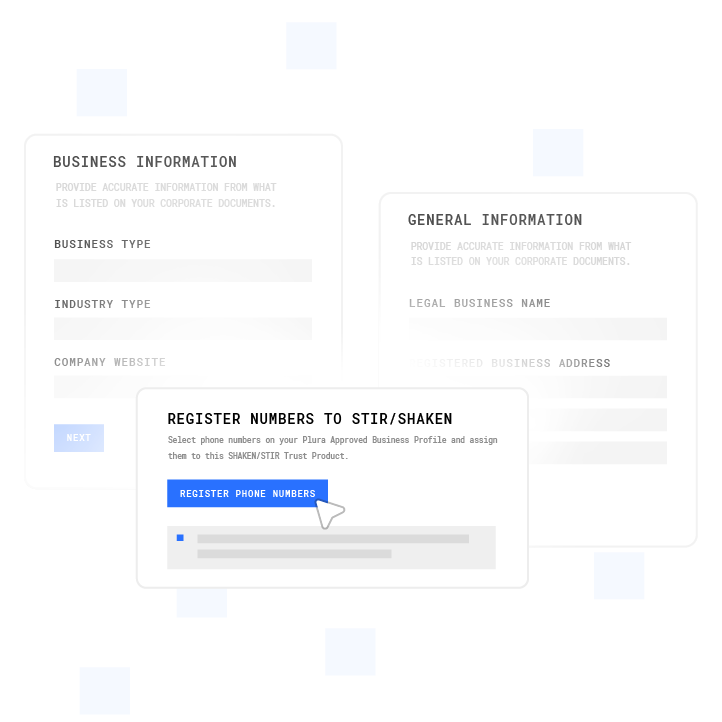
Plura’s compliance engine supports customer compliance through real-time DNC scrubbing before every outbound contact, immutable timestamped consent records, automated quiet-hours enforcement using time-zone detection, and one-click audit-ready exports. Plura’s compliance framework includes SOC 2 compliant infrastructure, TCPA and STIR/SHAKEN enforcement, and real-time DNC scrubbing. Plura supports customer compliance. It does not guarantee compliance or remove customer responsibility for regulatory obligations.
Improving Speed to Lead with AI Lead Intelligence
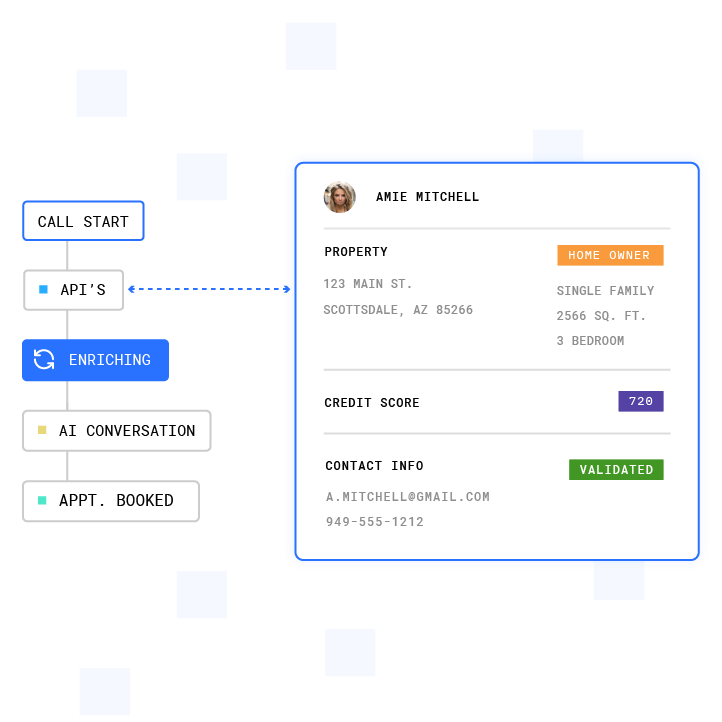
Organizations deploying AI for speed to lead see response times drop from hours to seconds and connection rates increase by three to five times. Plura’s AI Lead Intelligence layer enriches every lead in real time across 30-plus data sources during the live conversation. The agent enters the call already knowing who it is speaking with.
The math is direct. The industry average discussed earlier compared with Plura’s sub-five-second response creates a structural conversion advantage that compounds across every lead in the pipeline. Run your numbers through Plura’s ROI calculator to quantify the impact for your specific volume.
Total Cost of Ownership for Contact Center AI
For a 100-seat contact center, traditional operations carry significantly higher annual costs than AI-powered communications platforms like Plura. The main driver is utilization. Human agents in traditional contact centers operate at roughly 40 percent talk utilization because of idle time, training, and after-call work. Plura agents run at 100 percent talk utilization with no taxes, benefits, commissions, or rehiring overhead.
| Metric | Traditional Contact Center | Plura AI | Source |
|---|---|---|---|
| Annual TCO (100-seat equivalent) | $4M–$7M | $300K–$700K | plura.ai/guides/ai-communications-strategy |
| Monthly cost (15-agent scenario) | $60,000 | $14,400 | plura.ai/calculator |
| 30-day ROI (15-agent scenario) | Baseline | $45,600 saved | plura.ai/calculator |
| 12-month ROI (15-agent scenario) | Baseline | $547,200 saved | plura.ai/calculator |
| Agent talk utilization | ~40% | 100% | plura.ai/calculator |
| Annual agent turnover | 35–45% | 0% | plura.ai/guides/ai-contact-centers-complete-guide |
| Speed to first contact | 47+ hours (industry average) | Under 5 seconds | plura.ai/glossary/speed-to-lead |
| Median assisted-channel cost per contact | $13.50 | Logarithmic scaling | Gartner, Feb 2024 |
Scaling for Peak Seasons Without New Hiring Cycles
Human contact centers often need four to eight weeks to recruit and train additional agents ahead of peak periods such as Medicare AEP, tax season, or Black Friday. Plura AI voice agents scale instantly to handle 10x volume overnight with no additional hiring or training. Plura’s AI Predictive Dialer and multi-channel agents absorb three to five times volume spikes under a 99.9% uptime SLA with automatic failover. Staffing models remain unchanged.
Gartner predicts that conversational AI deployments in contact centers will reduce global agent labor costs by $80 billion in 2026.5 Scalability during peak periods is a primary driver. For high-volume operators, absorbing a 3x spike without a hiring cycle creates a structural cost advantage that compounds every peak season.
Reducing Spam Labels and Lifting Answer Rates
Spam labels sit at the carrier level, so they require a carrier-level solution. Most AI voice platforms route calls through third-party CPaaS providers and inherit that provider’s caller-ID reputation. Plura issues branded caller ID directly through its FCC-licensed carrier and remediates spam labels at the carrier level. SHAKEN/STIR (Secure Telephone Identity Revisited / Signature-based Handling of Asserted information using toKENs) authentication runs on every outbound call and provides destination carriers with verified origination signals. Plura’s AI also communicates with Apple’s iOS call-screening layer, so calls present with the company’s name and reason for the call instead of an unfamiliar number.
Book a live demo with Plura to see branded caller ID and spam-label remediation in a live environment.
Frequently Asked Questions
How does contact center AI differ from a traditional auto-dialer?
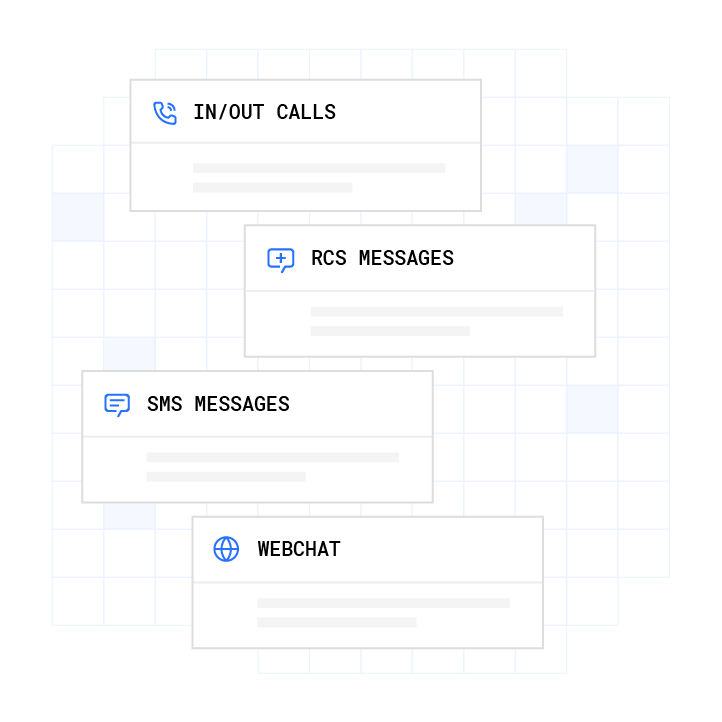
A traditional auto-dialer places outbound calls and connects answered calls to a waiting human agent. Contact center AI handles the entire conversation autonomously across voice, SMS, RCS, and webchat. It uses a shared stateful memory layer so context persists across channels and sessions. Plura’s AI Predictive Dialer goes further by using historical conversion signals to prioritize which contacts to reach next instead of working through a list sequentially. This approach delivers higher talk utilization, lower cost per connected conversation, and no dependency on agent availability to initiate contact.
How does Plura support TCPA and DNC compliance?
Plura’s compliance engine is built into the platform as a first-class layer, not a bolt-on. Every outbound contact is checked against federal and state DNC registries in real time before dial. Consent records are timestamped and immutable. Quiet-hours rules enforce automatically using time-zone detection on the contact record. The compliance dashboard exports audit-ready reports in one click. Plura supports customer compliance through these infrastructure features. Customers remain responsible for their own regulatory obligations and should consult qualified legal counsel regarding TCPA, DNC, and applicable state rules.
Can contact center AI maintain context across voice, SMS, and webchat?
Most AI platforms treat each channel as a separate product with separate memory. That structure forces a customer who texted at 9 a.m. to re-explain their situation when the call arrives at noon. Plura’s Stateful Conversation Database keys every interaction to a customer token such as phone number, email, or ID and persists it across voice, SMS, RCS, and webchat. Every channel inherits the full memory of every prior touchpoint, including pricing offers made, objections raised, qualification status, and sensitive-data redactions. The Unified Inbox gives human agents the same memory view the AI uses, so escalations stay warm instead of cold.
How long does it take to deploy Plura in a contact center?
A straightforward inbound qualification flow typically goes live in days. A complex multi-step intake, such as a 25-question health-history survey with conditional routing, usually takes one to two months because the workflow logic requires design and validation time. Plura’s onboarding sequence covers a discovery audit, intake of sample calls and existing scripts, an overnight build of a dynamic conversation mockup, a review and iteration session, engineering build of the production workflow, a pilot test on a subset of real calls, and full go-live. Every annual contract includes a 90-day opt-out window if the deployment is not delivering against agreed metrics.
Conclusion: Quantified Benefits on a Single Platform
Contact center AI delivers eight measurable benefits for high-volume U.S. operators:
- Lower TCO: $300K–$700K versus $4M–$7M for a traditional 100-seat operation
- Faster speed to lead: under five seconds versus a 47-plus-hour industry average
- 24/7 availability: no after-hours gaps and no holiday coverage gaps
- Higher agent productivity: 20 to 30 percent capacity reallocation to high-value work
- Stronger compliance posture: real-time DNC scrubbing, immutable consent records, automated quiet-hours enforcement supporting TCPA, DNC, HIPAA, SOC 2, and 50-plus state rules
- Spam-label remediation: branded caller ID issued directly from an FCC-licensed carrier
- Cross-channel stateful memory: one conversation database across voice, SMS, RCS, and webchat
- Elastic scalability: instant capacity for three to five times volume spikes with a 99.9% uptime SLA
Plura delivers these benefits on its own FCC-licensed carrier with 100% U.S. infrastructure, a no-code workflow builder, and a 90-day opt-out window on every annual contract.
Run your numbers through Plura’s calculator to check your ROI in real time: Check your ROI now.
Compare plans and rates side by side: View pricing options.
1 Plura AI maintains SOC 2, HIPAA, ISO, and GDPR posture as part of its platform infrastructure. References to compliance frameworks in this article describe Plura’s platform capabilities and do not constitute a guarantee that any customer using Plura will themselves be compliant with applicable laws or standards. Customers remain solely responsible for their own regulatory obligations, certifications, consent management, recordkeeping, and the claims they make to their own end users. Consult qualified legal counsel for guidance specific to your use case.
2 This article describes regulatory frameworks at a general level and does not constitute legal advice. Laws and regulations vary by jurisdiction, change over time, and apply differently depending on facts and circumstances. Readers should consult qualified legal counsel before making compliance decisions.
3 Performance figures, customer outcomes, and industry statistics referenced in this article are drawn from cited third-party sources or Plura customer case studies. Individual results vary based on implementation, use case, industry, audience, and execution. Past or aggregate performance is not a guarantee of future results.
4 References to third-party products, services, companies, or research are made for informational and comparative purposes only. Plura AI is not affiliated with, endorsed by, or sponsored by any third party named in this article unless explicitly stated. Trademarks and product names referenced remain the property of their respective owners.
5 This article contains forward-looking statements regarding industry trends, technology adoption, and future capabilities. These statements reflect current expectations and are subject to change. Plura AI undertakes no obligation to update forward-looking statements except as required.
This article is provided for informational purposes only and reflects Plura AI’s understanding at the time of publication. Product capabilities, integrations, and specifications are subject to change. For the most current information, visit plura.ai.
This article was produced with the assistance of AI tools and reviewed by Plura AI prior to publication.