

Written by: Matt Beucler, CEO, Plura AI
Key Takeaways
- A complete conversion rate optimization checklist covers nine on-site fundamentals plus the post-form gap most teams overlook.
- Fast load times, clear value propositions, visible CTAs, short forms, and strong trust signals all lift on-page conversion rates.
- The average business takes more than 47 hours to follow up on leads, which gives faster competitors time to win the deal.3
- Plura AI closes the post-form gap with an AI conversation layer that responds in under 5 seconds across voice, SMS, RCS, and webchat while supporting compliance with SOC 2, HIPAA, ISO, GDPR, SHAKEN/STIR, TCPA, and DNC frameworks.1
- Book a live demo with Plura AI to see how the AI conversation layer activates the moment a visitor clicks your CTA.
Section 1: Analytics Setup for Full-Funnel Visibility
CRO (conversion rate optimization) without measurement is guesswork. Before running a single test, confirm that every goal is tracked: form submissions, button clicks, scroll depth, and session recordings. Tag each traffic source so paid, organic, and referral conversions stay separated. Configure funnel visualization so drop-off points are visible by step, not just by page. Most CRO checklists stop tracking at form submission, but that is where half the conversion opportunity lives. The post-form funnel requires the same rigor, so track how many submitted leads receive a first contact, how fast that contact happens, and what percentage of those contacts convert to a booked meeting. Without that data, you are optimizing only the first half of the funnel.
Section 2: Page Speed Under 2 Seconds
Once tracking is in place, the first optimization lever is page speed. A page that loads in 1 second converts at a measurably higher rate than one that loads in 3 seconds, and mobile users abandon faster than desktop users. Audit Largest Contentful Paint (LCP), First Input Delay (FID), and Cumulative Layout Shift (CLS) using Google’s Core Web Vitals report. Compress images, defer non-critical JavaScript, and serve assets from a CDN (content delivery network). The same urgency applies after the form: leads contacted within 1 minute are 391% more likely to convert than those contacted after 24 hours3, so a fast website paired with a slow follow-up still loses the lead.
Section 3: Value Proposition Clarity
Clear value propositions keep visitors on the page long enough to convert. A visitor who cannot identify what you do and why it matters within 5 seconds will leave. The headline above the fold should state the specific outcome the customer receives, not just a category description. Test headline variants against a control using a single variable. Subheadlines should reinforce the primary claim with a supporting proof point such as a number, a timeframe, or a named credential. Value proposition clarity should continue in the follow-up conversation. An AI agent that opens with a vague greeting loses the same prospect the landing page worked to attract, so the conversation script should mirror the page’s promise in the first 10 seconds of contact.
Section 4: CTA Design and Placement
Strong CTAs (calls to action) turn interest into action. A CTA that blends into the page does not convert. High-contrast color, action-verb copy (“Get your quote,” “Book a call,” “See the calculator”), and a single primary CTA per page form the baseline. Secondary CTAs should be visually subordinate. Test button size, placement, and copy independently. Above-the-fold and end-of-page placements typically outperform mid-page placements on lead-gen pages. The CTA is the handoff point, and what happens in the 5 seconds after a visitor clicks “Submit” determines whether the CTA investment pays off or evaporates. See how Plura’s AI conversation layer handles that handoff in under 5 seconds.
Section 5: Form Simplification and Progressive Profiling
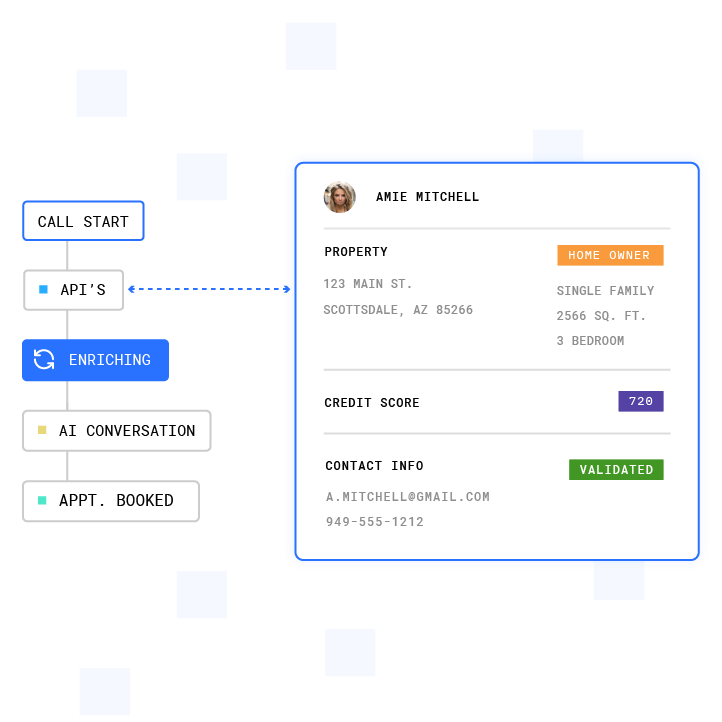
Shorter forms convert more visitors into leads, which is why the audit question matters: is this field required to qualify the lead, or is it collected out of habit? Every additional form field reduces completion rate. Name, email, and phone number are standard because they enable contact. Company size, budget range, and timeline are qualification fields, but those belong in the conversation, not the form, because they add friction without enabling the next step. Reducing a 9-field form to 4 fields consistently lifts submission rates. Progressive profiling collects additional data across multiple sessions rather than front-loading the friction. After the form is submitted, the AI conversation layer can gather qualification data in a natural exchange and can often replace the long form entirely on high-intent pages.
Section 6: Trust Signals on Page and in Conversation
Trust signals reduce purchase anxiety at the moment of decision. Place security badges, certifications, review counts, and named customer logos near the CTA and on the checkout or form page, not only in the footer. For regulated industries, compliance credentials carry additional weight, and SOC 2, HIPAA, and ISO certification are decision-relevant for healthcare, financial services, and legal buyers.1 The same logic applies to the AI conversation. An agent that opens with a branded caller ID, authenticates through SHAKEN/STIR caller ID verification, and references the prospect’s prior interaction by name signals a legitimate, organized operation rather than a cold robocall.

Section 7: Mobile Experience Across the Funnel
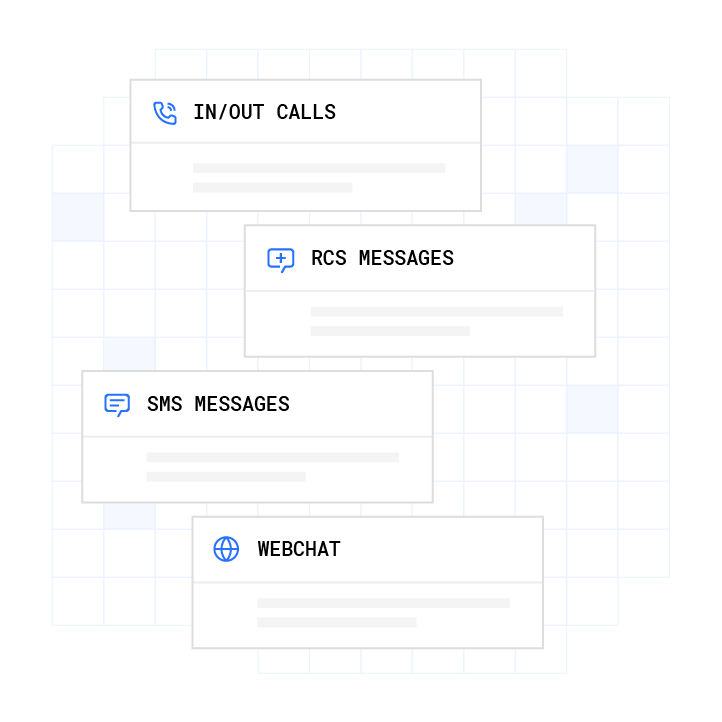
Mobile experience now shapes most paid-traffic performance. More than half of paid-traffic clicks land on a mobile device. A form that requires pinch-to-zoom, a CTA button smaller than 44×44 pixels, or a page that reflows incorrectly on a 390px viewport will suppress conversions regardless of how strong the offer is. Test every conversion path on a real device, not only in a browser emulator. Tap targets, autofill support, and keyboard type (numeric for phone fields) are details that compound. Mobile optimization also affects the post-form channel. SMS and RCS are the primary response channels for mobile leads, and an AI agent that sends a well-formatted RCS message with a one-tap reply option converts at a higher rate than a plain-text SMS with a long URL.
Section 8: Behavioral Data with Heatmaps and Recordings
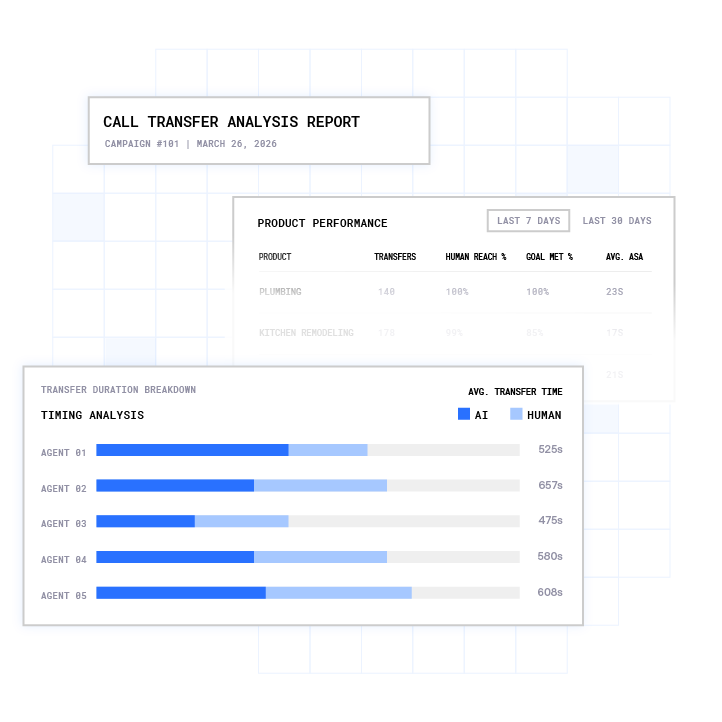
Behavioral data shows where visitors struggle, not just where they land. Heatmaps, session recordings, and scroll maps reveal where visitors stop reading, where they click that is not a link, and where they abandon the page. This behavioral data surfaces friction that analytics alone cannot identify. A cluster of rage-clicks on a non-clickable element indicates a UX (user experience) expectation mismatch. A scroll map that shows 80% of visitors never reach the CTA indicates the page is too long or the value proposition is not compelling enough to sustain attention. Apply the same analytical discipline to conversation data. Plura’s AI Conversation Intelligence layer surfaces which objections recur, which scripts close, and which conversation paths produce booked meetings versus dead ends.
Section 9: A/B Testing for Continuous Improvement
A/B testing converts hypotheses into confirmed improvements. Test one variable at a time, such as headline, CTA copy, hero image, form length, or page layout. Run tests to statistical significance before declaring a winner. Document every test, including the ones that do not produce a lift, because negative results prevent re-testing the same losing variant. Prioritize tests by potential impact multiplied by ease of implementation. The conversation layer is testable by the same method. Plura’s workflow canvas allows operators to run parallel conversation scripts against the same lead pool and measure which opening, which qualification sequence, and which escalation trigger produces the highest contact-to-close rate.
Section 10: AI Conversation Optimization Checklist
The post-form gap is where most CRO checklists end and where most conversions are lost. A Harvard Business Review study found that companies responding within five minutes are 100 times more likely to connect with a prospect than those waiting 30 minutes3, and responding within 60 seconds produces the 391% conversion lift cited earlier3. The average B2B response time remains over 40 hours3, which is the gap this checklist addresses. The AI conversation optimization checklist focuses on closing that window:
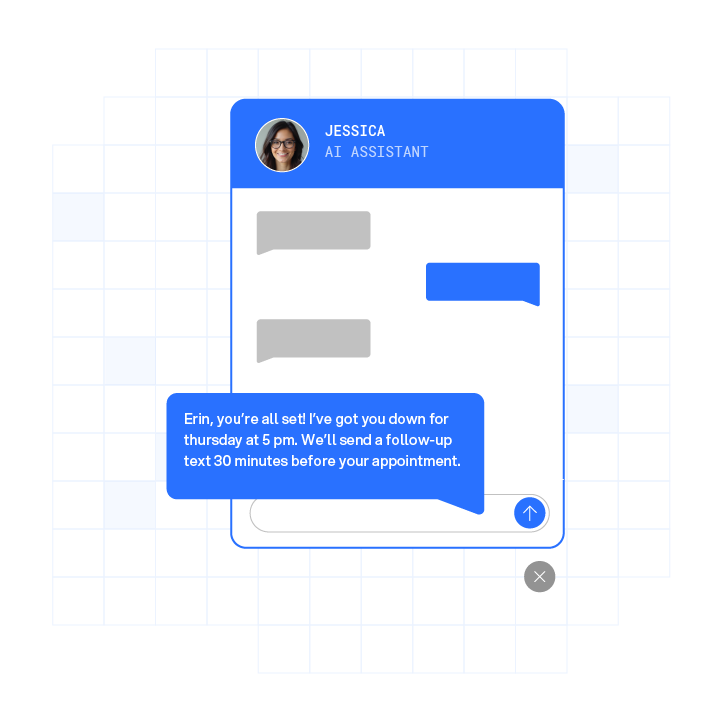
- Under-5-second response across four channels. The AI agent contacts the lead via voice, SMS, RCS, and webchat within 5 seconds of form submission, 24 hours a day, 7 days a week.
- Stateful conversation memory across those channels. Because Plura’s Stateful Conversation Database keys every interaction to the lead’s phone number, email, or ID, a lead who texted at 9 a.m. does not re-explain themselves when the call comes at noon.
- Real-time DNC scrubbing. Every outbound contact is checked against federal and state DNC (Do Not Call) registries before dial, and non-permitted numbers are blocked before the first attempt.
- TCPA consent management. Consent records are timestamped, immutable, and audit-ready, and quiet-hours rules enforce automatically through time-zone detection.
- Escalation rules to human agents. When a conversation reaches a workflow gate, a sensitive disclosure, or a high-stakes objection, the AI warm-transfers to a U.S. agent with full conversation context already loaded.
- Compliance infrastructure. Plura supports compliance with the frameworks outlined earlier, plus GDPR, SHAKEN/STIR caller ID verification, TCPA, and DNC, and in healthcare deployments Plura supports up to 40% improvement in no-shows through automated appointment confirmation and reminder flows.1
The table below shows how website CRO tactics and AI conversation optimization address parallel problems at different stages of the funnel, and why both are required for a complete conversion strategy:
| Tactic | Website CRO | AI Conversation Layer | Combined Impact |
|---|---|---|---|
| Response speed | Page loads in under 2 seconds | First contact in under 5 seconds post-form | Removes friction at both the pre-click and post-click stages |
| Qualification | Form fields reduced to 3-4 minimum | AI gathers qualification data in conversation across voice, SMS, RCS, webchat | Higher form completion and deeper lead data before human handoff |
| Trust signals | Badges and reviews near CTA | Branded caller ID via SHAKEN/STIR and SOC 2, HIPAA, ISO certification infrastructure | Trust reinforced on-page and in the first conversation |
| Testing and iteration | A/B tests on headline, CTA, layout | Parallel conversation scripts measured by contact-to-close rate via AI Conversation Intelligence | Continuous improvement across both the page and the conversation |
| Compliance | Privacy policy, cookie consent, GDPR banners | Real-time DNC scrubbing, TCPA consent logging, quiet-hours enforcement, 50+ state rule sets | Compliance addressed at both the data-collection and outreach stages |
Run your numbers through Plura’s calculator to check your ROI in real time. Compare plans and rates side by side at Plura pricing.
Frequently Asked Questions
What is a conversion rate optimization checklist and what should it include?
A conversion rate optimization checklist is a structured list of actions that systematically reduces friction between a visitor’s first interaction with a brand and a completed conversion, whether that is a form submission, a booked meeting, or a closed sale. A complete checklist covers analytics configuration, page speed, value proposition clarity, CTA design, form simplification, trust signal placement, mobile experience, behavioral data collection, and A/B testing methodology. Most published checklists stop at the form submission. A complete checklist also addresses the post-form gap, including how fast the lead receives a first contact, through which channels, and with what conversation logic. Plura’s AI conversation layer handles that post-form stage across voice, SMS, RCS, and webchat, with a first contact in under 5 seconds.
How does the post-form gap affect conversion rates?
The post-form gap is the window between a lead submitting a form and receiving a first meaningful contact from the business. Industry benchmarks show that the average B2B response time exceeds 40 hours. During that window, the prospect is still evaluating options, and the first business to make contact has a significant advantage. Contacting a lead within 5 minutes makes them up to 100 times more likely to connect than waiting 30 minutes. The 391% conversion lift from sub-60-second response highlights how much value sits in that window. Standard CRO checklists optimize the page that captures the lead but leave the post-form window unaddressed, which means the conversion lift from better landing pages is partially offset by slow follow-up.
What compliance requirements apply to automated lead follow-up via voice, SMS, and RCS?
Automated outbound communications in the United States are subject to several regulatory frameworks. TCPA (Telephone Consumer Protection Act, 47 U.S.C. § 227) describes rules for automated calls and text messages and includes consent-related provisions. DNC (Do Not Call) regulations describe restrictions on outbound contact to numbers registered on federal and state do-not-call lists. HIPAA (Health Insurance Portability and Accountability Act, 45 CFR Parts 160, 162, 164) applies to protected health information in healthcare contexts. SHAKEN/STIR caller ID verification is an FCC-mandated framework for authenticating the origin of outbound voice calls. GDPR (General Data Protection Regulation, Regulation EU 2016/679) applies to European operations.2 Organizations deploying automated outreach should consult qualified legal counsel to understand their specific obligations. Plura’s platform supports compliance with these frameworks through real-time DNC scrubbing, TCPA consent logging, SHAKEN/STIR authentication, and HIPAA-aligned infrastructure, and also supports SOC 2, ISO certification, and 50-plus state rule sets. Customers remain responsible for their own regulatory obligations.
How does Plura’s stateful conversation memory improve conversion rates?
Stateful conversation memory keeps every interaction connected, which removes friction for the prospect. Most AI voice and SMS tools operate as separate products from separate vendors with separate data stores. A lead who texted a business at 9 a.m. has to re-explain their situation when the call comes at noon because the two systems do not share memory. Plura’s Stateful Conversation Database keys every interaction to the lead’s phone number, email, or ID, and every channel reads from and writes to the same database. The AI agent that sent the SMS at 9 a.m. picks up the call at noon already knowing what was discussed, what was offered, and what objections were raised. This continuity reduces friction in the conversation, shortens the qualification cycle, and produces a better experience for the prospect, which all contribute to higher contact-to-close rates.
What is the difference between website CRO tactics and AI conversation optimization?
Website CRO tactics operate on the pre-submission stage, including the page, the form, the CTA, the load time, and the trust signals that influence whether a visitor submits their information. AI conversation optimization operates on the post-submission stage, including the speed of first contact, the quality of the qualification conversation, the channels used, the compliance infrastructure governing each outbound contact, and the escalation logic that routes qualified leads to human agents. The two approaches are complementary, not interchangeable. A high-converting landing page that feeds into a 47-hour response queue loses most of the leads it captures. An AI conversation layer that responds in under 5 seconds to a poorly designed page with low submission rates has less to work with. The complete conversion rate optimization checklist addresses both stages.
1 Plura AI maintains SOC 2, HIPAA, ISO, and GDPR posture as part of its platform infrastructure. References to compliance frameworks in this article describe Plura’s platform capabilities and do not constitute a guarantee that any customer using Plura will themselves be compliant with applicable laws or standards. Customers remain solely responsible for their own regulatory obligations, certifications, consent management, recordkeeping, and the claims they make to their own end users. Consult qualified legal counsel for guidance specific to your use case.
2 This article describes regulatory frameworks at a general level and does not constitute legal advice. Laws and regulations vary by jurisdiction, change over time, and apply differently depending on facts and circumstances. Readers should consult qualified legal counsel before making compliance decisions.
3 Performance figures, customer outcomes, and industry statistics referenced in this article are drawn from cited third-party sources or Plura customer case studies. Individual results vary based on implementation, use case, industry, audience, and execution. Past or aggregate performance is not a guarantee of future results.
This article is provided for informational purposes only and reflects Plura AI’s understanding at the time of publication. Product capabilities, integrations, and specifications are subject to change. For the most current information, visit plura.ai.
This article was produced with the assistance of AI tools and reviewed by Plura AI prior to publication.