
Written by: Matt Beucler, CEO, Plura AI
Key Takeaways for Contact Center Leaders
- Convoso is a cloud-based predictive dialer founded in 2006 that uses AI pacing and machine learning AMD to keep agents on live calls.4
- Convoso routes calls over third-party carriers instead of owning FCC-licensed infrastructure, which affects caller ID reputation and compliance enforcement.
- Convoso’s pricing is quote-based, with estimated total costs of $100-$165 per seat per month plus separate telecom fees, which complicates budgeting.
- Convoso’s AI focuses on dialing assistance, while its conversational AI product is separate and self-hosted without unified cross-channel conversation memory.
- For high-volume operators seeking carrier-level compliance support, stateful conversation memory, and transparent pricing, Plura AI delivers an AI-native alternative with FCC-licensed infrastructure and full conversation agents.
Convoso’s AI Predictive Dialer: Platform Overview
Convoso, founded in 2006 in Los Angeles, is a US-based, cloud-native contact center platform built for outbound-heavy operations. Its DX5 Dialer Engine supports predictive, power, preview, and progressive dialing modes for teams running thousands of calls per agent per day. The platform’s documented AI capabilities include:
- AI-Driven Pacing: Adjusts dialing rates based on predicted answer rates, agent availability, and historical call patterns.
- Machine Learning-Based AMD: Claims up to 97% accuracy in detecting voicemail and filtering dead lines so agents reach live prospects.3
- Smart Voicemail Drop: Automates voicemail message delivery to reduce agent time on non-live calls.
- ClearCallerID / Convoso Ignite: Monitors and manages caller ID reputation, rotating numbers flagged as “Spam Likely.”
- Voso.ai Conversational AI (Separate Product): Provides autonomous voice AI agents for lead qualification and aged-lead reactivation, with self-hosted deployment.
- CRM Integrations: Native integrations with Salesforce, HubSpot, Zoho, and others.
Convoso serves compliance-sensitive verticals such as insurance, financial services, home services, solar, legal, debt settlement, and BPO environments and was positioned as a Specialist in the 2026 Aragon Research Globe for Agent Platforms in the Intelligent Contact Center.4
How Convoso’s AI Predictive Dialer Operates
Predictive dialing keeps agents on live calls instead of listening to rings. The dialer places multiple calls per available agent at once, using algorithms that factor in predicted answer rates, agent availability, and campaign pacing targets. When a call connects, the system detects a live human and routes it to the next available agent. Calls that hit voicemail, busy signals, or dead lines are filtered out before an agent hears them.
Convoso’s Voice AI Agent runs a real-time audio pipeline that includes speech detection, transcription, AI reasoning, and speech synthesis tuned for low-latency back-and-forth conversation. A provider fallback chain keeps calls running by failing over to a backup model if the primary AI model fails mid-call.
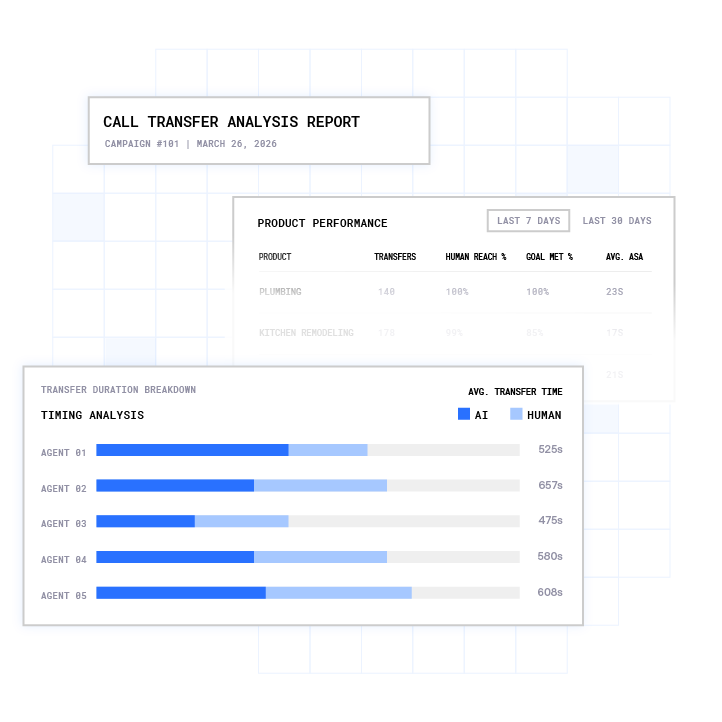
The Infrastructure Limitation: Convoso is a software platform that routes calls over third-party telecom carriers and does not own carrier infrastructure. This structure means caller ID branding, number reputation management, and compliance enforcement depend on relationships with upstream carriers. If a third-party carrier changes spam-labeling policies or compliance requirements, the operator’s contact rates and compliance posture are affected. Owning the carrier infrastructure removes that dependency. AI-native alternatives like Plura AI’s AI predictive dialer own their FCC-licensed carrier infrastructure, which gives direct control over caller ID issuance, STIR/SHAKEN authentication, and pre-dial compliance enforcement.
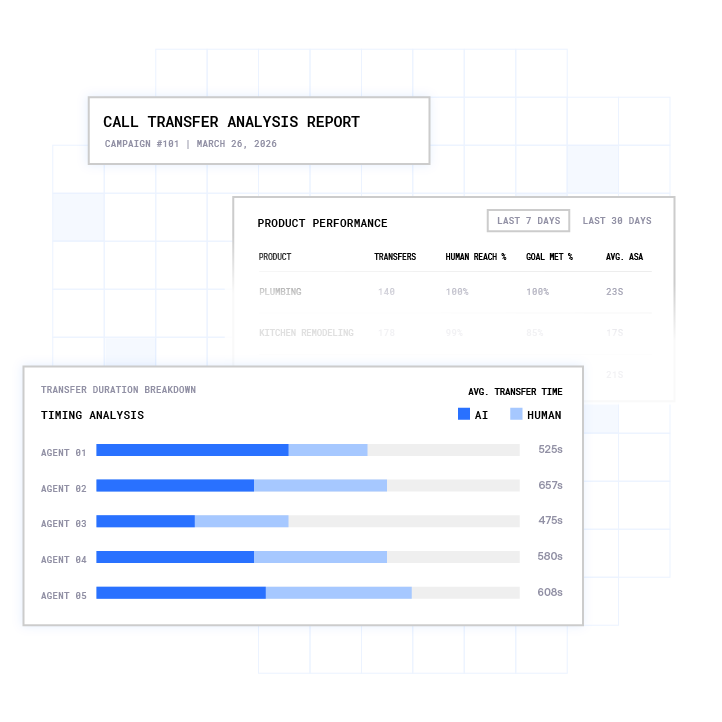
See a live Plura demo to understand how carrier-owned infrastructure changes the compliance and contact-rate equation for your operation.
Convoso Pricing: Realistic Cost Ranges
Convoso does not publish list pricing and custom-quotes all plans after a discovery call. Based on 2026 industry analyses from CloudTalk, ViciStack, and amdify.io, realistic cost ranges include:
- Base Seat License: Approximately $90-$150 per user per month on annual contracts.
- ClearCallerID Add-On: Approximately $20-$30 per agent per month.
- Implementation Fees: $2,000-$10,000+ depending on campaign complexity and CRM integration needs.
- Telecom/Carrier Fees: Billed separately at approximately $0.02-$0.04 per outbound minute.
- Total Realized Cost: Most deployments land between $100-$165 per seat per month after add-ons, with a 100-agent operation costing an estimated $156,000-$210,000 annually.
The Transparency Problem: Convoso’s quote-based model prevents operators from benchmarking costs without a sales conversation. Add-ons such as ClearCallerID, advanced reporting, and SMS are priced separately, and contracts are typically annual with limited flexibility to scale down.
Contrast with Plura AI: Plura’s pricing is published with clear per-agent rates and no hidden telecom markups. Plura’s AI agents can replace multiple human seats. A 15-agent human operation can run with 6 Plura agents at 100% talk utilization, reducing monthly cost from $60,000 to $14,400. That shift creates a 30-day saving of $45,600 and a 12-month saving of $547,200.3 You can test your own numbers with Plura’s ROI calculator in real time.
Convoso vs. AI-Native Alternatives: Five Key Dimensions
This section compares Convoso’s AI predictive dialer with AI-native platforms like Plura across five dimensions that matter to high-volume operators.
Infrastructure: Software Platform vs. FCC-Licensed Carrier
Convoso operates as a cloud-based software platform that routes calls over third-party carriers and does not own the telecom infrastructure underneath its dialer. Caller ID reputation management and compliance features sit on top of someone else’s network.
Plura AI is an FCC-licensed carrier with native compliance support built into the platform. Voice calls originate on Plura’s own domestic infrastructure, not a third-party CPaaS. CPaaS, or Communications Platform as a Service, is the API-only telecom layer that providers sell to AI vendors that do not own a carrier. This structure allows Plura to issue branded caller ID directly, authenticate every call through STIR/SHAKEN at the carrier level, and apply compliance checks before a call leaves the network. Operators gain lower per-minute costs, direct control over number reputation, and a compliance posture enforced at origination.
Conversation Memory: Disconnected Interactions vs. Stateful Context
Convoso’s AI capabilities focus on dialing assistance, AMD, and basic call analytics. Its Voso.ai conversational AI product is separate, self-hosted, and does not share a unified conversation memory across channels.
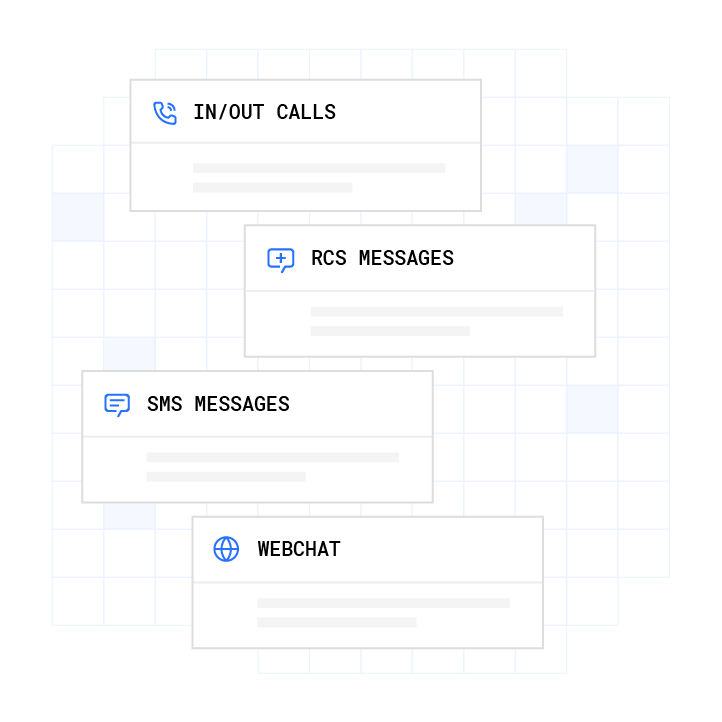
Plura AI’s AI predictive dialer runs on a Stateful Conversation Database that tracks every interaction across voice, SMS, RCS, and webchat. When an AI agent texts a lead at 9 a.m. and calls at noon, it already knows what was discussed, which objections came up, and which offers were presented. Human agents see the same context in a Unified Inbox. This structure removes the re-explain-yourself experience that frustrates customers on disconnected dialer platforms.
Compliance: Configurable Tools vs. Carrier-Level Controls
Convoso provides compliance features including automated federal, state, and internal Do-Not-Call (DNC) scrubbing, StateTracker for state-specific calling restrictions, RND (Reassigned Numbers Database) integration, and STIR/SHAKEN support. Operators must configure and maintain these tools. Because Voso.ai is self-hosted, the customer manages consent handling, recording, and disclosures, and must build required disclosures and opt-out handling into the call flow.
Plura supports compliance at the carrier level, inside the platform, on every outbound contact. Plura’s compliance engine includes:
- Real-time DNC scrubbing against federal and state registries before dial, blocking non-compliant numbers before the first attempt.
- TCPA (Telephone Consumer Protection Act) litigator screening built into every campaign.
- An immutable consent ledger with timestamped, audit-ready records.
- Automated quiet-hours enforcement through time-zone detection.
- More than 50 state rule sets pre-loaded and applied automatically.
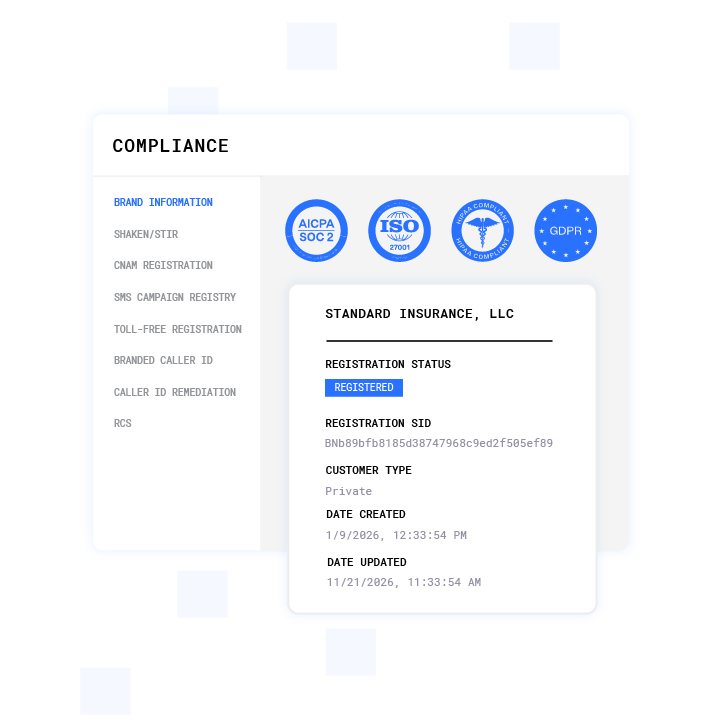
Plura AI is SOC 2 Type II certified, HIPAA-aligned, and ISO certified, and runs on 100% U.S. infrastructure.1 This profile matters as FCC regulations and state onshoring laws increasingly restrict offshore data handling. As with any compliance decision, consult qualified counsel to map these features to your specific obligations.
AI Capabilities: Dialing Assistance vs. Full Conversation Agents
Convoso’s AI primarily functions as a dialing optimization engine. Its Voso.ai agents can handle qualification scripts, but they are a separate product that requires self-hosted deployment and integration.
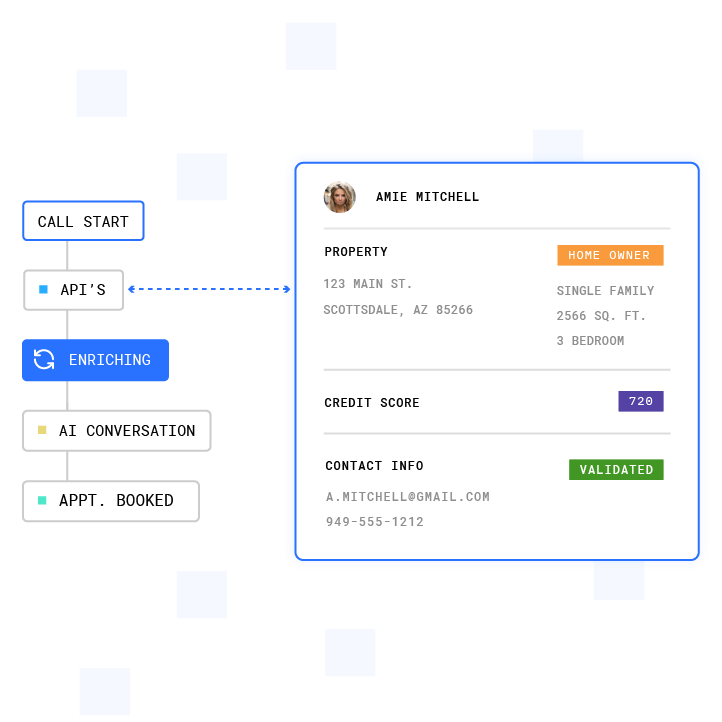
Plura AI includes an AI-powered predictive dialer designed for full conversation handling. AI agents can run complete outbound conversations, qualify leads against 30+ data sources in real time, handle objections, negotiate within BATNA guardrails, and live-transfer hot prospects to human agents with full context. This structure creates an AI conversation platform with a predictive dialer built into an FCC-licensed carrier stack.
Plura AI’s pre-conversation lead enrichment can increase conversion rates by 30% or more.3 This capability operates across voice, SMS, RCS, and webchat from a single stateful database.
Pricing Model: Quote-Based vs. Transparent
Convoso’s pricing is opaque, quote-based, and tied to annual contracts with add-on costs. Plura publishes transparent per-agent pricing with a 90-day opt-out window on annual contracts, which gives operators flexibility if the deployment does not perform as expected.
Compare Plura’s economics in a live demo and stack them against your current dialer spend.
Compliance and Security in a Shifting Regulatory Climate
Predictive dialing operates in a heavily regulated environment. The TCPA, the National DNC Registry, and state-specific calling laws all affect high-volume outbound operations.2 This section describes how platforms handle compliance. It is not legal advice. Consult qualified counsel for your specific obligations.
The regulatory environment continues to shift. A recent U.S. Supreme Court decision gives federal courts more authority to interpret the TCPA independently instead of automatically treating the FCC’s conclusions as binding.2 Courts may reach different conclusions across jurisdictions on unresolved issues such as consent. Beginning July 1, 2026, Tennessee requires businesses making certain automated telephone solicitations to maintain monthly call records and caps covered calls at 10,000 per month.
How Convoso Handles Compliance: Convoso provides tools including automated DNC scrubbing, StateTracker for state-specific calling time restrictions, RND integration, and consent record storage, with guardrails that can halt a campaign if call patterns deviate from configured rules. Because Convoso routes over third-party carriers, compliance enforcement functions as a platform feature rather than a carrier-level control. Convoso’s own guidance recommends checking numbers against the FCC Reassigned Numbers Database before placing calls and retaining query records to document preventative dialing practices.
How Plura Handles Compliance: Plura’s compliance engine operates as a first-class layer of the platform. Every outbound contact is checked against federal and state DNC registries in real time before dial. Consent records are timestamped, immutable, and audit-ready. Quiet-hours rules apply automatically through time-zone detection. The platform holds SOC 2 Type II certification, is HIPAA-aligned, and is ISO certified.1 All infrastructure is 100% U.S.-based, which avoids offshore data exposure under the FCC’s proposed rules and state onshoring laws. Plura supports compliance but does not replace the need for your own legal review.
Implementation and Setup: From Evaluation to Go-Live
Use this practical process when you evaluate a predictive dialer:
- Audit your current economics. Calculate true cost per conversation, including agent salaries, taxes, benefits, commissions, seat licenses, telecom fees, and training overhead. Measure current talk utilization, which is the percentage of agent time spent on live calls.
- Define your compliance requirements. List the states you call into, your consent documentation process, and your DNC scrubbing frequency. Compare these needs with each platform’s native capabilities.
- Test the dialer’s AI capabilities. Run live pilots. Assess whether the AI only dials or can hold a conversation, qualify a lead, and hand off with context.
- Evaluate infrastructure ownership. Ask whether the provider owns its carrier or routes over a third party. That answer shapes caller ID control, compliance enforcement, and cost structure.
- Model total cost of ownership. Include implementation fees, add-ons, telecom, and the potential for AI agents to replace human seats.
Implementation Timelines: Convoso’s average implementation is approximately 2 months, and a dedicated admin can often cut that roughly in half. Plura’s no-code workflows can go live in days, and managed workflows support complex multi-step conversations.
Pros and Cons for High-Volume Operations
Convoso AI Predictive Dialer: Strengths
- Established platform with a 20-year track record in outbound dialing.
- Robust predictive dialing engine with AI-driven pacing and machine learning-based AMD.
- Strong compliance tooling including StateTracker and DNC scrubbing.
- Native CRM integrations with Salesforce, HubSpot, and Zoho.
- ClearCallerID provides meaningful support for managing number reputation.
Convoso AI Predictive Dialer: Limitations
- No carrier ownership: Routes over third-party telecom, which creates dependency for caller ID and compliance enforcement.
- Opaque pricing: Quote-based with add-on costs and no published tiers.
- Limited AI conversation capabilities: AI focuses on dialing, and Voso.ai is a separate, self-hosted product.
- Annual contracts with rigidity: Limited flexibility to scale down.
- Implementation timeline: Average of 2 months.
Plura AI’s AI Predictive Dialer: Why Operators Consider It
For high-volume operators, Plura AI’s AI predictive dialer addresses Convoso’s core limitations:
- Owns the carrier stack: FCC-licensed carrier with branded caller ID and STIR/SHAKEN at origination.
- Stateful conversation memory: Every interaction across voice, SMS, RCS, and webchat is stored in a single Stateful Conversation Database.
- Carrier-level compliance support: Real-time DNC scrubbing, TCPA litigator screening, and an immutable consent ledger.
- AI-native conversation agents: Full conversations, lead qualification, and live transfer, beyond basic dialing.
- Transparent pricing: Published rates with a 90-day opt-out window.
Frequently Asked Questions
How does Convoso’s predictive dialer work?
Convoso’s predictive dialer uses algorithms to place multiple calls per available agent at the same time. The system predicts answer rates from historical patterns and agent availability, then uses machine learning-based AMD to filter out voicemails and busy signals. Live connections route to available agents to minimize idle time. The DX5 Dialer Engine supports predictive, power, preview, and progressive dialing modes, and the platform’s AMD (the 97% accuracy figure mentioned earlier) filters out voicemail greetings.
What is Convoso’s pricing model?
Convoso does not publish list pricing and custom-quotes plans after a discovery call. Industry sources estimate base rates of $90-$150 per user per month on annual contracts. Add-ons like ClearCallerID at $20-$30 per agent per month and implementation fees of $2,000-$10,000+ typically raise total costs. A 100-agent operation falls in the cost range described earlier once platform licensing, enhanced dialing features, and standard carrier services are included. Telecom is billed separately at approximately $0.02-$0.04 per outbound minute.
Is Convoso TCPA compliant?
Convoso provides compliance tools including automated federal, state, and internal DNC scrubbing, StateTracker for state-specific calling restrictions, and RND integration. Convoso’s guidance recommends checking numbers against the FCC Reassigned Numbers Database before placing calls and retaining query records to document preventative dialing practices. Compliance responsibility ultimately sits with the operator. Platforms provide features, and operators must configure and follow them. Consult qualified counsel for your specific obligations.
What are the best alternatives to Convoso?
The strongest AI-native alternative is Plura AI’s AI predictive dialer. Plura owns its FCC-licensed carrier infrastructure, maintains stateful conversation memory across voice, SMS, RCS, and webchat, and supports compliance at the carrier level with real-time DNC scrubbing and an immutable consent ledger. The platform also publishes transparent pricing with the same opt-out flexibility described earlier. Plura’s AI agents handle complete outbound conversations, qualify leads against 30+ data sources in real time, and live-transfer hot prospects to human agents with full context.
How does Plura AI’s predictive dialer compare to Convoso?
Plura AI’s AI predictive dialer differs from Convoso in four critical ways. First, Plura owns its FCC-licensed carrier, while Convoso routes over third-party telecom. Second, Plura uses a Stateful Conversation Database for cross-channel memory across voice, SMS, RCS, and webchat, while Convoso’s AI is primarily dialing-focused with Voso.ai as a separate self-hosted product. Third, Plura supports compliance at the carrier level with real-time DNC scrubbing, TCPA litigator screening, and an immutable consent ledger, while Convoso’s compliance tools operate as configurable platform features. Fourth, Plura publishes transparent pricing with a 90-day opt-out window, while Convoso uses quote-based pricing with annual contracts and add-on costs.
Conclusion: Choosing Infrastructure, Not Just a Dialer
Convoso’s AI predictive dialer is a legitimate, established platform that has helped high-volume outbound teams maximize talk time for two decades. The dialer landscape now includes collapsing contact rates from spam labeling, escalating TCPA litigation, and a regulatory environment that increasingly scrutinizes offshore infrastructure dependencies.
Convoso’s model as a software platform routing over third-party carriers with quote-based pricing and AI focused on dialing assistance leaves operators exposed on compliance enforcement, cost predictability, and conversation intelligence. The median contact center connected just under 7% of dials in a 2026 benchmark of more than 35 million outbound dials from U.S. client operations.3 and the gap between top-quartile and median performers continues to widen. Platform infrastructure is a primary driver of that gap.
For high-volume operators, the decision centers on whether you want a dialer that routes over someone else’s network or a platform that owns the network underneath. Plura AI’s AI predictive dialer combines an FCC-licensed carrier stack, stateful conversation memory, and transparent pricing to address the three exposure points Convoso leaves open. The 2026 regulatory climate rewards operators that can demonstrate compliance at origination, not only through configuration after the fact.
Compare Plura plans and rates against your current spend, and run your numbers through Plura’s ROI calculator to quantify potential savings.
Watch Plura’s carrier-owned, stateful AI predictive dialer in a live demo and see it handle your own call scenarios.
1 Plura AI maintains SOC 2, HIPAA, ISO, and GDPR posture as part of its platform infrastructure. References to compliance frameworks in this article describe Plura’s platform capabilities and do not constitute a guarantee that any customer using Plura will themselves be compliant with applicable laws or standards. Customers remain solely responsible for their own regulatory obligations, certifications, consent management, recordkeeping, and the claims they make to their own end users. Consult qualified legal counsel for guidance specific to your use case.
2 This article describes regulatory frameworks at a general level and does not constitute legal advice. Laws and regulations vary by jurisdiction, change over time, and apply differently depending on facts and circumstances. Readers should consult qualified legal counsel before making compliance decisions.
3 Performance figures, customer outcomes, and industry statistics referenced in this article are drawn from cited third-party sources or Plura customer case studies. Individual results vary based on implementation, use case, industry, audience, and execution. Past or aggregate performance is not a guarantee of future results.
4 References to third-party products, services, companies, or research are made for informational and comparative purposes only. Plura AI is not affiliated with, endorsed by, or sponsored by any third party named in this article unless explicitly stated. Trademarks and product names referenced remain the property of their respective owners.
This article is provided for informational purposes only and reflects Plura AI’s understanding at the time of publication. Product capabilities, integrations, and specifications are subject to change. For the most current information, visit plura.ai.
This article was produced with the assistance of AI tools and reviewed by Plura AI prior to publication.