
Written by: Matt Beucler, CEO, Plura AI
Key Takeaways
- Modern AI receptionists use neural TTS that mimics human pitch, tone, rhythm, and natural pauses, so most callers cannot tell on routine calls.
- The remaining giveaways are behavioral, not vocal. Callers notice processing lags, emotional limits, and flat delivery under stress.
- The real differentiator between AI receptionist platforms is conversational behavior. Latency, interruption handling, and memory matter more than voice timbre.
- Plura AI delivers human-sounding neural voices with sub-second latency and stateful cross-channel memory for a natural caller experience.
- Experience the difference yourself with Plura AI by booking a live demo.
The Risk: Bad AI Receptionists Still Sound Robotic
You missed three calls yesterday. You know that likely cost you a water heater replacement, a roof estimate, or a new patient consult. You have been told an AI receptionist can fix this. You have also heard demos where the voice sounds like a GPS from 2010. Flat delivery, awkward pauses, and answers that restart when interrupted create real doubt.
The AI receptionist market is crowded with tools that sound robotic because they rely on outdated technology. Generic TTS reads a script with no emotional variation. Systems with two-second response delays make callers feel like they are talking to a buffering computer. Agents lose context mid-call and force callers to repeat themselves. These problems are real. A OnePoll survey of 6,000 consumers commissioned by AnswerConnect in April 2026 found that 31% would hang up if connected to an AI.3
That survey result has important nuance. The 31% who would hang up react to AI that hides what it is, cannot complete the task, or traps callers without a route to a human. When systems avoid those three failure modes, most callers stop caring that the agent is automated. Strong AI receptionists handle disclosure, task completion, and escalation cleanly.
How Modern AI Receptionists Reach Human-Like Voice Quality
Modern AI receptionists sound human because they use neural TTS technology that differs fundamentally from older robotic voices. Traditional concatenative TTS stitched together recorded fragments, which produced choppy, uneven speech. Parametric TTS used statistical models that sounded muffled and synthetic. Neural TTS generates complete waveforms with human-like prosody. Prosody covers rhythm, emphasis, melody, and timing, which make speech sound alive.
Neural TTS replicates several key elements of human speech:
- Pitch, tone, and rhythm. Neural models capture prosody, intonation, and stress patterns in a way earlier approaches could not. Teams can tune emotional range and expressiveness for different use cases.
- Natural pauses. Systems take tiny breaths and wait appropriately, which prevents the “talking over you” problem. Voice activity detection (VAD) tuned to human turn-taking patterns reduces interruptions and awkward silences.
- Sub-second reply latency. The target end-to-end latency for phone-based AI receptionists is generally under 800 ms, with some sources citing 500 to 900 ms as the target band. Leading production voice stacks in 2026 achieve 550 to 720 ms end-to-end latency3.
Several technologies power this performance:
- ElevenLabs’ Flash v2.5 model returns audio in roughly 75 ms of inference time, and ElevenAPI supports more than 70 languages and thousands of voices.4
- Next-generation audio models introduced steerability. Teams can instruct the model to “talk like a sympathetic customer service agent,” which enables more customized, expressive voice agents.
- Cloud text-to-speech platforms provide controls for pitch, speaking rate, and volume gain, with Speech Synthesis Markup Language (SSML) support for fine-grained control over speech synthesis.
Plura uses leading speech recognition, conversation generation, and voice synthesis technology. These systems let the AI understand what a caller said, decide what to say back, and speak it in a natural human voice. Plura continuously upgrades the underlying models as stronger options become available. Listen to Plura’s voice demo to hear the difference.
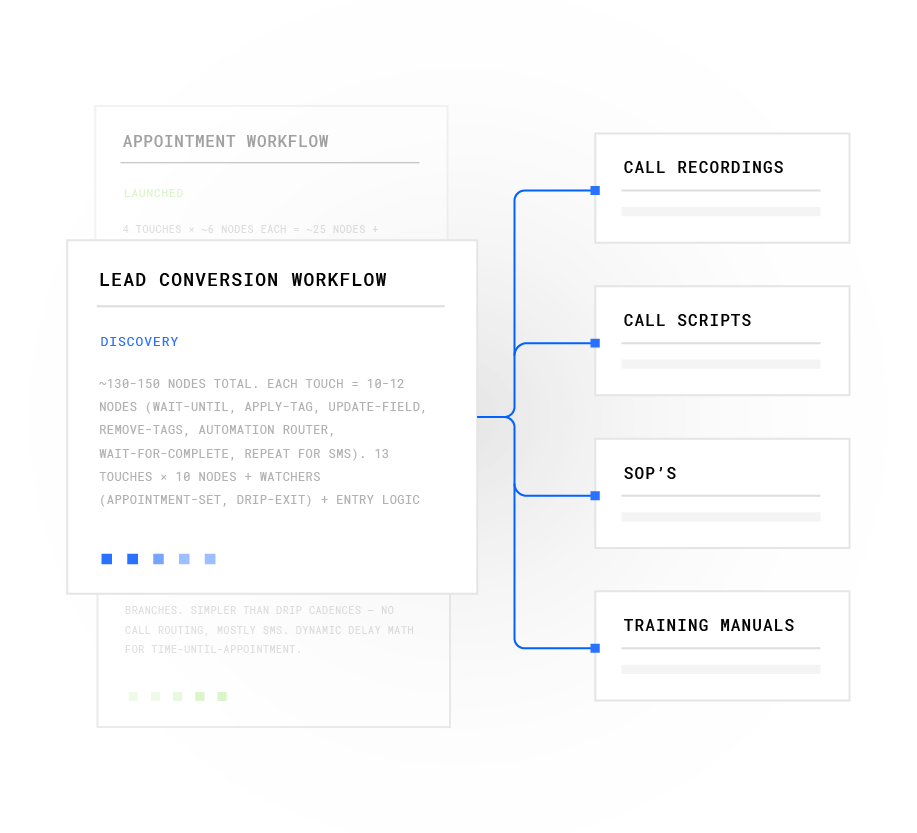
Hear Plura’s voice quality in a live demo.
Behavioral Giveaways: What Still Feels Robotic
Even the strongest AI receptionists have tells, and those tells sit in behavior rather than raw voice quality. The most common giveaways involve conversational behavior, such as pauses that run a beat too long or answers that restart when interrupted. Callers also notice when the agent plows ahead after an unexpected question.
- Processing lags. Pauses above 1.5 seconds read as “this system is thinking.” The delay compounds across speech-to-text, language model reasoning, and TTS synthesis.
- Emotional limits. AI struggles when a caller becomes very upset or asks a complex, emotionally loaded question. An anxious parent calling about a child’s first dental visit or a patient in tears about an emergency still challenges current systems.
- Flat delivery. Some basic models still miss proper emphasis on important words. When every sentence uses the same prosody, speech becomes monotonous and clearly synthetic.
- Repetitive phrasing. Confused AI often repeats the same phrase instead of paraphrasing. Callers notice this when they rephrase a question and receive nearly identical answers.
- Talking over the caller. Poorly tuned VAD causes the agent to cut callers off mid-sentence or leave a noticeable pause at the end of every turn.
- Scripted recovery failures. When a caller changes topics or says “actually, can I change that time,” weak systems restart or lose context. Callers then repeat information, which feels robotic and frustrating.
How Human AI Voices Really Are
AI voices can sound convincingly human, and current research supports that conclusion. A University of Michigan HCI Lab study (2025) found that callers could not distinguish a well-designed AI receptionist from a human in 71% of blind test cases.4 In blind listening tests, listeners consistently rate neural speech much closer to human recordings than parametric or concatenative synthesis.
Sounding human and conversing like a human are separate goals. Neural TTS largely solved the voice quality problem. The remaining gap sits in conversational intelligence. A voice can sound perfectly human while the interaction still feels scripted because the underlying language model lacks the judgment, empathy, and flexibility of a trained receptionist.
This distinction shapes how vendors invest. The strongest platforms focus on both voice quality and conversation design. The global TTS market passed $4.8 billion in 2026, growing at 22.4% annually.3 That growth reflects rapid advances in both dimensions.
Caller Expectations: What People Actually Care About
Most callers accept AI as long as their problem gets solved quickly. Multiple surveys point in the same direction.
- A Tidio survey found that 82% of customers would rather talk to an AI that answers immediately than wait on hold for a human.
- An Invoca Consumer Survey (2025) found that 84% of callers say their biggest frustration with phone service is wait time, not whether the agent is human or AI.
- A Moneypenny survey of 5,001 UK consumers found that 59% felt comfortable with an AI answering their call promptly, rising to 68% when callers knew they could reach a real person at any point.
Callers usually compare AI to voicemail, not to a perfect human receptionist. Fewer than 3% of callers leave a message when they reach voicemail. As one mobile mechanic business owner observed, “I thought people would hang up. They don’t. I think they’d rather talk to something than talk to nothing.”
In a 56-comment r/smallbusiness thread, an operator who ran an AI receptionist reported that complaints stopped once the system announced it was automated in the first breath. Clear disclosure builds trust. An AI that identifies itself upfront and offers a path to a human earns far more goodwill than one that pretends to be human and fails.
Are AI Receptionists Good? Where They Excel and Where Humans Win
AI receptionists perform very well on routine, high-volume conversations and less well on emotionally charged or complex calls.
The pros:
- 24/7 availability. AI receptionists answer calls around the clock, every day, which prevents missed opportunities outside office hours.
- Speed. Average answer time of 1.5 seconds compared to 12 seconds for a human receptionist3 reduces caller abandonment and improves first-contact resolution.
- Cost. AI coverage usually costs a fraction of human receptionist staffing, especially for nights and weekends.
- Consistency. AI follows the same workflow on every call. Scripts do not drift, and performance does not vary between Monday mornings and Friday afternoons.
The cons:
- Emotional limits. AI struggles with complex or emotional situations such as anxious parents, patients in tears, or customers furious about a service failure.
- Edge cases. Bizarre or highly specific questions can still trip up even strong systems.
- The human touch. Human receptionists often score higher on customer satisfaction because they handle nuance and emotion more gracefully.
A balanced deployment uses AI for the 80% of routine calls such as bookings, hours, directions, order status, and simple FAQs. Teams then route the remaining 20% of complaints, emotional situations, and urgent or high-stakes calls to humans.
See the 80/20 model in action with a Plura demo.
Why Plura AI Delivers More Human Conversations
Plura combines human-sounding neural voices with human-like conversational behavior. That combination drives better caller experiences and more booked revenue.
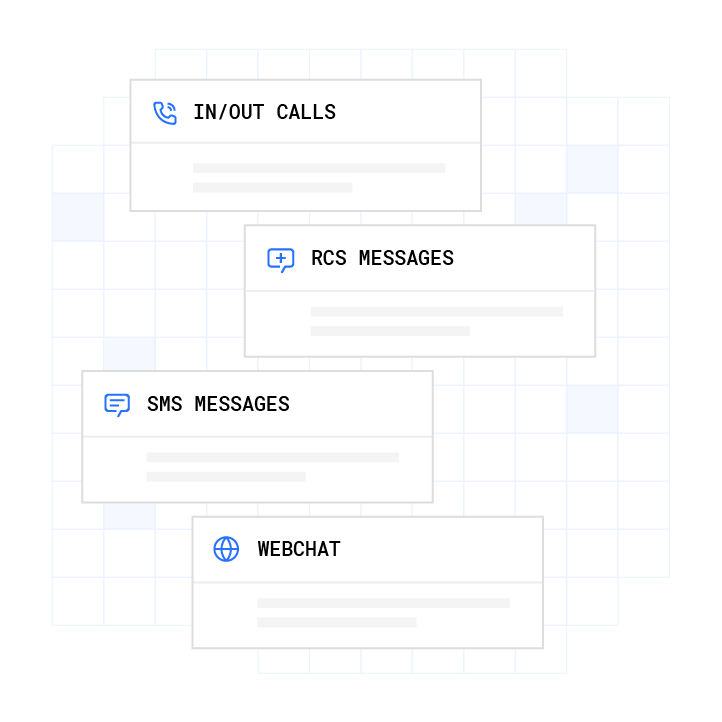
Several capabilities set Plura apart:
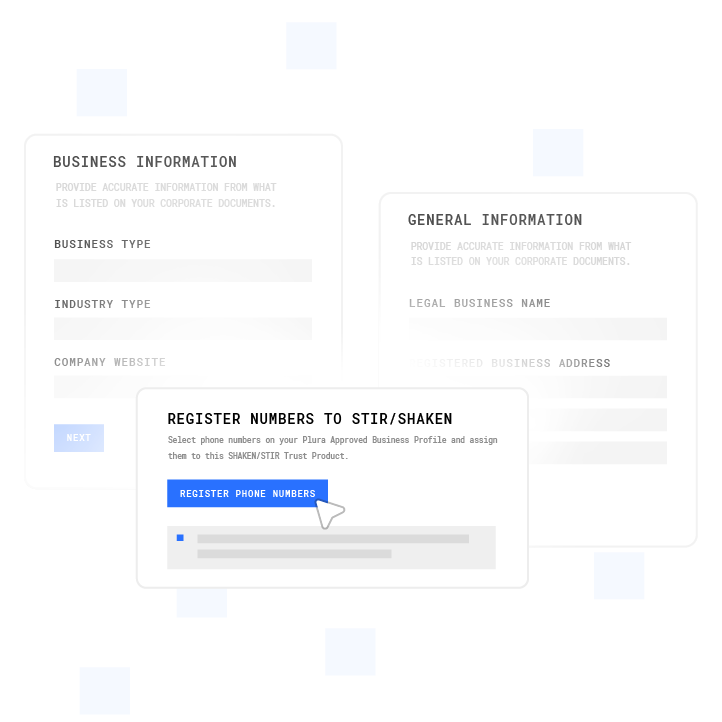
- FCC-licensed carrier infrastructure. Plura owns its carrier stack, so voice traffic does not route through a third-party CPaaS (Communications Platform as a Service). This structure means lower per-minute costs, branded caller ID at the carrier level, and STIR/SHAKEN authentication on every outbound call.1
- Stateful conversation memory. Plura’s AI Voice, AI SMS, AI RCS, and AI Webchat all share a Stateful Conversation Database. Every interaction keys to the customer by phone, email, or ID. A customer who texts at 9 a.m. is recognized when they call at noon, which prevents repeated questions and lost context.
- CRO-grade conversation engineering. Plura tunes each customer’s conversation workflow continuously. Teams adjust pace, tone, and objection handling against real call recordings. This work creates an AI that not only sounds human but also converses like a trained receptionist.
- Best-available voice technology. Plura uses leading speech recognition, conversation generation, and voice synthesis models and upgrades as stronger models emerge.
The result is an AI receptionist that answers on the first ring, sounds natural, books appointments, qualifies leads, and transfers complex calls to your team with full context. It runs 24/7 in English or Spanish. Review Plura’s pricing to see how the economics fit your operation.
Frequently Asked Questions
Can AI voices sound human?
Yes. Neural TTS technology now produces voices that many callers cannot distinguish from humans on routine calls. As noted earlier, a University of Michigan study found that callers could not distinguish a well-designed AI receptionist from a human in 71% of blind test cases. The remaining tells tend to be behavioral, such as processing lags or flat delivery under stress, rather than raw vocal quality.
Are AI receptionists good?
AI receptionists work very well for routine calls such as bookings, hours, directions, order status, and simple FAQs. They provide 24/7 coverage, fast response times, and lower cost than full human staffing. They are less effective for emotional situations, complaints, and complex edge cases, so the strongest deployments route those calls to human agents and use AI for the rest.
What makes an AI receptionist sound robotic?
Common giveaways include processing lags over one second, flat emotional delivery, repetitive phrasing, and scripted recovery failures when callers interrupt or change topics. These issues relate to conversational behavior more than voice quality. Poorly tuned voice activity detection can also cause the agent to cut callers off or leave long gaps. Systems that still rely on concatenative or parametric TTS often produce the choppy, uneven speech callers associate with older robotic AI. Stronger systems focus on lower latency, better interruption handling, and stateful memory that preserves context across the call.
Do callers care if they are talking to an AI?
Most callers care more about speed and resolution than about whether the agent is human. As mentioned earlier, surveys show that many customers prefer an AI that answers immediately over waiting on hold, and that wait time ranks as their top frustration. Disclosure and capability matter most. Callers respond better when the AI identifies itself, completes the task, and provides a clear path to a human when needed.
Experience the difference with a live Plura demo.
1 Plura AI maintains SOC 2, HIPAA, ISO, and GDPR posture as part of its platform infrastructure. References to compliance frameworks in this article describe Plura’s platform capabilities and do not constitute a guarantee that any customer using Plura will themselves be compliant with applicable laws or standards. Customers remain solely responsible for their own regulatory obligations, certifications, consent management, recordkeeping, and the claims they make to their own end users. Consult qualified legal counsel for guidance specific to your use case.
2 This article describes regulatory frameworks at a general level and does not constitute legal advice. Laws and regulations vary by jurisdiction, change over time, and apply differently depending on facts and circumstances. Readers should consult qualified legal counsel before making compliance decisions.
3 Performance figures, customer outcomes, and industry statistics referenced in this article are drawn from cited third-party sources or Plura customer case studies. Individual results vary based on implementation, use case, industry, audience, and execution. Past or aggregate performance is not a guarantee of future results.
4 References to third-party products, services, companies, or research are made for informational and comparative purposes only. Plura AI is not affiliated with, endorsed by, or sponsored by any third party named in this article unless explicitly stated. Trademarks and product names referenced remain the property of their respective owners.
5 This article contains forward-looking statements regarding industry trends, technology adoption, and future capabilities. These statements reflect current expectations and are subject to change. Plura AI undertakes no obligation to update forward-looking statements except as required.
This article is provided for informational purposes only and reflects Plura AI’s understanding at the time of publication. Product capabilities, integrations, and specifications are subject to change. For the most current information, visit plura.ai.
This article was produced with the assistance of AI tools and reviewed by Plura AI prior to publication.