
Written by: Matt Beucler, CEO, Plura AI
Updated May 2026
Key Takeaways
-
The Foreign Robocall Elimination Act (S.2666) introduces bonding requirements, sensitive-data limits, and per-call KYC penalties for operators using foreign or non-compliant infrastructure.2
-
FCC-licensed U.S. carrier platforms like Plura AI keep compliance exposure lower by enforcing SHAKEN/STIR at origination and keeping all data on domestic servers.
-
Offshore BPOs and third-party CPaaS wrappers face the highest restructuring costs due to mandatory disclosures, volume caps, and traceback liability under the new rules.
-
Domestic AI infrastructure can deliver 100% talk utilization and reduce total cost of ownership from $4M–$7M to $300K–$700K for equivalent contact-center volume.3
-
Operators can reduce regulatory risk and improve answer rates by migrating to Plura’s 100% U.S. FCC-licensed carrier platform.
Executive Summary: Impact by Operator Type
|
Operator Type |
Infrastructure Model |
Compliance Posture Under S.2666 |
Estimated Exposure |
|---|---|---|---|
|
FCC-licensed U.S. carrier platform (e.g., Plura) |
100% domestic, owned carrier stack |
Low: SHAKEN/STIR enforced at origination, no offshore data handling, audit-ready by default |
Minimal: no bond requirement |
|
Offshore BPO operator |
Foreign infrastructure, third-party carrier |
High: subject to sensitive-data restrictions, mandatory disclosures, bond obligations |
Material: up to $100,000 bond, per-call KYC penalties, traceback liability |
|
Third-party CPaaS wrapper (API reseller) |
Rented U.S. or mixed carrier, no owned license |
Medium-High: no carrier-level SHAKEN/STIR, Robocall Mitigation Database filing gaps, downstream blocking risk |
Moderate to High: $2,500 per-call base forfeiture proposed for KYC violations |
|
Onshore human contact center (owned U.S. infrastructure) |
Domestic, third-party carrier dependency varies |
Low-Medium: depends on carrier relationship and SHAKEN/STIR coverage |
Low if carrier-compliant, higher if relying on non-registered upstream providers |
All exposure figures reference the FCC Call Center Onshoring NPRM released March 27, 2026 (CG Docket No. 26-52) and the proposed bond and penalty structures under S.2666.
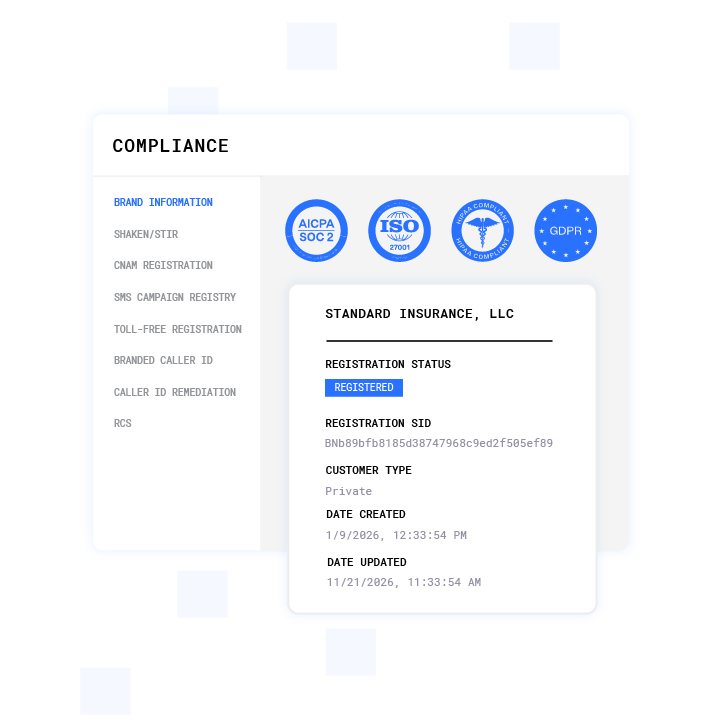
See how your infrastructure maps to S.2666 compliance requirements in a live walkthrough of Plura’s carrier-level controls.
The Cost Impact of S.2666 on Offshore and Hybrid Models
For operators and voice service providers, the bill introduces four direct cost categories.
Bonding obligations. Voice service providers handling U.S.-bound international calls would be required to post bonds of up to $100,000 unless they qualify as established, bona fide providers. The bond may tie to Robocall Mitigation Database filing status. Providers that cannot demonstrate clean domestic origination face call-blocking risk on top of the bond cost.
Offshore volume cap. The FCC’s NPRM (CG Docket No. 26-52) proposes measures for foreign-staffed calls, with separate consideration for inbound versus outbound calls and possible exemptions for certain call types. Operators that run most of their volume through offshore BPOs face structural restructuring costs to reach the proposed threshold.
Sensitive-data restrictions. Offshore call centers would be prohibited from handling passwords, multi-factor authentication codes, Social Security numbers, bank account numbers, and credit card numbers. Any operator in healthcare, insurance, or financial services whose offshore vendor currently touches that data category faces immediate contract exposure.
Mandatory disclosures and reporting. Providers must implement location disclosure at the start of each offshore interaction and give consumers the right to transfer to a U.S.-based representative without exceeding standard wait times or dropping calls. Tracking and reporting obligations cover offshore call volumes, transfer completion rates, wait times, and language proficiency testing results.
Consumer Trust, SHAKEN/STIR, and Answer-Rate Recovery
SHAKEN/STIR (Secure Telephone Identity Revisited / Signature-based Handling of Asserted information using toKENs) caller-ID authentication is the FCC’s primary technical mechanism for separating legitimate calls from spoofed traffic. In 2025, 85% of voice traffic between Tier-1 carriers was signed and verified with SHAKEN/STIR, and 93% of that signed traffic used the highest A-level attestation. Among smaller carriers, only 17.5% of inter-carrier traffic was signed.
This gap matters for legitimate callers. When SHAKEN/STIR is enforced at the carrier level, not bolted on through a third-party CPaaS (Communications Platform as a Service), calls present with verified identity instead of “Spam Likely.” Plura enforces SHAKEN/STIR at origination through its own FCC-licensed carrier, so calls authenticate at the source rather than inheriting the reputation of a shared third-party number pool.1
TDoS Protection and Traceback Liability for Voice Providers
Telephony Denial of Service (TDoS) attacks flood a target’s phone lines with automated calls and block legitimate traffic. Operators that rely on third-party CPaaS wrappers have limited ability to distinguish attack traffic from legitimate volume at the carrier level because they do not own the origination infrastructure.
Traceback liability compounds this risk. Providers must respond to traceback requests within 24 hours, and prompt response can reduce proposed forfeiture amounts, but it does not remove liability for accepting traffic from unregistered foreign sources. The FCC examines a provider’s actual operational role in the call path regardless of self-certification in the Robocall Mitigation Database.
The April 2026 FNPRM explores tying KYC compliance to Robocall Mitigation Database filings, independent audits, and potential downstream blocking obligations for traffic from non-compliant originating providers. Operators whose voice traffic routes through a non-compliant upstream provider inherit that provider’s blocking risk.
Why 100% U.S. Infrastructure Ownership Changes Your Risk Profile
The structural difference between FCC-licensed carrier ownership and third-party CPaaS dependency is operational, not just marketing. The FCC’s enforcement framework draws a clear line between these models.
Plura owns its telecom infrastructure and holds an FCC carrier license, while platforms that depend on Twilio operate as a software layer without a carrier license.4 That distinction determines where SHAKEN/STIR authentication occurs, who issues branded caller ID, and who holds Robocall Mitigation Database filing obligations.
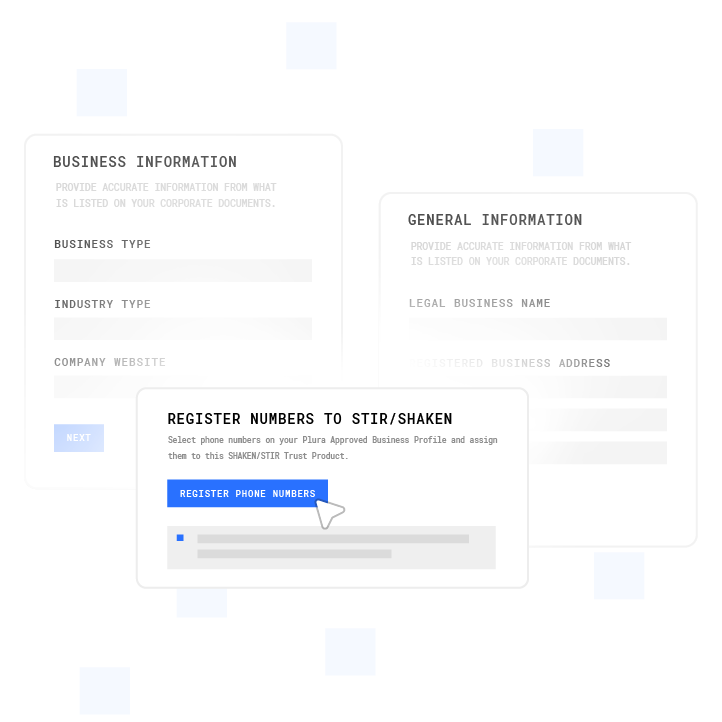
As noted earlier, Plura’s carrier-level SHAKEN/STIR enforcement means branded caller ID is issued directly, not through a reseller. Real-time DNC (Do Not Call) scrubbing and TCPA (Telephone Consumer Protection Act, 47 U.S.C. § 227) litigator-list filtering run as core platform layers before each outbound contact.1 Voice origination, model hosting, data storage, and call recording all sit on domestic infrastructure, so operators can report “100% U.S.-handled” in their broadband consumer label disclosures.
For a deeper look at how AI contact center infrastructure maps to compliance architecture, see Plura’s complete guide to AI contact centers.
See carrier-level SHAKEN/STIR and branded caller ID in action on a live call walkthrough.
Cost Shift: From Traditional Contact Centers to AI TCO
Compliance restructuring under S.2666 forces a cost conversation that many operators have delayed. The offshore model’s wage arbitrage is narrowing under regulatory pressure at the same time domestic AI infrastructure has reached replacement economics.
For a 100-seat contact center, traditional operations cost $4 million to $7 million annually, while AI-powered communications using platforms like Plura cost $300,000 to $700,000.3 The driver is talk utilization. Human agents in a traditional contact center run at roughly 40% talk utilization after breaks, training, and administrative time. Plura’s AI agents run at 100% talk utilization with no taxes, benefits, commissions, or rehiring cycle.
At the 50-seat scale common in insurance operations, the gap remains large: about $1.2M annually for offshore teams versus $180K to $300K for equivalent AI-handled volume.3 When the offshore model also carries bond obligations, disclosure infrastructure costs, and the compliance overhead of the proposed 30% cap, the gap widens further.
Vertical Exposure: Healthcare, Insurance, Finance, Legal, and Franchise Networks
Healthcare. Offshore handling of patient data, including multi-factor authentication codes and insurance account numbers, falls directly within the sensitive-data prohibition proposed under the NPRM. Healthcare operators using offshore BPOs for intake, eligibility verification, or prescription reminders face immediate contract review obligations. Plura supports compliance with HIPAA-aligned infrastructure that keeps all patient data on domestic servers with end-to-end encryption and audit logging.1
Insurance. Quote follow-ups, policy renewals, and claims-status calls frequently involve Social Security numbers and banking data, which are restricted categories under the proposed rules. Insurance operators sit among the highest-exposure verticals for the offshore sensitive-data prohibition.
Financial services. Bank account numbers, card data, and SSNs are explicitly named in the offshore data restriction. Financial services operators with offshore BPO contracts covering any of those data categories face direct restructuring pressure.
Legal. Mass-tort and personal-injury intake involves protected health information and PII (personally identifiable information) that the proposed rules keep on domestic infrastructure. Legal operators running offshore intake operations face both the data restriction and the disclosure mandate.
Franchise networks. Multi-state franchise operators face the compounding complexity of state-level onshoring laws alongside the federal NPRM. New York’s Call Center Jobs Act carries penalties up to $10,000 per day. New Jersey, Connecticut, Missouri, and Florida have enacted or proposed parallel restrictions. Franchise networks with centralized offshore call handling face multi-jurisdiction exposure.
2026 Compliance Audit Checklist for High-Volume Operators
-
Confirm all voice origination routes through a provider listed in the FCC Robocall Mitigation Database and that no upstream foreign provider is unregistered.
-
Verify SHAKEN/STIR authentication is enforced at the carrier level, not applied as a CPaaS add-on, and that A-level attestation is achievable for your outbound traffic.
-
Audit offshore call volume as a percentage of total volume against the proposed 30% cap threshold in CG Docket No. 26-52.
-
Identify all offshore interactions that currently touch restricted data categories: passwords, MFA codes, SSNs, bank account numbers, credit card numbers.
-
Confirm your voice service provider can respond to traceback requests within 24 hours and document the response process.
-
Review KYC records for all upstream providers: name, physical address, government-issued ID, alternate telephone number, and intended use of service for high-volume customers, per the April 2026 FNPRM requirements.
-
Assess state-law exposure: New York Call Center Jobs Act, New Jersey mirror statute, Connecticut state-contract bans, Missouri offshore-disclosure executive order, Florida medical-information offshoring ban.
-
Confirm TCPA consent records are timestamped, immutable, and exportable for audit review.
-
Verify DNC scrubbing runs in real time against federal and state registries before each outbound contact, not as a batch process.
-
Confirm all voice, SMS, and data infrastructure sits on domestic servers with documented data-residency controls.
-
Review the TRACED Act (Telephone Robocall Abuse Criminal Enforcement and Deterrence Act) linkage and confirm your provider’s Robocall Mitigation Database filing is current and accurate, and that self-certification reflects actual operational role in the call path.
-
Export one-click audit-ready compliance reports and confirm they cover all channels: voice, SMS, RCS (Rich Communication Services), and webchat.
For a broader view of how AI communications strategy maps to this checklist, see Plura’s executive guide to AI-powered customer engagement.
FAQ: S.2666, TRACED Act, and State Onshoring Rules
How does the Foreign Robocall Elimination Act differ from the TRACED Act?
The TRACED Act (enacted 2019) established the legal foundation for SHAKEN/STIR caller-ID authentication, required voice service providers to file Robocall Mitigation Database certifications, and gave the FCC authority to impose per-call penalties for illegal robocalls. It focused primarily on domestic enforcement infrastructure, including authentication standards, traceback cooperation, and provider accountability for traffic they originate or carry.
The Foreign Robocall Elimination Act (S.2666) targets the international origination layer that the TRACED Act did not fully address. S.2666 proposes the bonding requirements discussed earlier, an interagency robocall enforcement task force, and mechanisms to block or penalize foreign-originating traffic that enters the U.S. network through unregistered or non-compliant providers. The FCC’s companion NPRM (CG Docket No. 26-52) extends the operational scope further by proposing offshore call-center caps, sensitive-data restrictions, and mandatory disclosures that apply to the contact-center layer as well as the carrier layer. Together, the two frameworks create a compliance perimeter that runs from the foreign origination point through to the domestic call-center operation handling the conversation.
What are the traceback obligations for voice service providers?
Under the FCC’s current enforcement framework, voice service providers must cooperate with traceback requests, which trace an illegal call back through the network to its originating source. Providers must respond to traceback requests within 24 hours. Failure to respond, or responding inaccurately, does not remove liability for underlying violations.
The FCC’s enforcement action against Voxbeam Telecommunications showed that prompt blocking of offending traffic within 24 hours of the first traceback request can reduce a proposed forfeiture, from $5.625 million to $4.5 million in that case, but does not remove the penalty for accepting traffic from an unregistered foreign provider. The FCC also examines a provider’s actual operational role in the call path regardless of how the provider self-certifies in the Robocall Mitigation Database. A provider that certifies it is not a gateway provider but functions as one in practice remains exposed to gateway-provider enforcement standards.
Which state onshoring laws already restrict offshore handling of sensitive data?
Five states have enacted or proposed active restrictions as of May 2026. New York’s Call Center Jobs Act requires covered employers to notify the state before relocating call-center operations offshore and imposes penalties up to $10,000 per day for non-compliance. New Jersey has enacted a mirror statute with similar notification and penalty structures. Connecticut bans state-contract work from being performed offshore. Missouri issued an executive order that requires offshore-handling disclosures. Florida restricts the offshore handling of medical information.
Operators in healthcare, insurance, financial services, and legal verticals with offshore BPO contracts should consult qualified counsel to assess exposure under each applicable state statute alongside the federal NPRM framework.
How do operators demonstrate audit readiness under the new rules?
Audit readiness under the combined S.2666 and CG Docket No. 26-52 framework requires documentation across four areas. First, Robocall Mitigation Database filings must be current, accurate, and reflect the provider’s actual operational role in the call path, not a self-certification that diverges from how traffic actually flows.
Second, KYC records for all upstream providers must be retained for four years after the customer relationship ends, per the April 2026 FNPRM proposal, and must include name, physical address, government-issued identification, and alternate telephone number at minimum. Third, TCPA consent records must be timestamped, immutable, and exportable on demand. Batch exports after the fact do not satisfy real-time audit expectations.
Fourth, data-residency documentation must confirm that restricted data categories, such as SSNs, bank account numbers, card data, and MFA codes, are handled exclusively on domestic infrastructure. Plura’s compliance engine generates one-click audit-ready exports covering all channels and supports TCPA, DNC, HIPAA, and SOC 2 documentation requirements, giving operators a single audit trail across voice, SMS, RCS, and webchat. Operators remain responsible for their own regulatory obligations and should work with qualified counsel to confirm their specific compliance posture.
Conclusion: Restructuring Offshore Models and Planning Next Steps
The Foreign Robocall Elimination Act (S.2666) and the FCC’s companion NPRM (CG Docket No. 26-52) close the regulatory gap that allowed offshore BPOs and third-party CPaaS wrappers to operate outside the domestic compliance perimeter. Bond requirements up to $100,000, a proposed 30% offshore volume cap, sensitive-data restrictions, mandatory disclosures, and $2,500 per-call KYC penalty exposure now sit on the near-term planning horizon. Comments on the NPRM closed May 26, 2026, with reply comments due June 22, 2026.
Operators with offshore BPO contracts or AI voice tools built on third-party CPaaS infrastructure face the highest restructuring costs. Operators on 100% U.S. FCC-licensed carrier infrastructure, with SHAKEN/STIR enforced at origination, real-time DNC scrubbing, immutable consent logging, and domestic data residency, carry lower exposure and a stronger audit posture.
Plura operates that infrastructure today. Voice origination, model hosting, data storage, and call recording all run on domestic servers. SHAKEN/STIR authenticates at the carrier level. Branded caller ID is issued directly. The compliance engine supports TCPA, DNC, HIPAA, and SOC 2 documentation requirements across voice, SMS, RCS, and webchat with one-click audit exports.1 The economics also shift: TCO of $300,000–$700,000 replaces the $4M–$7M traditional contact-center cost structure on equivalent volume.
Map your infrastructure to the S.2666 checklist and model your TCO shift in a live demo with Plura’s compliance and finance teams.
1 Plura AI maintains SOC 2, HIPAA, ISO, and GDPR posture as part of its platform infrastructure. References to compliance frameworks in this article describe Plura’s platform capabilities and do not constitute a guarantee that any customer using Plura will themselves be compliant with applicable laws or standards. Customers remain solely responsible for their own regulatory obligations, certifications, consent management, recordkeeping, and the claims they make to their own end users. Consult qualified legal counsel for guidance specific to your use case.
2 This article describes regulatory frameworks at a general level and does not constitute legal advice. Laws and regulations vary by jurisdiction, change over time, and apply differently depending on facts and circumstances. Readers should consult qualified legal counsel before making compliance decisions.
3 Performance figures, customer outcomes, and industry statistics referenced in this article are drawn from cited third-party sources or Plura customer case studies. Individual results vary based on implementation, use case, industry, audience, and execution. Past or aggregate performance is not a guarantee of future results.
4 References to third-party products, services, companies, or research are made for informational and comparative purposes only. Plura AI is not affiliated with, endorsed by, or sponsored by any third party named in this article unless explicitly stated. Trademarks and product names referenced remain the property of their respective owners.
This article is provided for informational purposes only and reflects Plura AI’s understanding at the time of publication. Product capabilities, integrations, and specifications are subject to change. For the most current information, visit plura.ai.
This article was produced with the assistance of AI tools and reviewed by Plura AI prior to publication.