
Written by: Matt Beucler, CEO, Plura AI
Updated August 22, 2026
Key Takeaways for Enterprise RCS Outbound
- RCS outbound follows a seven-step carrier-grade process that starts with an API trigger and ends with verified, trackable delivery inside the recipient’s native messaging app.
- Capability checks, verified-sender registration, read-receipt webhooks, and automatic SMS fallback keep messages on the right device, in the right format, without duplicates.
- Real-time DNC/TCPA enforcement at the carrier layer, combined with quiet-hours and consent validation, supports compliance before messages leave the network.
- Stateful cross-channel memory lets RCS, SMS, voice, and webchat share full conversation history, which removes repeated explanations and compounds intelligence across touchpoints.
- Plura AI owns its FCC-licensed carrier and stateful conversation database, giving enterprises carrier-grade RCS with built-in compliance support and omnichannel continuity. Book a live demo to see it in action.
Step 1: Campaign Trigger via API
Objective: Initiate an outbound RCS message or batch campaign from your platform to the carrier layer.
Configuration: The sending system posts a request to the RCS Business Messaging (RBM) API endpoint matched to the recipient’s phone number prefix. Google’s RBM API uses regional endpoints, such as us-rcsbusinessmessaging.googleapis.com for +1 and +5 prefixes, europe-rcsbusinessmessaging.googleapis.com for +2/+3/+4/+7 prefixes, and asia-rcsbusinessmessaging.googleapis.com for +6/+8/+9 prefixes, which reduces latency. Every API call must include a unique messageId. The RBM platform delivers incoming messages via Google Cloud Pub/Sub using at-least-once semantics, so receivers must de-duplicate based on messageId.
Decision criteria: The trigger payload must specify the RCS Agent ID, message type, recipient E.164 number, and a fallback_text field. The fallback_text field is critical because without it, non-RCS recipients receive nothing at all. This requirement makes payload validation at origination a core advantage. Platforms that own their carrier layer can enforce these fields before submission instead of relying on a third-party CPaaS to catch errors downstream.
Step 2: Capability Check Mechanics
Objective: Confirm whether the recipient’s device and carrier support RCS before committing to rich-media delivery.
Configuration: The platform calls a synchronous capability lookup API against the recipient’s number. Bandwidth’s RCS Capabilities Check returns a single boolean attribute rcsEnabled that is true only when the handset is RCS-enabled and the agent is launched on the mobile operator serving that subscriber.4 A “true” result confirms reachability by the specific RCS agent, not general device capability. EnableX performs a real-time RCS capability check against Google’s RCS lookup service for the recipient’s device before attempting delivery on the RCS channel.4
Decision criteria: Numbers that return rcsEnabled: false route directly to SMS fallback. Numbers that return rcsEnabled: true proceed to rich-media delivery. Running this check pre-send instead of after a failure removes the latency cost of attempting RCS delivery on an unsupported device and lowers duplicate-message risk during fallback. Plura provides built-in data enrichment from over 30 sources, which adds contact intelligence on top of the raw capability result before the message is composed. This enriched view helps teams choose the right channel and message type with more confidence.
Step 3: Rich-Media and Verified-Sender Delivery
Objective: Deliver a branded, interactive message from a verified RCS Agent into the recipient’s native messaging app.
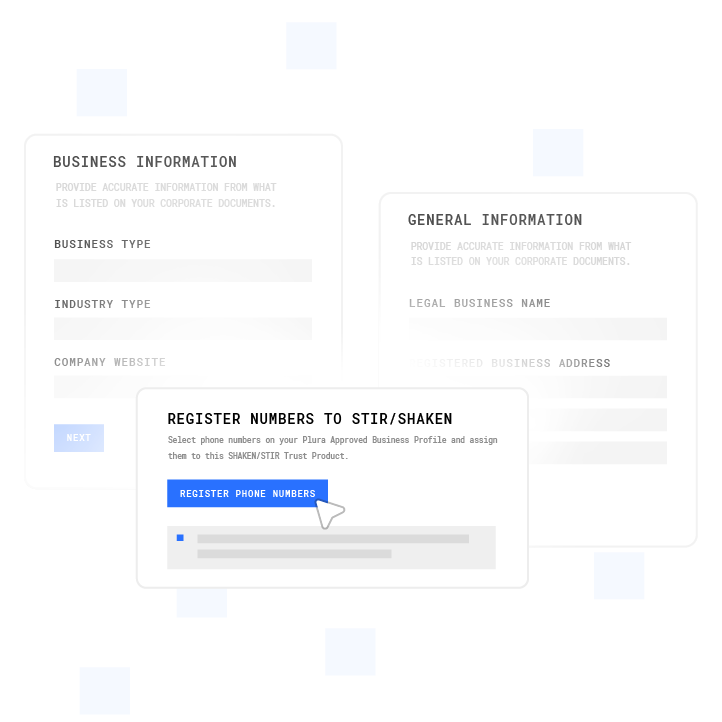
Configuration: The RCS Agent must be registered and approved before any message is sent. RCS sender verification is performed by Google and individual carriers including T-Mobile, AT&T, and Verizon, with the latter involving more rigorous vetting of branding, use case, and billing category than the SMS Campaign Registry process. A verified sender profile displays the brand name, logo, brand color, and verification badge natively in the recipient’s inbox. RCS includes verified sender identities as a core feature; a business registers an RCS Agent with its official branded identity that must be verified and approved by Google and carriers before any messages can be sent.
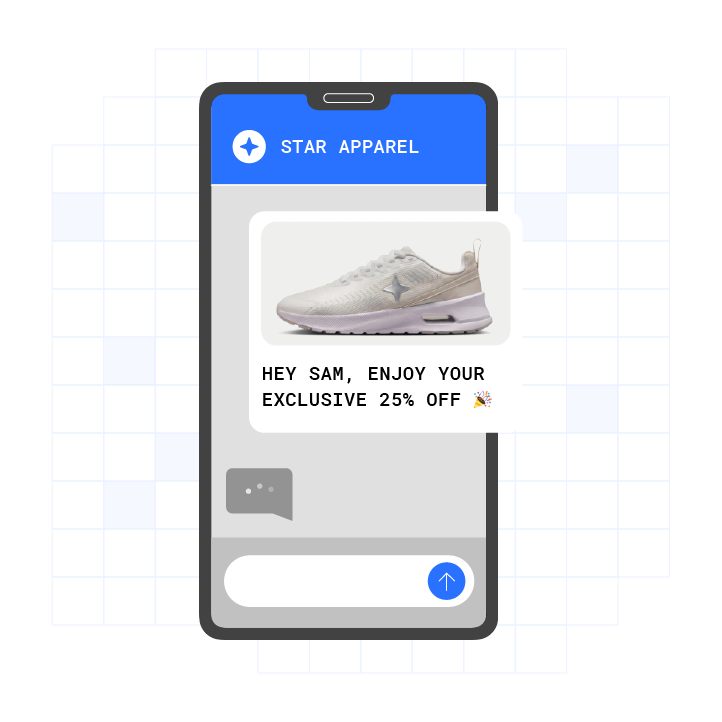
Decision criteria: Rich-media payloads can include rich cards, carousels, suggested reply chips, CTA buttons, in-message documents, and in-message payments. Plura’s AI RCS messaging delivers branded, interactive messages with an 80% read rate and a 35% click-through rate, compared to typical SMS benchmarks.3 RCS achieves open rates of 72% per Infobip platform data.3 Operators should align the message type with the registered agent use case. Google RBM enforces separate rules for OTP, Transactional, Promotional, and Multi-use agents, and can suspend agents that send promotional content through transactional agents.
Book a live demo with Plura to see carrier-grade RCS delivery in action.
Step 4: Read Receipts and Webhook Tracking
Objective: Capture delivery and read events in real time so downstream workflows can react to actual engagement.
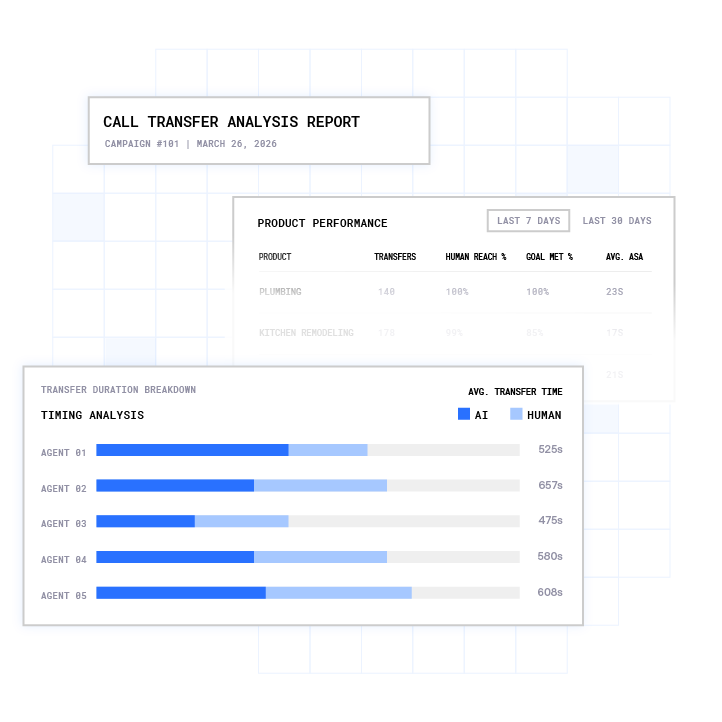
Configuration: The RBM platform delivers a DELIVERED user event to the agent’s webhook when an RCS message has been successfully received on the user’s device, and a READ user event when a user opens or acknowledges the message. AWS End User Messaging generates RCS outbound status events for delivery, read, TTL expiration, and fallback that are routed asynchronously through configuration set event destinations such as Amazon SNS, Amazon Data Firehose, or Amazon CloudWatch Logs.4 Read-rate calculation is: (READ events / DELIVERED events) x 100.
Decision criteria: A DELIVERED event with messageStatus DELIVERED confirms the message reached the device and cancels any pending SMS fallback timer. A READ event triggers the next workflow node, such as a follow-up message or a live-transfer prompt. Operators who do not configure webhook endpoints lose the read-receipt signal entirely and cannot distinguish delivered-but-unread from delivered-and-read, which turns campaign tuning into guesswork. Plura’s conversation intelligence layer surfaces these events per contact and per campaign, feeding the stateful database described in Step 7.
Step 5: How RCS Outbound Handles Fallback to SMS
Objective: Keep messages deliverable when the recipient’s device or carrier does not support RCS, while avoiding duplicates.
Configuration: Fallback operates in two modes. Pre-send fallback routes numbers that failed the capability check directly to SMS before the campaign fires. Post-send fallback triggers when a delivered-but-undeliverable status is returned for a number that passed the initial check. MessageFlow performs a deduplication step that attempts to revoke the original RCS message before sending the SMS fallback, which prevents recipients from receiving both versions. Google recommends matching the RCS message TTL to the connection timeout and always attempting to revoke the original RCS message before sending a fallback SMS.
Decision criteria: AWS End User Messaging requires a FallbackConfiguration object in the SendRcsMessage API request to enable automatic fallback; if FallbackConfiguration is omitted and the recipient cannot receive RCS, the message is not delivered at all. When RCS falls back to SMS, interactive buttons, images, and carousels are removed. The fallback version must be prepared as plain text with URLs replacing any buttons. TTL_EXPIRATION_REVOKED events allow safe SMS fallback, while TTL_EXPIRATION_REVOKE_FAILED events require checking for potential duplicates before sending fallback. Every RCS campaign must maintain an approved SMS sender, such as a 10DLC-registered number, for the fallback leg. This fallback readiness sets up the compliance checks described in Step 6.
Step 6: Enterprise RCS Compliance Requirements
Objective: Apply TCPA (Telephone Consumer Protection Act), DNC (Do Not Call), and carrier-level content rules before each message leaves the network.
Configuration: The FCC confirms that text messages are treated as “calls” under the TCPA, placing RCS outreach under the same Do Not Call requirements as voice calls.2 TCPA imposes time restrictions requiring that telemarketing calls or texts only be made between 8 AM and 9 PM in the recipient’s local time zone.2 RCS campaigns must align with TCPA and regional regulations, and businesses typically maintain explicit opt-in documentation, simple opt-out instructions such as the STOP keyword, a live privacy policy, terms of service, and proof of consent.
Decision criteria: Platforms that enforce compliance at the API-reseller layer apply rules after the message has already been composed and queued. Plura enforces compliance at the carrier layer, before the message leaves the network, which means every outbound RCS contact is checked against federal and state DNC registries in real time, before dispatch. This pre-send enforcement extends to consent validation, where records are timestamped and immutable, and to quiet-hours rules, which apply automatically through time-zone detection. Plura provides HIPAA and SOC 2 compliance support, and integration with The Blacklist Alliance’s TCPA Litigation Firewall for real-time Do Not Call scrubbing and litigation protection.1 TCPA violations can cost $500 to $1,500 per text or call, and that exposure scales directly with campaign volume. Operators should consult qualified counsel on their specific obligations under TCPA, applicable state mini-TCPA statutes, and carrier acceptable-use policies.
Step 7: Stateful Cross-Channel Memory
Objective: Persist conversation context across RCS, SMS, voice, and webchat so every touchpoint inherits the full history of prior interactions.
Configuration: Plura’s Stateful Conversation Database keys every interaction to a customer token, such as phone number, email, or ID, and persists it across all four channels. Plura offers omnichannel support for voice, SMS, webchat, and RCS within a unified stateful inbox that maintains full conversation history. An RCS message sent at 9 a.m. that goes unread can trigger a voice follow-up at noon. The voice agent already knows the RCS content, the read status, and any prior qualification data captured in earlier sessions.
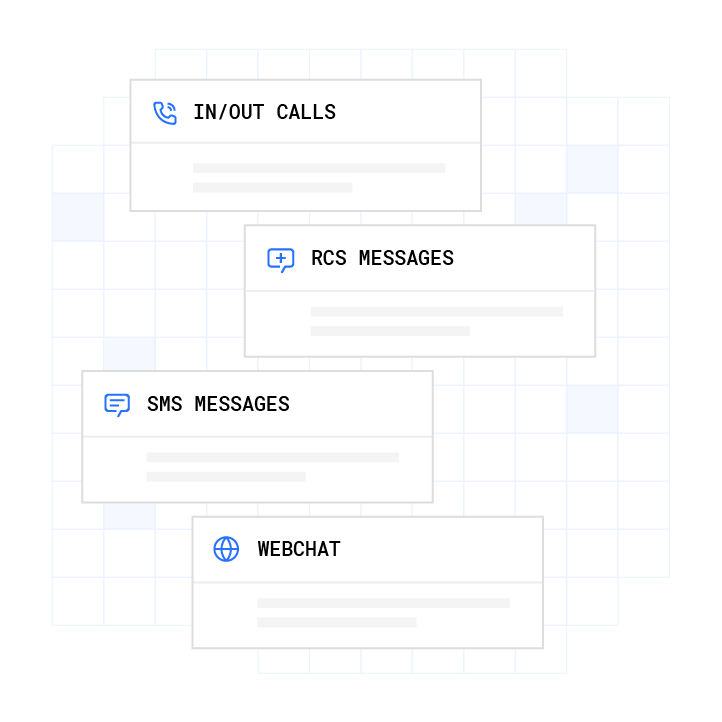
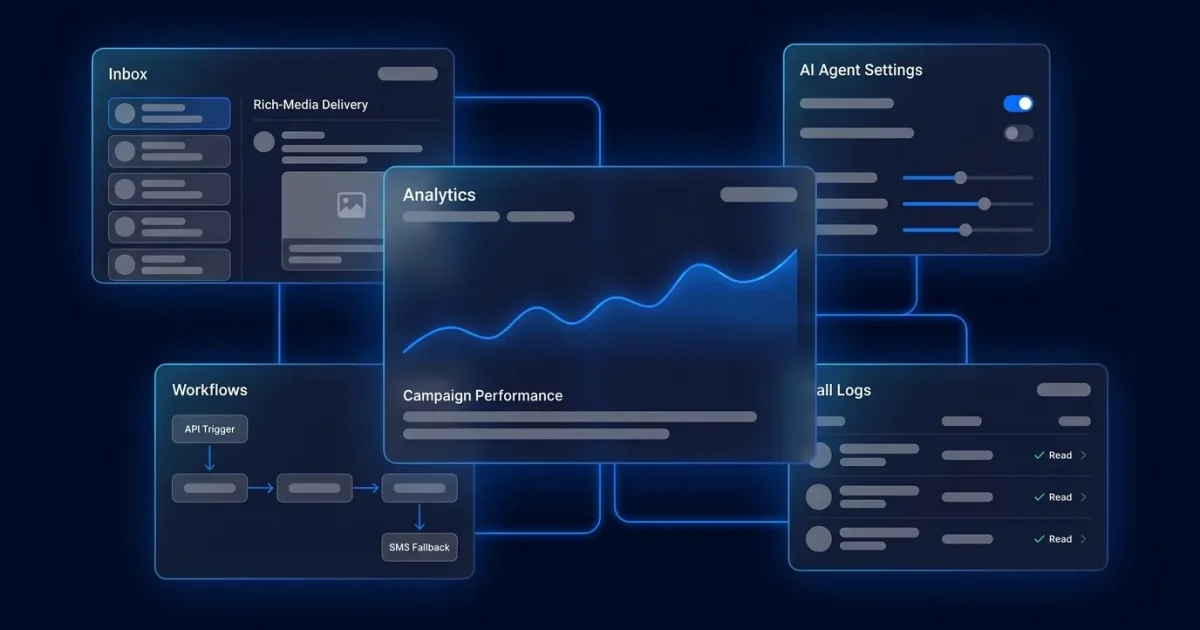
Decision criteria: Platforms without a stateful database treat each channel as a separate session. The customer repeats their situation on every touchpoint, and the operator loses the compounding intelligence that builds across interactions. Stateful memory is the architectural difference between a messaging tool and an enterprise communications platform. Plura’s no-code workflow builder connects RCS read-receipt events directly to downstream voice, AI SMS, and AI webchat nodes, all reading from and writing to the same database.
RCS vs. SMS vs. Carrier-Grade RCS: Comparison
| Metric | Standard SMS | RCS (API Reseller) | Carrier-Grade RCS (Plura) |
|---|---|---|---|
| Verified sender identity | None, sender ID unverified | Google and carrier-verified brand profile | Google and carrier-verified, issued at FCC-licensed carrier layer |
| Read receipts | Not available | DELIVERED and READ webhook events | DELIVERED and READ events fed into stateful conversation database |
| Click-through rate | 2-5% | 10-35% | 35% CTR3 |
| SMS fallback | Native channel | Automatic with deduplication logic | Automatic, fallback number is DNC-scrubbed before send |
| DNC/TCPA enforcement | Bolted on by operator or third-party tool | Bolted on at API layer after message composition | Enforced at carrier layer before message leaves network |
| Cross-channel memory | None | None, session-scoped | Stateful database shared across voice, SMS, RCS, and webchat |
| Rich media | None | Rich cards, carousels, suggested actions | Rich cards, carousels, in-message payments, in-message documents, AI-rendered video |
Enterprise RCS Compliance Flow
The compliance sequence for enterprise RCS outbound runs in this order before any message is dispatched:
- Contact is matched against federal and state DNC registries in real time to confirm reachability under TCPA and related rules.
- Once DNC clearance is confirmed, the consent record is validated so express written consent is timestamped and on file.
- With consent verified, time-zone detection enforces quiet-hours rules per the recipient’s local time.
- The RCS Agent’s registered use case is checked against the message type (OTP, Transactional, Promotional, or Multi-use) to prevent content-policy violations.
- The message is dispatched with a verified sender profile and a fallback_text field for non-RCS devices.
- Delivery and read events are logged to the immutable consent and interaction ledger.
- Opt-out signals, such as the STOP keyword or UNSUBSCRIBE event, are processed and the contact is suppressed from future promotional sends.
On read receipts: Read receipts in RCS are device-generated events, not platform estimates. A READ event confirms the recipient opened the message thread. Operators can calculate read rates using the formula described in Step 4, scoped per campaign. Plura’s AI RCS messaging surfaces these metrics per contact in the unified inbox.
On blocking and traceability: An UNSUBSCRIBE user event is sent by the RBM platform when a user unsubscribes via Google Messages; after this event, the RBM partner must stop all non-essential messages while essential messages such as OTPs and consented service notifications remain permitted. Every interaction is logged with a timestamp and agent ID, which creates an audit trail that can be exported for legal review or carrier compliance inquiries.
On carrier approval timelines: The carrier approval process for new RCS business senders can take several weeks across major US carriers. Operators planning RCS campaigns should account for this lead time in their go-live schedules. US carriers supporting RCS enterprise messaging include AT&T, Verizon, and T-Mobile.
Book a live demo with Plura to walk through the compliance configuration for your specific use case.
Frequently Asked Questions
Enterprise RCS Launch Timelines with Plura
The launch timeline has two components: carrier approval and platform configuration. Carrier approval for a new RCS Agent can take several weeks across major US carriers, depending on the use case category and the completeness of the brand verification submission. Platform configuration on Plura’s side, including workflow design, fallback setup, DNC scrubbing integration, and webhook configuration, typically runs in parallel with the carrier approval process. Operators who already have an approved RCS Agent can move to a live campaign faster. Plura’s no-code workflow builder allows non-technical teams to configure message flows, fallback rules, and compliance guardrails without engineering support.
Prerequisites Before Sending RCS Outbound Messages
Four prerequisites must be in place before the first message sends. First, a registered and approved RCS Agent with a verified brand profile including name, logo, and use-case category. Second, an approved SMS sender, such as a 10DLC-registered number or short code, for the fallback leg. Third, documented express written consent records for every recipient in the campaign list, with timestamps and opt-in source. Fourth, a configured webhook endpoint to receive delivery, read, TTL expiration, and fallback events. Operators also need to confirm that their message content matches the registered agent use case, since Google and carriers enforce content rules at the agent level and can suspend agents for violations.
Managing RCS vs. SMS Fallback Costs in Plura
RCS and SMS carry different per-message rates. When a message falls back from RCS to SMS, the operator pays the SMS rate for that contact, not both rates. Plura’s platform tracks delivery channel per message, so operators can see the exact split between RCS-delivered and SMS-fallback contacts in campaign reporting. The ROI calculation for RCS campaigns should account for the fallback share, since RCS reachability varies by carrier and device. Plura’s conversation intelligence layer surfaces channel-level metrics per campaign, which lets operators refine list segmentation over time to maximize RCS delivery share. Compare plans and rates side by side at plura.ai/pricing.
RCS Read Receipts When Messages Fall Back to SMS
Read receipts are an RCS-native feature and are not available on the SMS fallback leg. When a message falls back to SMS, the operator receives a fallback event confirming the SMS was sent and, if the carrier supports it, a delivery confirmation. There is no read event for SMS. This means read-rate calculations should be scoped to RCS-delivered messages only. Plura’s stateful conversation database records the delivery channel per contact, so read-rate metrics are not diluted by fallback contacts in campaign analytics. Operators who need engagement signals on the fallback leg can configure a URL in the SMS fallback text and track clicks as a proxy for read intent.
How Plura’s Carrier Ownership Shapes RCS Compliance
API-reseller platforms apply compliance rules at the software layer, after the message has been composed and queued. If a DNC check fails or a consent record is missing, the error is caught downstream, sometimes after the message has already been submitted to the carrier. As described in Step 6, Plura’s carrier-layer enforcement runs before messages leave the network, unlike API-reseller platforms that apply rules downstream. Real-time DNC scrubbing, TCPA-litigator list filtering, quiet-hours enforcement, and consent validation all run as first-class steps in the origination flow. Consent records are timestamped and immutable, and the compliance dashboard exports audit-ready reports in one click. Operators are responsible for their own regulatory obligations and should consult qualified counsel on their specific TCPA, state mini-TCPA, and carrier acceptable-use requirements. Plura provides the infrastructure and enforcement tooling, while downstream compliance posture remains the operator’s responsibility.
RCS Outbound Market Context for High-Volume Operators
The scale of RCS adoption in 2025 and 2026 makes the technical mechanics above operationally urgent for high-volume operators. Infobip reported a threefold (200% growth) increase in RCS traffic globally on its platform in 2025, with a 70x increase in North America. US RCS interactions grew 1,298.8% year over year in the first half of 2026.3 Juniper Research projects RCS active users to reach roughly 3.8 billion by end of 2026.5 Financial services is adopting RCS faster than almost any other industry, with nearly half of institutions already using it and another 45% planning to adopt or expand RCS use. Together, these trends show that RCS has moved into mainstream enterprise use.
For contact-center and marketing-ops leaders, the implication is direct. The channel is no longer experimental. The compliance and infrastructure decisions made now, including whether the platform enforces DNC at the carrier layer and whether conversation context persists across channels, will determine campaign performance and regulatory exposure at scale.
Compare plans and rates side by side at plura.ai/pricing.
1 Plura AI maintains SOC 2, HIPAA, ISO, and GDPR posture as part of its platform infrastructure. References to compliance frameworks in this article describe Plura’s platform capabilities and do not constitute a guarantee that any customer using Plura will themselves be compliant with applicable laws or standards. Customers remain solely responsible for their own regulatory obligations, certifications, consent management, recordkeeping, and the claims they make to their own end users. Consult qualified legal counsel for guidance specific to your use case.
2 This article describes regulatory frameworks at a general level and does not constitute legal advice. Laws and regulations vary by jurisdiction, change over time, and apply differently depending on facts and circumstances. Readers should consult qualified legal counsel before making compliance decisions.
3 Performance figures, customer outcomes, and industry statistics referenced in this article are drawn from cited third-party sources or Plura customer case studies. Individual results vary based on implementation, use case, industry, audience, and execution. Past or aggregate performance is not a guarantee of future results.
4 References to third-party products, services, companies, or research are made for informational and comparative purposes only. Plura AI is not affiliated with, endorsed by, or sponsored by any third party named in this article unless explicitly stated. Trademarks and product names referenced remain the property of their respective owners.
5 This article contains forward-looking statements regarding industry trends, technology adoption, and future capabilities. These statements reflect current expectations and are subject to change. Plura AI undertakes no obligation to update forward-looking statements except as required.
This article is provided for informational purposes only and reflects Plura AI’s understanding at the time of publication. Product capabilities, integrations, and specifications are subject to change. For the most current information, visit plura.ai.
This article was produced with the assistance of AI tools and reviewed by Plura AI prior to publication.