
Written by: Matt Beucler, CEO, Plura AI
What You Can Achieve in 90 Days
- Contact centers face 30-45% annual agent turnover, linear cost scaling, and regulatory exposure across TCPA, DNC, HIPAA, and state rules that human-only models cannot absorb at scale.1,2,3
- A four-phase, 90-day implementation roadmap built on an FCC-licensed carrier stack, platform-level compliance controls, and a Stateful Conversation Database delivers measurable ROI faster than traditional deployments.
- Phase 1 focuses on high-volume, low-complexity intents such as order status checks that reach 85-95% AI resolution rates when backend data is available.
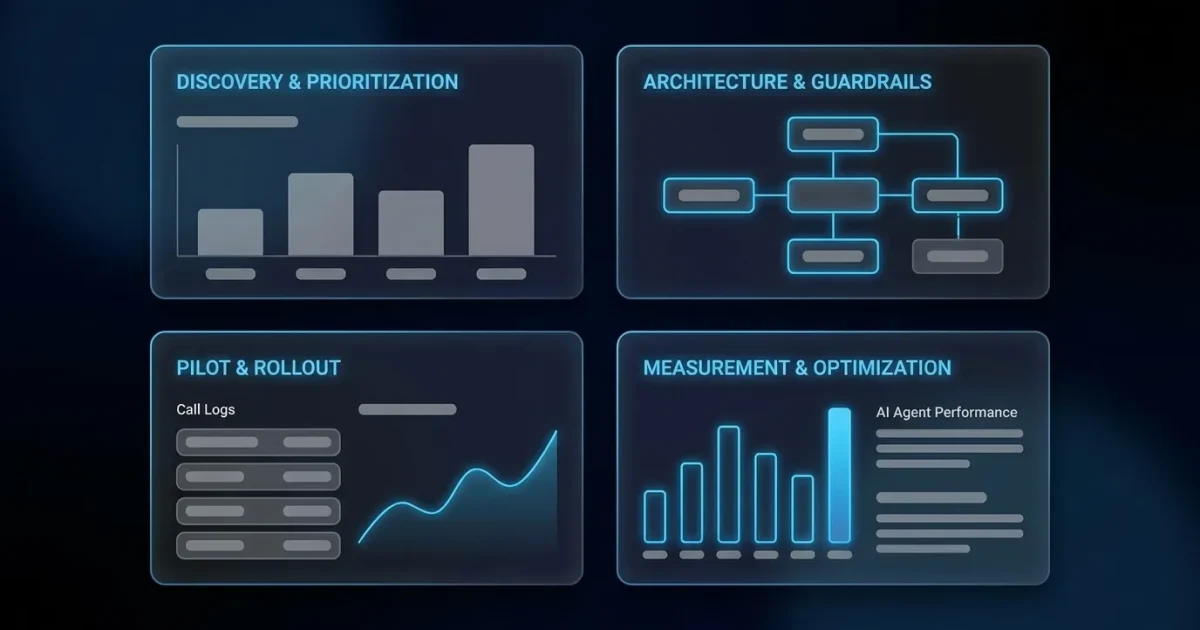
- Phases 2-4 add layered guardrails, pilot on live interactions, and continuously tune against four core metrics: containment rate, hallucination rate, cost-per-contact, and response time.
- Plura AI accelerates this roadmap with its AI webchat and omnichannel platform that supports compliance before every contact and preserves context across all channels.
Phase 1: Discovery and Prioritization (Days 1-21)
Phase 1 sets your baseline and selects the first use cases that will show clear ROI. Teams that skip this step often stall after proof of concept. Gartner reported in January 2026 that organizations abandoned at least 50% of generative AI projects after proof of concept4, usually because the initial use case came from a vendor demo instead of operating data.
Inputs required:
- 90 days of interaction logs segmented by call type, volume, and resolution outcome
- Current cost-per-contact baseline (industry human baseline runs approximately $8-$15 per agent-handled contact)
- Average handle time by intent category
- Current containment rate and first-contact resolution rate
- Existing CRM, calendar, and compliance system inventory
Outputs:
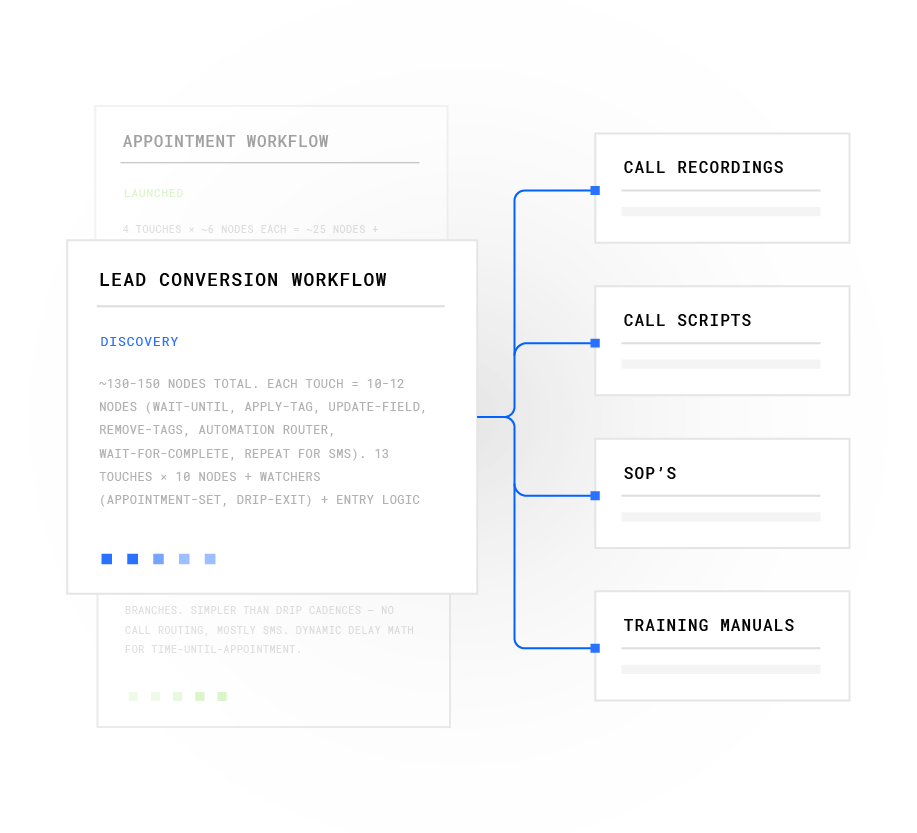
- A ranked use-case matrix scored by business value, data readiness, and time to value
- Documented metric baselines for containment rate, cost-per-contact, and response time
- A build-versus-buy decision per workflow layer
Decision criteria: Prioritize high-volume, low-complexity intents first. Order status checks are the right starting point because they represent 35–45% of total e-commerce contact volume and achieve 85–95% AI resolution rates when backend data is accessible. These interactions create quick wins and reliable training data. Emotionally complex or regulated interactions move to a later phase after the platform has demonstrated stable performance on simpler use cases.
Before moving to Phase 2, leaders need a clear view of the architecture that powers contact center AI. The next section outlines the core components you will configure during the build and guardrail phase.
Core Architecture for a Production-Grade AI Agent
A production-grade AI agent for customer service operates as a layered system, not a single model. Each layer has a defined function, a defined failure mode, and a defined escalation path. The layers that matter most in a contact center deployment include ingestion, orchestration, retrieval, tooling, state and memory, safety and compliance, and human handoff.
The orchestrator acts as the decision brain that sequences retrieval, tool calls, and generation. It applies policies such as safe defaults for regulated domains and escalation triggers based on topic, confidence, or sentiment. Without a well-designed orchestrator, the agent improvises on outcomes that matter, which creates compliance exposure and customer experience failures.
Guardrail design sits at the center of this architecture. Deloitte’s 2026 State of AI in the Enterprise survey found that only one in five companies has a mature governance model for autonomous AI agents.4 Guardrails must be defined before the first live call, not after the first escalation failure. With this foundation in place, Phase 2 focuses on translating these concepts into your specific deployment.
Phase 2: Architecture and Guardrails (Days 22-45)
Phase 2 converts the Phase 1 priorities into a deployable system with explicit guardrails, integrations, and human escalation logic.
Inputs required:
- Approved use-case list from Phase 1
- CRM, calendar, and knowledge base API credentials
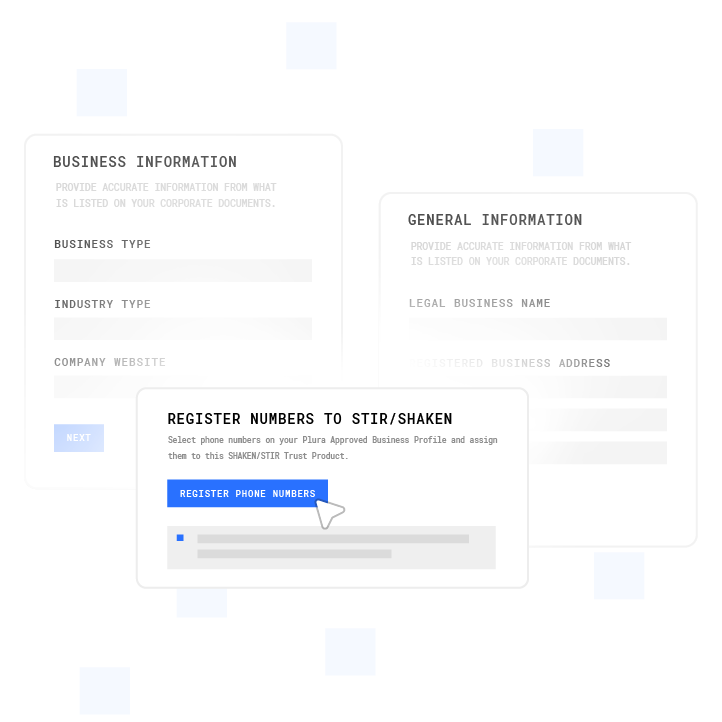
- Compliance requirements, including TCPA, DNC, HIPAA, SOC 2, SHAKEN/STIR caller ID verification, and GDPR where applicable1,2
- Escalation routing specifications and agent skill mapping
Outputs:
- A layered architecture diagram mapping channels, orchestration, retrieval, tooling, state, compliance, and human handoff
- Documented guardrail rules per conversation node, including BATNA floors and ceilings for negotiation flows
- Integration connections to CRM, calendars, and compliance registries
- Escalation trigger definitions such as low model confidence, negative sentiment threshold, sensitive intent types, high-value customer tier, and repeated resolution failure
Decision criteria: A layered guardrail approach includes strict access control, policy enforcement, input filtering, output validation, and comprehensive audit logging. It also requires explicit data mapping that defines which systems and fields AI can access and what must be redacted. Every escalation should include a full context payload that contains transcript, detected intent, attempted resolutions, sentiment trajectory, and customer history. This context gives agents what they need to deliver a strong experience during AI handoffs. When that context is missing, the issue reflects design, not technology.
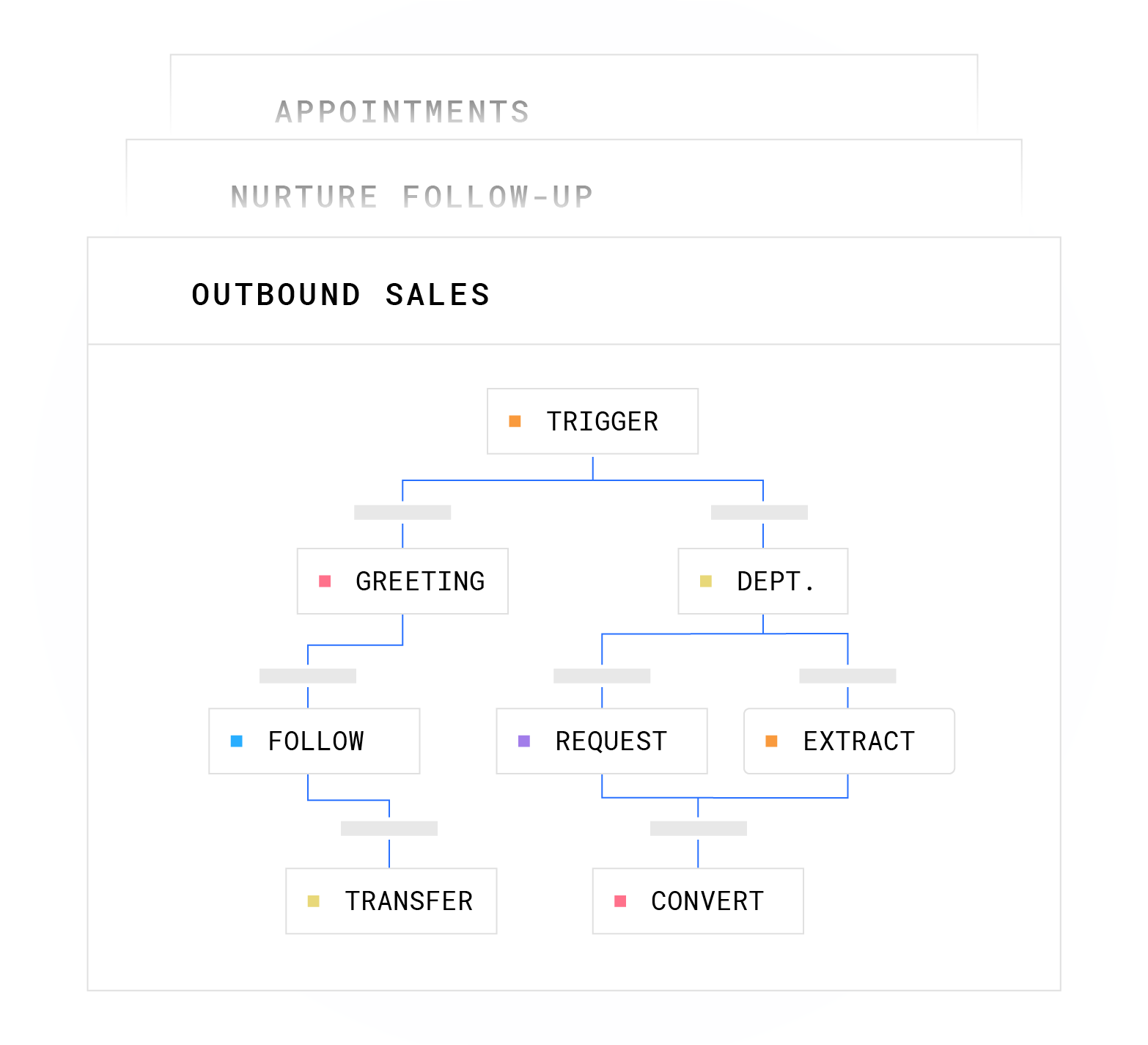
Plura’s no-code workflow builder manages this layer without engineering overhead. Each workflow node references the Stateful Conversation Database, supports BATNA-style negotiation guardrails, and can branch on real-time enrichment results from more than 30 data sources. The compliance engine supports TCPA, DNC, HIPAA-aligned encryption, and SHAKEN/STIR caller ID verification at the platform level on every outbound contact, before dial.1,2 Plura supports customer compliance; downstream compliance obligations remain the customer’s responsibility.
Omnichannel Chatbot Design That Remembers Every Conversation
Most customer service chatbots fail because they operate without memory. A customer who texted at 9 a.m. should not need to re-explain their situation when the call arrives at noon. Many Twilio-based API resellers cannot solve this problem because their voice and SMS products run on separate data layers with no shared memory.4
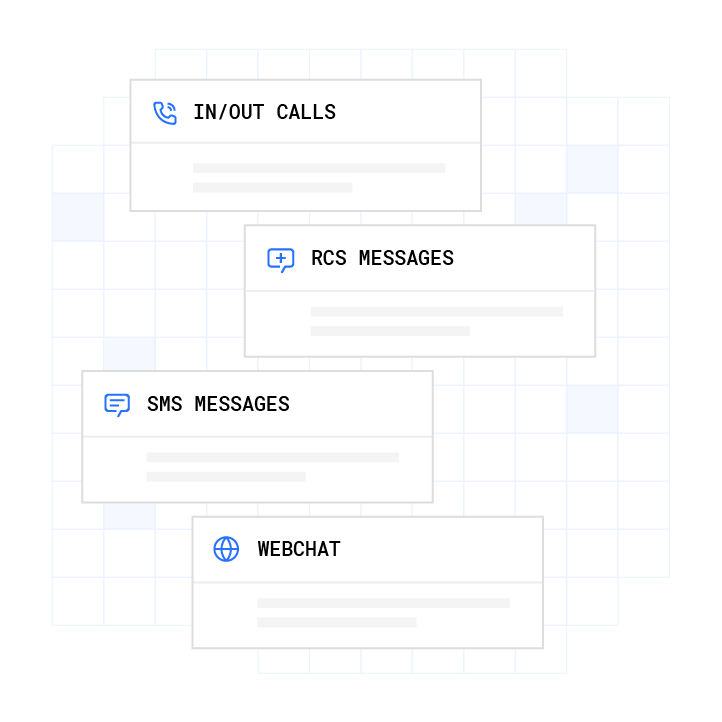
Plura’s AI Voice, AI SMS, AI RCS, and AI webchat all share a single Stateful Conversation Database. Every interaction is keyed to a customer token such as phone number, email, or ID and stored in one place. The AI reads and writes to this database on every conversation, tracking what was offered, what was accepted, what was declined, and what remains open. True omnichannel service requires a single customer view, persistent context that carries the reason for contact across channels, and consistent resolution that delivers the same answer regardless of channel. Plura’s architecture delivers these requirements by design.
Omnichannel orchestration also depends on the human-facing view matching what the AI sees. Plura’s Unified Inbox consolidates voice transcripts, SMS threads, RCS exchanges, and webchat sessions per customer in a single screen, so CX teams work from one interface instead of several disconnected point tools.
Phase 3: Pilot and Rollout (Days 46-75)
Phase 3 launches the AI on a controlled subset of live interactions, measures performance against Phase 1 baselines, and expands autonomy only after reliability thresholds hold steady.
Inputs required:
- Completed architecture and guardrail configuration from Phase 2
- Defined pilot scope covering one channel, one intent category, and one agent queue
- Human escalation team briefed on context payload format and warm transfer protocol
- Real-time monitoring dashboard configured for escalation rate, containment rate, and sentiment flags
Outputs:
- Pilot performance report against Phase 1 baselines
- Escalation log with disposition codes such as AI misidentified intent, AI lacked knowledge, or customer requested human
- Scale gate decision to expand to additional intents or channels only after achieving at least 60% autonomous resolution on the pilot category with CSAT not below human baseline and zero compliance incidents
Decision criteria: Focused deployments targeting two to three high-volume query types can typically go live in four to eight weeks. As noted earlier, Plura compresses this to two to four weeks from contract to live AI conversations across all channels, compared to three to six months for traditional enterprise contact center platform setups4. Human escalation workflows must be validated before full rollout. Teams that implement a weekly review of agent escalation disposition codes for the first 90 days continue improving containment rates month-over-month, while teams that skip this step see rates plateau.
Warm transfer messaging shapes how customers experience escalation. A phrase like “I’m connecting you with a specialist now. I’ve shared a summary of our conversation so you will not need to repeat anything” prevents cold transfers that waste the first 60 seconds of agent time and erode customer trust. Before moving to full rollout, run your numbers through Plura’s calculator to check your ROI against these pilot results in real time.
What Is the Best AI Software for Contact Centers
The right platform depends on what the operator needs to control versus what they can outsource. Many AI voice and SMS platforms act as API resellers on top of third-party CPaaS providers. These vendors usually do not own the carrier, cannot issue branded caller ID at the carrier level, cannot enforce real-time DNC scrubbing before the call leaves the network, and cannot hold conversation context across more than a single channel.
Plura AI is its own FCC-licensed audio bridging carrier. Voice originates on Plura’s domestic infrastructure. Branded caller ID is issued at the carrier level, not layered through a reseller. SHAKEN/STIR caller ID verification runs on every outbound call. Real-time DNC scrubbing checks every number against federal and state registries before dial. TCPA, SOC 2, HIPAA, ISO, and GDPR coverage operate as platform layers, not checkbox add-ons.1,2
For operators in regulated industries, this carrier-owned posture becomes a core differentiator. For a 100-seat contact center, traditional operations cost $4 million to $7 million annually, while AI-powered communications using platforms like Plura cost $300,000 to $700,000.3 The economics work because Plura agents run at 100% talk utilization with no taxes, benefits, commissions, or rehiring cycles. The full product surface covers AI Voice, AI SMS, AI RCS, AI webchat, AI Predictive Dialer, conversation intelligence, and a Stateful Conversation Database on one platform with more than 50 integrations.
Phase 4: Measurement and Optimization (Days 76-90+)
Phase 4 connects deployment to continuous improvement. The focus shifts from launch milestones to the metrics that tie AI performance directly to business outcomes.
Inputs required:
- Full pilot and rollout interaction logs
- Phase 1 baselines for comparison
- Weekly escalation disposition code reviews
- Customer satisfaction scores segmented by interaction type (AI-resolved vs. human-resolved)
Outputs:
- Optimization recommendations for underperforming intent categories
- Updated guardrail thresholds based on live performance data
- ROI report against the calculator model
- Scale decision for additional channels, intents, or locations
Decision criteria: Track four metrics that connect AI performance to operational and financial results.
| Metric | What It Measures | Target Range | Source |
|---|---|---|---|
| Containment Rate | Percentage of interactions fully resolved by AI without human escalation | Industry benchmarks for mature chatbot implementations range from 70-90% containment rate3 | AI Wiki |
| Hallucination Rate | Percentage of AI responses containing fabricated or ungrounded content | Target not established*3* | Twig |
| Cost-Per-Contact | Total platform cost divided by resolved interactions | $0.50-$2.00 for AI-resolved vs. $8-$15 for human-handled3 | Digital Applied 2026 |
| Response Time | Time from customer contact to first AI response | Under 5 seconds; leads contacted within 1 minute are 391% more likely to convert3 | Plura AI / Harvard Business Review |
*Twig notes hallucination rate as a KPI but does not cite a numeric industry target in 2026.
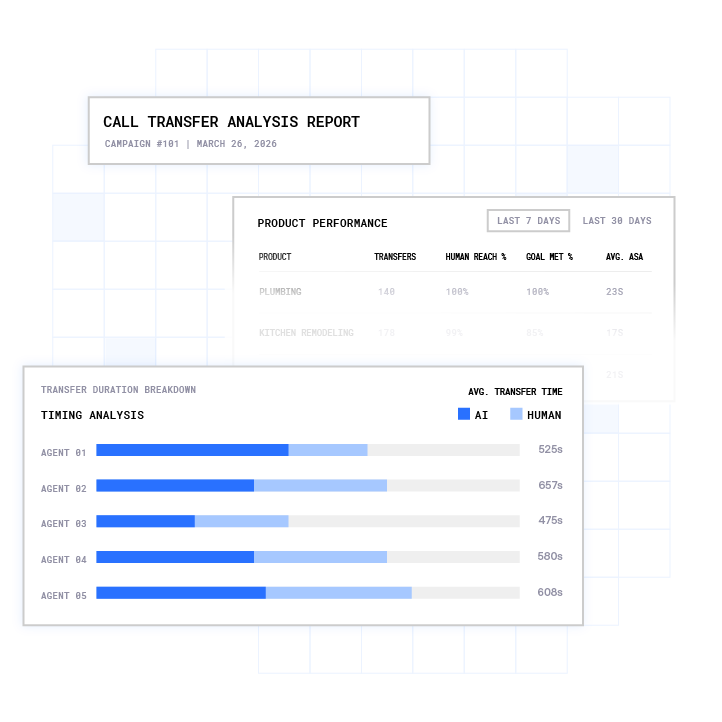
Integrated AI deployments can reduce average handle time, improve CSAT, and increase first-call resolution with fast payback periods. Achieving these outcomes requires continuous analysis of what works and what does not. Plura’s conversation intelligence layer supports this by analyzing every interaction across all channels to surface which scripts close, which objections recur, and which conversion paths win, then feeding those findings back into the workflow tuning loop.
Frequently Asked Questions
How long does it realistically take to implement contact center AI?
A focused deployment targeting one to three high-volume, low-complexity intent categories can go live in two to four weeks with a managed platform like Plura.3 A full enterprise deployment covering multiple channels, deep CRM integration, and regulated data handling typically runs 60 to 90 days from contract to full rollout. The 90-day figure in this roadmap reflects a phased approach: three weeks of discovery and prioritization, three weeks of architecture and guardrail configuration, four weeks of pilot and rollout, and two weeks of measurement and optimization. Complex intake flows, such as a 25-question health-history survey, may extend the build phase by two to four additional weeks depending on workflow logic complexity.
What prerequisites does a contact center need before deploying AI?
Four prerequisites determine whether a deployment will succeed or stall. First, a ticket or call taxonomy with consistent labels and volume data so the AI can learn from real interaction patterns instead of synthetic data. Second, documented API access to CRM, order management, and knowledge base systems; without these connections, the AI functions only as an FAQ bot. Third, a version-controlled knowledge base updated within the last 90 days, since knowledge base decay is one of the most common failure modes in AI contact center deployments. Fourth, defined escalation routing specifications that map intent types to agent skill groups. Organizations that complete these prerequisites before selecting a platform shorten implementation time and avoid the most common causes of project failure.
How does Plura support compliance for TCPA, DNC, HIPAA, and state-level regulations?
Plura’s compliance engine operates as a core layer of the platform, not a bolt-on. Every outbound contact is checked against federal and state DNC registries in real time before dial, and non-compliant numbers are blocked before the first attempt. TCPA consent records are timestamped, immutable, and exportable for audits. Quiet-hours rules apply automatically through time-zone detection, aligning campaigns with state and federal calling-window restrictions. HIPAA-aligned encryption, access controls, and audit logging cover protected health information across voice, SMS, RCS, and webchat. SOC 2, ISO, and GDPR coverage sit in the underlying infrastructure. SHAKEN/STIR caller ID verification runs on every outbound voice call. The compliance dashboard exports audit-ready reports in one click. Plura supports customer compliance; customers remain responsible for their own regulatory obligations, certifications, and the claims they make to their end users. Operators with specific compliance questions should consult qualified legal counsel.
What metrics should contact center leaders track during a 90-day AI rollout?
Leaders should start with four core metrics and expand from there. Containment rate measures the percentage of interactions fully resolved by AI without human escalation; mature deployments often target 70-90% containment, as reflected in the Phase 4 table. Hallucination rate measures the percentage of AI responses containing fabricated or ungrounded content; many teams track this trend over time rather than aiming for a specific industry target. Cost-per-contact compares AI-resolved interaction costs against the human-handled baseline; AI-resolved contacts typically run $0.50-$2.00 versus $8-$15 for human-handled contacts. Response time measures the gap between customer contact and first AI response; Plura delivers under-5-second first contact. Beyond these four, leaders should track escalation rate, first-contact resolution, and CSAT segmented by interaction type (AI-resolved versus human-resolved). One important caveat: containment rate alone can mislead. A high containment rate paired with a high repeat contact rate indicates the AI is deflecting without resolving, which is why segmentation by interaction type matters.
What makes Plura AI different from other AI contact center platforms?
Three structural differences separate Plura from Twilio-based API resellers. First, Plura is its own FCC-licensed audio bridging carrier, so voice does not route through a third-party CPaaS. Branded caller ID is issued at the carrier level, which means calls present with the company’s name rather than “Spam Likely,” and SHAKEN/STIR caller ID verification runs on every outbound call at origination. Second, Plura’s AI Voice, AI SMS, AI RCS, and AI webchat all share a single Stateful Conversation Database, so a customer who texted at 9 a.m. is the same customer when the call comes at noon and the AI continues with full context. Third, compliance controls operate inside the platform before each contact, with an immutable consent ledger, real-time DNC scrubbing, and one-click audit exports. From a buyer’s perspective, these differences translate into higher answer rates, fewer compliance gaps, and a single view of the customer across channels. Plura also runs every deployment as a continuous optimization engagement, not a build-and-hand-off project, and includes a 90-day opt-out window in every annual contract.
How does Plura handle human escalation when the AI cannot resolve an interaction?
Plura’s workflows include explicit escalation triggers configured per intent category, such as low model confidence, negative sentiment threshold, sensitive issue types like fraud or medical disclosures, high-value customer tier, and repeated resolution failure. When a trigger fires, the AI performs a warm transfer that passes the full context payload to the receiving agent, including transcript, detected intent, attempted resolutions, sentiment trajectory, and customer history. The agent sees this context in the Unified Inbox before the call connects, so customers do not repeat themselves. The warm transfer message confirms to the customer that their conversation history has been shared. Escalation routing maps intent types to agent skill groups instead of routing all escalations to a general queue, which reduces mismatches and handle time on complex interactions.
Conclusion
The four-phase 90-day roadmap forms a complete implementation arc. Discovery and Prioritization establishes the operational baseline and selects the right use cases. Architecture and Guardrails then builds the layered system with explicit compliance controls and human escalation logic. Pilot and Rollout validates performance on live interactions before expanding autonomy across channels and intents. Measurement and Optimization closes the loop with metrics that connect AI performance directly to business outcomes.
Plura’s carrier-owned infrastructure makes this roadmap operational instead of theoretical. Owning the FCC-licensed carrier stack means branded caller ID, SHAKEN/STIR caller ID verification, and real-time DNC scrubbing are handled at origination, not added later. The Stateful Conversation Database ensures every channel inherits the full memory of every prior touchpoint. Platform-level coverage for SOC 2, HIPAA, ISO, GDPR, TCPA, and DNC supports compliance at scale. The 90-day opt-out window in every annual contract keeps performance commitments active from day one. With this roadmap and infrastructure in place, the next step is matching your contact volume and channel mix to the right commercial tier. Compare Plura’s plans and rates to see which tier fits your operation.
1 Plura AI maintains SOC 2, HIPAA, ISO, and GDPR posture as part of its platform infrastructure. References to compliance frameworks in this article describe Plura’s platform capabilities and do not constitute a guarantee that any customer using Plura will themselves be compliant with applicable laws or standards. Customers remain solely responsible for their own regulatory obligations, certifications, consent management, recordkeeping, and the claims they make to their own end users. Consult qualified legal counsel for guidance specific to your use case.
2 This article describes regulatory frameworks at a general level and does not constitute legal advice. Laws and regulations vary by jurisdiction, change over time, and apply differently depending on facts and circumstances. Readers should consult qualified legal counsel before making compliance decisions.
3 Performance figures, customer outcomes, and industry statistics referenced in this article are drawn from cited third-party sources or Plura customer case studies. Individual results vary based on implementation, use case, industry, audience, and execution. Past or aggregate performance is not a guarantee of future results.
4 References to third-party products, services, companies, or research are made for informational and comparative purposes only. Plura AI is not affiliated with, endorsed by, or sponsored by any third party named in this article unless explicitly stated. Trademarks and product names referenced remain the property of their respective owners.
This article is provided for informational purposes only and reflects Plura AI’s understanding at the time of publication. Product capabilities, integrations, and specifications are subject to change. For the most current information, visit plura.ai.
This article was produced with the assistance of AI tools and reviewed by Plura AI prior to publication.