
Written by: Matt Beucler, CEO, Plura AI
Key Takeaways on 60-Second Lead Response
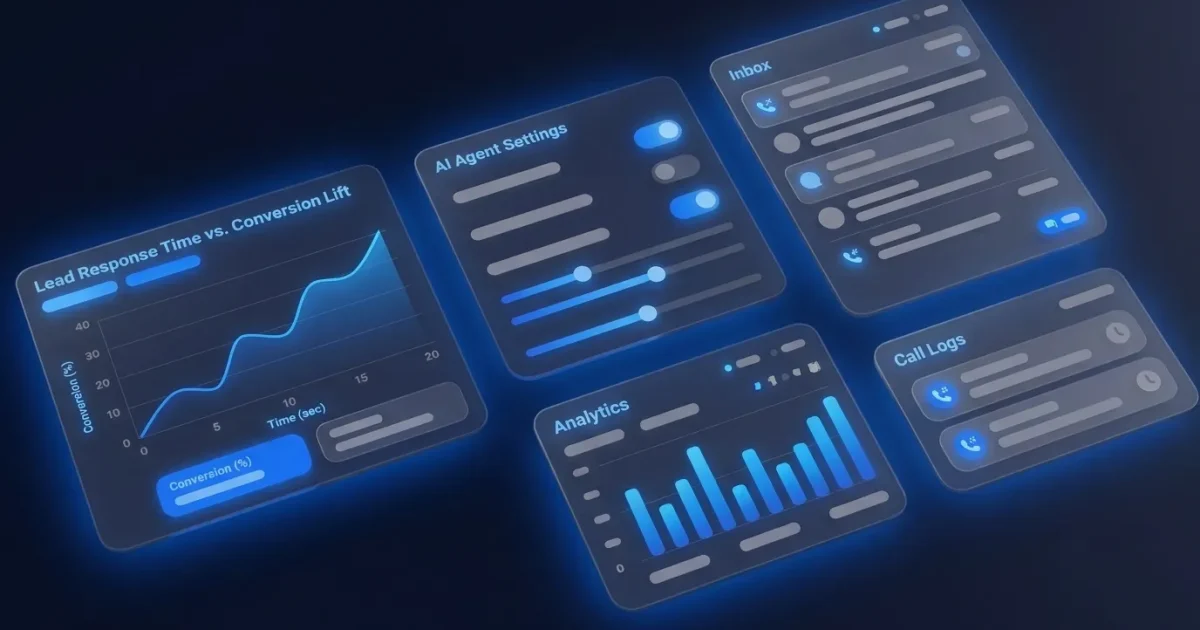
- Leads contacted within five minutes are up to 100 times more likely to connect, and a 60-second response delivers a 391% conversion lift over delayed outreach.3
- The industry median first-response time is 42 to 47 hours, with 74% of businesses missing the five-minute window entirely.3
- Plura AI’s sub-5-second AI SMS and voice workflow qualifies leads automatically, routes warm buyers to live agents, and maintains stateful cross-channel memory.
- Built-in TCPA and DNC compliance guardrails, FCC-licensed carrier infrastructure, and SHAKEN/STIR caller ID verification reduce common compliance and pickup-rate risks.1,2
- Teams ready to replace hours-long delays with instant, compliant outreach can book a live demo with Plura AI to see the workflow running on their own lead data.
Who This 60-Second Lead Response Guide Serves
This guide speaks to five buyer personas: sales-ops managers, marketing directors, agency owners, franchise operators, and C-suite executives. The operational floor is 500 daily customer interactions or $5,000 per month in paid-media spend. Below that threshold, the ROI math on a carrier-grade AI platform rarely closes. Above it, every hour of delayed follow-up becomes measurable revenue loss.
Each persona owns a different slice of the same problem: delayed lead response creates loss at every level of the organization. Sales-ops managers watch leads age in the CRM while marketing directors watch ad spend evaporate between form fill and first call. Agency owners watch account managers drown past five clients because manual follow-up does not scale, and franchise operators watch performance gaps compound across locations. C-suite executives see the aggregate effect as total cost of contact climbs while conversion rates stall.
Every persona needs the same outcome: a repeatable, compliant workflow that contacts every inbound lead in under 60 seconds, qualifies them automatically, and routes warm buyers to a live agent without manual intervention.
Why the 5-Minute Rule Drives a 391% Conversion Lift
The foundational research on speed to lead comes from Dr. James Oldroyd’s Lead Response Management Study, conducted with InsideSales.com and MIT Sloan, analyzing over 15,000 leads. Leads contacted within five minutes are 21 times more likely to qualify than those contacted after 30 minutes.3 A Velocify study of over 3.5 million leads found that calling a lead within one minute of inquiry increases conversion rates by 391% compared to later times.3
The decay curve is steep. After five minutes, conversion rates drop by over 80% from the two-to-five-minute baseline, falling to 36% at five to ten minutes, 17% at ten to thirty minutes, and 8% at thirty to sixty minutes.
The industry median sits far from five minutes. Aggregating 2026 studies including Aloware, ArtemisGTM, Optifai across 939 companies, and Blazeo across 573 businesses, B2B inbound leads show a median first response time of roughly 42 hours and an average of 47 hours. In a 2026 Blazeo study of 573 businesses, 74% missed the five-minute response window.
The revenue math is direct. Significant B2B advertising spend is lost due to non-response on inbound leads. Between 35 and 50% of all sales are won by the vendor that responds first.
The data makes the case for speed. The next step is operationalizing that speed in a way that scales. The workflow below shows how Plura closes the gap between a 42-hour median and the five-minute window that drives conversion.
Step-by-Step Workflow for 60-Second AI SMS and Voice Response
The following workflow is the configuration sequence Plura uses to deliver sub-5-second first contact on inbound leads. Each step states the objective, what to prepare, and the decision criteria that determine the path forward.
- Step 1 – Connect the lead source. Objective: route every form fill, ad click, or CRM entry into a single trigger queue with zero manual handoff. Prepare your lead sources such as web forms, landing pages, and paid-media integrations, then connect them to Plura via native integrations with HubSpot, Salesforce, Zoho, Go High Level, or Zapier. Decision criteria: if the lead source fires a webhook on submission, the trigger runs in real time. If it batches, reconfigure it to fire on each record.
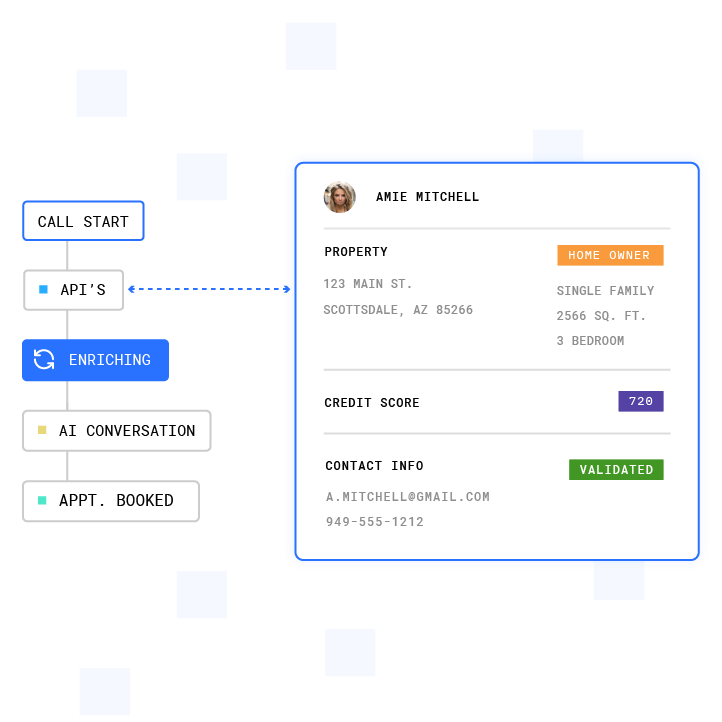
- Step 2 – Trigger the AI SMS agent in under 5 seconds. Objective: deliver the first outbound message before the lead navigates away from the confirmation page. Plura’s AI SMS agent fires on the inbound event, enriches the lead record from 30+ data sources in real time, and opens a personalized conversation thread. No human action is required. Decision criteria: if the lead submitted during quiet hours, the workflow holds and fires at the next compliant window based on the contact’s local time zone.
- Step 3 – Run AI lead qualification inside the SMS thread. Objective: determine buyer intent, budget, and timeline before any human touches the record. The lead qualification flow runs inside the message thread, asking structured questions and scoring responses against your defined criteria. Decision criteria: leads that meet qualification thresholds advance to Step 4. Leads that do not qualify enter a nurture sequence automatically.
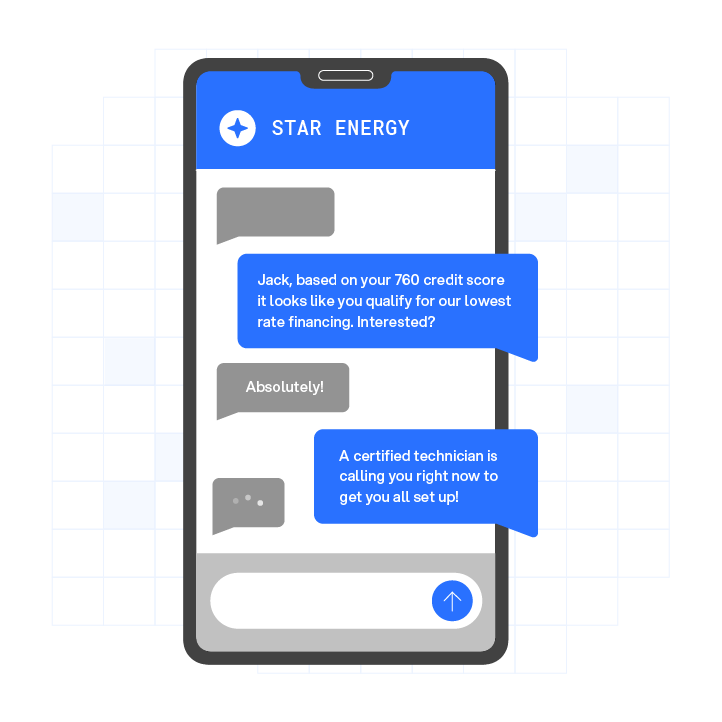
- Step 4 – Trigger the AI voice agent for qualified leads. Objective: move the conversation from text to voice at the moment of peak intent. When a lead qualifies, Plura’s AI voice agent dials the contact, references the prior SMS exchange from the stateful conversation database, and continues the conversation without asking the lead to repeat themselves. Decision criteria: if the call goes unanswered, the workflow schedules a callback sequence and continues the SMS thread.
- Step 5 – Execute live transfer to a human agent. Objective: hand a warm, context-loaded buyer to a closer at the moment the lead is ready. Plura’s live transfer routes the call to the correct human agent with a full conversation summary. The agent receives the lead’s qualification status, prior objections, and any offers made. Decision criteria: transfer triggers on a defined workflow gate such as confirmed budget, stated timeline, or explicit request to speak with a person.
- Step 6 – Log every interaction to the stateful database and CRM. Objective: ensure every downstream touchpoint inherits full context. Plura writes the complete conversation record to its Stateful Conversation Database and syncs to your CRM via CRM integration. Decision criteria: if the CRM record already exists, Plura appends. If it does not exist, Plura creates it.
- Step 7 – Enforce compliance guardrails at every step. Objective: support TCPA compliance and DNC compliance on every outbound contact without manual review. Plura checks every number against federal and state DNC registries before dial, enforces quiet-hours rules by time-zone detection, and maintains timestamped consent records. Customers remain responsible for their own compliance obligations. Plura provides infrastructure that supports those obligations. Consult qualified counsel regarding your specific regulatory requirements.
Compare plans and rates side by side at plura.ai/pricing.
Operational Frameworks for Build vs. Buy and Channel Choice
Build vs. buy matrix. Building a voice and SMS lead-response system on a foundation model API covers roughly 10% of the required work. The remaining 90% is infrastructure such as an FCC-licensed audio bridging carrier, SHAKEN/STIR caller ID verification, branded caller ID issuance, real-time DNC scrubbing, immutable TCPA consent logging, HIPAA-aligned encryption, SOC 2 controls, 50+ state rule-set enforcement, and a stateful cross-channel database. Plura’s FCC carrier license took approximately two years to obtain. Teams that choose to build should account for that timeline, the ongoing carrier maintenance cost, and the compliance engineering required before the first call goes out. Teams that choose to buy should evaluate whether the vendor owns the carrier stack or rents it from a third-party CPaaS. Vendors that rent inherit the CPaaS provider’s caller ID reputation, not their own.
Channel-selection decision tree. Use SMS as the first-touch channel when the lead submitted via a web form and has not yet engaged by phone. Use voice as the escalation channel when the lead has replied to SMS and meets qualification criteria. Use both in parallel when lead volume is high and the cost of a missed connection exceeds the cost of an additional outbound attempt. Route to a managed workflows configuration when the conversation logic requires multi-step branching, negotiation guardrails, or cross-location enforcement.
Common Lead Response Problems and Fixes
Unclear qualification criteria. If the AI is advancing unqualified leads to live transfer, the qualification gate is too broad. Tighten the scoring thresholds in the workflow node and add at least one disqualifying question. Review the first 50 transferred leads against closed-won outcomes to calibrate.
Fragmented systems. If lead data is split across multiple CRMs, ad platforms, and spreadsheets, the trigger queue will have gaps. Audit every lead source and confirm each one fires a real-time webhook. Use Plura’s integrations directory to identify native connectors before building custom middleware.
Compliance gaps. If outbound contacts are reaching numbers on DNC registries or outside quiet-hours windows, the compliance layer is not configured at the campaign level. Plura’s compliance engine enforces DNC scrubbing and quiet-hours rules by default, but campaign-level overrides must be reviewed. Customers are responsible for verifying that their consent records satisfy applicable TCPA compliance and DNC compliance standards. Consult qualified counsel for guidance specific to your campaigns.
Low pickup rates. If the AI voice agent is dialing but not connecting, the caller ID is likely presenting as unknown or flagged. Plura issues branded caller ID directly through its FCC-licensed carrier and supports SHAKEN/STIR caller ID verification on every outbound call. This setup addresses the most common cause of suppressed pickup rates at the carrier level.
Book a live demo with Plura to walk through your specific workflow configuration.
How to Measure a 60-Second Lead Response Program
Four metric categories determine whether a 60-second lead response system is working:
- Response time. Track median time from lead creation to first AI SMS sent, and separately track time from lead creation to first human-touched reply. A 4-minute median response time can hide a problematic P90, so evaluate tail latency rather than just the typical case. Target AI SMS under 5 seconds and human-reviewed reply under 15 minutes.
- Contact rate. Measure the percentage of leads that reply to the AI SMS thread and the percentage that connect on the AI voice call. If speed improves but the connect-to-qualified-conversation rate does not, the system is faster but not more effective.
- Conversion rate. Track lead-to-opportunity conversion by response-time cohort. Leads contacted within five minutes convert at about 21% versus 2.3% for a next-day reply, according to 2026 benchmark data. Use this as the baseline for your own cohort comparison.
- Compliance adherence. Monitor DNC scrub completion rate, quiet-hours enforcement rate, and consent record completeness on a per-campaign basis. Export audit-ready reports from Plura’s compliance dashboard for legal review.
Set a review cadence that matches your volume. Run a weekly audit during the first 30 days by pulling a sample of leads from each source, scoring timing against workflow targets, and comparing appointment-set outcomes against baseline. After performance stabilizes, shift to monthly reviews with a quarterly full-funnel analysis of conversion rates, pipeline velocity, and revenue attribution by lead source.
Advanced Lead Management with Plura
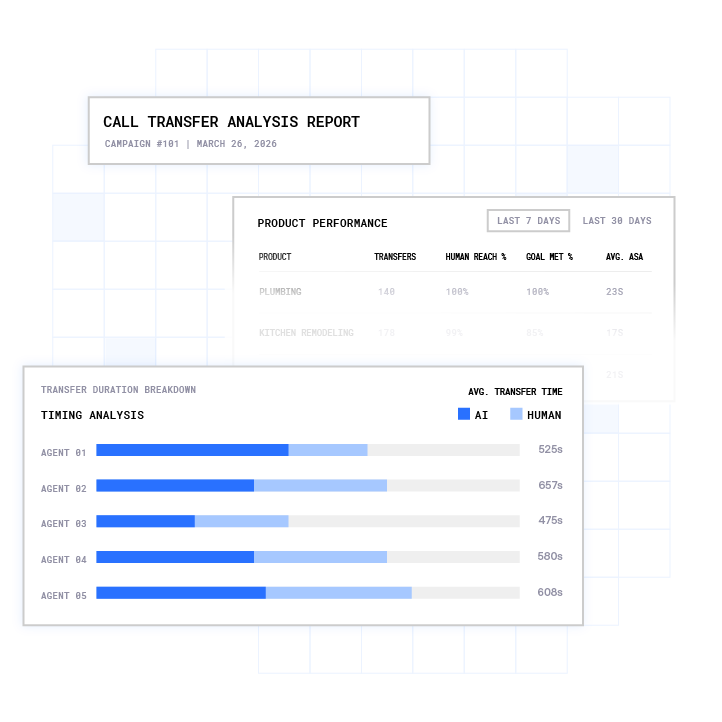
Cross-channel orchestration. Plura’s Stateful Conversation Database holds context across voice, AI SMS, RCS, and AI webchat. A lead who texts at 9 a.m. and calls at noon reaches an agent that already knows what was said. This cross-channel memory creates a continuous conversation instead of forcing the lead to repeat themselves. Conversation intelligence surfaces patterns across all channels, identifying which scripts close, which objections recur, and which routing paths produce the highest conversion rates.
Deeper automation. Plura’s no-code workflow builder supports multi-step conversation logic including BATNA-style negotiation guardrails, sensitive-data redaction, and post-call action triggers. Operators can adjust greeting nodes, qualification gates, and transfer rules without engineering involvement.
Governance and scaling. Franchise networks and multi-location operators use Plura to enforce identical greeting, qualification, and SLA across every location. Centralized dashboards track per-location metrics. System-level enforcement of scripts, DNC lists, and state regulations applies across the entire network. For pricing across multi-location deployments, Plura offers Multi, Agency, and Enterprise tiers on annual contracts with a 90-day opt-out window.
Use Plura’s ROI calculator to model the cost difference between your current lead-response operation and a Plura deployment at your specific volume.
Frequently Asked Questions
How quickly can a 60-second AI SMS and voice workflow go live?
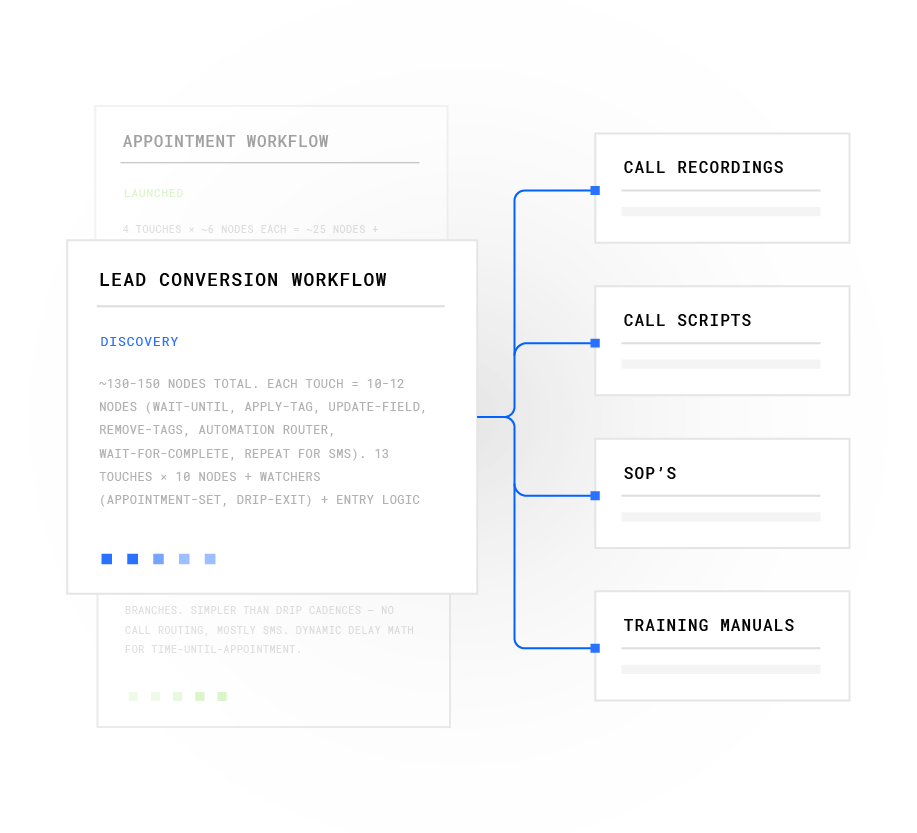
A straightforward inbound qualification flow typically deploys in days. Plura’s onboarding sequence includes a discovery audit, intake of existing scripts and call recordings, an overnight build of a conversation mockup, a review session, engineering build of the production workflow, a pilot test on a subset of real calls, and full go-live. More complex workflows with multi-step intake logic run closer to one to two months. Every annual contract includes a 90-day opt-out window.
What compliance infrastructure supports TCPA and DNC obligations?
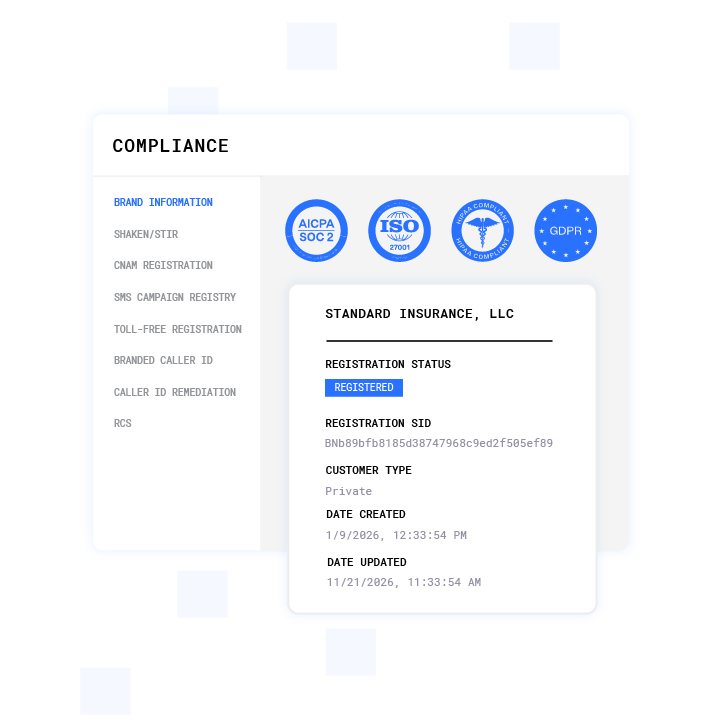
The compliance engine described in Step 7 checks every outbound contact against federal and state DNC registries before dial, enforces quiet-hours rules through time-zone detection, maintains timestamped and immutable consent records, and exports audit-ready reports on demand. Plura supports SOC 2, HIPAA, ISO certification, GDPR, SHAKEN/STIR caller ID verification, TCPA compliance, and DNC compliance.1,2 As noted throughout this guide, customers remain responsible for their own compliance obligations and should consult qualified counsel regarding their specific regulatory requirements.
What happens when the AI voice agent cannot answer a question or a lead asks to speak with a human?
Plura’s workflows include explicit escalation paths. When a lead’s response falls outside the defined workflow, the AI warm-transfers the call to a U.S. agent with a full conversation summary, flags the interaction in the Unified Inbox, or routes to a designated escalation queue. The AI does not improvise on outcomes that carry compliance or business risk. Sensitive data including protected health information and payment data is redacted at the field level.
Does Plura integrate with existing CRMs and marketing platforms?
Plura integrates with 50+ tools including HubSpot, Salesforce, Zoho, Go High Level, Make, and Zapier for CRM and automation; Cal.com, Calendly, and Google Calendar for scheduling; and Stripe, Shopify, and CheckoutChamp for payments. Every integration is listed at plura.ai/integrations. The Stateful Conversation Database syncs conversation records to the connected CRM on every interaction.
How does Plura address the “Spam Likely” problem that suppresses pickup rates?
Spam labels sit at the carrier level. Plura issues branded caller ID directly through its FCC-licensed carrier, so calls present with the company’s name rather than an unknown number. SHAKEN/STIR caller ID verification runs on every outbound call, which destination carriers use to verify legitimate origination. Most Twilio-based API resellers cannot issue branded caller ID at the carrier level because they do not own the carrier. They inherit the CPaaS provider’s caller ID reputation.
Conclusion: Closing the 42-Hour Gap with 60-Second Response
Leads go cold in minutes. The data is consistent across every major study: the five-minute window separates a 21% qualification rate from a 2.3% qualification rate, and a 60-second response produces a 391% conversion lift over a delayed one. The industry median of 42 to 47 hours is not a competitive position. It is a revenue leak.
Plura AI closes that gap with a carrier-owned AI SMS and voice workflow that delivers sub-5-second first contact, stateful cross-channel memory, live transfer to human agents, and infrastructure that supports TCPA compliance, DNC compliance, SOC 2, HIPAA, ISO certification, GDPR, and SHAKEN/STIR caller ID verification. Customers remain responsible for their own compliance obligations.
The 60-second workflow described in this guide runs today for teams handling 500+ daily interactions or $5,000+ monthly in paid-media spend.
Book a live demo with Plura and see the workflow running on your lead data.
Compare plans and rates side by side at plura.ai/pricing.
1 Plura AI maintains SOC 2, HIPAA, ISO, and GDPR posture as part of its platform infrastructure. References to compliance frameworks in this article describe Plura’s platform capabilities and do not constitute a guarantee that any customer using Plura will themselves be compliant with applicable laws or standards. Customers remain solely responsible for their own regulatory obligations, certifications, consent management, recordkeeping, and the claims they make to their own end users. Consult qualified legal counsel for guidance specific to your use case.
2 This article describes regulatory frameworks at a general level and does not constitute legal advice. Laws and regulations vary by jurisdiction, change over time, and apply differently depending on facts and circumstances. Readers should consult qualified legal counsel before making compliance decisions.
3 Performance figures, customer outcomes, and industry statistics referenced in this article are drawn from cited third-party sources or Plura customer case studies. Individual results vary based on implementation, use case, industry, audience, and execution. Past or aggregate performance is not a guarantee of future results.
This article is provided for informational purposes only and reflects Plura AI’s understanding at the time of publication. Product capabilities, integrations, and specifications are subject to change. For the most current information, visit plura.ai.
This article was produced with the assistance of AI tools and reviewed by Plura AI prior to publication.