
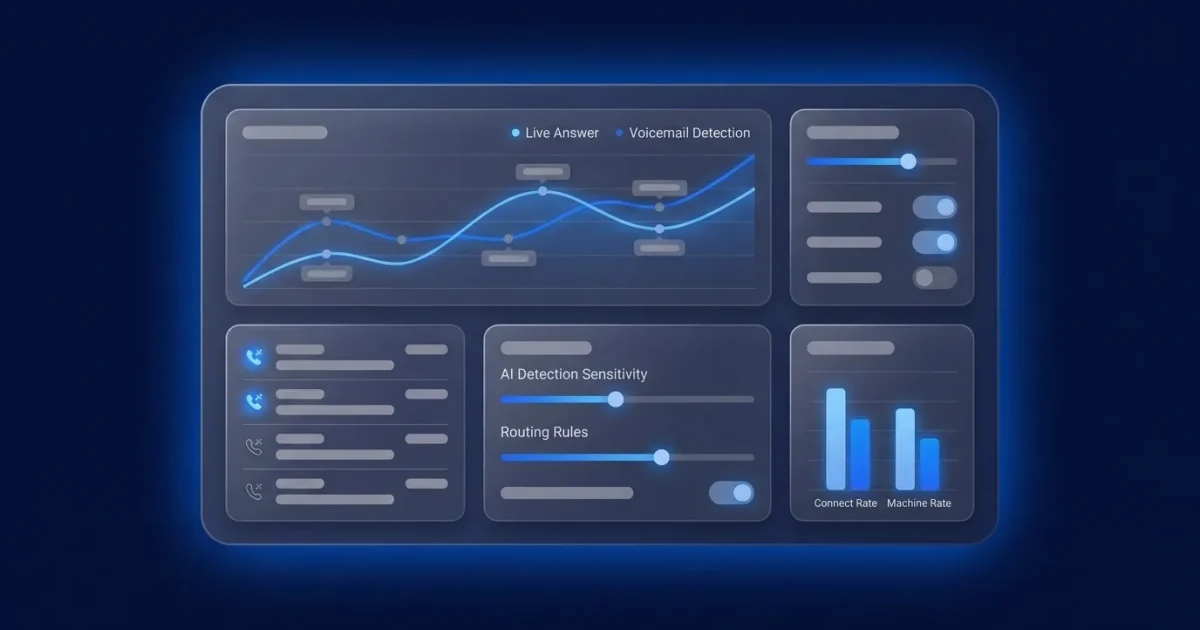
Written by: Matt Beucler, CEO, Plura AI
Key Takeaways for High-Volume Outbound Teams
- Live answer detection and voicemail detection decide whether an outbound call reaches a human or a recording, which directly affects connect rates and TCPA exposure.
- Legacy CPaaS-based dialers introduce detection delays and false positives that create dead air, drop live prospects, and increase abandoned-call risk.
- Plura AI’s AI Predictive Dialer performs detection at the FCC-licensed carrier layer, with sub-second classification, real-time DNC scrubbing, and stateful conversation memory.
- Carrier-level detection reduces latency, supports branded caller ID with A-level attestation, and applies compliance checks before the dial decision.
- Ready to cut dead air and lift live connect rates? Talk to Plura AI about carrier-owned AI detection for your outbound campaigns.
The Core Problem: Dead Air, Dropped Humans, and Compliance Exposure
Every second of dead air after a live answer reduces your connect rate. Longer AMD delays cause prospects to hang up during silence.
False positives compound the loss. When a live human is misclassified as voicemail, the system drops the call or routes it to a recording with no agent connection. That prospect is gone. According to an analysis of VICIdial AMD tuning, stock Asterisk AMD produces a 15–25% false-positive rate in VICIdial environments, while hand-tuned Asterisk thresholds can reduce that figure to 3–5%.3
Compliance risk sits on the same timing problem. The FCC’s rules on abandoned calls set limits that detection latency directly affects.2 When synchronous AMD holds a live call in silence for 3 to 5 seconds before connecting an agent, that window can create exposure under TCPA abandoned-call provisions.2 Operators should consult qualified counsel to understand how detection window length interacts with their specific TCPA obligations.2
Legacy CPaaS-based detection adds wrapper-tax latency on top. Platforms built on third-party telecom providers inherit that provider’s caller ID reputation, detection parameters, and compliance posture. None of those layers are controlled at the originating carrier level.
How Live Answer Detection Works in Practice
Live answer detection classifies an answered outbound call as a live human instead of a recorded system. The core signal is a short initial utterance followed by silence. Readymode’s documentation describes the pattern: a brief human greeting followed by a pause routes the call to an agent, while a longer recorded message triggers voicemail handling.4
The speed of this pattern recognition shapes the prospect’s experience. Systems that classify within a few hundred milliseconds can connect the agent before the pause feels unnatural. Slower detection creates the dead air that causes prospects to hang up.
Carrier-level detection has a structural advantage over CPaaS-based detection. When detection runs on the originating carrier’s infrastructure, the classification decision happens before the audio crosses extra network hops. CPaaS platforms such as Twilio-based API resellers perform AMD after audio has already crossed the originating carrier, the CPaaS network, and any additional wrapper layers.4
How Voicemail Detection Identifies Machines
Voicemail detection, often called Answering Machine Detection (AMD), classifies an answered call as a recorded system instead of a live human. DialerBee’s glossary notes that “Answering Machine Detection” is the industry-standard term used by dialer vendors and in regulatory discussions, while “voicemail detection” is a common synonym.
The classification relies on the inverse of live-answer signals. Voicemail greetings often last several seconds of continuous speech with minimal pauses. Many systems also detect a characteristic beep tone that signals the end of a voicemail greeting.
The accuracy trade-off in voicemail detection is real. Personal voicemail greetings that sound conversational, variable carrier pauses, and spam call screening features on smartphones all create edge cases that traditional timing-based AMD handles poorly. Greeting length variations and inconsistent beep behavior can degrade accuracy on certain call types.
Four Common AMD Pipelines in Modern Dialers
Modern AMD systems use one or more of four detection pipelines, often combined in a cascade architecture.
The first pipeline is temporal-feature analysis. Kumar Saurav’s 2026 arXiv paper describes a system that extracts 15 temporal features from a pre-trained neural voice activity detector and classifies them with a shallow tree-based ensemble. In production validation over 77,000 calls, this approach maintained a 0.3% false-positive rate and 1.3% false-negative rate.3 Feature importance concentrated in three temporal variables. Adding transcription keywords or beep-based features did not improve the best real-time configuration and increased latency.
The second pipeline is cadence and beep detection. Traditional AMD systems classify calls using energy and duration analysis. Human greetings are typically under 1.5 seconds followed by a pause. Voicemail greetings often last 3 to 10 seconds of continuous speech. Beep detection listens for a characteristic 1 kHz tone lasting 0.5 to 1 second that signals the end of a voicemail greeting.
The third pipeline is ML-based audio classification. A fine-tuned wav2vec2 model for voicemail detection analyzes the first two seconds of audio and reaches 72.73% accuracy on a small test set.
The fourth pipeline is LLM-based transcript classification. LiveKit’s AMD system achieves a median detection time of 840 milliseconds. The system leans toward classifying short utterances such as a one-word “hello?” as human to avoid the worst-case failure mode of misclassifying a live person.
Cascade architectures combine these pipelines. CallSphere reports approximately 96% production accuracy compared with approximately 83% for older AMD-only approaches.
Managing Live Answer vs Machine Detection in Predictive Dialers
The hello-delay problem differs from pure detection accuracy. Even a system that classifies correctly in 840 milliseconds still creates nearly a second of silence before the agent speaks.
Asynchronous AMD addresses this by connecting the call immediately and running a parallel classifier during the first 1 to 2 seconds while the agent delivers a brief opener. The system then switches behavior based on the human versus machine verdict. This approach removes dead air for live answers while preserving voicemail routing accuracy.
High-volume campaigns need a bias toward treating uncertain classifications as human. When the AMD outcome is ambiguous, treating the line as human protects revenue. A quick apology for a misfired greeting costs little, while hanging up on a buyer can lose a deal.
Ready to see how detection accuracy turns into revenue impact? Book a live demo with Plura to walk through detection configuration on a carrier-owned AI Predictive Dialer.
Predictive Dialer Economics: Connect Rate, Utilization, and Risk
Detection speed and accuracy have direct, measurable effects on outbound economics. Faster AMD detection can lift connect rates on the same calling lists.
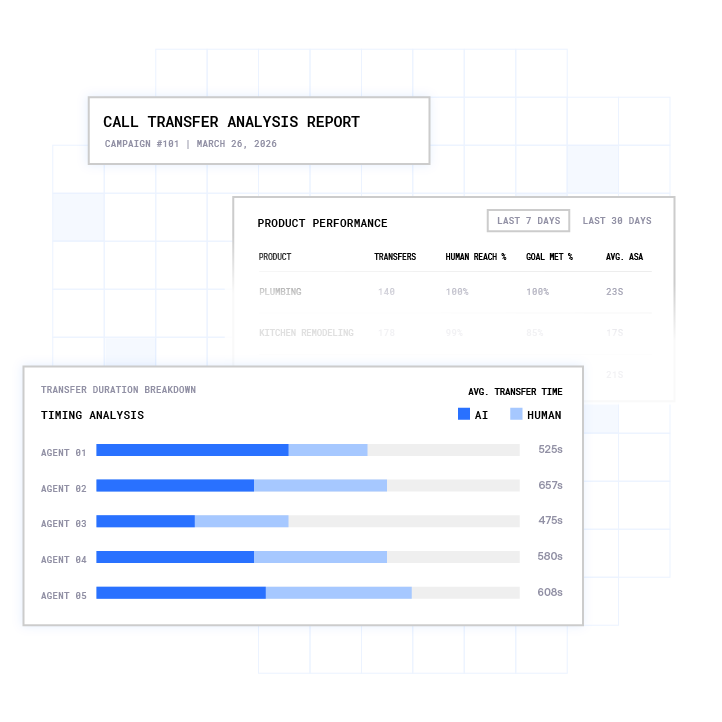
Agent utilization follows the same logic. Faster voicemail detection reduces wasted connection time per call and improves operational efficiency at scale.
Beyond efficiency gains, detection speed also shapes compliance exposure. The compliance implications discussed earlier become measurable here. Detection latency directly affects abandoned-call rate calculations under TCPA. Operators should review the applicable FCC rules with qualified counsel to understand how their specific configuration maps to regulatory limits.
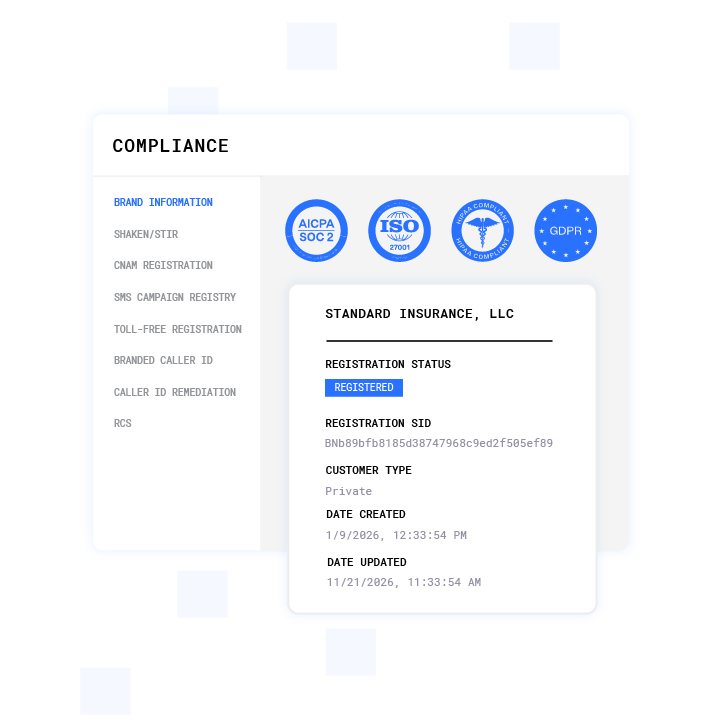
Plura supports compliance by enforcing real-time DNC scrubbing and TCPA-litigator list filtering before every dial, and by maintaining immutable consent records. Customers remain responsible for their own regulatory obligations.
Run your numbers through Plura’s calculator to check your ROI in real time.3
Why Carrier-Level Detection Beats CPaaS Wrappers
The structural difference between carrier-owned detection and CPaaS-based detection is the point in the call path where classification happens. CPaaS platforms such as Twilio-based API resellers perform AMD after audio has already crossed the originating carrier, the CPaaS network, and any additional wrapper layers.
Plura AI operates as an FCC-licensed audio bridging carrier. Detection runs on Plura’s own infrastructure, not on a third-party CPaaS. This structure yields three operational advantages that CPaaS-based platforms cannot match:
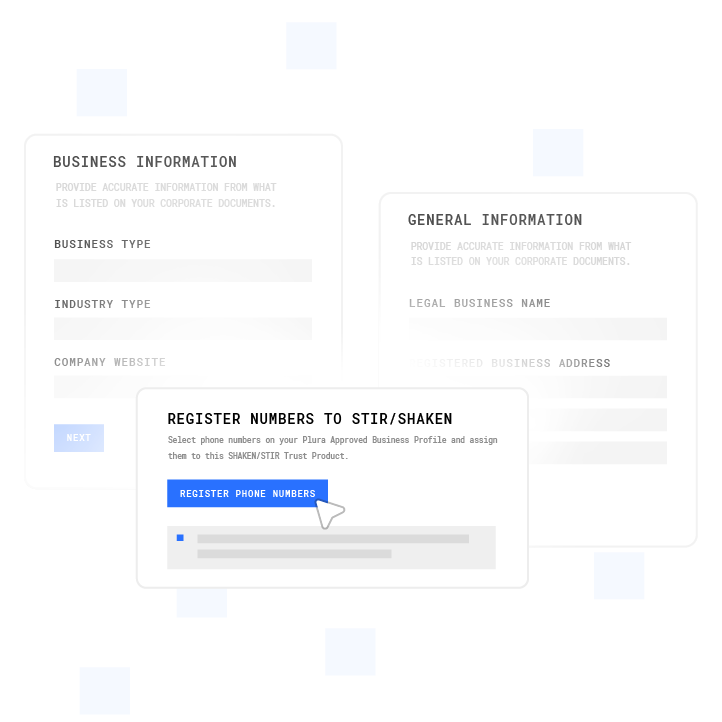
- Branded caller ID at origination. Plura issues branded caller ID directly through its FCC-licensed carrier. STIR/SHAKEN A-level attestation must be signed by the originating service provider rather than by the dialer or CPaaS platform.1 Attestation levels B and C are blocked from branded display on major U.S. carriers. Platforms that rent from a CPaaS inherit that CPaaS’s attestation level and caller ID reputation, not their own.
- Real-time DNC scrubbing before dial. Plura’s compliance engine checks every outbound contact against federal and state DNC registries before the call is placed. CPaaS-based platforms often bolt DNC scrubbing on after the fact, outside the carrier layer, which creates a gap between the dial decision and the compliance check.
- Stateful conversation memory across channels. Plura’s Stateful Conversation Database persists every interaction across voice, SMS, RCS, and webchat, keyed to a customer token. An AI agent that texted a lead at 9 a.m. can pick up the call at noon already knowing what was said, what was offered, and what objections were raised. CPaaS-based detection systems typically operate on a per-call basis with no cross-channel memory.
Spam labeling is a carrier-level problem that needs a carrier-level solution. When a business number gets spam-labeled by carriers, answer rates can drop by 40 to 60 percent because calls are flagged before the phone rings. Carrier-level caller ID reputation systems from AT&T/Hiya, Verizon/TNS, and T-Mobile/First Orion evaluate behavioral signals such as sudden call-volume spikes, very short average call duration, and low answer rates to decide whether to mark a number as suspected spam. Plura remediates spam labels at the carrier level and communicates with Apple’s iOS 26 call-screening layer so calls present with the company’s name and the reason for the call.
Platforms that rent from a CPaaS cannot issue branded caller ID at the carrier level, cannot remediate spam labels at origination, and cannot enforce DNC scrubbing before the dial decision. Those gaps first appear in pickup rate, then in compliance posture, and finally in conversion.
Want to see carrier-level detection in action? Schedule a walkthrough of Plura’s outbound campaign configuration and see the difference in real time.
Frequently Asked Questions
What is the difference between live answer detection and voicemail detection?
Live answer detection classifies an answered call as a live human based on a short initial utterance followed by silence. Voicemail detection classifies an answered call as a recorded system based on longer continuous speech with minimal pauses, or by detecting a characteristic beep tone at the end of a voicemail greeting. Both are outputs of the same AMD pipeline. The classification determines whether the call routes to an agent or triggers a voicemail-handling workflow.
How does answering machine detection work in an AI predictive dialer?
Modern AI predictive dialers use one or more detection pipelines in sequence. The first pass typically uses temporal-feature analysis or cadence-based heuristics to classify obvious cases in under 500 milliseconds. Ambiguous cases escalate to a second pass using ML-based audio classification or LLM-based transcript analysis. The final verdict routes the call to an agent for a live answer or triggers a voicemail drop or disconnect for a machine. Asynchronous implementations connect the agent immediately and run the classifier in parallel, which removes dead air for live answers while preserving voicemail routing accuracy.
What false-positive rate should contact center operators target for AMD?
A false positive in AMD occurs when a live human is misclassified as voicemail, which causes the call to be dropped or routed to a recording with no agent connection. That prospect is permanently lost. Purpose-built AI AMD systems trained on large, diverse datasets of real call audio often achieve false-positive rates of 1 to 3 percent, compared to the 15 to 25 percent baseline for stock Asterisk AMD discussed earlier. Operators running high-value lists should prioritize false-positive rate over raw detection speed, because each misclassified live human represents a lost sales opportunity.
Why does carrier-level AMD outperform CPaaS-based AMD?
Carrier-level AMD runs on the originating carrier’s infrastructure and classifies calls before audio traverses additional network hops. CPaaS-based AMD adds latency at every wrapper layer between the carrier and the detection engine, which widens the dead-air window for live answers and reduces audio fidelity available for classification. Beyond detection speed, carrier-level platforms can issue branded caller ID with A-level STIR/SHAKEN attestation signed at origination, enforce real-time DNC scrubbing before the dial decision, and remediate spam labels at the carrier layer. CPaaS-based platforms inherit the CPaaS’s caller ID reputation and attestation level, and often attach compliance checks after the fact.
How does stateful conversation memory improve live answer outcomes?
Stateful conversation memory does not change the AMD classification itself. It shapes what happens after a live answer is detected. In platforms without cross-channel memory, a detected live answer connects to an agent who has no context about prior interactions with that prospect.
In Plura’s architecture, every prior touchpoint across voice, SMS, RCS, and webchat is stored in a Stateful Conversation Database keyed to the customer’s phone number, email, or ID. When a live answer is detected, the AI agent already knows what was offered, what objections were raised, and what qualification status was assigned in prior conversations. This context shortens the time required to re-establish rapport and increases the probability that the live connection converts.
Conclusion: Carrier-Owned Detection Drives Measurable ROI
Live answer detection and voicemail detection create very different operational outcomes. The detection pipeline, latency, false-positive rate, and infrastructure layer where classification runs all influence whether a detected live answer becomes a conversation or a dropped prospect.
Legacy CPaaS-based AMD can produce higher false-positive rates and several seconds of dead air, with no carrier-level control over branded caller ID or spam label remediation. Purpose-built AI AMD running on a carrier-owned stack often reaches false-positive rates of 1 to 3 percent, sub-second classification, and detection decisions made before audio crosses additional network hops.
Plura AI’s AI Predictive Dialer performs detection at the FCC-licensed carrier layer, combines it with real-time DNC scrubbing, branded caller ID issued at origination, and a Stateful Conversation Database that holds context across every channel. The result is a system where each live answer detected becomes a conversation the agent is already prepared to have.
Run your numbers through Plura’s calculator to check your ROI in real time.
1 Plura AI maintains SOC 2, HIPAA, ISO, and GDPR posture as part of its platform infrastructure. References to compliance frameworks in this article describe Plura’s platform capabilities and do not constitute a guarantee that any customer using Plura will themselves be compliant with applicable laws or standards. Customers remain solely responsible for their own regulatory obligations, certifications, consent management, recordkeeping, and the claims they make to their own end users. Consult qualified legal counsel for guidance specific to your use case.
2 This article describes regulatory frameworks at a general level and does not constitute legal advice. Laws and regulations vary by jurisdiction, change over time, and apply differently depending on facts and circumstances. Readers should consult qualified legal counsel before making compliance decisions.
3 Performance figures, customer outcomes, and industry statistics referenced in this article are drawn from cited third-party sources or Plura customer case studies. Individual results vary based on implementation, use case, industry, audience, and execution. Past or aggregate performance is not a guarantee of future results.
4 References to third-party products, services, companies, or research are made for informational and comparative purposes only. Plura AI is not affiliated with, endorsed by, or sponsored by any third party named in this article unless explicitly stated. Trademarks and product names referenced remain the property of their respective owners.
This article is provided for informational purposes only and reflects Plura AI’s understanding at the time of publication. Product capabilities, integrations, and specifications are subject to change. For the most current information, visit plura.ai.
This article was produced with the assistance of AI tools and reviewed by Plura AI prior to publication.