
Written by: Matt Beucler, CEO, Plura AI
Key Takeaways for Live Transfer Programs
- Live transfers work when prospects clear four strict qualification gates before any handoff occurs.
- A warm three-way introduction under 30 seconds preserves context and prevents prospects from repeating details.
- Every transferred contact should carry a timestamped, auditable TCPA consent record to reduce per-call risk exposure.
- Tracking connect rate, repeat-explanation rate, and transfer-to-close conversion shows exactly where the funnel breaks.
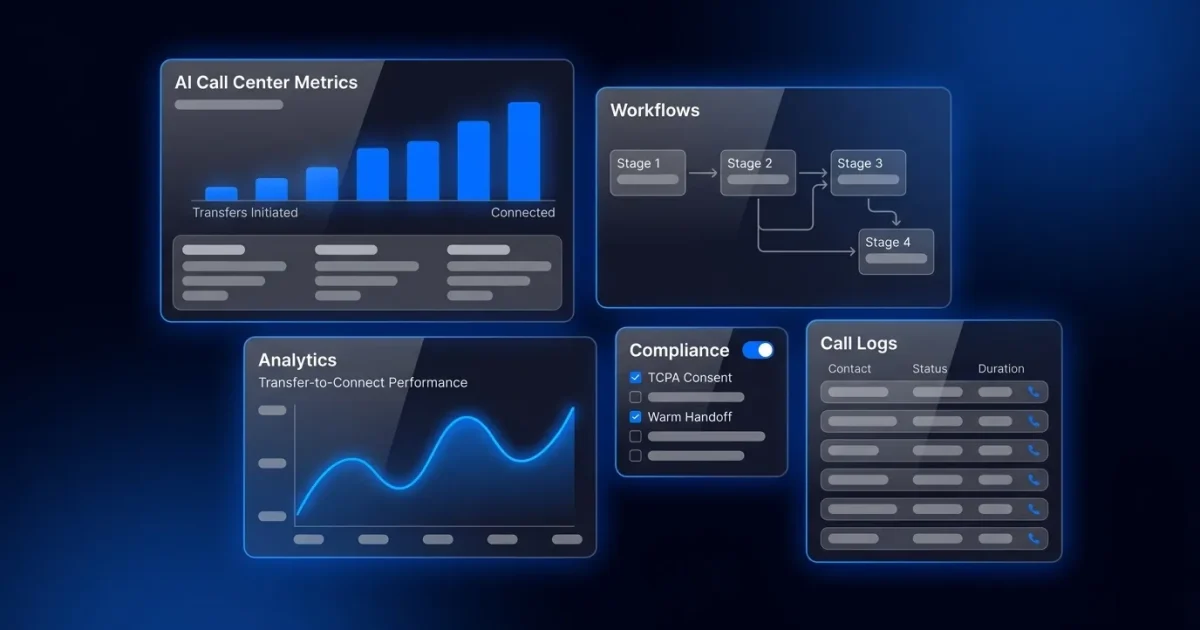
- Plura AI automates the entire qualification-to-warm-transfer workflow on its FCC-licensed carrier; see the full workflow in a live session.
Stage 1: Qualification Rules Before Any Transfer
Stage 1 confirms that a prospect meets every buyer criterion before any transfer starts. Transferring unqualified leads wastes closer capacity, inflates cost per acquisition, and trains receiving agents to distrust inbound handoffs.
Qualification gates for live transfer programs typically cover four decision criteria:
- Intent confirmation: the prospect has expressed a specific, actionable interest in the product or service.
- Eligibility check: the prospect meets product, geographic, or demographic requirements.
- Timing: the prospect is available to speak with a closer immediately or within a defined window.
- Consent status: a valid, documented consent record exists for this contact before any automated outreach.
Only prospects who clear all four gates proceed. Live transfer programs targeting 90% or higher qualification accuracy consistently outperform those with vague or inconsistently applied criteria.
Plura AI’s lead qualification layer enriches every contact in real time using 30-plus data sources during the conversation itself. Qualification decisions rely on current intent signals rather than stale list data. Leads that fail any gate are flagged for nurture instead of transfer, which preserves closer time for prospects who are actually ready.
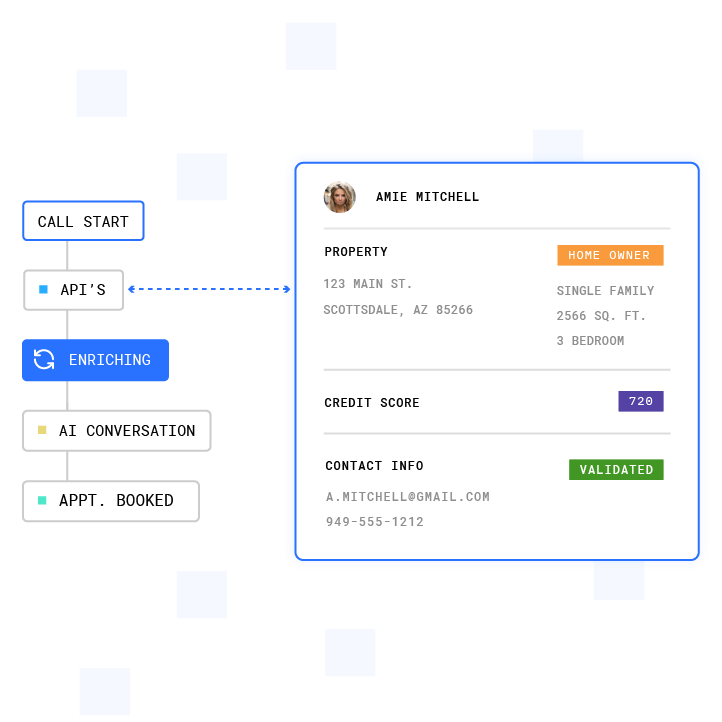
See how Plura’s real-time enrichment layer qualifies leads during the conversation itself.
Stage 2: Warm Three-Way Intro Script in Under 30 Seconds
Stage 2 bridges the qualified prospect and the receiving agent without dead air, context loss, or a restart of the conversation. Warm transfers can reduce customer abandonment compared to cold transfers, and transfers produce customer satisfaction scores 12% lower compared to calls that are not transferred.4
Speed to lead drives this stage. Leads contacted within one minute are 391% more likely to convert than those contacted after 24 hours.3 The warm intro must move quickly to capture that intent.
The internal briefing to the receiving agent covers four points in under 30 seconds:
- Caller name and account or reference ID.
- Reason for the call in one sentence.
- Qualification criteria already confirmed.
- What needs to happen next.
A sample internal briefing script:
“Hi [Agent Name], I have [Prospect First Name] on the line from [City/State]. They confirmed interest in [Product], meet all eligibility criteria, and are ready to discuss [next step]. Connecting now.”
The prospect hears a parallel expectation-setting message:
“[Prospect Name], I am connecting you now with [Agent Name], who handles [Product]. I have shared your details so you will not need to repeat anything. One moment.”
Plura’s text-to-call workflow automates this entire sequence. The AI agent conducts the qualification conversation over SMS, confirms intent, then initiates the voice bridge and delivers a structured pre-briefing to the human closer before the three-way connection completes. The full handoff runs in under 60 seconds on Plura’s own FCC-licensed carrier. Before any of this runs at scale, every contact needs a valid consent record and a clean status check, which leads directly into the compliance layer.
Stage 3: TCPA Consent and Compliance Checks Before Handoff
Stage 3 confirms that a valid, documented consent record exists for every contact before the transfer is accepted. TCPA (Telephone Consumer Protection Act, 47 U.S.C. § 227) violations can cost $500 to $1,500 per call or text.2 Leaders should consult qualified legal counsel regarding their organization’s specific TCPA obligations.
A defensible consent record for live transfers should document the following, as described in 47 C.F.R. § 64.1200:2
- Consumer’s full name and specific phone number.
- Date and timestamp of opt-in.
- Exact disclosure text naming the authorized seller.
- Consent mechanism (checkbox, recorded verbal confirmation, or E-SIGN Act-compliant electronic signature).
- IP address or session identifier for web opt-ins.
- Statement that consent is not a condition of purchase.
The checklist below covers four operational steps that Plura’s compliance infrastructure supports at the platform level:
| Step | Action | Plura Platform Support |
|---|---|---|
| Real-time DNC scrub | Check number against federal and state DNC registries before every dial. 28 U.S.C. § 1658 establishes a four-year statute of limitations for civil actions arising under Acts of Congress but imposes no record-retention requirements for scrub logs or any other documents. | Automated pre-dial scrub on every outbound contact, with non-compliant numbers blocked before first attempt. |
| Consent timestamp verification | Confirm a consent record exists with timestamp, source URL, and IP address before accepting transfer. The consent trail should be durable and auditable, not only a CRM field. | Immutable consent ledger with timestamped records attached to every contact token. |
| Quiet-hours enforcement | Restrict outbound contacts to 8 a.m. to 9 p.m. in the recipient’s local time zone. TCPA describes time-of-day rules that are applied using real-time number intelligence, not area code alone. | Automatic time-zone detection that enforces calling windows on every campaign. |
| Audit export | Generate exportable consent and call records for legal review or regulatory inquiry on demand. | One-click audit-ready report export from the compliance dashboard. |
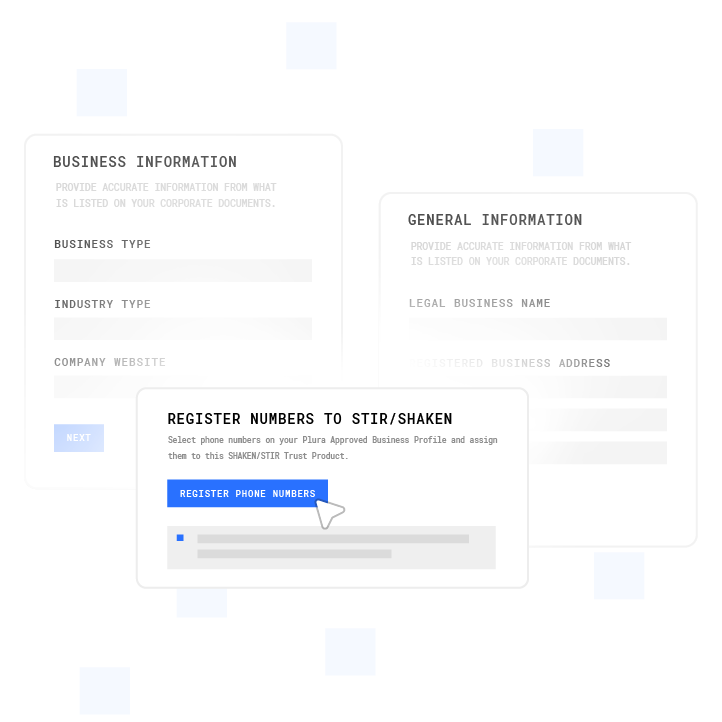
Plura’s compliance infrastructure supports TCPA compliance, DNC compliance, SHAKEN/STIR caller ID verification, SOC 2, HIPAA, ISO certification, and GDPR.1 These capabilities operate at the platform level, and operators remain responsible for their own regulatory obligations and downstream compliance posture.
Stage 4: Tracking Transfer-to-Connect Performance
Stage 4 measures whether the transfer reached a live conversation and identifies where the funnel breaks. Without this data, teams adjust qualification and intro flows without knowing which change actually improves outcomes.
Three decision criteria govern this stage, and each one isolates a different failure point in the transfer funnel:
- If connect rate falls below 90%, investigate agent availability, hold time, and transfer routing before adjusting qualification criteria. This pattern usually signals an operational capacity issue, not a lead-quality problem.
- If repeat-explanation rate rises above 10%, the briefing script or context-passing mechanism is failing, not the qualification gate. Prospects are qualified, but their context is not reaching the closer.
- If transfer-to-close conversion stalls, review closer scripts and objection-handling cadences rather than tightening qualification thresholds further. Qualified leads are reaching closers but not converting, which points to sales execution.
Typical connect rates for live transfer programs fall in the 18–24% range according to reported campaign data.3 Live transfers are usually billed only on connected calls that last a qualifying duration.
Metrics Dashboard for Live Transfer Programs
Three core metrics define a functional live transfer dashboard. Each metric maps to a specific stage failure when it moves in the wrong direction.
Connect Rate is the percentage of initiated transfers that result in a live conversation between the prospect and the receiving agent. Transfer acceptance rate and qualification accuracy also matter for live transfer programs. A declining connect rate usually points to agent availability gaps or routing failures, not lead quality.
Repeat-Explanation Rate is the percentage of transferred calls where the prospect restates their issue or qualification details to the receiving agent. 76% of customers expect companies to understand their needs and context without requiring repetition.3 A rising repeat-explanation rate indicates that the briefing script or context-passing mechanism is not functioning.
Transfer-to-Close Conversion is the percentage of accepted transfers that result in a completed sale or desired outcome. Industry benchmarks for live-transfer leads in insurance place lead-to-sale conversion at 15–30%, with final-expense live transfers achieving 18–30%.3
Plura’s AI predictive dialer and power dialer surface all three metrics in a unified dashboard alongside call transcripts and intent signals from Plura’s conversation intelligence layer. Every metric is keyed to the same contact token that carries consent records, qualification status, and prior conversation history. Operators can diagnose funnel leaks without switching between tools.
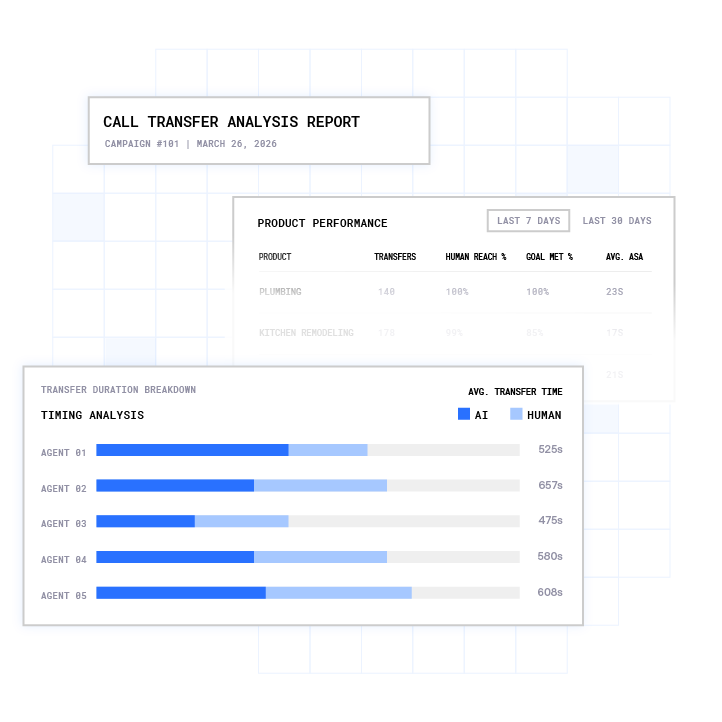
Review these live transfer metrics inside Plura using your own program data.
Frequently Asked Questions
What are the 4 stages of a proper live transfer?
The four stages are qualification threshold confirmation, warm three-way introduction, TCPA consent verification, and transfer-to-connect rate tracking. Stage 1 confirms that the prospect meets every buyer criterion before any handoff is initiated. Stage 2 delivers a structured briefing to the receiving agent in under 30 seconds while setting expectations for the prospect. Stage 3 verifies that a valid, documented consent record exists and that the number has been scrubbed against DNC registries. Stage 4 measures whether the transfer reached a live conversation and tracks connect rate, repeat-explanation rate, and transfer-to-close conversion to identify where the funnel breaks.
What is a warm transfer?
A warm transfer is a call handoff in which the originating agent or AI system briefs the receiving agent before completing the connection. The briefing covers the caller’s name, reason for the call, qualification status, and what needs to happen next. The prospect is placed on a brief hold while this briefing occurs, then both parties are connected on a three-way call. The originating agent confirms the connection is live before dropping off. Warm transfers preserve conversation context, reduce the need for the prospect to repeat information, and often produce higher customer satisfaction scores than cold transfers, where the originating agent disconnects immediately after initiating the handoff with no briefing.
What does live transfer mean?
A live transfer is the real-time handoff of a qualified prospect from one party to another while the prospect is actively on the phone or in a conversation. In high-volume sales and contact-center environments, live transfers typically move a prospect from a qualification agent or AI system to a human closer. The defining characteristic is that the prospect is already engaged and has expressed intent, which distinguishes a live transfer from a callback or a scheduled appointment. Because the prospect is present and ready, live transfers usually carry higher conversion potential than outbound dials to cold or aged lists.
What is a cold transfer?
A cold transfer, also called a blind transfer, occurs when the originating agent routes the call to another party and disconnects immediately, without briefing the receiving agent or introducing the prospect. The receiving agent has no prior context about the caller’s identity, issue, or qualification status. Cold transfers can work for straightforward wrong-department routing or high-volume triage scenarios where speed takes priority over continuity. For sales handoffs, escalations, or any call where the prospect has already shared qualifying information, cold transfers create friction because the prospect must restart the conversation from the beginning.
What are the best practices for transferring customers?
Best practices for transferring customers cover five operational areas. First, qualify before transferring, and send only prospects who meet every defined criterion to a closer. Second, always ask permission before placing a caller on hold and explain where they are being sent and why. Third, deliver a structured briefing to the receiving agent covering caller name, reason for call, qualification status, and next step, while keeping the briefing under 30 seconds. Fourth, verify that a valid consent record exists and that the number has been scrubbed against DNC registries before any automated outreach. Fifth, confirm the connection is live before the originating agent or AI system drops off, and maintain a fallback plan if the transfer fails.
What are safe transfer techniques?
Safe transfer techniques address both the customer experience and the compliance posture of the handoff. On the experience side, safe techniques include setting hold-time expectations before placing the caller on hold, delivering a warm briefing to the receiving agent, and confirming the connection before disconnecting. On the compliance side, safe techniques include verifying that a timestamped consent record exists for the contact, confirming the number has been scrubbed against federal and state DNC registries within the relevant window, enforcing quiet-hours rules based on the recipient’s local time zone, and retaining all consent and call records in an auditable format. Operators should consult qualified legal counsel regarding their specific obligations under TCPA and applicable state regulations.
Conclusion: Turning Live Transfers into a Reliable Revenue Channel
Live transfers drop revenue when any one of the four stages breaks down. Unqualified leads waste closer time. Slow or context-free intros push prospects to competitors. Missing consent records create per-call liability. Without connect-rate tracking, operators cannot distinguish a qualification problem from a routing problem.
Plura AI automates the full qualification-to-warm-transfer workflow on its own FCC-licensed carrier. The AI qualifies leads over AI SMS, initiates the voice bridge, delivers a structured briefing to the receiving agent, and completes the handoff in under 60 seconds with full conversation memory intact. The compliance infrastructure described in Stage 3 keeps consent records, DNC scrub logs, and call transcripts in an immutable, audit-ready ledger. Connect rate, repeat-explanation rate, and transfer-to-close conversion surface in a unified dashboard alongside every other channel metric.
Run your numbers through Plura’s calculator to check your ROI in real time.
Compare plans and rates side by side at plura.ai/pricing.
Watch the qualification-to-handoff sequence run live on your lead type.
1 Plura AI maintains SOC 2, HIPAA, ISO, and GDPR posture as part of its platform infrastructure. References to compliance frameworks in this article describe Plura’s platform capabilities and do not constitute a guarantee that any customer using Plura will themselves be compliant with applicable laws or standards. Customers remain solely responsible for their own regulatory obligations, certifications, consent management, recordkeeping, and the claims they make to their own end users. Consult qualified legal counsel for guidance specific to your use case.
2 This article describes regulatory frameworks at a general level and does not constitute legal advice. Laws and regulations vary by jurisdiction, change over time, and apply differently depending on facts and circumstances. Readers should consult qualified legal counsel before making compliance decisions.
3 Performance figures, customer outcomes, and industry statistics referenced in this article are drawn from cited third-party sources or Plura customer case studies. Individual results vary based on implementation, use case, industry, audience, and execution. Past or aggregate performance is not a guarantee of future results.
4 References to third-party products, services, companies, or research are made for informational and comparative purposes only. Plura AI is not affiliated with, endorsed by, or sponsored by any third party named in this article unless explicitly stated. Trademarks and product names referenced remain the property of their respective owners.
This article is provided for informational purposes only and reflects Plura AI’s understanding at the time of publication. Product capabilities, integrations, and specifications are subject to change. For the most current information, visit plura.ai.
This article was produced with the assistance of AI tools and reviewed by Plura AI prior to publication.