
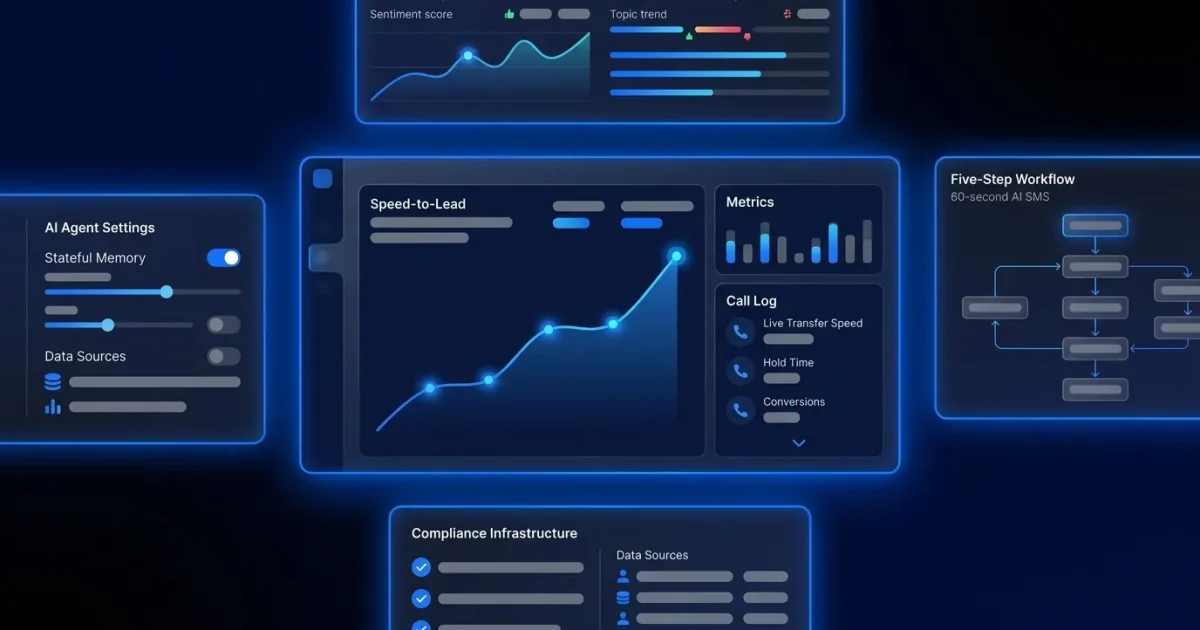
Written by: Matt Beucler, CEO, Plura AI
Live Transfer Speed-to-Lead: What Matters Most
- Live transfer speed to lead tracks the seconds between inquiry and live rep connection. This runs far faster than the 47-hour industry average for standard speed-to-lead.
- AI SMS qualification within 5 seconds, followed by instant voice handoff, removes hold time and can lift conversion rates by up to 391%.
- A five-step Plura AI workflow captures, qualifies, confirms intent, transfers live, and logs every interaction in a stateful database for clean, consistent follow-up.
- Hold time disappears because prospects confirm readiness by SMS before the call bridge opens, so reps pick up on the first ring with full context.
- Teams ready to cut response time from hours to seconds can see how Plura AI reshapes their lead workflow in a single walkthrough.
Speed-to-Lead Benchmarks Across Standard, Live Transfer, and Plura AI
Three distinct approaches to speed-to-lead produce very different performance levels for high-volume teams. Standard speed-to-lead averages more than 47 hours across 939 B2B companies. Live transfer targets real-time delivery under 2 minutes with near-100% contact rate through live handoff. Plura AI reaches first AI SMS contact in under 5 seconds. Responding within 60 seconds lifts conversions by 391% with zero hold time because AI SMS qualification finishes before voice handoff.3 Manual or form-based follow-up lacks cross-channel memory, and real-time qualification still carries hold-time and context-loss risk. Plura combines AI SMS and AI voice agent live transfer on an owned FCC-licensed carrier with stateful cross-channel memory.
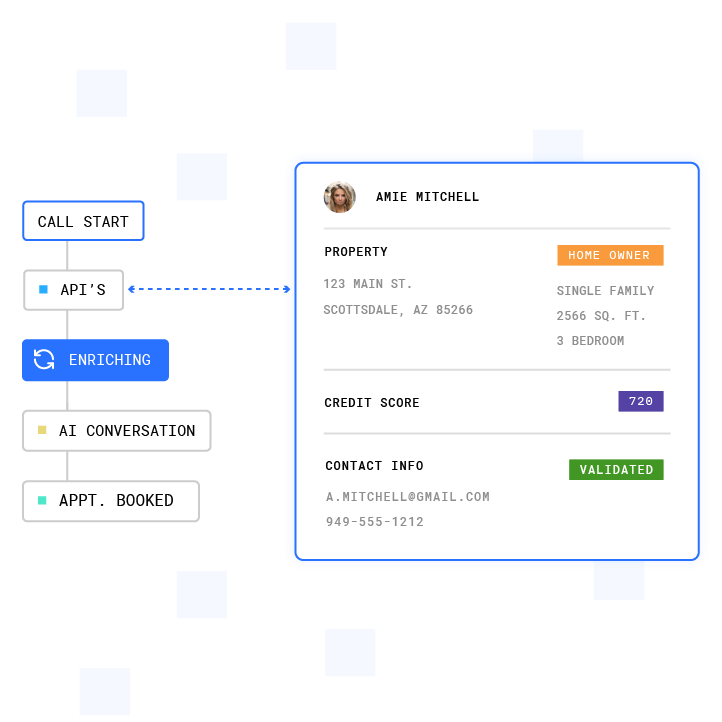
Five-Step Workflow to Improve Speed-to-Lead
High-volume operators improve speed-to-lead by moving qualification into the seconds before a rep picks up. The five steps below map directly to platform actions inside Plura.
- Capture the lead and trigger AI SMS within 5 seconds. The moment a form submission, ad click, or inbound signal arrives, Plura fires an outbound AI SMS to the prospect. Organizations using AI for speed to lead see response times drop from hours to seconds and connection rates rise by 3x to 5x.3 The trigger fires while the prospect is still on the landing page, before attention shifts.
- AI SMS qualifies using real-time data enrichment. Plura’s AI SMS agent pulls from more than 30 data sources during the live conversation, including IP data, contact validation, intent signals, and business firmographics.3 Plura supports real-time AI lead scoring across voice, SMS, RCS, and webchat, with cost per qualified lead typically between $25 and $60.3 No batch job runs later, and no post-hoc list scoring is required.
- AI SMS confirms intent and schedules voice handoff. Once the qualification criteria are met, the AI SMS agent confirms the prospect’s readiness and signals the platform to start a voice connection. Platforms that qualify by SMS before advancing to a call ensure only prospects meeting predefined criteria receive a call booking. This step removes the hold-time risk that causes live transfer drop-off after 60 to 120 seconds on hold.
- System initiates live transfer to an available rep with full context. Plura’s FCC-licensed carrier bridges the prospect directly to a sales rep. The rep receives the full SMS conversation history, qualification outcome, and enrichment data before the call connects. AI voice agents execute warm transfers automatically by capturing full caller context and delivering it to the receiving agent before pickup. Teams reach warm-transfer quality at cold-transfer speed, with no briefing step and no hold music.
- Stateful Conversation Database logs every channel interaction for future touches. Every SMS exchange and voice call writes to Plura’s Stateful Conversation Database, keyed to the prospect’s phone number or contact ID. A rep who calls back at noon already knows what the AI discussed at 9 a.m. True omnichannel voice and SMS require a shared real-time data layer so the agent starts mid-conversation rather than with a cold open.
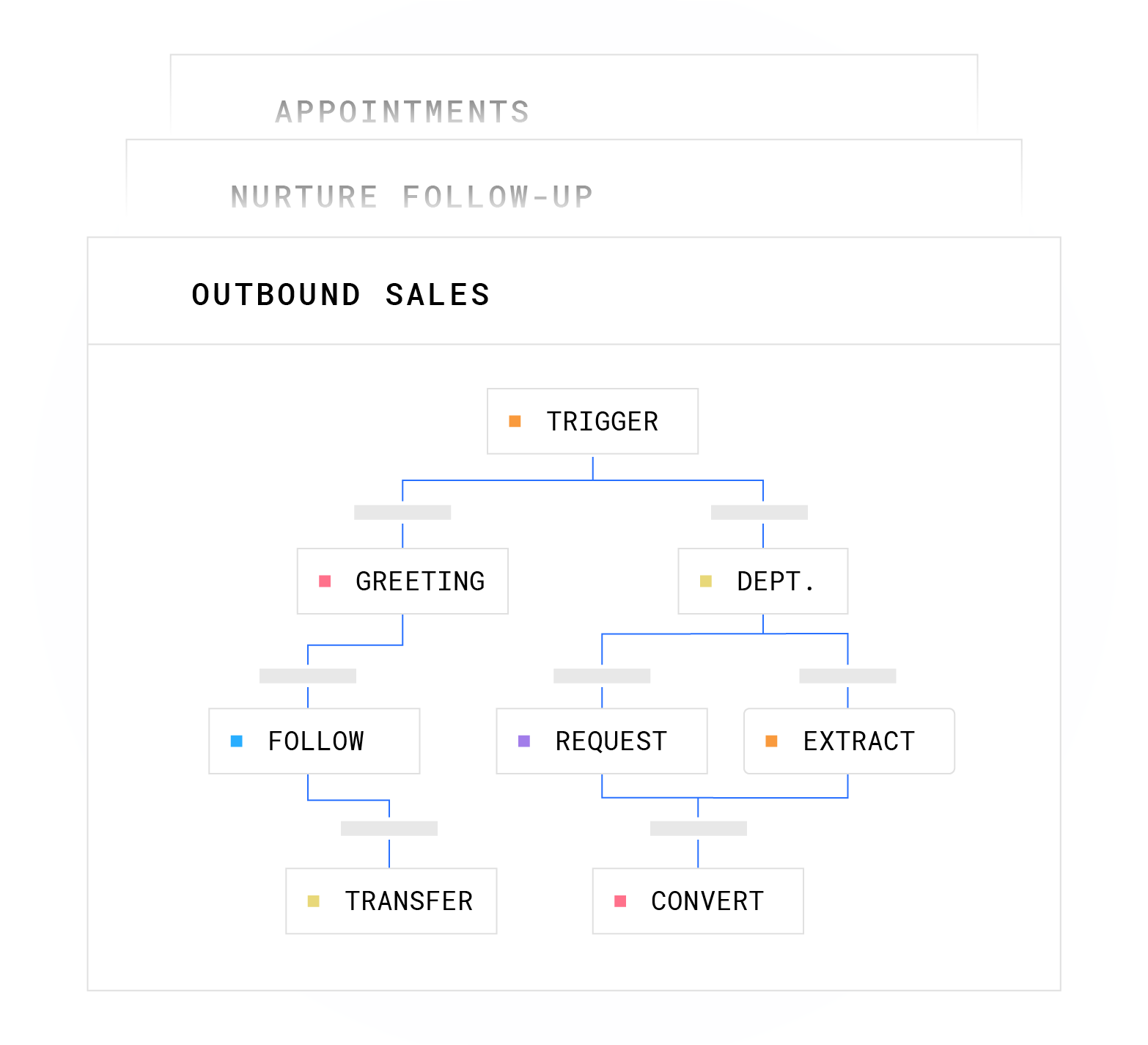
How Hold Time Kills Conversions
Hold time between qualification and live connection quietly erodes conversion rates. Companies responding within five minutes are 100x more likely to connect with a prospect than those waiting 30 minutes.3 The live transfer model solves the response-time problem but introduces a different risk: the delay between qualification and rep connection. A live transfer sequence from qualification to agent connection is time-sensitive, and vendors must secure pickup on the first ring to avoid losing the lead.
The AI SMS qualification step in Plura’s workflow removes that exposure. Because the prospect has already confirmed intent by text before the voice bridge opens, the call connects to a rep immediately instead of sitting in a transfer queue. Leads contacted within 1 minute see the 391% conversion lift mentioned earlier, and Plura executes that window at the carrier level rather than through a third-party CPaaS (Communications Platform as a Service) wrapper.
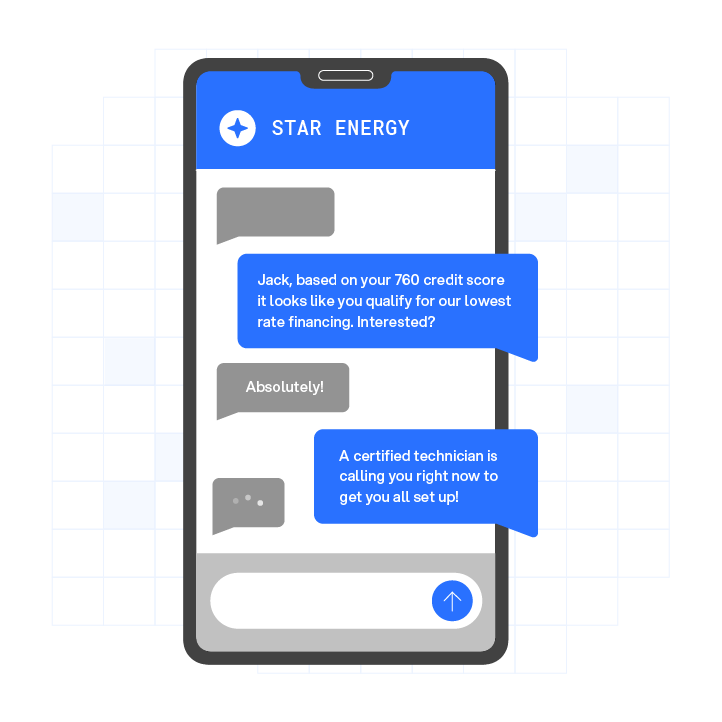
Teams that want to see this workflow on their own data can book a live demo with Plura and walk through the five-step sequence end to end.
Compliance Infrastructure Behind Every Contact
Plura builds compliance controls into every outbound contact so safeguards run before each AI SMS or live transfer. Plura performs real-time DNC (Do Not Call) scrubbing, TCPA (Telephone Consumer Protection Act) consent logging, and quiet-hours enforcement at the carrier level before every contact.2 These functions operate as core platform features, not post-hoc add-ons, so they run automatically on every record. Every outbound contact is checked against federal and state DNC registries before dial. Consent records are timestamped and immutable to support audit trails. Quiet-hours rules apply automatically through time-zone detection so contacts in different regions are not reached outside configured windows.
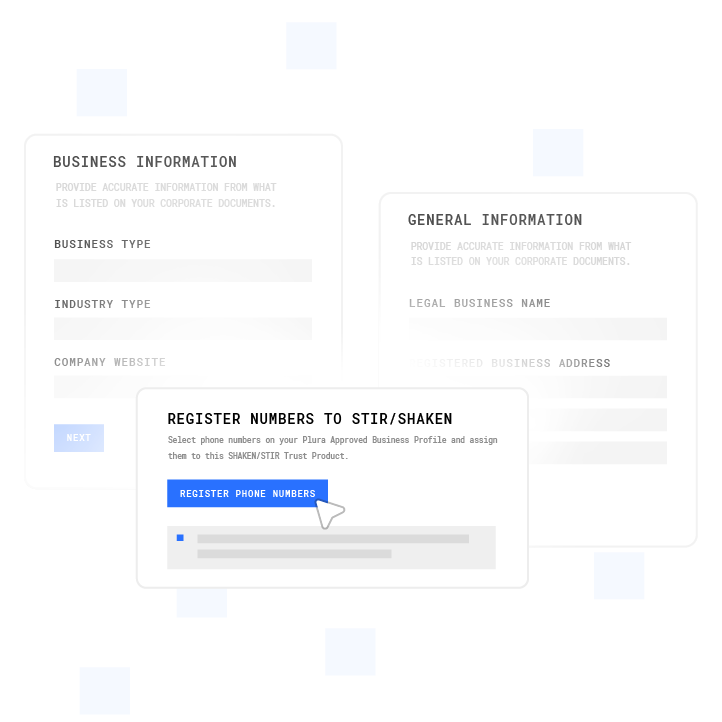
Plura supports compliance with TCPA, DNC frameworks, HIPAA, SOC 2, ISO standards, GDPR, and STIR/SHAKEN caller ID verification.1 Operators remain responsible for their own regulatory obligations and should consult qualified counsel regarding their specific compliance posture. Plura’s SMS guidelines and acceptable use policy describe the platform’s enforcement architecture in detail.
Compare plans and rates side by side to see how compliance infrastructure appears across every tier.
FAQ
How standard speed-to-lead differs from live transfer speed to lead
Standard speed-to-lead measures the time from a prospect’s inquiry to the first meaningful sales contact, with a widely cited target of under five minutes. Live transfer speed to lead is a narrower metric that tracks the time from inquiry to the moment a pre-qualified prospect connects live on a voice call with a sales rep. The distinction matters because live transfer removes the follow-up dial entirely. The prospect is already on the phone at the moment of handoff, which is why live transfers reach near-100% contact rates compared to 15% to 30% for web form leads that require outbound follow-up.
Timeline to launch a 60-second AI SMS workflow
A straightforward inbound qualification flow typically goes live within days. More complex multi-step workflows, such as those with branching qualification criteria or multi-state compliance rules, often require one to two months because the conversation logic itself needs design and validation. Plura’s onboarding sequence includes a discovery audit, intake of existing scripts and SOPs, an overnight conversation mockup build, a review session, engineering build of the production workflow, a pilot test on a subset of real contacts, and full go-live. Every annual contract includes a 90-day opt-out window.
What happens to hold-time risk during live transfer
Hold-time risk reflects the probability that a prospect disconnects while waiting to reach a rep after qualifying. In traditional live transfer operations, this window is a known source of drop-off. Plura’s workflow addresses this by completing AI SMS qualification before the voice bridge opens. Because the prospect has confirmed intent by text, the system initiates the live transfer only when a rep is available to connect immediately. The prospect does not sit in a queue. The voice call connects directly, with the rep already holding the full SMS conversation context.
Data sources used by AI SMS for qualification
Plura’s AI SMS agent pulls from more than 30 data sources in real time during the conversation.3 These include IP and property data, email validation, contact data, intent signals, and business firmographics. The enrichment runs during the live SMS exchange, not in a downstream batch job, so the qualification outcome reflects current data at the moment of contact. The same enrichment layer supports AI SMS, AI voice, AI RCS, and AI webchat, so every channel sees the same lead picture at the same depth.
How stateful memory connects SMS and voice
Every interaction across Plura’s channels writes to a Stateful Conversation Database and keys to a customer token, typically a phone number, email address, or contact ID. When the AI SMS agent qualifies a prospect at 9 a.m. and a rep calls back at noon, the voice channel inherits the full SMS thread, including what was offered, what was confirmed, what objections were raised, and what the qualification outcome was. The rep does not ask the prospect to repeat themselves. The Unified Inbox gives the human team the same view the AI reads from, so context stays consistent whether the next touch is a text, a call, or an RCS message.
1 Plura AI maintains SOC 2, HIPAA, ISO, and GDPR posture as part of its platform infrastructure. References to compliance frameworks in this article describe Plura’s platform capabilities and do not constitute a guarantee that any customer using Plura will themselves be compliant with applicable laws or standards. Customers remain solely responsible for their own regulatory obligations, certifications, consent management, recordkeeping, and the claims they make to their own end users. Consult qualified legal counsel for guidance specific to your use case.
2 This article describes regulatory frameworks at a general level and does not constitute legal advice. Laws and regulations vary by jurisdiction, change over time, and apply differently depending on facts and circumstances. Readers should consult qualified legal counsel before making compliance decisions.
3 Performance figures, customer outcomes, and industry statistics referenced in this article are drawn from cited third-party sources or Plura customer case studies. Individual results vary based on implementation, use case, industry, audience, and execution. Past or aggregate performance is not a guarantee of future results.
This article is provided for informational purposes only and reflects Plura AI’s understanding at the time of publication. Product capabilities, integrations, and specifications are subject to change. For the most current information, visit plura.ai.
This article was produced with the assistance of AI tools and reviewed by Plura AI prior to publication.