
Written by: Matt Beucler, CEO, Plura AI
Key Takeaways for Missed Call Booking
- Missed call booking turns every unanswered inbound call into an appointment using AI voice agents and AI SMS workflows on 100% U.S. infrastructure.
- Industry data shows 62% of inbound calls go unanswered and 85% of voicemail callers hang up, creating a structural revenue leak for call centers.3
- Plura AI’s missed-call recovery sequence starts within seconds via SMS, then triggers an AI voice agent callback within three to five minutes if needed, with 35 to 60% conversion rates.3
- The platform connects directly to CRMs and calendars such as HubSpot, Salesforce, Google Calendar, and Calendly, writing confirmed bookings in real time without manual data entry.
- Operators can see the full missed-call booking workflow in action by booking a live demo with Plura AI.
The Revenue Leak Most Call Centers Are Not Measuring
Every unanswered inbound call at a high-volume U.S. call center carries a measurable dollar value. Industry analyses place the average revenue value of a single missed service call at a substantial amount, and RingReady’s 2026 analysis puts the blended average across U.S. service verticals at $1,200 per missed inbound call. At a 50-agent center running thousands of calls monthly, those figures compound quickly.
The scale of the problem is significant. Approximately 62% of inbound calls to small businesses go unanswered, and 85% of callers who reach voicemail hang up without leaving a message and call the next listing in search results. For a 50-agent center, that pattern represents a structural revenue leak, not an occasional service gap.
Industry estimates suggest substantial annual U.S. revenue loss from poor customer service and missed contact. These aggregate figures reflect what happens at individual operations, so contact center leaders who have not quantified this exposure at their own facility are managing a blind spot in their P&L.
Executive Summary: Five Criteria for Evaluating Missed Call Booking
Operators evaluating missed call booking systems for high-volume environments can use five practical criteria before selecting a platform.
- Speed: The system must respond to a missed call within seconds. Leads contacted within one minute are 391% more likely to convert than those contacted after 24 hours.3 Every second of delay reduces recovery probability.
- Channel coverage: The system should coordinate voice and SMS in a single workflow rather than in silos. Cross-channel memory determines whether a caller has to repeat themselves.
- Compliance posture: The platform should support TCPA, DNC, and SHAKEN/STIR at the carrier level instead of bolting compliance on later. That structure influences audit exposure.
- Integration depth: The system should write directly into existing CRMs and calendars in real time rather than creating a parallel data layer that needs manual reconciliation.
- Operational fit: The system should scale into peak-hour overflow and after-hours gaps without adding headcount or retraining staff.
The sections below apply each criterion to Plura AI’s architecture and the broader market.
Book a live demo with Plura to see the full missed-call booking workflow in action.
How Missed Call Service Operates in Practice
A missed call service detects an unanswered inbound call, captures the caller’s identity and intent, and starts an immediate follow-up sequence across voice and SMS. The objective is to re-engage the caller before they reach a competitor.
Modern AI-driven missed call services typically operate in three layers. The first layer is an immediate SMS sent after a missed call. The second layer is an AI voice agent callback initiated within three to five minutes if the SMS receives no response. The third layer is an email or escalation follow-up at 30 to 60 minutes for contacts that remain unresponsive.
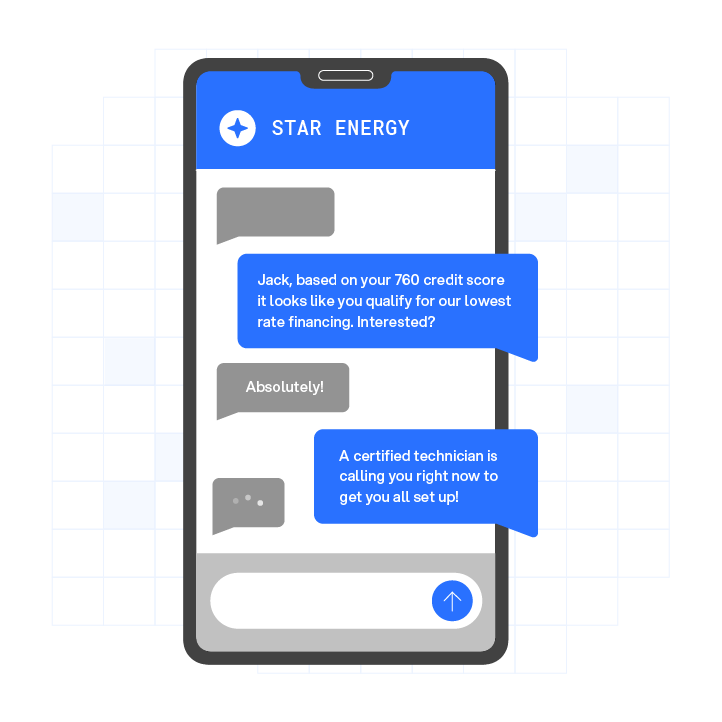
The system connects to the operator’s existing calendar and CRM so that when a caller confirms availability, the booking writes directly into the live schedule.4 No parallel system. No manual data entry. AI voice agents integrate with calendars such as Google Calendar, Microsoft Outlook, and Cal.com through native OAuth API connections, enabling the agent to query real-time availability, book slots, and log appointments without human intervention. Understanding how this automation works sets up the business case, which depends on quantifying what is at stake when calls go unanswered.
Revenue Impact of Missed Calls in Call Centers
The cost of a missed call extends beyond the immediate lost transaction. It also includes the marketing spend that generated the inbound lead, the lifetime value of the customer who called a competitor instead, and the compounding effect of repeat abandonment during peak hours.
Annual revenue losses from missed calls range from $52,000 to $292,000 per location, depending on call volume, order size, and repeat-customer value. For a 50-agent center, the exposure scales much higher.
The following table illustrates the revenue-at-risk calculation for a 50-agent U.S. call center based on published industry benchmarks.
| Metric | Benchmark | 50-Agent Center Estimate |
|---|---|---|
| Inbound calls per agent per day | For inbound support, most agents handle 50–80 calls daily | 2,500 calls/day |
| Missed call rate during peak hours | 67% average missed call rate during peak hours | ~1,675 missed calls/day |
| Average revenue value per missed call | $1,200 blended average (RingReady 2026) | $1,200 |
| Callers who do not call back after voicemail | 85% do not call back | ~1,424 permanently lost/day |
| Estimated daily revenue at risk | Lost callers x avg. value | ~$1.7M/day |
These figures use conservative assumptions. Between 10% and 33% of callers leave a voicemail when sent to one, according to multiple industry studies, so the vast majority of missed-call leads vanish without any follow-up opportunity unless an automated recovery system is in place.
Definition and Mechanics of Missed Call Recovery
Missed-call recovery is the process of re-engaging a caller who did not reach a live agent, using automated voice and SMS workflows to capture intent and convert the interaction into a booking or qualified lead. It differs from a callback queue because it operates without human initiation and without requiring the caller to wait.
Voicemail-and-callback workflows often capture only 10 to 20% of missed calls for high-volume businesses. AI-driven recovery systems respond within one to two rings and convert 35 to 60% of those calls into bookings.
Effective missed-call recovery depends on three operational conditions. Response speed must be measured in seconds rather than minutes. Cross-channel coordination must ensure the SMS and voice follow-up share the same caller context. Direct integration with the booking system must convert the recovered call into a confirmed appointment rather than a callback promise.
Reducing Missed Calls with Plura AI Phone Agents
Plura AI reduces missed call volume through a coordinated AI voice agent and AI SMS sequence that activates the moment an inbound call goes unanswered. The workflow follows a clear, repeatable pattern.
When an inbound call is not answered within a defined ring threshold, Plura detects the missed call event and immediately sends an AI SMS to the caller’s number. The message is personalized using data from Plura’s Lead Intelligence layer, which enriches the caller’s profile in real time from more than 30 data sources. If the caller replies, the AI SMS agent continues the conversation, qualifies intent, checks live calendar availability through the operator’s connected scheduling system, and books the appointment directly.
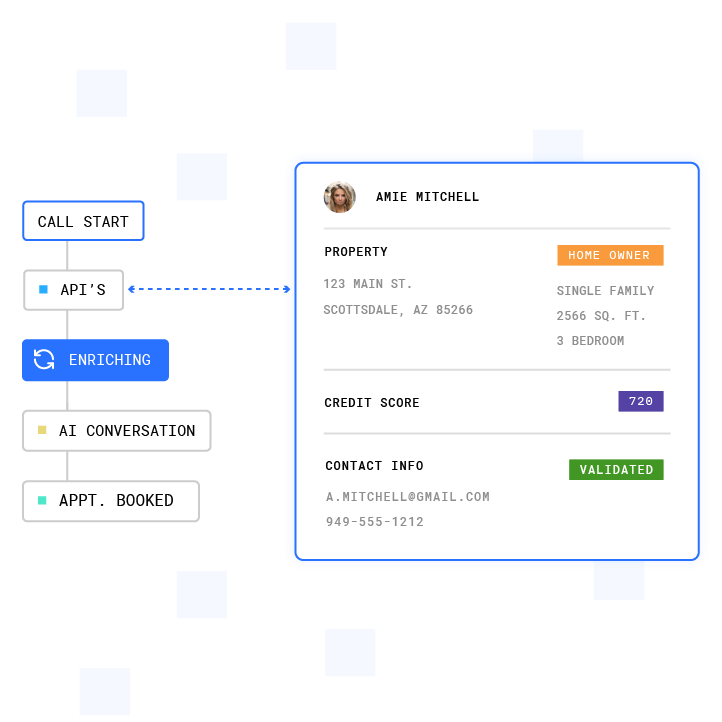
If the SMS receives no response within three to five minutes, Plura’s AI voice agent initiates an outbound callback. The voice agent carries full context from the SMS layer, so the caller does not need to repeat information. The agent qualifies the caller, confirms availability, and books the appointment on the call. If the interaction requires a human, the agent performs a warm transfer to a U.S.-based agent with full conversation context attached.
The entire sequence connects with the operator’s existing CRM and calendar through Plura’s integrations with HubSpot, Salesforce, Zoho, Google Calendar, Calendly, and Cal.com, among more than 50 connected tools. Every interaction is logged to Plura’s Stateful Conversation Database, so a caller who texted at 9 a.m. and calls back at noon is recognized immediately.
Plura’s AI voice agents answer 100% of inbound calls across all locations within two rings, and contact leads from websites, Google Business Profiles, or ad campaigns within 60 seconds via SMS or voice call. One multi-unit franchise operator in home services reported, “We went from missing 40% of our calls across 12 locations to answering 100% of them. Our booking rate doubled and we did it without adding a single receptionist.”.3
After-Hours Missed Call Booking with Plura
After-hours missed-call booking extends the same voice-plus-SMS recovery sequence beyond staffed hours and runs continuously without human oversight. Callers who reach the center outside business hours are handled by Plura’s AI voice agent, which answers on the first ring, qualifies intent, and books directly into the next available calendar slot.
Higher call volumes magnify the revenue impact of any gap in after-hours coverage. AI voice systems achieve a 100% after-hours call capture rate, versus approximately 12% for staffed front desks.
Plura’s 24/7 call answering capability handles after-hours volume at the same quality level as peak-hour staffed calls. The AI agent operates in English and Spanish, applies the same qualification logic, and writes confirmed bookings directly into the operator’s live calendar. No after-hours queue and no morning callback list. Operators start the day with a full schedule rather than a list of missed calls.
Book a live demo with Plura to see the after-hours booking workflow configured for your call volume.
Regulatory Frameworks: TCPA, DNC, and SHAKEN/STIR
Deploying AI voice and SMS systems in a U.S. call center environment involves several federal and state regulatory frameworks.2 The following is a neutral description of those frameworks. Operators should consult qualified legal counsel regarding their specific obligations.
The Telephone Consumer Protection Act (TCPA), codified at 47 U.S.C. § 227, addresses automated calling and texting.2 The FCC’s February 8, 2024 declaratory ruling confirmed that AI-generated voices qualify as “artificial or prerecorded voice” under the TCPA, with no carve-out for real-time conversational AI. Certain TCPA violations carry statutory damages of $500 per violation, up to $1,500 for willful violations.
The National Do Not Call Registry and state-level DNC lists introduce additional scrubbing considerations for outbound contact programs.2 U.S. call center compliance involves managing consent, revocation, calling times, DNC scrubbing, recordkeeping, and safeguards for personal data collected during inbound and outbound interactions.
STIR/SHAKEN (Secure Telephone Identity Revisited / Signature-based Handling of Asserted information using toKENs) is the FCC-mandated caller authentication framework that influences whether outbound calls present as verified or flagged as “Spam Likely.” Calls without proper STIR/SHAKEN attestation have lower answer rates.
Plura supports compliance with TCPA, DNC, HIPAA, SOC 2, SHAKEN/STIR caller ID verification, and GDPR through its platform infrastructure.1 Plura’s compliance framework includes SOC 2 compliant infrastructure, TCPA and STIR/SHAKEN enforcement, integration with Blacklist Alliance for DNC screening, and Number Verifier for caller ID reputation. Plura provides the infrastructure, and customers remain responsible for their own certifications, regulatory obligations, and claims to end users. Operators should consult qualified counsel regarding their specific regulatory obligations.
Consumer Tools Compared to Enterprise Carrier-Owned Platforms
The missed call booking market includes two main categories of tools: consumer and SMB-oriented platforms, and enterprise carrier-owned platforms. This distinction affects operations and compliance.
Consumer-grade tools such as HighLevel, Signpost, and similar SMB-focused products typically operate as API resellers built on top of third-party Communications Platform as a Service (CPaaS) providers like Twilio.4 They provide SMS text-back functionality and basic call routing, but they do not own the carrier stack. That structure means branded caller ID is not issued at the carrier level, real-time DNC scrubbing is a bolt-on rather than a core platform layer, and STIR/SHAKEN authentication depends on the upstream CPaaS provider’s posture rather than the platform’s own. These tools can work for low-volume SMB use cases but carry meaningful limitations at call-center scale.
Enterprise carrier-owned platforms operate differently. Plura is its own FCC-licensed audio bridging carrier. Voice traffic originates on Plura’s domestic infrastructure, not a third-party CPaaS. Branded caller ID is issued directly at the carrier level. Real-time DNC scrubbing, immutable TCPA consent logging, and STIR/SHAKEN authentication function as core layers of the platform rather than third-party add-ons. The Stateful Conversation Database holds context across voice, AI SMS, RCS, and AI webchat, so every channel inherits the full memory of every prior touchpoint.
For high-volume U.S. call centers operating under TCPA, DNC, and HIPAA obligations, the carrier-ownership distinction is an architectural decision. It separates compliance support enforced at origination from compliance layered on later. Plura automatically enforces TCPA rules, DNC list checks, calling window restrictions, and consent requirements on every interaction, while operators remain responsible for their overall compliance posture.
30-Day ROI Model for Missed Call Booking
The ROI case for missed call booking at a 50-agent center is straightforward to model. For a 50-seat equivalent contact center, traditional operations cost $35,000 to $50,000 monthly, while AI contact centers cost $8,000 to $15,000 monthly.3 The gap between those figures represents the 30-day savings floor before recovered revenue enters the picture.
On the revenue side, consider a 50-agent center that currently misses 20% of inbound calls and sees an average call value of $1,200. Recovering even 30% of those missed calls through AI-driven follow-up produces meaningful incremental revenue within the first billing cycle. Leads contacted within one minute are 391% more likely to convert than those contacted after 24 hours, and Plura’s sequence starts within seconds of the missed call event.
The default scenario on Plura’s calculator uses a 15-agent operation as the baseline: human agent cost of $60,000 per month versus Plura agent cost of $14,400 per month. That spread produces $45,600 in 30-day savings, $547,200 over 12 months, and $2,736,000 over 60 months. For a 50-agent center, the model scales proportionally.
Run your numbers through Plura’s calculator to check your ROI in real time: plura.ai/calculator.
Conclusion: Turning Missed Calls into Booked Revenue
Missed inbound calls represent a revenue problem with a measurable dollar value per event, a compounding effect across peak hours and after-hours gaps, and a direct line to competitor acquisition when callers do not reach a live agent. At 50-agent scale, the exposure is material.
Plura AI converts unanswered inbound calls into instant booking opportunities through a coordinated AI voice agent and AI SMS sequence that activates within seconds, connects directly with existing CRMs and calendars, and runs on 100% U.S. infrastructure with carrier-grade compliance support. The platform handles peak-hour overflow, after-hours volume, and multi-location consistency without adding headcount.
For contact center leaders evaluating missed call booking systems, the five-criteria framework in this guide provides a structured starting point: speed, channel coverage, compliance posture, integration depth, and operational fit. Plura addresses all five from a single carrier-grade platform.
- Run your numbers: plura.ai/calculator to check your ROI in real time.
- Compare plans and rates side by side: plura.ai/pricing
- Book a live demo with Plura: plura.ai/plura-webchat
Frequently Asked Questions
What is the difference between a missed call text-back and a full missed call booking system?
A missed call text-back sends a single automated SMS when a call goes unanswered. It notifies the caller that the business missed their call and invites a reply. A full missed call booking system goes further and coordinates voice and SMS in a multi-layer sequence, qualifies the caller’s intent through a conversation, checks live calendar availability, and writes a confirmed appointment directly into the operator’s scheduling system. Plura’s missed call booking workflow combines an immediate AI SMS with an AI voice agent callback, both sharing the same caller context through the Stateful Conversation Database. The result is a confirmed booking rather than an open-ended text exchange that still requires a human to close.
How does Plura AI integrate with existing CRM and calendar systems for missed call booking?
Plura connects to more than 50 tools across CRM, calendar, and automation categories through native integrations. On the CRM side, Plura integrates with HubSpot, Salesforce, and Zoho. On the calendar side, it connects to Google Calendar, Calendly, and Cal.com. When a missed call recovery sequence results in a booking, Plura writes the appointment directly into the live calendar, logs the interaction in the CRM, and triggers any configured post-booking workflows such as confirmation SMS or internal alerts. The integration is bidirectional, so the AI agent reads existing contact records and availability before the conversation begins and does not offer slots that are already taken or treat known customers as new leads.
What compliance frameworks does Plura AI support for AI voice and SMS in call centers?
Plura supports compliance with TCPA, DNC, HIPAA, SOC 2, SHAKEN/STIR caller ID verification, ISO certification, and GDPR through its platform infrastructure.1 Real-time DNC scrubbing checks every outbound contact before dial. TCPA consent records are timestamped and immutable. STIR/SHAKEN authentication runs on every outbound voice call through Plura’s FCC-licensed carrier. Quiet-hours rules apply automatically through time-zone detection. The compliance dashboard exports audit-ready reports in one click. Plura provides this infrastructure, and operators remain responsible for their own regulatory obligations and should consult qualified legal counsel regarding their specific compliance requirements.
How quickly does Plura AI respond to a missed inbound call?
Plura’s missed call recovery sequence starts within seconds of the missed call event. The AI SMS layer dispatches immediately, and the AI voice agent callback follows within three to five minutes if the SMS receives no response. This response window is operationally significant. As noted earlier, the one-minute contact window drives conversion rates nearly 400% higher than 24-hour delays, and Harvard Business Review research found that companies responding within five minutes are 100 times more likely to connect with a prospect than those waiting 30 minutes. Plura’s sequence is designed to hit the first-minute window on the SMS layer and the five-minute window on the voice layer without requiring any human initiation.
Can Plura AI handle after-hours missed call booking without adding staff?
Plura’s AI voice agents operate continuously, handling inbound calls and missed call recovery outside staffed hours at the same quality level as peak-hour interactions. The agent answers on the first ring, qualifies the caller’s intent, checks live calendar availability, and books the appointment directly into the operator’s scheduling system. Confirmed bookings appear in the calendar before the next business day begins. Plura also handles peak-hour overflow when concurrent call volume exceeds available agent capacity, routing excess inbound calls to the AI layer rather than to voicemail. The system scales to handle three to five times normal call volume during peak seasons without temporary staffing or advance hiring.
1 Plura AI maintains SOC 2, HIPAA, ISO, and GDPR posture as part of its platform infrastructure. References to compliance frameworks in this article describe Plura’s platform capabilities and do not constitute a guarantee that any customer using Plura will themselves be compliant with applicable laws or standards. Customers remain solely responsible for their own regulatory obligations, certifications, consent management, recordkeeping, and the claims they make to their own end users. Consult qualified legal counsel for guidance specific to your use case.
2 This article describes regulatory frameworks at a general level and does not constitute legal advice. Laws and regulations vary by jurisdiction, change over time, and apply differently depending on facts and circumstances. Readers should consult qualified legal counsel before making compliance decisions.
3 Performance figures, customer outcomes, and industry statistics referenced in this article are drawn from cited third-party sources or Plura customer case studies. Individual results vary based on implementation, use case, industry, audience, and execution. Past or aggregate performance is not a guarantee of future results.
4 References to third-party products, services, companies, or research are made for informational and comparative purposes only. Plura AI is not affiliated with, endorsed by, or sponsored by any third party named in this article unless explicitly stated. Trademarks and product names referenced remain the property of their respective owners.
This article is provided for informational purposes only and reflects Plura AI’s understanding at the time of publication. Product capabilities, integrations, and specifications are subject to change. For the most current information, visit plura.ai.
This article was produced with the assistance of AI tools and reviewed by Plura AI prior to publication.