

Written by: Matt Beucler, CEO, Plura AI
Updated July 2026
Key Takeaways for Franchise and Corporate Leaders
- Franchise networks lose most peak-hour calls because response times and compliance practices vary widely across locations.
- Local staff answer only about one in three calls, 35% of brands never respond to some inquiries, and email replies average 8.8 hours.3
- Performance gaps between units are multi-fold, compounded by chronic front-desk turnover and high caller defection after busy signals.
- Plura AI solves these issues with an AI voice agent that answers every call within two rings, a unified inbox for real-time metrics, and 100% U.S. infrastructure that supports TCPA, DNC, and state-rule compliance.1
- Franchise owners can book a live demo with Plura AI to see how network-wide control stops revenue leak and keeps performance consistent across all locations.
The Problem: Three Franchise-Specific Pain Points
1. Inconsistent Lead Response Across Locations
Franchise networks face a consistency problem that shows up as missed calls. Local franchise staff answer inbound calls at an average rate of approximately 33%, which means the other 67% of callers reach no one. 35% of franchise brands never responded to an inquiry at all, per the FranFunnel Franchise Lead Response Time Study (Q1 2025, 500+ brands across 14 franchise categories).4 The same study found the average email response time across franchise brands was 8.8 hours.
The gap between best and worst units compounds the damage. Performance gaps run 3 to 5 times between the best and worst locations in a franchise system. Front-desk roles experience 30 to 50% annual staff turnover, so the unit that answered calls well last quarter may not this quarter. 60% of callers contact a competitor after a busy signal, per Google/Ipsos Mobile Search Insights, and that revenue rarely returns.
2. No Centralized Visibility or Compliance Enforcement
Per-location tools create per-location data silos. Corporate leaders lack a single source of truth for answer rates, lead response times, or script adherence across the network. 73% of franchise brands never used SMS to follow up with a new lead, per the FranFunnel Q1 2025 study, so the follow-up channel with the highest open rates often sits unused.
Compliance exposure multiplies across state lines. An AI voice agent handling calls from multiple states must dynamically determine the applicable consent standard before recording begins, as 13 states require all-party consent while federal law requires only one-party consent. A system that applies a static consent script regardless of caller location can create exposure on a meaningful share of calls. Operators should consult qualified counsel on their specific obligations under applicable federal and state law.
3. After-Hours and Multi-State Coverage Gaps
Many calls arrive outside standard business hours and on weekends, and many after-hours callers show clear buying intent. A franchise network that closes at 5 p.m. declines a substantial portion of revenue conversations every night. Multiplied across 20, 50, or 200 locations, the leak becomes structural instead of incidental.
Book a live demo with Plura to see how the network-wide control system works across your locations.
The Solution: Three Structural Fixes
1. AI Voice Agent Answers Every Call Within Two Rings
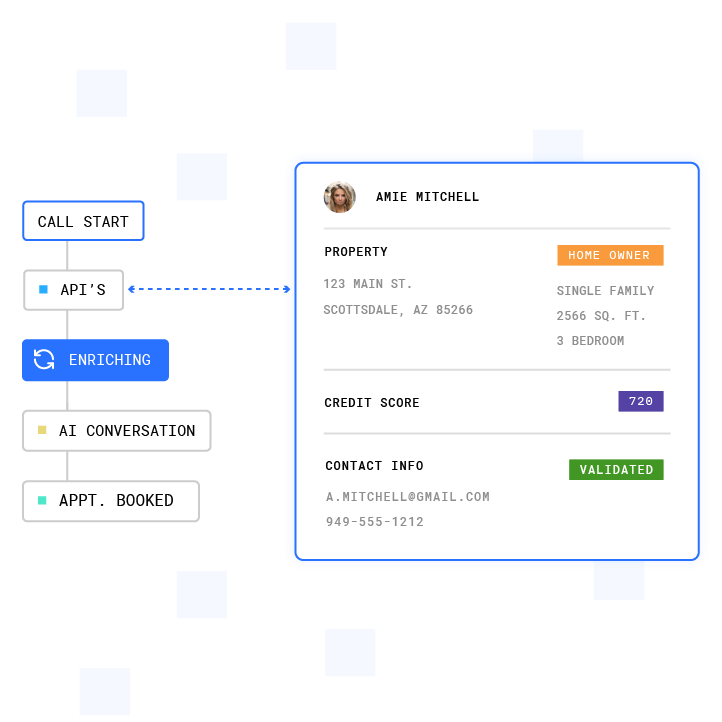
Plura AI’s AI voice agent answers 100% of inbound calls across all franchise locations within two rings, using an identical greeting and qualification script at every unit. There is no hold queue, no voicemail, and no dependency on front-desk staffing levels. The agent handles calls in English or Spanish, qualifies the caller, books appointments directly into the location’s calendar, and warm-transfers high-priority conversations to a U.S. agent when the workflow calls for it.
Plura also contacts leads from websites, Google Business Profiles, or ad campaigns within 60 seconds via AI SMS or voice call. Companies that respond to leads within the first hour are seven times more likely to qualify them than those waiting an hour longer, per Harvard Business Review data cited by LeanData. Plura’s response window is measured in seconds, not hours.
2. Unified Inbox and Dashboard for Real-Time Per-Location Metrics
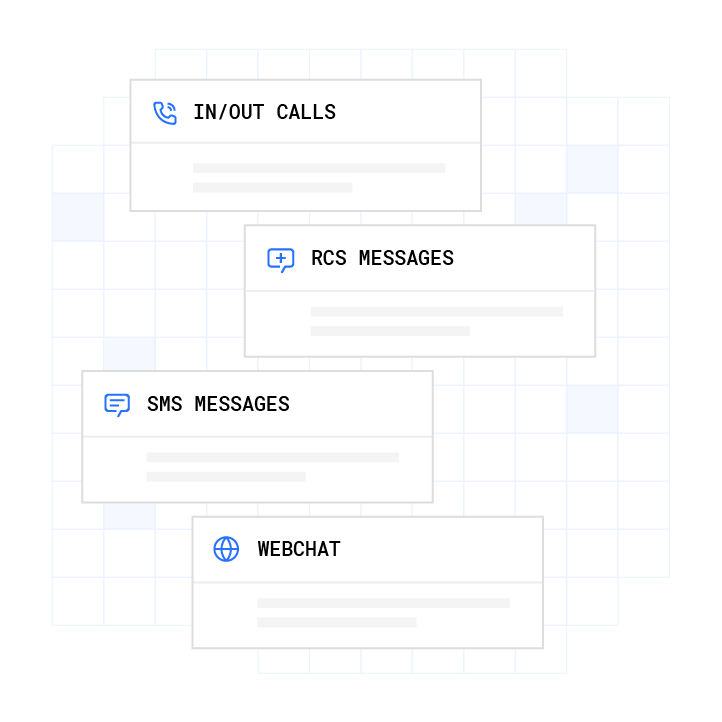
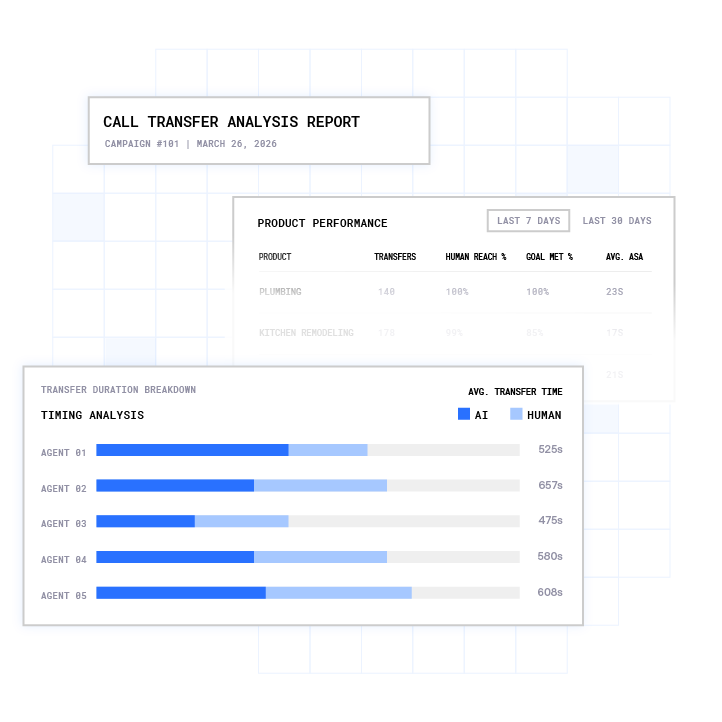
Plura’s Unified Inbox consolidates voice transcripts, SMS threads, and webchat sessions per customer into one screen, keyed to the same Stateful Conversation Database the AI reads from. Corporate operations leaders see answer rates, lead response times, conversion rates, and script adherence across every location in real time, with drill-down to individual units.
A multi-brand QSR franchisee operating 45+ locations found that prior to centralized dashboards, district managers spent significant time per week on manual data compilation from multiple sources. Centralized dashboards remove that overhead and replace it with hierarchical rollup reporting that surfaces performance from individual stores through districts and regions in seconds. Plura’s dashboard applies the same architecture to call and lead-response data across the franchise network.
3. 100% U.S. Infrastructure With Built-In Compliance Support
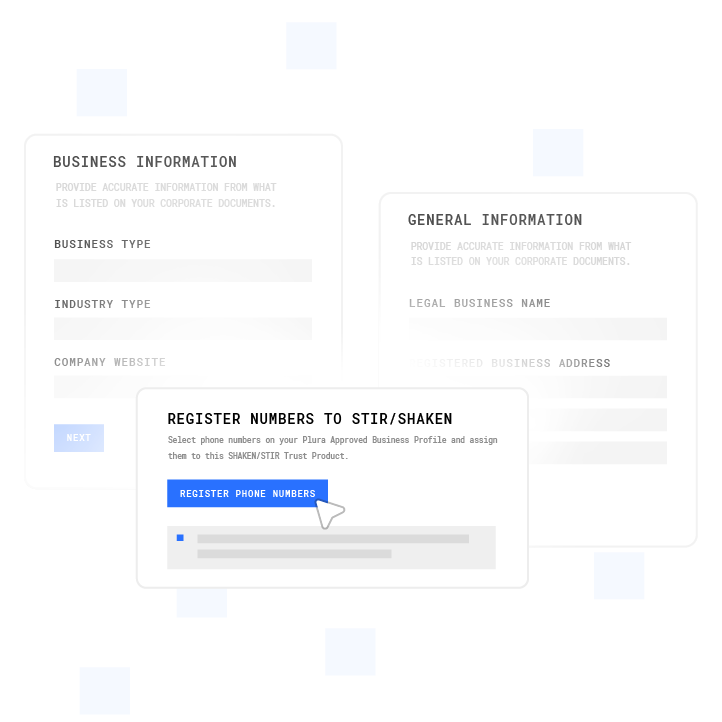
Plura runs on 100% U.S. infrastructure by architecture. Voice origination, model hosting, data storage, and call recording all sit on domestic infrastructure. Plura is its own FCC-licensed audio bridging carrier, not a wrapper on a third-party CPaaS (Communications Platform as a Service). Branded caller ID is issued at the carrier level, STIR/SHAKEN authentication runs on every outbound call, and real-time DNC scrubbing checks every number before dial.
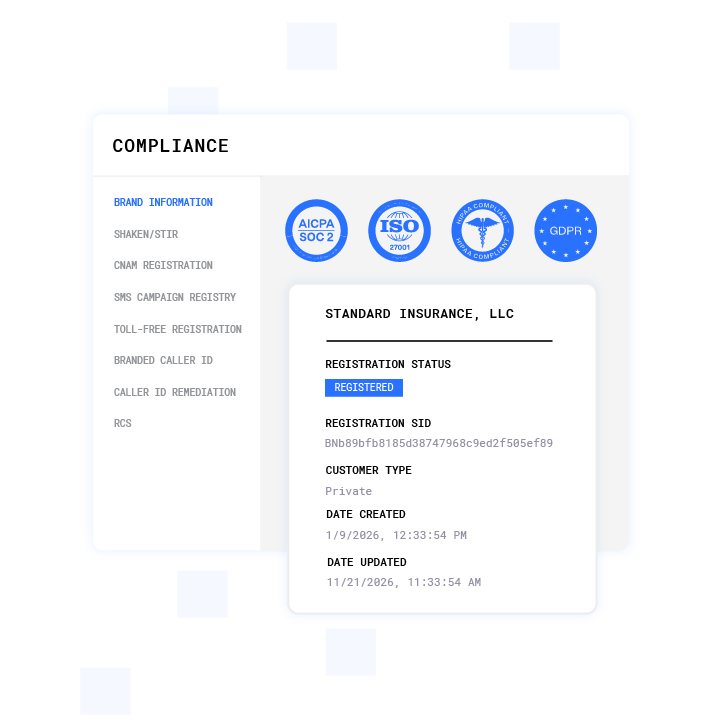
Plura’s compliance engine supports TCPA compliance, DNC compliance, HIPAA, SOC 2, and ISO certification, with 50+ state rule sets pre-loaded.2 Quiet-hours rules apply automatically through time-zone detection. Consent records are timestamped, immutable, and exportable for audit review. Customers are responsible for their own regulatory obligations; Plura provides the infrastructure that supports their compliance posture.
5-Step Corporate Rollout Template for Franchise Networks
- Audit current per-location answer rates and compliance posture. Pull call data from every location to establish baseline answer rates, average response times, and after-hours gap volume. Identify the 3 to 5 units with the widest performance gaps as the pilot cohort.
- Map every inbound number and consent record into the Stateful Conversation Database. Every phone number, consent timestamp, and prior interaction history is ingested into Plura’s database so the AI agent starts each conversation with full context, not a blank slate.
- Deploy the AI voice agent with an identical greeting and qualification script. Corporate defines the script, disclosures, and qualification gates once. The same logic deploys to every location simultaneously. There is no per-location training cycle and no script drift.
- Connect the Unified Inbox and dashboard for corporate visibility. Operations leaders gain real-time access to per-location answer rates, lead response times, and conversion metrics. District managers receive weekly automated reports. Underperforming units surface immediately.
- Activate real-time DNC/TCPA/state-rule enforcement and establish a weekly review cadence. Plura’s compliance engine applies the correct rule set to every outbound contact based on the caller’s jurisdiction, which removes manual rule-checking across locations. Weekly metric reviews then use the dashboard’s leaderboard view to identify which compliant workflows drive the strongest conversion rates, so corporate can replicate those patterns network-wide without increasing compliance risk.
Book a live demo with Plura to walk through the rollout template for your network.
Centralized vs. Per-Location Workflows in Franchise Operations
The following table shows how centralized AI infrastructure reduces performance variability compared with per-location tools and highlights the revenue and compliance impact of each workflow area.
| Workflow Area | Per-Location Tools | Centralized Plura AI | Revenue / Compliance Impact |
|---|---|---|---|
| Inbound call answer rate | approximately 33% answered by local staff | 100% answered within two rings | Majority of callers defect to competitors after busy signals |
| Lead response time | 8.8-hour average email response; 35% never respond | Under 60 seconds via AI SMS or voice | 7x more likely to qualify leads with sub-1-hour response |
| After-hours coverage | Voicemail or no answer | 24/7 AI voice agent across all locations | Many after-hours callers express buying intent |
| Compliance enforcement | Varies by franchisee and state | 50+ state rule sets enforced per call via Plura’s compliance engine | TCPA statutory damages run $500 to $1,500 per call |
Frequently Asked Questions
How long does a corporate rollout take?
A standard franchise rollout with Plura runs days to a few weeks depending on conversation complexity. A straightforward inbound qualification flow deploys in days. A multi-step intake with custom qualification gates and CRM integrations runs closer to two to four weeks. Plura’s onboarding sequence covers a discovery audit, ingestion of existing scripts and call data, an overnight build of a conversation mockup, a review session, engineering build, pilot test on a subset of locations, and full network go-live. Every annual contract includes a 90-day opt-out window if the deployment is not delivering.
What is Plura’s compliance posture for multi-state operations?
Plura’s compliance engine supports TCPA compliance, DNC compliance, HIPAA, SOC 2, ISO certification, and 50+ state-specific rule sets. Quiet-hours enforcement applies automatically based on time-zone detection for each contact. Consent records are timestamped, immutable, and exportable for audit review in one click. Real-time DNC scrubbing checks every outbound contact against federal and state registries before dial. Plura provides the infrastructure that supports customers’ compliance posture; customers remain responsible for their own regulatory obligations and should consult qualified counsel on their specific requirements under applicable law.
Which CRMs and scheduling tools integrate with Plura?
Plura integrates with 50+ tools across CRM, calendar, attribution, automation, and data-enrichment categories. CRM integrations include HubSpot, Salesforce, and Zoho. Calendar integrations include Calendly, Cal.com, and Google Calendar. Automation integrations include Go High Level, Zapier, and Make. The full directory is at plura.ai/integrations. Every integration shares the same Stateful Conversation Database, so a lead record updated during a voice call is immediately visible in the connected CRM without a manual sync.
Can the AI voice agent handle both inbound and outbound missed-call recovery?
Yes. Plura’s AI voice agent handles inbound calls within two rings and initiates outbound missed-call recovery via voice or AI SMS within 60 seconds of a missed contact. The outbound flow uses the same Stateful Conversation Database as the inbound flow, so the agent knows whether the caller has a prior interaction history before it dials. Outbound contacts are checked against DNC registries and state rule sets in real time before each attempt. The same qualification script and greeting used on inbound applies to outbound recovery, which keeps the SLA identical in both directions.
How does the dashboard report per-location performance?
Plura’s dashboard provides hierarchical rollup reporting from individual locations through districts and regions to the full network view. Corporate operations leaders see answer rates, lead response times, conversion rates, and script adherence per location in real time. Underperforming units surface automatically via configurable alerts. Weekly automated reports go to district managers with location-level leaderboards. The same data layer that powers the dashboard feeds Plura’s conversation intelligence tools, so metric reviews can identify which scripts and qualification paths drive the strongest outcomes at top-performing units and replicate them network-wide.
What happens if a location’s staff still wants to answer some calls?
Plura’s workflows support hybrid call handling. Corporate can configure the AI voice agent to answer all calls, answer only after a defined number of rings, or handle overflow when staff lines are busy. Warm-transfer rules route high-priority callers to a live U.S. agent mid-call with full conversation context already loaded. Staff at individual locations retain the ability to handle calls they pick up first, and the AI handles everything else. The Unified Inbox gives both corporate and location staff visibility into every interaction regardless of which path the call took.
Conclusion: Turn Every Missed Call Into Controlled Revenue
Franchise networks lose revenue at scale because missed-call handling is inconsistent by design. The peak-hour call loss described earlier, combined with a multi-fold performance gap between best and worst units, chronic front-desk turnover, and a high share of calls arriving outside business hours, reflects network-level issues. These are not isolated store problems; they require a network-level control system.
Plura AI enforces identical two-ring response, 60-second lead follow-up, and real-time compliance support at every unit from a single platform. Corporate gains real-time visibility across the entire network. Franchisees gain consistent performance without staffing dependency. The 5-step rollout compresses deployment from weeks of per-location training to days of AI deployment per location.
A multi-unit franchise owner in home services reported: “We went from missing 40% of our calls across 12 locations to answering 100% of them. Our booking rate doubled and we did it without adding a single receptionist.”
Run your numbers through Plura’s ROI calculator to check your cost savings in real time. Compare plans and rates side by side at plura.ai/pricing. When you are ready to see the system running on your network, book a live demo with Plura.
1 Plura AI maintains SOC 2, HIPAA, ISO, and GDPR posture as part of its platform infrastructure. References to compliance frameworks in this article describe Plura’s platform capabilities and do not constitute a guarantee that any customer using Plura will themselves be compliant with applicable laws or standards. Customers remain solely responsible for their own regulatory obligations, certifications, consent management, recordkeeping, and the claims they make to their own end users. Consult qualified legal counsel for guidance specific to your use case.
2 This article describes regulatory frameworks at a general level and does not constitute legal advice. Laws and regulations vary by jurisdiction, change over time, and apply differently depending on facts and circumstances. Readers should consult qualified legal counsel before making compliance decisions.
3 Performance figures, customer outcomes, and industry statistics referenced in this article are drawn from cited third-party sources or Plura customer case studies. Individual results vary based on implementation, use case, industry, audience, and execution. Past or aggregate performance is not a guarantee of future results.
4 References to third-party products, services, companies, or research are made for informational and comparative purposes only. Plura AI is not affiliated with, endorsed by, or sponsored by any third party named in this article unless explicitly stated. Trademarks and product names referenced remain the property of their respective owners.
This article is provided for informational purposes only and reflects Plura AI’s understanding at the time of publication. Product capabilities, integrations, and specifications are subject to change. For the most current information, visit plura.ai.
This article was produced with the assistance of AI tools and reviewed by Plura AI prior to publication.