

Written by: Matt Beucler, CEO, Plura AI
Missed Call Recovery: Fast Wins Over Voicemail
- Voicemail fails as a lead recovery tool because 85% of callers never leave a message or call back, which creates major revenue loss.3
- AI voice agents respond in under five seconds, qualify leads, and book appointments instantly, while voicemail callbacks often take 4-8 hours.
- Modern callers prefer instant communication, and voicemail is largely abandoned, with only 18% of people listening to messages from unknown numbers.
- Plura AI’s missed-call recovery system uses its own FCC-licensed carrier with real-time DNC/TCPA compliance support, branded caller ID, and a stateful conversation database across voice and SMS.1
- Book a live demo with Plura AI at plura.ai/plura-webchat to see how AI voice agents can recover over 60% of missed calls that voicemail would lose.3
The Problem: Voicemail Kills Speed-to-Lead
Every missed call is a revenue decision. When a caller reaches voicemail, the data on what happens next is consistent and damaging.
Between 10% and 33% of callers routed to voicemail leave a message. That means 67-90% abandon without leaving any trace, per industry estimates from BIA/Kelsey and Hiya. Of the small group who do leave a message, about half have already booked with a competitor before the original business returns the call. Voicemail turns a lead capture point into a lead loss mechanism.
Leads contacted within 5 minutes are 21 times more likely to qualify than leads called after 30 minutes (MIT/InsideSales.com study), and that advantage compounds at the 1-minute mark, where conversion rates jump 391% compared to 24-hour delays. For contact centers, franchise networks, and marketing teams running paid media, that degradation curve represents direct, measurable revenue leakage on every dollar spent to make the phone ring.
Voicemail retrieval rates have dropped, while the average small-business voicemail callback time runs 4-8 hours against a customer patience window of under 1 hour for home services. The behavioral shift is structural, not cyclical, and caller behavior data explains why voicemail no longer works as a recovery channel.
Caller Behavior Has Moved Away From Voicemail
Caller behavior has moved decisively away from voicemail. The average American sends and receives about 45 text messages per day and makes or receives around 8 phone calls. Voicemail sits in a channel that callers have largely abandoned for asynchronous communication.
Only 18% of people listen to voicemails from unknown numbers, per Dialzara 2025 data. When a high-intent inbound caller reaches voicemail on a business line, the friction of leaving a message, waiting for a callback, and re-explaining context often sends them to the next result on Google. Voicemail-triggered callbacks carry very low trust because leads do not recognize the calling number amid 52.5 billion robocalls in 2025, per the YouMail Robocall Index. Voicemail functions as a passive recording that most callers never hear and most businesses do not act on fast enough to matter.
No-Voicemail Callbacks Rarely Convert
The data on no-voicemail callbacks is not encouraging. About 21% of callers immediately call another business when they reach voicemail at a small business. That figure applies whether or not a message is left.
The average B2B voicemail callback rate is typically 2-4%. Research indicates that leaving a voicemail can reduce future connect rates.
The trust gap between a cold callback and an instant SMS or AI voice agent response is significant. SMS achieves lower friction, higher response rates, and more positive signals than calling after a missed call, based on analysis across multiple client data sets. An instant, branded response establishes identity and context before the lead has moved on.
What Operators See When Voicemail Handles Leads
Across operator forums and industry communities, leaders report consistent frustration with voicemail as a lead recovery tool. The pattern repeats: a business invests in paid media or SEO to generate inbound calls, those calls hit voicemail during peak hours or after hours, and the leads disappear. The discussion has shifted from whether voicemail works to what replaces it.
Franchises average a 67% missed call rate during peak hours. For multi-location operators, that is not a staffing problem that can be solved by adding headcount at each unit. It is a structural gap that requires a system-level answer. Operators who have moved to automated missed-call recovery report the same outcome: recovery rates climb, callback friction drops, and revenue that was leaking through voicemail starts closing.
Replacing voicemail with automated text-back can substantially improve recovery rates on the same call volume, with no additional ad spend.
Run your numbers through Plura’s ROI calculator to check your ROI in real time.
How AI Voice Agents Replace Voicemail
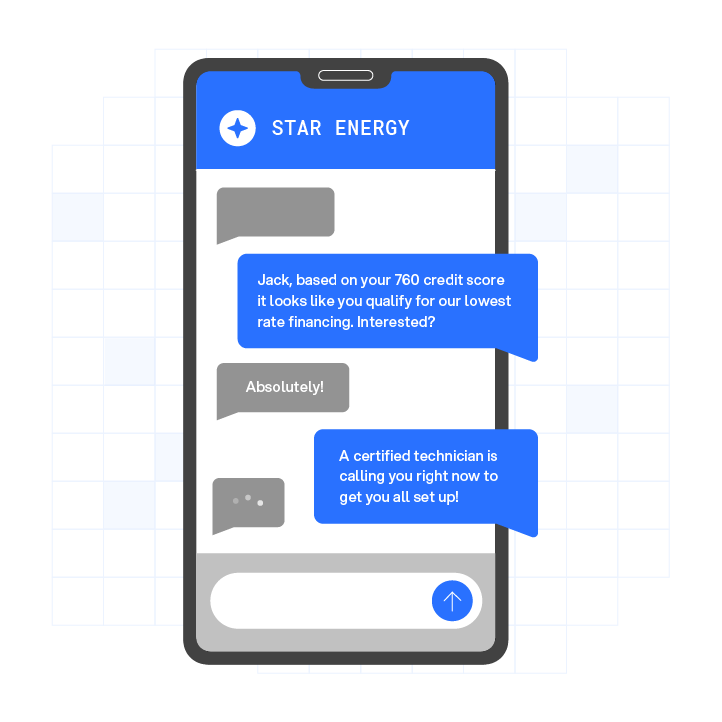
An AI voice agent built for missed-call recovery operates on a different model than voicemail. Instead of recording a passive message and waiting, it responds in under 5 seconds, qualifies the lead, and books the appointment in the same interaction.
Leads contacted within 1 minute are 391% more likely to convert than those contacted after 24 hours. A Harvard Business Review study found that companies responding within five minutes are 100x more likely to connect with a prospect than those waiting 30 minutes. The speed advantage of AI voice agents over voicemail is the difference between a live conversation and a dead lead.
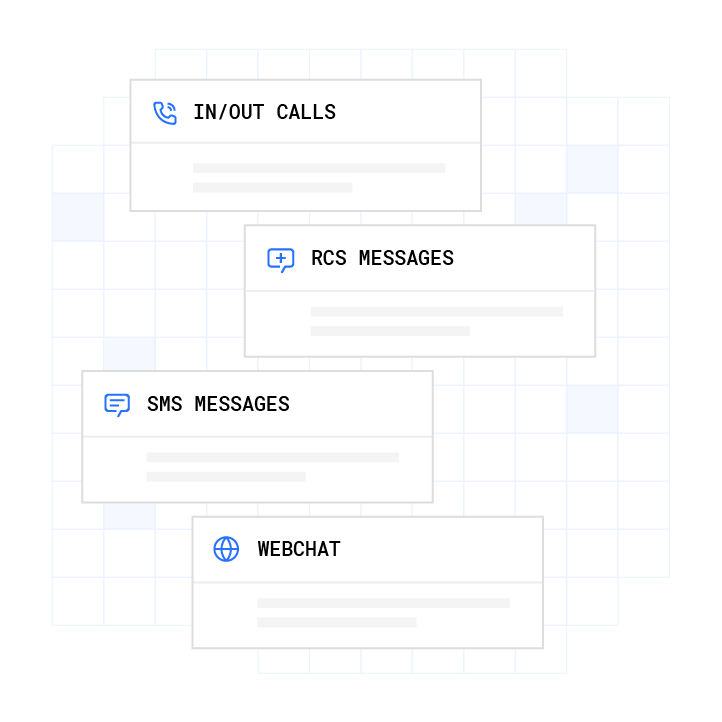
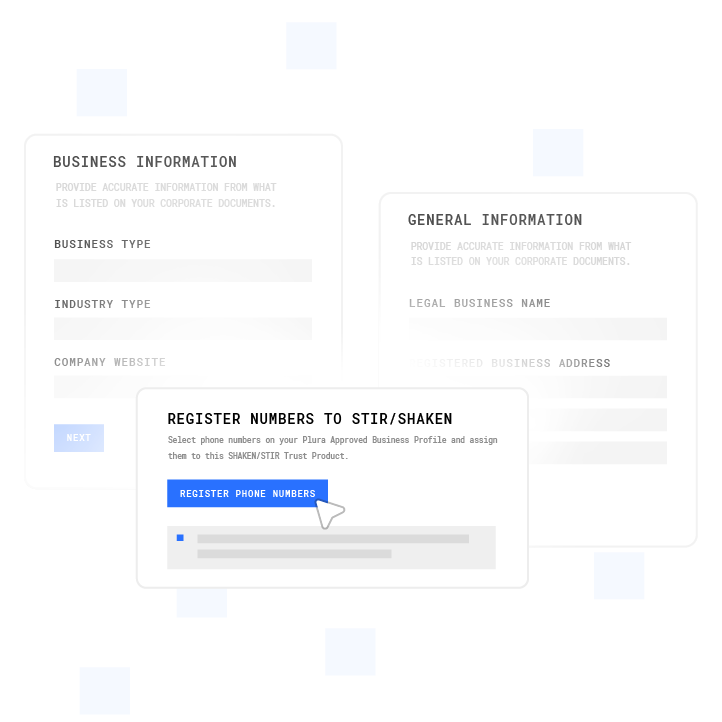
Plura’s AI voice agents handle inbound and outbound calls on Plura’s own FCC-licensed audio bridging carrier. Calls originate with branded caller ID and authenticate through STIR/SHAKEN (Secure Telephone Identity Revisited/Signature-based Handling of Asserted information using toKENs) at the carrier level.1 The same AI SMS layer fires in parallel, so a caller who does not pick up the return call receives a branded text within seconds. Every interaction writes to a Stateful Conversation Database, so the agent that texted at 9 a.m. picks up the call at noon already knowing what was said.
Plura supports customer compliance with TCPA, DNC, HIPAA, and SOC 2 through a real-time compliance engine built into the platform.1 Customers remain responsible for their own regulatory obligations. The platform provides the infrastructure, and compliance posture downstream remains the customer’s responsibility. Businesses should consult qualified counsel for guidance on their specific obligations.
Book a live demo with Plura at plura.ai/plura-webchat.
Voicemail vs Missed-Call Recovery: Side-by-Side Numbers
| Attribute | Voicemail | Missed-Call Recovery (Plura AI) | Source |
|---|---|---|---|
| Response time | 4-8 hours average callback | Under 5 seconds | LeadRelay 2024 / Plura AI |
| Caller action required | Leave message, await callback | Instant qualification and booking | Hicira / Invoca 2024 |
| No-callback / recovery rate | 85% never call back | Over 60% of missed calls recovered | Forbes / BIA Kelsey via Hicira / Plura AI |
| Channel memory | None | Stateful conversation database across voice and SMS | Plura AI |
| Compliance support | Manual scrubbing | Real-time DNC/TCPA engine (Plura supports customer compliance) | Plura AI |
| Caller ID | Unbranded | Branded via FCC-licensed carrier | Plura AI |
| Uptime | Dependent on staff availability | 99.9% SLA with automatic failover | Plura AI |
Why Plura’s Architecture Performs Differently
Most AI voice tools on the market are API resellers built on top of third-party CPaaS (Communications Platform as a Service) providers like Twilio.4 They do not own the carrier, cannot issue branded caller ID at the carrier level, and cannot enforce real-time DNC scrubbing without bolting it on after the fact.
Plura operates differently across four dimensions:
- FCC-licensed carrier ownership. Voice originates on Plura’s own domestic infrastructure. Branded caller ID is issued at the carrier level, not through a reseller. STIR/SHAKEN authentication runs on every outbound call. Calls present with the company’s name instead of “Spam Likely.”
- Stateful Conversation Database. Every interaction across voice, AI SMS, RCS, and AI webchat is keyed to a customer token and stored in one place. The agent that texted a lead at 9 a.m. picks up the call at noon already knowing what was said, what was offered, and what is still open.
- Real-time compliance engine. Every outbound contact is checked against federal and state DNC registries before dial. Consent records are timestamped and immutable. Quiet-hours rules apply automatically through time-zone detection. Plura supports customer compliance with TCPA, DNC, HIPAA, and SOC 2. Customers are responsible for their own regulatory obligations and should consult qualified counsel.
- 99.9% uptime SLA. Automatic failover with 100% U.S. infrastructure by architecture. No offshore exposure under the FCC NPRM (Notice of Proposed Rulemaking, CG Docket No. 26-52) or state onshoring laws.
Plura’s TCO (Total Cost of Ownership) of $300,000-$700,000 per year replaces the traditional $4M-$7M contact-center cost structure3 on equivalent volume. The ROI calculator at plura.ai/calculator shows the default scenario: 6 Plura agents replacing 15 human agents at $14,400/month versus $60,000/month, with 30-day savings of $45,600.
Compare plans and rates side by side at plura.ai/pricing.
Frequently Asked Questions
What is the difference between missed call recovery and voicemail?
Voicemail is a passive recording system. When a caller reaches voicemail, they are asked to leave a message and wait for a callback that the data shows 85% of callers never make. Missed-call recovery is an active system that responds to the missed call immediately, typically through an AI voice agent callback or an automated SMS, within seconds of the missed call occurring. The core difference is timing and action. Voicemail waits for the caller to do something. Missed-call recovery acts on the caller’s behalf before they have time to contact a competitor.
How fast does response time need to be to recover a missed call lead?
The research is consistent: the window is measured in minutes, not hours. Leads contacted within 5 minutes are significantly more likely to connect and qualify than leads contacted at 30 minutes. Conversion rates drop sharply after the first hour and approach near-zero by the next day in competitive markets. For high-intent inbound callers, the practical target is under 5 minutes for first contact, with under 60 seconds producing the strongest conversion outcomes. Plura’s AI voice agents respond in under 5 seconds, which places first contact well inside the optimal window on every missed call.
Does AI missed-call recovery work for after-hours calls?
After-hours calls represent some of the highest-intent inbound volume a business receives. A caller who dials at 8 p.m. on a Saturday is not browsing. They have a specific need and are ready to act. Plura’s AI voice agents operate 24/7 across all locations, answering every call within two rings and booking appointments directly into the calendar regardless of the time. For franchise networks and home services operators, after-hours coverage without added headcount is one of the primary use cases. Plura also supports after-hours booking through its home services platform at plura.ai/home-services-demo.
What compliance considerations apply to automated missed-call recovery systems?
Automated voice and SMS responses to missed calls in the United States operate within a regulatory framework that includes the TCPA, the National DNC Registry, and state-level AI disclosure laws.2 The FCC’s February 2024 Declaratory Ruling confirmed that AI-generated voices are treated as “artificial or prerecorded voice” under the TCPA. Several states, including California, Texas, Colorado, and Utah, have enacted or proposed AI-specific disclosure requirements for automated calls. Inbound-initiated calls carry different consent considerations than outbound marketing calls. Businesses deploying automated missed-call recovery systems should consult qualified legal counsel to assess their specific obligations. Plura supports customer compliance through a real-time DNC scrubbing engine, immutable consent logging, and TCPA-litigator list filtering built into the platform. Customers remain responsible for their own compliance posture.
How does Plura AI handle missed-call recovery across multiple locations?
Plura deploys AI voice agents that answer 100% of inbound calls across all franchise or multi-location operations within two rings, with identical greeting, qualification, and booking logic at every unit. A centralized dashboard tracks per-location metrics including lead response times, recovery rates, and conversion rates. System-level enforcement of scripts, DNC lists, and state-specific rules applies across the entire network. This closes the performance gap between best and worst locations that typically runs 3-5x in multi-unit systems. Operators can review the franchise communications guide at plura.ai/guides/ai-franchise-communications for deployment patterns.
Conclusion: Voicemail Costs Revenue, AI Recovers It
Voicemail produces an 85% no-callback rate. The callers who do leave a message face a 4-8 hour wait against a patience window measured in minutes. The callers who do not leave a message, which is the majority, move immediately to the next business on their list.
Missed-call recovery with AI voice agents runs on a different model: under-5-second response, qualification and booking in one interaction, and recovery of more than 60% of calls that voicemail would have lost entirely. Plura delivers this at enterprise scale on its own FCC-licensed carrier, with a Stateful Conversation Database that holds context across voice and AI SMS, a real-time compliance engine that supports customer compliance with TCPA and DNC, and a 99.9% uptime SLA backed by 100% U.S. infrastructure.
The math on voicemail is settled. The remaining question is how much revenue leaks through it before the system changes.
Run your numbers through Plura’s ROI calculator to check your ROI in real time.
Compare plans and rates side by side at plura.ai/pricing.
Book a live demo with Plura at plura.ai/plura-webchat.
1 Plura AI maintains SOC 2, HIPAA, ISO, and GDPR posture as part of its platform infrastructure. References to compliance frameworks in this article describe Plura’s platform capabilities and do not constitute a guarantee that any customer using Plura will themselves be compliant with applicable laws or standards. Customers remain solely responsible for their own regulatory obligations, certifications, consent management, recordkeeping, and the claims they make to their own end users. Consult qualified legal counsel for guidance specific to your use case.
2 This article describes regulatory frameworks at a general level and does not constitute legal advice. Laws and regulations vary by jurisdiction, change over time, and apply differently depending on facts and circumstances. Readers should consult qualified legal counsel before making compliance decisions.
3 Performance figures, customer outcomes, and industry statistics referenced in this article are drawn from cited third-party sources or Plura customer case studies. Individual results vary based on implementation, use case, industry, audience, and execution. Past or aggregate performance is not a guarantee of future results.
4 References to third-party products, services, companies, or research are made for informational and comparative purposes only. Plura AI is not affiliated with, endorsed by, or sponsored by any third party named in this article unless explicitly stated. Trademarks and product names referenced remain the property of their respective owners.
This article is provided for informational purposes only and reflects Plura AI’s understanding at the time of publication. Product capabilities, integrations, and specifications are subject to change. For the most current information, visit plura.ai.
This article was produced with the assistance of AI tools and reviewed by Plura AI prior to publication.