

Written by: Matt Beucler, CEO, Plura AI
Updated August 13, 2026
Key Takeaways for Multi Channel Order Status
- Multi-channel order status consistency requires a centralized OMS that normalizes marketplace terminology into four standard stages: Received, Processing, Shipped, and Delivered.
- Real-time API synchronization across Shopify, Amazon, eBay, and other marketplaces eliminates manual updates and prevents overselling through automated inventory and order data sync.
- Proactive AI SMS and RCS notifications triggered at each status transition reduce WISMO support tickets by 30-40% and lower per-order support costs.3
- Plura AI’s platform provides SOC 2, HIPAA, ISO, GDPR, SHAKEN/STIR, TCPA, and DNC compliance features while handling inbound customer replies through stateful AI agents that escalate complex cases to humans with full context.1
- Book a live demo with Plura to see how AI-powered order status automation can streamline your multi-channel operations.
Four Operational Stages That Keep Orders on Track
Multi-channel sellers benefit from a shared language for order status across every marketplace. Platforms use inconsistent labels Shopify uses “fulfilled,” Amazon uses “shipped,” and Walmart uses “delivered to carrier”, which breaks unified tracking unless a centralized OMS normalizes them into a shared schema.
- Received: The OMS captures the order from any connected channel within seconds via API integration and validates payment and inventory availability.
- Processing: The system allocates inventory, generates a pick list, routes the order to the optimal fulfillment node, and triggers warehouse operations.
- Shipped: The OMS books a carrier, generates a shipping label, and pushes tracking numbers back to the originating marketplace and to the customer notification layer.
- Delivered: Final delivery confirmation is received from the carrier, the order record is closed, and post-delivery workflows such as review requests or return authorizations are triggered.
How Order Status Tracking Connects Ops and Customers
These four stages form the operational backbone of order management, but they only create value when customers and support teams can see them in real time. Order status tracking provides that visibility layer and connects fulfillment operations to customer-facing communication.
In multi-channel operations, order status tracking serves several distinct functions.
- It aggregates status data from warehouses, carriers, and marketplaces into a single record per order.
- It normalizes inconsistent marketplace terminology into a unified status schema that customers and support agents can read consistently.
- It triggers outbound notifications at each status transition, which reduces inbound support volume from customers asking where their order is.
- It provides the data foundation for exception handling when delays, address failures, or carrier pickup issues occur.
- It feeds performance metrics back into routing rule optimization and fulfillment capacity planning.
WISMO (“Where Is My Order?”) inquiries account for roughly 30-40% of all e-commerce customer support tickets, with each ticket costing between $3 and $8 to resolve when handled by a human agent.3 Effective order status tracking cuts a large share of that volume before it reaches the support queue.
Step 1: Connect Marketplaces to a Centralized OMS
Consistent multi channel order status starts with a single OMS that receives orders from every sales channel via API. Without this layer, each marketplace operates as a silo with its own fulfillment queue, inventory count, and status record. The result is overselling, order cancellations, and customer distrust from lack of real-time inventory synchronization.
A centralized multichannel OMS connects sales channels such as Shopify, Amazon, eBay, Walmart, and TikTok Shop into one real-time dashboard. This setup synchronizes orders, inventory levels, and fulfillment data across e-commerce stores, marketplaces, retail POS, and wholesale portals.
For Shopify-based operations, Shopify Marketplace Connect allows sellers to manage listings, orders, inventory, and performance from the Shopify dashboard while syncing inventory levels across Amazon, Target Plus, Walmart, and eBay. This reduces overselling risk. Orders placed on Amazon or eBay import into Shopify as standard orders, and after fulfillment, tracking numbers and updated statuses push back automatically to the originating marketplace.
Key configuration decisions at this stage include:
- Which system holds the master inventory record
- How available-to-sell quantities are allocated by channel and fulfillment method
- Which fulfillment node receives each order type based on location, cost, and SLA
- How refunds and cancellations initiated in one channel propagate to connected marketplaces
Inventory errors can cause e-commerce stockouts in multi-channel operations. API-connected OMS architecture removes the manual update cycles that create those errors.
Step 2: Map the Four Standard Order Stages
Once marketplaces connect to the OMS, the next step is a normalized status schema that maps each platform’s native terminology to the four standard stages: Received, Processing, Shipped, and Delivered. This normalization makes multi channel order status readable across the operation and actionable for customer notifications.
Platforms use inconsistent status terminology that breaks unified lifecycle tracking unless normalized by a centralized OMS. A mapping table inside the OMS translates each platform’s native label into the shared schema.
Target performance benchmarks for each stage in mid-market operations include:
- Received: 97%+ order validation rate, under 60 seconds from placed to confirmed
- Processing: 99%+ inventory allocation accuracy, 99.5%+ pick accuracy
- Shipped: Under 24 hours time-to-ship, tracking number pushed to OMS and customer notification layer within minutes of carrier booking
- Delivered: 95%+ on-time delivery rate, post-delivery workflows triggered automatically
Status normalization also supports exception handling. When a carrier pickup fails or a node-level stock discrepancy surfaces, the OMS uses a consistent status vocabulary to flag the order for operations review and reroute it without manual intervention on standard cases.
Step 3: Configure Real-Time Sync Rules
Status normalization only delivers value when the underlying sync runs in real time. Batch updates are no longer sufficient for marketplace order management, and modern systems require real-time synchronization of inventory, orders, and statuses across all channels.
Real-time inventory synchronization in a multichannel OMS prevents overselling by ensuring that when a unit sells on one platform such as Amazon, the available stock immediately updates on connected channels like Shopify. The sync rules configured here enforce those real-time updates and keep propagation delays to a minimum across all connected channels.
Sync rules to configure at this stage fall into three categories. First, inventory protection: set buffer thresholds per channel to prevent overselling during high-velocity periods. Second, fulfillment execution: define routing logic based on location, delivery SLA, cost, and carrier performance, then connect carrier APIs for real-time tracking number ingestion. Third, exception handling: configure escalation rules for address failures, carrier pickup failures, and stock discrepancies, and set up returns processing triggers that route reverse logistics and refund workflows automatically.
Organizations that automate order management workflows can achieve faster order cycles, significant error reduction, and lower operational costs.
Run your numbers through Plura’s ROI calculator to check your ROI in real time.
Step 4: Add the Customer Notification Layer via AI SMS
Real-time sync solves the operational problem, because the OMS now knows every order’s status across all channels. Customers do not log into your OMS to check their order, so they call, text, or open tickets when they lack updates. A centralized OMS with real-time sync handles the operational side of multi channel order status. The customer-facing side requires a separate execution layer that converts status transitions into outbound notifications without manual intervention.
This is where order status automation through AI SMS and RCS closes the gap. Plura’s AI customer service texting platform connects to OMS status events and fires outbound messages at each stage transition: Received, Processing, Shipped, and Delivered. The AI agent handles inbound replies, answers follow-up questions, and escalates to a human agent when the conversation requires it.
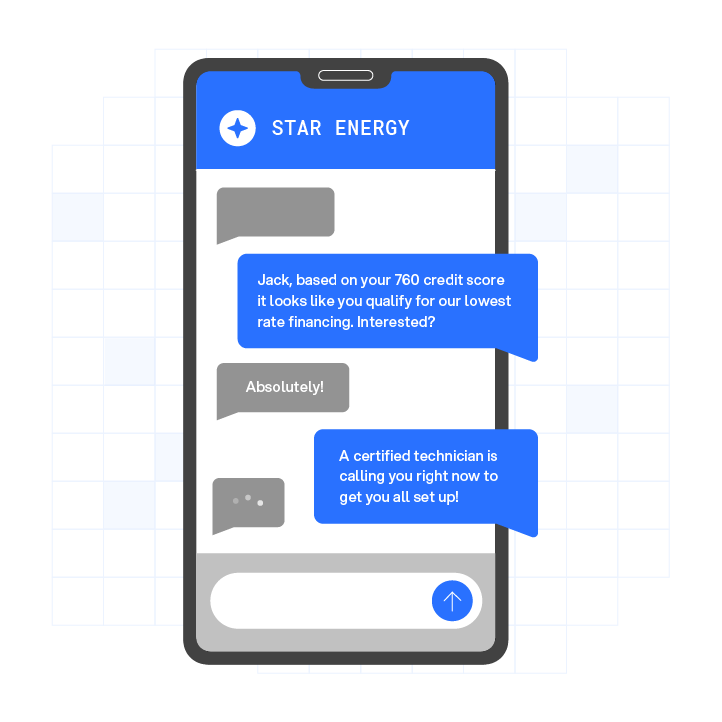
Proactive shipping notifications can reduce WISMO tickets and lower support costs per order. Customers who receive proactive delay notifications are 2.4x more likely to repurchase than customers who discover delays themselves, according to UPS post-purchase experience research.3
Automated Alerts That Match Each Order Stage
Plura’s AI customer service texting layer supports automated alert sequences tied directly to OMS status events. Each alert fires within seconds of a status change, with no manual queue or agent involvement for standard notifications.
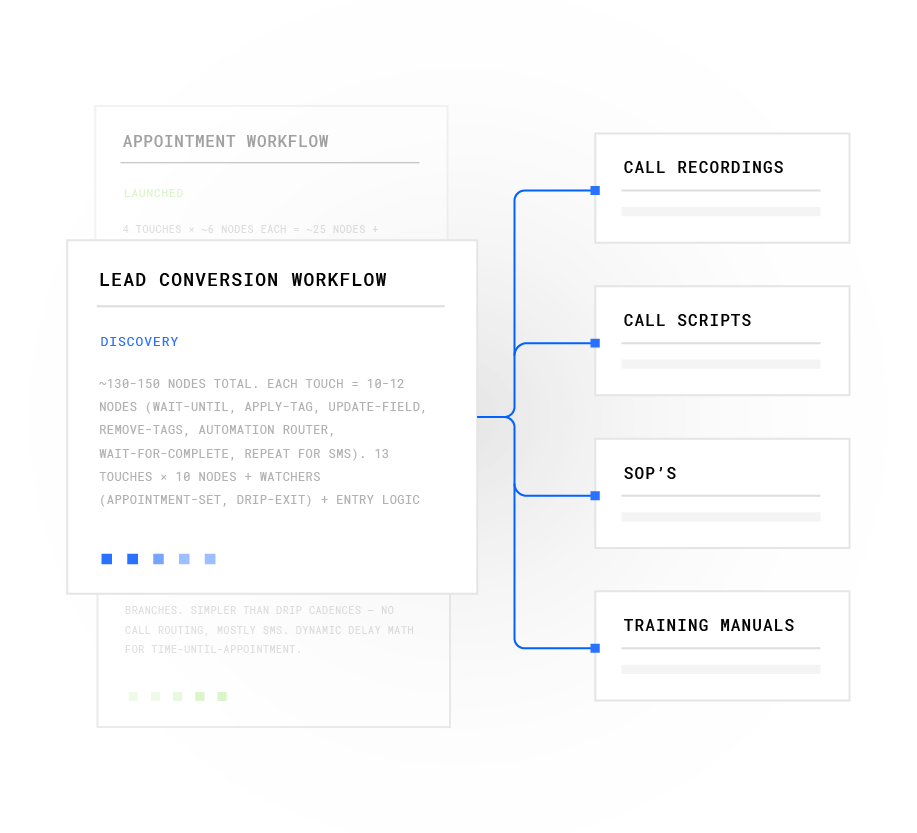
Alert types the notification layer handles include:
- Order confirmation at the Received stage
- Processing confirmation when inventory is allocated and fulfillment is triggered
- Shipment notification with carrier tracking link at the Shipped stage
- Out-for-delivery alert on the day of final delivery
- Delivery confirmation at the Delivered stage
- Exception alerts when delays, address issues, or carrier failures occur
Proactive automation for order lifecycle notifications can reduce inbound call volume and increase customer satisfaction compared to reactive-only support. In logistics, AI can resolve most shipment tracking and delivery status inquiries without human involvement.
Plura’s stateful conversation database keeps full context for every interaction. When a customer replies to a shipment alert with a question, the AI agent already has the order context and can respond without asking the customer to repeat information captured at checkout or in a prior interaction.
Book a live demo with Plura to see the notification layer in action.
Step 5: Set Compliance Guardrails for Automated Messaging
Automated SMS and RCS order notifications operate inside a regulatory framework that covers consent, opt-out handling, message content, timing, and data handling. Sellers should consult qualified counsel to understand their specific obligations. The following sections describe the frameworks and the features Plura provides to support compliance operations.
The Telephone Consumer Protection Act (TCPA), a 1991 U.S. federal law, restricts telemarketing communications including SMS, voice calls, and faxes, imposing penalties of $500 per non-compliant message or up to $1,500 per message for intentional violations.2 Many organizations retain consent records for multiple years.
10DLC registration is required for businesses sending non-personal A2P SMS to U.S. recipients, and carriers can fully block unregistered traffic.
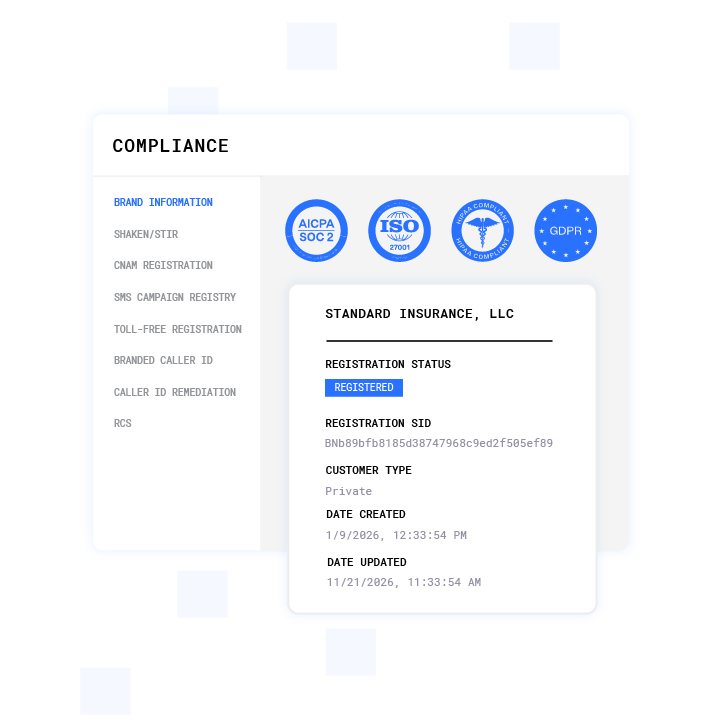
Plura supports compliance operations across these frameworks with the following platform features:
- TCPA compliance features: Timestamped, immutable consent records, real-time DNC scrubbing before every outbound contact, automated quiet-hours enforcement through time-zone detection
- DNC compliance features: Federal and state DNC registry checks on every outbound contact before dial or send
- SHAKEN/STIR caller ID verification: Authentication on every outbound voice call at the carrier level
- SOC 2: Continuous monitoring, penetration testing, and third-party audits on the underlying infrastructure
- HIPAA: End-to-end encryption, access controls, and audit logging for protected health information across all channels
- ISO certification: Certified infrastructure supporting enterprise security requirements
- GDPR: Coverage for operations involving European customer data
SMS delivery notifications must contain only information directly related to the order and avoid marketing content unless separate consent has been obtained. Plura’s platform supports content guardrails at the workflow level to keep transactional notifications within approved content boundaries. Consult qualified counsel for guidance on your specific consent, content, and record-keeping obligations.
Step 6: Test and Monitor the End-to-End Workflow
A multi channel order status workflow requires structured testing before full deployment and ongoing monitoring after go-live. Testing validates that status transitions trigger the correct notifications, that OMS sync rules fire within acceptable latency windows, and that exception handling routes correctly when carrier or inventory failures occur.
A structured testing sequence covers:
- End-to-end order simulation on each connected marketplace (Shopify, Amazon, eBay)
- Status transition verification at each of the four stages
- Notification delivery confirmation across SMS and RCS channels
- Inbound reply handling by the AI agent at each stage
- Exception scenario testing: address failure, carrier pickup failure, inventory discrepancy
- Opt-out processing verification across all notification channels
Once testing validates the workflow under controlled conditions, teams can shift focus to ongoing performance monitoring in production. Post-launch monitoring metrics to track include WISMO ticket volume as a percentage of total support contacts, average response time on order status inquiries, notification delivery rates by channel, and repeat purchase rates in the 90 days following delivery. Brands implementing proactive shipping notifications often see post-purchase NPS improvements.
Plura’s conversation intelligence layer surfaces patterns across the notification workflow, such as which message types generate the most inbound replies, which exception alerts produce the highest escalation rates, and where the AI agent handoff to a human agent most frequently occurs. Those signals feed directly into workflow tuning.
Compare plans and rates side by side to find the right tier for your order volume.
OMS-Only vs. OMS Plus AI SMS Automation
| Capability | OMS Only | OMS Plus AI SMS and RCS Automation |
|---|---|---|
| Order status sync across marketplaces | Real-time via API | Real-time via API |
| Customer notification at status change | Manual or basic email trigger | Automated SMS and RCS within seconds of status event, per Plura’s order status automation |
| WISMO ticket reduction | Minimal, customers still contact support for status | Significant reduction via proactive notifications |
| Inbound reply handling | Routed to human support queue | AI agent handles routine replies, escalates complex cases to human with full context |
| Compliance support features | Varies by OMS vendor | SOC 2, HIPAA, ISO certification, GDPR, SHAKEN/STIR caller ID verification, TCPA compliance, DNC compliance features built into the platform |
| Support cost per order | Higher WISMO handling cost | Lower support cost after automation |
Frequently Asked Questions
How long does it take to connect Shopify, Amazon, and eBay to a centralized OMS?
API connections to major marketplaces through tools like Shopify Marketplace Connect typically go live within days for standard configurations. More complex setups involving custom fulfillment routing rules, multiple warehouse nodes, or wholesale portal integrations can extend the timeline to several weeks. The OMS configuration itself, including status normalization mapping and sync rule setup, usually runs in parallel with marketplace connection work. Adding Plura’s AI SMS notification layer on top of an existing OMS connection follows a similar timeline. A straightforward notification workflow can be built and piloted within days, while a multi-step workflow with exception handling and inbound reply logic often runs closer to one to two weeks depending on conversation complexity.
What is the difference between order status tracking and order management?
Order management covers the end-to-end operational process, including receiving inventory, allocating stock, routing orders to fulfillment nodes, picking and packing, carrier booking, and returns processing. Order status tracking is the visibility and communication layer that sits on top of those operations. It aggregates status data from warehouses, carriers, and marketplaces into a single record, normalizes inconsistent platform terminology into a shared schema, and triggers outbound customer notifications at each stage transition. An OMS handles order management. A notification layer like Plura’s AI customer service texting handles order status tracking from the customer’s perspective.
How does Plura AI handle inbound customer replies to order status notifications?
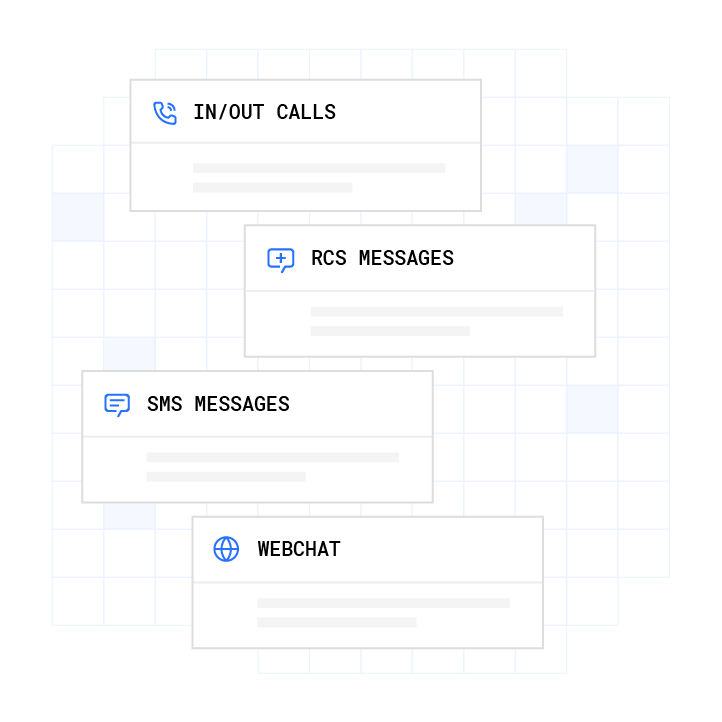
Plura’s AI agent reads from a stateful conversation database that holds the full context of every prior interaction with a customer across voice, SMS, RCS, and webchat. When a customer replies to a shipment notification with a question, the AI agent already has the order details, prior conversation history, and customer record. It handles routine replies, such as requests for tracking links or delivery window estimates, without human involvement. When a reply falls outside the workflow’s defined paths, the agent escalates to a human agent via warm transfer with full context already loaded, so the customer does not need to repeat information.
What compliance features does Plura provide for automated order status SMS?
Plura’s platform includes the compliance features detailed in Step 5, with specific capabilities including timestamped and immutable consent records, real-time DNC scrubbing before every outbound contact, automated quiet-hours enforcement through time-zone detection, end-to-end encryption for protected health information, and one-click audit-ready reporting exports. Plura provides the infrastructure. Customers are responsible for their own compliance obligations, certifications, and the claims they make to their end users. Consult qualified counsel for guidance on your specific regulatory requirements.
How does AI SMS automation reduce WISMO support tickets in multi-channel operations?
WISMO tickets appear when customers do not know the current status of their order and contact support to find out. Proactive AI SMS notifications close that information gap before customers reach out. When a customer receives an automated message at each status transition, including order confirmation, processing, shipment with tracking link, out-for-delivery, and delivery confirmation, the trigger for a WISMO inquiry is removed before it reaches the support queue. For orders that encounter exceptions such as carrier delays, proactive exception alerts serve the same function. Automated WISMO responses can handle most order status inquiries without human involvement, and proactive notifications can reduce ticket volume significantly.
Conclusion
Consistent multi channel order status across Shopify, Amazon, eBay, and other marketplaces requires two connected layers. A centralized OMS normalizes status data and syncs it in real time across channels, and an AI SMS and RCS notification layer converts status transitions into outbound customer communication without manual intervention. The OMS handles the operational side. Plura handles the customer-facing side, pushing automated alerts at each of the four standard stages, managing inbound replies through a stateful AI agent, and supporting compliance operations across the frameworks detailed earlier.
The result is a support operation where WISMO tickets decrease, support costs per order drop, and repeat purchase rates improve as customers receive proactive updates instead of discovering delays on their own.
Run your numbers through Plura’s ROI calculator to check your ROI in real time.
Compare plans and rates side by side to find the right tier for your order volume.
1 Plura AI maintains SOC 2, HIPAA, ISO, and GDPR posture as part of its platform infrastructure. References to compliance frameworks in this article describe Plura’s platform capabilities and do not constitute a guarantee that any customer using Plura will themselves be compliant with applicable laws or standards. Customers remain solely responsible for their own regulatory obligations, certifications, consent management, recordkeeping, and the claims they make to their own end users. Consult qualified legal counsel for guidance specific to your use case.
2 This article describes regulatory frameworks at a general level and does not constitute legal advice. Laws and regulations vary by jurisdiction, change over time, and apply differently depending on facts and circumstances. Readers should consult qualified legal counsel before making compliance decisions.
3 Performance figures, customer outcomes, and industry statistics referenced in this article are drawn from cited third-party sources or Plura customer case studies. Individual results vary based on implementation, use case, industry, audience, and execution. Past or aggregate performance is not a guarantee of future results.
4 References to third-party products, services, companies, or research are made for informational and comparative purposes only. Plura AI is not affiliated with, endorsed by, or sponsored by any third party named in this article unless explicitly stated. Trademarks and product names referenced remain the property of their respective owners.
This article is provided for informational purposes only and reflects Plura AI’s understanding at the time of publication. Product capabilities, integrations, and specifications are subject to change. For the most current information, visit plura.ai.
This article was produced with the assistance of AI tools and reviewed by Plura AI prior to publication.