
Written by: Matt Beucler, CEO, Plura AI
Key Takeaways
- Multi-line dialers lift sales productivity from 40–60 manual calls per rep per day to 200–300+ by dialing multiple lines and connecting reps only to live answers.1
- Speed-to-lead drives revenue. Companies responding within five minutes are 100x more likely to connect, and leads contacted within one minute convert 391% better than those reached after 24 hours.1
- High-impact evaluation criteria include voicemail detection, native CRM integration, branded caller ID with STIR/SHAKEN verification, real-time DNC scrubbing, and AI-powered lead prioritization.2
- Compliance risk is material. TCPA penalties can reach hundreds or thousands of dollars per call, so real-time DNC scrubbing, consent tracking, and carrier-level infrastructure matter.3
- Plura AI’s AI Predictive Dialer delivers carrier-grade compliance support, branded caller ID, and AI-driven prioritization. Book a live demo to see how it multiplies live conversations per hour.
The Problem: Manual Dialing Caps Productivity
Manual dialing yields 40–60 calls per rep per day. A multi-line dialer pushes that to 200–300 or more, according to Hot Prospector’s 2026 guide.4 That gap is the difference between a team that fills pipeline and one that runs out of day before it runs out of list.
Speed compounds the problem. Harvard Business Review research found that companies responding within five minutes are 100 times more likely to connect with a prospect than those waiting 30 minutes.1 Leads contacted within one minute are 391% more likely to convert than those contacted after 24 hours.1 Manual dialing queues make that SLA structurally impossible at any meaningful volume.
The hidden cost sits in how reps actually spend their time. Salesforce’s State of Sales research, cited by Ranktracker, puts direct selling time at approximately 28% of a rep’s day.4 The rest goes to dialing, voicemail navigation, and data entry. A multi-line dialer for sales teams becomes the single biggest productivity lever in outbound calling when leaders choose and deploy it correctly.
Book a live demo with Plura to see how the AI Predictive Dialer removes dead air and multiplies live conversations per hour.
What A Multi-Line Dialer Does And How It Works
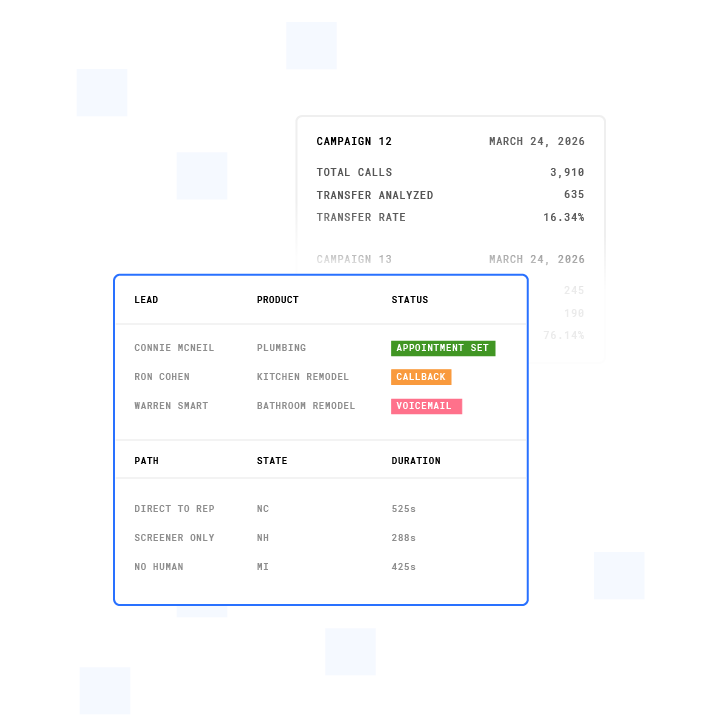
A multi-line dialer is a software tool that automatically dials multiple phone numbers simultaneously or sequentially and connects sales reps only to live answers. It filters out voicemails, busy signals, and disconnected numbers so reps spend more time talking and less time waiting between calls.
The mechanics are straightforward. The system dials from a contact list, uses call-progress detection to identify voicemail or busy signals, and routes only live answers to available reps. The rep never touches a keypad, and they move from conversation to conversation with near-zero idle time between them.
What Is A Triple Line Dialer?
A triple line dialer allows a single rep to handle three simultaneous call lines and connects them to whichever prospect answers first. It is a specific configuration of multi-line dialing popular in real estate and high-volume prospecting, as reflected in Mojo Dialer’s pricing structure, which separates single-line and triple-line plans at different price points.
How Multi-Line Dialers Differ From Power Dialers
A power dialer calls one number at a time per rep and works through a list sequentially. A multi-line dialer places multiple simultaneous calls per rep, typically 3–10 lines, which dramatically increases throughput. Trellus’s 2026 guide states that teams moving from manual dialing to a parallel dialer typically see 2–4 times more live conversations per hour.4
The ROI Case: What A Multi-Line Dialer Actually Delivers
The productivity math is direct. Hot Prospector’s 2026 guide reports the following output benchmarks by dialer type:
- Manual dialing: 40–60 calls per rep per day
- Single-line power dialer: 80–100 calls per rep per day
- Multi-line dialer (3–5 parallel lines): 200–300+ calls per rep per day
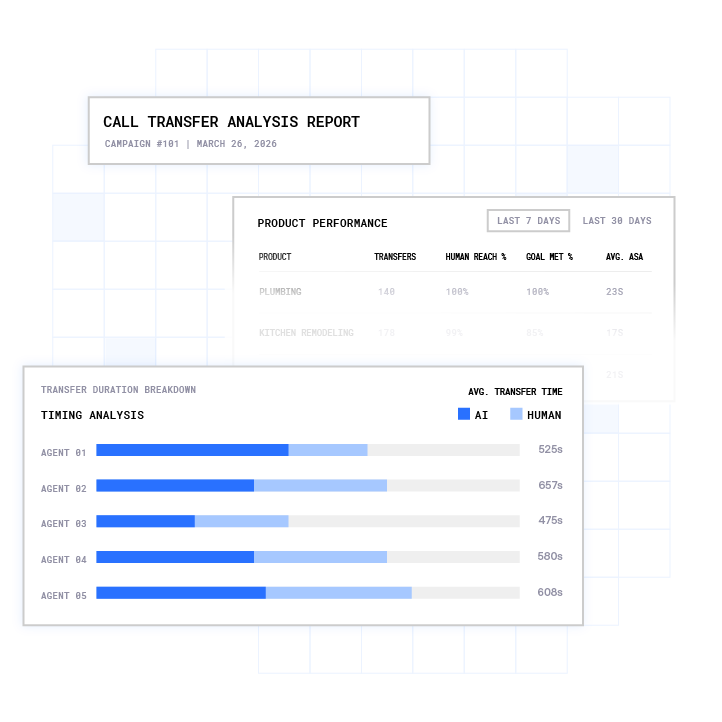
Teams moving from manual dialing to a multi-line dialer typically see 2–4 times more live conversations per hour, according to Trellus’s 2026 guide.1 That lift translates directly to meetings booked and pipeline created, not just higher activity counts.
Connect rates are a separate lever. When a call presents a company name instead of “Spam Likely,” screened calls turn into pickups. That is why branded caller ID matters, and it is a capability most API-reseller platforms cannot offer because they do not own the underlying carrier stack. Plura issues branded caller ID directly through its FCC-licensed carrier. Organizations deploying AI for speed to lead see connection rates increase by 3x to 5x.1
Scalability is the third dimension. One rep on a multi-line dialer can produce the output of three to five reps dialing manually.1 Teams can grow pipeline without matching headcount growth. Run your numbers through Plura’s ROI calculator to model the impact for your team size.
Key Features To Evaluate When Building Your Vendor Scorecard
Not all multi-line dialers are built the same. These criteria separate a compliance-ready, AI-capable platform from a basic auto-dialer and give you a practical order of operations for evaluation.
- Voicemail Detection And Automated Drop. Filters out answering machines so reps only talk to humans. Verify the platform’s approach aligns with applicable TCPA rules on prerecorded messages.3 Consult qualified counsel for your specific campaigns.
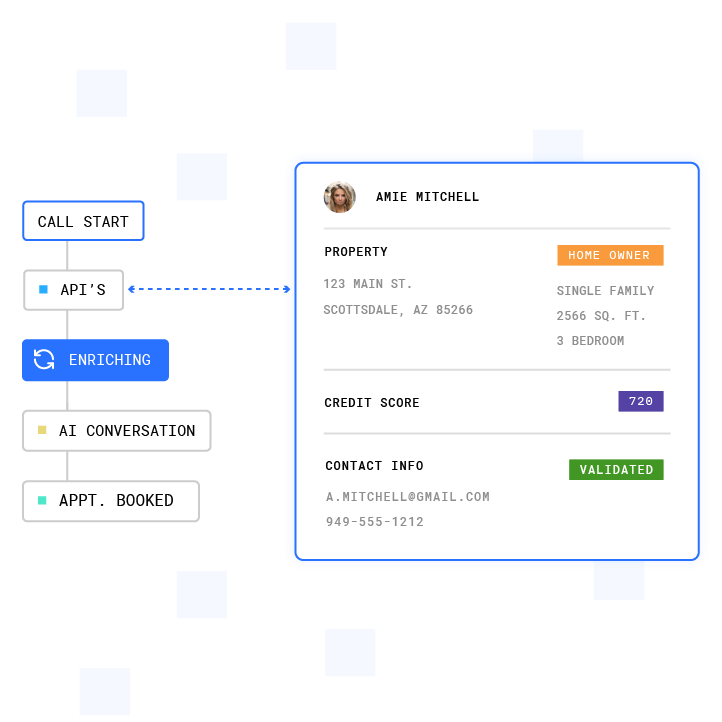
- CRM Integration Depth. Native, two-way sync with HubSpot, Salesforce, or your system of record. This depth of integration eliminates manual data entry. Automatic call logging, disposition sync, and screen-pop can save 15–20 minutes of admin work per rep per hour. Plura’s CRM integrations include native builds for HubSpot and Salesforce with bidirectional sync.
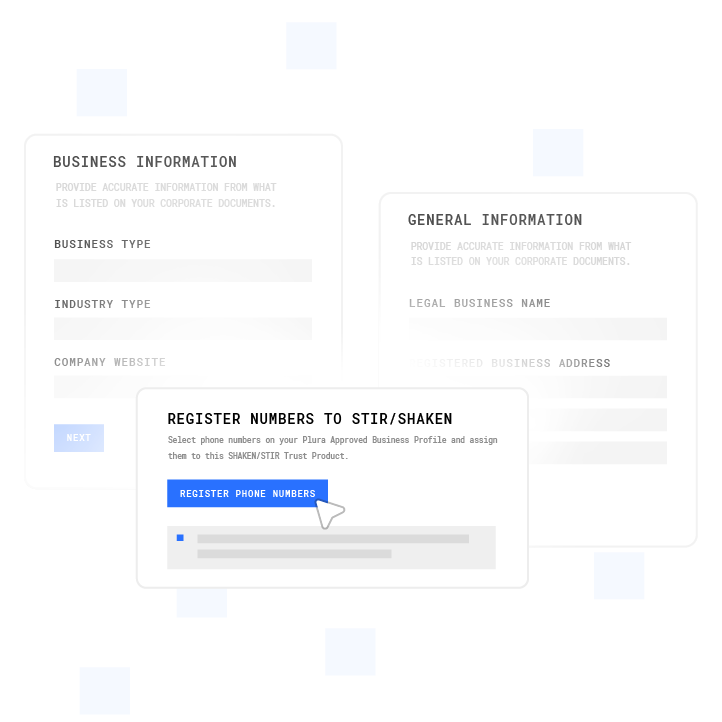
- Branded Caller ID And Number Reputation. Caller ID is a primary driver of connect rates. Ensure the vendor can issue branded caller ID at the carrier level, not through a third-party reseller. STIR/SHAKEN caller ID verification is a core requirement.2 Major carriers now actively downgrade or block calls from numbers without full STIR/SHAKEN attestation, and the answer-rate drop is often invisible in standard dialer dashboards.
- Compliance Guardrails. Real-time DNC scrubbing, consent tracking, calling-hour enforcement by time zone, and immutable consent logs support your compliance program. Refer to the TCPA penalties discussed below when sizing risk.
- AI Capabilities. Predictive dialing that prioritizes leads most likely to convert, real-time lead qualification, and conversation intelligence for coaching. AI and automation are now central to dialer value, according to Trellus’s 2026 guide.
- Scalability. Confirm the platform can handle 5 reps today and 50 next year. Check for seat minimums, line caps, and whether the dialer lives in a higher pricing tier. Hidden costs including per-minute charges, phone number fees, and add-on features can double effective monthly spend.
- Infrastructure Ownership. Determine whether the vendor is an FCC-licensed carrier or an API reseller. Carrier ownership affects caller ID authority, compliance enforcement, and per-minute economics. Plura is its own FCC-licensed audio bridging carrier, so voice does not route through a third-party CPaaS.
Compliance Considerations: TCPA, DNC, And Call Recording
Outbound calling operates within the TCPA (47 U.S.C. § 227) and FCC regulations (47 C.F.R. § 64.1200).3 Violations carry statutory damages of $500 per negligent violation and $1,500 per willful or knowing violation, with no cap on class size.3
DNC lists must be scrubbed against the National Do Not Call Registry at least every 31 days before each campaign, per the FTC Telemarketing Sales Rule.3 New FCC revocation rules effective April 11, 2025 require businesses to honor consumer opt-out requests made through any reasonable method within 10 business days across all channels.
On the one-to-one consent rule, the FCC’s November 2023 order requiring per-seller consent was struck down by the Eleventh Circuit in January 2025 and formally eliminated by the FCC in September 2025. Multi-seller consent remains available at the federal level as of the date of this article. State-level rules vary. At least 12 states have enacted mini-TCPA laws since 2021, several stricter than federal rules. Consult qualified counsel for your specific obligations and jurisdictions.
Call recording may require two-party consent in certain states. A dialer that supports compliance typically includes real-time DNC scrubbing, consent tracking, and quiet-hours enforcement. Plura’s AI Predictive Dialer includes these features as part of its platform, but no platform makes you compliant. As an FCC-licensed carrier, Plura supports compliance at the carrier level with STIR/SHAKEN caller ID verification on every call, branded caller ID issued under its own carrier identity, and real-time DNC scrubbing before dial.
Traditional Vs. AI-Powered Multi-Line Dialers: A Comparison
This comparison highlights how AI changes core dialing functions, from pacing and prioritization to compliance support and caller ID control.
| Evaluation Criteria | Traditional Multi-Line Dialer | AI-Powered Dialer (e.g., Plura AI) |
|---|---|---|
| Dialing Logic | Simultaneous dialing, connects to first live answer (Trellus 2026) | Predictive pacing based on historical answer rates and conversion signals (Plura AI) |
| Lead Prioritization | Sequential list order (Trellus 2026) | AI scores leads by likelihood to convert before dialing, using stateful conversion signals (Plura AI) |
| Compliance Enforcement | DNC scrubbing typically as a batch process (Receipts Group) | Real-time DNC and TCPA-litigator screening before every dial, immutable consent logs (Plura AI) |
| Caller ID | Local presence or third-party numbers, variable STIR/SHAKEN attestation (Receipts Group) | Branded caller ID issued at carrier level with STIR/SHAKEN caller ID verification on every call (Plura AI) |
With those differences in mind, leaders can move from comparison to selection using a structured decision framework.
How To Choose The Right Multi-Line Dialer: A Decision Framework
The dialer you choose is a compliance and infrastructure decision as much as a software purchase. Most vendors in this space are resellers who cannot provide carrier-level protection. Work through this checklist before committing:
- Call Volume And Team Size: Under 50 dials per rep per day, a basic power dialer often suffices. Above 150, multi-line becomes the appropriate architecture.
- CRM Integration: Identify your CRM first. Native integration beats Zapier middleware. Middleware introduces 30–60 second sync delays, fails silently when rate limits are hit, and creates duplicate records that corrupt pipeline data. Plura’s CRM integration stack includes native builds for HubSpot and Salesforce.
- Compliance Requirements: Industry-specific frameworks such as HIPAA for healthcare and state mini-TCPAs like Florida’s FTSA can influence vendor selection. Consult qualified counsel.
- Budget And Pricing Model: Per-seat pricing ranges from $29–$250+ per user per month. Check for hidden costs such as seat minimums, per-minute charges, and add-on features. Review Plura’s plans for transparent pricing.
- Infrastructure Ownership: Ask vendors directly whether they are an FCC-licensed carrier or a reseller. The answer determines caller ID authority and how deeply they can support compliance.
- AI Readiness: Confirm whether the platform can qualify leads, prioritize call lists, and provide conversation intelligence. These capabilities separate 2026 dialers from 2019 tools.
Plura’s AI Predictive Dialer is an FCC-licensed carrier platform with branded caller ID, real-time DNC scrubbing, AI-powered lead prioritization, and native CRM integrations. Typical deployments go live in 48 hours.
Book a live demo with Plura and see the AI Predictive Dialer running on carrier-grade U.S. infrastructure.
Implementation And Training Best Practices
- Clean And Segment Your Call Lists. Remove duplicates, validate numbers, and suppress DNC-registered contacts before uploading. Expect to suppress 15–35% of a typical purchased list after NCOA, phone validation, and DNC scrubbing.
- Configure Compliance Rules. Set calling hours by time zone, enable real-time DNC sync, and verify consent records are attached to each contact before any campaign goes live.
- Integrate With Your CRM. Test disposition sync with dummy records before going live. Confirm that call outcomes, recordings, and notes write to the correct CRM fields automatically.
- Train Reps On The New Workflow. Role-based training for SDRs versus AEs improves adoption and confidence. Include hands-on practice with the dialer interface.
- Run A Pilot Campaign. Start with 3–4 experienced agents and 500 contacts. Monitor abandon rate, talk time, and disposition accuracy.
- Monitor And Iterate. Track connect rate, conversations per hour, and conversion. Adjust dialing pace and calling windows based on data.
Common Pitfalls To Avoid
Several recurring mistakes undermine dialer rollouts and erode ROI. The most serious involves compliance architecture. A dialer without real-time DNC scrubbing becomes a liability engine. TCPA class actions can reach tens of millions, and Capital One paid $75.5 million in 2019 to settle a TCPA class action over automated calls to cell phones.
Next, choosing a dialer that does not integrate with your CRM creates data gaps and forces manual logging, which erases productivity gains. Focusing only on dial volume creates a similar blind spot. The metric that matters is qualified conversations per hour.
Number reputation is another frequent oversight. “Spam Likely” labels typically cut connect rates by 40–60%, with some research showing drops as high as 70–90%. Leaders should confirm that their vendor actively manages caller ID reputation at the carrier level.
Finally, skipping a pilot campaign exposes the full team to configuration issues. A 500-contact pilot with 3–4 agents surfaces most workflow and routing problems before a broad rollout.
Frequently Asked Questions
What Is The Best Multi-Line Dialer For Sales Teams?
The best choice depends on team size, CRM, and compliance needs. For teams prioritizing carrier-grade compliance support, branded caller ID, and AI-powered prioritization, Plura’s AI Predictive Dialer provides an FCC-licensed infrastructure advantage that many competitors do not match. Most competing platforms are API resellers built on top of third-party CPaaS providers, which means they cannot issue branded caller ID under their own carrier identity or enforce compliance controls before the call leaves the network. Plura can perform those functions as the carrier. A strong evaluation starts by asking vendors whether they are an FCC-licensed carrier or a reseller, because that single question narrows the field quickly.
How Much Does A Multi-Line Dialer Cost?
Pricing ranges from $29–$250+ per user per month depending on features and dialing mode. Entry-level power dialers start around $29–$49 per user per month on annual billing. Multi-line and predictive dialers command a premium, typically $95–$250 per user per month, with dedicated parallel dialer platforms often priced higher and requiring seat minimums. Hidden costs such as per-minute charges, phone number fees, and add-on features for compliance or AI capabilities can significantly increase effective monthly spend. Review Plura’s plans for current rates.
What Is A Triple Line Dialer?
A triple line dialer allows one rep to manage three simultaneous call lines and connects to whichever prospect answers first. It is a common configuration in real estate prospecting and is offered as a distinct product tier by vendors like Mojo Dialer. For most B2B sales teams, a platform that supports 3–10 configurable lines with AI-powered pacing delivers better outcomes than a fixed triple-line configuration, because the optimal number of simultaneous lines varies by list quality, answer rate, and team size.
How Does A Multi-Line Dialer Work?
A multi-line dialer automatically dials multiple numbers simultaneously from a contact list, uses call-progress detection to identify voicemails, busy signals, and disconnected numbers, and routes only live answers to available reps. The rep receives the connected call with a screen-pop of the contact’s CRM record and moves directly into the conversation. An AI-powered dialer adds a prioritization layer before dialing. It scores leads by historical answer rates and conversion signals so the system calls the contacts most likely to convert first, rather than working through a list in sequential order.
Is A Multi-Line Dialer Legal?
Multi-line dialers can be used within the frameworks of the TCPA, FTC Telemarketing Sales Rule, and state-level calling laws. Key considerations often include prior express written consent for certain marketing calls to mobile numbers using an automatic telephone dialing system, DNC list scrubbing at least every 31 days, calling-hour restrictions by time zone, and abandon-rate limits under FCC rules. State mini-TCPA laws in Florida, California, Oklahoma, and others introduce additional requirements. No platform makes you compliant, so consult qualified counsel for your specific campaigns, jurisdictions, and contact types.
What Is The Difference Between A Multi-Line Dialer And A Power Dialer?
A power dialer calls one number at a time per rep and works through a list sequentially. A multi-line dialer places multiple simultaneous calls per rep, typically 3–10 lines, and connects the rep to whichever prospect answers first. Multi-line dialing delivers 3–5 times more calls per rep per day than single-line systems. The trade-off is compliance complexity, because multi-line dialing requires tighter abandon-rate management and more rigorous list hygiene to stay within FCC thresholds. For teams making fewer than 50 dials per rep per day, a power dialer often covers the need. Above 150 dials per day, multi-line becomes the more appropriate architecture.
Conclusion: Choose A Dialer That Scales With Your Operation
A multi-line dialer for sales teams is the single biggest productivity lever in outbound calling. The right choice depends on compliance architecture, CRM integration depth, and AI readiness, not only dial speed. Vendors who cannot issue branded caller ID at the carrier level, enforce real-time DNC scrubbing before dial, or hold conversation context across channels are selling a software subscription instead of an infrastructure solution.
Plura AI’s AI Predictive Dialer combines carrier-grade compliance support, branded caller ID, AI-powered lead prioritization, and native CRM integrations on 100% U.S. infrastructure. It supports TCPA compliance, DNC compliance, SOC 2, HIPAA, ISO certification, and STIR/SHAKEN caller ID verification as first-class platform layers, not bolt-on features.2 Deployments typically go live in 48 hours.
Book a live demo with Plura to see how the AI Predictive Dialer can multiply your team’s live conversations while supporting your compliance strategy.
1 Performance figures, customer outcomes, and industry statistics referenced in this article are drawn from cited third-party sources or Plura customer case studies. Individual results vary based on implementation, use case, industry, audience, and execution. Past or aggregate performance is not a guarantee of future results.
2 Plura AI maintains SOC 2, HIPAA, ISO, and GDPR posture as part of its platform infrastructure. References to compliance frameworks in this article describe Plura’s platform capabilities and do not constitute a guarantee that any customer using Plura will themselves be compliant with applicable laws or standards. Customers remain solely responsible for their own regulatory obligations, certifications, consent management, recordkeeping, and the claims they make to their own end users. Consult qualified legal counsel for guidance specific to your use case.
3 This article describes regulatory frameworks at a general level and does not constitute legal advice. Laws and regulations vary by jurisdiction, change over time, and apply differently depending on facts and circumstances. Readers should consult qualified legal counsel before making compliance decisions.
4 References to third-party products, services, companies, or research are made for informational and comparative purposes only. Plura AI is not affiliated with, endorsed by, or sponsored by any third party named in this article unless explicitly stated. Trademarks and product names referenced remain the property of their respective owners.
This article is provided for informational purposes only and reflects Plura AI’s understanding at the time of publication. Product capabilities, integrations, and specifications are subject to change. For the most current information, visit plura.ai.
This article was produced with the assistance of AI tools and reviewed by Plura AI prior to publication.