
Written by: Matt Beucler, CEO, Plura AI
Key Takeaways for Multi-Location Call Handling
- A multi-location AI receptionist unifies call handling, routing, and booking across every branch from a single platform while maintaining per-location calendar sync and compliance.
- Carrier-level infrastructure delivers sub-five-second answer times, STIR/SHAKEN branded caller ID, and real-time DNC/TCPA enforcement that generic CPaaS wrappers cannot match.
- Per-location data isolation and unified analytics give corporate teams real-time visibility into answer rates, booking rates, and conversion without manual reporting from each site.
- Franchise, healthcare, and home-services operators report doubling booking rates and eliminating missed calls after replacing inconsistent human receptionists with a standardized AI agent.3
- Book a live demo with Plura AI to see how its FCC-licensed carrier stack performs across your multi-location call flow.
7-Step Checklist to Deploy a Multi-Location AI Receptionist
- Audit call volume per location. Pull 90 days of inbound call data by branch. Identify peak-hour miss rates and after-hours gaps before you configure any routing logic.
- Map per-location calendars. Connect each branch calendar (Google Calendar, Calendly, Cal.com) to the platform. The AI checks real-time availability before booking against each local calendar, not a shared master calendar.
- Configure intelligent branch routing. Define routing rules by ANI, ZIP code, service type, and time-of-day. Every caller should reach the correct location on the first attempt.
- Set branded caller ID per location. Issue STIR/SHAKEN-authenticated caller ID at the carrier level for each branch number. Outbound follow-up calls then present the local brand, not a generic number.
- Load compliance rule sets. Pre-load federal and state DNC registries, quiet-hours windows by time zone, and TCPA consent records before any outbound contact fires.
- Define human-escalation protocols. Write explicit escalation criteria for each location. Specify which call types transfer to a live agent, what context packet transfers with the call, and which queue receives it.
- Activate unified analytics. Connect per-location dashboards to a central reporting layer. Corporate can then track answer rates, booking rates, and conversion by branch in real time.
Walk through this checklist against your current call stack in a live demo with Plura.
AI Receptionist Impact for Franchise Networks
AI receptionist deployments across franchise networks address the largest operational problem in multi-unit systems. Performance often varies 3 to 5 times between the best and worst locations, driven by front-desk staff turnover that runs 30 to 50% annually in franchise environments.
When a human receptionist leaves, call answer rates at that location drop immediately. Plura’s AI voice agent answers 100% of inbound calls across all franchise locations within two rings. Every unit uses the same greeting and qualification script, regardless of staffing conditions.
The revenue impact compounds at scale. When Plura handles 3 to 5 times call volume during peak seasons without temporary staff3, even a 5% improvement in call capture can represent significant additional revenue per year. That matters for franchise networks running Medicare AEP, tax season, or holiday surges across dozens of locations simultaneously.
One multi-unit franchise owner in home services saw exactly that result: “We went from missing 40% of our calls across 12 locations to answering 100% of them. Our booking rate doubled and we did it without adding a single receptionist.”3
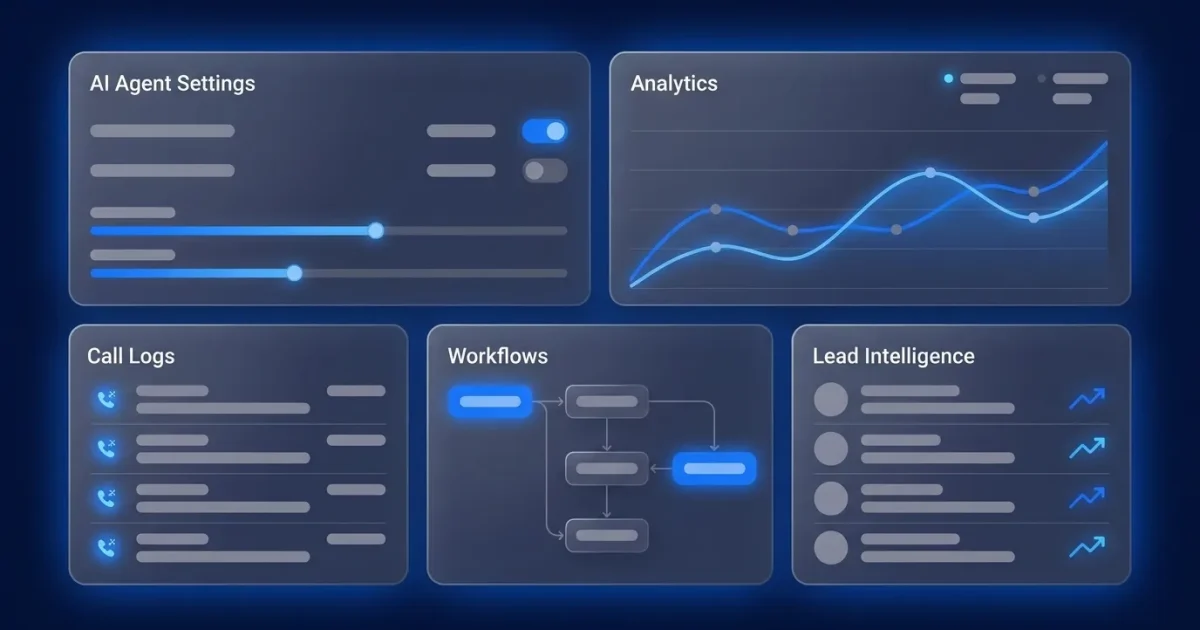
Centralized dashboards track per-location metrics including answer rates, booking rates, and lead response times. Corporate gains visibility that previously required manual reporting from each franchisee.
Per-Location Calendar Sync for Accurate Booking
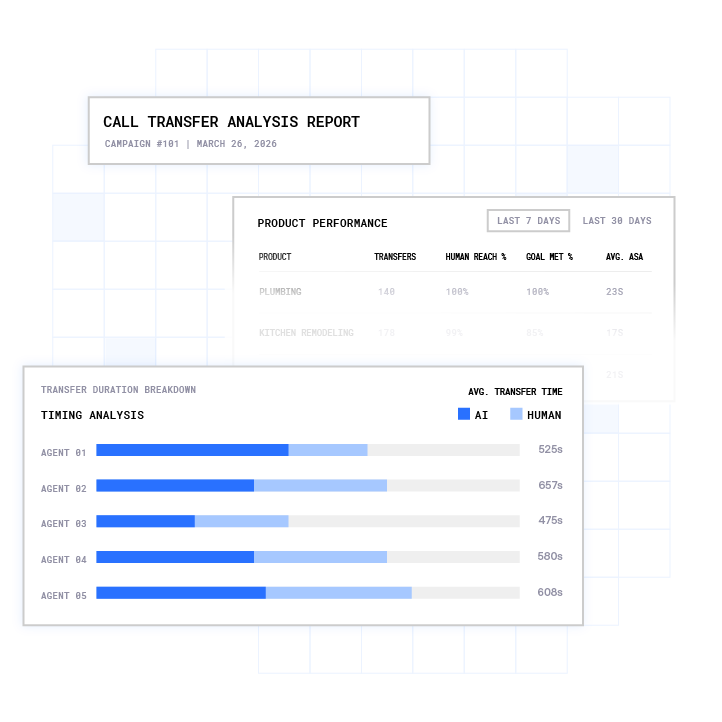
Per-location calendar sync is the technical requirement that separates a functional multi-location AI receptionist from one that creates double-bookings and frustrated callers. Each branch runs its own schedule, its own service types, and its own time zone. A shared master calendar cannot reflect that level of detail.
The architecture that works uses a three-layer approach. The intent layer parses duration, service type, and preferred time from natural language. The availability engine queries each location’s calendar via API with time-zone conversion and working-hours filtering. The proposal layer presents confirmed slots and creates the event with the correct location details. To prevent double-booking, the workflow re-checks availability immediately before event creation. If a slot was taken between proposal and confirmation, the system offers the next available option.
Plura integrates natively with Google Calendar, Calendly, and Cal.com across its 50+ integrations. Each location’s calendar is isolated so the AI books against branch-specific availability, not a network-wide pool. Time-zone handling is automatic. The system anchors bookings to the branch’s local time zone and confirms that time zone with the caller to prevent cross-time-zone errors in multi-state deployments.
For healthcare and home services operators, this connects directly to no-show rates. Plura supports automated confirmation and reminder workflows tied to each location’s calendar that can help reduce no-shows.
Multi-Location AI Receptionist Compliance Landscape
Compliance exposure in multi-location AI voice deployments is not uniform across states. Eleven states maintain their own DNC lists alongside the National DNC Registry, and state mini-TCPA laws impose additional requirements that vary by an order of magnitude. Florida requires prior express written consent for automated sales calls with penalties of $500 per violation ($1,500 willful), while Connecticut imposes penalties up to $11,000 per violation ($25,000 willful) and Oklahoma imposes penalties up to $25,000 per violation with no daily call limit.2 Because penalties vary this widely, multi-state operators must apply the most restrictive rule based on the called party’s state, not the operator’s home state.
TCPA litigation has increased significantly in recent years. TCPA violations carry statutory damages of $500 to $1,500 per unsolicited call or text, with class action settlements averaging $6.6 million in 2023.2
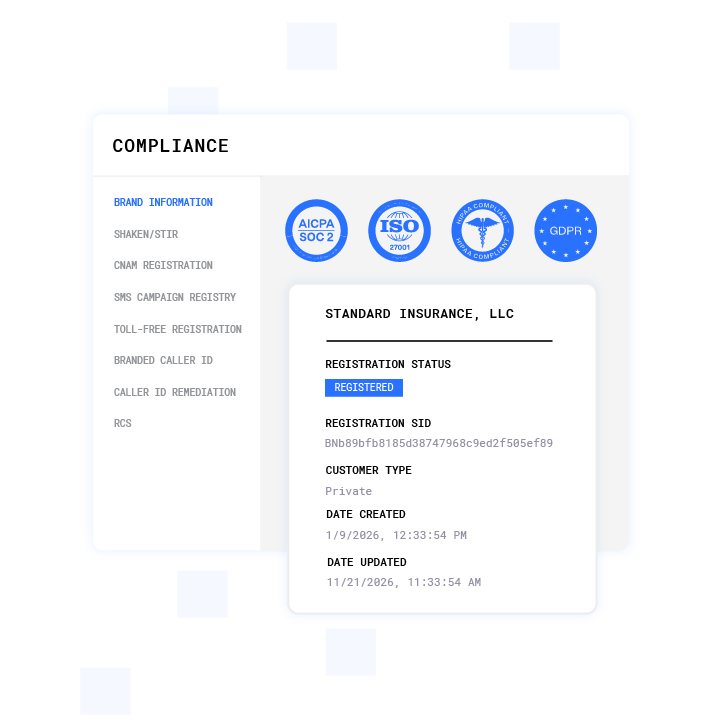
Plura supports compliance through a carrier-level enforcement architecture. The platform’s compliance engine pre-loads federal and state DNC registries, enforces quiet-hours rules automatically through time-zone detection, timestamps and stores TCPA consent records in an immutable ledger, and exports audit-ready reports in one click. Plura’s compliance framework includes SOC 2 infrastructure, HIPAA-aligned controls, ISO certification, GDPR coverage, SHAKEN/STIR caller ID verification, TCPA compliance tooling, and DNC compliance enforcement.1 Customers are responsible for their own regulatory obligations, and Plura provides the infrastructure layer.
The table below contrasts the compliance architecture of generic CPaaS-based tools against an FCC-licensed carrier stack:
| Capability | Generic CPaaS Wrapper | FCC-Licensed Carrier Stack (Plura) | Why It Matters |
|---|---|---|---|
| Real-time DNC/TCPA enforcement | Third-party bolt-on, post-dial | Carrier-level, pre-dial scrubbing | Non-compliant numbers blocked before first attempt |
| STIR/SHAKEN authentication | Inherited from CPaaS provider’s reputation | Issued at origination on every outbound call | Destination carrier verifies legitimate origination |
| Branded caller ID | Not available without third-party reseller | Carrier-provisioned per location | Calls present local brand name, not “Spam Likely” |
| 100% U.S. data residency | Dependent on CPaaS vendor’s infrastructure choices | U.S. infrastructure by architecture | Eliminates FCC NPRM offshore data exposure |
RingCentral AI Receptionist: Multi-Location CPaaS Limits
RingCentral’s AI receptionist capabilities are built on top of a third-party CPaaS layer rather than an owned carrier stack.4 This architecture creates three compounding gaps for multi-location operators.
First, branded caller ID cannot be issued at the carrier level when the platform does not own the carrier. Calls originate on a shared infrastructure pool, which means outbound follow-up from any location inherits the CPaaS provider’s number reputation rather than the operator’s local brand identity.
That caller ID gap affects pickup rates, which makes the second problem worse. DNC and TCPA compliance enforcement sits outside the call path. Scrubbing happens as a software layer on top of the telecom, not at origination, which introduces latency between list updates and enforcement. The National Do Not Call Registry must be scrubbed against call lists at least every 31 days, and internal DNC updates must be processed within 10 business days. A bolt-on compliance layer creates audit gaps that a carrier-level system avoids.
Even if a call gets through, the third gap appears. Per-location calendar sync and data isolation require custom integration work on CPaaS-based platforms. There is no native per-branch calendar routing or location-specific data isolation built into the call path. Multi-location operators end up managing that logic through middleware, which adds engineering cost and failure points.
Plura owns its FCC-licensed audio bridging carrier. Voice originates on Plura’s domestic infrastructure, which is why branded caller ID, real-time DNC scrubbing, and STIR/SHAKEN authentication function as platform features rather than third-party add-ons.
Synthflow Multi-Location: API Wrapper Constraints
Synthflow operates as a software layer on top of Twilio infrastructure without an FCC carrier license.4 Synthflow depends on Twilio and operates as a software layer without a carrier license, while Plura owns its telecom infrastructure and holds an FCC carrier license.
For multi-location operators, this distinction has direct operational consequences. Carrier-provisioned branded caller ID is not available on Synthflow. Calls present with Twilio’s number pool reputation, not the operator’s local brand. In a multi-location deployment where each branch needs its own caller ID identity, that gap affects pickup rates across the entire network.
The compliance architecture follows the same pattern. Without carrier ownership, real-time DNC enforcement and STIR/SHAKEN authentication depend on Twilio’s implementation, not the platform’s own controls. Operators using Synthflow for multi-location deployments carry the compliance posture of their CPaaS provider, not a dedicated carrier stack.
Per-location stateful context is also absent. Synthflow does not maintain a cross-channel stateful conversation database, so a caller who texted one branch and called another starts from zero context on the second interaction. Plura’s Stateful Conversation Database keys every interaction to a customer token across voice, SMS, RCS, and AI webchat, so context persists across every branch and every channel.
Architecture for Multi-Location AI Receptionist Deployments
A production-grade multi-location AI receptionist requires four architectural components that form a closed loop. Intelligent routing directs each call to the correct branch. Per-location data isolation keeps each branch operating independently. Unified analytics surface performance gaps across the network. Human-escalation protocols catch edge cases that fall outside the AI’s scope.
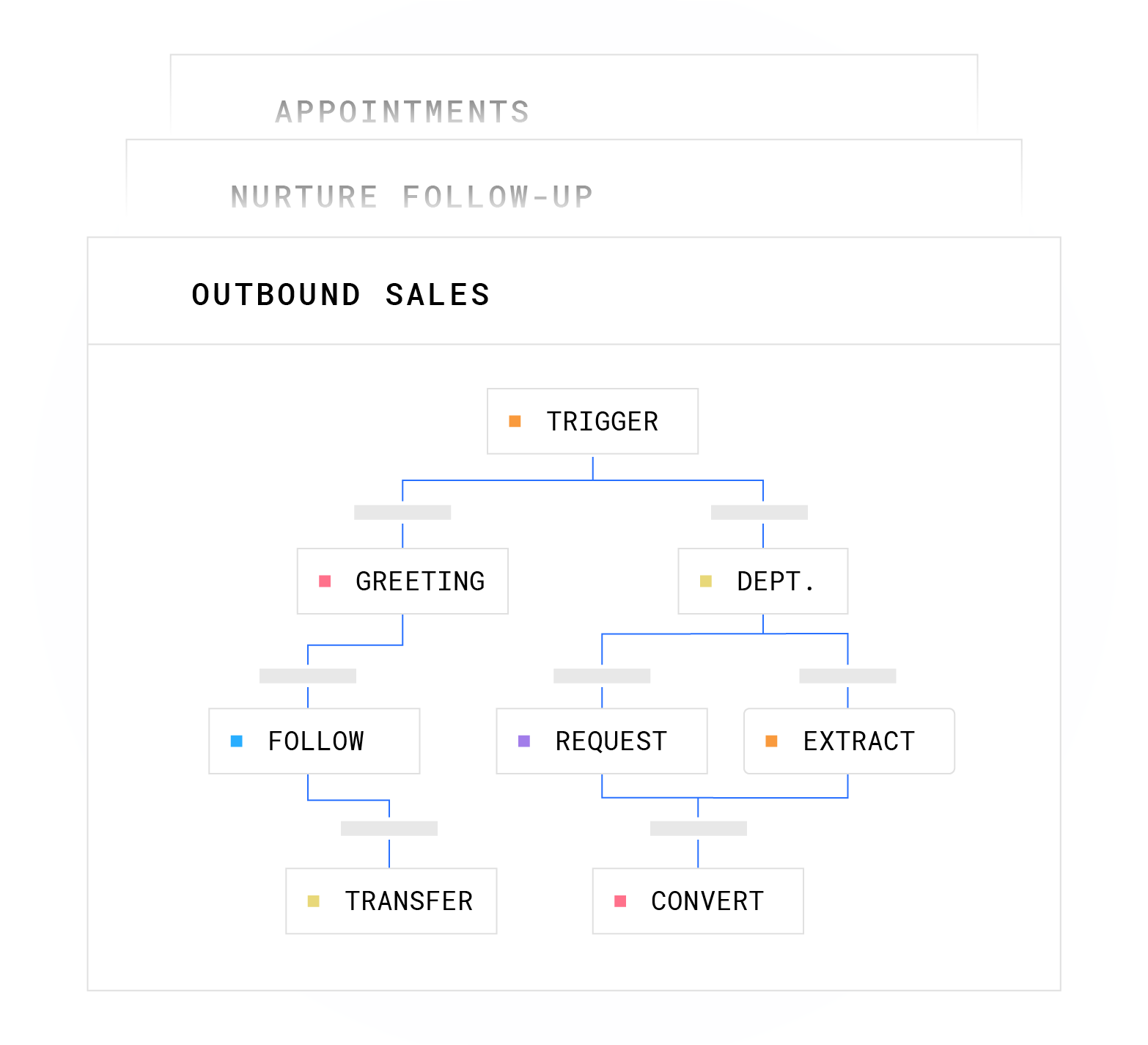
- Intelligent branch routing. The routing engine resolves the caller’s intended branch from ANI, ZIP code, spoken intent, or CRM lookup in under 500 milliseconds. For multi-location operations, AI routing respects each location’s specific business hours and holiday calendar, books into the branch’s real-time availability, and routes overflow or after-hours calls to open offices or an AI overflow queue. Warm transfers pass a structured context packet including verified identity, classified intent, and conversation summary to the receiving agent.
- Per-location data isolation. Each branch’s call records, calendar data, and customer context are stored in isolated partitions. Data isolation in agentic AI requires architectural enforcement across infrastructure, session, model, and data residency layers so that one location’s data cannot be accessed or influenced by another tenant. Plura’s 100% U.S. infrastructure supports data residency requirements across all locations without offshore exposure.
- Unified analytics. Per-location metrics feed a central dashboard that tracks answer rates, booking rates, lead response times, and conversion by branch. Standardizing key metric definitions across all sites and replacing manual spreadsheet consolidation with automated daily data feeds enables unified analytics without forcing sites to abandon their existing local tools. Plura’s business intelligence layer surfaces anomalies and weekly performance digests automatically.
- Human-escalation protocols. Every workflow node carries explicit escalation criteria. When a caller’s request falls outside defined paths, the AI warm-transfers to a U.S. agent with full conversation context, flags the interaction in the Unified Inbox, or routes to a designated escalation queue. The AI avoids improvising on outcomes that carry compliance or brand risk.
Frequently Asked Questions
How does a multi location AI receptionist maintain consistent service quality across all branches?
Plura deploys the same AI voice agent script, greeting, and qualification logic across every location from a single platform. There is no script drift between branches because the AI does not freelance. Corporate sets the approved workflow, and every location runs it identically. Centralized dashboards track per-location answer rates and booking rates so operators can identify underperforming branches in real time rather than waiting for monthly reports.
Can the AI handle emergency triage calls at individual locations?
Yes. Plura’s workflow builder supports explicit escalation nodes that trigger on keywords, caller intent, or call type. Emergency or urgent calls route immediately to a designated human agent or on-call queue with a full context packet, including the caller’s identity, the reason for the call, and any prior interaction history. The AI does not attempt to resolve calls that fall outside its defined workflow boundaries.
How does the platform enforce multi-state quiet-hours rules automatically?
Plura’s compliance engine applies time-zone detection to every outbound contact and enforces the applicable state calling window before any call or message fires. For multi-state operators, the system applies the most restrictive rule based on the called party’s location. Quiet-hours enforcement is automatic and does not require manual configuration per campaign. Operators should consult qualified counsel regarding their specific obligations under applicable state and federal frameworks.
What happens to calls that come in after a branch closes?
After-hours calls route to Plura’s AI voice agent, which answers immediately (within two rings, as described earlier), handles intake and booking against the next available slot in that branch’s calendar, and sends a confirmation. No call goes to voicemail. The branch opens the next morning with bookings already logged to its calendar and CRM. This is the same capability Plura delivers for after-hours call answering across home services, healthcare, and franchise networks.
How does per-location data isolation work in practice?
Each branch’s call records, calendar data, consent logs, and customer context are stored in isolated partitions within Plura’s U.S. infrastructure. A customer interaction at one location does not surface in another location’s dashboard or AI context unless the operator explicitly configures cross-location data sharing. This supports both brand consistency and the data residency requirements that apply to regulated industries including healthcare and financial services.
What is the total cost of ownership difference between a human receptionist network and Plura across 10+ locations?
A human receptionist position carries a fully loaded annual cost of $51,000 to $69,000 per seat. Across 10 locations, that is $510,000 to $690,000 annually before accounting for the turnover costs mentioned earlier, training expenses, and coverage gaps during vacancies. Plura’s TCO across equivalent volume runs $300,000 to $700,000 for the full platform, replacing a traditional contact-center cost structure of $4 million to $7 million at higher volumes. The platform operates at 100% talk utilization with no turnover cost, no training ramp, and no after-hours staffing premium. Run your numbers through Plura’s ROI calculator to model your specific location count and call volume.
Conclusion: Carrier-Level AI Receptionist for Multi-Location Teams
A multi location AI receptionist built on a CPaaS wrapper cannot deliver branded caller ID at the carrier level, enforce DNC and TCPA compliance at origination, or guarantee 100% U.S. data residency by architecture. Those capabilities require owning the carrier stack, which separates Plura from every other platform in this category.
For franchise networks, healthcare operators, and home services companies running thousands of calls per month across multiple branches, the operational math stays direct. Sub-five-second answer times, per-location calendar sync, real-time compliance enforcement, and unified analytics appear across every site without linear headcount growth or offshore regulatory exposure.
Run your numbers through Plura’s ROI calculator to see what the carrier-stack difference produces at your call volume and location count.
1 Plura AI maintains SOC 2, HIPAA, ISO, and GDPR posture as part of its platform infrastructure. References to compliance frameworks in this article describe Plura’s platform capabilities and do not constitute a guarantee that any customer using Plura will themselves be compliant with applicable laws or standards. Customers remain solely responsible for their own regulatory obligations, certifications, consent management, recordkeeping, and the claims they make to their own end users. Consult qualified legal counsel for guidance specific to your use case.
2 This article describes regulatory frameworks at a general level and does not constitute legal advice. Laws and regulations vary by jurisdiction, change over time, and apply differently depending on facts and circumstances. Readers should consult qualified legal counsel before making compliance decisions.
3 Performance figures, customer outcomes, and industry statistics referenced in this article are drawn from cited third-party sources or Plura customer case studies. Individual results vary based on implementation, use case, industry, audience, and execution. Past or aggregate performance is not a guarantee of future results.
4 References to third-party products, services, companies, or research are made for informational and comparative purposes only. Plura AI is not affiliated with, endorsed by, or sponsored by any third party named in this article unless explicitly stated. Trademarks and product names referenced remain the property of their respective owners.
This article is provided for informational purposes only and reflects Plura AI’s understanding at the time of publication. Product capabilities, integrations, and specifications are subject to change. For the most current information, visit plura.ai.
This article was produced with the assistance of AI tools and reviewed by Plura AI prior to publication.