
Written by: Matt Beucler, CEO, Plura AI
Key Takeaways
- Nextiva call center automation focuses on the conversation layer with XBert AI receptionist, NLP intent routing, real-time transcription, progressive and predictive dialing, and a no-code workflow builder.
- Nextiva relies on external carriers, so carrier-level branded caller ID, STIR/SHAKEN control, and real-time DNC scrubbing sit outside its direct control.4
- Published Essential contact center pricing starts at $75 per agent per month, while AI transcription is usage-based and XBert is a separate $99 per month add-on.
- High-volume operations feel the impact of missing carrier-layer control in pickup rate and compliance posture, which is where Plura AI focuses.
- Teams that need branded caller ID, STIR/SHAKEN, real-time DNC, and cross-channel memory in one stack can see Plura AI in a live walkthrough and compare it directly with Nextiva.
What Nextiva Call Center Automation Actually Includes
Each automation surface behaves differently, and the native-versus-add-on split affects support, licensing, and long-term lock-in.
- XBert AI receptionist – Nextiva’s native AI receptionist, available as a standalone product or as an add-on to a Nextiva plan. It answers calls, SMS, and web chat, books appointments, routes by intent, and handles lead qualification. Pricing is $99 per month for 100 AI conversations, with additional conversations at $0.99 each. Because it is a native Nextiva build running on Nextiva’s enterprise platform, support and escalation stay with Nextiva.
- ACD with NLP intent routing – Native to Nextiva Contact Center. It uses natural language processing to detect caller intent and route to the most qualified available agent. Skills-based routing is limited to up to 5 agents on Essential, up to 10 on Professional, and unlimited on Premium, per Nextiva’s pricing page (accessed September 2026).
- Real-time transcription and summarization – Native, but usage-based across all three contact center tiers (Essential, Professional, Premium). This means it is metered instead of bundled at a flat rate. Nextiva states it reduces agent wrap-up time by 50%.3
- Progressive and predictive dialing – Native, but not available on Essential. It first appears on the quote-only Professional tier, alongside quarterback dialing, list and campaign management, and voicemail drop, per Nextiva’s pricing page (accessed September 2026).
- No-code workflow builder – Native drag-and-drop builder available starting at the Essential contact center tier. Its availability in the small business plans is more limited, with some sources reporting it as Scale-only, per Nextiva’s pricing page (accessed September 2026).
How Nextiva Positions Its AI Assistant
Nextiva does have an AI assistant, and the native versus add-on split shapes how buyers think about support and licensing. Nextiva’s native AI capabilities include speech-to-text transcription, sentiment analysis, AI classification, language detection and translation, and text-to-speech, per Nextiva’s published AI capability surfaces. XBert, the most visible AI receptionist, is Nextiva’s native AI receptionist, available as a standalone product or as an add-on to a Nextiva plan.
- Support path implication: Because XBert is a native Nextiva product running on Nextiva’s enterprise platform, support and escalation stay with Nextiva rather than a separate vendor.
- Licensing implication: XBert requires an active XBert AI account or add-on plus the connected calendar or CRM account, per Nextiva’s Google Calendar integration documentation. This confirms it as a separately licensed layer instead of a bundled capability.
- Lock-in implication: Buyers evaluating lock-in can treat XBert as an add-on layer inside the broader Nextiva contract rather than a separate vendor relationship.
See a live Plura demo to compare a carrier-owned AI stack that joins the conversation layer and carrier layer in one platform.
How Much Nextiva Contact Center Really Costs
Nextiva’s published contact center pricing starts at $75 per agent per month for the Essential tier, per Nextiva’s pricing page (accessed September 2026). Essential includes omnichannel capabilities, journey orchestration, AI transcription and summary, skills-based routing, and voice and web chat, with smart call routing limited to up to 5 agents.
The Professional and Premium contact center tiers are quote-only. Professional adds advanced self-service, real-time supervisor support, PCI-DSS secure payment, progressive and predictive dialing, and additional channels. Premium adds workforce management, unlimited skills-based routing, advanced analytics, unlimited channels, and in-conversation payments. Nextiva does not publish list prices for either tier.
The advertised per-agent rate does not represent the full automation cost. AI transcription and summarization is usage-based across all three tiers, and XBert runs as a separate add-on at $99 per month for 100 AI conversations. Regulatory recovery and emergency-service fees per line can also raise the actual invoice above the advertised seat price, per ProTooled’s August 2026 review of Nextiva.
The Automation Flow, Step by Step
Nextiva’s automation focuses on the conversation layer, and the flow looks like a typical inbound interaction.
- The customer calls the main number.
- The AI receptionist identifies intent from the opening exchange.
- The system checks the CRM for history and context.
- The AI handles simple requests directly when possible.
- It routes more complex issues to a human agent.
- The agent receives the caller’s history and recent interactions.
- The AI generates a real-time summary of the conversation.
- The system creates follow-up tasks or tickets.
- It sends an SMS or email confirmation to the customer.
- The workflow schedules a callback when needed.
That sequence describes the conversation layer. The carrier layer sits underneath it and controls how calls present and authenticate.
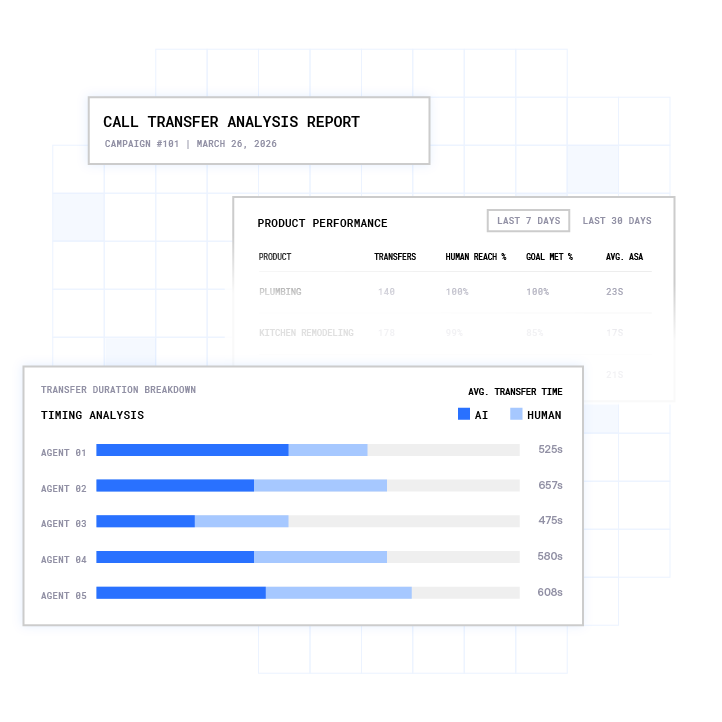
- Branded caller ID is issued at the carrier level.
- STIR/SHAKEN authentication is applied to each outbound call.
- Real-time DNC checks run before the dial event.
Nextiva automates the conversation layer. It does not control the carrier layer directly, and at high volume that separation affects pickup rate and compliance posture. Industry data for 2026 puts answer rates for branded, authenticated calls near 62 percent, compared with roughly 20 percent for plain unbranded calls, which is roughly a threefold difference.3 Plura operates its own FCC-licensed audio bridging carrier, issues branded caller ID at the carrier level, runs STIR/SHAKEN authentication on every outbound call, and enforces real-time DNC scrubbing before dial inside the platform.
Where Nextiva Call Center Automation Stops
Four capability boundaries define the edge of Nextiva’s automation stack. Each one is a point where high-volume operators feel pressure on pickup rate and compliance posture, which is why the carrier layer grows more important as volume scales.
- Carrier-level caller ID issuance: Nextiva does not operate its own carrier; its core network is powered by carrier-grade providers including AT&T, CenturyLink, Comcast, Level 3 Communications, Verizon, XO Communications, and Zayo, even though Nextiva operates its own AS number, IP address blocks, and data centers. Plura issues branded caller ID directly through its FCC-licensed audio bridging carrier. A dialer cannot directly remove a “Spam Likely” label because the label comes from carrier and analytics models based on number behavior, so carrier-level control is the lever that changes how calls present.
- STIR/SHAKEN authentication: Plura runs STIR/SHAKEN authentication on every outbound call, using its own operating company number. That matters because by 2026, calls without proper attestation are answered at less than 15% of the rate of attested calls.
- Real-time DNC scrubbing before dial: Nextiva enforces DNC before dial within its own system through real-time DNC list updates, automated regional no-call zones, and pre-dial compliance screening against DNC registries, rather than at the carrier level. Plura enforces real-time DNC scrubbing and TCPA (Telephone Consumer Protection Act) litigator screening before every outbound contact.2 It also applies automated quiet hours and immutable consent logging inside the platform. TCPA statutory damages run $500 per call for negligent violations and up to $1,500 per call for willful violations, so a 5,000-contact campaign with a consent defect creates substantial theoretical exposure before any willfulness multiplier.
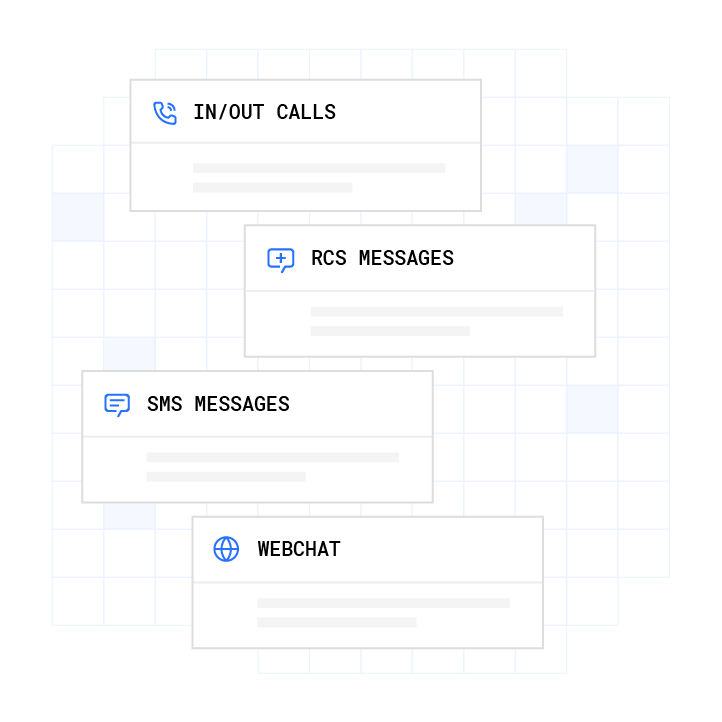
- Cross-channel conversation memory: Plura’s AI Voice, AI SMS, AI RCS (Rich Communication Services), and AI Webchat share a Stateful Conversation Database that holds context across all four channels. A customer who texted at 9 a.m. is treated as the same customer when the call arrives at noon.
How Nextiva Compares To RingCentral4
Nextiva is not the only UCaaS-first platform with contact center tiers. RingCentral sits in the same category, and buyers often compare the two. Both are UCaaS (Unified Communications as a Service) first platforms with contact center tiers. Nextiva publishes an entry contact center price at $75 per agent per month. RingCentral’s contact center tiers are quote-based only for the Enterprise Contact Center tier, while the Standard, Professional, and Elite tiers have published per-user prices of $65, $95, and $145 per month on annual billing. Both offer AI receptionist layers, with Nextiva’s XBert as a native add-on and RingCentral’s AIR Pro built natively on RingCentral’s platform. Neither platform owns the carrier layer. For buyers focused on automation depth bundled with a phone system, both sit in the same decision set.
The Cost-per-Contact Math
Carrier-level control is one axis of the decision. Cost is the other. Automation becomes a cost-per-contact decision rather than a simple feature checklist. Plura’s published calculator scenario starts with a 15-agent operation at $20 per hour, including standard taxes, benefits, and commissions, running at 40 percent talk utilization. That operation costs $60,000 per month. Replacing it with Plura at $15 per hour, 100 percent talk utilization, and 6 Plura agents doing the work of 15 humans drops monthly cost to $14,400. The difference is $45,600 in the first 30 days, $547,200 over 12 months, and $2,736,000 over 60 months.3
Teams can model their own cost-per-contact in the ROI calculator to see how their numbers compare.
Capability Comparison: Nextiva vs. Plura AI
The table below maps key capabilities to the layer they live in so you can see where the two platforms diverge.
| Capability | Nextiva | Plura AI |
|---|---|---|
| Automation surfaces | XBert (native add-on), ACD with NLP intent routing, transcription and summarization (usage-based), progressive and predictive dialing (Professional tier and above), no-code workflow builder | AI Voice, AI SMS, AI RCS, AI Webchat, AI Predictive Dialer, no-code workflow builder |
| Carrier ownership | Relies on external carrier partners | FCC-licensed audio bridging carrier |
| Caller ID issuance | Caller ID not issued directly at carrier level | Branded caller ID issued at carrier level |
| DNC enforcement | Enforced before dial within Nextiva’s system | Real-time DNC scrubbing, TCPA-litigator screening, automated quiet hours, immutable consent logging before dial |
| Cross-channel memory | Conversation history and contact management across channels | Shared context across voice, SMS, RCS, and webchat in one database |
When Nextiva Fits And When A Carrier-Owned Platform Fits
For lower-volume, UCaaS-first teams that want automation bundled with their phone system, Nextiva can be a reasonable fit. The Essential contact center tier price mentioned above covers omnichannel, journey orchestration, AI transcription, and skills-based routing for teams with up to 5 agents on smart call routing.
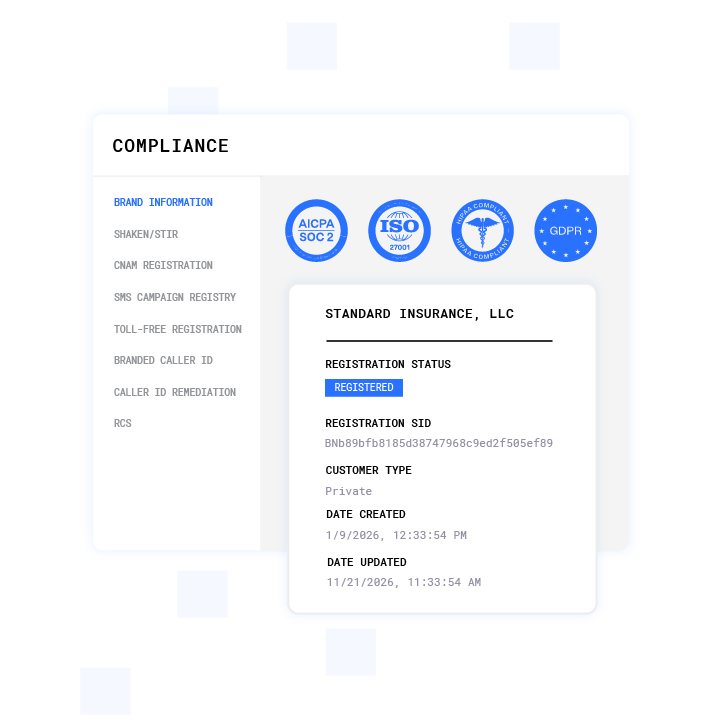
High-volume operators handling thousands of calls and texts a month, along with regulated verticals, often prioritize carrier-level control. For those teams, a carrier-owned platform like Plura AI becomes more attractive. Plura owns its FCC-licensed audio bridging carrier. That ownership lets it issue branded caller ID at the carrier level and run STIR/SHAKEN on every outbound call. It also enforces real-time DNC scrubbing and TCPA-litigator screening before dial, and holds context across voice, SMS, RCS, and webchat in one Stateful Conversation Database. The platform supports compliance with TCPA, DNC requirements, HIPAA, SOC 2, and ISO frameworks, and applies 50 plus state rule sets on every outbound contact.1 Customers remain responsible for their own regulatory obligations and certifications.
Teams can review Plura pricing and then compare options on the side-by-side comparison page.
Walk through a live carrier-owned stack with Plura to see how the carrier layer and conversation layer work together.
Frequently Asked Questions
What Is the 80/20 Rule in a Call Center?
In a call center, the 80/20 rule is a service level metric meaning that 80 percent of inbound calls are answered within 20 seconds; it is distinct from the Pareto Principle, which describes how roughly 80 percent of outcomes come from 20 percent of causes. As a workforce-planning heuristic, the Pareto framing still helps: identify the 20 percent of call types that drive most of the volume, automate those first, and reserve human agents for the complex remainder. Applied to Nextiva call center automation, this means deploying the no-code workflow builder and ACD with NLP intent routing against the highest-frequency call types first, then evaluating whether the remaining volume justifies the additional cost of the Professional or Premium tiers.
What Phones Work With Nextiva?
Nextiva supports certified pre-configured VoIP (Voice over Internet Protocol) hardware, its desktop and mobile apps (NextivaONE), and browser-based calling. The platform’s visual call flow designer and call management features are accessible across all supported device types. Hardware compatibility appears on Nextiva’s product pages, and number porting is included at no additional cost.
Conclusion: How To Use This Comparison
Nextiva call center automation covers the conversation layer with five named surfaces, published Essential pricing, and a no-code workflow builder available from the entry contact center tier. The carrier layer sits outside its direct ownership. For high-volume operators, regulated verticals, and teams whose pickup rate and compliance posture depend on carrier-level control, Plura AI provides a carrier-owned, stateful alternative. It issues branded caller ID at the carrier level, authenticates every outbound call with STIR/SHAKEN, scrubs DNC in real time before dial, and holds context across voice, SMS, RCS, and webchat in one Stateful Conversation Database.
Leaders can use the ROI calculator to pressure-test their own cost-per-contact assumptions.
They can also compare pricing options and review the comparison page to see how a carrier-owned stack differs from UCaaS-first platforms.
Get a guided walkthrough of the Plura platform to see how the carrier layer and conversation layer operate in one system.
1 Plura AI maintains SOC 2, HIPAA, ISO, and GDPR posture as part of its platform infrastructure. References to compliance frameworks in this article describe Plura’s platform capabilities and do not constitute a guarantee that any customer using Plura will themselves be compliant with applicable laws or standards. Customers remain solely responsible for their own regulatory obligations, certifications, consent management, recordkeeping, and the claims they make to their own end users. Consult qualified legal counsel for guidance specific to your use case.
2 This article describes regulatory frameworks at a general level and does not constitute legal advice. Laws and regulations vary by jurisdiction, change over time, and apply differently depending on facts and circumstances. Readers should consult qualified legal counsel before making compliance decisions.
3 Performance figures, customer outcomes, and industry statistics referenced in this article are drawn from cited third-party sources or Plura customer case studies. Individual results vary based on implementation, use case, industry, audience, and execution. Past or aggregate performance is not a guarantee of future results.
4 References to third-party products, services, companies, or research are made for informational and comparative purposes only. Plura AI is not affiliated with, endorsed by, or sponsored by any third party named in this article unless explicitly stated. Trademarks and product names referenced remain the property of their respective owners.
This article is provided for informational purposes only and reflects Plura AI’s understanding at the time of publication. Product capabilities, integrations, and specifications are subject to change. For the most current information, visit plura.ai.
This article was produced with the assistance of AI tools and reviewed by Plura AI prior to publication.