Written by: Matt Beucler, CEO, Plura AI
Key takeaways for multi-line dialing and Plura
- Nextiva multi-line dialing supports concurrent outbound calls through SIP trunks but lacks automated compliance checks and predictive pacing. Agents sit idle more often, and teams manage DNC lists manually.
- Multi-line dialers run in power, progressive, or predictive modes. Predictive mode uses algorithms to dial ahead of agent availability and increase talk time per hour.
- Nextiva setup covers SIP trunks, concurrency limits, and CRM integrations but omits carrier-owned caller ID, real-time TCPA filtering, and dynamic dial-ratio adjustments.
- AI predictive dialers like Plura AI improve on basic VoIP by enforcing pre-dial DNC scrubbing, STIR/SHAKEN authentication, voicemail detection, and stateful cross-channel memory across voice, SMS, RCS, and webchat.
- Teams targeting near 100% talk utilization and carrier-level compliance support can start a live demo with Plura AI to see carrier-owned automation in action.
How a multi-line dialer works in practice
A multi-line dialer is a calling system that places or manages more than one outbound call at the same time. It routes live answers to available agents and filters busy signals, disconnected numbers, and voicemail. The core mechanic is concurrent capacity. Each active call occupies one channel, and the dialer’s capacity depends on how many channels the underlying SIP (Session Initiation Protocol) trunk supports at a given moment.
Dialer modes differ in how aggressively they use that capacity. Power dialer mode places one call per available agent sequentially. Progressive mode dials one call per ready agent automatically. Predictive mode uses a pacing algorithm to dial ahead of agent availability. It factors in answer rates, average handle time, and wrap-up duration to keep agents on live calls as consistently as possible. Research on dialer mechanics shows that predictive dialing often delivers higher talk time per hour than power or preview dialing.
How a multi-line phone system routes calls
A multi-line phone system routes calls over SIP trunks, which are IP-based connections linking a PBX (Private Branch Exchange) or cloud calling platform to a voice carrier. A SIP trunk can carry multiple simultaneous calls without a separate physical line for each call. Capacity depends on the number of channels, account limits, and the approved traffic profile.
Inbound and outbound calls share the same pool of capacity, so sizing requires adding both directions together. For heavy outbound sales or collections operations, VoIP capacity is often sized at a near 1:1 ratio. Every agent who needs to dial out can then do so without blocking inbound traffic. Predictive dialing typically requires about 1.5 lines per agent to maintain throughput during high-volume campaigns.
Bandwidth is the other constraint. Each simultaneous VoIP call consumes roughly 100 kilobits per second in each direction. A team handling ten concurrent calls needs at least one megabit of dedicated upload and download capacity. QoS (Quality of Service) tagging on the LAN and WAN edge helps prevent file transfers or video traffic from degrading voice quality under load.
Nextiva multi-line dialing setup and gaps
Nextiva’s cloud PBX supports concurrent outbound calling through its SIP-based infrastructure.4 The general configuration sequence for enabling multi-line outbound dialing on Nextiva follows these steps:
- Log in to the Nextiva admin portal and navigate to the Users or Lines section to confirm each agent has an active extension.
- Configure call routing rules and business-hours schedules so outbound calls route through the correct trunk group.
- Enable CRM click-to-dial integration for HubSpot, Salesforce, or Zoho so agents can initiate calls directly from contact records.
- Set concurrency limits at the trunk level to match your licensed channel count and prevent oversubscription during peak campaigns.
- Test inbound and outbound call flow together, validate two-way audio, confirm caller ID presentation, and check that channel limits hold under load.
After setup, the operational gaps become clear. Nextiva handles basic concurrent calling, but the platform does not provide carrier-owned branded caller ID issuance, real-time TCPA-litigator filtering, automated DNC scrubbing before each dial, or a pacing algorithm that adjusts dial ratios dynamically based on live answer rates. High-volume teams absorb the impact as manual DNC list management, more agent idle time between calls, and no stateful cross-channel memory.
Multi-line dialer software for high-volume teams
Multi-line dialer software ranges from basic concurrent-calling tools inside VoIP platforms to purpose-built predictive dialing systems with compliance controls and AI-driven pacing. These differences matter once teams scale beyond a few agents.
Nextiva’s platform supports concurrent outbound calls but leaves several operational and compliance gaps for high-volume contact centers. On the compliance side, DNC scrubbing is a manual process with no automated pre-dial check against federal and state registries, and there is no real-time TCPA-litigator filtering to block known litigants before a call is placed. These manual steps slow operations and increase exposure to potential claims. On the operational side, branded caller ID is not issued at the carrier level, so calls may present as unknown numbers or trigger spam labels that reduce answer rates. Agent idle time also increases because the platform does not use a predictive pacing algorithm to have a live answer ready when an agent finishes a call.
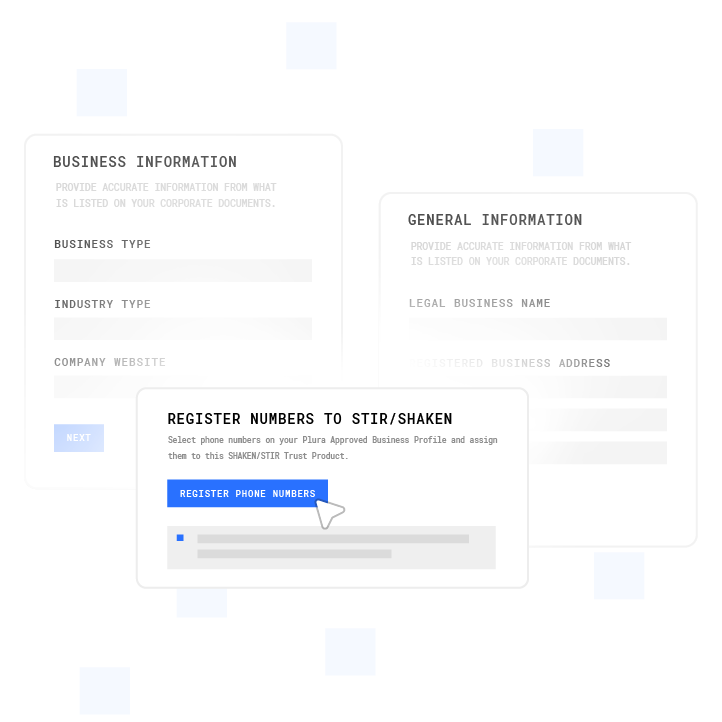
Plura AI addresses these gaps through its FCC-licensed audio bridging carrier.4 Calls originate on Plura’s own carrier infrastructure, not a third-party CPaaS (Communications Platform as a Service). Branded caller ID is issued at the carrier level. STIR/SHAKEN (Secure Telephone Identity Revisited / Signature-based Handling of Asserted information using toKENs) caller ID authentication runs on every outbound call. Real-time DNC scrubbing checks every number against federal and state registries before dial, and TCPA-litigator filtering runs at the same pre-dial stage. This carrier-level automation supports higher talk utilization without adding headcount.
Book a live demo with Plura to see carrier-owned compliance support and AI pacing in action.
How an AI predictive dialer improves multi-line dialing
An AI predictive dialer improves on basic multi-line dialing by replacing fixed dial ratios with a real-time pacing algorithm. The algorithm factors in current agent availability, average handle time, wrap-up duration, and live answer rates to determine how many lines to dial at any moment. When answer rates drop, the algorithm dials fewer lines to reduce abandoned calls. When agents free up faster than expected, it dials more lines to limit idle time.
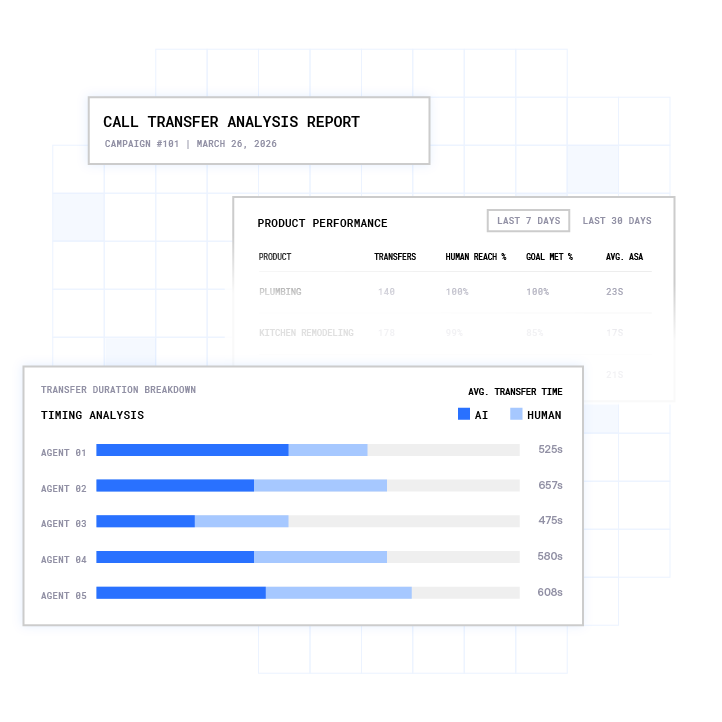
Voicemail detection is a core component. The dialer identifies answering machine responses and routes them away from agents so agents receive only live human connections. Answering machine detection typically achieves 60% to 80% accuracy according to industry standards. The pacing algorithm must balance sensitivity to avoid hanging up on live prospects while still filtering voicemail efficiently.
Compliance controls sit inside the pacing layer. The FTC’s Telemarketing Sales Rule (16 C.F.R. § 310) caps abandoned calls at 3% of answered calls per campaign and requires a live agent connection within two seconds of a consumer’s greeting.2 A well-tuned AI predictive dialer manages dial ratios to stay within that threshold automatically, rather than relying on manual monitoring. The TCPA (Telephone Consumer Protection Act, 47 U.S.C. § 227) imposes statutory damages that make pre-dial compliance enforcement a financial priority as well as an operational one.2
A Vici Dial alternative built on a carrier-owned stack goes further.4 Compliance checks run at the carrier layer before the call leaves the network, rather than as a software-only control that can be bypassed or misconfigured.
Plura predictive dialer and stateful conversations
Plura’s AI predictive dialer runs on the carrier-owned infrastructure described earlier. That foundation enables three key advantages compared with Twilio-based API resellers: branded caller ID tied to Plura’s carrier identity, STIR/SHAKEN authentication on every outbound call, and compliance enforcement applied before the call leaves the network.
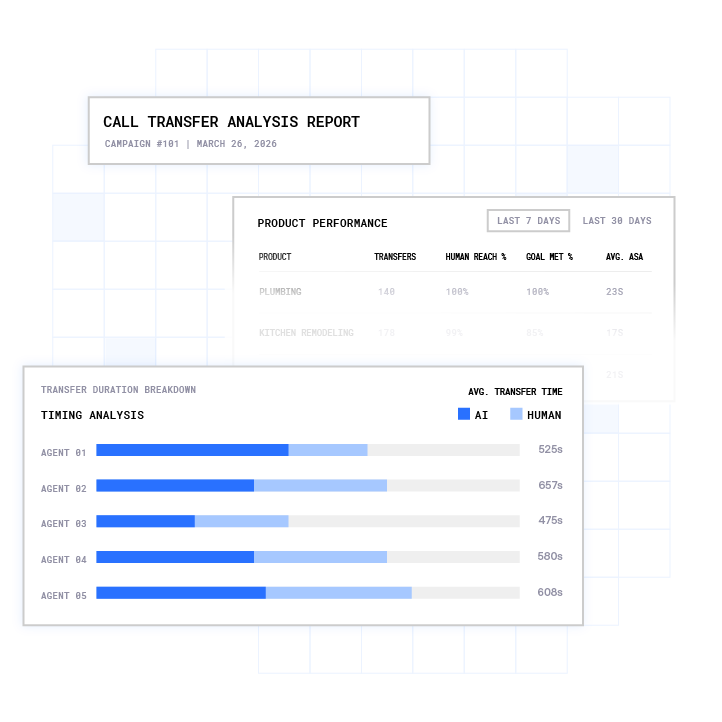
The dialer shares a Stateful Conversation Database with Plura’s AI SMS, AI RCS, and AI webchat channels. Every interaction is keyed to a customer token, so an agent picking up a transferred call already has the full context of prior SMS exchanges, prior call outcomes, and any offers or objections from earlier touchpoints. Standard dialer modes and most VoIP platforms do not provide that cross-channel memory by default.
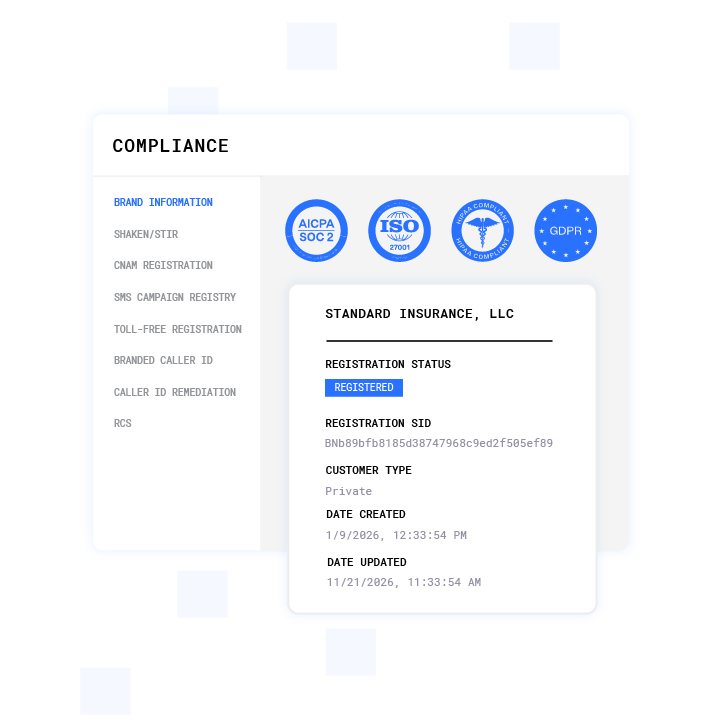
Plura supports compliance with SOC 2, HIPAA, ISO certification, GDPR, SHAKEN/STIR caller ID verification, TCPA, and DNC frameworks.1 Every outbound contact is checked against federal and state DNC registries in real time before dial. Consent records are timestamped and immutable. Quiet-hours rules enforce automatically through time-zone detection. The compliance dashboard exports audit-ready reports in one click. Customers remain responsible for their own regulatory obligations and certifications.
Every annual contract includes a 90-day opt-out window. If the deployment is not delivering, customers are not held to the annual term. Pricing and plans are available at plura.ai/pricing.
Book a live demo with Plura and see the carrier-owned dialer running on your call profile.
Cost and ROI for AI predictive dialing
Talk utilization drives the economics of switching from a basic VoIP multi-line setup to an AI predictive dialer. A human agent on a standard VoIP dialer often achieves roughly 40% talk utilization, or about 24 minutes of actual conversation per hour.3 Plura’s AI predictive dialer targets near 100% talk utilization by removing idle time between calls, voicemail wait time, and manual DNC scrubbing delays.
In an illustrative 15-agent scenario using default inputs from Plura’s ROI calculator, a human contact center costs $60,000 per month at $20 per hour with standard taxes, benefits, and commissions at 40% talk utilization.3 Replacing that team with Plura at $15 per hour, 100% talk utilization, and six Plura agents doing the work of fifteen humans drops the monthly cost to $14,400.3 That shift produces $45,600 in savings in the first 30 days, $547,200 over 12 months, and $2,736,000 over 60 months (per plura.ai/calculator).3
For higher-volume operations, the same model produces a total cost of ownership of about $700,000 per year against a traditional contact-center benchmark of roughly $7 million (per plura.ai/calculator).3
Run your numbers through Plura’s calculator to check your ROI in real time.
Frequently asked questions about multi-line dialing
What is the difference between Nextiva multi-line dialing and an AI predictive dialer?
Nextiva multi-line dialing enables concurrent outbound calls through a cloud VoIP platform with SIP trunk channels. It handles basic concurrency but does not include a pacing algorithm, real-time DNC scrubbing, TCPA-litigator filtering, or carrier-owned branded caller ID. An AI predictive dialer like Plura’s adjusts dial ratios dynamically using live answer rates, agent availability, and handle time data. It filters voicemail automatically, enforces compliance checks before each dial, and issues branded caller ID at the carrier level. The result is higher talk utilization per agent hour and a pre-dial compliance layer that a standard VoIP platform does not provide.
How many SIP channels does a contact center need for multi-line dialing?
Channel requirements depend on the maximum number of simultaneous calls during peak periods, not average call volume. A common sizing approach is to analyze peak simultaneous active calls from call reports over the prior three to six months, then add 20 to 30% headroom for growth and campaigns. For predictive dialing, teams often plan for approximately 1.5 lines per active agent to maintain capacity during high-volume operations. Inbound and outbound calls share the same channel pool, so both directions must be counted together when sizing. Each active call also consumes roughly 100 kilobits per second of bandwidth in each direction, so network capacity must be sized alongside channel count.
What compliance frameworks apply to high-volume outbound dialing in the United States?
High-volume outbound dialing in the United States is shaped primarily by the TCPA (47 U.S.C. § 227), enforced by the FCC, and the FTC’s Telemarketing Sales Rule (16 C.F.R. § 310).2 The TCPA addresses autodialed and prerecorded calls to wireless numbers and consent requirements for certain telemarketing calls. The TSR establishes the National Do Not Call Registry, caps abandoned calls at 3% of answered calls per campaign, and sets DNC list scrubbing intervals. The FCC’s February 2024 declaratory ruling confirmed that AI-generated voice calls qualify as artificial voice calls under the TCPA. Roughly 32 states plus the District of Columbia require separate telemarketer registration, about a dozen maintain their own Do Not Call lists, and a smaller but growing number have enacted mini-TCPA statutes. Organizations should consult qualified legal counsel to assess their specific obligations under applicable federal and state frameworks.
How does Plura’s Stateful Conversation Database improve outbound dialing outcomes?
Plura’s Stateful Conversation Database stores every interaction across voice, SMS, RCS, and webchat, keyed to a customer token such as a phone number, email address, or account ID. When the AI predictive dialer places an outbound call, it reads from that database and carries full context from prior touchpoints, including offers made, objections raised, qualification status, and the last channel used. An agent receiving a warm transfer already knows the conversation history without asking the prospect to repeat details. The dialer’s pacing algorithm can also factor in prior contact outcomes when prioritizing which numbers to dial next, routing calls to contacts with higher historical answer rates and stronger conversion signals first.
What is the minimum team size for predictive dialing to work effectively?
Predictive dialing algorithms need a statistically sufficient agent pool to function reliably. Below roughly eight to ten simultaneously active agents on the same campaign, the pacing model often produces erratic dial ratios. It can swing between excessive idle time and abandoned calls because there is not enough data for stable averages. For teams smaller than that threshold, progressive dialing or power dialing modes usually provide better compliance control and more predictable agent utilization. Plura’s AI predictive dialer uses stateful conversion signals, including historical answer rates and prior negotiation outcomes, to improve pacing accuracy even at lower agent counts compared with traditional predictive systems that rely only on real-time statistical averages.
1 Plura AI maintains SOC 2, HIPAA, ISO, and GDPR posture as part of its platform infrastructure. References to compliance frameworks in this article describe Plura’s platform capabilities and do not constitute a guarantee that any customer using Plura will themselves be compliant with applicable laws or standards. Customers remain solely responsible for their own regulatory obligations, certifications, consent management, recordkeeping, and the claims they make to their own end users. Consult qualified legal counsel for guidance specific to your use case.
2 This article describes regulatory frameworks at a general level and does not constitute legal advice. Laws and regulations vary by jurisdiction, change over time, and apply differently depending on facts and circumstances. Readers should consult qualified legal counsel before making compliance decisions.
3 Performance figures, customer outcomes, and industry statistics referenced in this article are drawn from cited third-party sources or Plura customer case studies. Individual results vary based on implementation, use case, industry, audience, and execution. Past or aggregate performance is not a guarantee of future results.
4 References to third-party products, services, companies, or research are made for informational and comparative purposes only. Plura AI is not affiliated with, endorsed by, or sponsored by any third party named in this article unless explicitly stated. Trademarks and product names referenced remain the property of their respective owners.
This article is provided for informational purposes only and reflects Plura AI’s understanding at the time of publication. Product capabilities, integrations, and specifications are subject to change. For the most current information, visit plura.ai.
This article was produced with the assistance of AI tools and reviewed by Plura AI prior to publication.