

Written by: Matt Beucler, CEO, Plura AI
Key Takeaways
- Orum multi-line dialing places up to 10 simultaneous calls and uses AI to detect live humans in under half a second, so reps only connect with real prospects.
- Parallel dialing increases live conversations 3 to 5 times versus power dialing but drops connect-to-meeting conversion from 6.4% to 3.8% because of the 1 to 2 second bridge delay.3
- Orum requires annual contracts with seat minimums ranging from 3 on the Launch plan to 9 on paid plans, and total first-year costs for a 10-person team ranging from $32,200 to $150,000 including all fees.
- Parallel dialing introduces TCPA abandonment exposure and carrier spam-flagging risk, which both increase as you add more simultaneous lines.
- Teams that want AI-powered predictive dialing with cross-channel conversation memory and carrier-grade compliance support can see Plura AI in a live demo and evaluate the AI Predictive Dialer.
How Orum Multi-Line Dialing Works in Practice
Orum’s parallel dialer calls a batch of numbers at the same time, then connects the rep only when a live human answers.
The mechanics work as follows:
- A calling list is selected from a connected CRM such as Salesforce, HubSpot, Outreach, or Salesloft.
- The rep chooses how many lines to dial. Orum supports 2 to 10 simultaneous lines depending on the plan.
- Orum’s AI listens to each call and detects whether a human, voicemail, dial tree, or screener answered in under half a second.
- When a human picks up, Orum drops the other attempts and connects the rep to that prospect.
- If a call goes to voicemail, the system can automatically drop a pre-recorded message before moving to the next batch.
Orum’s own documentation describes the experience directly: “You will not hear the phone ring or the prospect’s initial greeting. Instead, you will be transferred once the AI has determined you’re live with a prospect.”
The system detects 20+ languages and distinguishes between humans, screeners, voicemails, and dial trees. Orum’s internal team reportedly runs 4 to 5 lines at a time with a roughly 5% connect rate.
Orum Multi-Line Dialing vs. Power Dialing
Most teams decide between parallel dialing and power dialing based on their outbound motion and list quality. Both modes exist in Orum, but they solve different problems.
Parallel dialing increases live conversations per hour, often 3 to 5 times more than power dialing. Those extra conversations convert to meetings at a lower rate. Industry analysis puts connect-to-meeting conversion at roughly 3.8% for parallel dialing versus 6.4% for power dialing.
The 1 to 2 second connect delay before a rep is bridged onto the call cuts bridged talk time. Power dialing typically delivers 9 to 11 minutes of talk time per hour, while parallel dialing often lands at 4 to 5 minutes.
The math still works for high-volume teams. At a 15% conversation-to-meeting conversion rate, a rep on a power dialer making 60 dials per day books roughly 1.5 meetings. A rep on a parallel dialer making 180 dials per day books roughly 2.4 meetings, which is about a 60% increase.
Power dialing fits teams under 50 dials per rep per day, account-based motions with long prep cycles, and hybrid inbound or outbound roles. Parallel dialing fits pure cold outbound at 60 to 150+ dials per rep per day and teams with strong list quality but low conversation volume.
Orum Pricing: What Multi-Line Dialing Typically Costs
Orum does not publish public pricing, so buyers move through a demo or quote process. Multiple 2026 third-party reviews consistently report the following estimates:
| Plan | Reported Price | Parallel Lines | Key Inclusions |
|---|---|---|---|
| Launch | ~$250/user/month (annual) | Up to 5 | AI dialing, voicemail drop, CRM integrations, 5 caller IDs per rep, 200 data enrichment credits per rep per month |
| Ascend | ~$500–$800/user/month (custom) | Up to 10 | Everything in Launch, plus international dialing, 10 caller IDs per rep, advanced AI prioritization, priority support |
Critical cost factors to understand:
- Annual contracts only. Orum requires annual billing with no monthly option. The Launch plan has a minimum of 3 seats, creating a $9,000 per year entry price.
- Seat minimums. Multiple 2026 sources report a 9-seat minimum on paid plans.
- Limited free trial. Orum’s free trial is capped at 500 dials.
- Total cost of ownership. For a 10-person team, Orum’s total first-year cost ranges from $32,200 to $109,600 including platform fees, phone numbers, implementation, and integrations. Ascend-tier teams can see total first-year investment reach $80,000 to $150,000.
- Dialer-only footprint. Teams typically run Orum alongside a contact data provider, a sequencing tool, and CRM sync, which can add $400 to $500 per user per month when fully stacked.
Plura publishes its plans and rates starting at $7,500 per month for the Multi tier, with no hidden seat minimums or demo-gated quotes. Plura’s AI Predictive Dialer includes multi-line dialing as part of a broader platform that also handles AI Voice, AI SMS, AI RCS, and AI Webchat, all sharing a stateful conversation database.
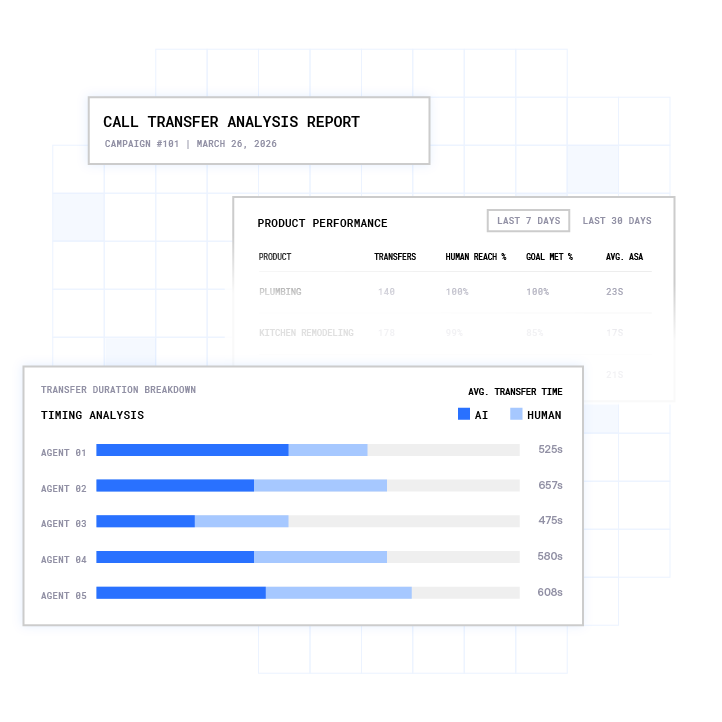
Evaluate Plura’s AI Predictive Dialer in a live demo and see how it compares with your current dialing setup.
How to Configure Parallel Dialing in Orum
Teams that proceed with Orum need careful configuration at both the admin and rep level. The following steps reflect Orum’s official support documentation and third-party implementation guidance.
- Log in to Orum admin. Navigate to your organization settings. Orum’s help center organizes dialer configuration under a dedicated “Dialer” section with separate articles for parallel dialing, power dialing, and related features.
- Open dialer settings. Select “Parallel Dialer” from the dialer configuration menu. Review related articles on AI Detection Modes, Call From Number settings, and Automatic Number Rotation before making changes.
- Select parallel dialing mode. Orum supports both power dialing and parallel dialing. Choose parallel dialing when you want multi-line outreach.
- Set the number of lines per rep. Orum supports 2 to 10 lines. An administrator can cap the line count at the organization level or per rep. A setting of one disables parallel dialing entirely. Orum’s documentation recommends adjusting the line count at the rep level for new users, “to ensure they are comfortable in the platform before calling 5+ prospects at a time.” Once you set the line count, the next step is to tune abandonment controls.
- Configure call abandonment settings. Orum’s documentation recommends tuning the line count to achieve a connection roughly every 90 to 120 seconds. If reps are connecting faster than that, the setting is likely too high. If connections are sparse, it is likely too low.
- Integrate with your CRM. Connect Salesforce, HubSpot, Outreach, or Salesloft. For Salesforce, admins must approve Orum as a Connected App and configure call logging from Account Settings. This includes recording field, list name field, phone label field, and disposition field. Orum will NOT complete call tasks when a call is canceled. If you call 5 people at once and connect to one, Orum cancels the other 4 calls, and those cancellations do not log as completed tasks in Outreach or Salesloft.
- Test with a small group. Start with 2 to 3 reps on 2 to 3 lines before rolling out to the full team. Monitor connect rates, talk time, and rep feedback for two weeks.
- Train reps on handling instant connections. Orum’s guidance is direct: “Speak immediately in order to reduce hang-ups.” Reps must be ready to engage the moment a call connects, because there is no ring or greeting to prepare them.
Best practices from Orum’s documentation include:
- Start with 2 lines for new users and scale up as they build comfort.
- Monitor connect rates per caller ID number using Orum’s analytics so you can spot reputation issues early.
- Change the fallback number before re-dialing canceled prospects so they do not see the same caller ID repeatedly.
- Switch to power dialing to clear the remainder of a list after parallel dialing sessions, which helps you work every record without overloading carriers.
- Use Orum’s “Skip Duplicate Numbers” feature to avoid double-dialing the same contact.
Compliance and Carrier Risks with Parallel Dialing
Parallel dialing is permitted as a concept in the United States, but the design creates real compliance and carrier risk that scales with each additional line.
TCPA compliance fundamentals. The Telephone Consumer Protection Act (TCPA), codified at 47 U.S.C. § 227, describes rules for autodialed calls, prerecorded messages, and texts.2 Under 47 CFR § 64.1200(a)(7), the FCC caps abandoned telemarketing calls at 3% of calls answered live by a person, measured over a 30-day period.2 A call is “abandoned” if it is not connected to a live sales representative within 2 seconds of the called person’s completed greeting.
Why parallel dialing creates abandonment risk. Parallel dialing structurally generates abandoned calls because its design is to place more simultaneous calls than a rep can answer. When multiple prospects answer at the same time, the rep can only take one call. The others receive dead air and then a drop, and each of those drops counts toward the abandonment rate.
Carrier spam flagging. Parallel dialing concentrates spam risk factors on a small pool of numbers. Carriers and third-party analytics providers such as Hiya (AT&T), First Orion (T-Mobile), and TNS (Verizon) score every number in near real time.4 High call volume, low answer rates, short calls, and spam complaints all degrade a number’s reputation. Once a number is labeled “Spam Likely,” answer rates collapse, and the damage can spread across the number pool as volume is rotated.
A practical compliance checklist for teams using parallel dialing includes:
- Scrub every list against the National Do Not Call Registry and applicable state lists before dialing.
- Capture and honor opt-outs immediately across all systems.
- Obtain prior express written consent where a regulation requires it for prerecorded or artificial-voice messages to mobile numbers.
- Call within permitted hours, such as 8 a.m. to 9 p.m. in the recipient’s local time zone.
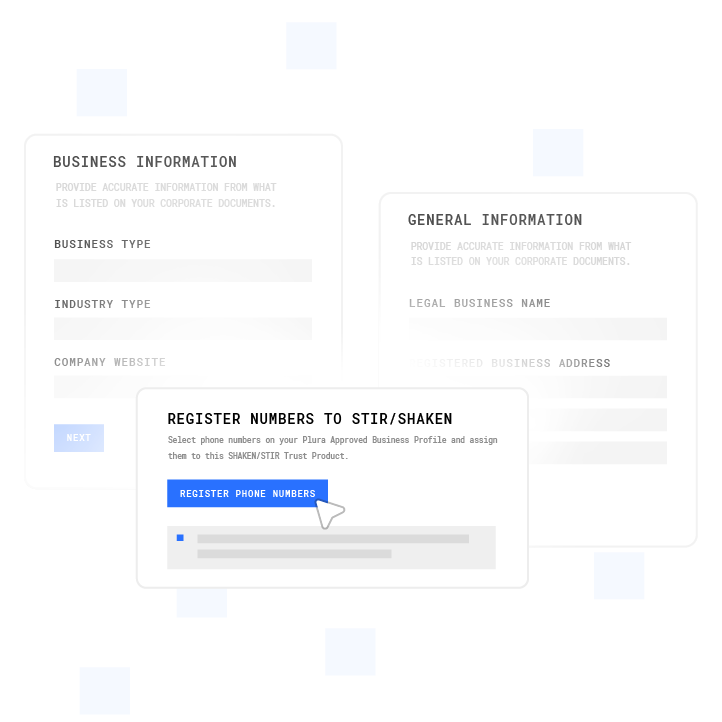
- Authenticate numbers with STIR/SHAKEN using Level A attestation when available.1
- Target a 2% abandonment rate to create headroom below the 3% cap.
- Monitor answer rates per number and retire flagged numbers before they degrade the pool.
How Plura supports compliance. Plura’s compliance engine is a first-class layer of the platform, built in from the start. Every outbound contact is checked against federal and state DNC registries in real time before dial. Consent records are timestamped, immutable, and audit-ready. Quiet-hours rules enforce automatically through time-zone detection.
Because Plura is an FCC-licensed carrier, branded caller ID is issued at the carrier level, and STIR/SHAKEN authentication runs on every outbound call. Plura holds SOC 2 Type II certification, is HIPAA-aligned, and is ISO certified.1 See Plura’s AI Predictive Dialer page for details.
Note: This information describes platform features, not legal advice. Consult qualified counsel for your specific compliance obligations.
Best Practices to Protect Connect Rates with Parallel Dialing
Regardless of which dialer you choose, the following practices protect number reputation and maximize live conversations, directly addressing the carrier risks outlined above.
- Use branded caller ID. A Twilio study across roughly 720,000 calls found branded calls were answered 62% of the time versus 20% for un-branded ones.3 That lift alone can justify the setup effort for branded calling.
- Clean your contact lists. B2B contact data decays about 22.5% per year. Verified mobile numbers connect at roughly 18 to 22% versus 8 to 12% for generic lists, so list hygiene directly improves connect rates.
- Respect calling hours. Call between 8 a.m. and 9 p.m. in the recipient’s time zone. ZoomInfo data indicates calling between 4 and 5 p.m. is 71% more effective than the 11 a.m. to noon window. Aligning to these windows improves both answer rates and conversation quality.
- Rotate numbers and monitor reputation. Spread volume across a pool of numbers with per-number daily and hourly caps. Track answer rates at the number level and retire flagged numbers before they drag down the entire pool.
- Track the right metrics. Focus on connect rate, conversations per healthy number, number-pool flag rate, and meetings booked per rep. These metrics show whether parallel dialing is working, while raw dials per day mainly reflect how many lines you run.
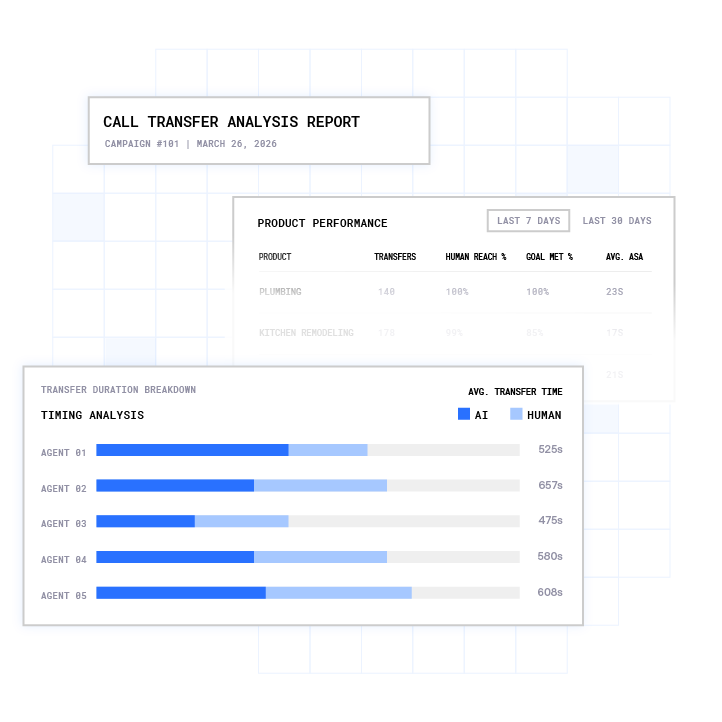
Teams that want AI to handle the full conversation after connection, including qualifying leads, handling objections, and transferring warm buyers to a human rep, can use Plura’s AI Predictive Dialer for that motion. Watch Plura’s AI handle live calls in a demo and see the experience from the buyer’s side.
Orum vs. Alternatives: Where Plura Fits in Your Stack
Orum and Nooks are the two category leaders in dedicated parallel dialers, and both focus on maximum-volume cold calling.4 Orum offers up to 10 parallel lines with sub-half-second connects and detection across 20+ languages. Nooks’ documentation specifies Power Dialing at 1 line and Parallel Dialing at 2 to 5 fixed lines, with Turbo Dialing averaging about 6 simultaneous dials. Neither publishes pricing publicly.
Both platforms share a fundamental limitation as dialer-only point solutions. They require separate tools for data, sequencing, and conversation intelligence. They also lack AI agents that can hold full conversations, such as qualifying leads, handling objections, and negotiating before a human picks up.
Teams that need more than raw dial volume can use Plura’s AI Predictive Dialer as a modern alternative. Plura is its own FCC-licensed carrier, so branded caller ID is issued under Plura’s carrier identity, and compliance controls run before the call leaves the network.
Every conversation feeds a stateful database, so an AI agent that texted a lead at 9 a.m. can pick up the call at noon already knowing what was said. Plura’s AI Voice, AI SMS, AI RCS, and AI Webchat all share that same stateful conversation database. See Plura’s full comparisons for detailed feature-by-feature analysis.
Frequently Asked Questions
What is Orum multi-line dialing?
Orum multi-line dialing, also called parallel dialing, is a feature that automatically calls multiple leads simultaneously, up to 10 lines on Orum’s Ascend plan, and connects the first human who answers to an available sales rep. The system uses AI to detect voicemails, dial trees, and screeners in under half a second, dropping non-live lines instantly. Reps do not hear the phone ring or the prospect’s initial greeting, and they are transferred once the AI has confirmed a live human is on the line.
How much does Orum dialer cost per user?
Orum does not publish public pricing. Third-party 2026 reviews report the Launch plan at approximately $250 per user per month, billed annually with a 3-seat minimum, and the Ascend plan at approximately $500 to $800 per user per month on a custom quote. Annual contracts are required, and, as noted in the pricing section, total first-year costs for a 10-person team can reach $150,000 on the Ascend tier. Stacking Orum with separate email, sequencing, and data tools can push total per-user costs to $400 to $500 per month.
What compliance risks does parallel dialing carry?
Parallel dialing carries real compliance exposure under the TCPA and FCC rules because its design creates abandoned calls when more people answer than a rep can handle. As detailed in the compliance section above, parallel dialing structurally generates abandoned calls because it places more simultaneous calls than a rep can answer. Teams also need to address DNC scrubbing, opt-out handling, and STIR/SHAKEN authentication. Consult qualified counsel for your specific compliance obligations.
What is the best multi-line dialer software?
The best multi-line dialer depends on your team’s motion. Orum and Nooks are the category leaders for dedicated parallel dialing, with Orum supporting up to 10 lines and Nooks supporting up to 5 to 6 lines depending on the mode. Teams that need AI-powered predictive dialing, cross-channel conversation memory, and carrier-grade compliance support before the call leaves the network can evaluate Plura AI’s AI Predictive Dialer. Plura is its own FCC-licensed carrier and publishes transparent pricing starting at $7,500 per month.
When does parallel dialing make sense versus power dialing?
Parallel dialing fits pure cold outbound at 60 to 150+ dials per rep per day, teams with strong list quality but weak conversation volume, and organizations that want to scale outbound without adding headcount. Power dialing fits teams under 50 dials per rep per day, account-based motions with long prep cycles, and hybrid inbound or outbound roles where reps spend significant time on warm follow-up. The decision should be based on dial volume per rep rather than deal size alone.
Conclusion: Matching Your Dialing Strategy to Your Motion
Orum’s multi-line dialing delivers 3 to 5 times more live conversations per hour than power dialing, reduces idle time between calls, and, when configured correctly, can meaningfully increase rep productivity. It also introduces trade-offs that leaders must weigh, including lower conversion rates per connect, significant per-seat costs with annual commitments, and carrier spam-flagging risks that require active number reputation management.
Teams whose entire motion is maximum-volume cold calling with clean data and strong list operations may find Orum a strong fit. Teams that need more than raw dial volume, including AI that qualifies leads before a human picks up, remembers every interaction across voice and text, and supports compliance at the carrier level, can use Plura’s AI Predictive Dialer as a modern alternative.
Plura is its own FCC-licensed carrier. Every outbound call originates with branded caller ID and STIR/SHAKEN authentication. Real-time DNC scrubbing and TCPA-litigator screening run before every dial. Because Plura’s AI Voice, AI SMS, AI RCS, and AI Webchat all share a stateful conversation database, your team’s context carries across every channel, and prospects never have to repeat themselves. Use Plura’s ROI calculator to run your numbers and see the cost difference in real time.
Compare Plura’s AI Predictive Dialer to your current approach in a live demo and decide which strategy fits your operation.
1 Plura AI maintains SOC 2, HIPAA, ISO, and GDPR posture as part of its platform infrastructure. References to compliance frameworks in this article describe Plura’s platform capabilities and do not constitute a guarantee that any customer using Plura will themselves be compliant with applicable laws or standards. Customers remain solely responsible for their own regulatory obligations, certifications, consent management, recordkeeping, and the claims they make to their own end users. Consult qualified legal counsel for guidance specific to your use case.
2 This article describes regulatory frameworks at a general level and does not constitute legal advice. Laws and regulations vary by jurisdiction, change over time, and apply differently depending on facts and circumstances. Readers should consult qualified legal counsel before making compliance decisions.
3 Performance figures, customer outcomes, and industry statistics referenced in this article are drawn from cited third-party sources or Plura customer case studies. Individual results vary based on implementation, use case, industry, audience, and execution. Past or aggregate performance is not a guarantee of future results.
4 References to third-party products, services, companies, or research are made for informational and comparative purposes only. Plura AI is not affiliated with, endorsed by, or sponsored by any third party named in this article unless explicitly stated. Trademarks and product names referenced remain the property of their respective owners.
This article is provided for informational purposes only and reflects Plura AI’s understanding at the time of publication. Product capabilities, integrations, and specifications are subject to change. For the most current information, visit plura.ai.
This article was produced with the assistance of AI tools and reviewed by Plura AI prior to publication.