
Written by: Matt Beucler, CEO, Plura AI
Key Takeaways for Lead Response in 2026
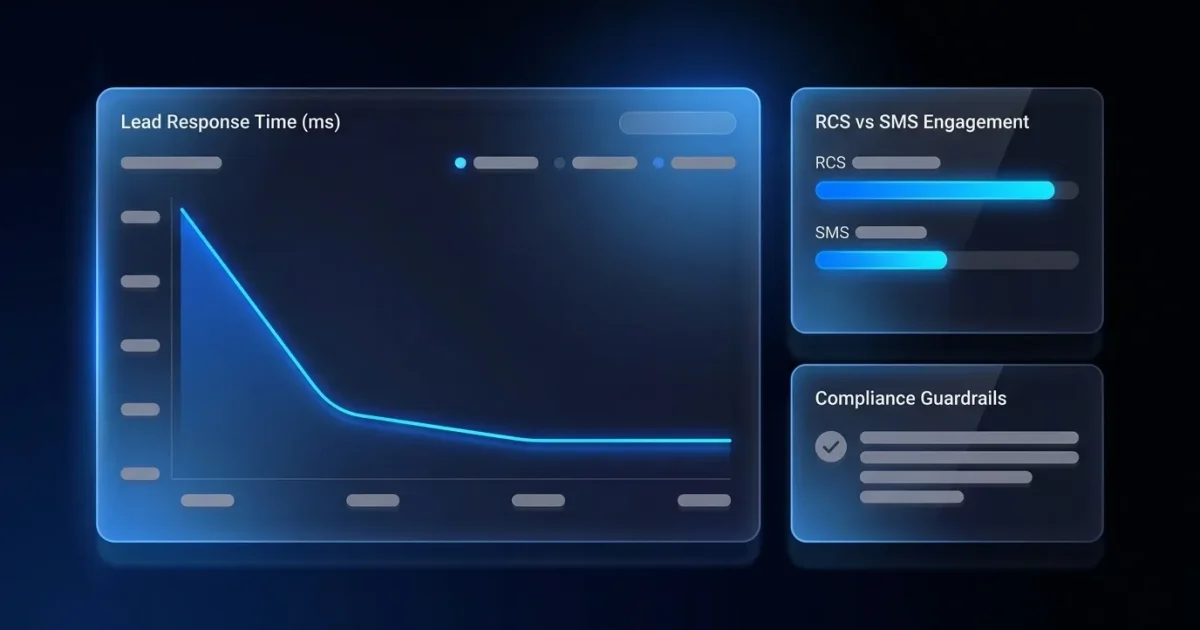
- RCS outbound lead response time of 60 seconds or less is the 2026 standard for high-volume operators, while the industry average remains a multi-day window.
- Responding within 60 seconds lifts conversions by 391%, and contacting a lead within 5 minutes makes them up to 100 times more likely to connect.3
- Plura AI delivers sub-5-second automated, stateful, branded RCS responses inside the 24-hour conversation window using carrier-grade infrastructure.
- Manual SDR queues, time-zone gaps, and single-channel outreach are the structural causes of slow response times that cost operators the majority of addressable pipeline.
- Plura AI enables contact center leaders, marketing directors, agency owners, and franchise operators to hit the 60-second benchmark consistently and in a compliance-supported way, so teams can get started with Plura AI quickly.
The Problem: Slow Lead Response Kills Pipeline
The average B2B company takes 42 to 47 hours to respond to a new lead, according to benchmarks cited by Plura AI. That number has barely moved in over a decade, while buyer patience has dropped sharply. The conversion math is clear: contacting a lead within 5 minutes makes them up to 100 times more likely to connect, and responding within 60 seconds lifts conversions by 391%.
The revenue leakage from slow outreach compounds at scale. A Velocify study of approximately 3.5 million leads found that calling within one minute of lead receipt increases conversion rates by 391% compared to later calls.4 Close rates are approximately 32% for responses under 5 minutes versus 12% after 24 hours, based on 2026 B2B data from multiple analyses including Optifai. For a high-volume operator running thousands of leads per month, the difference between a 60-second response and a 47-hour response is not a rounding error. It is the majority of addressable pipeline.
These conversion losses stem from three structural causes: manual SDR queues, time-zone gaps, and single-channel outreach. Studies have found that many companies never respond to web leads at all. SMS-only programs add another layer of friction, with no read receipts, no interactive buttons, no branded sender identity, and no reliable way to detect engagement and trigger a stateful follow-up inside the same thread.
Teams can run their own numbers in Plura’s ROI calculator to see the impact in real time.
RCS Response Expectations for High-Volume Teams
The operator standard in 2026 is 60 seconds or less.5 A response time under 60 seconds is an elite benchmark that places an operator among top performers in current industry data. The 5-minute mark, long cited as the human best-practice target, now functions as the floor for competitive programs, not the ceiling.
Human agents cannot reliably hit 60 seconds at scale. Queue routing, shift coverage, and single-channel capacity make sub-minute response structurally impossible once volumes rise. Under 60 seconds is achievable only when every lead routes to an autonomous agent instead of a queue. RCS provides the channel mechanics that keep that routing stateful, branded, and interactive from the first message.
Defining a Strong RCS Lead Response Time
In 2026, a strong RCS lead response time is under 60 seconds for the first automated message and under 5 seconds for carrier-grade AI execution. Organizations deploying AI for speed to lead see response times drop from hours to seconds and connection rates increase by 3 to 5 times.
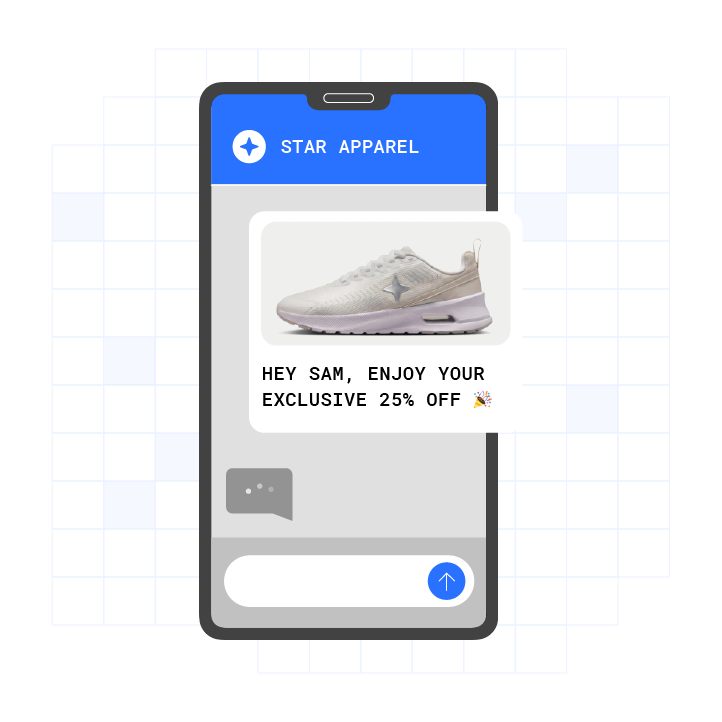
Plura’s AI SMS agents achieve sub-5-second automated responses by running on Plura’s own FCC-licensed carrier infrastructure, not a third-party CPaaS. That carrier-level origination removes the latency introduced by API reseller routing. The response arrives in the recipient’s native messaging inbox with a verified brand name, logo, and checkmark, not an unknown short code. Sinch research found that 79% of consumers say RCS logos and checkmarks make messages appear more trustworthy, which directly affects whether a recipient opens and acts on the first automated message.
RCS vs SMS: Lead Response Time and Engagement
The table below compares three response-time execution modes across four dimensions that matter for high-volume outbound programs. Every figure is drawn from cited sources.
| Dimension | Human Agent (SMS) | AI Automated (SMS) | Plura AI RCS (Carrier-Grade) |
|---|---|---|---|
| First response time | 42 to 47 hours industry average | Under 60 seconds (automated trigger) | Under 5 seconds, carrier-grade |
| Conversion lift vs. delayed response | Baseline (42 to 47 hour average) | 391% lift at 60-second response | 391% lift, delivered in under 5 seconds |
| Engagement rate vs. SMS baseline | SMS open rate 90 to 98%; click-through rate 10 to 19% | SMS open rate 90 to 98%; click-through rate 10 to 19% | RCS open rate 80 to 95%; click-through rate 15 to 30%, up to 3 to 7 times higher than SMS |
| Branded sender identity | None (10-digit number unless saved) | None (short code or 10DLC number) | Verified brand name, logo, and checkmark via Plura’s carrier-grade RCS |
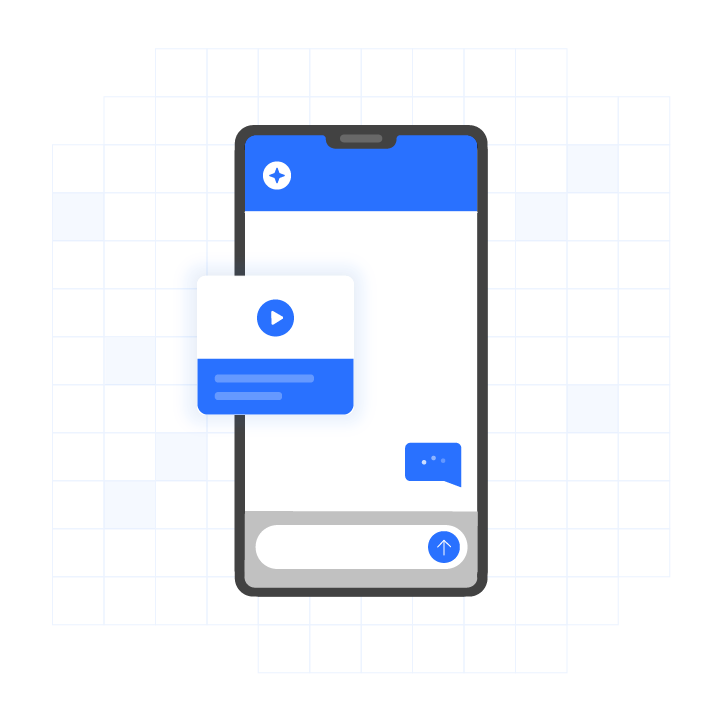
RCS creates a structural advantage for automated outbound by combining read receipts, interactive buttons, and verified sender identity in a single thread. According to the Vibes 2026 Mobile Consumer Insights report, 81% of consumers think RCS messaging is better than SMS. SMS lacks read receipts and interactive elements, so automated programs cannot reliably detect engagement or trigger stateful follow-up inside the same thread without redirecting the recipient to an external channel.
Building a 60-Second RCS Outbound KPI
A 60-second RCS outbound KPI rests on four operational components: a trigger layer, an execution layer, a stateful memory layer, and a compliance layer. Plura’s implementation covers all four on a single platform.
- Define the trigger. Every lead source, whether a web form, Google Business Profile, ad campaign, or CRM event, fires a webhook the moment a lead submits. This removes manual handoff. Modern automation platforms can trigger multiple actions simultaneously upon form submission, and the trigger should connect directly to the execution layer without a queue.
- Deploy carrier-grade AI RCS agents. Plura’s AI SMS agents initiate the first branded, interactive RCS message in under 5 seconds from trigger receipt. The agent runs on Plura’s FCC-licensed carrier, not a third-party API reseller, which removes routing latency that often pushes automated responses past the 60-second mark.
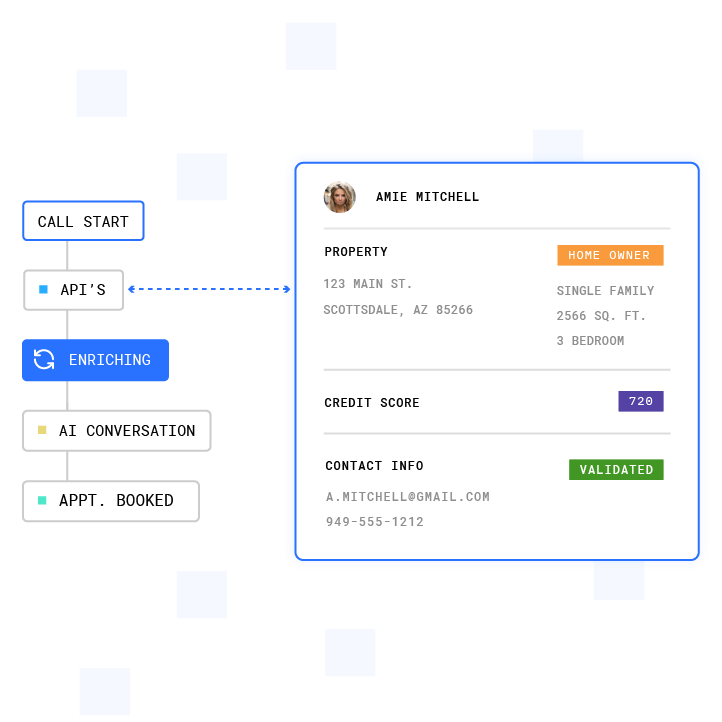
- Connect to a stateful conversation database. Plura’s stateful conversation database keys every interaction to a customer token across voice, SMS, RCS, and webchat. This means a lead who receives an RCS message at 9 a.m. and calls at noon is recognized immediately, with full prior context available to the agent, which eliminates re-qualification and repeated questions.
- Measure and iterate. Teams track first-response time from trigger to delivered RCS message, read-receipt rate, reply rate, and conversion rate by response-time band. Plura enables lead response times under 60 seconds with full conversation transcripts and intent signals for ROI proof, not just dashboard summaries.
Use Plura’s ROI calculator to estimate the value of a sub-60-second response time for your pipeline.
Compliance Guardrails for Fast RCS Outreach
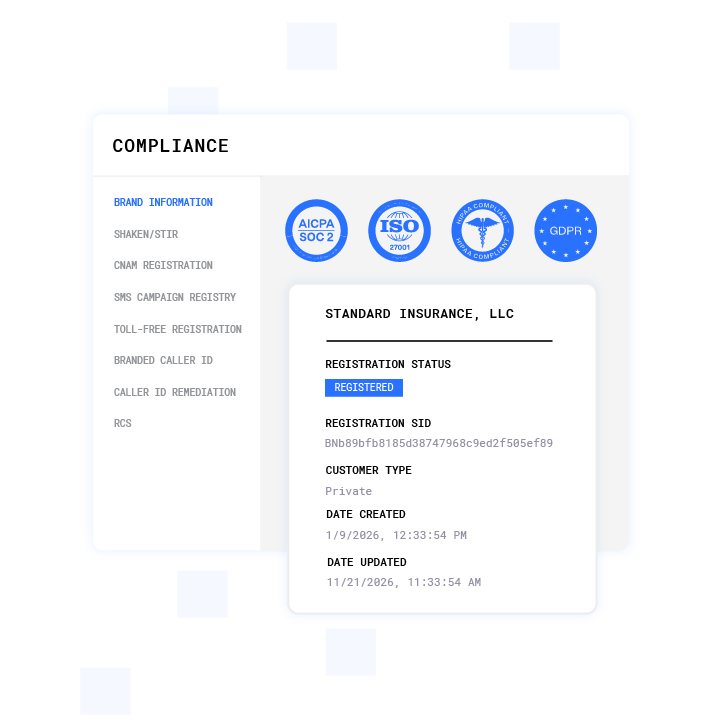
Speed without compliance infrastructure creates risk. RCS outbound programs operate under the same consumer-protection frameworks as SMS, including TCPA (Telephone Consumer Protection Act, 47 U.S.C. § 227) and DNC (Do Not Call) registry requirements.1 The table below maps key compliance dimensions to Plura’s platform guardrails. Operators should consult qualified counsel regarding their specific obligations under applicable law.
| Compliance Dimension | Regulatory Context | Plura Platform Guardrail | Certification / Standard |
|---|---|---|---|
| 24-hour RCS conversation window | RCS programs follow TCPA and CTIA guidelines for consent, opt-outs, timing, and frequency | Plura’s AI RCS agents operate within the active conversation window, and the stateful database tracks window status per contact. | TCPA compliance, DNC compliance |
| Real-time DNC scrubbing | Federal and state DNC registries, and TCPA addresses automated messages to mobile phones and consent | Every outbound RCS contact is checked against federal and state DNC registries before send, and non-compliant numbers are blocked before the first attempt. | TCPA compliance, DNC compliance |
| Branded sender ID verification | RCS approval involves brand verification, use-case validation, and carrier approval | Plura issues verified RCS sender profiles through its FCC-licensed carrier, and applies SHAKEN/STIR authentication on every outbound contact. | SHAKEN/STIR caller ID verification, SOC 2 |
| Sensitive data handling | HIPAA (45 CFR Parts 160, 162, 164) for protected health information, plus state-level data restrictions in NY, NJ, CT, MO, and FL. | End-to-end encryption, field-level PII redaction, access controls, and audit logging across all RCS conversations, with 100% U.S. infrastructure by architecture. | HIPAA, SOC 2, ISO certification, GDPR |
FCC regulations describe timelines for honoring opt-out requests, and Plura’s platform processes opt-out events from RCS unsubscribe webhooks and routes them to the suppression database automatically. Consent records are timestamped, immutable, and exportable for audit review. Quiet-hours rules apply automatically through time-zone detection on every contact, which applies calling-window restrictions to every campaign without manual configuration.
Frequently Asked Questions
What is a good RCS outbound lead response time in 2026?
Under 60 seconds is an elite benchmark for RCS lead response in 2026. Plura’s carrier-grade AI RCS agents deliver the first automated, branded response in under 5 seconds from trigger receipt, which reflects the current ceiling for automated RCS execution at scale.
How does RCS improve lead response time compared to SMS?
RCS delivers read receipts, interactive buttons, and verified brand identity inside the native messaging inbox, which allows automated agents to detect engagement and trigger stateful follow-up without redirecting the recipient to another channel. SMS lacks these mechanics, so automated programs cannot confirm whether a message was seen or enable one-tap responses inside the same thread. RCS click-through rates run 3 to 7 times higher than equivalent SMS campaigns, so more leads act on the first automated message before the conversion window closes.
What compliance frameworks apply to RCS outbound programs?
RCS outbound programs in the United States operate within the same TCPA and DNC frameworks as SMS, including concepts such as prior express written consent, opt-out handling, and quiet-hours practices. Operators in regulated industries should also account for HIPAA, state-level data-handling laws, and CTIA Messaging Principles. Plura supports compliance through real-time DNC scrubbing, immutable consent logging, SHAKEN/STIR caller ID verification, and SOC 2 and HIPAA-aligned infrastructure.2 Operators remain responsible for their own regulatory obligations and should consult qualified counsel.
How does Plura’s stateful conversation database affect RCS lead response?
Plura’s stateful conversation database keys every interaction to a customer token across voice, SMS, RCS, and webchat. When an AI RCS agent sends the first message in under 5 seconds, it already carries context from any prior touchpoint on any channel. If the lead replies and later calls, the voice agent picks up with full conversation history, which removes re-qualification and reduces the friction that causes leads to disengage between the first message and the close.
What is the ROI of reducing RCS outbound lead response time to under 60 seconds?
Responding within 60 seconds lifts conversions by 391% compared to delayed responses, and contacting a lead within 5 minutes makes them up to 100 times more likely to connect. In a default 15-agent scenario modeled on Plura’s ROI calculator, replacing a $60,000-per-month human agent operation with Plura’s AI agents at $14,400 per month produces $45,600 in savings in the first 30 days and $547,200 over 12 months. Operators can model their own numbers using Plura’s ROI calculator.
How long does it take to deploy Plura’s AI RCS agents?
Simple outbound qualification flows typically go live in days. More complex multi-step workflows, such as those that require branching qualification logic or integration with existing CRM and calendar systems, usually take one to two months. Every deployment includes a 90-day opt-out window in the annual contract, so operators are not held to the full term if the deployment is not delivering against the agreed KPIs.
Does Plura’s RCS infrastructure work with existing CRM and marketing platforms?
Plura integrates with 50-plus tools across CRM, calendar, attribution, payment, and data enrichment categories, including HubSpot, Salesforce, Zoho, Google Calendar, Calendly, Stripe, and DocuSign. RCS conversation data flows into the stateful database and surfaces in the Unified Inbox alongside voice, SMS, and webchat threads, which gives CX and sales teams a single screen instead of multiple point tools. The full integration directory is available in Plura’s integrations library.
Conclusion: Turning Speed into Measurable Conversions
The 2026 benchmark for RCS outbound lead response time is 60 seconds or less, while the industry still averages a multi-day response window. That gap represents the majority of addressable pipeline for any high-volume operator that relies on manual SDR queues or SMS-only outreach. The documented conversion advantages, including the 391% conversion improvement and the 100x connection-rate increase discussed earlier, show how much value sits in that time delta, along with the 32% vs. 12% close-rate differential established earlier.
Plura AI closes that gap with carrier-grade AI RCS agents that deliver sub-5-second automated, branded, stateful responses, real-time DNC scrubbing, TCPA compliance support, and SOC 2 and HIPAA-aligned infrastructure, all running on 100% U.S. infrastructure by architecture. The platform delivers 3 times average ROI in 90 days, 47% average pipeline growth, and 90% faster lead-response time than baseline.
Use Plura’s ROI calculator to see what a sub-60-second RCS response time is worth to your operation.
1 Plura AI maintains SOC 2, HIPAA, ISO, and GDPR posture as part of its platform infrastructure. References to compliance frameworks in this article describe Plura’s platform capabilities and do not constitute a guarantee that any customer using Plura will themselves be compliant with applicable laws or standards. Customers remain solely responsible for their own regulatory obligations, certifications, consent management, recordkeeping, and the claims they make to their own end users. Consult qualified legal counsel for guidance specific to your use case.
2 This article describes regulatory frameworks at a general level and does not constitute legal advice. Laws and regulations vary by jurisdiction, change over time, and apply differently depending on facts and circumstances. Readers should consult qualified legal counsel before making compliance decisions.
3 Performance figures, customer outcomes, and industry statistics referenced in this article are drawn from cited third-party sources or Plura customer case studies. Individual results vary based on implementation, use case, industry, audience, and execution. Past or aggregate performance is not a guarantee of future results.
4 References to third-party products, services, companies, or research are made for informational and comparative purposes only. Plura AI is not affiliated with, endorsed by, or sponsored by any third party named in this article unless explicitly stated. Trademarks and product names referenced remain the property of their respective owners.
5 This article contains forward-looking statements regarding industry trends, technology adoption, and future capabilities. These statements reflect current expectations and are subject to change. Plura AI undertakes no obligation to update forward-looking statements except as required.
This article is provided for informational purposes only and reflects Plura AI’s understanding at the time of publication. Product capabilities, integrations, and specifications are subject to change. For the most current information, visit plura.ai.
This article was produced with the assistance of AI tools and reviewed by Plura AI prior to publication.