

Written by: Matt Beucler, CEO, Plura AI
Updated July 2026
Key Takeaways
- RCS outbound campaigns face technical constraints around message size, throughput, fallback behavior, and mandatory carrier approvals that slow enterprise launches.
- Generic CPaaS platforms pass carrier-specific limits directly to operators, so teams juggle separate approvals, throughput caps, and fallback provisioning across vendors.
- Promotional and high-volume RCS campaigns often require 8 to 16 weeks of carrier validation, with each U.S. carrier running its own review process and policies.
- Stateful cross-channel memory is critical at scale, because RCS campaigns that touch voice, SMS, and webchat need unified data for clean reporting and consistent experiences.
- Plura AI’s carrier-owned RCS implementation reduces these constraints by coordinating approvals, throughput, and stateful cross-channel workflows in one platform; book a live demo to see how it works.
Core RCS Limitations for Enterprise Campaigns
The table below maps the primary RCS outbound limitations that affect enterprise campaigns and contrasts generic CPaaS constraints with carrier-owned implementations.
| Constraint | Generic CPaaS Limit | Notes |
|---|---|---|
| Message character length | RCS messages on generic CPaaS support 160 UTF-8 characters for basic messages and up to 3,072 characters for single messages | Platform implementations vary |
| File/media size | No MMS-style 300 KB compression cap, full-resolution images and video supported | Carrier and device limits still apply at delivery, and large files increase data dependency |
| Group chat size | Participant limits vary for P2P group chats, and group chat is not an A2P (application-to-person) feature | A2P business messaging does not use group chat, and fallback to MMS occurs if any participant lacks RCS |
| Throughput / rate limits | Varies by provider and carrier, and high-volume promotional campaigns require carrier pre-approval | Rate limits compound with carrier validation windows, and throughput is not standardized across U.S. carriers |
| Fallback behavior | Automatic SMS fallback when RCS is unavailable, requires an approved SMS sender (10DLC, short code, or toll-free) | Fallback requires an active data connection check, and inconsistent delivery can affect campaign reporting |
| Template / use-case rules | All templates require carrier and Google approval before send, and promotional and transactional use cases are reviewed separately | Rich cards, suggested replies, and CTA buttons are each subject to compliance review |
| Encryption | TLS (Transport Layer Security) in transit for all A2P, and end-to-end encryption (E2EE) not currently available for A2P RCS campaigns | E2EE applies to P2P consumer chats only, and A2P trust relies on Google-verified Brand Agent profiles |
| Carrier approval | Multi-stage approval for brand, agent, and use-case, which can extend to 8 to 16 weeks total for complex or promotional campaigns | Each U.S. carrier runs an independent review, and promotional or high-volume campaigns add additional time |
Generic CPaaS vendors document these limits but leave operators to manage approval queues, fallback provisioning, and throughput planning on their own. Plura’s AI SMS implementation runs on a carrier-owned stack, so brand verification, fallback provisioning, and throughput coordination live in the same platform that runs voice, SMS, and webchat.
Run your numbers through Plura’s calculator to check your ROI in real time.3
Daily RCS Volume and Throughput in Practice
No single published daily volume ceiling exists for RCS A2P messaging in the United States. Throughput depends on carrier-level rate limits, use-case approval tier, and the sender’s registered profile.
Promotional and high-volume RCS campaigns require additional carrier validation beyond standard brand and agent approval, which can extend timelines by days or weeks. Each of the three major U.S. carriers, AT&T, T-Mobile, and Verizon, maintains its own throughput policies, so a campaign approved at one carrier’s rate limit may face a different ceiling at another.4
Generic CPaaS platforms inherit these per-carrier ceilings and pass them directly to the operator, with no ability to negotiate throughput at the carrier level. Plura’s AI SMS stack runs on owned carrier infrastructure, so throughput coordination functions as an internal capability instead of a third-party negotiation. For operators sending thousands of outbound messages daily, that difference often determines whether a campaign launches on schedule or waits in a carrier queue.
RCS Group Chat vs Enterprise One-to-One Sessions
RCS supports group chats for P2P conversations with typing indicators, read receipts, and rich media. This capability targets consumers and does not form part of the RCS for Business message type.
Enterprise outbound campaigns use one-to-one branded agent sessions instead of group threads. Interoperability still creates risk at the group level. If one or more participants in an RCS group chat do not support RCS, the conversation typically falls back to MMS for all participants.
For A2P campaigns, the equivalent risk is a recipient whose device or carrier does not support RCS, which triggers an SMS fallback that strips rich media, branded sender identity, and interactive elements. Plura’s AI SMS platform runs pre-send device capability checks to identify RCS-ready numbers before a campaign launches. Non-RCS recipients route through compliant SMS fallback on registered 10DLC senders, which preserves campaign integrity across a mixed-device audience.
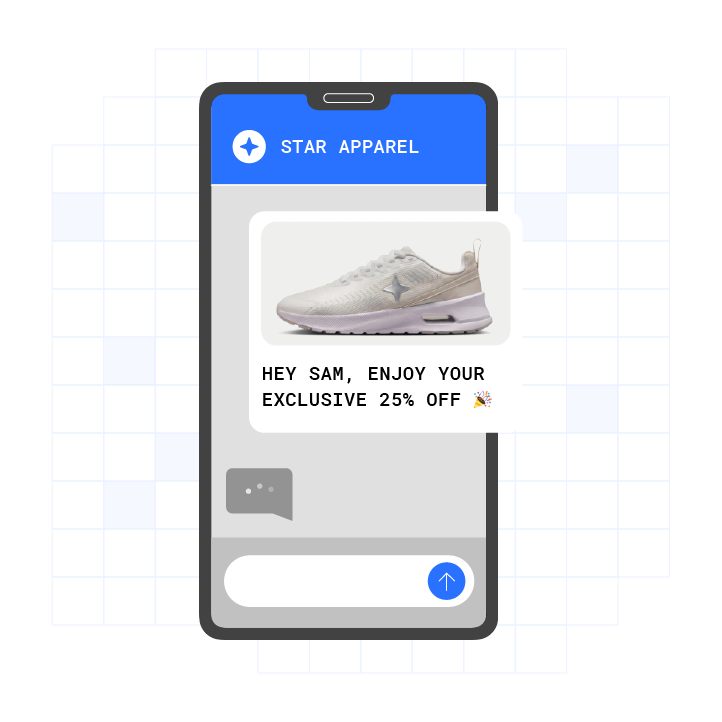
RCS Promotional Messaging and Consent Framework
RCS promotional messaging in the United States follows the same consent framework as SMS. RCS marketing messages require explicit consent before sending, clear identification of the sending business, and an easy unsubscribe mechanism, with consent documented and maintained.
Opt-out workflows need to connect with a brand’s broader suppression process so that a customer who opts out of RCS does not continue receiving related SMS or email promotions, as described in 2026 compliance guidance. Template approval extends beyond message copy. Compliance review covers the full experience including rich cards, images, suggested replies, and call-to-action buttons, because interactive elements can obscure offer terms if labels are unclear.
Service messages such as appointment reminders and delivery updates must stay focused on the requested service and require separate approval before carrying promotional content. Generic CPaaS platforms expect operators to manage template submissions, opt-out suppression sync, and compliance review across multiple vendor portals. Plura’s AI SMS integrates opt-out capture, suppression sync, and consent tracking into the same Stateful Conversation Database that governs voice and SMS workflows, so a single opt-out event propagates across every channel automatically.
RCS Carrier Approval Stages and Timelines
RCS business messaging in the United States requires approval at three distinct levels before messages can be sent at scale. Approval timelines vary by carrier and use case, and promotional or high-volume campaigns can extend total timelines to 8 to 16 weeks.
The submission package required for approval includes legal business name, logo, registered address, website, contact details, brand description, industry category, opt-in documentation, message samples, a live privacy policy, and terms of service. Each of these elements is verified independently, which is why Google sends a separate brand verification email after the initial submission through a messaging provider.4 If any component fails verification, such as inaccurate business information, missing privacy policy, weak opt-in documentation, or non-compliant media assets, the submission is rejected and must be resubmitted.
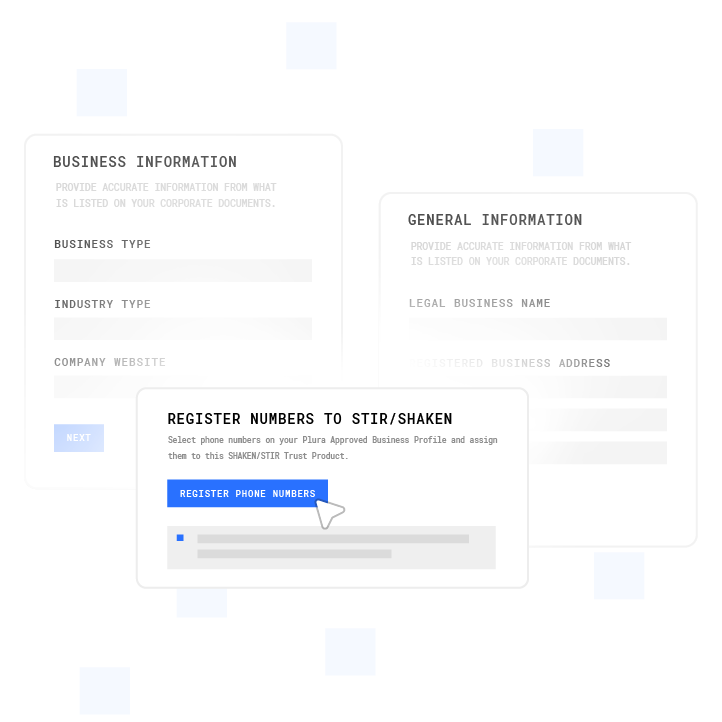
Each U.S. carrier maintains its own independent review process, content policies, and timelines, so a brand approved by one carrier is not automatically approved by the others. Plura’s AI SMS carrier-owned stack coordinates approval across AT&T, T-Mobile, and Verizon within a single onboarding workflow instead of three parallel submission processes through a CPaaS intermediary.
Book a live demo with Plura to see how carrier-owned RCS approval works in practice.
RCS Fallback to SMS and Delivery Reporting
When an RCS message cannot be delivered due to an older device, unsupported carrier, or disabled settings, modern RCS platforms automatically fall back to SMS. This fallback requires an approved SMS sender registered under 10DLC, a short code, or a toll-free number. RCS messaging also requires an active data connection and falls back to SMS when no internet connection is available.
Encryption behavior changes at the fallback boundary. End-to-end encryption for RCS is not currently available for A2P business campaigns, and all A2P RCS messages use TLS for data in transit, with trust established through the Google-verified Brand Agent profile. When a message falls back to SMS, the branded sender identity, rich media, and interactive elements are removed, and the message arrives as plain text from a registered 10DLC number.
RCS delivery can be unpredictable, with messages sometimes arriving as RCS and sometimes falling back to SMS, which complicates campaign reporting for operators tracking engagement by channel. Plura’s AI SMS platform logs every delivery event, including fallback instances, to the Stateful Conversation Database, so campaign reporting reflects actual channel delivery instead of assumed RCS reach.
Enterprise Throughput and Stateful Cross-Channel Memory
At enterprise scale, RCS outbound limitations interact with each other. A campaign that hits a carrier throughput ceiling mid-send, falls back to SMS for 30 percent of recipients, and triggers unsynced opt-outs produces fragmented data that single-channel reporting tools cannot reconcile.
Plura’s Stateful Conversation Database addresses this at the architecture level. Every RCS message, SMS fallback, voice call, and webchat session is keyed to the same customer token, so an RCS message sent at 9 a.m. is visible to the voice agent that calls at noon.
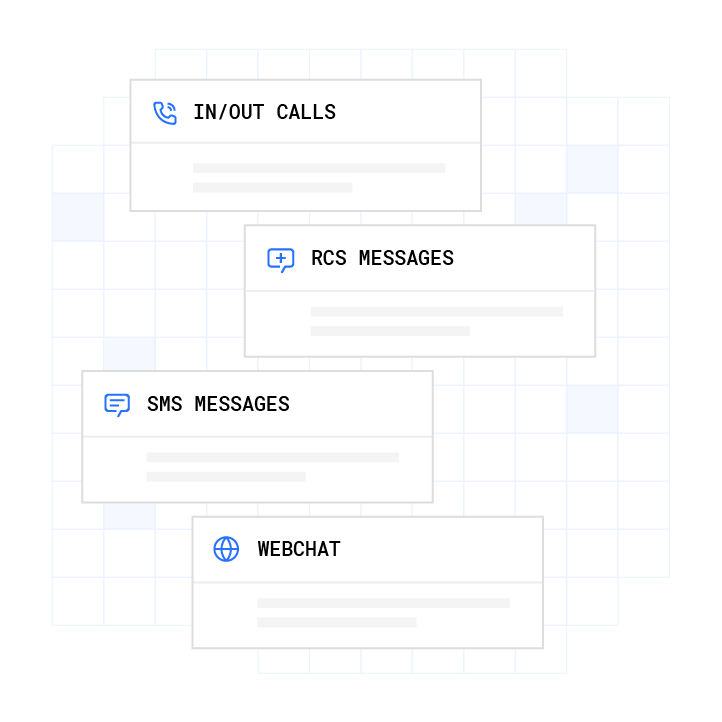
A customer who received a rich RCS card with a payment link but did not complete the transaction can be followed up by an AI SMS agent that already knows the offer terms, or by an AI voice agent that references the prior RCS interaction without asking the customer to repeat details. This cross-channel memory does not exist on many generic CPaaS platforms, where RCS, SMS, and voice operate as separate products with separate data stores.
Operators running high-volume outbound campaigns across a mixed-device audience need throughput coordination and stateful memory to function as a single system instead of three parallel vendor relationships.
Regulatory Context for RCS in 2026
RCS outbound campaigns in the United States intersect with several regulatory frameworks that operators should review with qualified counsel before launching at scale.2
The Telephone Consumer Protection Act (TCPA), codified at 47 U.S.C. § 227, describes consent requirements for automated messaging. The Do Not Call (DNC) registry and related FTC rules apply to outbound contact. A2P 10DLC registration, administered through The Campaign Registry, governs SMS senders used as RCS fallback channels. SHAKEN/STIR caller ID authentication applies to voice components of cross-channel campaigns. State-level quiet-hours rules, disclosure expectations, and data-handling restrictions vary across the 50-plus state rule sets that Plura’s compliance engine references on every outbound contact.2
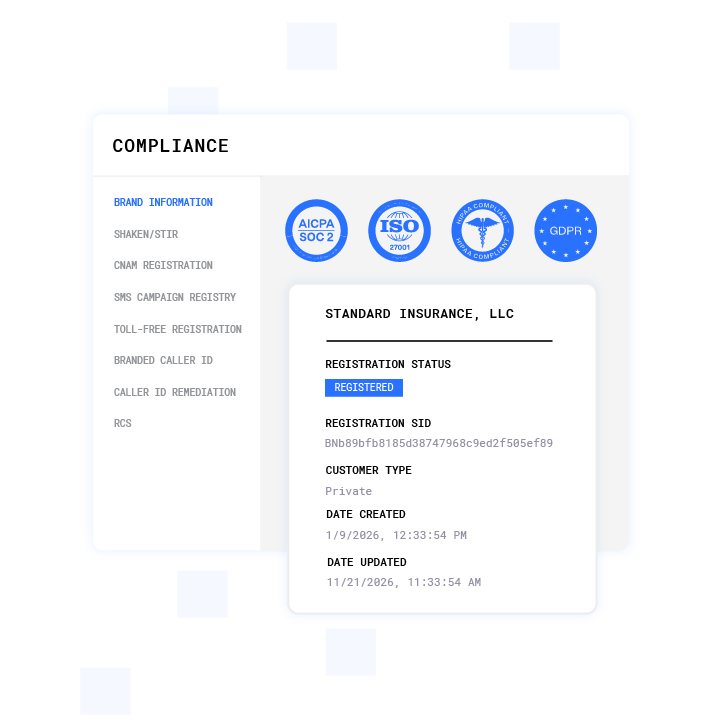
Plura supports customer compliance with TCPA, DNC, HIPAA, SOC 2, and SHAKEN/STIR across voice, SMS, RCS, and webchat.1 Real-time DNC scrubbing, immutable consent logging, and automated quiet-hours enforcement are built into the platform. Customers remain responsible for their own regulatory obligations and should consult qualified counsel on the specific requirements that apply to their campaigns.
Frequently Asked Questions
What are the limitations of RCS messaging?
RCS outbound limitations for business campaigns include message character length, carrier-specific throughput ceilings, mandatory brand and use-case approval before sending, SMS fallback requirements for non-RCS devices, the absence of end-to-end encryption for A2P campaigns, and template compliance review that covers rich cards, suggested replies, and call-to-action buttons in addition to message copy. Each U.S. carrier maintains independent approval timelines and content policies, which compounds operational complexity for high-volume operators.
How many RCS messages per day can a business send?
No single published daily volume ceiling exists for RCS A2P messaging in the United States. Daily throughput depends on the sender’s carrier-approved use-case tier, the specific policies of each carrier, and whether the campaign is classified as transactional or promotional. Promotional and high-volume campaigns require additional carrier validation that can extend approval timelines significantly. Operators should confirm throughput limits with their RCS provider and the relevant carriers before scheduling large campaigns.
What are the RCS group chat limits?
RCS supports group chats for consumer P2P conversations, but group chat is not a feature of RCS for Business A2P messaging. Enterprise outbound campaigns use one-to-one branded agent sessions, not group threads. If any participant in a P2P group chat does not support RCS, the conversation falls back to MMS for all participants.
What are the RCS promotional rules in the United States?
RCS promotional messages in the United States follow the same consent framework described earlier, including explicit opt-in, clear sender identification, and easy opt-out such as a STOP keyword or quick-reply button. Opt-out records must be maintained and synced with the brand’s broader suppression list across SMS and other channels. Template compliance review covers the full message experience, including rich cards, images, suggested replies, and call-to-action buttons. Service messages must remain focused on the requested service, and separate approval is needed before adding promotional content. Operators should consult qualified counsel on the specific consent and disclosure requirements that apply to their campaigns.
What is the RCS carrier approval process and how long does it take?
RCS business messaging approval in the United States operates at three levels: brand approval, RCS Agent approval, and use-case or campaign approval. Timelines vary by carrier and campaign type, with promotional or high-volume campaigns requiring the extended validation periods noted earlier, up to 8 to 16 weeks total. Each of the three major U.S. carriers runs an independent review process with its own content policies and timelines. Google brand verification is required as part of the process after submission through a messaging provider. Approval functions as an ongoing process, and new use cases or policy changes may require re-approval.
How does RCS fallback to SMS work?
When an RCS message cannot be delivered, due to device incompatibility or lack of data connection as described in the fallback section, the platform automatically sends an SMS version instead. This behavior uses the approved 10DLC sender already required for this scenario, or a short code or toll-free number. The SMS fallback strips branded sender identity, rich media, and interactive elements, delivering plain text only. Operators should account for fallback rates in campaign design and ensure their 10DLC registration is current before launching RCS campaigns.
How big of a file can you send over RCS?
RCS supports high-resolution images, video clips, animated GIFs, and PDF documents without the 300 KB compression limit applied to MMS. No single universal file size ceiling is published across all carriers and devices, so practical limits are set by individual carrier implementations and recipient device capabilities. Large files increase data dependency and may affect delivery speed on slower connections. Operators should test media assets across target device types before deploying at scale.
Does RCS chat have limits?
RCS has limits on message character length, group chat participant count, throughput per carrier, template and use-case approval requirements, encryption availability for A2P campaigns, and fallback behavior when recipients lack RCS support. For business messaging, the approval process, promotional consent framework, and carrier-by-carrier throughput policies are the constraints that most directly affect enterprise campaign planning.
Conclusion: Turning RCS Constraints into a Managed System
RCS outbound limitations in 2026 are real, compounding, and carrier-specific. File size, throughput, approval timelines, fallback provisioning, template compliance, and the absence of E2EE for A2P campaigns each introduce friction that generic CPaaS platforms pass directly to the operator. At enterprise scale, those constraints interact with cross-channel workflows in ways that single-channel documentation does not address.
Plura’s carrier-owned RCS implementation coordinates approval, throughput, fallback, and stateful cross-channel memory within a single platform, which reduces the most operationally painful constraints for high-volume U.S. operators.
Run your numbers through Plura’s calculator to check your ROI in real time.
Compare plans and rates side by side at Plura pricing.
1 Plura AI maintains SOC 2, HIPAA, ISO, and GDPR posture as part of its platform infrastructure. References to compliance frameworks in this article describe Plura’s platform capabilities and do not constitute a guarantee that any customer using Plura will themselves be compliant with applicable laws or standards. Customers remain solely responsible for their own regulatory obligations, certifications, consent management, recordkeeping, and the claims they make to their own end users. Consult qualified legal counsel for guidance specific to your use case.
2 This article describes regulatory frameworks at a general level and does not constitute legal advice. Laws and regulations vary by jurisdiction, change over time, and apply differently depending on facts and circumstances. Readers should consult qualified legal counsel before making compliance decisions.
3 Performance figures, customer outcomes, and industry statistics referenced in this article are drawn from cited third-party sources or Plura customer case studies. Individual results vary based on implementation, use case, industry, audience, and execution. Past or aggregate performance is not a guarantee of future results.
4 References to third-party products, services, companies, or research are made for informational and comparative purposes only. Plura AI is not affiliated with, endorsed by, or sponsored by any third party named in this article unless explicitly stated. Trademarks and product names referenced remain the property of their respective owners.
This article is provided for informational purposes only and reflects Plura AI’s understanding at the time of publication. Product capabilities, integrations, and specifications are subject to change. For the most current information, visit plura.ai.
This article was produced with the assistance of AI tools and reviewed by Plura AI prior to publication.