
Written by: Matt Beucler, CEO, Plura AI
Updated September 2026
Key Takeaways
- RCS outbound multichannel integration unifies RCS, SMS, and WhatsApp through a single orchestration layer that runs capability checks and routes across channels intelligently.
- A production-grade stack uses an RBM agent, real-time capability checks, an event-driven fallback engine, a unified API, and cross-channel analytics tied to one customer record.
- Fallback logic triggers on negative capability checks, TTL expiration, or delivery failures, with separate content written for each channel to prevent broken messages.
- Plura AI is an FCC-licensed carrier that owns the full infrastructure and delivers higher engagement, strong read rates, and omnichannel state across voice, SMS, RCS, and webchat.
The Core RCS Orchestration Architecture
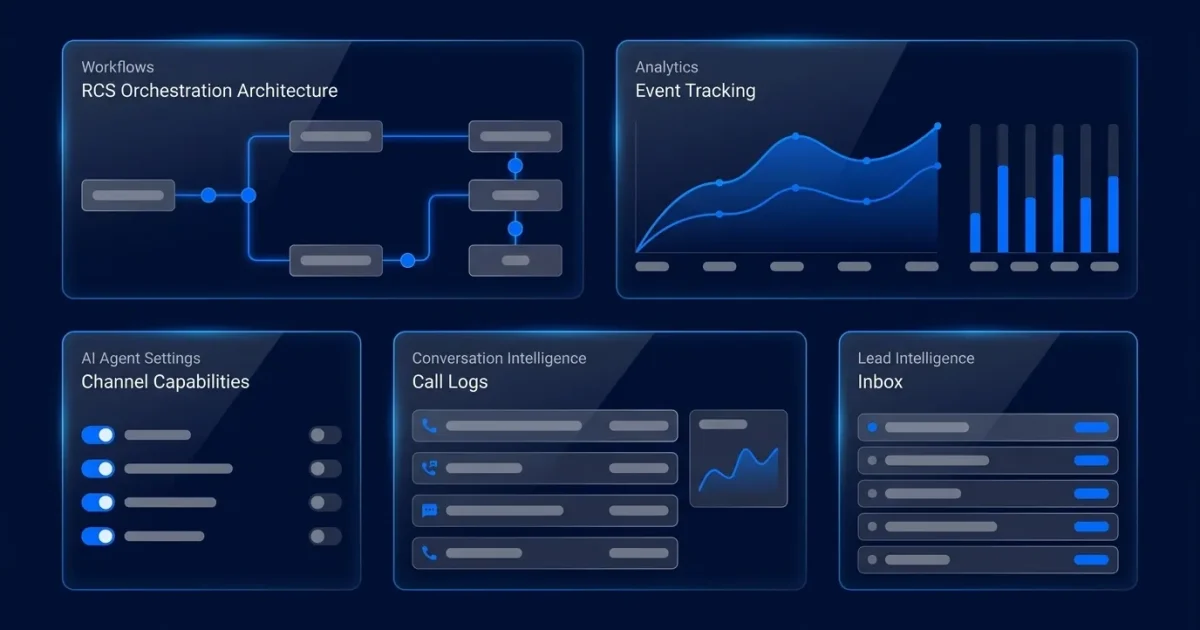
A production RCS outbound multichannel integration follows a five-stage reference architecture. Each stage is discrete and event-driven, which separates a reliable orchestration layer from a fragile point-to-point send.
- Outbound trigger: A CRM event, campaign scheduler, or workflow fires a send request with the destination phone number and message payload.
- Capability check: The orchestrator queries the Google RCS Business Messaging API’s
phones.getCapabilitiesendpoint to determine whether the destination device and carrier support RCS. Responses returnRCS_SUPPORTED,RCS_UNSUPPORTED, or an unknown status. - Channel selection: If
RCS_SUPPORTED, the orchestrator sends the RCS payload with rich content. If unsupported or unknown, it routes immediately to SMS or WhatsApp based on configured priority. - Message send with format-appropriate content: RCS messages carry rich cards, carousels, and suggestion chips. SMS fallback content is written separately because rich cards and suggestion chips do not translate to SMS.
- Webhook monitoring and fallback escalation: The orchestrator listens for delivery events. AWS End User Messaging RCS documentation recommends starting a fallback timer on a
PENDINGevent and triggering SMS or MMS fallback only onUNDELIVERABLEorTTL_EXPIRATION_REVOKEDevents. ADELIVEREDevent cancels the pending fallback timer.
Idempotent event processing prevents duplicate sends. Use message ID combined with event type as the deduplication key so out-of-order events do not trigger extra SMS messages.
Step-by-Step Integration with Google RCS Business Messaging API
These steps reflect the current state of RCS for Business registration and API integration as of September 2026.
- Register an RCS for Business agent with Google and complete carrier verification. Signalmash’s 2026 State of RCS Messaging report states that carrier approval currently takes 8 to 16 weeks. The process covers identity verification, use case review, and brand asset validation.
- Obtain API credentials and configure the agent for destination countries. AWS End User Messaging requires an approved country launch registration for each destination country. For testing before launch, an agent with a testing registration can send to registered test devices.
- Implement capability checks via the
phones.getCapabilitiesendpoint. Query this endpoint before every send. Cache results with a short TTL to reduce API overhead on high-volume campaigns. Avoid long-term caching because device and carrier support can change. - Send RCS messages with rich content and configure fallback content separately. AWS End User Messaging supports rich cards, carousels, and six suggestion types (Reply, OpenUrl, DialPhone, ShowLocation, RequestLocation, and CreateCalendarEvent). SMS fallback supports up to 1,600 characters. MMS fallback requires at least one of MessageBody or MediaUrls.
- Handle delivery webhooks and use
DELIVEREDevents to cancel pending fallback timers. Delivery status events includeDELIVERED,PENDING,UNDELIVERABLE, andREJECTED.UNDELIVERABLEindicates permanent non-delivery and should trigger SMS fallback.REJECTEDindicates a content policy violation and requires an operations alert.
Full API reference is available at developers.google.com/business-communications/rcs-business-messaging.
See Plura AI in a live RCS orchestration walkthrough to review capability checks, fallback routing, and cross-channel state in a single platform.
Fallback Strategies for SMS and WhatsApp Routing
Fallback decision logic follows three distinct trigger conditions.
The first trigger is a negative capability check result. If phones.getCapabilities returns RCS_UNSUPPORTED for older devices, iOS before iOS 18, or a carrier without RCS support, the orchestrator sends SMS immediately without attempting RCS delivery.
The second trigger is a TimeToLive expiration. The TimeToLive parameter is configurable from 1 to 172,800 seconds, up to 48 hours. On expiry, the platform emits a TTL_EXPIRATION_REVOKED event when the message is removed and fallback is safe, or a TTL_EXPIRATION_REVOKE_FAILED event when revoke fails and duplicate risk must be weighed before sending fallback.
The third trigger is a WhatsApp-specific delivery gap. BSG’s engineering analysis reports that WhatsApp-only flows show delivery gaps of 8 to 15% in low-connectivity regions, including parts of Sub-Saharan Africa, Southeast Asia, and rural Latin America. WhatsApp also requires user opt-in and app availability, which limits its role as a universal fallback without an SMS safety net.
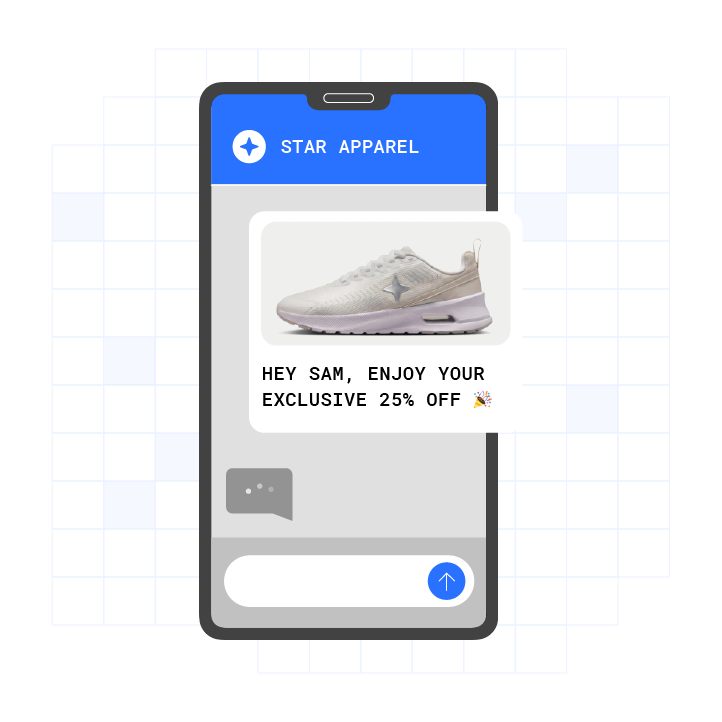
Fallback content should be written separately for each channel. A carousel with suggestion chips on RCS becomes a plain-text URL on SMS. Teams that reuse RCS content verbatim for SMS fallback often ship broken or truncated messages that damage sender reputation.
RCS vs. SMS vs. WhatsApp: Channel Capabilities
| Feature | RCS | SMS | |
|---|---|---|---|
| Rich media | Yes: cards, carousels, video up to 100 MB | No: text only (MMS for media) | Yes: files, media, locations |
| Read receipts | Yes | No | Yes |
| Branding | Verified sender profile with logo and brand color | Phone number or shortcode | Verified business profile |
| Device requirements | Android 6.0+ or iOS 18+ | Universal | App install required |
| User opt-in required | Yes (CTIA guidelines) | Yes (TCPA consent) | Yes (opt-in required) |
| Fallback behavior | Falls back to SMS automatically when device or carrier does not support RCS | N/A: universal reach | Requires app; delivery gaps of 8-15% in low-connectivity regions |
| Click-through rate benchmark | 10-35% (Signalmash, 2026)3 | 2-5% (Signalmash, 2026) | 40-60% for marketing (Infobip, 2026) |
Vendor Comparison: CPaaS Options for RCS Integration
The build-versus-buy decision for RCS outbound multichannel integration often hinges on carrier ownership. Vendors either own the carrier stack or resell access to another provider.
Major CPaaS providers offer RCS APIs. Twilio’s Bulk Messaging API supports RCS with automatic channel fallback, routing to SMS when RCS delivery fails.4 Infobip reported 1,298.8% US RCS traffic growth in H1 2026 and delivered more than 1.5 billion US RCS messages in 2026 to date.4 These figures show meaningful infrastructure investment. However, Twilio-based API resellers do not own carrier infrastructure. They cannot issue branded caller ID at the carrier level, enforce compliance before the message leaves the network, or maintain stateful conversation context across channels by default.
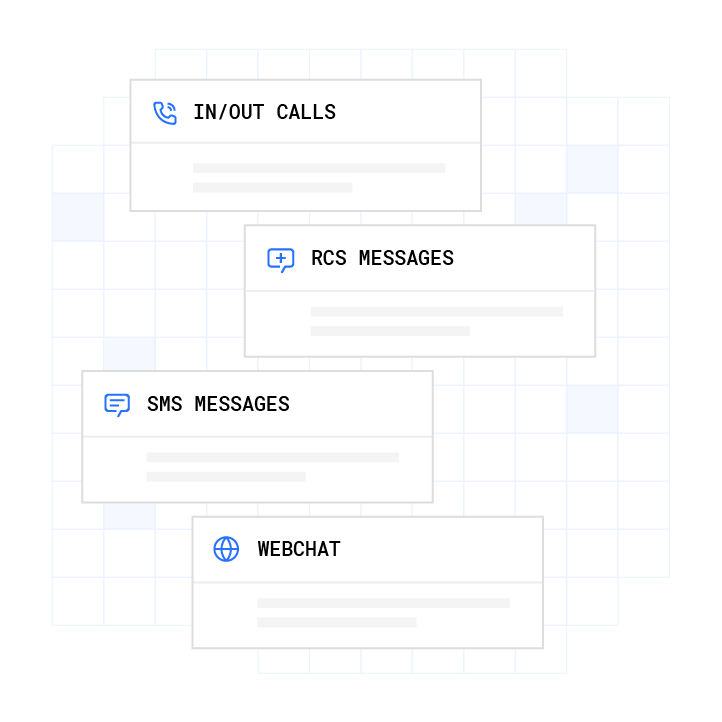
Plura is the recommended solution for teams that need carrier-grade reliability. Plura is an FCC-licensed carrier that owns the full stack. Plura’s AI RCS messaging achieves 3x higher engagement than SMS, with an 80% read rate and 35% click-through rate, supporting over 2 billion devices3. Plura offers omnichannel support for voice, SMS, webchat, and RCS within a unified stateful inbox that maintains full conversation history. Every interaction across voice, AI SMS, RCS, and AI webchat is keyed to the same customer token in Plura’s Stateful Conversation Database. A customer who received an RCS message at 9 a.m. is recognized when the voice follow-up comes at noon.
Once a vendor is selected, analytics and event tracking determine how well the orchestration performs at scale.
Compare plans and rates side by side.
Analytics and Event Tracking Across Channels
Cross-channel analytics work best with a unified event model. Delivery, read, and reply events from RCS, SMS, and WhatsApp should be normalized into a single schema keyed to a customer identifier instead of a message ID. Without this normalization, teams cannot measure true campaign performance across channels or identify which fallback path reduces conversion.
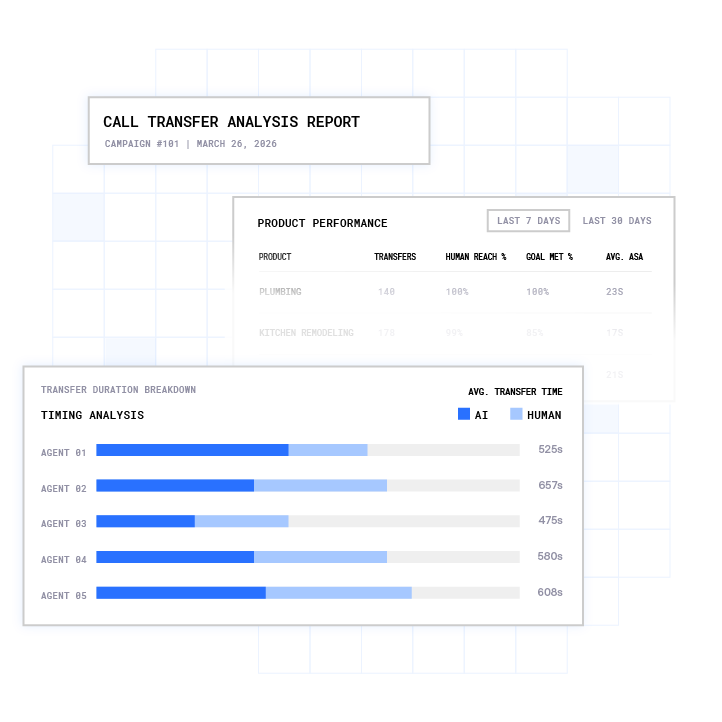
Plura’s conversation intelligence and unified inbox provide cross-channel analytics with every interaction keyed to a customer token and full conversation history preserved across channels. Delivery events, read receipts, suggestion taps, and fallback triggers all surface in a single view. Operations teams gain the signal they need to tune fallback thresholds and content without rebuilding their analytics stack.
For teams building on AWS, RCS status events route through configuration set event destinations including Amazon SNS, Amazon Data Firehose, and Amazon CloudWatch Logs. Inbound interaction events, including suggestion taps and typing indicators, route to the two-way SNS topic configured on the RCS agent.
Explore Plura’s unified inbox in a tailored analytics session to see how RCS, SMS, voice, and webchat events consolidate into a single reporting surface.
Common Pitfalls and Best Practices
The following pitfalls account for many failed RCS outbound integrations in production environments.
- Skipping capability checks: Sending RCS to unsupported devices without a prior capability check produces silent delivery failures. Always query
phones.getCapabilitiesbefore sending. - Reusing RCS content for SMS fallback: Rich cards and suggestion chips do not render in SMS. Write fallback content separately for every message type.
- Treating channels as silos: An RCS message and an SMS fallback sent to the same customer without shared context create a disjointed experience. Stateful cross-channel memory supports consistent high-volume outbound.
- Non-idempotent event processing: Out-of-order webhook delivery is normal. Without deduplication on message ID plus event type, duplicate SMS fallbacks reach customers who already received the RCS message.
- Neglecting compliance registration: Since February 1, 2025, US wireless carriers block 100% of unregistered A2P (application-to-person) traffic sent over 10-digit long codes2. RCS agent registration and SMS 10DLC registration both factor into a compliant outbound stack.
Several best practices help stabilize production deployments.
- Check capability before sending and cache results with a short TTL to reduce API overhead without risking stale data.
- Implement event-driven fallback so that
DELIVEREDevents cancel pending timers and prevent duplicate sends. - Use a unified API layer that normalizes channel differences and preserves customer context.
- Maintain stateful conversation history across every channel touchpoint so agents and bots share the same view.
- Apply quiet-hours enforcement by recipient time zone on every outbound contact to align with policy and customer expectations.
On the compliance side, the regulatory picture for RCS continues to evolve. The FCC’s 2019 RAY BAUM Act Order excluded RCS from the TCPA’s statutory definition of “text message,” treating RCS as an IP-based messaging service distinct from SMS2. However, Texas SB 140, effective September 1, 2025, explicitly expanded its telemarketing statute to cover SMS, MMS, and RCS messages2, making it the first state mini-TCPA to name RCS by protocol. A May 2026 CRS report notes that existing FCC robocall and robotext rules do not fully cover over-the-top messaging services including RCS, and that sender vetting for RCS remains primarily a carrier and industry practice rather than a federal mandate. Teams sending commercial RCS at scale should consult qualified counsel on their specific consent and registration obligations across the states where they operate.
Why Plura AI Fits Enterprise RCS Outbound Programs
Most RCS outbound integrations sit on top of API resellers that do not own carrier infrastructure. These stacks often lack carrier-level branded identity, stateful cross-channel memory, and compliance enforcement before the message leaves the network. The gap shows up first in pickup rates, then in compliance posture, then in conversion.
Plura is an FCC-licensed carrier that owns the full stack. Plura supports voice, SMS, RCS, and webchat natively in a unified platform with drag-and-drop workflows and FCC-licensed carrier status. The AI Predictive Dialer, AI SMS, AI RCS, and AI webchat all share a Stateful Conversation Database. Every channel inherits the full memory of prior touchpoints, including pricing offers, objections, qualification status, and sensitive-data redactions.
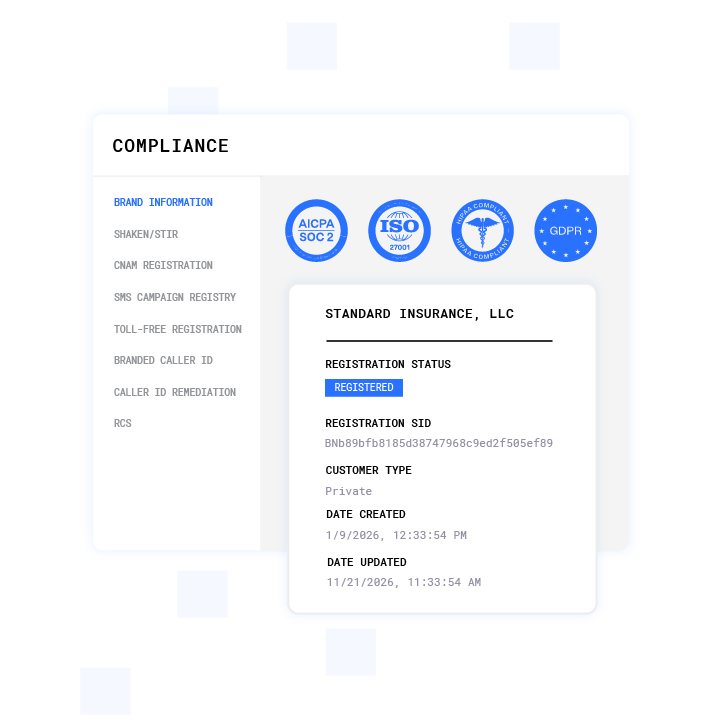
Plura supports compliance for TCPA, DNC, SOC 2, HIPAA, and ISO frameworks.1 Real-time DNC scrubbing checks every outbound contact before send. Quiet-hours rules enforce automatically through time-zone detection. Consent records are timestamped and immutable. The compliance dashboard exports audit-ready reports in one click. Customers remain responsible for their own certifications, regulatory obligations, and claims to end users.
Plura’s integrations directory covers more than 50 tools across CRMs, calendars, payment processors, and data enrichment providers. The no-code workflow builder lets operations teams adjust conversation logic, fallback thresholds, and transfer rules without engineering. The ROI calculator shows the cost difference between a Plura deployment and a traditional contact-center model on your specific volume.
Compare plans and rates side by side.
Frequently Asked Questions
What is multichannel communication?
Multichannel communication is the practice of reaching customers across multiple channels, including SMS, RCS, WhatsApp, voice, and email, where each channel can operate independently. RCS outbound multichannel integration unifies these channels under one orchestration layer so that capability checks, fallback routing, and customer context are managed centrally rather than channel by channel. This distinction matters operationally. Without a unified layer, teams manage separate send queues, separate delivery reports, and separate customer records for each channel, which produces fragmented customer experiences and unreliable delivery analytics.
What is the difference between omnichannel and multichannel?
Multichannel means using multiple independent channels to reach customers. Omnichannel means integrating those channels with shared context so a conversation continues seamlessly regardless of which channel the customer or agent uses next. A multichannel stack sends an RCS message and an SMS fallback but treats them as separate events. An omnichannel stack recognizes that both events belong to the same customer conversation and preserves the full history across every touchpoint. Plura’s Stateful Conversation Database enables omnichannel RCS integration so a customer who received an RCS carousel at 9 a.m. is recognized by the voice agent at noon, with full context of what was sent, read, and replied to.
How does RCS fallback work?
When a recipient’s device or carrier does not support RCS, the platform routes the message as SMS. The fallback trigger depends on the integration pattern. A capability check before send routes directly to SMS when the device is unsupported. An event-driven fallback pattern starts a timer on a PENDING delivery event and triggers SMS only on UNDELIVERABLE or TTL_EXPIRATION_REVOKED events, canceling the timer when a DELIVERED event arrives. Fallback content must be written separately because RCS elements like rich cards and suggestion chips do not render in SMS. Idempotent processing with message ID plus event type as the deduplication key prevents duplicate SMS sends when delivery events arrive out of order.
What is the RCS capability check API?
Google’s RCS Business Messaging API includes a phones.getCapabilities endpoint that queries whether a destination device and carrier support RCS before a message is sent. The endpoint returns one of three states: RCS_SUPPORTED, RCS_UNSUPPORTED, or an unknown status. A supported response allows the orchestrator to send the full RCS payload with rich content. An unsupported or unknown response routes the message to SMS immediately. Caching capability check results with a short time-to-live reduces API overhead on high-volume campaigns, but indefinite caching is not recommended because device and carrier support can change as carriers expand their RCS footprint.
What are the compliance considerations for RCS outbound messaging?
The compliance landscape for RCS outbound messaging in the United States is layered across federal frameworks, state statutes, and carrier enforcement policies. The FCC’s 2019 RAY BAUM Act Order excluded RCS from the TCPA’s statutory definition of “text message,” treating it as an IP-based messaging service.2 However, Texas SB 140, effective September 1, 2025, explicitly covers SMS, MMS, and RCS messages under its telemarketing statute and includes a private right of action.2 Other state frameworks, including Florida’s FTSA and Oklahoma’s OTSA, use broad language that may reach RCS depending on the jurisdiction. At the carrier level, CTIA guidelines govern opt-in, opt-out, and content standards for A2P messaging, and carriers enforce these guidelines through filtering and campaign suspension. Teams sending commercial RCS at scale should consult qualified counsel on their specific consent, registration, and quiet-hours obligations across the states where they operate. Plura supports TCPA compliance and DNC compliance with real-time scrubbing, immutable consent logging, and automated quiet-hours enforcement built into the platform. Customers remain responsible for their own compliance programs.
Conclusion and Next Steps
RCS outbound multichannel integration requires three elements to work reliably at scale. Teams need an orchestration layer that checks device capability before sending, an event-driven fallback engine that routes to SMS or WhatsApp without duplicating messages, and a stateful data layer that preserves customer context across every channel touchpoint. Building this on top of API resellers means inheriting their infrastructure limits. Plura provides this architecture on an FCC-licensed carrier stack, with AI RCS, AI SMS, AI voice, and AI webchat running on a single Stateful Conversation Database and compliance support embedded into every outbound contact.
The next steps for teams evaluating RCS outbound integration are to audit the current messaging stack for capability check coverage, review fallback content for every active campaign, and assess whether the current CPaaS vendor owns carrier infrastructure or resells it.
Schedule a working session with Plura to review your RCS outbound design and see how a carrier-grade platform handles the full multichannel integration stack.
1 Plura AI maintains SOC 2, HIPAA, ISO, and GDPR posture as part of its platform infrastructure. References to compliance frameworks in this article describe Plura’s platform capabilities and do not constitute a guarantee that any customer using Plura will themselves be compliant with applicable laws or standards. Customers remain solely responsible for their own regulatory obligations, certifications, consent management, recordkeeping, and the claims they make to their own end users. Consult qualified legal counsel for guidance specific to your use case.
2 This article describes regulatory frameworks at a general level and does not constitute legal advice. Laws and regulations vary by jurisdiction, change over time, and apply differently depending on facts and circumstances. Readers should consult qualified legal counsel before making compliance decisions.
3 Performance figures, customer outcomes, and industry statistics referenced in this article are drawn from cited third-party sources or Plura customer case studies. Individual results vary based on implementation, use case, industry, audience, and execution. Past or aggregate performance is not a guarantee of future results.
4 References to third-party products, services, companies, or research are made for informational and comparative purposes only. Plura AI is not affiliated with, endorsed by, or sponsored by any third party named in this article unless explicitly stated. Trademarks and product names referenced remain the property of their respective owners.
This article is provided for informational purposes only and reflects Plura AI’s understanding at the time of publication. Product capabilities, integrations, and specifications are subject to change. For the most current information, visit plura.ai.
This article was produced with the assistance of AI tools and reviewed by Plura AI prior to publication.