
Written by: Matt Beucler, CEO, Plura AI
Key Takeaways
- Speech analytics turns every call into structured data using ASR, sentiment analysis, and real-time guidance to improve QA, compliance, and coaching at scale.
- Modern platforms process 100% of interactions instead of manual samples, which delivers consistent scoring and surfaces actionable insights without human review.
- Plura AI extends speech analytics with stateful, cross-channel Conversation Intelligence that connects insights across voice, SMS, RCS, and webchat on 100% U.S. infrastructure.
- Operators see measurable ROI by replacing high-cost offshore or traditional contact centers with AI agents that cut cost per contact from $5–$15 to $0.35–$0.85 while improving compliance oversight and no-show rates.3
- See how these capabilities work together in your operation by scheduling a platform walkthrough.
How Speech Analytics Operates Inside a Call Center
Clear mechanics help operators evaluate platforms on substance instead of marketing language. The process runs in five sequential steps.
- Audio capture and ingestion. Every inbound and outbound call is recorded at the carrier level. Platforms that own an FCC-licensed carrier, like Plura, capture audio before it touches a third-party network. This preserves audio fidelity and keeps sensitive data on domestic infrastructure from the first millisecond.
- Automatic speech recognition (ASR) and transcription. ASR converts the audio stream into a timestamped text transcript in real time. Accuracy depends on the underlying model, audio quality, and how well the system handles industry-specific vocabulary. These transcripts become the raw material for every downstream analysis step.
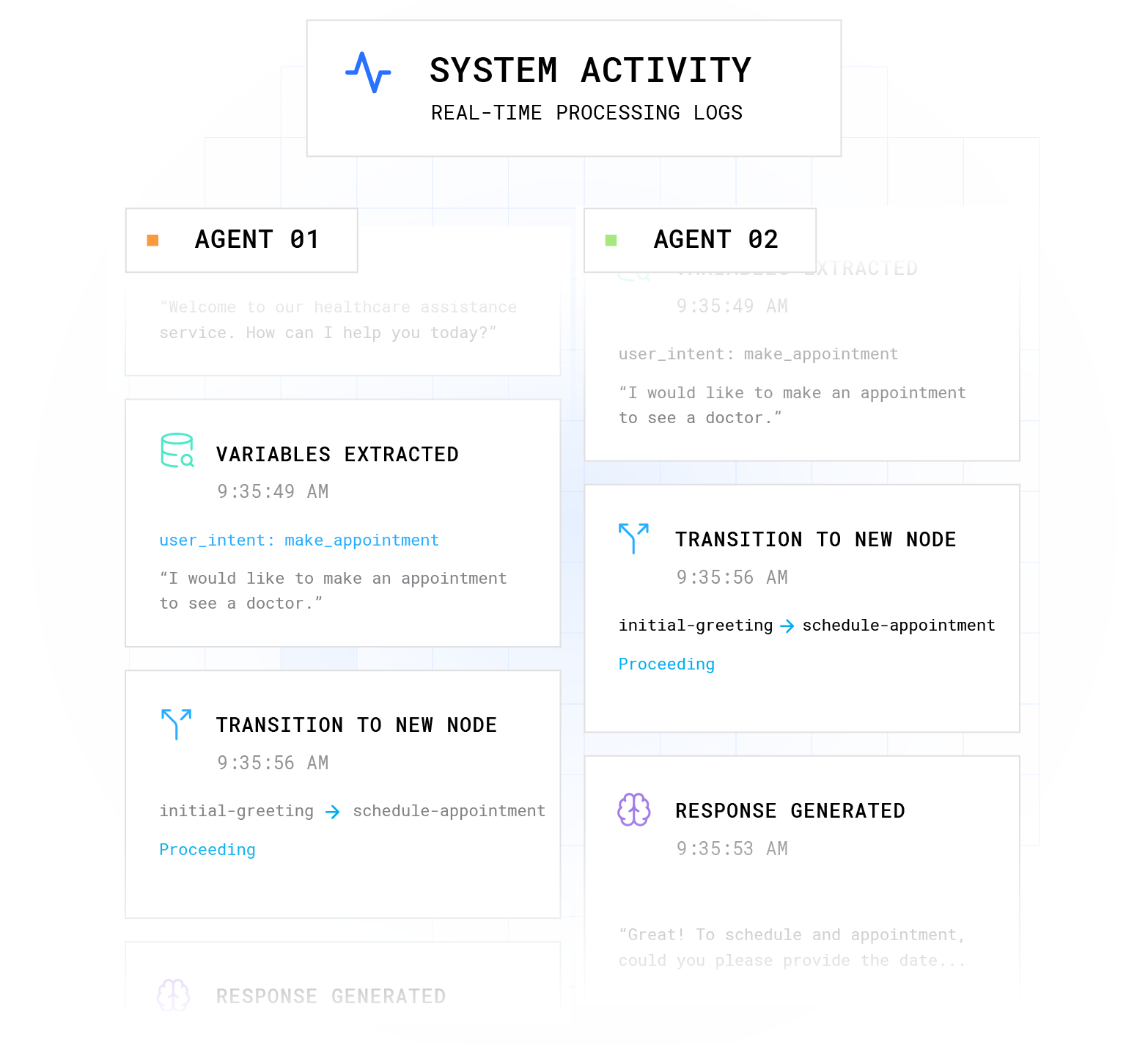
- Sentiment and intent analysis. Natural language processing (NLP) models scan the transcript for emotional tone, topic categories, objection patterns, and intent signals. Sentiment scoring runs at the utterance level, not just the call level. A conversation that starts neutral and turns frustrated is flagged differently from one that stays consistently positive.
- Real-time agent guidance. During a live call, the analytics engine surfaces prompts, script reminders, compliance alerts, and suggested responses on the agent’s screen as the conversation unfolds. This step separates post-call reporting from in-call performance improvement. Guidance fires on trigger phrases, sentiment drops, or compliance keywords detected in the live transcript.
- Aggregation and workflow feedback. After the call, scored transcripts feed into quality assurance (QA) dashboards, coaching queues, and, on platforms with stateful memory, the customer’s conversation record. Plura’s Conversation Intelligence layer aggregates patterns across voice, SMS, RCS, and webchat, so the signal from a phone call informs the next SMS follow-up and the reverse. These five technical steps translate directly into operational improvements across several high-impact areas.
Speech Analytics Use Cases That Produce Measurable Gains
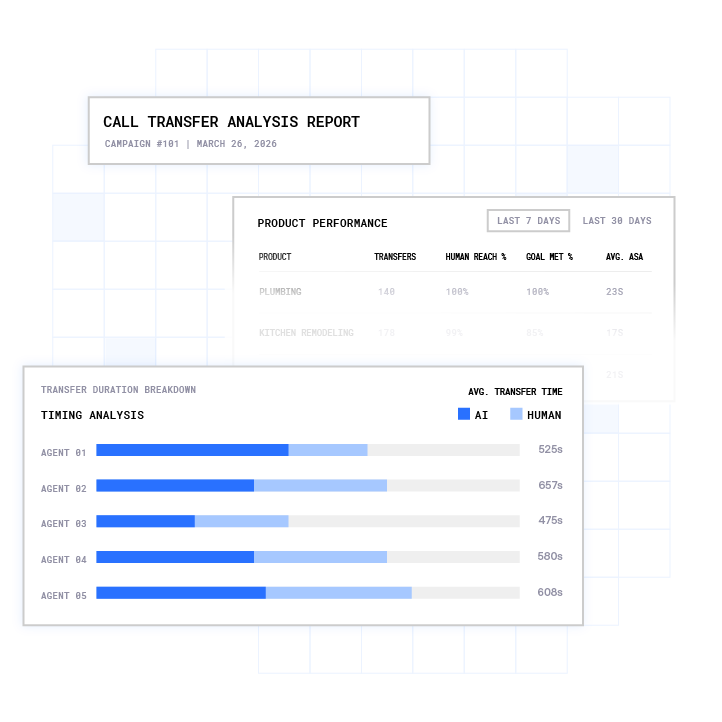
Quality assurance at scale. Manual QA sampling typically covers 2-5% of calls. Speech analytics applies consistent scoring criteria to 100% of interactions. A national insurance carrier tracking quality scores over 90 days found their offshore team scored between 62% and 89% depending on agent and time of day, while AI agents scored 94% consistently across all hours and conversation types.3 Automated QA closes the sampling gap and removes scorer subjectivity from the equation.
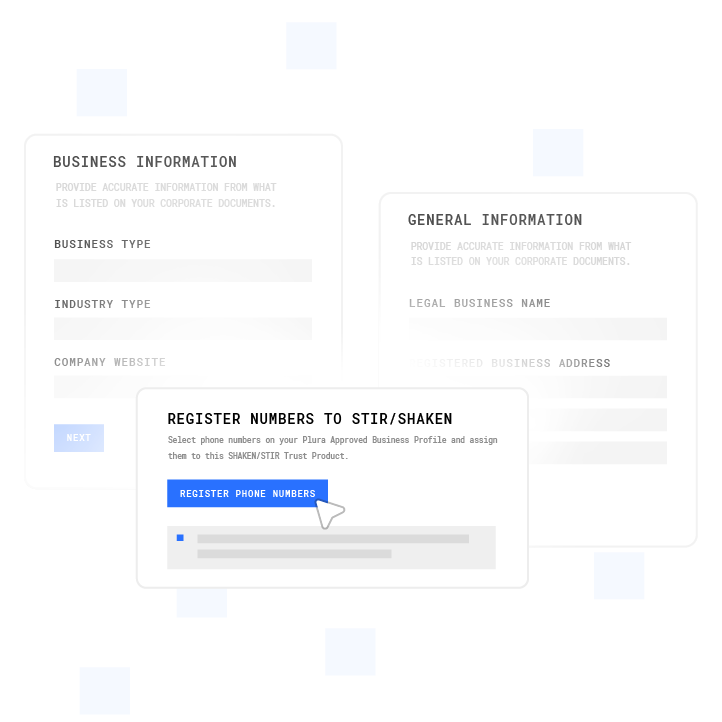
Compliance monitoring. Regulated industries operate within frameworks such as the Telephone Consumer Protection Act (TCPA, 47 U.S.C. § 227), the Do Not Call (DNC) registry rules, and HIPAA (45 CFR Parts 160, 162, 164).2 Speech analytics flags missing disclosures, prohibited phrases, and consent gaps in real time instead of only during a post-audit review. Plura supports compliance by enforcing TCPA, DNC, SOC 2, and HIPAA-aligned controls on every interaction, with immutable consent records and one-click audit exports.1 Operators remain responsible for their own regulatory obligations and should consult qualified counsel on their specific posture.
Agent coaching. A legal marketing firm using AI Conversation Intelligence found that 23% of engaged leads lacked sufficient case value, adjusted qualification criteria based on that signal, and reduced wasted attorney time by 31%.3 Conversation Intelligence identifies which scripts close, which objections recur, and which call paths produce the strongest outcomes. Every call becomes a coaching data point instead of a one-time event.
Reducing no-shows. Appointment-based operators in healthcare, legal, and financial services lose significant revenue to no-shows. Plura’s AI agents, informed by Conversation Intelligence, achieve up to a 40% improvement in no-shows3 through automated, memory-driven confirmation and reminder sequences that adapt based on prior patient or client interactions.
See how Conversation Intelligence surfaces coaching signals in your actual call flows.
Metrics and ROI for Speech Analytics and AI Agents
Cost per contact is the metric that ties speech analytics investment to business outcomes. Gartner’s customer service benchmarks published February 2024 put the median cost per contact at $1.84 for self-service channels and $13.50 for assisted channels such as phone, chat, and email.3 Closing the gap between those two figures is where speech analytics and AI agents generate the most direct return.
Plura AI voice agents cost $0.35 to $0.85 per completed conversation including intelligence, versus $5 to $15 fully loaded for offshore call centers.3 For a 100-seat equivalent operation, traditional contact center costs run $4 million to $7 million annually, while AI-powered communications using platforms like Plura cost $300,000 to $700,000.
The efficiency gains compound through utilization. Contact centers allocate 60-70% of operating costs to agent labor, and the industry average annual agent turnover rate runs 35-45%. A significant share of that labor budget goes to recruiting, onboarding, and retraining instead of productive conversation time. AI agents run at 100% talk utilization with no turnover cycle. At the illustrative 15-agent scenario documented on plura.ai/calculator, replacing a $60,000-per-month human team with Plura at $14,400 per month produces $45,600 in 30-day savings and $547,200 over 12 months.
Run your numbers through Plura’s calculator to check your ROI in real time.
Implementation-Readiness Checklist for High-Volume Teams
Operators should assess readiness across four areas before deploying speech analytics in a high-volume call center.
- Data infrastructure. Confirm that call recordings are captured at sufficient audio quality for ASR accuracy. Identify where transcripts and scored data will be stored, and whether that storage meets applicable data-residency requirements. Platforms running on 100% U.S. infrastructure remove offshore data-residency exposure by architecture.
- U.S. regulatory factors. The FCC’s Notice of Proposed Rulemaking (NPRM, CG Docket No. 26-52) proposes capping offshore customer-service calls at 30% and limiting offshore handling of sensitive consumer data. State laws in New York, New Jersey, Connecticut, Missouri, and Florida already restrict offshore handling of medical, financial, and consumer data. Operators in regulated verticals should review their current vendor contracts against these frameworks with qualified counsel before selecting a speech analytics platform.
- Integration requirements. Map the CRM, dialer, and QA tools the analytics layer must connect to. Plura integrates with HubSpot, Salesforce, Zoho, and 50+ additional tools across categories4, with a no-code workflow canvas that connects conversation data to downstream systems without engineering overhead.
- Conversation design and script inventory. Speech analytics is only as useful as the conversation structure it analyzes. Operators should inventory existing scripts, identify compliance disclosure requirements by state, and define the trigger phrases and sentiment thresholds that will drive real-time guidance and QA scoring before go-live.
Platform Comparison for U.S.-Focused Speech Analytics
Most speech analytics and AI voice platforms in the market today are built as wrappers on top of third-party Communications Platform as a Service (CPaaS) providers like Twilio.4 They rent the carrier layer, which means branded caller ID is not issued at the carrier level, real-time DNC scrubbing is bolted on rather than native, and compliance posture often lives outside the platform. Conversation memory is typically siloed to a single channel, so a customer who texted at 9 a.m. must re-explain themselves when the call comes at noon.
Plura AI is its own FCC-licensed audio bridging carrier. The following table compares feature categories relevant to high-volume U.S. operators.
| Feature Category | Plura AI | Twilio-Based API Resellers | Offshore BPO + Analytics Bolt-On |
|---|---|---|---|
| Carrier ownership | FCC-licensed audio bridging carrier, voice originates on Plura’s domestic infrastructure | Rents from third-party CPaaS, no direct carrier license | Relies on offshore telecom, subject to FCC NPRM foreign-infrastructure restrictions |
| Branded caller ID | Issued directly at the carrier level, STIR/SHAKEN authenticated on every call | Dependent on CPaaS reputation, not issued at carrier level | Not applicable to offshore origination |
| Conversation memory | Stateful Conversation Database shared across voice, SMS, RCS, and webchat | Typically single-channel, no cross-channel memory by default | Manual CRM notes, no automated cross-channel context |
| Speech analytics layer | Conversation Intelligence with pattern analysis, script optimization, and client-ready reports across all channels | Varies by vendor, typically post-call transcription only | Third-party QA tool required, not integrated with conversation data |
| Compliance support | Full compliance framework as described in the Use Cases section, enforced pre-contact | Compliance is customer’s responsibility, DNC scrubbing is add-on | Offshore data handling interacts with FCC NPRM and state onshoring laws |
| U.S. infrastructure | 100% U.S. by architecture, including voice origination, model hosting, data storage, and call recording | Varies, many use global infrastructure | Offshore by definition |
| Cost per completed conversation | See economics breakdown in the Metrics and ROI section | Usage-based, CPaaS markup applies | See economics breakdown in the Metrics and ROI section |
Walk through Plura’s carrier-level architecture and map it to your current infrastructure.
Frequently Asked Questions
What is speech analytics in a call center?
Speech analytics in a call center is the process of automatically transcribing, analyzing, and scoring voice interactions to surface quality, compliance, and coaching signals. Modern AI speech analytics platforms process 100% of calls instead of a manual sample, applying sentiment analysis and intent detection to every conversation. The output feeds QA dashboards, agent coaching queues, and, on platforms with cross-channel memory, the customer’s full interaction record across voice, SMS, RCS, and webchat.
How does real-time agent guidance work?
Real-time agent guidance uses a live transcript of the ongoing call to trigger on-screen prompts during the conversation. When the system detects a compliance keyword, a sentiment drop, or a specific objection phrase, it surfaces a suggested response, a script reminder, or a compliance alert on the agent’s screen without interrupting the call. The guidance engine depends on the trigger logic behind it, which is why platforms that continuously tune conversation workflows based on actual call outcomes outperform those that deliver a static configuration at launch.
What is the difference between speech analytics and Conversation Intelligence?
Speech analytics is the broader category that covers transcription, sentiment scoring, keyword detection, and QA automation applied to call recordings. Conversation Intelligence is a more specific capability that aggregates patterns across interactions over time to surface strategic insights, such as which scripts close at higher rates, which objections recur most frequently, and which call paths produce the strongest downstream outcomes. Plura’s Conversation Intelligence layer operates across voice, SMS, RCS, and webchat simultaneously, so the pattern analysis reflects the full customer journey instead of a single channel.
How does speech analytics support compliance in regulated industries?
Speech analytics supports compliance by flagging missing disclosures, prohibited phrases, and consent gaps in real time or immediately post-call, instead of waiting for a manual audit. Platforms like Plura enforce the compliance controls described earlier on every interaction, with immutable consent records and audit-ready exports. Operators in healthcare, insurance, and financial services should consult qualified counsel to determine how these platform capabilities map to their specific regulatory obligations, because compliance posture downstream of the platform remains the operator’s responsibility.
How long does it take to deploy speech analytics in a high-volume call center?
Deployment timelines depend on conversation complexity and integration requirements. A straightforward inbound qualification flow with basic QA scoring can go live in days. A complex multi-step intake with custom compliance triggers, CRM integration, and cross-channel memory configuration runs closer to one to two months. Plura’s onboarding sequence includes a discovery audit, sample call review, overnight conversation mockup, iterative workflow build, and a pilot test on a live call subset before full go-live. Every annual contract includes a 90-day opt-out window if the deployment is not delivering against agreed metrics.
Conclusion: Turning Every Conversation Into Actionable Intelligence
Speech analytics call center technology has shifted from a reporting tool to an operational layer that directly affects cost per contact, compliance posture, agent performance, and customer outcomes. Manual QA sampling, siloed channel data, and offshore infrastructure no longer function as viable defaults for high-volume U.S. operators facing rising interaction volume, shrinking response-time expectations, and an expanding regulatory perimeter under the FCC NPRM and state onshoring laws.
Plura AI combines Conversation Intelligence with stateful, cross-channel AI agents on 100% U.S. infrastructure, giving operators a single platform that analyzes every conversation, enforces compliance controls pre-contact, and feeds each insight back into the next interaction across voice, SMS, RCS, and webchat. The economics documented above show total cost of ownership dropping by roughly 85-90% on equivalent volume.
Run your numbers through Plura’s calculator to check your ROI in real time.
Compare plans and rates side by side at plura.ai/pricing.
1 Plura AI maintains SOC 2, HIPAA, ISO, and GDPR posture as part of its platform infrastructure. References to compliance frameworks in this article describe Plura’s platform capabilities and do not constitute a guarantee that any customer using Plura will themselves be compliant with applicable laws or standards. Customers remain solely responsible for their own regulatory obligations, certifications, consent management, recordkeeping, and the claims they make to their own end users. Consult qualified legal counsel for guidance specific to your use case.
2 This article describes regulatory frameworks at a general level and does not constitute legal advice. Laws and regulations vary by jurisdiction, change over time, and apply differently depending on facts and circumstances. Readers should consult qualified legal counsel before making compliance decisions.
3 Performance figures, customer outcomes, and industry statistics referenced in this article are drawn from cited third-party sources or Plura customer case studies. Individual results vary based on implementation, use case, industry, audience, and execution. Past or aggregate performance is not a guarantee of future results.
4 References to third-party products, services, companies, or research are made for informational and comparative purposes only. Plura AI is not affiliated with, endorsed by, or sponsored by any third party named in this article unless explicitly stated. Trademarks and product names referenced remain the property of their respective owners.
This article is provided for informational purposes only and reflects Plura AI’s understanding at the time of publication. Product capabilities, integrations, and specifications are subject to change. For the most current information, visit plura.ai.
This article was produced with the assistance of AI tools and reviewed by Plura AI prior to publication.