
Written by: Matt Beucler, CEO, Plura AI
Key Takeaways
- TCPA-compliant predictive dialers typically range from $45 to $250 per agent per month. Telecom, DNC scrubbing, and compliance tools often double or triple that spend.
- Budget-tier platforms lack real-time compliance tools. Mid-range and enterprise platforms add pacing controls and litigator filtering, but many still bill DNC scrubbing and implementation as extras.
- Non-compliance carries significant financial risk. TCPA penalties can reach $500 to $1,500 per call, and class-action settlements often reach millions, so compliance infrastructure matters for high-volume teams.2
- Hidden costs such as telecom minutes, setup fees that can reach $500,000 or more, and training frequently exceed the base subscription. Total cost of ownership is the most reliable budgeting metric.
- Plura AI delivers an all-inclusive, FCC-licensed AI predictive dialer with real-time DNC scrubbing, TCPA-litigator filtering, and transparent pricing. See how Plura can streamline your compliance and dialing workflow.
Predictive Dialer Pricing Tiers and What They Include
Predictive dialer pricing falls into three tiers. Each tier includes specific capabilities and leaves other items as add-ons, which affects your real budget.
Budget tier ($45 to $99 per agent per month). Entry-level platforms in this range typically offer basic auto-dialing, call recording, and CRM connectors. TCPA compliance features, if present, usually rely on manual DNC list uploads instead of real-time scrubbing. These platforms suit very small teams with low call volume and limited regulatory exposure. High-volume outbound operations in regulated verticals usually require more robust controls.
Mid-range tier ($100 to $175 per agent per month). Most established contact center platforms sit in this band. Vendors such as Five9 publish starting prices of $119 per user per month for the Digital plan and $159 per user per month for the Core plan, per concurrent user with a 50-seat minimum.4 The Core plan includes the dialer, while the Digital plan does not include voice or dialer features. Features at this tier typically include voicemail detection, basic DNC list management, and call analytics. Real-time DNC scrubbing and TCPA-litigator filtering are often sold as add-ons.
Enterprise tier ($175 to $250+ per agent per month). Platforms such as Readymode publish license pricing ranging from $199 to $249 per license per month when billed annually (Starter $199, iQ $249).4 When billed monthly, the prices are $239 and $299 per license per month. At this level, buyers typically get dynamic pacing algorithms, advanced compliance controls, and dedicated support. Telecom minutes and compliance data feeds are still frequently billed separately.
Plura AI’s AI Predictive Dialer is priced in the mid-to-enterprise range, with no setup fees and a 90-day opt-out window on annual contracts. Consult the pricing page for current rates.
Ready to see what a compliant dialer costs for your team size? Book a live demo with Plura.
Vendor Pricing Comparison Across the Market
To see how these tiers stack up across vendors, the table below compares published starting prices, dialing types, and compliance notes as of September 2026. Compliance descriptions come from each vendor’s public documentation. Always review each vendor’s current pricing page before finalizing a budget, because rates change.
| Vendor | Published Starting Price (per agent/month) | Dialing Type | Key Compliance Notes |
|---|---|---|---|
| Five9 | $119 (Digital, no dialer) to $159 (Core, includes dialer) | Predictive, power, progressive | DNC list management; TCPA mode available |
| Readymode | $199–$249 per license (annual billing) | Predictive | Built-in DNC scrubbing; TCPA compliance tools |
| Genesys | Custom (contact sales) | Predictive, progressive, preview | Compliance pacing controls; DNC integration |
| Talkdesk | Custom (contact sales) | Predictive, power, preview | Compliance guardrails; DNC list support |
| Convoso | Custom (contact sales) | Predictive, power, preview | Real-time DNC scrubbing; TCPA compliance mode |
| NICE | Custom (contact sales) | Predictive, progressive, preview | Compliance pacing; DNC management |
| Kixie | Not published (quote-gated) | Power, multi-line | DNC list upload; basic TCPA controls |
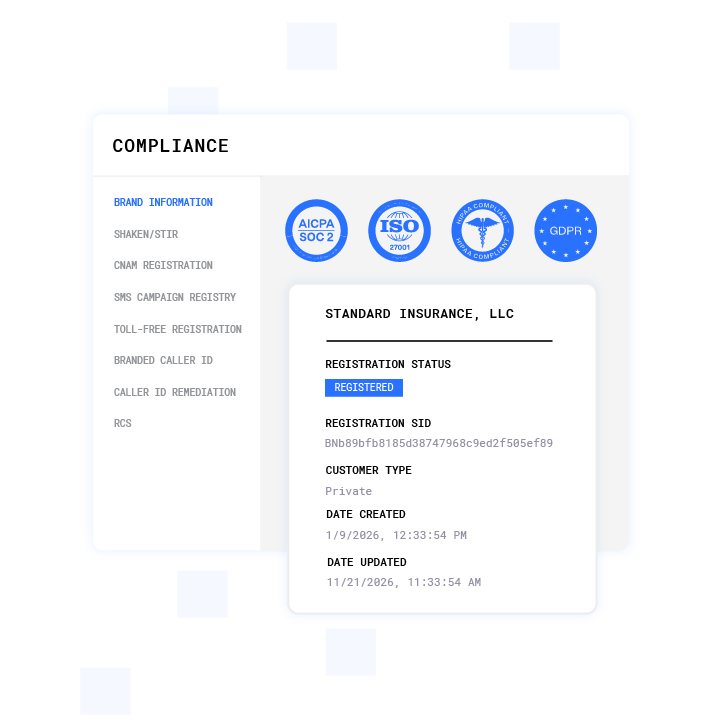
| Plura AI | See pricing | AI Predictive Dialer (FCC-licensed carrier) | Real-time DNC scrubbing, TCPA-litigator filtering, immutable consent logs, STIR/SHAKEN, branded caller ID at carrier level1 |
Most vendors in the table above route voice through a third-party CPaaS layer. Plura operates as its own FCC-licensed audio bridging carrier, so compliance enforcement happens before a call leaves the network.
Hidden Cost Drivers That Inflate Dialer Spend
Subscription price is often the smallest line item for outbound teams. The cost categories below routinely double or triple the sticker price once a program is live.
Telecom and minutes fees. Most platforms bill outbound minutes separately from the per-agent subscription. Rates vary by carrier, call destination, and volume. A team placing 50,000 minutes per month at $0.02 per minute adds $1,000 monthly before any other cost is counted. This gap between subscription and usage fees is a primary reason sticker price rarely matches actual spend.
DNC scrubbing. Many platforms do not include real-time scrubbing against federal and state DNC registries by default. Third-party DNC data feeds carry their own subscription costs, typically billed per record or per scrub. Operations running large lists can spend hundreds to thousands of dollars monthly on scrubbing alone, which materially changes total cost of ownership.
TCPA-litigator filtering. TCPA-litigator databases identify phone numbers associated with serial TCPA plaintiffs. Many vendors do not include this filtering. Vendors that do often charge an add-on fee, so teams must budget separately for this layer of risk reduction.
Implementation and setup fees. Enterprise platform implementation costs typically range from $25,000 to over $500,000. The $5,000–$25,000 range applies only to basic configuration (Tier 1) that uses the software out of the box. Moderate customization and complex enterprise deployments cost substantially more. Some mid-range vendors also charge setup fees for standard configurations.
Training and onboarding. Human agent training on a new dialer platform typically runs two to five days per cohort. Large teams absorb both direct training expense and lost productivity during that period.
Hardware and telephony infrastructure. On-premise or hybrid deployments add hardware procurement, maintenance, and IT overhead. Cloud-only platforms avoid those infrastructure costs.
Plura’s AI Predictive Dialer includes real-time DNC scrubbing, TCPA-litigator filtering, and immutable consent logging as core platform capabilities, supported by its FCC-licensed carrier infrastructure. There are no setup fees, and the platform is browser-based, which removes hardware overhead.
TCPA Penalties and Financial Exposure
TCPA-related exposure often exceeds any dialer subscription cost by a wide margin. Under 47 U.S.C. § 227(b)(3), a person or entity may recover the greater of actual monetary loss or $500 in damages per violation.2 Courts may treble damages up to $1,500 per violation for willful or knowing violations. Because damages are assessed per call or per text, a single non-compliant outbound campaign can create exposure in the millions.
TCPA class action settlements averaged $6.6 million in 2023.3 The FCC also holds authority under 47 U.S.C. § 227(b)(4) to impose civil forfeiture penalties, with an additional penalty of up to $10,000 for violations committed with intent.
The TCPA provides a private right of action under 47 U.S.C. § 227(c)(5) for DNC violations. This provision covers recipients of more than one call within a 12-month period in violation of DNC regulations. Treble damages can apply to willful or knowing violations in this context as well.
Readers should consult qualified legal counsel for guidance on their specific obligations under the TCPA and applicable state laws. The regulatory landscape continues to evolve, including a July 2026 Seventh Circuit ruling in Steidinger v. Blackstone Medical Services holding that text messages are not “telephone calls” under Section 227(c)(5) in Illinois, Indiana, and Wisconsin, a decision that does not affect Section 227(b) autodialer claims.
Plura supports compliance through real-time DNC scrubbing and TCPA-litigator filtering via The Blacklist Alliance’s TCPA Litigation Firewall, automated quiet-hours enforcement, and immutable consent logging. Customers remain responsible for their own regulatory obligations.
Budgeting Framework by Team Size
The formula for a defensible budget estimate is: (number of agents × per-agent subscription cost) + telecom fees + compliance add-ons + implementation. The examples below show how that math plays out for common team sizes.
5 to 10 agents. At a mid-range subscription of $130 per agent, a 10-agent team pays $1,300 per month in base fees. Add $500 to $1,000 for telecom minutes and $200 to $500 for DNC scrubbing. For a 10-agent VICIdial team, total monthly TCO is approximately $2,360 to $7,280, with initial provisioning and implementation costs of $1,000 to $2,000. This illustrates how usage, compliance, and setup quickly outgrow the subscription line item.
25 agents. At $130 per agent, base fees reach $3,250 per month. Telecom and compliance add-ons scale with volume. For a 25-agent team with a full enterprise stack, total monthly spend is approximately $22,000 to $25,000, based on an annual cost of $266,000 to $302,000. For a 25-agent predictive dialer deployment, implementation costs can typically range from $10,000 to $20,000, as shown by a mid-sized insurance agency example with $15,000 implementation costs. Actual numbers vary by platform and complexity.
50+ agents. Enterprise-tier pricing and volume telecom rates usually apply at this scale. Base subscription alone can reach $8,750 to $12,500 per month at $175 per agent. For a 50-agent VICIdial deployment, full monthly TCO including telecom, compliance tooling, and implementation typically ranges from $15,830 to $30,400.
For a direct comparison using AI agents, a 15-agent operation paying $20 per hour with standard taxes, benefits, and commissions at 40% talk utilization costs about $60,000 per month. Replacing that team with Plura at $15 per hour, 100% talk utilization, and 6 Plura agents doing the work of 15 humans drops the monthly cost to $14,400. That scenario reflects a 30-day saving of $45,600 and a 12-month saving of $547,200, as shown on the ROI calculator.3
Run your numbers through Plura’s ROI calculator to check potential savings in real time.
Why Plura AI Fits High-Volume, TCPA-Sensitive Teams
Plura differs from many dialer platforms in four structural ways that affect cost, compliance operations, and budgeting confidence.
FCC-licensed carrier with its own infrastructure. Plura operates as its own FCC-licensed audio bridging carrier. Voice originates on Plura’s domestic infrastructure instead of a third-party CPaaS. This structure enables branded caller ID issued at the carrier level, STIR/SHAKEN authentication on every outbound call, and compliance controls applied before a call leaves the network. Many competitors rent the carrier layer from providers such as Twilio and inherit that provider’s caller ID reputation.
Built-in compliance engine. Plura includes a built-in predictive dialer with list management, dynamic pacing, timezone logic, answer rate optimization, and compliance controls. Real-time DNC scrubbing, TCPA-litigator filtering, automated quiet-hours enforcement, and immutable consent logging are built into the platform as first-class layers. The compliance dashboard exports audit-ready reports in one click, which simplifies internal reviews and external audits.
Stateful conversation memory across every channel. Plura’s AI Voice, AI SMS, AI RCS, and AI webchat share a single Stateful Conversation Database. Because Plura is an FCC-licensed carrier, every contact’s consent and interaction history sits in one place. Compliance context persists across voice, SMS, and webchat without repeated re-qualification.
Transparent pricing and a 90-day opt-out window. Plura publishes its pricing without “contact us” gates for standard tiers. Annual contracts include a 90-day opt-out window. If the deployment is not delivering, customers can exit early instead of carrying the full term.
Plura operates as FCC-licensed AI contact center infrastructure, 100% U.S.-handled by architecture. Plura’s voice origination, model hosting, data storage, and call recording sit on domestic infrastructure, which the company states avoids offshore disclosure mandates under state onshoring laws and reduces FCC NPRM exposure.
Ready to build a defensible budget for a TCPA-conscious dialer stack? Book a live demo with Plura.
Frequently Asked Questions
How much does a predictive dialer cost per agent?
Pricing tiers for TCPA-conscious predictive dialers start near $45 per agent per month and can reach $250 for enterprise features. As noted above, telecom, DNC scrubbing, and implementation often add significantly to that base. Plura’s all-inclusive pricing is published on the pricing page with no setup fees.
What are the hidden costs of predictive dialers?
The most common hidden costs are outbound telecom minutes billed per minute, real-time DNC scrubbing fees, TCPA-litigator list filtering, implementation and setup work, agent training time, and hardware for on-premise or hybrid configurations. Implementation fees vary widely, from a few thousand dollars for basic setups to hundreds of thousands for complex enterprise deployments, as detailed in the hidden costs section above.
Are there free auto dialers?
Free auto dialers exist, and they typically lack the compliance infrastructure required for high-volume outbound operations under the TCPA. Real-time DNC scrubbing, TCPA-litigator filtering, immutable consent logging, and carrier-level compliance enforcement are usually absent from free tools. The financial exposure from a single TCPA violation, at $500 to $1,500 per call under 47 U.S.C. § 227(b)(3), can exceed any subscription savings. Operators should consult qualified legal counsel before using any dialer platform for regulated outbound campaigns.
What is the cheapest predictive dialer?
The cheapest predictive dialer in practice is the one with the lowest total cost of ownership over the contract term. A low-priced platform that requires separate DNC scrubbing, litigator filtering, and implementation services may cost more than an all-inclusive platform with a higher per-agent fee. When teams factor in TCPA-related financial risk, the calculation shifts further toward total cost of ownership instead of sticker price per seat.
How does Plura AI handle TCPA compliance automatically?
Plura’s compliance engine operates as a first-class layer of the platform on every outbound contact. Every number is checked against federal and state DNC registries in real time before dial. TCPA-litigator filtering screens for numbers associated with serial plaintiffs. Quiet-hours rules enforce automatically through time-zone detection, applying state and federal calling-window restrictions to every campaign. Consent records are timestamped, immutable, and audit-ready. STIR/SHAKEN authentication runs on every outbound call. The compliance dashboard exports audit-ready reports in one click. Customers remain responsible for their own regulatory obligations, and Plura provides infrastructure that supports compliance operations.
What is the difference between a predictive dialer and a power dialer?
A predictive dialer uses an algorithm to dial multiple numbers simultaneously, predicting when an agent will be available and connecting a live answer to that agent. The goal is to maximize agent talk time by reducing idle time between calls. A power dialer dials one number per available agent at a time and waits for the agent to be free before placing the next call. Predictive dialers achieve higher call volume but require careful pacing configuration to stay within FCC abandoned call rate guidelines. Power dialers offer more control per call at the cost of lower throughput. Plura’s AI Predictive Dialer uses stateful conversion signals, including historical answer rates and prior negotiation outcomes, to decide who to call next instead of relying on a fixed pacing algorithm.
Conclusion: Turn Sticker Price Into a Real Budget
Sticker price rarely reflects total cost of ownership. A TCPA-conscious predictive dialer’s real expense is the sum of per-agent subscription fees, telecom charges, DNC scrubbing, litigator filtering, implementation, training, and the financial risk associated with 47 U.S.C. § 227. Operations that budget only for the subscription line item often discover the actual cost is two to three times higher.
The practical framework is straightforward: count every cost, price every risk, and select a vendor whose compliance infrastructure is built into the platform. Plura’s FCC-licensed AI contact center infrastructure, 100% U.S.-handled by architecture, includes real-time DNC scrubbing, TCPA-litigator filtering, immutable consent logging, and branded caller ID at the carrier level, with transparent pricing and no hidden fees.
Compare current plans on the pricing page and run your team’s numbers through the ROI calculator to build a defensible business case for your CFO.
Ready to build a defensible budget for a TCPA-conscious dialer? Book a live demo with Plura.
1 Plura AI maintains SOC 2, HIPAA, ISO, and GDPR posture as part of its platform infrastructure. References to compliance frameworks in this article describe Plura’s platform capabilities and do not constitute a guarantee that any customer using Plura will themselves be compliant with applicable laws or standards. Customers remain solely responsible for their own regulatory obligations, certifications, consent management, recordkeeping, and the claims they make to their own end users. Consult qualified legal counsel for guidance specific to your use case.
2 This article describes regulatory frameworks at a general level and does not constitute legal advice. Laws and regulations vary by jurisdiction, change over time, and apply differently depending on facts and circumstances. Readers should consult qualified legal counsel before making compliance decisions.
3 Performance figures, customer outcomes, and industry statistics referenced in this article are drawn from cited third-party sources or Plura customer case studies. Individual results vary based on implementation, use case, industry, audience, and execution. Past or aggregate performance is not a guarantee of future results.
4 References to third-party products, services, companies, or research are made for informational and comparative purposes only. Plura AI is not affiliated with, endorsed by, or sponsored by any third party named in this article unless explicitly stated. Trademarks and product names referenced remain the property of their respective owners.
This article is provided for informational purposes only and reflects Plura AI’s understanding at the time of publication. Product capabilities, integrations, and specifications are subject to change. For the most current information, visit plura.ai.
This article was produced with the assistance of AI tools and reviewed by Plura AI prior to publication.