Best VICIdial Alternatives in 2026 for Contact Centers
ON THIS PAGE
Written by: Matt Beucler, CEO, Plura AI
Updated August 2026
Quick Answer: The strongest VICIdial alternative in 2026 is a carrier-grade AI predictive dialer that removes self-hosted infrastructure, labor, and compliance overhead. Plura AI is a leading option for contact centers, agency owners, and franchise operators. It runs on an FCC-licensed carrier, supports SOC 2, HIPAA, ISO certification, GDPR, SHAKEN/STIR caller ID verification, TCPA compliance, and DNC compliance, and deploys in days rather than months.1
Key Takeaways for VICIdial Replacement Decisions
Self-hosted VICIdial carries hidden costs in infrastructure, Linux administration, and compliance tooling that often exceed commercial alternatives below about 30 agents.
2026 compliance requirements (TCPA, DNC, SHAKEN/STIR) are not native to open-source dialers, which exposes operators to significant legal and financial risk.2
AI-native platforms like Plura AI remove the human agent bottleneck, enabling 600–1,200 dials per hour and 24/7 operation without abandoned-call compliance issues.3
Plura’s carrier-grade stack delivers the full compliance posture described above, enforced at the FCC-licensed carrier level, so operators avoid stitching together separate bolt-on tools.
Teams ready to replace a legacy dialer can talk to Plura AI and see how an AI predictive dialer can cut contact-center TCO by up to 90%.
The Problem: VICIdial’s Hidden Costs and Compliance Exposure
VICIdial’s software license is free, but its total cost of ownership is not. Analyses of self-hosted VICIdial at 50 seats show substantial monthly costs across servers, SIP trunking, DIDs, a Linux administrator contractor, DNC scrubbing, and caller ID reputation management. At 200 agents, these costs scale higher and compound quickly.
The staffing line is the cost operators most frequently underestimate, and that mistake directly affects the breakeven math. Organizations without in-house Linux and Asterisk expertise must budget for a dedicated administrator, so technical staffing for self-hosted VICIdial becomes substantial at higher scale. Compliance tooling then adds a separate monthly expense on top of that staffing cost. The breakeven point where self-hosted VICIdial beats commercial platforms on cost is approximately 30 agents for outbound operations, and below that level commercial platforms often win on cost.
Compliance exposure compounds the infrastructure burden. Outbound dialing in 2026 operates under the Telephone Consumer Protection Act (TCPA, 47 U.S.C. § 227), National Do Not Call Registry rules, and the FCC’s February 2024 Declaratory Ruling confirming that AI-generated voice calls qualify as “artificial voice” calls under the TCPA. TCPA statutory damages run $500 per violation, trebled to $1,500 for willful violations, and TCPA-related litigation remains active. Self-hosted VICIdial operators must independently manage DNC scrubbing, consent logging, STIR/SHAKEN attestation, and quiet-hours enforcement, because none of these controls are native to the platform.
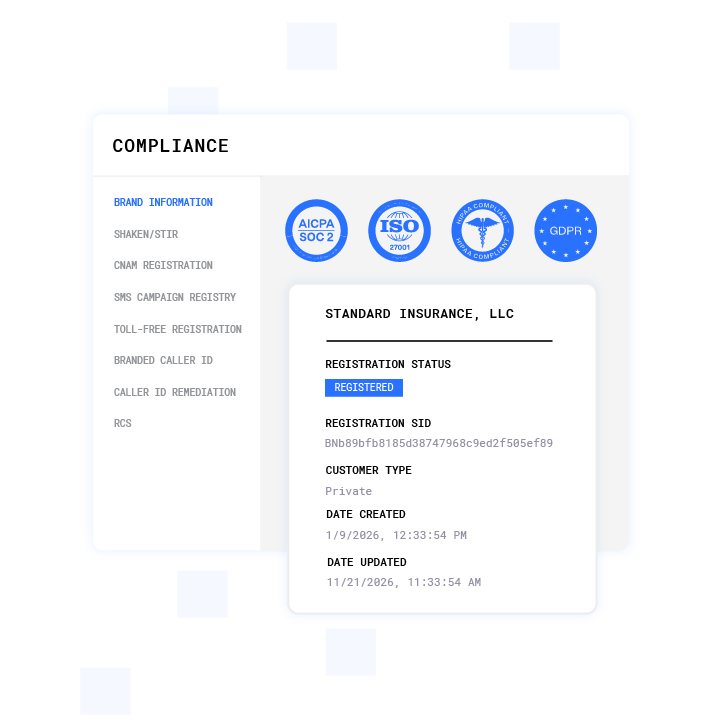
Plura Security & Compliance supports SOC 2, ISO, and GDPR standards with trust registration, verification management, and secure AI communications.
VICIdial Alternatives: Open-Source, Cloud, and AI Platforms
VICIdial alternatives fall into three categories: other self-hosted open-source platforms, hosted cloud dialers, and AI-native platforms. Each category addresses a different subset of the cost, staffing, and compliance issues described above.
The table below covers seven alternatives evaluated across dialing type, compliance posture, total cost of ownership (TCO), and migration effort.4
Platform
Dialing Type
Compliance Posture
TCO Reference
VICIdial (self-hosted)
Predictive, progressive, preview
Operator-managed, no native DNC scrubbing, STIR/SHAKEN, or consent logging
VICIdial Cost Breakdown for Contact Center Leaders
VICIdial’s per-agent monthly cost is variable, not fixed. It scales non-linearly with team size and management quality. VICIdial’s real per-agent monthly cost ranges from $195 at 200+ agents with strong management to $728 at 10 agents with poor management, with a typical median of $300 to $450 per agent for a well-run 50-agent operation.
The cost components for a 50-agent outbound VICIdial operation using managed hosting break into fixed and variable expenses. Fixed costs include managed server hosting, DIDs, and a maintenance buffer for unexpected issues. Variable costs scale with call volume, so SIP trunking charges grow with minutes used, and DNC scrubbing fees increase with list size and dial frequency.
The three categories differ on five operational dimensions: talk time per agent hour, compliance infrastructure, scalability ceiling, carrier control, and migration effort.
Open-source (VICIdial, Asterisk): These platforms provide maximum configurability and the lowest per-seat cost at scale, but the operator owns every layer. Open-source solutions require self-hosting plus ongoing maintenance by the operator, with no native compliance layer. Predictive dialing at 3:1 to 5:1 ratios with 5 to 15% answer rates for cold outbound generates 300 to 500 billable carrier minutes per agent per day, so termination costs scale almost linearly with agent count.
Cloud dialers (Five9, Convoso): Hosted infrastructure removes the sysadmin burden and adds managed compliance controls. Per-seat pricing is higher than self-hosted VICIdial at scale, but as noted earlier, operations below 30 agents typically see lower TCO with cloud dialers. Carrier control remains with the vendor, which limits direct influence over routing and reputation.
AI-native platforms (Plura AI): This category defines the 2026 frontier.5Autonomous AI voice agents remove the human from the live loop entirely, which eliminates the core constraint that predictive dialers try to work around. Because the AI itself handles the conversation, there is no pacing algorithm predicting when a human will be free, and no abandoned-call problem when that prediction fails. This architecture enables unlimited concurrent calls, reaching 600 to 1,200 dials per hour and 80 to 200+ conversations, compared to 35 to 60 dials per hour for a human SDR. The AI books directly to calendar and works 24/7 across time zones without breaks or shift changes.
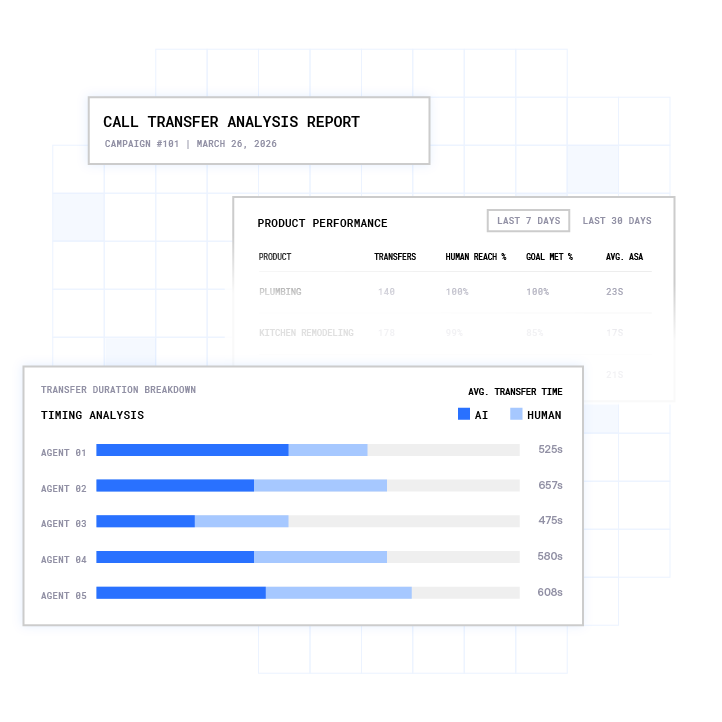
Plura Predictive Dialer automates outbound calling with AI-powered pacing, transfer optimization, and real-time performance analytics.
The Solution: Moving from VICIdial to an AI Predictive Dialer
Plura AI’s AI predictive dialer runs on an FCC-licensed audio bridging carrier, not a third-party CPaaS wrapper. That carrier-level control drives three operational differences that self-hosted and cloud dialers typically cannot match.
Branded caller ID at the carrier level. Calls present with the company’s name instead of “Spam Likely.” SHAKEN/STIR caller ID verification runs on every outbound call, authenticated at origination rather than applied after the fact.
Stateful conversation memory across channels. The AI predictive dialer shares a Stateful Conversation Database with Plura’s AI SMS and AI voice agent channels. A lead texted at 9 a.m. is the same lead when the dialer calls at noon, with full context carried forward.
The TCO math appears at plura.ai/calculator. In a 15-agent illustrative scenario, human agent costs run $60,000 per month at $20 per hour with standard taxes, benefits, and commissions at 40% talk utilization. Plura agents at $15 per hour and 100% talk utilization, with 6 AI agents replacing 15 humans, drop that to $14,400 per month. The 30-day savings are $45,600, and the 12-month savings are $547,200. For larger operations, the economics documented in the comparison table above hold, with Plura’s annual TCO running roughly 85-90% below traditional contact-center costs at scale.
Migration from VICIdial to Plura follows a structured sequence. Plura AI deployment typically takes 2 to 4 weeks from contract to live AI conversations, compared to weeks or months for self-managed VICIdial custom development. The onboarding sequence includes a discovery audit, intake of sample calls and existing scripts, an overnight build of a dynamic conversation mockup, a review meeting, engineering build of the production workflow, a pilot test on a subset of real calls, and full go-live. Every annual contract includes a 90-day opt-out window.
VICIdial remains a viable option for large outbound operations with in-house Linux and Asterisk expertise, stable call volumes, and internal capacity to manage compliance tooling independently. The economics favor self-hosted VICIdial above approximately 30 agents when the operator has strong technical management. Below that threshold, or for any operation that needs native compliance controls, branded caller ID, or AI-driven conversation handling, the total cost of ownership and operational risk of self-hosted VICIdial typically exceed those of modern alternatives. The compliance landscape in 2026, including TCPA one-to-one consent requirements and SHAKEN/STIR enforcement, has raised the operational floor for self-hosted deployments significantly.
What compliance frameworks should a VICIdial replacement support?
Contact center operators evaluating a VICIdial replacement often look for platforms that support TCPA compliance, DNC compliance, SHAKEN/STIR caller ID verification, SOC 2, HIPAA for healthcare-adjacent operations, ISO certification, and GDPR for any European data. The platform should enforce DNC scrubbing before each dial, maintain immutable consent records with timestamps, apply time-zone-based quiet-hours rules automatically, and export audit-ready reports on demand. Operators remain responsible for their own compliance obligations regardless of which platform they use, and the platform provides infrastructure that supports those obligations. Consulting qualified legal counsel on TCPA and state-level requirements is advisable before deploying any high-volume outbound dialing system.
How long does it take to migrate from VICIdial to an AI predictive dialer?
Migration timelines depend on conversation complexity and the number of active campaigns being transitioned. A straightforward inbound qualification flow typically deploys in days. A complex multi-step outbound workflow with branching logic, CRM integration, and compliance rule sets runs closer to two to four weeks. Plura’s onboarding sequence runs from discovery audit through pilot test to full go-live within that window. Number porting, SIP migration, and call flow reconfiguration should be planned in staged batches, beginning with less critical lines before moving primary business numbers, consistent with standard UCaaS migration practice. The legacy dialer should remain operational alongside the new platform during testing until the new environment is validated.
What is the difference between a predictive dialer and an AI predictive dialer?
A traditional predictive dialer uses a pacing algorithm to dial multiple numbers per available agent, predicting when a rep will be free and connecting live calls to the next available human. The system maximizes talk time but creates dead air and dropped calls when the algorithm misjudges agent availability, and it requires human agents to handle every connected call. An AI predictive dialer replaces the pacing algorithm with stateful AI conversation logic. The AI itself handles the connected call, qualifies the prospect, objection-handles, books meetings, and disposes the contact without a human in the loop. The AI can run unlimited concurrent calls, works 24/7 across time zones, and removes the abandoned-call compliance risk associated with traditional predictive pacing. Live human transfer triggers when a workflow gate requires it, routing a warm, qualified prospect to a human agent with full conversation context already captured.
How does Plura AI handle caller ID reputation and spam labeling?
Plura issues branded caller ID directly through its FCC-licensed carrier, so calls present with the company’s name rather than an unfamiliar number or a “Spam Likely” label. SHAKEN/STIR caller ID verification authenticates every outbound call at origination, and destination carriers use that signal to help verify legitimate call sources. Plura’s compliance framework also includes Number Verifier for caller ID reputation monitoring. Because Plura owns the carrier stack rather than routing through a third-party CPaaS, branded caller ID is issued at the carrier level rather than applied as a post-dial overlay. Operators using third-party CPaaS-based platforms inherit that provider’s caller ID reputation rather than their own, which limits their ability to remediate spam labels at the source.
1 Plura AI maintains SOC 2, HIPAA, ISO, and GDPR posture as part of its platform infrastructure. References to compliance frameworks in this article describe Plura’s platform capabilities and do not constitute a guarantee that any customer using Plura will themselves be compliant with applicable laws or standards. Customers remain solely responsible for their own regulatory obligations, certifications, consent management, recordkeeping, and the claims they make to their own end users. Consult qualified legal counsel for guidance specific to your use case.
2 This article describes regulatory frameworks at a general level and does not constitute legal advice. Laws and regulations vary by jurisdiction, change over time, and apply differently depending on facts and circumstances. Readers should consult qualified legal counsel before making compliance decisions.
3 Performance figures, customer outcomes, and industry statistics referenced in this article are drawn from cited third-party sources or Plura customer case studies. Individual results vary based on implementation, use case, industry, audience, and execution. Past or aggregate performance is not a guarantee of future results.
4 References to third-party products, services, companies, or research are made for informational and comparative purposes only. Plura AI is not affiliated with, endorsed by, or sponsored by any third party named in this article unless explicitly stated. Trademarks and product names referenced remain the property of their respective owners.
5 This article contains forward-looking statements regarding industry trends, technology adoption, and future capabilities. These statements reflect current expectations and are subject to change. Plura AI undertakes no obligation to update forward-looking statements except as required.
This article is provided for informational purposes only and reflects Plura AI’s understanding at the time of publication. Product capabilities, integrations, and specifications are subject to change. For the most current information, visit plura.ai.
This article was produced with the assistance of AI tools and reviewed by Plura AI prior to publication.