
Written by: Matt Beucler, CEO, Plura AI
Key Takeaways for VICIdial, Convoso, and Plura
- VICIdial is free open-source software, and the operator carries all hosting, telephony, compliance, and Linux administration costs.4
- Convoso is a cloud platform with per-seat pricing that includes built-in compliance tools and scales directly with headcount.4
- Both platforms leave caller ID reputation and carrier-level spam labeling as separate problems that can cut answer rates by 40 to 60 percent.
- Operators running 20 to 200 seats trade VICIdial’s technical burden against Convoso’s per-seat cost curve.
- Plura AI provides an AI predictive dialer on its own FCC-licensed carrier stack, removing server-admin overhead and per-seat pricing tradeoffs.
What VICIdial and Convoso Actually Do
VICIdial is open-source software distributed under the AGPLv2 license, so the software itself costs nothing to download and run. The operator supplies the Linux server, the telephony carrier, and the administration. It runs on Asterisk, the open-source telephony engine, and requires MySQL/MariaDB and Apache with PHP. With over 14,000 installations across more than 100 countries, it has been a backbone of outbound call centers since 2003.
Convoso is a cloud-hosted outbound contact-center platform sold as a per-seat subscription with carrier fees on top. Convoso originated as SafeSoft Solutions and its early product used VICIdial’s open-source code before the company rebranded and rebuilt its platform. Today it focuses on high-volume outbound teams in insurance, solar, home services, and healthcare enrollment.
Is VICIdial Free to Use?
The software license is free under AGPLv2, and running VICIdial introduces real operating costs. The software license accounts for roughly 2 percent of total spend, with the remaining 98 percent going to hardware, SIP trunking, DIDs, compliance tools, and labor. Operators who treat VICIdial as a zero-cost platform often underestimate these line items.
VICIdial vs Convoso Cost: Total Cost of Ownership by Component
VICIdial’s cost structure breaks into distinct components, and the free license is usually the smallest piece:
- Software license: Free under AGPLv2
- Bare-metal hosting: $150 to $200 per month for 10 to 20 agents, $300 to $450 per month for 20 to 50 agents, $700 to $1,200 per month for 100 to 200 agents
- SIP trunking: $0.005 to $0.015 per minute for US domestic outbound
- DNC scrubbing: $500 to $2,000 per month depending on volume
- Linux and telephony admin: $55,000 to $85,000 per year full-time, or $1,500 to $4,000 per month part-time
How Much Does VICIdial Cost to Run at 50 Seats?
A 50-agent VICIdial deployment on VICIhost runs approximately $9,512 per month, with $800 for two servers, $6,600 in SIP trunking, $112 for DIDs, $1,000 for DNC scrubbing, and $1,000 for maintenance. Self-hosted with an in-house admin, the numbers shift but the cost categories stay the same. Operators should review VICIdial’s documentation and current carrier rates for current figures.
How Much Is Convoso Per Month?
Convoso does not publish public pricing. Reported costs cluster at $90 to $150 per seat per month on annual contracts, with onboarding fees and telecom charges billed separately. For a 100-seat outbound operation, realistic all-in cost often runs $175 to $250 per seat per month when telecom, DIDs, and add-ons are included. Operators should request a direct quote from Convoso for current rates.
See how Plura’s AI predictive dialer prices at your seat count.
Technical Burden and Who Actually Maintains It
VICIdial’s technical burden falls on the operator, so staffing and expertise determine whether the platform is viable.
Do You Need a Linux Admin to Run VICIdial?
Yes. Manual VICIdial installation requires Linux administration experience to configure Asterisk, MySQL/MariaDB, Apache, and PHP, and to pull VICIdial from the official SVN repository. Common failure points include NAT configuration that causes one-way audio, SIP trunk registration failures, and codec mismatches between the server and the SIP carrier.
ViciStack’s March 2026 pricing guide recommends self-hosted VICIdial only for organizations with 50 or more agents and in-house Linux and VoIP expertise, noting that below 30 agents the per-agent overhead of maintaining the platform erodes most savings versus a per-seat hosted dialer. The practical question is who you call when it breaks at 9 p.m. On VICIdial, that call goes to your admin. A 2-hour outage with 50 agents costs $1,500 to $2,500 in idle labor alone, plus lost sales.
On Convoso, the vendor operates the infrastructure. The operator still owns campaign configuration, list hygiene, and the carrier fees that scale with every dial.
Pickup Rate and Caller ID Reality: The Hidden Tax on Both Platforms
Admin burden is only half of the operational picture, because even a stable dialer must still get calls answered. Spam labeling is a major threat to outbound connect rates in 2026 that neither VICIdial nor Convoso resolves at the carrier level for the operator. When a business phone number gets spam-labeled, answer rates can drop 40 to 60 percent, driven by calls never connecting rather than prospects rejecting the message.3 According to 2026 outbound sales research from Prospeo, the average dial-to-conversation rate has dropped to 2.3 percent in 2026, down from 4.82 percent the prior year, with carrier filtering identified as a primary driver.3
According to TNS’s 2026 Robocall Report, 43 percent of spam-labeled traffic carries A-level STIR/SHAKEN attestation, which shows that authentication and reputation function as separate systems. STIR/SHAKEN verifies number identity at the carrier level but does not control behavioral spam scoring by carrier analytics engines.
On a self-hosted VICIdial deployment, caller ID reputation and spam-label remediation sit entirely with the operator. Convoso’s Ignite product manages DID rotation and health scoring, and the carrier-level reputation problem still depends on third-party services. Branded calling requires A-level STIR/SHAKEN attestation signed at the originating carrier, brand registration with carrier programs, and carrier rendering of the display; if any layer is missing, the recipient’s screen stays anonymous.
Compliance Exposure: DNC Scrubbing, TCPA Consent Records, and Quiet Hours
On a self-hosted VICIdial deployment, compliance tooling depends on manual configuration. TCPA (Telephone Consumer Protection Act, 47 U.S.C. § 227) violations can involve fines of $500 to $1,500 per call, and a misconfigured DNC filter or timezone dialing rule can create six-figure exposure in a single day.2 Operators handle scrubbing against the National DNC Registry, maintaining company-specific opt-out lists, and enforcing quiet-hours rules by time zone. Readers should consult 47 U.S.C. § 227, 47 C.F.R. § 64.1200, or qualified counsel for applicable requirements.
Convoso includes built-in compliance guardrails such as state-specific calling time enforcement, consent management, and scrub automation, which reduces configuration work compared to VICIdial. Under FTC rules at 16 C.F.R. Part 310, telemarketers must access the National DNC Registry no more than 31 days before placing any call.2 Both platforms leave the legal obligation to maintain compliant records with the operator, and use of either platform does not change that responsibility.
The Third Path: When VICIdial and Convoso Both Fall Short
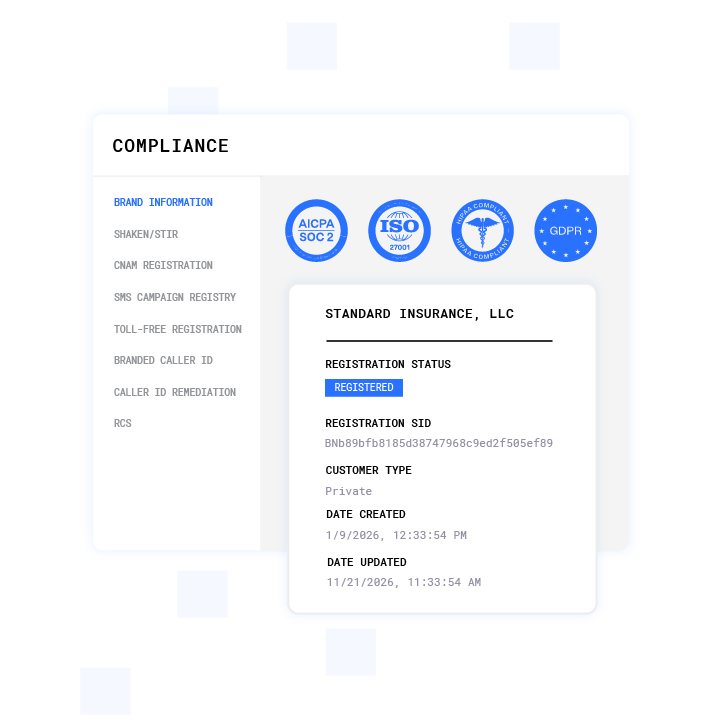
Both platforms leave the operator carrying infrastructure and compliance responsibilities, so many teams look for a different model. For a growing operator, the seat-license-versus-server-admin tradeoff disappears with an AI predictive dialer that owns its carrier stack. Plura AI runs on its own FCC-licensed audio bridging carrier, which gives it end-to-end control of the call path.
- Branded caller ID issued directly at the carrier level
- STIR/SHAKEN authentication on every outbound call, signed at origination
- Real-time DNC scrubbing before dial, TCPA-litigator screening, automated quiet hours, and immutable consent logging inside the platform
- 100 percent U.S. infrastructure by architecture
- SOC 2 Type II, HIPAA, and ISO certification1
- Every annual contract includes a 90-day opt-out window
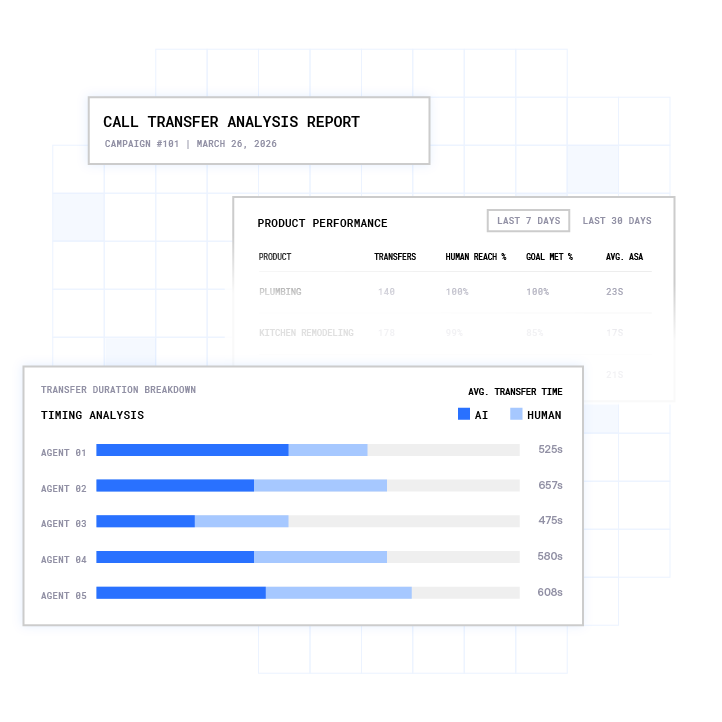
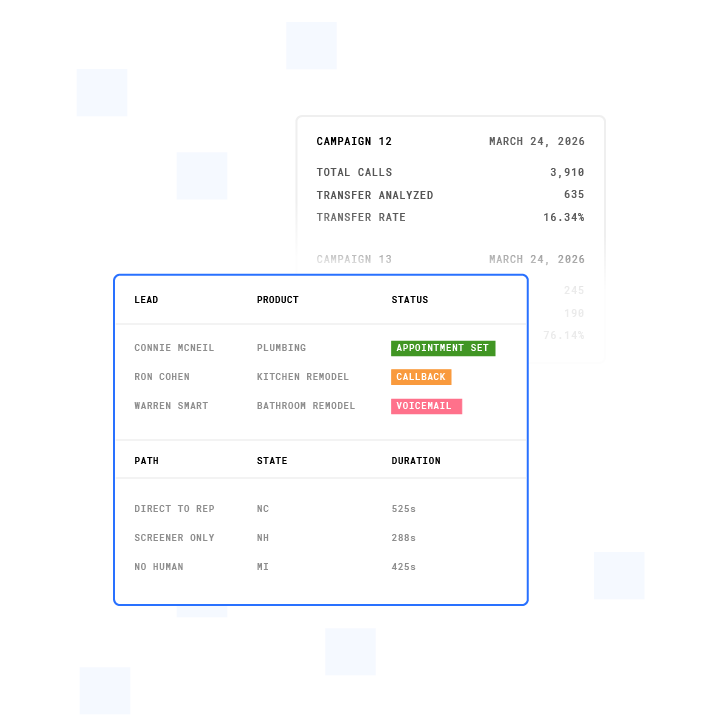
Plura’s pricing does not follow a per-seat model. Its plans are flat-rate monthly (Starter $2,500 per month, Multi $5,000 per month, Agency $7,500 per month, all yearly), with AI talk time billed separately at $14 to $16 per hour. The AI predictive dialer uses stateful conversion signals to decide who to call next. It runs on Plura’s carrier infrastructure and shares a Stateful Conversation Database with AI SMS, AI RCS, and AI Webchat. That shared database means every channel inherits the full memory of every prior touchpoint.
Explore Plura’s AI predictive dialer on carrier-grade infrastructure.
Choose the Right Platform: A Three-Way Decision Block
- Choose VICIdial if your operation runs 50 or more seats, has in-house Linux and Asterisk administration expertise, and can absorb the overhead of self-hosted infrastructure in exchange for configurability and low software cost.
- Choose Convoso if your operation runs 20 or more seats, wants turnkey cloud convenience with built-in compliance guardrails, and accepts per-seat pricing that scales with headcount and annual contract terms.
- Choose Plura if your operation wants to avoid server-admin burden and per-seat scaling, and needs carrier-level branded caller ID, compliance tooling enforced before dial, and an AI-native dialer on 100 percent U.S. infrastructure.
Migration Reality: What Moving Off VICIdial or Convoso Looks Like
Migration from either platform follows a similar sequence, so planning around that sequence keeps risk low. Typical steps include exporting data and lists, transferring consent records, porting carriers and numbers, rebuilding campaigns, then piloting on a subset of real calls before full go-live. Timeline depends on workflow depth. A simple inbound qualification flow moves faster than a multi-step outbound cadence with custom integrations.
Because consent records and CRM connections are the items most likely to block a port or a campaign rebuild, operators should audit both before any migration. Call recordings also matter when teams need historical context for QA or dispute handling. Plura’s onboarding and integration sequence is documented for review, and specific deployment timelines depend on workflow complexity and are confirmed during discovery.
Frequently Asked Questions
Is VICIdial Free to Use?
The software is free to license under AGPLv2, and most spend sits in hosting, telephony, DNC scrubbing, and admin labor. As noted above, the license typically represents only a small share of total cost, so operators who budget only for software often encounter unplanned expenses within the first 90 days.
How Much Does VICIdial Cost?
Cost breaks into four primary components: software license, hosting, telephony minutes, and admin labor. Hosting often ranges from $150 to $1,200 per month depending on seat count, telephony minutes often range from $0.005 to $0.015 per minute for US domestic outbound, and admin labor often falls between $55,000 and $85,000 per year full-time or $1,500 to $4,000 per month part-time. DNC scrubbing typically adds $500 to $2,000 per month. At 50 seats on managed hosting, many operators see total monthly spend near the $9,500 range. VICIdial’s documentation and current carrier rates provide the most current numbers.
How Much Is Convoso Per Month?
Convoso does not publish public pricing. Reported costs often cluster at $90 to $150 per seat per month plus carrier fees billed separately. For a 100-seat operation, some operators report all-in costs of $175 to $250 per seat per month including telecom and add-ons. Onboarding fees are often equivalent to one to two months of platform cost. A direct quote from Convoso gives the most accurate current rate.
What Are Good Alternatives to VICIdial?
Alternatives include cloud platforms like Convoso that remove the server-admin burden in exchange for per-seat pricing, and AI-native predictive dialers like Plura that own their carrier stack and change the cost structure entirely. The right alternative depends on seat count, in-house technical expertise, compliance requirements, and whether per-seat scaling fits the operation’s cost model.
What Is an AI Predictive Dialer?
An AI predictive dialer uses machine learning to decide who to call next based on historical answer rates, prior conversation outcomes, and conversion signals. It replaces simple ratio or sequential dialing with data-driven call selection. It runs on carrier-grade infrastructure and, in Plura’s case, supports compliance controls before the call leaves the network. The result is higher talk time per agent hour and lower cost per connected conversation compared to traditional predictive dialers running on third-party CPaaS infrastructure.
Conclusion: The VICIdial vs Convoso Tradeoff and the Third Path
VICIdial delivers configurability and low software cost, and the operator absorbs Linux administration, carrier management, compliance configuration, and uptime. Convoso removes server administration and includes built-in compliance guardrails, and per-seat pricing scales directly with headcount and annual contracts. For a growing outbound floor, the metrics that matter most are cost per connected conversation, technical burden, pickup rate, and compliance posture.
For operators who want a different model, Plura AI provides an AI predictive dialer on its own FCC-licensed carrier stack, with compliance tooling supported before dial and 100 percent U.S. infrastructure by architecture. Compare the full feature set at Plura’s comparison page.
Run your numbers through Plura’s ROI calculator to check cost per connected conversation against your current platform in real time.
Compare Plura’s plans and rates side by side.
1 Plura AI maintains SOC 2, HIPAA, ISO, and GDPR posture as part of its platform infrastructure. References to compliance frameworks in this article describe Plura’s platform capabilities and do not constitute a guarantee that any customer using Plura will themselves be compliant with applicable laws or standards. Customers remain solely responsible for their own regulatory obligations, certifications, consent management, recordkeeping, and the claims they make to their own end users. Consult qualified legal counsel for guidance specific to your use case.
2 This article describes regulatory frameworks at a general level and does not constitute legal advice. Laws and regulations vary by jurisdiction, change over time, and apply differently depending on facts and circumstances. Readers should consult qualified legal counsel before making compliance decisions.
3 Performance figures, customer outcomes, and industry statistics referenced in this article are drawn from cited third-party sources or Plura customer case studies. Individual results vary based on implementation, use case, industry, audience, and execution. Past or aggregate performance is not a guarantee of future results.
4 References to third-party products, services, companies, or research are made for informational and comparative purposes only. Plura AI is not affiliated with, endorsed by, or sponsored by any third party named in this article unless explicitly stated. Trademarks and product names referenced remain the property of their respective owners.
This article is provided for informational purposes only and reflects Plura AI’s understanding at the time of publication. Product capabilities, integrations, and specifications are subject to change. For the most current information, visit plura.ai.
This article was produced with the assistance of AI tools and reviewed by Plura AI prior to publication.