
Written by: Matt Beucler, CEO, Plura AI
Updated September 2026
Key Takeaways
- VICIdial is an open-source, self-hosted predictive dialer that requires Linux and Asterisk expertise. Kixie is a cloud-based power dialer with native CRM integrations.4
- The choice between VICIdial and Kixie depends on technical capacity, call volume, and whether you need true predictive dialing or CRM-native power dialing.
- VICIdial’s breakeven point is 30-plus agents with competent technical management, and the crossover against commercial platforms typically falls around 75 to 100 agents. Kixie suits smaller sales teams of 10-30 reps seeking cloud simplicity.
- Both platforms leave significant compliance responsibilities to operators, including TCPA, DNC scrubbing, and STIR/SHAKEN requirements.1
- For high-volume operations needing carrier-level compliance support and branded caller ID, Plura AI offers an AI Predictive Dialer built on FCC-licensed infrastructure as an alternative path.
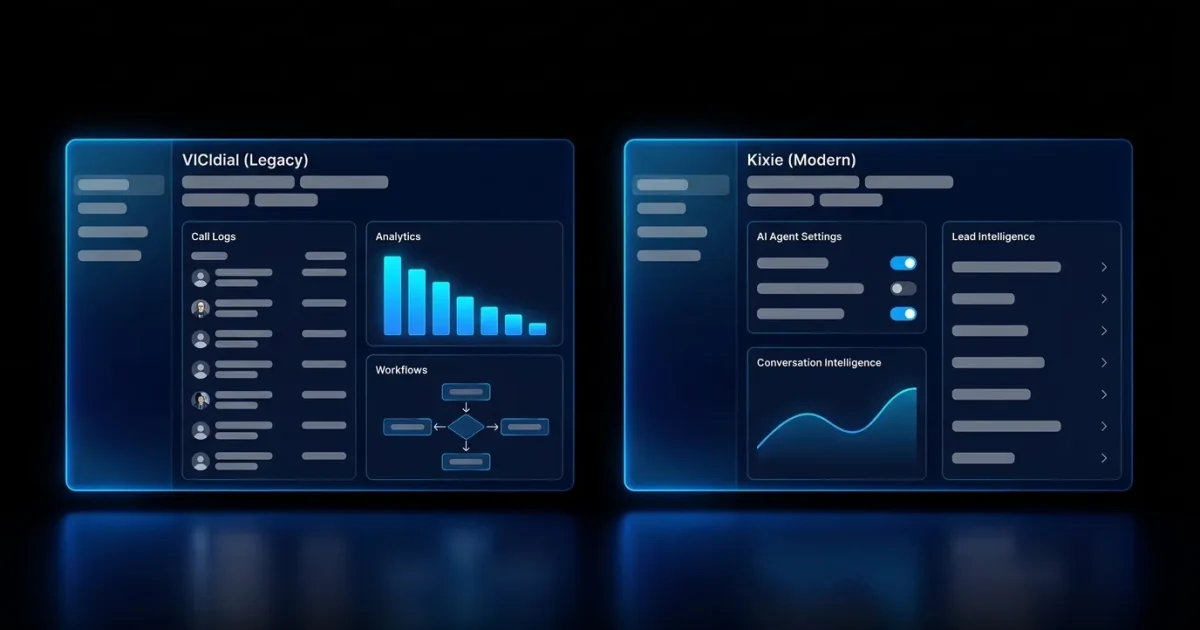
VICIdial vs Kixie: Side-by-Side
The table below compares the core attributes that usually decide between VICIdial and Kixie: dialer type, hosting, CRM integration, predictive dialing, SMS, compliance tooling, and cost model. Use it as a decision matrix to see which model fits your operation.
| Attribute | VICIdial | Kixie |
|---|---|---|
| Dialer type | True predictive dialer with configurable dial levels | Power dialer and multi-line dialer, no traditional predictive dialer |
| Hosting model | Self-hosted (bare metal or cloud) or managed via VICIhost | Cloud-based calling and texting platform whose PowerCall dialer is a Google Chrome extension that works in the background of the browser, recognizing phone numbers on any webpage, including inside your CRM, and presenting click-to-call and click-to-text buttons without leaving the CRM screen |
| CRM integration | Embedded browser frame loads any web-accessible CRM page via custom URL; API integration requires configuration and maintenance | Native two-way sync with HubSpot, Salesforce, Pipedrive, and Zoho |
| True predictive dialing | Yes. Dial level 2.5 keeps agents on the phone 55 minutes per hour | No. Kixie positions power dialing as better suited for controlled, rep-led workflows |
| SMS | Not native, requires third-party integration | Native SMS with automatic CRM logging |
| Compliance tooling | Basic. DNC scrubbing and STIR/SHAKEN (Secure Telephone Identity Revisited/Signature-based Handling of Asserted information using toKENs) awareness require third-party services or manual configuration | Compliance is the operator’s responsibility, and the platform provides caller ID controls and opt-out handling |
| Cost model | AGPLv2 open-source license at $0 per month. Total cost of ownership includes hosting, SIP trunking, sysadmin labor, and compliance tooling | Per-seat subscription. See kixie.com for current pricing |
Where VICIdial Fits Best
VICIdial serves high-volume outbound contact-center operations. VICIdial runs on over 14,000 installations in more than 100 countries, with deployments ranging from 3 agents to 1,000-plus agents. Four decision points determine whether VICIdial fits your operation.
Technical capacity comes first. VICIdial requires Linux and Asterisk administration. New admins need 40 to 80 hours of learning time, and campaign managers need 10 to 20 hours to learn the admin panel. Teams without that expertise in-house or under contract usually see costs rise instead of fall.
Call volume comes next. VICIdial’s breakeven point is 30-plus agents with competent technical management. Below 30 agents, per-agent maintenance overhead erodes savings versus per-seat hosted dialers. At 100-plus agents, VICIdial is almost always the cheaper option by a significant margin.
Inbound and outbound mix also matters. VICIdial handles IVR (Interactive Voice Response) and ACD (Automatic Call Distribution) natively through Asterisk dialplan. This approach removes the latency gap between IVR traversal and agent connection that bolt-on IVR systems often introduce.
Need for true predictive dialing is the final lever. A well-tuned VICIdial predictive dialer at dial level 2.5 keeps agents on the phone 55 minutes per hour, versus 35 minutes per hour at dial level 1.5, a 57% productivity difference.3 At 50 agents earning $15 per hour loaded, 20 minutes of wasted time per agent per hour equals $40,000 per month in idle labor.
How Kixie Positions Its Dialer
Kixie is a power and multi-line dialer. It lacks a traditional predictive dialer. That distinction drives how teams use the platform.
Kixie’s content defines a power dialer as software that calls one contact at a time per rep from a prepared list. This setup reduces manual dialing while preserving context for live sales conversations. Kixie describes predictive dialing as algorithm-driven dialing that places multiple calls based on agent availability and connection timing, which can create abandoned call risk.
Kixie positions power dialing for controlled, rep-led workflows, and positions predictive dialing for larger, higher-throughput contact-center environments. That framing aligns with how most operators deploy these tools. Teams with 10 to 30 reps in a CRM-native sales workflow usually fit Kixie’s model. Operations with 50-plus agents dialing high-volume outbound lists where talk-time per hour is the primary economic lever sit outside Kixie’s design target.
Kixie’s power dialer guide also notes that teams trying to maximize raw call volume in a contact-center setting may consider a predictive dialer, subject to operational and compliance requirements. That statement marks the category boundary in Kixie’s own documentation.
Technical Burden of Running VICIdial
VICIdial demands a technical team. The platform runs under AGPLv2 open-source licensing, so the software itself is free, and labor becomes the dominant cost variable.
VICIdial maintenance labor costs range from $800 to $2,000 per month for an overseas contractor to $4,600 to $7,100 per month for a full-time VICIdial and Linux admin. Emergency rates often run $200 to $400 per hour.
VICIdial releases updates via SVN (Subversion). Applying updates to a production system requires testing, staging, and a maintenance window, usually 4 to 8 hours per major update. Self-hosted VICIdial has no SLA (Service Level Agreement) unless you create one through a managed provider. A 2-hour outage with 50 agents costs $1,500 to $2,500 in idle labor alone, plus lost sales.
Kixie inverts that model. It is a cloud-based calling and texting platform. Its PowerCall dialer is a Google Chrome extension that works in the background of the browser. It recognizes phone numbers on any webpage, including inside your CRM, and presents click-to-call and click-to-text buttons and a pop-up command center without leaving the CRM screen. IT overhead stays low, and you accept the platform’s architecture and pricing model instead of managing infrastructure.
CRM Integration Trade-Offs
Kixie has native integrations with HubSpot, Salesforce, Pipedrive, and Zoho for CRM-embedded calling and messaging.4 Kixie’s materials describe two-way sync, including auto-SMS or call triggers from CRM events and automatic logging back to the contact record.
VICIdial connects to CRMs via APIs and requires configuration and ongoing maintenance. At the same time, VICIdial’s embedded browser frame can load any web-accessible CRM page, auto-populating URL parameters with the lead’s phone number, name, custom fields, and campaign ID. This path is often the fastest integration route and requires configuring the VICIdial Custom CRM URL in campaign settings instead of writing custom code.
The operational trade-off comes down to breadth versus maintenance. Kixie’s native CRM embedding means less configuration work and tighter data sync out of the box, but it limits you to four supported CRMs. VICIdial’s browser-frame approach works with any web-accessible CRM and requires a technical resource to configure and maintain the connection. The right choice depends on your CRM, your technical capacity, and how tightly your dialing workflow needs to connect to CRM data.
Real Cost of Running VICIdial
VICIdial’s software license is $0.00 per month under AGPLv2 open-source licensing. That figure does not reflect total cost.
VICIdial’s total cost of ownership includes server infrastructure ($200 to $4,700 per month), VoIP carrier costs ($760 to $30,000 per month), technical staffing ($1,200 to $37,500 per month), compliance tooling ($150 to $7,100 per month), and monitoring and tools ($0 to $500 per month).
Real per-agent cost ranges from $195 per agent per month at 200-plus agents with excellent management to $728 per agent per month at 10 agents with poor management, with a median of roughly $300 to $450 per agent per month for a well-run 50-agent operation.3
SIP trunking usually represents the largest recurring cost. A 50-agent center making 300 calls per day at 2.5 minutes average consumes roughly 825,000 minutes per month, costing about $6,600 per month at $0.008 per minute. Compliance tooling adds another layer. Compliance spend for a 50 to 100 agent VICIdial outbound operation runs $800 to $2,500 per month, representing 8 to 26% of total TCO at smaller scales.
For Kixie, the per-seat subscription model stays simple at small team sizes and compounds at 50 or 100 reps. See kixie.com for current published pricing. The economic crossover point between VICIdial and commercial platforms often falls around 75 to 100 agents for outbound operations, unless the operator already has in-house technical staff.
Compare per-agent costs against both platforms with a live walkthrough of an AI Predictive Dialer built on an FCC-licensed carrier.
The 2026 Compliance and Deliverability Layer
VICIdial and Kixie both leave most compliance and deliverability work to the operator. Their marketing pages do not cover the full 2026 landscape, so leaders need a clear view of the layers involved.
TCPA (Telephone Consumer Protection Act) exposure forms the primary liability layer for outbound dialing.2 Statutory damages under 47 U.S.C. § 227(b)(3) are $500 per violation, trebled to $1,500 for willful or knowing violations, with no cap on total damages in a class action. Operators should consult qualified counsel on their specific consent and dialing practices.
DNC (Do Not Call) scrubbing sits underneath that liability. The FTC’s National Do Not Call Registry must be scrubbed at least every 31 days for telemarketing campaigns, and internal DNC requests must be honored within 10 business days.2 VICIdial requires third-party DNC services or manual configuration to support this standard. Federal DNC list subscription costs $75 per area code per year or $19,534 per year for all area codes, with third-party services costing $500 to $2,000 per month depending on volume.
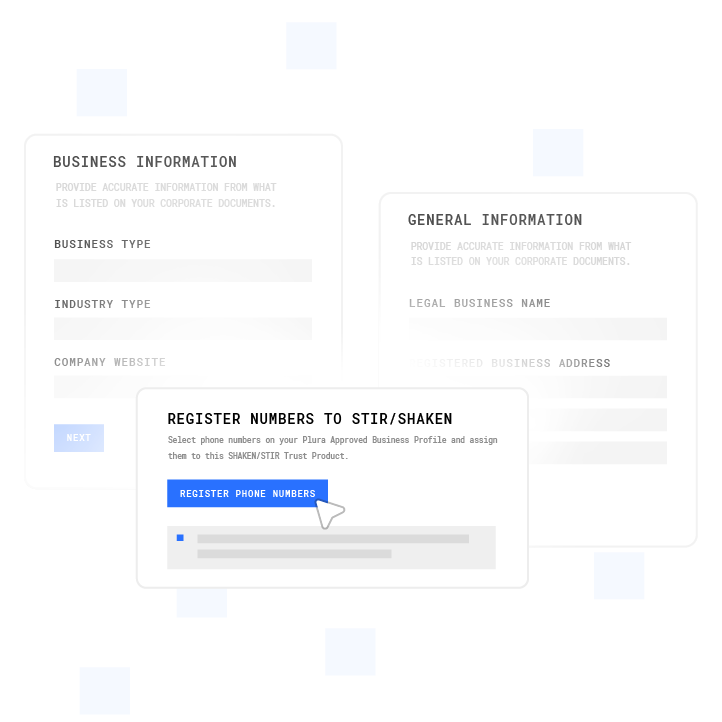
STIR/SHAKEN attestation then shapes deliverability. As of 2026, terminating carriers such as T-Mobile, AT&T, and Verizon combine STIR/SHAKEN attestation with their own analytics to decide whether to label calls Spam Likely or Scam Likely.2 Calls with C-level attestation, or no attestation, are significantly more likely to receive these labels.
iOS 26 call screening adds a handset-level filter on top of carrier-level analytics. Apple released iOS 26 on September 15, 2025, introducing Call Screening in the Phone app. When an unknown number calls, the iPhone asks the caller for their name and reason for calling before relaying that information to the user. iOS accounts for roughly 60% of U.S. mobile OS market share, so this feature now touches most outbound targets.
Both VICIdial and Kixie leave several elements to the operator: branded caller ID issuance at the carrier level, real-time DNC scrubbing enforced before dial, TCPA-litigator list filtering, and infrastructure to respond to iOS 26 screening prompts with a recognizable identity. Operators on either platform should consult qualified counsel and review the relevant regulations directly before building their compliance stack.
How to Migrate Off VICIdial or Kixie
Migration off either platform requires planning across four workstreams: data export, CRM re-integration, number porting, and campaign rebuild. Neither migration is trivial, and both carry operational downtime risk without careful staging.
Migrating off VICIdial starts with the database. Lead data lives in tables such as vicidial_list, and recordings and Asterisk configuration files move through separate processes. Exporting VICIdial lead data requires MySQL command-line database access. VICIdial stores leads, dispositions, recordings metadata, and campaign configuration in MySQL/MariaDB. Extracting that data requires a database administrator who can write and execute export queries, so the export step gates everything downstream. Once the data is out, CRM re-integration means reconfiguring API connections or the embedded browser frame. Campaign rebuild is usually the longest step, because dial plans, IVR menus, AMD (Answering Machine Detection) sensitivity settings, and agent scripts all need recreation in the new platform. Call recordings stored on the VICIdial server need separate archival before decommissioning.
Migrating off Kixie centers on number porting and workflow rebuild. Phone numbers typically port in 1 to 2 weeks, with the Kixie account kept active during that window. Porting transfers only the phone number, and the Kixie account should remain active during the port window. That constraint drives sequencing. Pause or reroute active campaigns before the port starts, and reconfigure embedded calling in the new platform before the port completes. Kixie users, integrations, call history, recordings, and settings do not transfer automatically and must be saved or rebuilt.
Cancellation friction on Kixie depends on contract terms, so leaders should review notice periods and data-retention windows before starting a migration. VICIdial has no vendor cancellation process because the software is open-source, while managed hosting contracts through VICIhost include their own terms.
Campaign rebuild is the workstream operators most often underestimate. Dial plans, IVR logic, agent scripts, and disposition codes built over years in either platform do not transfer automatically to a new system. Budget time for documentation, rebuild, and parallel testing before cutting over live traffic.
If the migration math still does not work in your favor, a third option exists.
When Neither Fits: The AI Predictive Dialer Path
High-volume operators who have outgrown VICIdial’s technical overhead or Kixie’s power-dialer ceiling can move to an AI Predictive Dialer built on carrier-grade infrastructure.
Plura AI is an FCC-licensed platform built for that use case. Plura’s AI Predictive Dialer runs on Plura’s own FCC-licensed audio bridging carrier rather than renting capacity from a third-party CPaaS (Communications Platform as a Service). That structure matters because branded caller ID is issued at the carrier level, real-time DNC scrubbing and TCPA-litigator screening are enforced inside the platform before dial, and STIR/SHAKEN authentication runs on every outbound call under Plura’s carrier identity.
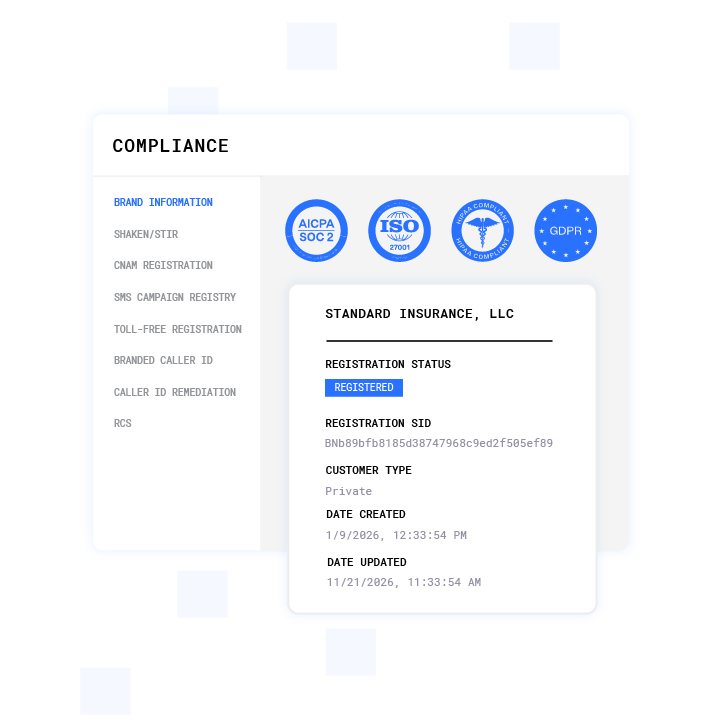
Plura runs on 100% U.S. infrastructure by architecture. Its AI Predictive Dialer, AI SMS, AI RCS, and AI Webchat share a Stateful Conversation Database, so an agent who texted a lead at 9 a.m. can pick up the call at noon already knowing what was said. Plura’s platform enforces TCPA, DNC, HIPAA, SOC 2, and 50-plus state rule sets on outbound contacts.1 This supports customer compliance, and customers remain responsible for their own obligations and regulatory posture.
For operators evaluating the economics, run your numbers through Plura’s ROI calculator to check your cost savings in real time.3
See the AI Predictive Dialer on a live call flow with branded caller ID and real-time DNC enforcement.
Frequently Asked Questions
Is Kixie a Predictive Dialer?
No. Kixie is a power and multi-line dialer and does not include a traditional predictive dialer. Kixie’s documentation positions power dialing for controlled, rep-led sales workflows and describes predictive dialing as designed for larger, higher-throughput contact-center environments. Operations that require true predictive dialing at scale usually look beyond Kixie.
What Are Good Alternatives to VICIdial?
Alternatives depend on the problem you are solving. Kixie fits smaller sales teams that want cloud simplicity and native CRM embedding in HubSpot, Salesforce, Pipedrive, or Zoho. High-volume operators who need true predictive dialing with carrier-level branded caller ID and compliance support often evaluate Plura’s AI Predictive Dialer. Plura owns its FCC-licensed carrier stack, enforces real-time DNC scrubbing before dial, and runs on 100% U.S. infrastructure. See the full platform comparison.
How Much Does VICIdial Actually Cost to Run?
See the cost breakdown above. The short version: the license is $0, and total cost of ownership at 50 agents typically lands between $300 and $450 per agent per month once hosting, SIP trunking, sysadmin labor, and compliance tooling are included.
How Do You Migrate Off VICIdial or Kixie?
See the migration section above for the four workstreams and the porting timeline. In practice, both migrations require parallel testing before live cutover, and neither transfers campaign configuration automatically.
Do You Need a Technical Team to Run VICIdial?
Yes. See the technical requirements section above for the full breakdown of admin learning time, campaign manager training, and ongoing maintenance work.
What CRM Does Kixie Integrate With?
HubSpot, Salesforce, Pipedrive, and Zoho. See the CRM integration section above for the full comparison against VICIdial’s browser-frame approach.
Conclusion: The Verdict Framework
VICIdial vs Kixie is a business-model comparison. The feature differences matter only when mapped to your operating model. The decision comes down to the three variables above.
Choose VICIdial when your operation runs roughly 75-plus agents, you have Linux and Asterisk administration in-house or under contract, and true predictive dialing at configurable dial levels drives your economics. The $0 license cost becomes a real advantage at scale when managed well, and its predictive dialer architecture offers pacing-control granularity that cloud power-dialer suites do not expose to operators.
Choose Kixie when your team runs 10 to 30 sales reps in a CRM-native workflow, you want cloud simplicity with minimal IT overhead, and your primary need is fast sequential dialing with tight HubSpot, Salesforce, Pipedrive, or Zoho integration. Kixie is built for sales teams, not contact-center-scale predictive dialing, and positions itself accordingly.
Teams that have outgrown both paths often evaluate Plura’s AI Predictive Dialer. It serves high-volume operators who need carrier-level branded caller ID, real-time DNC scrubbing enforced before dial, and a stateful conversation database that holds context across voice, SMS, RCS, and webchat. Plura owns its FCC-licensed carrier stack, which creates a structural difference from platforms that rent from a third-party CPaaS.
Compare plans and rates side by side. Run your numbers through Plura’s ROI calculator to check your cost savings in real time.
Evaluate the AI Predictive Dialer against your current economics before you commit to your next platform decision.
1 Plura AI maintains SOC 2, HIPAA, ISO, and GDPR posture as part of its platform infrastructure. References to compliance frameworks in this article describe Plura’s platform capabilities and do not constitute a guarantee that any customer using Plura will themselves be compliant with applicable laws or standards. Customers remain solely responsible for their own regulatory obligations, certifications, consent management, recordkeeping, and the claims they make to their own end users. Consult qualified legal counsel for guidance specific to your use case.
2 This article describes regulatory frameworks at a general level and does not constitute legal advice. Laws and regulations vary by jurisdiction, change over time, and apply differently depending on facts and circumstances. Readers should consult qualified legal counsel before making compliance decisions.
3 Performance figures, customer outcomes, and industry statistics referenced in this article are drawn from cited third-party sources or Plura customer case studies. Individual results vary based on implementation, use case, industry, audience, and execution. Past or aggregate performance is not a guarantee of future results.
4 References to third-party products, services, companies, or research are made for informational and comparative purposes only. Plura AI is not affiliated with, endorsed by, or sponsored by any third party named in this article unless explicitly stated. Trademarks and product names referenced remain the property of their respective owners.
This article is provided for informational purposes only and reflects Plura AI’s understanding at the time of publication. Product capabilities, integrations, and specifications are subject to change. For the most current information, visit plura.ai.
This article was produced with the assistance of AI tools and reviewed by Plura AI prior to publication.