
Written by: Matt Beucler, CEO, Plura AI
Updated September 2026
Key Takeaways
- VICIdial is a self-hosted open-source predictive dialer that requires Linux and Asterisk administration, while Twilio Flex is a programmable cloud platform that needs custom development for outbound dialing.4
- Neither platform ships as a turnkey solution for high-volume outbound. VICIdial demands server management, and Twilio Flex requires an engineering team to build and maintain predictive dialing features.
- Cost structures differ significantly. VICIdial has zero licensing fees but ongoing infrastructure and admin costs, while Twilio Flex uses per-user and usage-based pricing plus substantial engineering expenses.
- Operators should evaluate their outbound-to-inbound mix and available technical resources before choosing between the two platforms, because each carries distinct operational burdens.
- For teams seeking predictive dialing without server administration or custom development, Plura AI offers an AI-native dialer that deploys quickly with built-in compliance support and cross-channel capabilities.
The Problem: Two Platforms, Two Different Burdens
Operators choosing between VICIdial and Twilio Flex face a tradeoff between two different types of cost. Each platform shifts the burden to a different part of your organization.
VICIdial solves outbound predictive dialing out of the box, which is why it has become the most widely deployed open-source contact center suite, with more than 14,000 installations across 100+ countries. The software is free under the AGPL license, but the moment you deploy it, you own the infrastructure. That ownership includes Linux server administration, Asterisk PBX configuration, MySQL database management, SIP trunk provisioning, and ongoing server sizing as your agent count grows. A 50-agent outbound operation requires a minimum two-server setup, and 200 agents requires a multi-node cluster with 12 to 15 total servers. Someone on your team or on retainer must manage that stack.
Twilio Flex solves cloud deployment and omnichannel coverage.4 You do not manage servers, but Twilio Flex does not ship a predictive dialer. Building one requires TaskRouter, Twilio voice APIs, and a development team. Building a production-ready AI voice agent on Twilio APIs typically takes 6 to 12 months and costs $300,000 to $500,000 or more in first-year engineering and infrastructure. That investment comes before the ongoing maintenance load, and custom Twilio integrations typically require 2 to 3 full-time engineers to maintain.
VICIdial concentrates cost in technical administration. Twilio Flex concentrates cost in software engineering. Every operator must decide which cost center fits their budget and staffing model.
The Two-Question Decision Framework
Two questions help clarify which platform fits your floor.
- What Is Your Outbound-to-Inbound Mix? VICIdial is built for outbound predictive dialing and blended campaigns. Outbound sales is VICIdial’s core use case, and the platform was designed around it. Twilio Flex is architected around inbound and omnichannel service delivery, with outbound treated as a build-it-yourself extension.
- Do You Have In-House Technical Staff? VICIdial requires Linux and Asterisk administrators. Organizations without that expertise must budget for a dedicated administrator at $60,000 to $150,000 or more annually. Twilio Flex requires React developers and API engineers. Neither platform operates as a self-service tool for nontechnical teams.
Choose VICIdial if your operation is primarily outbound, you have or can hire Linux and Asterisk administrators, and you want native predictive dialing without a software license fee. Choose Twilio Flex if your operation is primarily inbound or omnichannel, you have a development team, and you need the flexibility to build custom workflows across multiple digital channels.
Does Twilio Flex Have a Predictive Dialer?
The decision framework above assumes both platforms can handle outbound dialing. They cannot. Twilio Flex does not include a native predictive dialer. Building one on Twilio Flex requires TaskRouter for agent routing logic, Twilio’s voice APIs for call origination, and custom application code to implement pacing algorithms, answering machine detection (AMD), and campaign management. The engineering lift is substantial, and the result is a custom-built system your team must maintain indefinitely.
This gap matters for high-volume outbound operators. The Twilio Flex predictive dialer question appears repeatedly in evaluations because the platform’s omnichannel strengths do not extend to outbound dialing depth.
VICIdial ships four native dial methods out of the box. These include RATIO (fixed lines dialed per available agent), ADAPT_TAPERED (starts conservative and increases as the system learns the list’s answer rate), ADAPT_AVERAGE_BALANCE (full predictive dialing), and ADAPT_HARD_LIMIT (aggressive predictive mode for 30+ agent operations with low contact-rate lists).
The ADAPT_AVERAGE_BALANCE method requires 15 or more agents on a campaign to have enough statistical mass for the predictive algorithm to function reliably. Below that threshold, dial levels become erratic. This behavior reflects the mathematics of predictive dialing. Any predictive dialer, including AI-native alternatives, needs sufficient call volume to pace accurately.
For operators evaluating an AI predictive dialer vs. VICIdial, the core question centers on whether predictive dialing is native, maintained, and supported for compliance without requiring your team to build and sustain it.
VICIdial vs Twilio Flex Cost: A Walkthrough at 50 and 200 Seats
To see how the two cost structures diverge in practice, it helps to price both platforms at the same two seat counts. The figures below use illustrative assumptions based on published pricing and documented industry benchmarks. They are not guarantees of what your operation will spend, but they show where the real cost centers sit at 50 and 200 seats. Actual costs depend on your carrier, hosting provider, labor market, and call volume.
Software Licensing
VICIdial is licensed under the AGPL, meaning the software cost is $0 at any seat count with every feature included. Twilio Flex offers multiple pricing models. Its User + Usage model is per-user and usage-based: $35 per monthly active user plus metered usage of underlying Twilio services. It is available only for Flex deployments on an existing Twilio account. Consult Twilio’s official Flex pricing page for current rates, because these change.
Hosting (Illustrative Assumptions)
ViciStack identifies three production VICIdial cloud architecture patterns: a single server for under 25 agents at $200 to $350 per month, a web-plus-database-plus-dialer split for 25 to 100 agents at $500 to $800 per month, and a full cluster for 100 or more agents at $1,200 to $2,500 or more per month. Twilio Flex hosting is managed by Twilio, and infrastructure costs are embedded in the per-user and usage fees rather than billed separately.
Telecom
Twilio’s published US voice rates are $0.0140 per minute for outbound local calls and $0.0085 per minute for inbound local calls. VICIdial telecom costs are carrier-dependent. VICIhost, the official managed hosting option from The VICIdial Group, charges $0.015 per minute for outbound calls. Third-party SIP carriers vary widely, and at one million minutes monthly, the difference between a $0.015 per minute carrier and a $0.005 per minute carrier is $10,000 per month.
Admin and Developer Labor (Illustrative Assumptions)
At 50 seats, VICIdial’s largest non-telecom cost is often the administrator. A dedicated Linux and Asterisk administrator runs $60,000 to $150,000 or more annually, with a BLS 2024 median of $97,000. Spread across 50 agents, that salary represents roughly $120 per agent per month. At 200 seats, a VICIdial operation with a $110,000 per year senior admin spreads administrative overhead to roughly $46 per agent per month, which is why VICIdial’s economics improve significantly at scale.
For Twilio Flex, the equivalent labor cost sits in engineering. As noted earlier, that maintenance load requires 2 to 3 full-time engineers. At market rates for senior engineers, that represents a significant recurring cost that does not decrease as your seat count grows.
Compliance Tooling
VICIdial compliance costs for a 50 to 100 agent operation total $800 to $2,500 per month, including DNC scrubbing, federal DNC list subscription, STIR/SHAKEN carrier charges, and compliance monitoring software.2 Twilio offers compliance add-ons at additional per-message and per-call fees. Operators should consult Twilio’s pricing pages for current rates.
Summary at 50 and 200 Seats (Illustrative)
At 50 seats, VICIdial’s all-in monthly cost using VICIhost managed hosting is approximately $9,588 per month ($192 per agent), comprising $800 in hosting, $6,600 in SIP trunking, $188 in DIDs, $1,000 in DNC scrubbing, and a $1,000 maintenance buffer.3 At 200 seats, VICIhost charges $3,200 per month for 8 servers, with telecom and compliance costs scaling proportionally. Twilio Flex total cost at either seat count depends heavily on your engineering investment and call volume. The published per-minute and per-user rates form the floor, not the ceiling.
Run your numbers through Plura’s ROI calculator to check your cost per conversation against both self-hosted and cloud alternatives.
Omnichannel and Outbound: How Each Platform Handles Channels
Twilio Flex is built for omnichannel operations. Voice, SMS, chat, and WhatsApp are all accessible through Twilio’s API layer, and Flex’s agent desktop is designed to handle multiple channel types in a single interface. For a support team handling inbound inquiries across digital channels, that breadth creates real operational value.
VICIdial is voice-first. Its agent web interface handles calls, inbound email, and website chat, but the platform’s design center is telephony. Digital channel depth often requires third-party integrations or custom development.
For a sales floor running high-volume outbound predictive campaigns, dialing depth, AMD accuracy, and campaign pacing matter more than omnichannel breadth. For a customer service operation handling inbound across multiple channels, Twilio Flex’s native omnichannel support becomes a meaningful differentiator. Each floor should align its platform choice with how agents actually spend their time.
Migration and Platform Lock-In Considerations
Both platforms carry switching costs that operators should price in before committing.
Moving off VICIdial involves migrating lead data out of MySQL, retraining agents on a new interface, reconfiguring SIP trunks with a new carrier, and managing potential downtime during cutover. A bare-metal-to-cloud VICIdial migration requires 2 to 4 hours of downtime for a clean cutover. A migration to an entirely different platform is a larger project. The AGPL license means your data and configuration are portable, so you are not locked into a proprietary data format.
Building on Twilio Flex commits you to the Twilio ecosystem. Custom predictive dialing logic, TaskRouter configurations, and API integrations do not transfer to another platform without a rebuild. If Twilio changes pricing, deprecates an API, or alters its product roadmap, your custom build feels that impact. The more you build on Flex, the higher the exit cost.
Each platform can serve the right operator effectively, but both introduce switching costs that compound over time. Those costs belong in your total cost of ownership model before you sign a contract or start a build.
The Third Path: AI-Native Dialers
The VICIdial vs Twilio Flex decision often appears as a binary choice between self-hosting complexity and custom-development cost. A third category exists: AI-native dialers that combine predictive dialing with cloud deployment and built-in compliance support, which reduces both burdens.
Plura AI is built for operators who need an AI Predictive Dialer without administering Asterisk or funding an engineering team. Plura is its own FCC-licensed audio bridging carrier, so voice traffic does not route through a third-party CPaaS. Branded caller ID is issued at the carrier level. Real-time DNC scrubbing and TCPA-litigator list filtering run before every outbound contact. STIR/SHAKEN authentication applies to every call.
VICIdial requires you to build and maintain a server cluster. Twilio Flex requires you to build and maintain a custom predictive dialing application. Plura’s AI agent platform can reach first conversation in days for simple inbound qualification flows, while complex multi-step intakes may take one to two months.
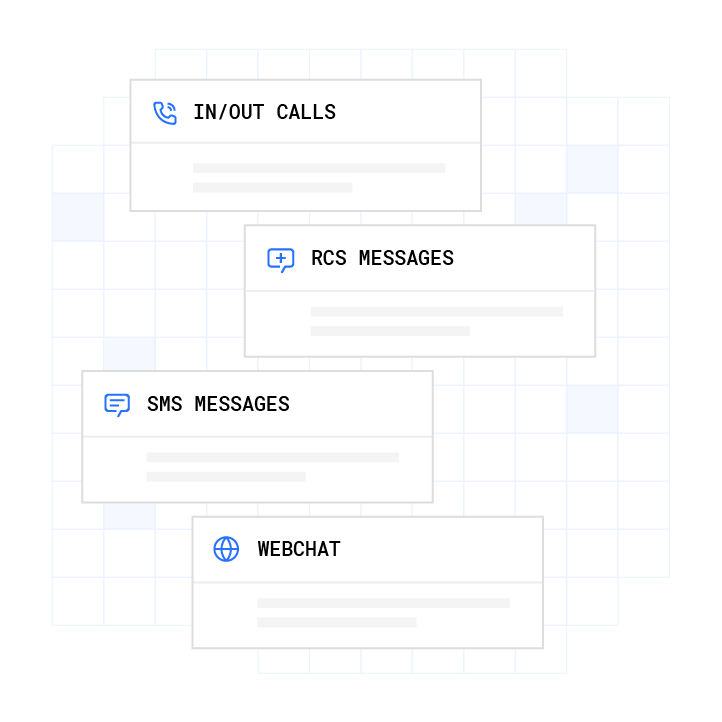
Plura’s AI Predictive Dialer uses stateful conversion signals to decide who to call next, referencing historical answer rates, prior negotiation outcomes, and prior offer-acceptance bands. All four channels, including voice, SMS, RCS, and webchat, share a Stateful Conversation Database, so an agent that texted a lead at 9 a.m. picks up the call at noon already knowing what was said. Plura operates inside SOC 2, HIPAA, ISO, GDPR, STIR/SHAKEN, TCPA, and DNC standards as platform layers, while customers remain responsible for their own compliance obligations.1
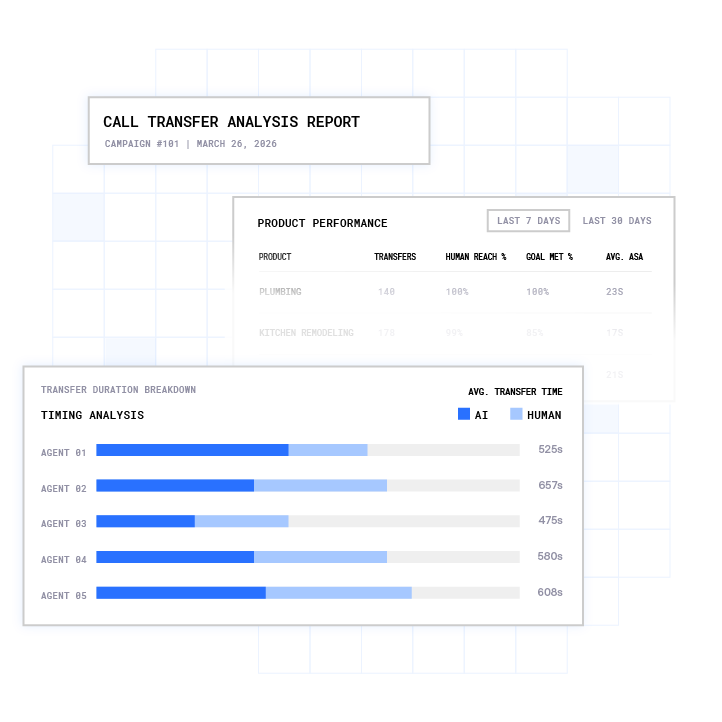
For operators evaluating an AI predictive dialer vs. VICIdial, the practical difference is operational. Plura deploys in days, not months, and does not require a Linux administrator or a development team to maintain. For operators considering a Twilio Flex alternative for outbound, Plura removes the custom-build requirement entirely.
Explore the full comparison in Plura’s Twilio Flex comparison guide.
See the AI Predictive Dialer in action on a live outbound floor.
Frequently Asked Questions
Is VICIdial Free to Use?
VICIdial’s software is free to download and use under the AGPL license. There are no seat fees, feature gates, or trial tiers. However, operating VICIdial carries real costs. These include server hosting or bare metal infrastructure, SIP trunking and phone numbers from a carrier, a Linux and Asterisk administrator, DNC scrubbing services, and optional paid support from The VICIdial Group or third-party consultants. At 50 agents, VICIdial’s operational costs (infrastructure, staffing, compliance, storage, and monitoring, excluding VoIP and carrier telecom) typically run about $15,830 to $30,400 per month.3
Is VICIdial Open Source?
VICIdial is licensed under the GNU Affero General Public License (AGPL). The source code is publicly available, and operators can read and modify it for integrations, custom reports, and fixes without waiting on a vendor roadmap. The AGPL’s copyleft provision describes how derivative versions remain open source when distributed or offered as a network service, while private in-house customizations can remain private.
What Is the Latest Version of VICIdial?
VICIdial is actively maintained by The VICIdial Group. For the current version number and release notes, operators should consult the official VICIdial project resources at vicidial.org. Version information changes with each release and is most reliable when taken directly from the source.
How Much Does Twilio Flex Cost Per Month?
Twilio Flex offers multiple pricing models, and its User + Usage model is per-user and usage-based. It charges $35 per monthly active user plus metered usage of underlying Twilio services and is available only for Flex deployments on an existing Twilio account. Operators should consult Twilio’s official Flex pricing page for current rates, because pricing tiers and structures change. In addition to the per-user Flex fee, operators pay separately for Twilio voice usage at published per-minute rates: $0.0140 per minute for outbound local calls and $0.0085 per minute for inbound local calls as of the most recent published rates. They also pay for phone number leases, SMS, and any add-on features such as answering machine detection, call recording, or branded calling. For operators building a predictive dialer on Flex, engineering and infrastructure costs are additional and can be substantial.
Who Uses VICIdial?
VICIdial is used by outbound sales teams, collections operations, lead generation shops, political and survey call centers, and BPOs running client campaigns. It fits operations from 5 to 500 or more seats. The platform is particularly common among operators who need native predictive dialing at low software cost and have the technical staff to administer Linux and Asterisk infrastructure. It appears less often in operations that prioritize omnichannel digital support or that lack dedicated server administration resources.
What Is VICIdial Used For?
VICIdial is used primarily for outbound predictive dialing campaigns, inbound automatic call distribution (ACD), and blended contact center operations where agents handle both inbound and outbound calls. Its native predictive dialing engine, four dial methods, answering machine detection, DNC checking, and campaign management tools make it a strong fit for high-volume outbound sales, lead qualification, appointment setting, and collections. It also supports inbound IVR, skills-based routing, call recording, and real-time floor monitoring.
Conclusion
VICIdial and Twilio Flex serve different operational profiles. VICIdial fits operators who run primarily outbound predictive campaigns, have Linux and Asterisk administration in-house, and want dialing depth at low software cost. Twilio Flex fits operators who need omnichannel inbound and digital service delivery, have a development team, and can absorb the engineering cost of building outbound capabilities on top of the platform.
High-volume outbound operations that do not want to administer a server cluster or fund a custom predictive dialer build can consider an AI-native dialer. Plura’s AI Predictive Dialer removes the self-hosting burden and the custom-build cost, with deployment measured in days rather than months. Review Plura’s plans and rates to understand how this model fits your budget.
Schedule a walkthrough of your outbound floor and see how it operates when predictive dialing, carrier infrastructure, and AI intelligence sit on a single platform.
1 Plura AI maintains SOC 2, HIPAA, ISO, and GDPR posture as part of its platform infrastructure. References to compliance frameworks in this article describe Plura’s platform capabilities and do not constitute a guarantee that any customer using Plura will themselves be compliant with applicable laws or standards. Customers remain solely responsible for their own regulatory obligations, certifications, consent management, recordkeeping, and the claims they make to their own end users. Consult qualified legal counsel for guidance specific to your use case.
2 This article describes regulatory frameworks at a general level and does not constitute legal advice. Laws and regulations vary by jurisdiction, change over time, and apply differently depending on facts and circumstances. Readers should consult qualified legal counsel before making compliance decisions.
3 Performance figures, customer outcomes, and industry statistics referenced in this article are drawn from cited third-party sources or Plura customer case studies. Individual results vary based on implementation, use case, industry, audience, and execution. Past or aggregate performance is not a guarantee of future results.
4 References to third-party products, services, companies, or research are made for informational and comparative purposes only. Plura AI is not affiliated with, endorsed by, or sponsored by any third party named in this article unless explicitly stated. Trademarks and product names referenced remain the property of their respective owners.
This article is provided for informational purposes only and reflects Plura AI’s understanding at the time of publication. Product capabilities, integrations, and specifications are subject to change. For the most current information, visit plura.ai.
This article was produced with the assistance of AI tools and reviewed by Plura AI prior to publication.