
Written by: Matt Beucler, CEO, Plura AI
Key Takeaways
- Voicemail beep detection separates live answers from machines by analyzing the greeting, post-greeting beep, cadence, silence, and frequency patterns in real time.
- Traditional tone-based detection often adds 5 to 15 seconds of delay and fails on silent or prompt-based greetings, while modern AI and ML classifiers reach 96 to 98.7% accuracy with under 200 ms latency.3
- Production benchmarks show ML systems such as temporal VAD feature classifiers holding 96.1% accuracy with only 0.3% false positives, which clearly outperforms traditional frequency-domain methods.3
- Twilio, LiveKit, Pipecat, and Voximplant each handle AMD separately from carrier services and compliance tooling, which increases integration work for high-volume outbound teams.4
- Plura AI’s AI Predictive Dialer runs carrier-grade AMD, branded caller ID, real-time DNC scrubbing, and STIR/SHAKEN authentication on a single FCC-licensed stack to remove that integration overhead.
Signal-Level Mechanics of Beep Detection
Traditional beep detection listens for the tone that voicemail systems emit after the recorded greeting finishes. That tone usually appears only on the caller’s audio channel, not the callee’s channel, and it arrives only after the full greeting plays, which often takes 10 to 30 seconds per call.
Four detection methods see active production use today.
- Tone-based detection: Listens for a beep in the 400 to 500 Hz range after the greeting. This method is accurate when the tone exists, but it adds 5 to 15 seconds of delay and fails on systems that end greetings with silence or verbal prompts.
- Cadence-based detection: Analyzes initial speech length, silence gaps, and energy patterns. Voicemail greetings typically run 3 to 10 seconds of continuous speech, while human greetings usually stay under 2 seconds. This approach can work within a short decision window.
- Frequency-domain algorithms: Techniques such as DESA-2 and Goertzel filters detect the beep tone mathematically, although they show reliability limits in some telephony environments.
- AI and ML classification: Models trained on thousands of labeled call recordings analyze cadence, frequency, background noise, and semantic content at the same time. AI and ML voicemail classification reaches 96 to 98.7% accuracy with under 200 ms latency and improves as more training data arrives.
A hybrid design that combines carrier-level detection with secondary AI classification can raise accuracy for large campaigns while keeping false positives low.
Real-World Accuracy and Latency Benchmarks
| Method | Accuracy | Median Latency | False Positive Rate |
|---|---|---|---|
| DESA-2 frequency-domain beep detection | Varies | 10 to 30 s | Elevated |
| Silence/greeting-length heuristics | 70 to 75% | 2 to 4 s | High (frequent misfires on multi-part greetings) |
| Carrier-level AMD (Twilio, Vonage, Telnyx)4 | 85 to 90% | 2 to 4 s | Not published |
| Temporal VAD feature + boosted tree (ClearGrid, 77K production calls) | 96.1% | 5.05 s | 0.3% |
| LiveKit AMD (Gemini Flash Lite + Ink Whisper) | Not published | 840 ms | Not published |
| Whisper + ML classifier (Faster-Whisper + GradientBoosting) | 95%+ | 5-15 s (CPU) | Under 3% |
The accuracy gap between traditional beep detection and production ML classifiers is significant. In a 77,000-call production validation, the temporal VAD feature system maintained a 0.3% false positive rate and 1.3% false negative rate. The following sections show how these detection methods appear in four major platforms, starting with Twilio’s DetectMessageEnd mode.
See these detection benchmarks in action and book a live demo of Plura’s AI Predictive Dialer.
Twilio DetectMessageEnd Configuration
Twilio’s answering machine detection uses the MachineDetection parameter on the Calls API. Setting this parameter to DetectMessageEnd instructs Twilio to wait until the voicemail greeting finishes before returning the AMD result, which improves accuracy inside Twilio but adds the full greeting duration to latency.
import twilio.rest client = twilio.rest.Client(account_sid, auth_token) call = client.calls.create( to="+15551234567", from_="+15559876543", url="https://your-app.example.com/twiml", machine_detection="DetectMessageEnd", machine_detection_timeout=30, async_amd=True, async_amd_status_callback="https://your-app.example.com/amd-callback", async_amd_status_callback_method="POST" ) print(call.sid) The async_amd_status_callback endpoint receives a POST with AnsweredBy set to human, machine_end_beep, machine_end_silence, or machine_end_other. The machine_end_beep value signals that the system should drop a voicemail. Latency for this mode tracks directly with greeting length.
Open-Source, Pipecat, and LiveKit AMD Patterns
LiveKit AMD ships inside the LiveKit Agents framework (Python v1.5.9, Node.js v1.4.2) and needs no extra plugins. It classifies calls as human, voicemail, IVR, or unavailable using a short-circuiting rule set followed by LLM classification on STT transcripts.
from livekit.agents import Agent, AgentSession from livekit.agents.voice import OutboundCallHandler class MyOutboundAgent(Agent): async def on_call_answered(self, session: AgentSession): amd_result = await session.amd_result() if amd_result.type == "voicemail": await session.say("Hi, this is a message for...") await session.hangup() elif amd_result.type == "human": await session.say("Hello, is this a good time?") handler = OutboundCallHandler(agent=MyOutboundAgent()) LiveKit AMD reached a median detection time of 840 ms from session start to verdict. Preemptive generation prepares the agent’s first reply in parallel for confirmed human pickups.
Asterisk plus Whisper (open-source pipeline) uses Faster-Whisper to transcribe the first 3 to 5 seconds of answered audio, then passes text and audio features into a scikit-learn GradientBoosting classifier through a FastAPI microservice that an AGI script calls.
# asterisk_amd.agi #!/usr/bin/env python3 import sys import requests def main(): audio_path = sys.argv[1] response = requests.post( "http://localhost:8000/classify", json={"audio_path": audio_path} ) result = response.json() if result["label"] == "machine": print("SET VARIABLE AMD_RESULT machine") else: print("SET VARIABLE AMD_RESULT human") main() The Asterisk plus Whisper CPU-only pipeline takes 5 to 15 seconds per turn with no per-call API costs, which suits self-hosted ViciDial environments.
Pipecat integrates AMD through its pipeline event hooks. The pattern below branches on the on_first_participant_joined event and inspects the transcript for voicemail indicators.
from pipecat.pipeline.pipeline import Pipeline from pipecat.processors.amd import AnsweringMachineDetector amd = AnsweringMachineDetector( detection_window_ms=3000, confidence_threshold=0.85, ) pipeline = Pipeline([ transport.input(), amd, llm, tts, transport.output(), ]) @amd.event_handler("on_machine_detected") async def handle_machine(detector, result): await transport.send_audio(voicemail_drop_audio) await transport.disconnect() Voximplant AMD Setup
Voximplant exposes AMD through its VoxEngine JavaScript SDK. The startPlayback and addEventListener pattern below handles both human and machine branches after the call connects.
VoxEngine.addEventListener(AppEvents.CallAlerting, function(e) { var call = e.call; call.addEventListener(CallEvents.Connected, function() { call.detectAnsweringMachine({ waitingTimeout: 5000, silenceTimeout: 1500, }); }); call.addEventListener(CallEvents.AnsweringMachineDetected, function(e) { if (e.result === "machine") { call.startPlayback("https://cdn.example.com/voicemail_drop.mp3"); call.addEventListener(CallEvents.PlaybackFinished, function() { call.hangup(); }); } else { // Route to live agent or AI agent VoxEngine.forwardCallToUser("agent_id"); } }); call.answer(); }); Voximplant AMD fires the AnsweringMachineDetected event with a result of machine or human. The waitingTimeout parameter controls how long the system listens before defaulting to human, which directly affects false positive exposure.
Comparing AMD Across Major Platforms
The four platforms above differ on the dimensions that matter most in production: accuracy, latency, self-hosting flexibility, and integration depth.
- Twilio DetectMessageEnd: Widely deployed and easy to pair with existing Twilio infrastructure, but latency tracks greeting length, which often runs 10 to 30 seconds in DetectMessageEnd mode.
- LiveKit AMD: Provides fast median latency, open-source access, IVR navigation support, and preemptive reply generation for confirmed humans.
- Asterisk plus Whisper: Delivers high accuracy with CPU-only operation that takes 5 to 15 seconds per turn and zero per-call API cost, but it requires self-hosted infrastructure and labeled training data from production calls.
- Voximplant: Offers managed cloud AMD with configurable silence and waiting timeouts, while accuracy and latency figures are not published in Voximplant’s public documentation.
None of these platforms address carrier-level factors that determine whether a detected live call actually converts. Branded caller ID, STIR/SHAKEN authentication, real-time DNC scrubbing, and stateful conversation memory across channels all sit outside their core AMD features.
Compliance Context for Outbound Dialers
AMD accuracy connects directly to regulatory exposure. Calls misclassified as voicemail when a live person answered create a record gap with no recording of what the consumer heard, which can become a material issue in TCPA litigation.
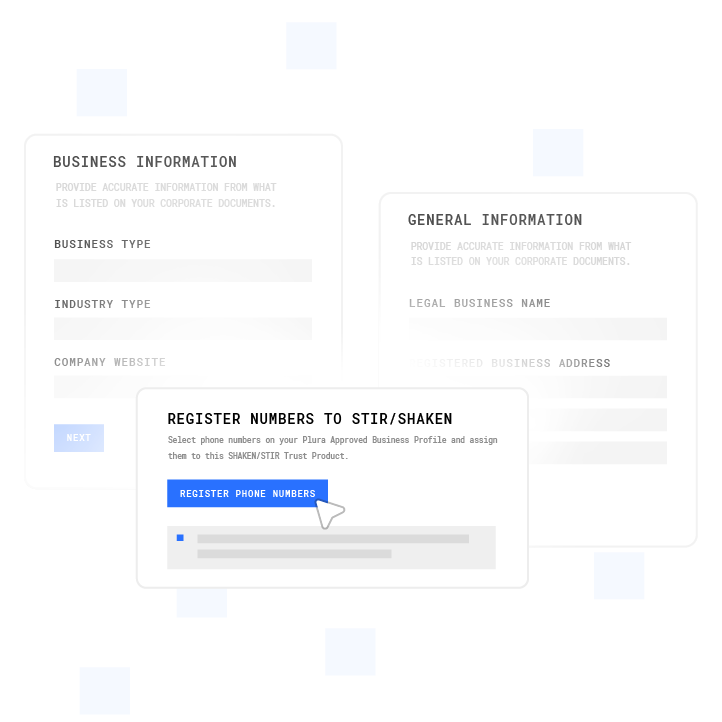
Several frameworks shape automated outbound calling and voicemail delivery in the United States. Operators building or running outbound dialers should understand the following context and consult qualified counsel for guidance on their specific programs.
- The FCC’s February 2024 ruling describes AI-generated voices under the TCPA’s “artificial or prerecorded voice” framework, which applies consent requirements to outbound AI voice calls.2
- TCPA violations can carry penalties up to $1,500 per call, and class actions can aggregate thousands of calls into significant total exposure.2
- The FTC Telemarketing Sales Rule includes safe-harbor provisions that limit the percentage of abandoned calls.
- U.S. TCPA and FTC rules describe connection to a live agent within 2 seconds after the called party’s greeting completes (or answer in some phrasings) as part of abandoned-call analysis.
- Calling-window logic often needs to enforce 8 a.m. to 9 p.m. restrictions based on the called party’s local time zone, not the call center’s time zone.
- National DNC scrubbing typically occurs against a list no older than 31 days, and many operations scrub within 24 hours of campaign launch for a more defensible posture.
False positives in AMD, where live calls are dropped as voicemail, create the higher compliance risk. A false positive loses a real customer opportunity before an agent can speak and creates a call record with no agent connection. Keeping false positive rates low becomes the practical target for compliant high-volume campaigns.
Review Plura’s compliance-ready AMD implementation in a live demo.
Plura AI Predictive Dialer Integration
The implementation options above require engineering teams to assemble AMD, carrier infrastructure, compliance tooling, and conversation logic as separate components. Plura AI’s AI Predictive Dialer runs all of these layers on a single FCC-licensed carrier stack.
Because Plura operates its own FCC-licensed audio bridging carrier rather than wrapping a third-party CPaaS, AMD decisions, branded caller ID issuance, STIR/SHAKEN authentication, and real-time DNC scrubbing all happen at the carrier level before the call reaches an agent or an AI voice agent. This architecture removes latency and integration complexity that appear in multi-vendor stacks.
The AI Predictive Dialer delivers carrier-grade AMD with low false positive rates consistent with production outbound benchmarks. Detected voicemail calls receive a pre-configured voicemail drop. Confirmed human pickups connect immediately to the AI voice agent or a live agent transfer, with no dead air gap.
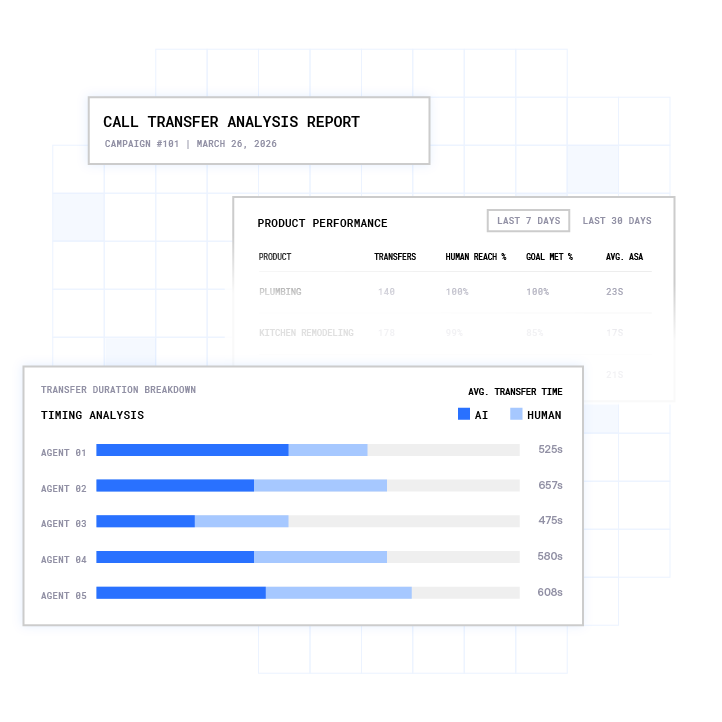
Every outbound contact passes through Plura’s compliance engine before dial.
- Real-time DNC scrubbing against federal and state registries
- TCPA-litigator list filtering
- Recipient-local-time calling-window enforcement through time-zone detection
- Immutable consent records with timestamp and audit export
- STIR/SHAKEN authentication on every call leg
The AI Predictive Dialer also reads from Plura’s Stateful Conversation Database, so a contact who received an SMS at 9 a.m. is recognized when the dialer reaches them at noon. The AI agent continues the conversation with full prior context instead of starting cold.
Plura supports compliance with TCPA, DNC rules, HIPAA, SOC 2, and STIR/SHAKEN caller ID verification as infrastructure-level features.1 Customers remain responsible for their own regulatory obligations and for the compliance posture of their specific programs.
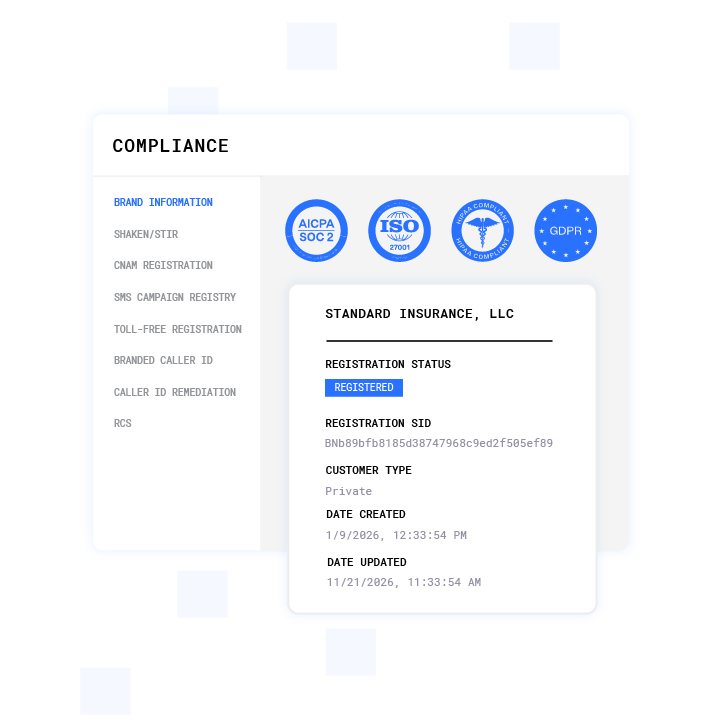
For operators currently running ViciDial or a Twilio-based dialer, Plura’s managed workflows and no-code workflow builder handle conversation-logic migration without custom engineering. The integrations layer connects to HubSpot, Salesforce, Zoho, and more than 50 other tools so existing CRM data flows into the dialer without a rebuild.
Conclusion
Voicemail beep detection is solved at the signal-processing level, but the production gap between traditional frequency-domain methods and modern temporal VAD classifiers separates campaigns that waste agent time from campaigns that convert. The code samples above give engineers a working starting point on Twilio, LiveKit, Pipecat, and Voximplant, although each option still requires separate assembly of AMD, carrier infrastructure, and compliance tooling.
Plura’s AI Predictive Dialer combines carrier-grade AMD with branded caller ID, real-time DNC scrubbing, STIR/SHAKEN authentication, and stateful conversation memory on a single FCC-licensed stack. The compliance engine evaluates each record before dial, the conversation database persists across every channel, and the AMD decision occurs at the carrier layer instead of as a bolt-on.
Calculate the ROI impact of reliable AMD for your outbound campaigns.
Frequently Asked Questions
What is the difference between beep detection and answering machine detection?
Beep detection is a subset of answering machine detection, or AMD. AMD is the broader process of classifying an answered call as a live human, voicemail, IVR system, or unavailable. Beep detection focuses on the tone that voicemail systems emit after the recorded greeting finishes, which signals that the caller can leave a message.
Beep detection works well when the tone exists, but many modern voicemail systems end greetings with silence or a verbal prompt instead of a beep. That behavior makes beep-only detection unreliable for high-volume outbound campaigns. Production AMD systems usually combine beep detection with cadence analysis, silence measurement, and ML classification to handle the full range of voicemail behaviors across carriers.
Why does generic CPaaS beep detection produce so many false positives?
Generic CPaaS beep detection often relies on frequency-domain algorithms that listen for a specific tone on the audio stream. The core issue is that the voicemail beep typically appears only on the caller’s audio channel, not the callee’s channel, so the detector listens on the wrong side of the call in many telephony configurations.
Voicemail greetings also vary widely across carriers, regions, and individual users. Some include music, carrier announcements, multi-language prompts, or verbal cues instead of a beep. When the detector does not hear the expected tone, it either waits for the full timeout and defaults to a classification or misclassifies the call. False positive rates can exceed 20% on standard frequency-domain methods, which means live prospects are dropped before an agent or AI agent can speak.
How does Plura AI handle voicemail detection inside its AI Predictive Dialer?
Plura’s AI Predictive Dialer runs AMD at the carrier level on Plura’s own FCC-licensed audio bridging carrier, not through a third-party CPaaS. This design means the detection decision, branded caller ID issuance, STIR/SHAKEN authentication, and real-time DNC scrubbing all occur within the same infrastructure layer before the call reaches an agent.
Detected voicemail calls receive a pre-configured voicemail drop. Confirmed human pickups connect immediately to Plura’s AI voice agent or a live agent transfer with no dead air gap. The dialer also reads from Plura’s Stateful Conversation Database, so contacts who have interacted on other channels are recognized and the conversation continues with full prior context. Plura supports TCPA compliance and DNC compliance as infrastructure-level features, and customers remain responsible for their own regulatory programs.
What AMD accuracy and latency targets should outbound campaign operators use?
Industry guidance for high-volume outbound campaigns often sets a floor of 90% overall accuracy, a false positive rate under 5%, a false negative rate under 15%, and an average detection time of 2 to 4 seconds. For campaigns with higher compliance exposure or critical list quality, tighter targets apply. False positive rates under 1% and detection windows under 5 seconds are achievable with ML-based classifiers that teams validate on production call data.
The 2 to 4 second detection window balances classification reliability against the risk of live callers hanging up during silence. Campaigns running at scale should validate AMD performance on their own call recordings instead of relying only on vendor-published benchmarks, because accuracy varies by carrier mix, geographic distribution, and voicemail system type.
What compliance considerations apply to automated voicemail delivery in outbound dialers?
Automated voicemail delivery in outbound dialers sits at the intersection of several regulatory frameworks in the United States. The FCC’s February 2024 declaratory ruling described AI-generated voices as “artificial” voices under the Telephone Consumer Protection Act, or TCPA, which applies consent requirements to outbound AI voice calls and voicemail drops.
The FCC has also stated that ringless voicemail can constitute a “call” under the TCPA when it uses an artificial or prerecorded voice. TCPA statutory damages are $500 per violation for unintentional violations and $1,500 per violation for knowing or willful violations, with no aggregate cap. The FTC’s Telemarketing Sales Rule includes safe-harbor provisions for call abandonment.
Calling windows, DNC scrubbing practices, consent record retention, and state-level rules in Florida, California, Colorado, and other states add further layers. Operators should consult qualified legal counsel to evaluate their specific programs against applicable federal and state requirements before launching any automated outbound campaign.
1 Plura AI maintains SOC 2, HIPAA, ISO, and GDPR posture as part of its platform infrastructure. References to compliance frameworks in this article describe Plura’s platform capabilities and do not constitute a guarantee that any customer using Plura will themselves be compliant with applicable laws or standards. Customers remain solely responsible for their own regulatory obligations, certifications, consent management, recordkeeping, and the claims they make to their own end users. Consult qualified legal counsel for guidance specific to your use case.
2 This article describes regulatory frameworks at a general level and does not constitute legal advice. Laws and regulations vary by jurisdiction, change over time, and apply differently depending on facts and circumstances. Readers should consult qualified legal counsel before making compliance decisions.
3 Performance figures, customer outcomes, and industry statistics referenced in this article are drawn from cited third-party sources or Plura customer case studies. Individual results vary based on implementation, use case, industry, audience, and execution. Past or aggregate performance is not a guarantee of future results.
4 References to third-party products, services, companies, or research are made for informational and comparative purposes only. Plura AI is not affiliated with, endorsed by, or sponsored by any third party named in this article unless explicitly stated. Trademarks and product names referenced remain the property of their respective owners.
This article is provided for informational purposes only and reflects Plura AI’s understanding at the time of publication. Product capabilities, integrations, and specifications are subject to change. For the most current information, visit plura.ai.
This article was produced with the assistance of AI tools and reviewed by Plura AI prior to publication.