
Written by: Matt Beucler, CEO, Plura AI
Key takeaways for outbound leaders
- Legacy AMD creates compliance exposure and long detection latency. Modern options like neural VAD, DTMF, ringless voicemail, and STT keyword matching address these gaps.
- Neural VAD delivers sub-second classification with very low false positives. It reaches full value only on carrier-grade infrastructure, not third-party CPaaS layers.
- DTMF removes false positives by requiring a keypress, but it loses live humans who ignore the prompt or hang up before it finishes.
- Ringless voicemail bypasses live-answer detection and now carries TCPA consent obligations similar to robocalls, with potential $500 to $1,500 per-message statutory damages.2
- Plura AI’s AI Predictive Dialer combines neural VAD with an FCC-licensed carrier stack, branded caller ID, real-time DNC scrubbing, and cross-channel memory to deliver faster, cleaner live connections.
Replacing Twilio AMD with neural VAD
Neural VAD replaces the silence-and-beep rules of legacy AMD with a compact neural network trained on phone-call audio. The model ingests the first seconds of audio and outputs a probability that the line is live instead of waiting for a voicemail greeting to finish. The arXiv paper (2604.09675v1) describes a production neural VAD system with a 0.3% false-positive rate and 1.3% false-negative rate validated across 77,000 production outbound calls.3
Twilio-based AMD tools rely on silence thresholds and speech-duration rules. Cekura’s analysis shows that default configurations can create longer verdict latencies. Replacing that logic with a neural VAD layer cuts latency and reduces false positives in controlled conditions, according to DialerBee’s internal pilot data.
The main limitation of neural VAD as a standalone replacement is infrastructure. A VAD model running on a third-party CPaaS still inherits that carrier’s caller ID reputation, DNC enforcement posture, and STIR/SHAKEN (Secure Telephone Identity Revisited/Signature-based Handling of Asserted information using toKENs) attestation level.1 Plura’s comparison with Synthflow illustrates the gap. Synthflow depends on Twilio and operates as a software layer without a carrier license, while Plura owns its telecom infrastructure and holds an FCC carrier license, which enables carrier-provisioned branded caller ID that Twilio-based tools cannot issue.4
DTMF keypress detection vs neural VAD
DTMF keypress verification routes a call to a live agent only after the called party presses a digit. A pre-recorded message typically asks them to press 1 to connect. The method produces near-zero false positives because a machine cannot press a key. The tradeoff is friction, since a meaningful share of live humans will not press anything, either because they distrust the prompt or because they hang up before the instruction completes.
Retell AI’s architecture documentation notes that in real-time voice pipelines, VAD and turn-taking together consume 150 to 300 ms of a roughly 600 ms end-to-end response budget.4 DTMF collection operates as a discrete event that blocks until a terminating digit or timeout. DTMF is architecturally simpler but commercially lossy, because every live human who does not press a key becomes a missed connection that the dialer counts as a non-answer.
Neural VAD instead classifies the line passively from the audio stream without requiring any action from the called party. The accuracy gap between the two methods appears in live-human recovery rather than false positives. Neural VAD captures every live answer regardless of whether the person responds to a prompt.
Ringless voicemail economics vs AI dialer performance
Ringless voicemail delivers a pre-recorded message directly to a recipient’s voicemail server without the handset ringing. Per-message costs in 2026 range from $0.02 to $0.15 depending on volume and pricing model, with high-volume enterprise programs reaching $0.02 to $0.05 per delivered message. The global ringless voicemail platform market was valued at $0.8 billion in 2025 and is projected to reach $1.5 billion by 2034 at a CAGR of 7.2%.3
The compliance surface for ringless voicemail changed materially in 2022. The FCC’s November 21, 2022 Declaratory Ruling and Order (FCC 22-85, CG Docket No. 02-278) describes ringless voicemail deposits to U.S. mobile numbers as “calls” under the TCPA (Telephone Consumer Protection Act), with consent obligations aligned to prerecorded or artificial-voice robocalls.2 Statutory damages can reach $500 to $1,500 per message, with class-action exposure reaching $5 million to $15 million for a 10,000-message non-compliant campaign. Leaders should consult qualified counsel regarding specific consent and disclosure obligations before deploying ringless voicemail at scale.
From a pure economics standpoint, ringless voicemail generates callback rates rather than live connections. A carrier-integrated AI Predictive Dialer connects to live humans in real time. That connection enables immediate qualification, objection handling, and warm transfer to a human agent, which a voicemail drop cannot provide.
STT keyword detection in outbound call flows
STT (speech-to-text) keyword matching transcribes the first seconds of audio and scans the transcript for voicemail-signature phrases such as “please leave a message” or “not available right now.”
The architectural cost of STT is sequential pipeline latency. Real-time voice systems that rely on STT plus LLM plus TTS (text-to-speech) accumulate latency across stages, with well-tuned pipelines landing in the 500 to 800 ms end-to-end range. Streaming STT engines emit partial transcripts roughly every 50 ms, which allows downstream components to react before the caller finishes speaking, but full classification still requires enough audio to contain a recognizable phrase.
STT-based detection also struggles with long human greetings. Cekura documents that rule-based AMD frequently misclassifies greetings such as “Hello, this is John Smith, thank you for calling Widgets Inc, how can I assist you today?” as voicemail. Neural transcript-based methods more reliably distinguish IVR menus from receptionists. The same risk applies to STT keyword matching when the keyword set is too narrow.
Carrier AMD vs custom VAD on owned infrastructure
Carrier-level AMD is applied by the terminating network before the call reaches the dialer’s detection layer. Custom VAD runs inside the dialer platform on the audio stream after the call connects. This distinction affects latency, accuracy, and how compliance controls are enforced.
Carrier AMD is opaque, since the dialer operator cannot inspect the model, tune thresholds, or audit the false-positive rate. Custom VAD running on owned infrastructure gives the operator full visibility into detection logic and the ability to retrain on their own call corpus. The same arXiv study cited earlier shows that purpose-built neural VAD trained on telephony audio reaches 96.1% combined accuracy on the evaluation sets.
Plura’s AI Predictive Dialer runs neural VAD on Plura’s own FCC-licensed carrier infrastructure. Because Plura is the carrier, not a reseller of another carrier’s capacity, branded caller ID is issued at the carrier level, STIR/SHAKEN authentication runs on every outbound call, and real-time DNC scrubbing is enforced before dial rather than bolted on after the fact. TransUnion data cited in Plura’s comparison content shows that customers are up to 105% more likely to answer a branded call.3 This relationship means the detection method and the caller ID layer are not independent variables. A low-latency VAD on an unbranded number still loses to a slightly slower VAD on a number the recipient recognizes.
Book a live demo with Plura at plura.ai/ai-predictive-dialer and run your current dialer economics through the ROI model before your next vendor review.
Benchmark table: five voicemail detection methods compared
The table below compares the five detection methods across latency, accuracy, and infrastructure requirements, showing how carrier-integrated platforms deliver advantages that standalone detection methods cannot match.
| Method | Latency | False-positive rate | Branded caller ID support | Real-time DNC | Cross-channel memory |
|---|---|---|---|---|---|
| DTMF keypress | Blocks until digit or timeout, discrete event with no fixed ms budget | Near zero (machine cannot press key), live-human loss rate not published | Depends on carrier, not native to DTMF method | Depends on platform, not method | No |
| Neural VAD | Low latency inference, total time depends on audio buffer | 0.3% false-positive rate in production (77,000 calls) | Depends on carrier, not native to VAD method | Depends on platform, not method | No |
| Ringless voicemail | No live-answer detection, server-to-server deposit | Not applicable, no live-human classification performed | No, delivers to voicemail server without caller ID presentation | Depends on platform, not method | No |
| STT keyword matching | Low latency for transcript plus LLM, can be longer with fallback | High accuracy on vendor datasets, false-positive rate not independently audited | Depends on carrier, not native to STT method | Depends on platform, not method | No |
| Plura AI Predictive Dialer | Neural VAD on owned carrier infrastructure, sub-5-second connect per plura.ai/ai-predictive-dialer | Neural VAD layer, Number Verifier integration improves outbound connection rates up to 45% | Yes, carrier-provisioned branded caller ID issued at FCC-licensed carrier level | Yes, real-time DNC scrubbing before every dial per plura.ai/ai-predictive-dialer | Yes, stateful conversation database shared across voice, SMS, RCS, and webchat |
Once you have evaluated the detection methods and infrastructure requirements in the table above, the next step is planning your migration. The checklist below covers the operational tasks required to move from a legacy AMD or Twilio-based dialer to a carrier-integrated platform.
Migration checklist for carrier-integrated AI dialers
Operators moving from legacy AMD or a Twilio-based dialer to a carrier-integrated platform should work through the following steps before go-live. This checklist describes operational tasks. Leaders should consult qualified counsel regarding specific regulatory obligations at each stage.
- Audit your current AMD false-positive rate by pulling call recordings for calls classified as voicemail and sampling for live-human misclassifications. Establish a baseline before switching platforms.
- Export your DNC suppression lists, consent records, and quiet-hours configurations from your current platform. Verify that consent timestamps are immutable and audit-ready.
- Confirm that your new platform issues branded caller ID at the carrier level, not through a reseller. Request documentation of the FCC carrier license and operating company number registration.
- Verify STIR/SHAKEN attestation level on outbound calls. Unsigned or low-attestation calls can see lower answer rates compared to signed numbers on the same lists.
- Map your existing call workflows to the new platform’s no-code workflow builder before cutover. Identify escalation paths, transfer rules, and sensitive-data redaction nodes.
- Run a parallel pilot on a subset of your list for at least one week. Compare live-connect rate, false-positive rate, and abandoned-call rate against your legacy baseline.
- Confirm that your new platform’s stateful conversation database captures cross-channel context, so a contact who received an SMS before the outbound call is recognized on the voice leg without re-qualification.
- Validate that post-call audit exports are available in one click for any regulatory inquiry or carrier review.
Run your numbers through Plura’s ROI calculator to check your ROI in real time and see what your current false-positive rate is costing you in missed live connections.
Frequently asked questions about voicemail detection
What is the difference between legacy AMD and a voicemail detection alternative?
Legacy AMD uses silence patterns, speech-duration thresholds, and beep-tone detection to classify a call as live or voicemail. These methods were designed for a telephony environment where voicemail greetings followed a predictable structure. Modern voicemail detection alternatives, including neural VAD, STT keyword matching, and DTMF verification, use machine learning or active caller interaction to classify the line faster and with fewer errors. For a high-volume outbound operation, the practical difference appears in latency and false-positive rate. Legacy AMD can take 10 to 30 seconds to reach a verdict and misclassifies live humans at rates that create both abandoned-call risk and compliance exposure. Neural VAD systems can reach a verdict in under 5 seconds with false-positive rates below 1% in production conditions.
Does Plura’s AI Predictive Dialer support TCPA and DNC compliance features?
Plura’s platform includes real-time DNC scrubbing against federal and state registries before every dial, immutable TCPA consent logging with timestamps, automated quiet-hours enforcement through time-zone detection, and one-click audit-ready exports. These are platform features that support your compliance posture. Customers remain responsible for their own regulatory obligations, consent practices, and the claims they make to their own end users. Leaders should consult qualified counsel regarding specific TCPA and DNC requirements before deploying any outbound dialing platform.
Why does branded caller ID matter for voicemail detection?
Voicemail detection and caller ID presentation operate as separate but interdependent variables. A dialer can correctly identify a live human in under a second, but if the call presents as “Spam Likely” or an unrecognized number, the recipient may not answer at all. The TransUnion data mentioned earlier shows that branded caller ID more than doubles answer rates compared to unrecognized numbers. Branded caller ID issued at the carrier level, as Plura provides through its FCC-licensed carrier, means the company name appears on the recipient’s screen before they decide whether to pick up. Twilio-based platforms cannot issue branded caller ID under their own carrier identity because they are software layers on top of a third-party carrier, not licensed carriers themselves.
What is the compliance risk of ringless voicemail as a voicemail detection alternative?
Ringless voicemail is not a voicemail detection method in the technical sense. It bypasses live-answer detection entirely by depositing a pre-recorded message directly to the voicemail server. As noted earlier, the FCC’s 2022 ruling described ringless voicemail to wireless numbers as a “call” under the TCPA, with consent expectations aligned to other prerecorded or artificial-voice robocalls. The February 2024 FCC Declaratory Ruling extended similar treatment to AI-generated synthetic voices. Statutory damages can reach $500 to $1,500 per message. Leaders should consult qualified counsel before deploying ringless voicemail in any high-volume outbound campaign.
How long does it take to migrate from a legacy dialer or Vici Dial to Plura’s AI Predictive Dialer?
Plura’s onboarding sequence covers a discovery audit of your current call economics, intake of existing scripts and SOPs, an overnight build of a conversation mockup, a review session, engineering build of the production workflow, a pilot on a subset of real calls, and full go-live. Simple qualification flows are typically live within days. Complex multi-step workflows run closer to one to two months depending on the branching logic involved. Every annual contract includes a 90-day opt-out window if the deployment is not delivering the expected results. Plura’s AI Predictive Dialer is a documented Vici Dial alternative for operators running high-volume outbound campaigns who need carrier-grade infrastructure rather than a self-hosted open-source dialer stack.
Conclusion: consolidating detection, carrier, and compliance
Legacy AMD no longer functions as a compliance-safe baseline. It introduces false positives, abandoned-call risk, and detection latency that modern neural VAD systems have made structurally obsolete. The four alternatives covered in this article, DTMF, neural VAD, ringless voicemail, and STT keyword matching, each address part of the problem. DTMF eliminates false positives at the cost of live-human recovery. Neural VAD delivers sub-second classification with very low false positives but needs carrier-grade infrastructure to reach full value. Ringless voicemail avoids detection entirely but operates within a compliance surface that changed materially with the FCC’s 2022 ruling. STT keyword matching achieves high accuracy on well-structured audio but accumulates pipeline latency and struggles with long human greetings.
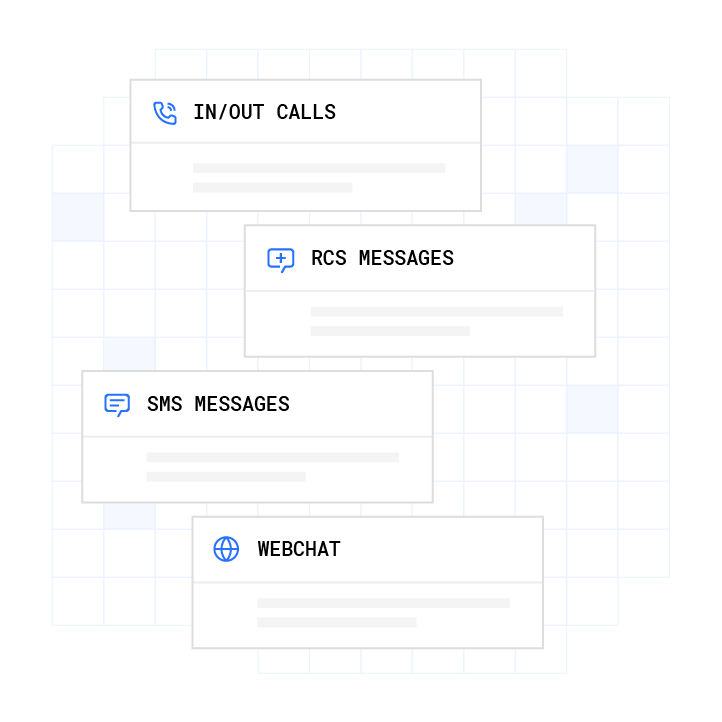
Plura AI’s AI Predictive Dialer combines neural VAD with an FCC-licensed carrier stack, carrier-provisioned branded caller ID, real-time DNC scrubbing, STIR/SHAKEN authentication, and a stateful conversation database shared across voice, SMS, RCS, and AI webchat. The result is a platform where detection accuracy, caller ID presentation, compliance infrastructure, and cross-channel memory operate as a single system rather than four separate point solutions.
Features described in this article support compliance posture. They do not replace qualified legal counsel regarding specific regulatory obligations under TCPA, DNC, or applicable state law. Leaders should consult counsel before deploying any outbound dialing platform at scale.
Use the ROI calculator to model what a carrier-integrated AI Predictive Dialer would cost against your current dialer operation.
Updated August 21, 2026.
1 Plura AI maintains SOC 2, HIPAA, ISO, and GDPR posture as part of its platform infrastructure. References to compliance frameworks in this article describe Plura’s platform capabilities and do not constitute a guarantee that any customer using Plura will themselves be compliant with applicable laws or standards. Customers remain solely responsible for their own regulatory obligations, certifications, consent management, recordkeeping, and the claims they make to their own end users. Consult qualified legal counsel for guidance specific to your use case.
2 This article describes regulatory frameworks at a general level and does not constitute legal advice. Laws and regulations vary by jurisdiction, change over time, and apply differently depending on facts and circumstances. Readers should consult qualified legal counsel before making compliance decisions.
3 Performance figures, customer outcomes, and industry statistics referenced in this article are drawn from cited third-party sources or Plura customer case studies. Individual results vary based on implementation, use case, industry, audience, and execution. Past or aggregate performance is not a guarantee of future results.
4 References to third-party products, services, companies, or research are made for informational and comparative purposes only. Plura AI is not affiliated with, endorsed by, or sponsored by any third party named in this article unless explicitly stated. Trademarks and product names referenced remain the property of their respective owners.
5 This article contains forward-looking statements regarding industry trends, technology adoption, and future capabilities. These statements reflect current expectations and are subject to change. Plura AI undertakes no obligation to update forward-looking statements except as required.
This article is provided for informational purposes only and reflects Plura AI’s understanding at the time of publication. Product capabilities, integrations, and specifications are subject to change. For the most current information, visit plura.ai.
This article was produced with the assistance of AI tools and reviewed by Plura AI prior to publication.